
Before a Speedmaster ever saw the Moon, Soviet watches were already punching a timecard in orbit. The USSR put the first satellite, the first man, the first woman and the first spacewalker into space — and Soviet watch factories made sure there was a mechanical watch present for all of it. Here’s the real history behind the USSR’s space watches — and the space-mad dials it left behind.
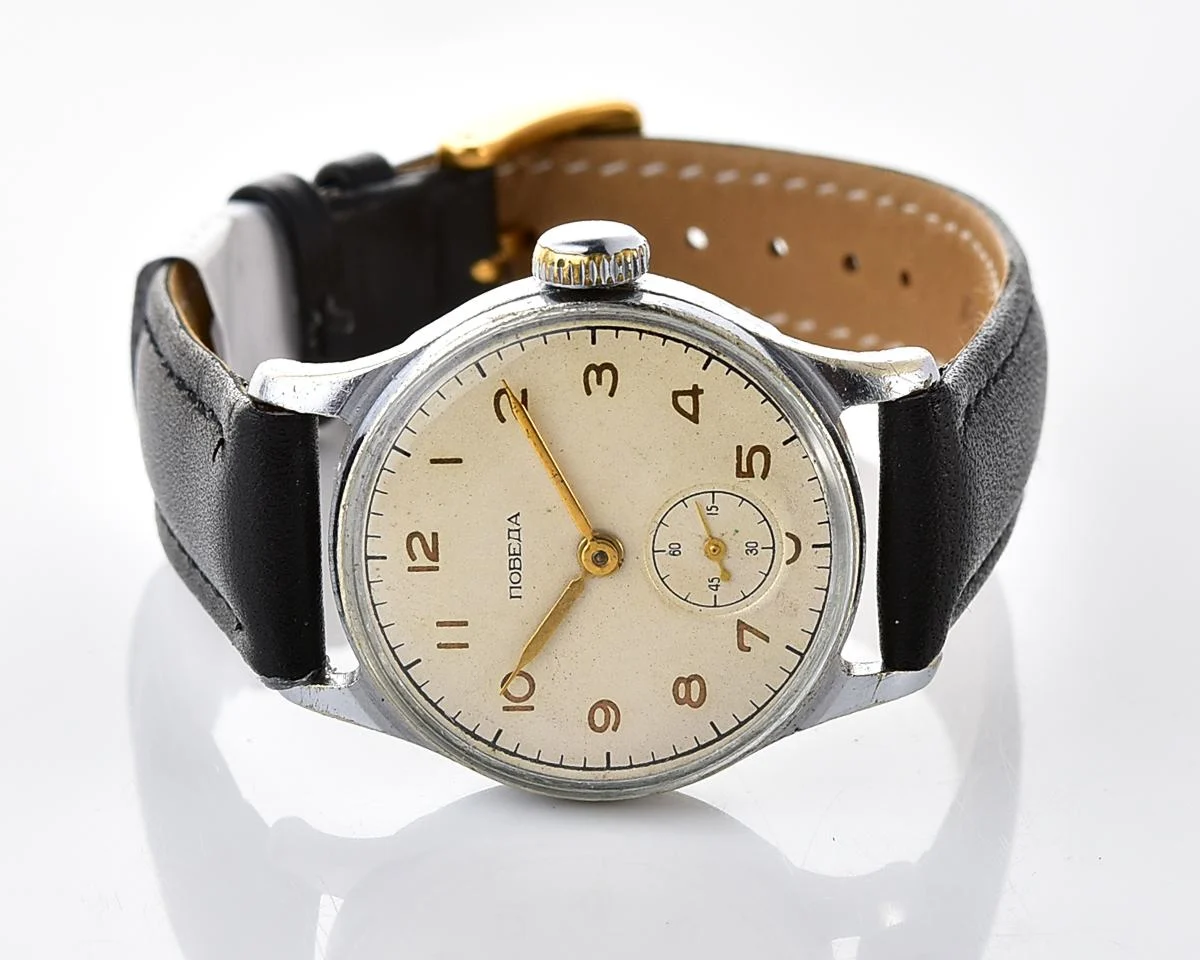
March 1961: the first watch in space had four legs
A month before Gagarin, the first watch to leave Earth was strapped to a dog. On 9 March 1961 Chernushka (“Blackie”) flew a single orbit aboard Korabl-Sputnik 4 — one of the last dress rehearsals for a crewed launch, mannequin “Ivan Ivanovich” in the ejection seat and all — and came home alive. Fastened to her was a Pobeda 34-K: an ordinary 15-jewel hand-wound watch, but in the unusually stout hermetic case that gives the model its name. It belonged to Dr Abraham Genin, a researcher in Soviet aerospace medicine, who by most accounts attached his own watch without asking anyone first — he wanted to know what launch loads, vibration and vacuum would do to a mechanical movement. The answer turned out to be: not much. The watch was identified years later from the engraving on its case back, which is both how the story survives and how Genin is said to have got into trouble for it. Gagarin’s Sturmanskie takes the glory, but the little Pobeda got there first.
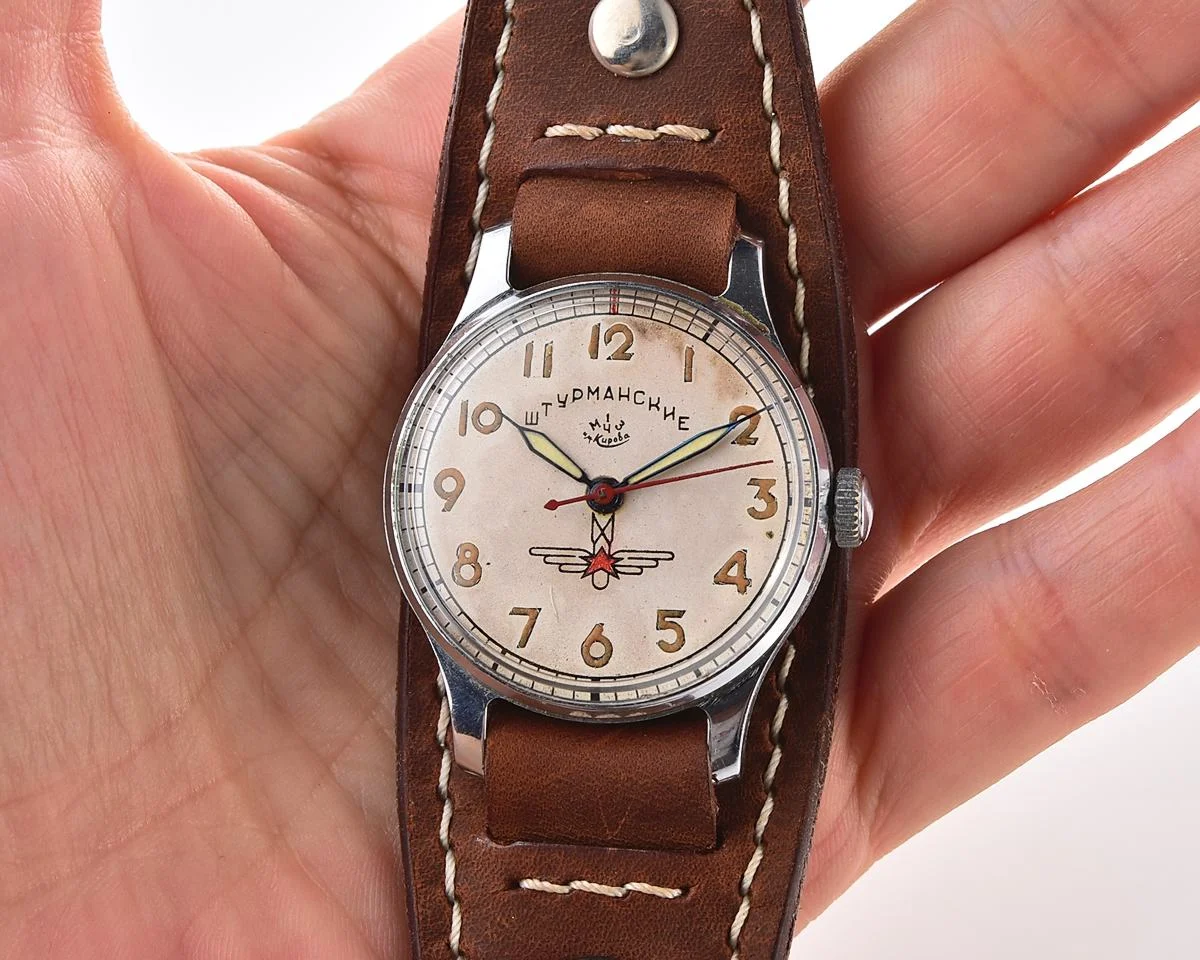
1961: Gagarin’s Sturmanskie
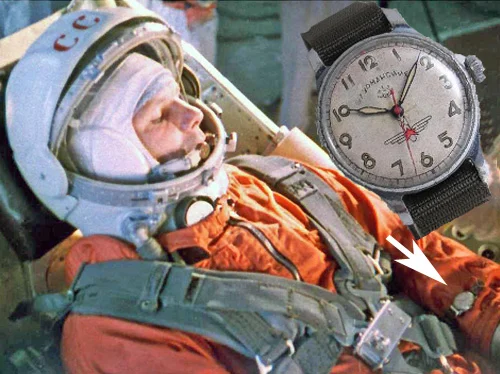
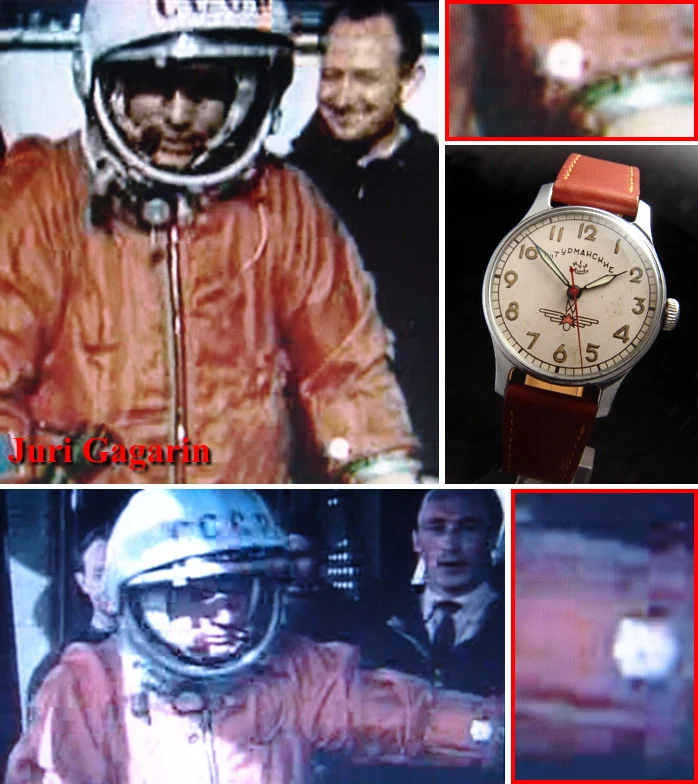
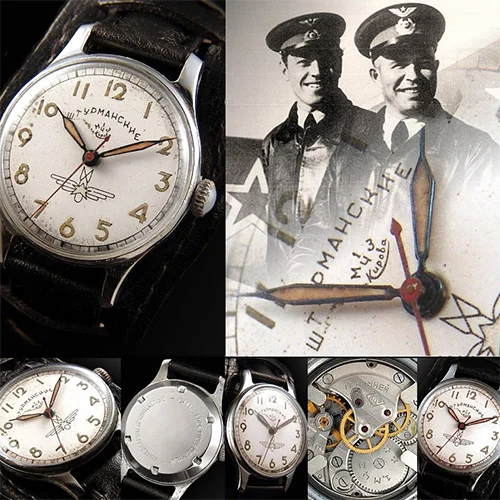
On April 12, 1961, Yuri Gagarin orbited the Earth wearing a Sturmanskie — the “navigator’s” watch issued to Soviet air force pilots, made by the First Moscow Watch Factory (later Poljot). Nobody ran a marketing program about it; the watch was simply part of a pilot’s kit, and it kept time in orbit the way it kept time over airfields. The first watch in space was a service item — which somehow makes it more impressive, not less.
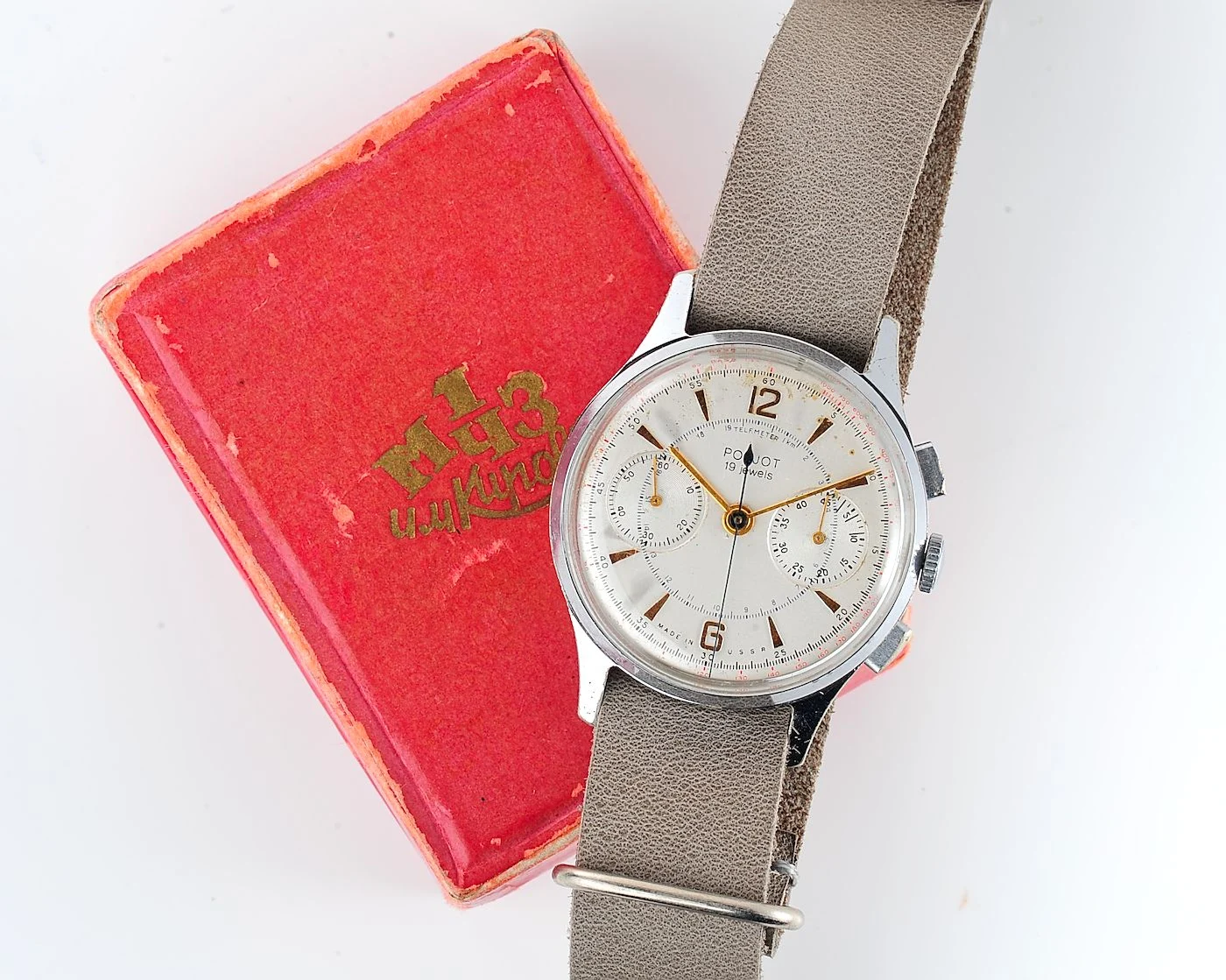
1965: A chronograph in the vacuum
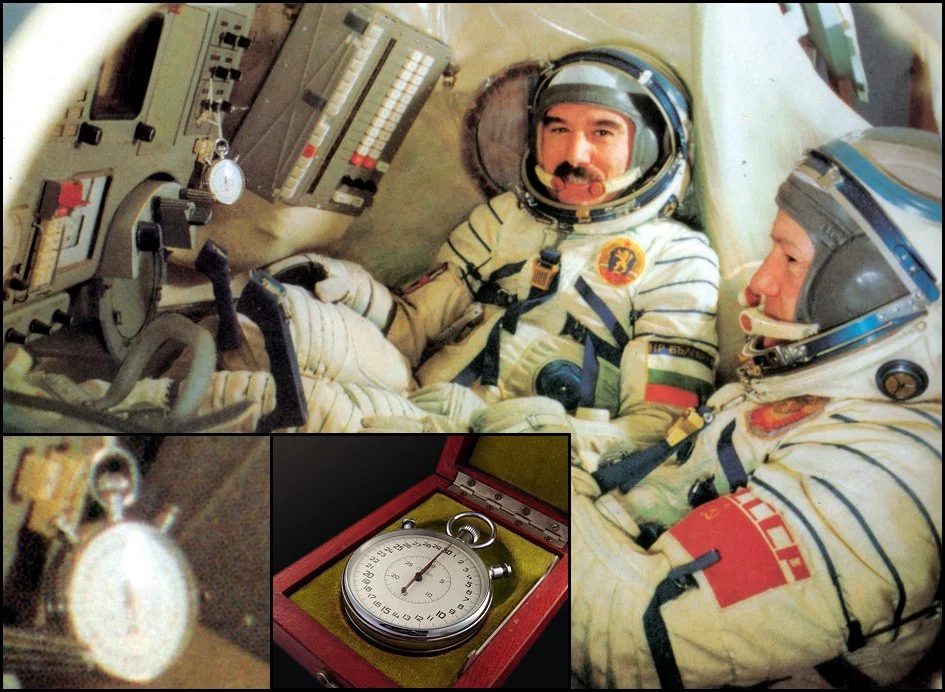
When Alexei Leonov left Voskhod 2 for the first spacewalk in history, a Strela chronograph (calibre 3017) was with him — outside the spacecraft, in vacuum, timing the twelve most dangerous minutes of the space race so far. The Strela became the cosmonauts’ chronograph of the 1960s and remains one of the most desirable Soviet watches ever made.
Raketa: a factory renamed by a rocket
The space program didn’t just borrow watches — it named them. The Petrodvorets Watch Factory launched its new flagship brand: Raketa, “rocket,” in honor of Gagarin’s flight. For the next three decades the factory produced some of the most space-flavored designs in horology, including 24-hour watches originally built for people — polar crews, submariners, cosmonauts — whose windows are no help in telling day from night.
The dials that brought space home
For every watch that actually flew, Soviet factories made thousands that celebrated the flying. Space was the USSR’s favorite decorative subject, and watch dials and case backs became a little museum of it:
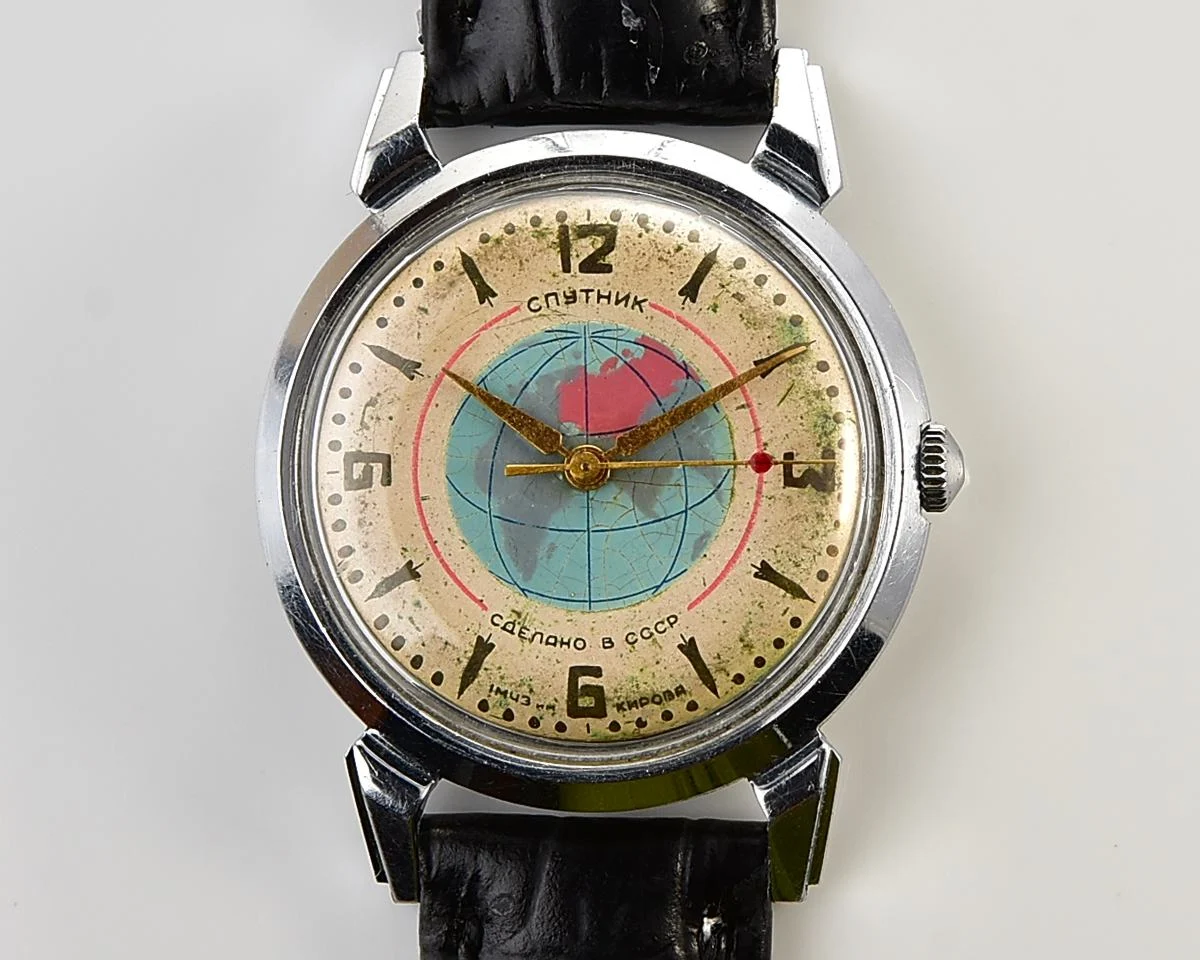
- Sputnik dials — some with a tiny satellite as the seconds indicator, orbiting the dial once a minute.
- Rockets, orbits and cosmonaut helmets on Komandirskie and civilian dials alike.
- Commemorative Molnija pocket watches with Gagarin’s portrait and anniversary engravings.
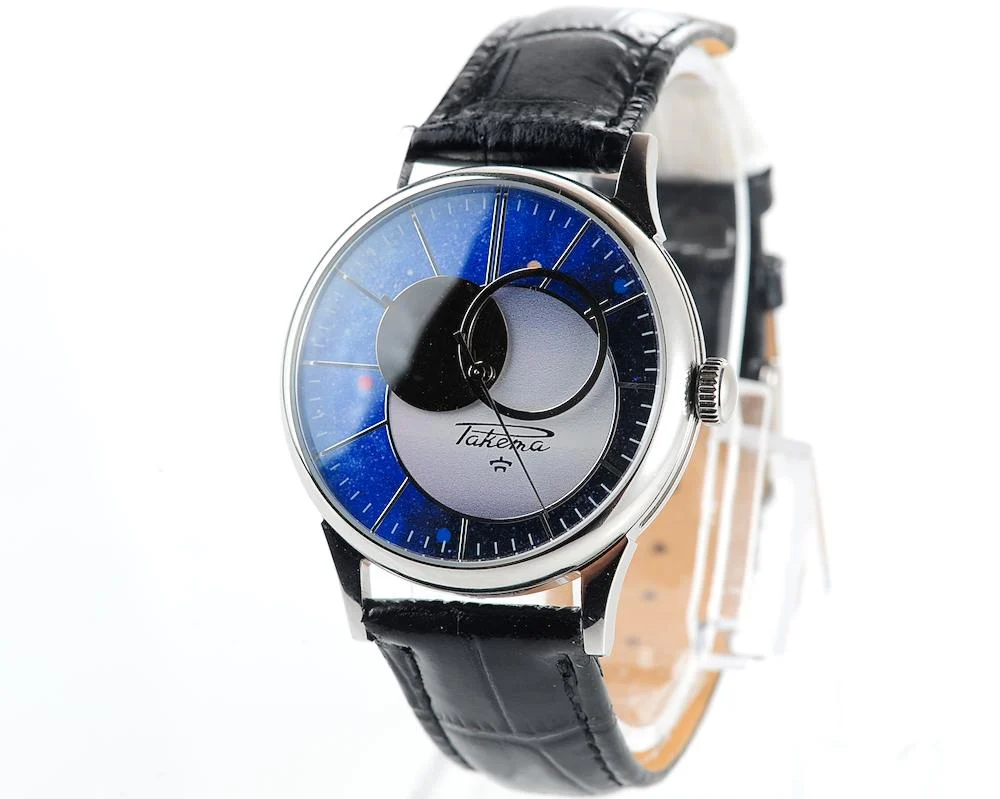
- Copernicus dials — Raketa’s planetary design, and cleverer than it looks: the two discs sweeping the starfield are not a sun and a moon but Earth and Jupiter, geared so that Earth’s year is the minute hand’s hour and Jupiter’s twelve-year orbit is the hour hand’s twelve. A working model of the solar system that also tells the time.
Collecting Soviet space watches today
Genuine flight-connected pieces — original Sturmanskie from 1949 to the early 1960s, and Poljot-Strela 3017 chronographs — are serious collector territory with serious prices — and serious counterfeit risk, so buy carefully (our frankenwatch guide applies double here). The commemorative and space-themed production, though, is one of the most affordable joys in the hobby: real Soviet watches, real space-race iconography, prices that don’t require a cosmonaut’s salary.
Space-themed watches – in stock now
-
Sale! 6% New!
Large Raketa Copernicus wristwatch with 2609.HA Soviet mechanical movement
-
New!
Soviet gold-plated Vostok Komandirskie mechanical watch with purple dial – Zakaz MO CCCP, engraved “Baikonur 1974–1976”
-
New!
Vintage Soviet Sputnik watch with original dial – 1MChZ Kirova globe dial from the late 1950s
-
Sale! 6% New!
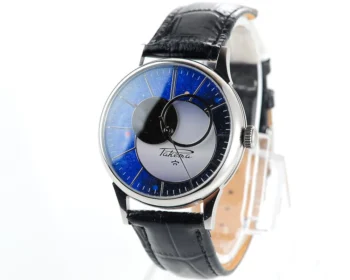
Large Raketa Copernicus wristwatch with 2609.HA Soviet mechanical movement
-

Space food souvenir set – empty Kosmopit cosmonaut soup tube, Soviet “First in the World” space postcards & aluminium rocket
-
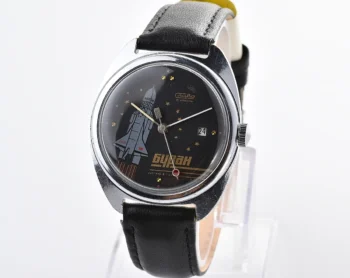
Slava Buran mechanical vintage watch – relic of Soviet space exploration era!
-
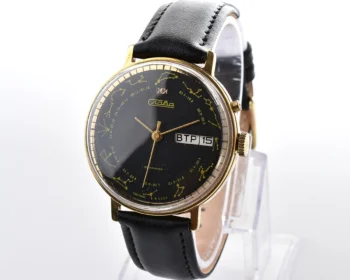
Soviet Slava gold plated mechanical wristwatch with Zodiak signs on the dial
-
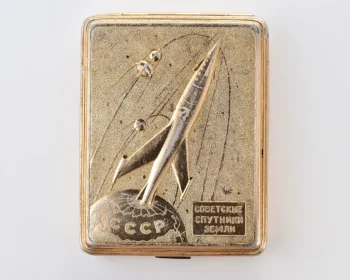
Vintage Space Rocket Sputnik metal cigarette box – “Soviet Earth Satellites”, gold-tone Soviet cosmos exploration era relic
FAQ
What watch did Gagarin actually wear?
A Sturmanskie type 2 from the First Moscow Watch Factory — standard issue for Soviet air force pilots of his cohort.
Was the first watch in open space Soviet?
Yes — the Strela chronograph, worn by Alexei Leonov during the first spacewalk on March 18, 1965.
Are space-themed Soviet watches expensive?
The flown-model originals, yes — an authentic Sturmanskie or Strela 3017 runs well into the hundreds, and deservedly so. Everything the space age inspired at home is another matter: Sputnik dials with a tiny satellite for a seconds hand, 24-hour dials, the format Raketa built for North Pole expeditions, where the sun is no help in telling noon from midnight, Vostok and Komandirskie watches carrying Gagarin’s portrait, and commemoratives for the Buran shuttle, the Baikonur cosmodrome and the Soyuz programme. Most of it sits under $350. That’s most of what you’ll find in our space-themed collection.
Soviet watches in space: the photographic record
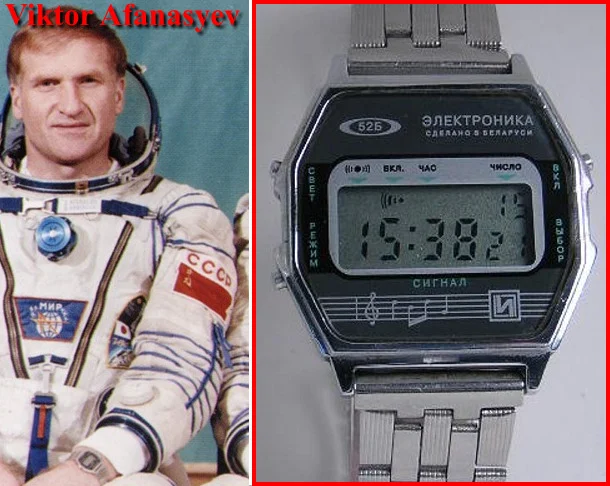
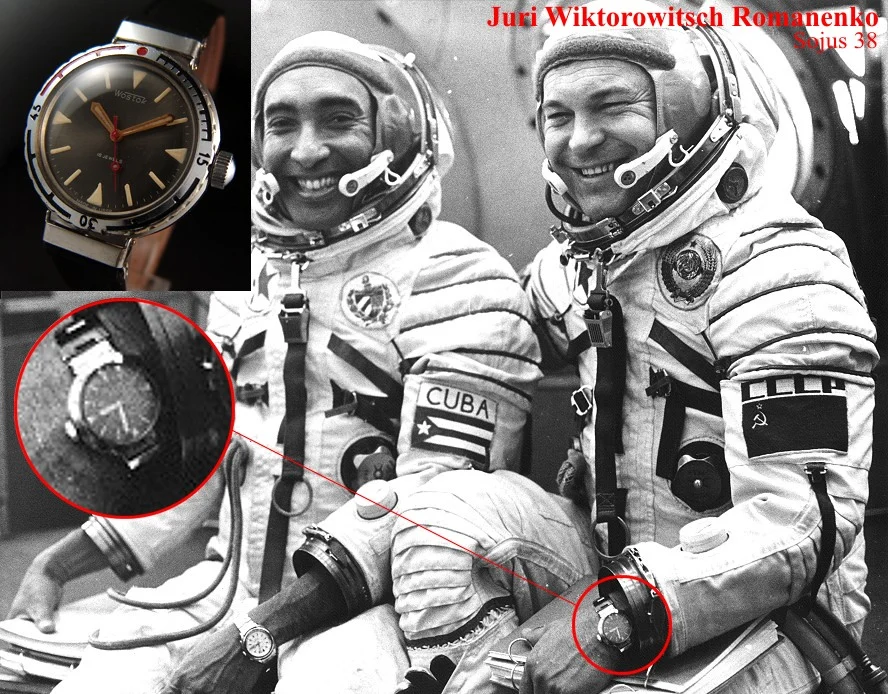
Explore our space-themed Soviet watches — serviced, tested, and only slightly obsessed with the cosmos.