
Ask any collector of Soviet watches what keeps them up at night and you’ll hear one word: frankenwatch. A frankenwatch is a watch assembled from parts that never left a factory together — a 1980s dial on a 1960s movement in a case from something else entirely, sold as an original. The vintage Soviet watch market has plenty of them, and learning to spot one is the single most useful skill a buyer can develop. Here’s how.
What exactly is a frankenwatch?
Not every replaced part makes a franken. Watches are machines; crystals crack, crowns wear out, straps rot. A vintage watch with a service-replaced crystal is just a watch that has been maintained. A frankenwatch is different: it’s a combination — dial, hands, case and movement mixed to create a watch that never existed, usually to imitate a rare and expensive model.
There’s also a Soviet-specific wrinkle: the factories themselves interchanged parts across production runs, and for decades service shops across the USSR swapped components freely. The line between “period-correct service replacement” and “franken” is genuinely blurry — which is exactly why sellers should describe what a watch actually is, not what they wish it were.
The classic red flags
1. The dial is too perfect
A 60-year-old watch with a flawless, glossy, bright dial should make you suspicious. Redialed (repainted) watches are everywhere in this market. Look for printing that’s slightly too thick, fonts that don’t match known originals, misaligned minute tracks, and lume plots that are brilliant white when the hands’ lume is aged yellow.
2. Mismatched aging
Dial, hands and case should have lived the same life. A crisp new-looking dial under scratched-up hands, or aged patina on a polished-to-death case, means the parts have different biographies.
3. The movement doesn’t match the brand
Soviet movements are well documented and factory-specific. A Raketa should contain a Petrodvorets movement (like the 2609.HA); a Vostok should contain a Chistopol calibre like the 2414. If someone shows you a “Poljot” running a Slava movement, walk away. Always ask for a movement photo before buying — a seller who won’t open the case back is telling you something.
4. Pocket-watch “conversions”
A whole genre of frankens: huge “marriage” wristwatches built by putting a Molnija pocket watch movement into a new oversized wristwatch case, often with a freshly painted “commemorative” dial. Some people enjoy them as what they are — but they are new creations, not vintage watches, and should never be priced or described as originals.
5. Fantasy dials
Skulls, Red Army tanks, KGB emblems, submarine commanders — dramatic dials that appear on none of the factory catalogues. The USSR did make commemorative dials, but the documented ones are known to collectors. If a dial looks like it was designed for a tourist market stall in 1995, it probably was.
6. A rare watch at a convenient price
The market knows what a genuine rarity costs. A “rare 1961 prototype” at a bargain price isn’t luck — it’s bait.
How to protect yourself
- Learn the reference models. Collector forums and catalogue scans document what original dials, hands and movements look like for every major model.
- Demand movement photos. Every honest seller of Soviet watches expects this request.
- Compare lume, printing and aging across the whole watch.
- Buy from sellers who disclose. The good ones tell you when a strap is aftermarket or a part is non-original — unprompted. That’s the behavior that matters more than any single watch. (It’s how we handle it.)
Where we stand
We sell some of these watches ourselves — openly. Custom builds, marriage watches and redialed pieces in our store carry a collector’s note at the top of the description, live in a dedicated Custom Builds & Marriage Watches category, and are priced as what they are. A genuine vintage movement in modern clothes can be an honest, enjoyable watch — as long as nobody calls it a 1957 original. That’s the whole difference between a custom build and a frankenwatch: the label.
-
Sale! 17%
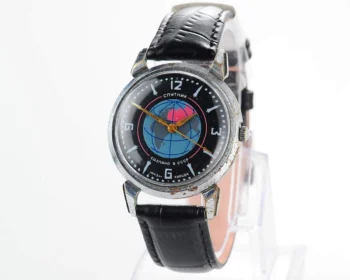
Sputnik mechanical watch
-
Sale! 11%
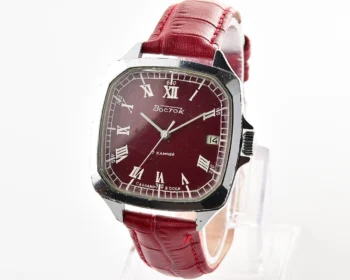
Large Soviet Wostok (Vostok) mechanical wristwatch
-
Sale! 10%
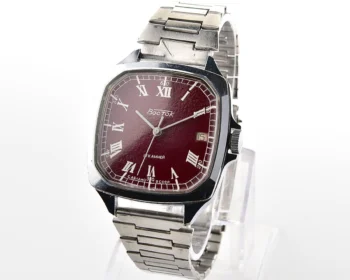
Large Vintage Vostok Date – Burgundy Dial with Roman Numerals in Cushion Case on Steel Bracelet, Cal. 2414A
-
Sale! 18%
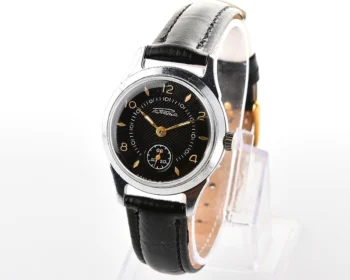
Vintage Soviet mechanical Raketa wrist watch
-
 Out of stockSale! 5%
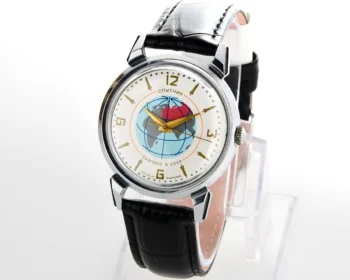
Sputnik mechanical watch
-
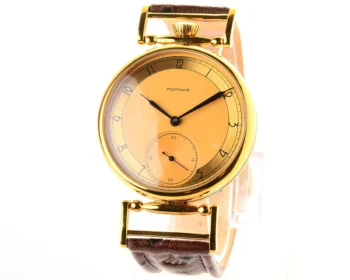
Soviet style Molnija wrist watch with luxury ostrich leather strap and transparent back cover!
-
Sale! 20%
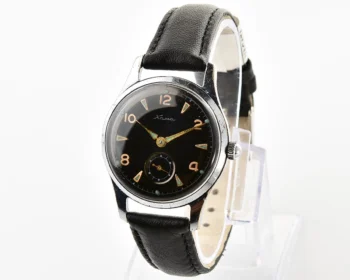
Vintage Soviet Kama mechanical watch, the 1st quarter of 1957!
-
Sale! 13%
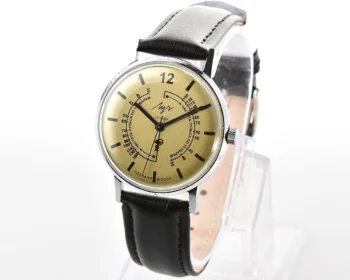
Excellent ultra-thin mechanical Luch “Medicine” – with pulse scale!
FAQ
Is a redial always bad?
For a collector, mostly yes — a redialed watch loses most collector value. As a wearer’s watch, it can still be a fine machine; it just needs to be priced and described as a redial.
Are replaced crystals and crowns a problem?
No. These are consumables. Replacing them is servicing, not fakery — as long as the seller doesn’t claim “all original” while doing it.
Did Soviet factories really mix parts themselves?
Yes. Production runs shared components and specifications drifted constantly. This is why honest experts talk about “period-correct” rather than guaranteeing every screw is birth-original.
Want the real thing? Every watch in our store is serviced, photographed individually, and described as what it actually is — start with our vintage Soviet wrist watches.