
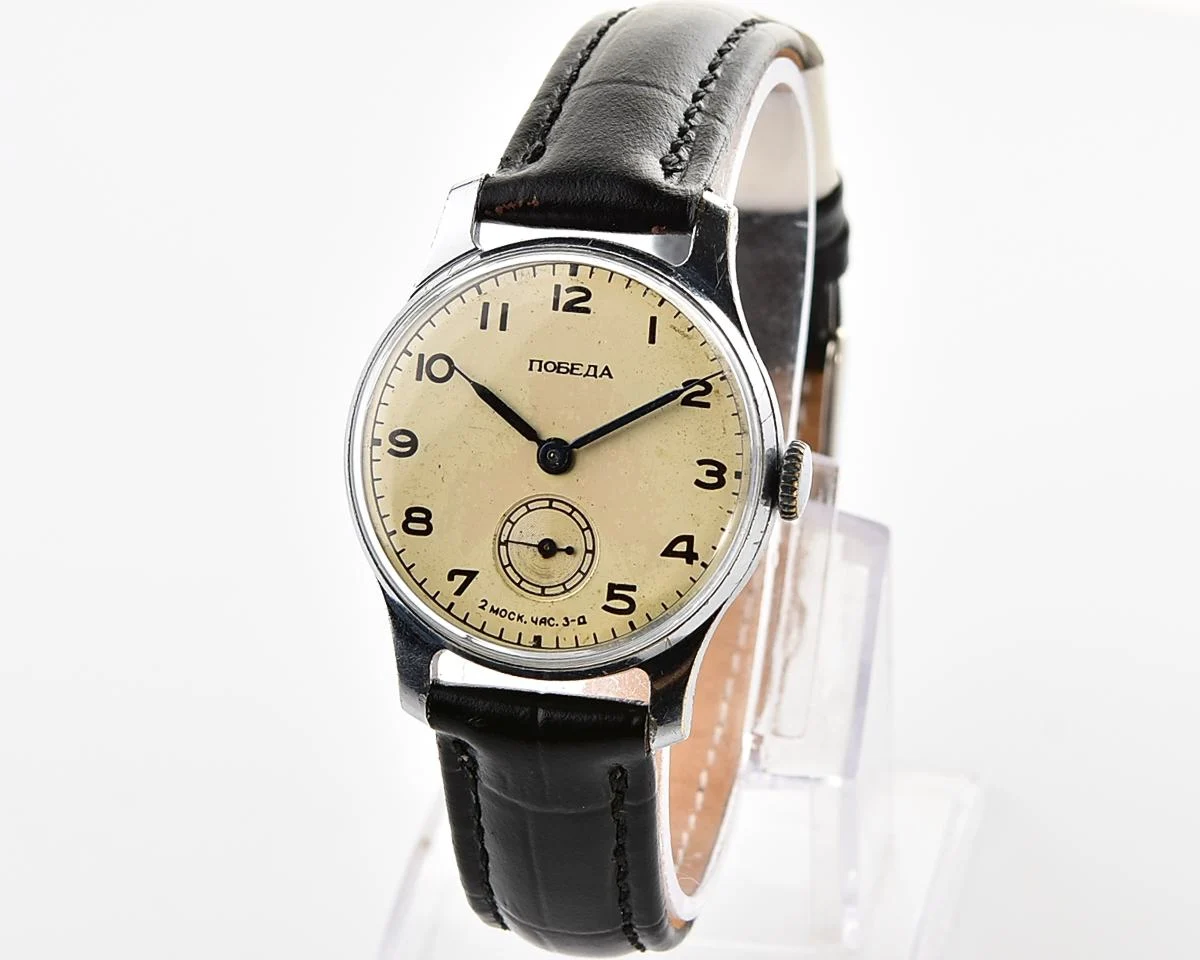
No Soviet watch carries more history in its name than the Pobeda — “Victory.” Born in 1946, in the first year after the war it was named for, the Pobeda was the USSR’s watch for everyone: affordable, simple, produced in the tens of millions, and — as the story goes — personally approved at the very top.
A watch to mark a victory
Soviet lore holds that the name and the specifications of the new watch were approved by Stalin himself, as a timepiece worthy of commemorating the victory in the Great Patriotic War. Whatever happened in that meeting room, the brief that emerged was remarkably sensible: a watch that was accurate, durable, and cheap enough for ordinary citizens — a victory watch for the people who had done the winning.
French genes, Soviet character
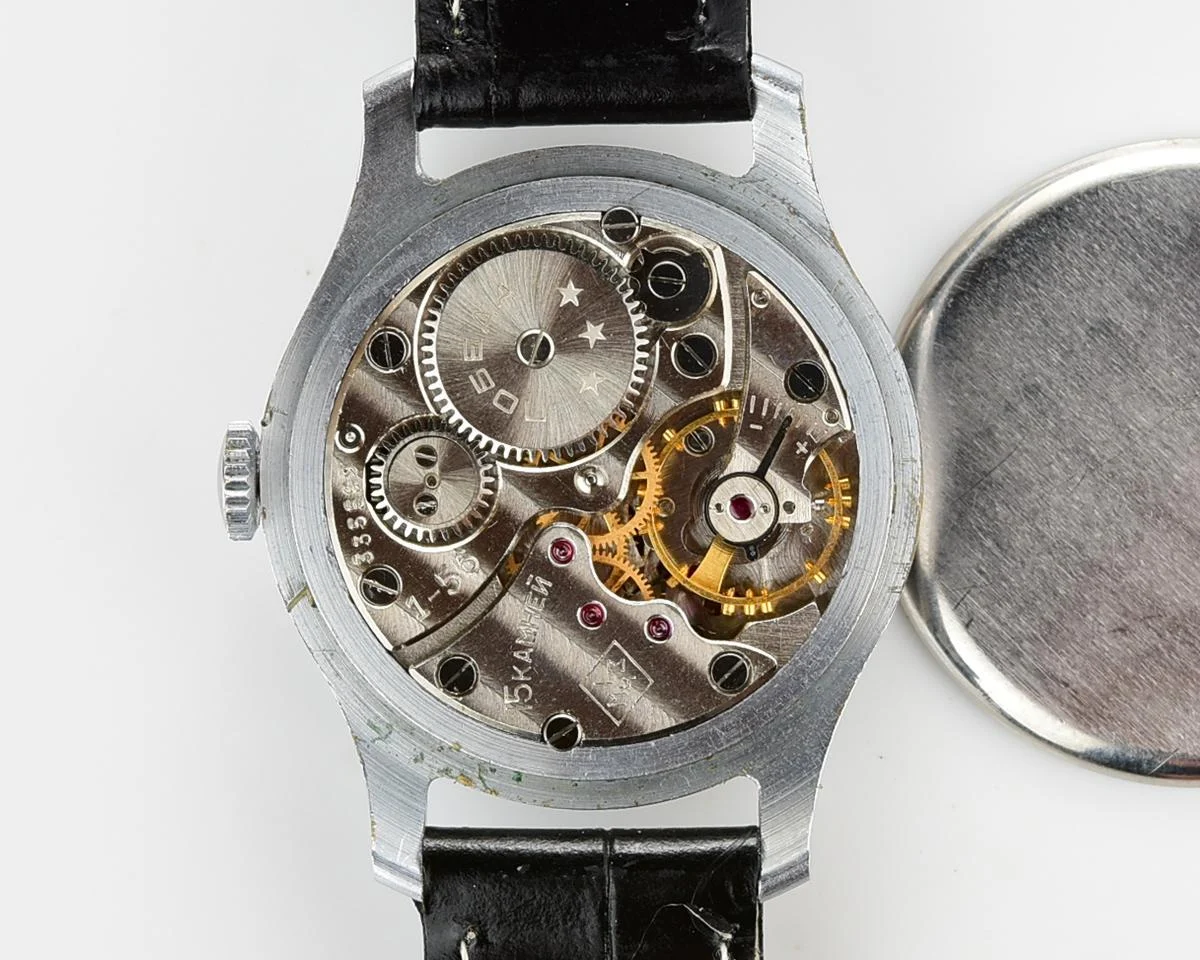
The Pobeda’s movement — the 15-jewel calibre 2602 family — was developed from a design by the French watchmaker LIP, with whom the USSR had cooperated before the war. It’s a small, honest, hand-wound movement with no complications and no pretensions, which is precisely why so many still run today. There was nothing in it to break elegantly; it either works or it asks for a cleaning.
Made everywhere, worn by everyone
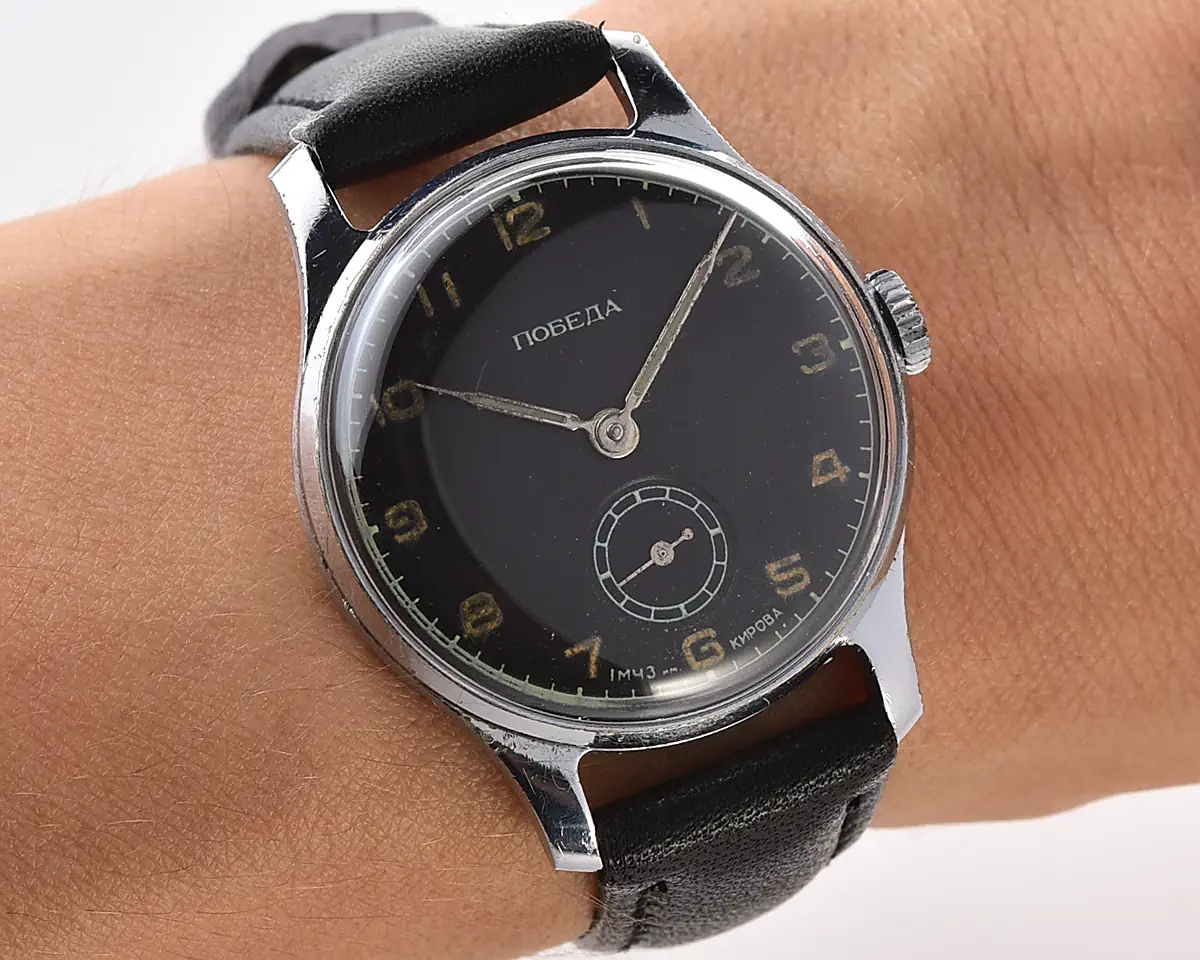
Here’s the detail that surprises new collectors: Pobeda was not one factory’s watch. It was a state brand, produced across the Soviet watch industry — in Moscow at the First and Second Watch Factories, at Petrodvorets near Leningrad, at ZiM in Kuibyshev (today’s Samara), and elsewhere. Factories came and went from the program over the decades; ZiM carried the Pobeda banner all the way to the 1990s, outliving the USSR itself.
For collectors this means delightful variety: the same modest watch appears with dozens of dial designs, case styles and factory markings across nearly fifty years of production. Learning to read those markings — which factory, which era — is half the fun of collecting Pobedas.
Why collect a Pobeda today?
- History per ruble: few watches connect you this directly to the postwar Soviet world — this is the watch on the wrist in the photographs of that era.
- Honest mechanics: the simple 2602 is easy to service and keeps respectable time when healthy.
- Entry point: Pobedas remain among the most affordable vintage mechanical watches with a real story — a perfect first Soviet watch. (If you’re choosing a first, our reliability guide is written for you.)
FAQ
What does “Pobeda” mean?
“Victory” — commemorating the Soviet victory in the Second World War. Production began in 1946.
Which factory made my Pobeda?
Check the dial and case back markings — different factories signed their work differently across the decades. Our listings identify the factory and era where the markings allow it.
Are Pobedas reliable?
A serviced one, yes — the movement is about as simple as mechanical watchmaking gets, which is a compliment. See our servicing standards.
Browse our serviced vintage Pobeda watches — hundreds of them, from late-1940s classics to final-era ZiM production.