
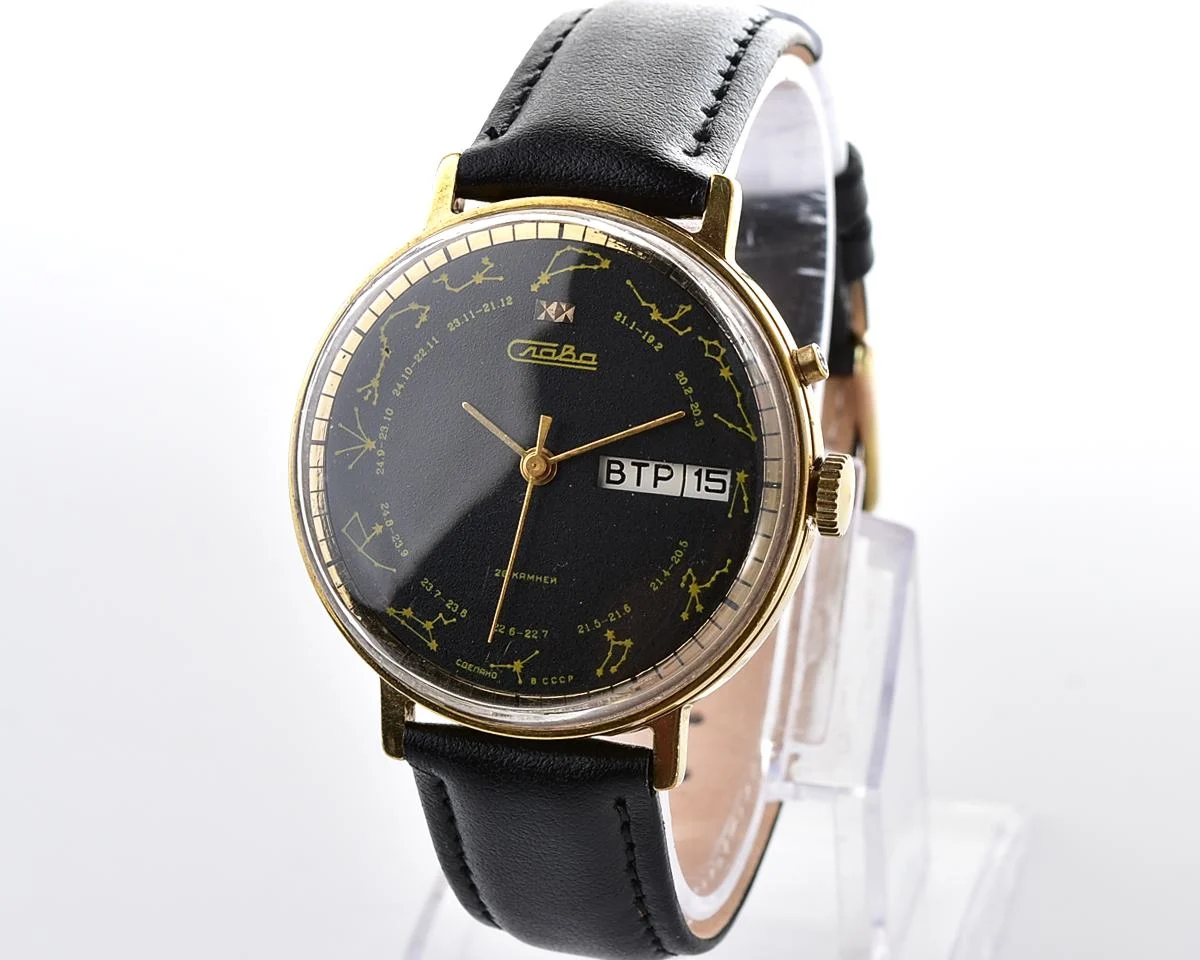
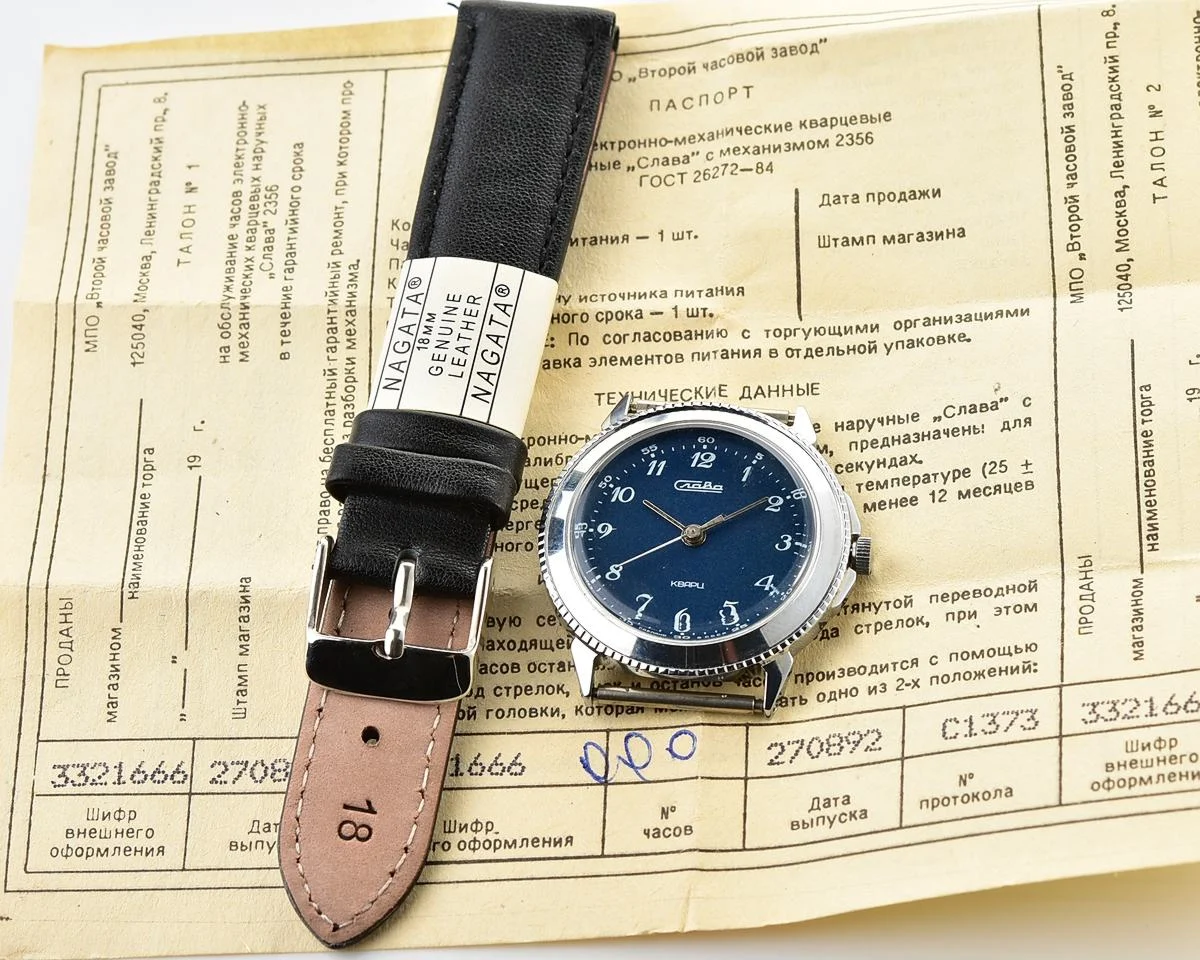
If Vostok was the USSR’s soldier and Poljot its pilot, Slava — “Glory” — was its civilian. Made by the Second Moscow Watch Factory, Slava watches went to teachers, engineers, grandmothers and newlyweds: the watches of ordinary Soviet life, made with some genuinely clever engineering underneath.
The Second Moscow Watch Factory
Founded in 1924, the Second Moscow Watch Factory was one of the pillars of the Soviet watch industry — and, indirectly, the parent of another: it was this factory’s wartime evacuation to Chistopol in 1941 that seeded what became Vostok. Back home in Moscow, the factory built alarm clocks, ladies’ watches and everyday wristwatches, and from the late 1950s its civilian watches carried the brand Slava.
The twin-barrel trick
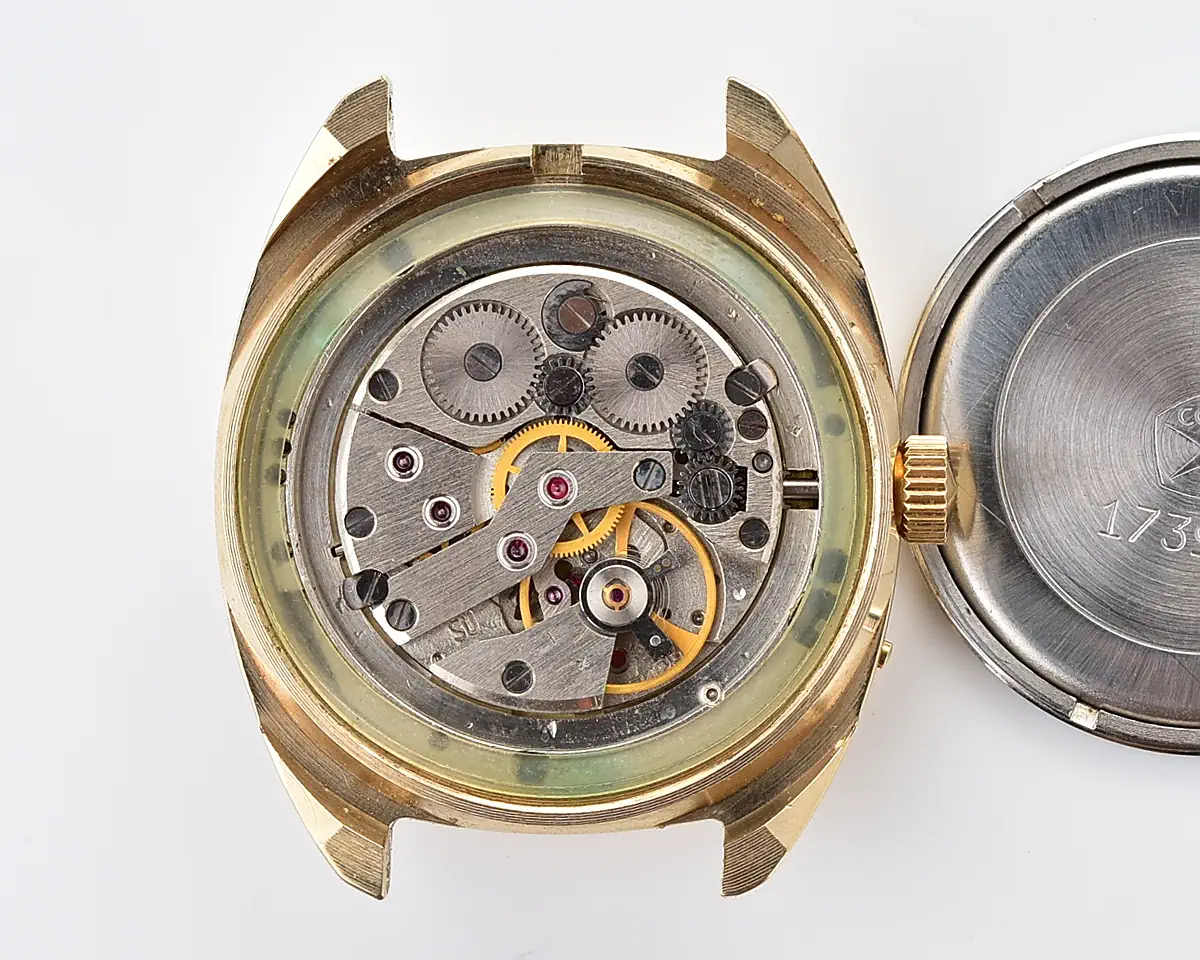
Slava’s signature piece of engineering runs through its whole 24xx family of calibres: two mainspring barrels instead of one. You’ll find them in the hand-wound 2414 (date) and 2428 (day-date), and in the automatic 2416 and 2427. Two smaller springs working together deliver their power more evenly than one long spring — steadier torque, steadier accuracy across the power reserve. It’s an elegant solution you mostly find in far more expensive watchmaking, sitting quietly inside a watch made for schoolteachers.
The 2414 shares its number with a Vostok calibre, confusingly, but it is an entirely different movement.
Watches for the other half of the USSR
The Second Moscow Watch Factory was also the USSR’s great maker of ladies’ watches — tiny calibres like the 1600 series, dressed in everything from austere steel to gloriously kitschy gilt and crystal. Vintage Soviet ladies’ watches remain one of the most underpriced corners of the hobby, and most of the good ones are Slavas.
Sekonda and the export story
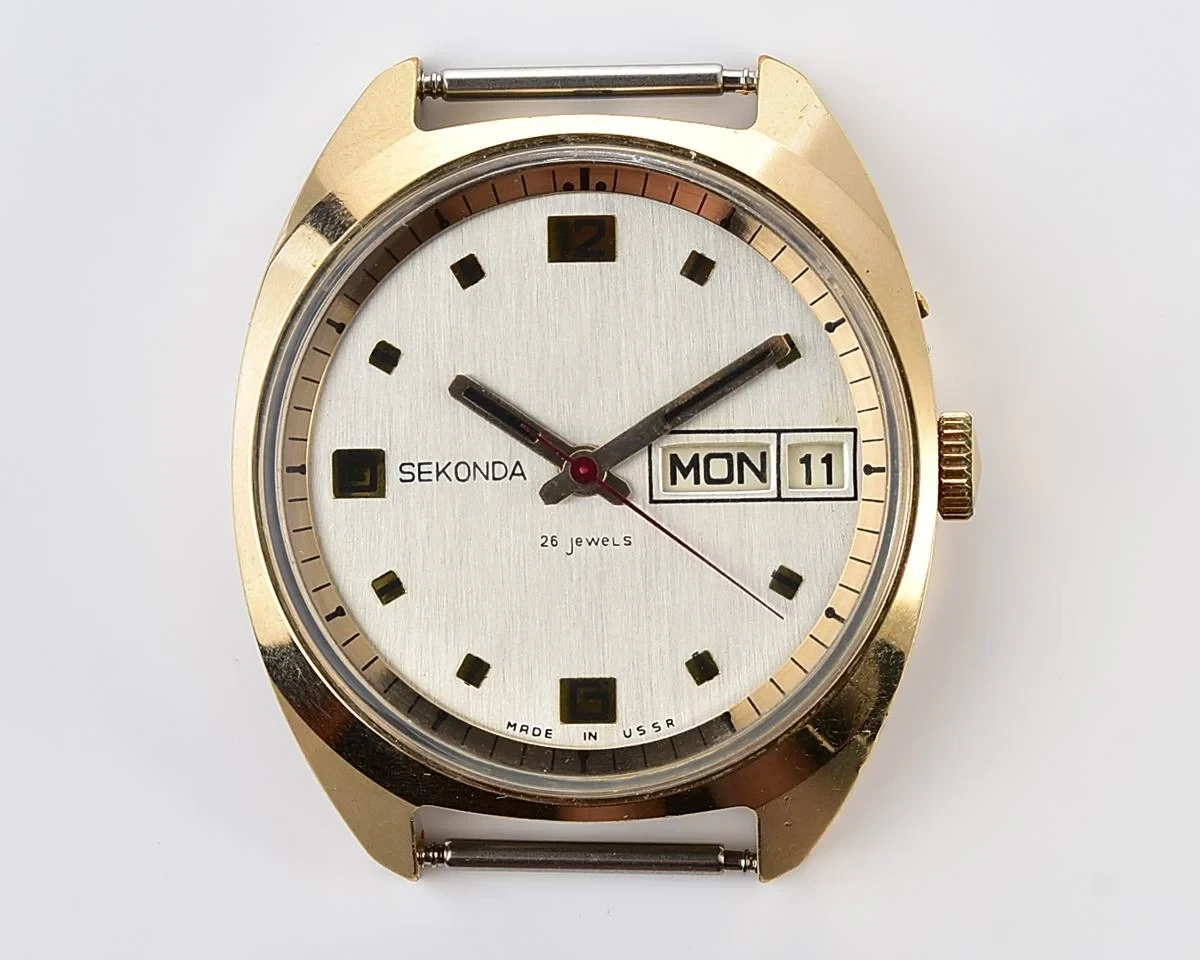
If you grew up in Britain, you may know these watches by another name: Sekonda, the export brand under which Soviet watches — many of them Slava and Poljot production — were sold in the West from the 1960s. Same Moscow movements, more pronounceable label.
FAQ
What does “Slava” mean?
“Glory” — a civilian brand name from the late 1950s onward for the Second Moscow Watch Factory’s watches.
What is special about Slava movements?
The double mainspring barrel used across the 24xx family — the hand-wound 2414 and 2428 as well as the automatic 2416 and 2427 — smoother power delivery than a single barrel, an unusually refined feature for an everyday watch.
Are Slava watches good for new collectors?
Very — they’re plentiful, characterful and affordable, and the twin-barrel movements give you real mechanical interest for little money. As always with vintage: buy serviced, or budget for a service. Our Slava collection comes serviced and tested.
Browse serviced vintage Slava watches — from twin-barrel hand-wound and automatic models to ladies’ watches.