
“Are vintage Soviet watches reliable?” is the question every new collector asks, usually right after seeing that a serviced mechanical watch from a fallen superpower costs less than dinner for two. The short answer: yes — if the watch has been serviced, and if your expectations are calibrated to 1970, not to a quartz Casio. Here’s the long answer.
Soviet watches were built to be repaired, not replaced
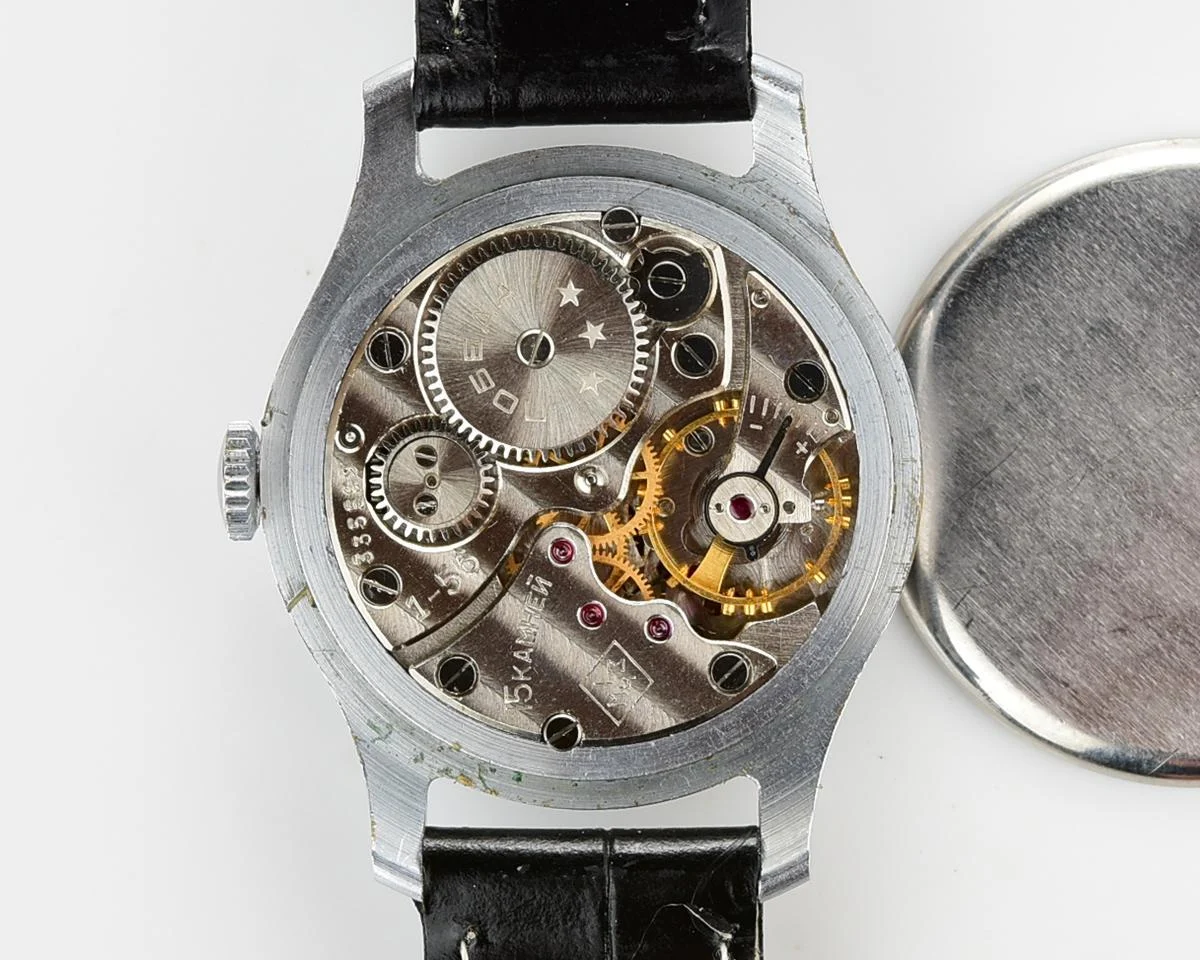
The USSR designed its watches the way it designed its tractors: simple, robust, and meant to be fixed by any competent mechanic anywhere from Riga to Vladivostok. Movements like the Vostok 2414, the Raketa 2609.HA and the Pobeda 2602 are uncomplicated, well-documented mechanisms with generous tolerances. This is exactly what you want in a 50-year-old machine: nothing exotic, nothing fragile, everything replaceable.
That’s also why so many survive. These watches were produced in the tens of millions, and parts availability today is excellent by vintage-watch standards.
What “reliable” means for a vintage mechanical watch
- Accuracy: A healthy, serviced Soviet movement typically runs within roughly ±20–40 seconds per day, and a well-regulated one can do better. That was normal for mechanical watches of the era — Swiss ones included. If you need atomic precision, you need quartz.
- Power reserve: Most hand-wound Soviet calibres run about 36–45 hours on a full wind. Wind it once a day, ideally at the same time, and it will keep honest time.
- Durability: Vostok’s military and dive watches are famously hard to kill. Dress watches are dress watches — treat a thin 1960s Luch the way you’d treat any 60-year-old elegant machine.
The one thing that actually matters: servicing
Almost every “unreliable Soviet watch” story is really a story about a watch that hasn’t been serviced since Brezhnev. Oil dries out in decades, not centuries; dried oil means friction, bad accuracy, and eventually worn parts. A mechanical watch — Soviet, Swiss or Japanese — needs cleaning and fresh lubrication every several years to stay healthy.
This is why “it runs” on an auction listing means very little (and why our frankenwatch guide is worth reading before you bid), and why we service and test every watch before it goes into the store. A serviced 1975 Raketa is a reliable daily companion. An unserviced one is a lottery ticket that ticks.
What to expect — and what not to
- Don’t swim with vintage watches unless they’re a properly gasketed dive model that has been pressure-checked. Half-century-old seals are not seals; they are archaeology. Even a vintage Amphibia should earn your trust at the service bench before it earns a swim.
- Expect character: a faint patina, a dial that has seen things, a mechanical heartbeat you can hear at night. This is the point.
- Magnetism, hard knocks and winding like you’re angry at it are the main enemies. Gentle daily winding is all the maintenance a serviced watch asks of you.
FAQ
Can I wear a vintage Soviet watch every day?
Yes — a serviced one. Thousands of people do exactly that. Just keep it away from water and treat it like the well-made vintage machine it is.
How often does it need servicing?
Roughly every 5 years for a daily wearer, less often for an occasional one. Any competent watchmaker can service common Soviet calibres — parts and documentation are plentiful.
Which Soviet watch is the most reliable?
The boring, correct answer: the one that was serviced most recently. Among brands, Vostok tool watches have the toughest reputation, and the Pobeda‘s simple 15-jewel movement has been shrugging off decades since 1946.
Every watch in our store comes serviced, regulated and tested — browse the full collection.