
While the rest of the world was abandoning the pocket watch, the Soviet Union kept perfecting it. The Molnija (“Lightning”) pocket watch — made at the Chelyabinsk Watch Factory from 1947 — became the timekeeper of Soviet railwaymen, sailors and veterans, and one of the most rewarding entry points into Soviet horology today.
A factory in the Urals
The Chelyabinsk Watch Factory was established in the late 1940s in the industrial heart of the Urals, and “Molnija” became its defining brand. While it made wristwatches early on, the factory found its calling in pocket watches and technical timepieces — including instrument clocks for aircraft, ships and military vehicles, a sideline that says a lot about the build philosophy of the pocket watches.
The 3602: a Swiss ancestor, a Soviet career
The heart of most Molnija pocket watches is the calibre 3602, developed from the Swiss Cortébert calibre 616 — a design the USSR had licensed before the war. The Soviets kept manufacturing and refining it for half a century: a big, unhurried, beautifully simple hand-wound movement that a watchmaker can service with ordinary tools and that shrugs off decades of neglect better than almost anything else from the era.
Big movements are also honest movements: open a Molnija case back and you can watch the whole mechanism breathe — one reason so many were made with display engravings and why they make superb first mechanical watches for the curious.
The case-back art gallery
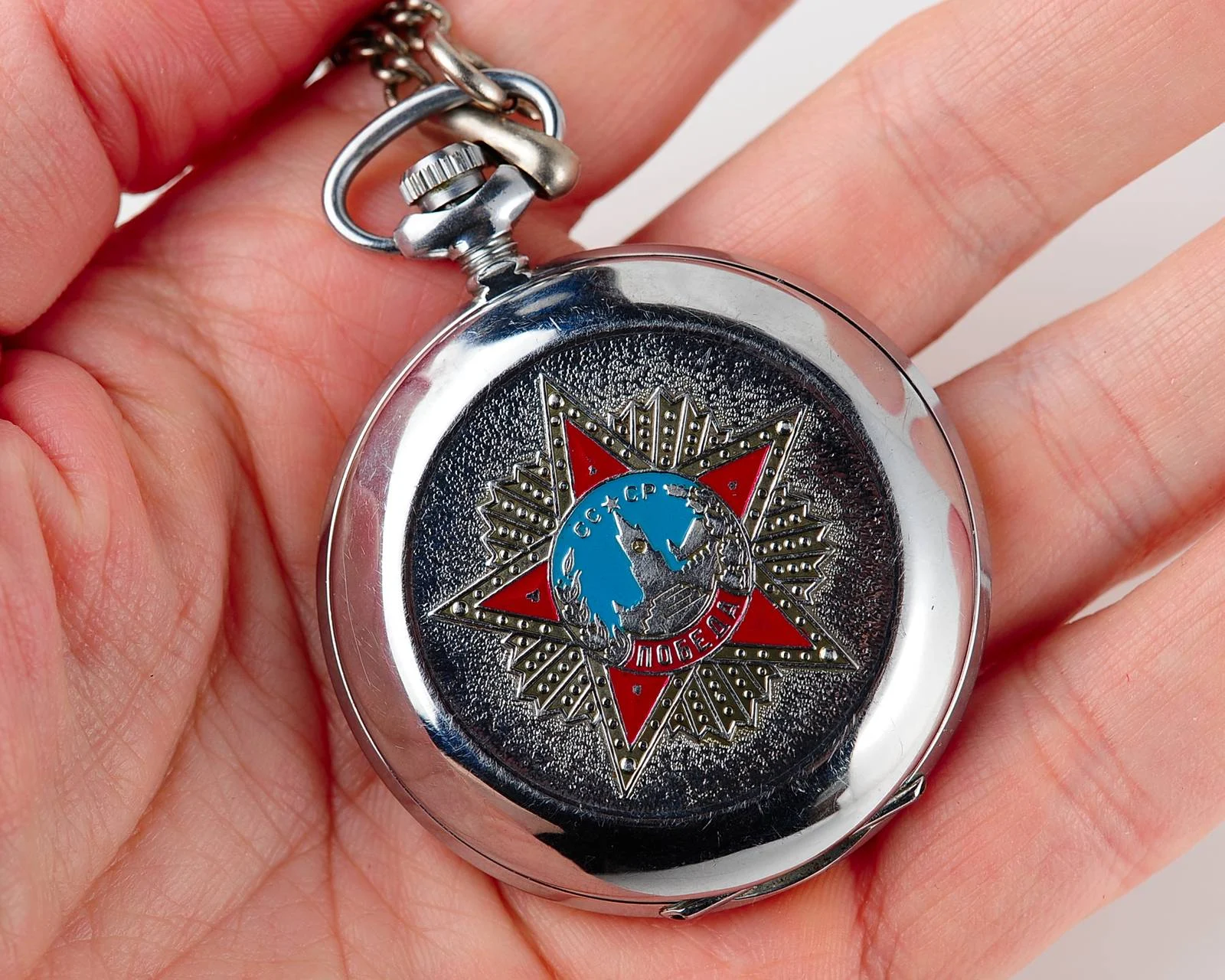
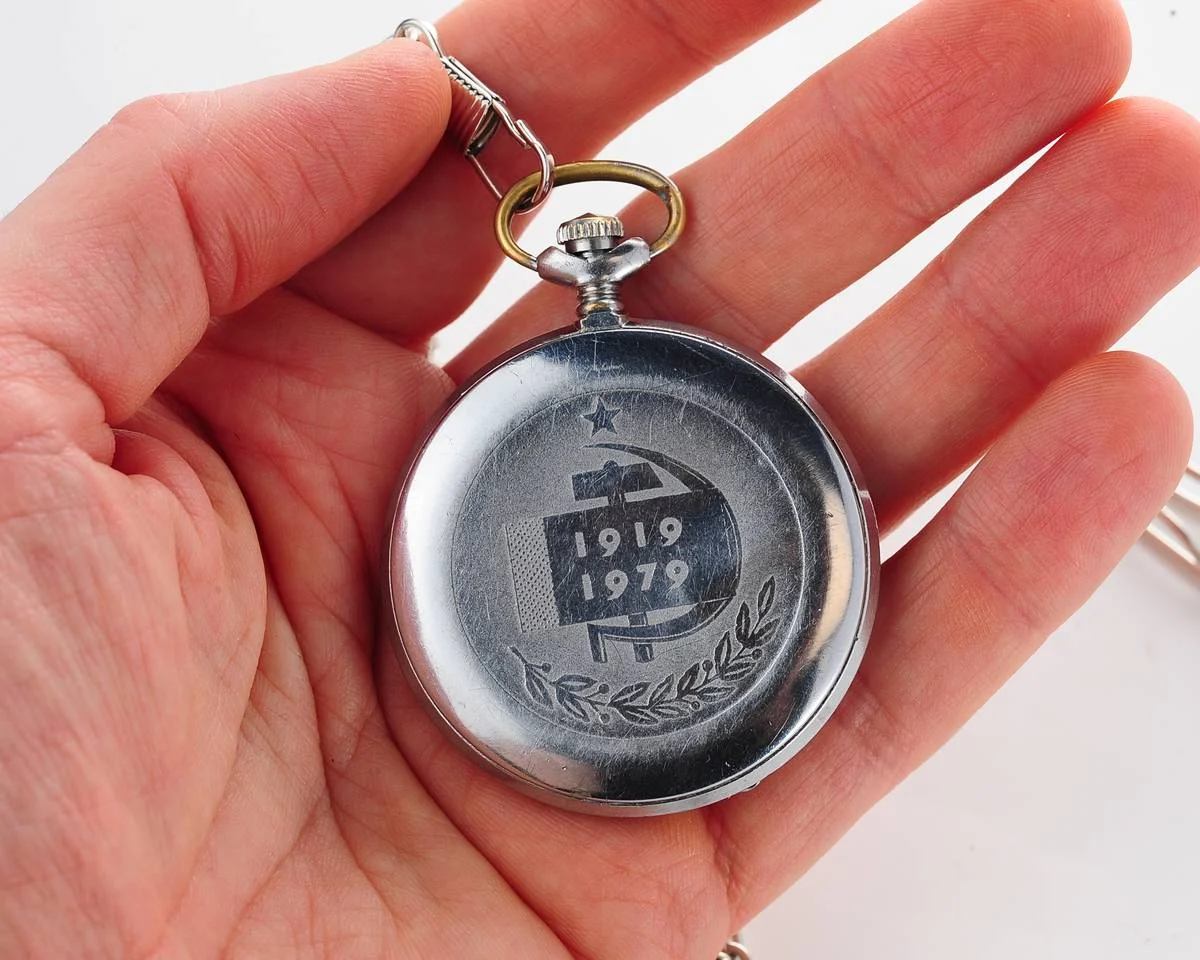
Molnija’s glory is on the outside: embossed and engraved case backs celebrating everything the USSR wanted celebrated — locomotives for the railways, warships for the navy, the Kremlin, cosmonauts, anniversaries of the Victory, hunting scenes with unreasonably majestic elk. Collecting Molnija case backs is collecting Soviet iconography in nickel-plated relief, and there are hundreds of designs.
Who carried them
- Railway workers — the pocket watch remained official equipment on Soviet railways long after wristwatches conquered everyone else.
- The military and navy — including versions for people who needed a watch that worked with gloves.
- Veterans and officials — commemorative Molnijas were the standard respectable gift for decades.
- The blind — Braille Molnijas with hinged crystals and tactile markers, one of the factory’s quietly humane specialties.
A warning about “Molnija wristwatches”
Because the movements are large, cheap and plentiful, Molnija pocket movements are the raw material for a whole industry of oversized “marriage” wristwatches with freshly painted commemorative dials. Some people enjoy them as new-made curiosities — but they are not vintage wristwatches, whatever the listing says. Our guide to spotting frankenwatches covers the tells.
FAQ
What does “Molnija” mean?
“Lightning.” The factory in Chelyabinsk produced the brand from 1947 into the 2000s.
Are Molnija pocket watches reliable?
Exceptionally, once serviced — the 3602 is a large, robust movement with Swiss ancestry and fifty years of Soviet refinement. Ours are serviced and tested before listing.
What should I look for when buying one?
An original dial (beware bright repaints), an interesting case back, and a movement photo. The engraved commemorative backs are where the collecting fun lives.
Browse our serviced Soviet pocket watches, including Molnijas with railway, naval and space case backs.