Description
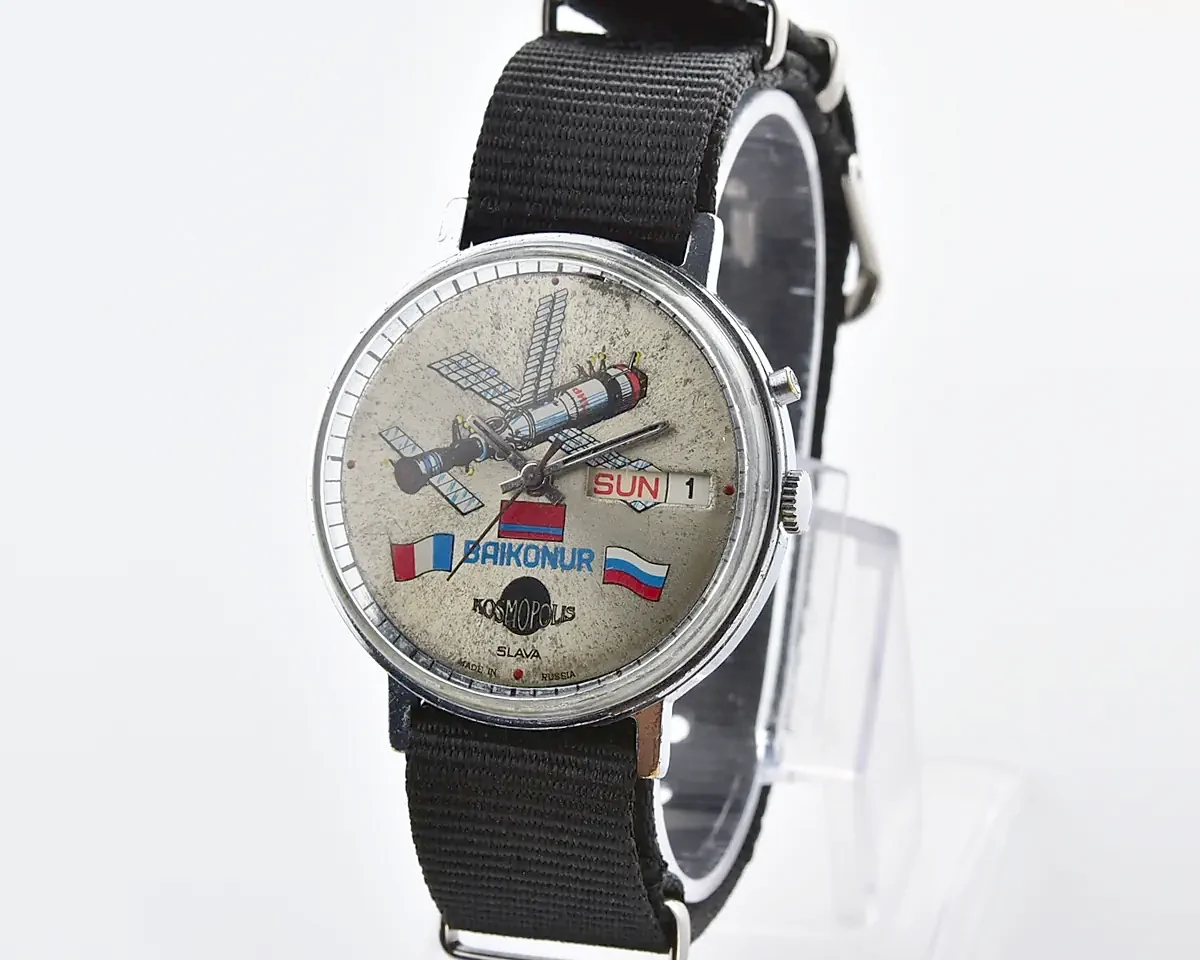
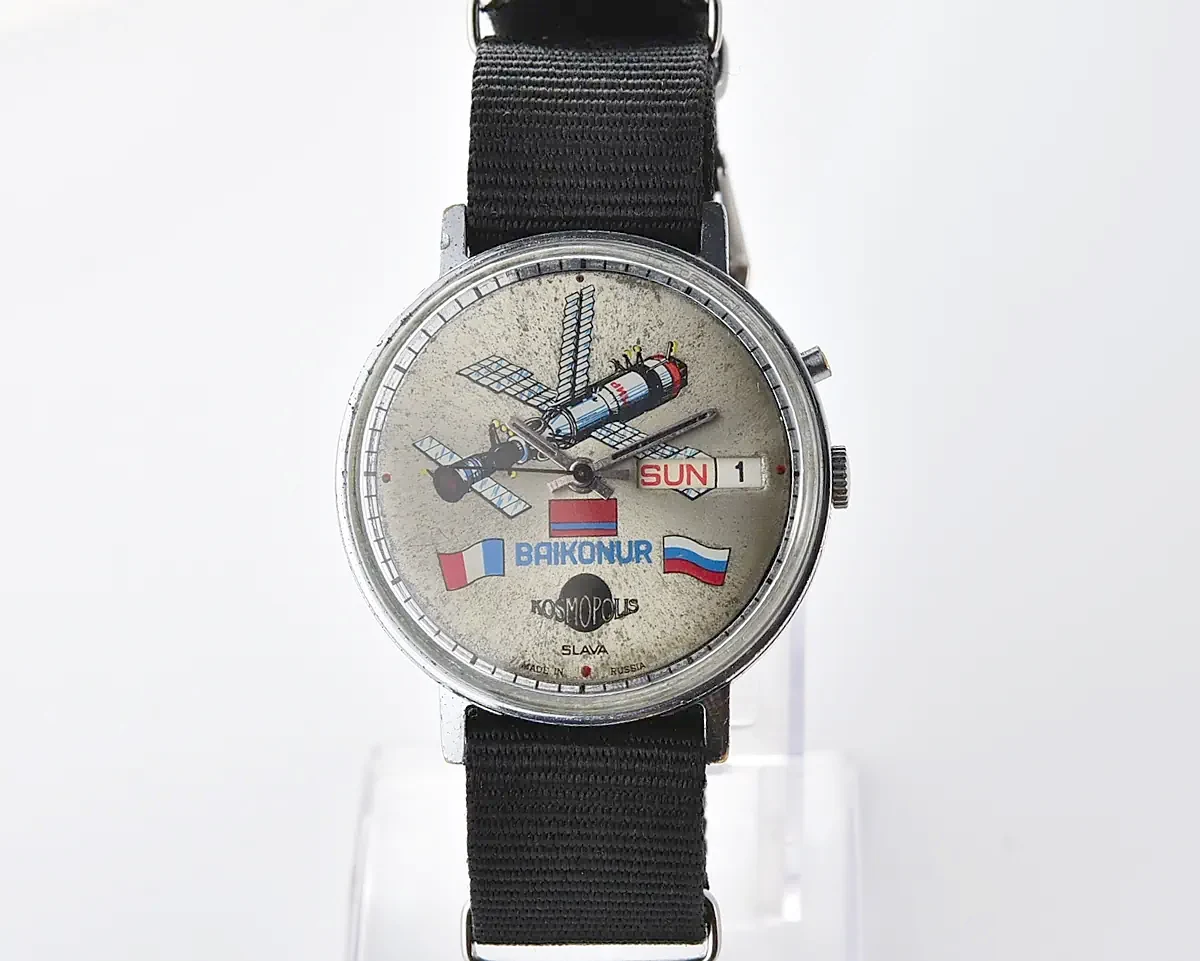
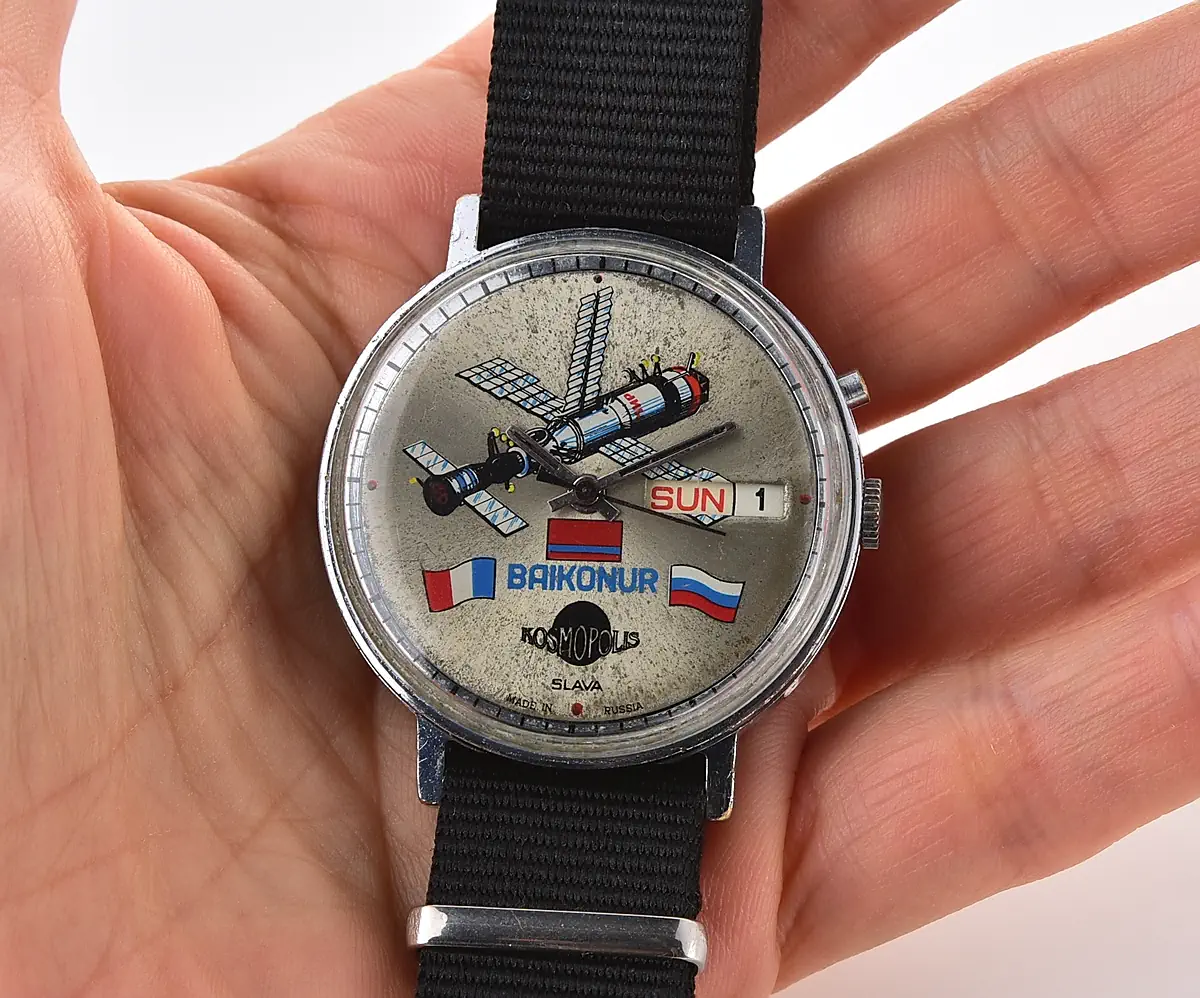
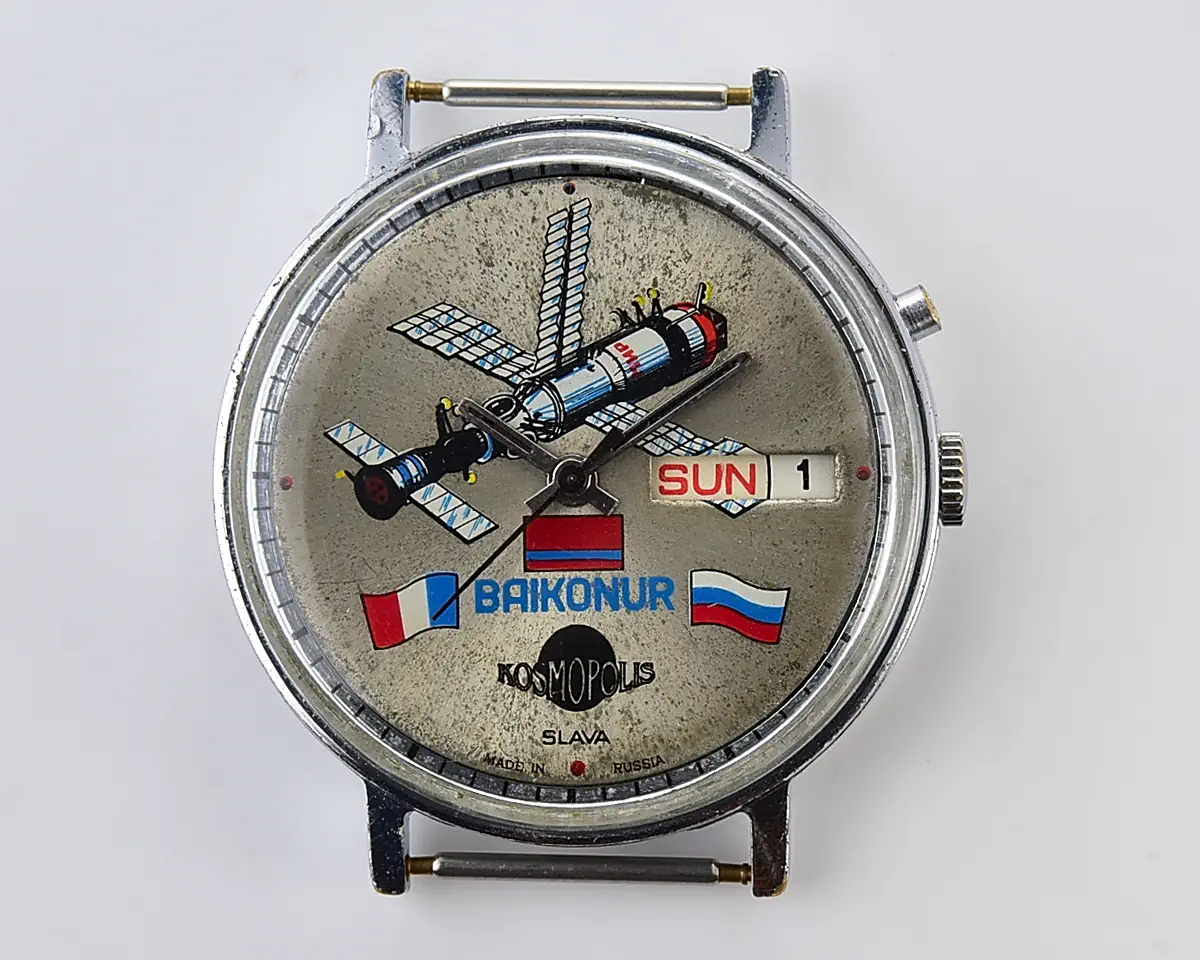
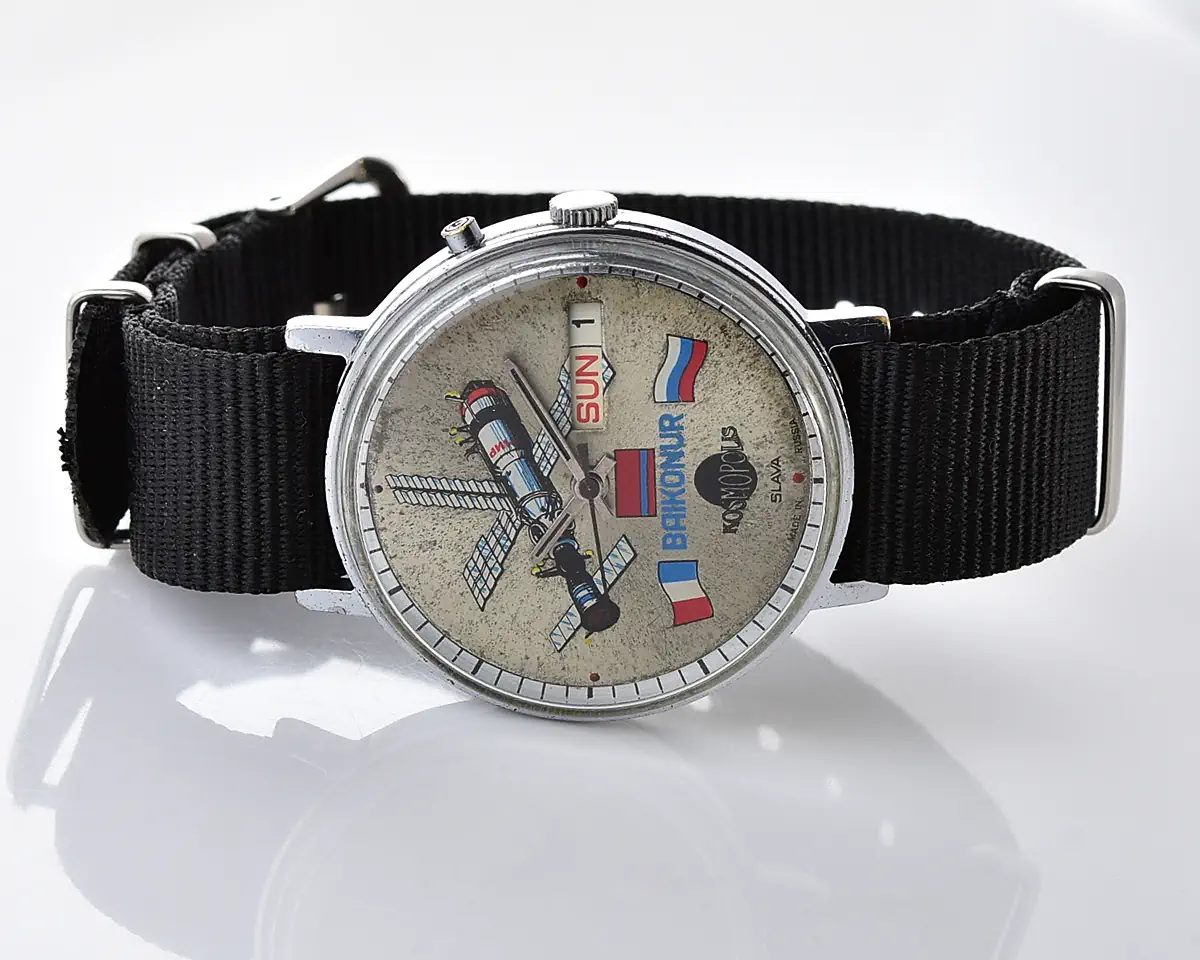
Slava “Baikonur – Kosmopolis” mechanical wrist watch
Made by the Slava factory (the former 2nd Moscow Watch Factory) in the 1990s, after the break-up of the USSR – the dial is signed “MADE IN RUSSIA”.
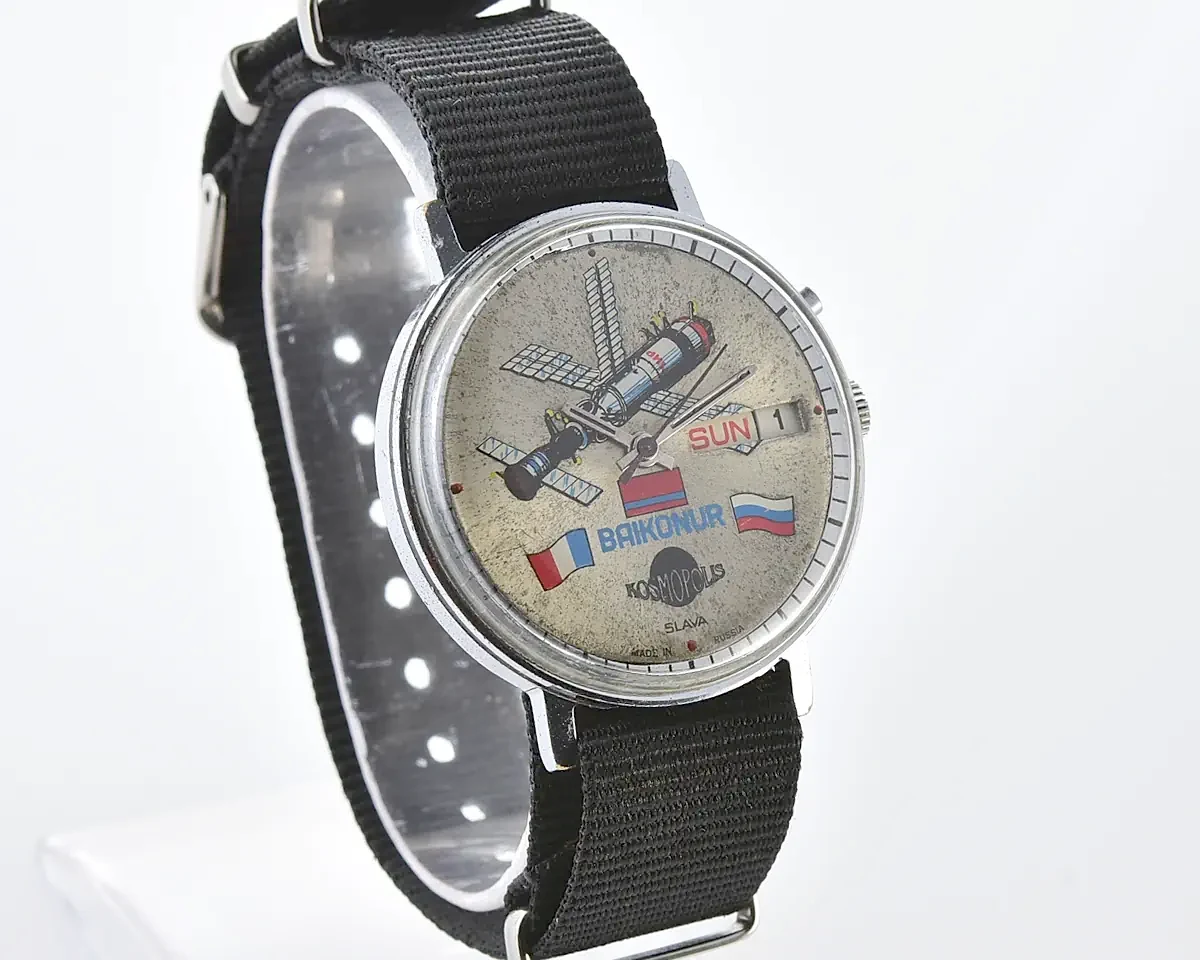
The dial shows the Mir space station with a docked Soyuz spacecraft, the word BAIKONUR – the cosmodrome from which Mir crews were launched – and the French and Russian flags, a nod to the joint French–Russian crewed flights to Mir. Beneath them sits the KOSMOPOLIS logo, Greek for “city of the cosmos”.
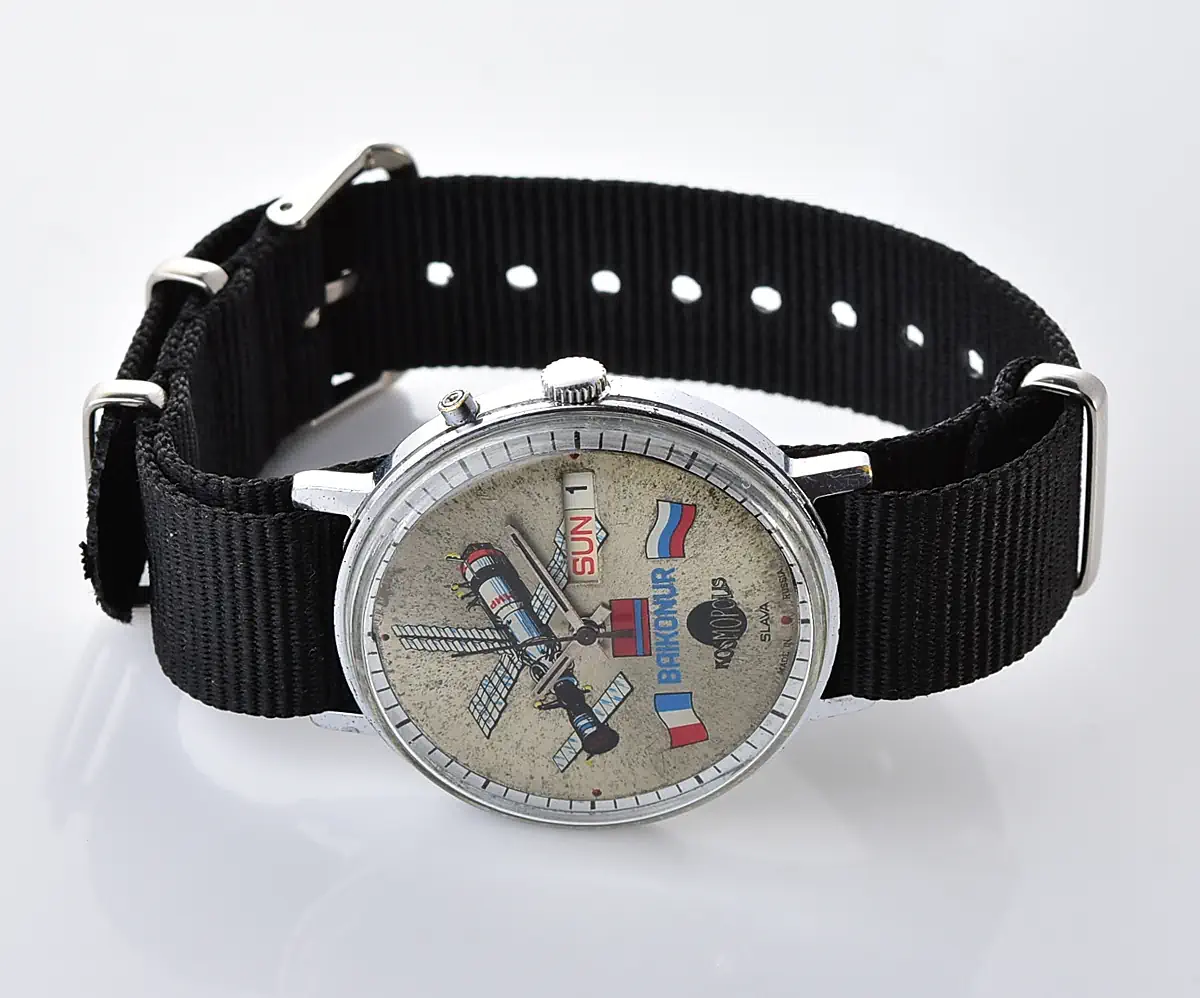
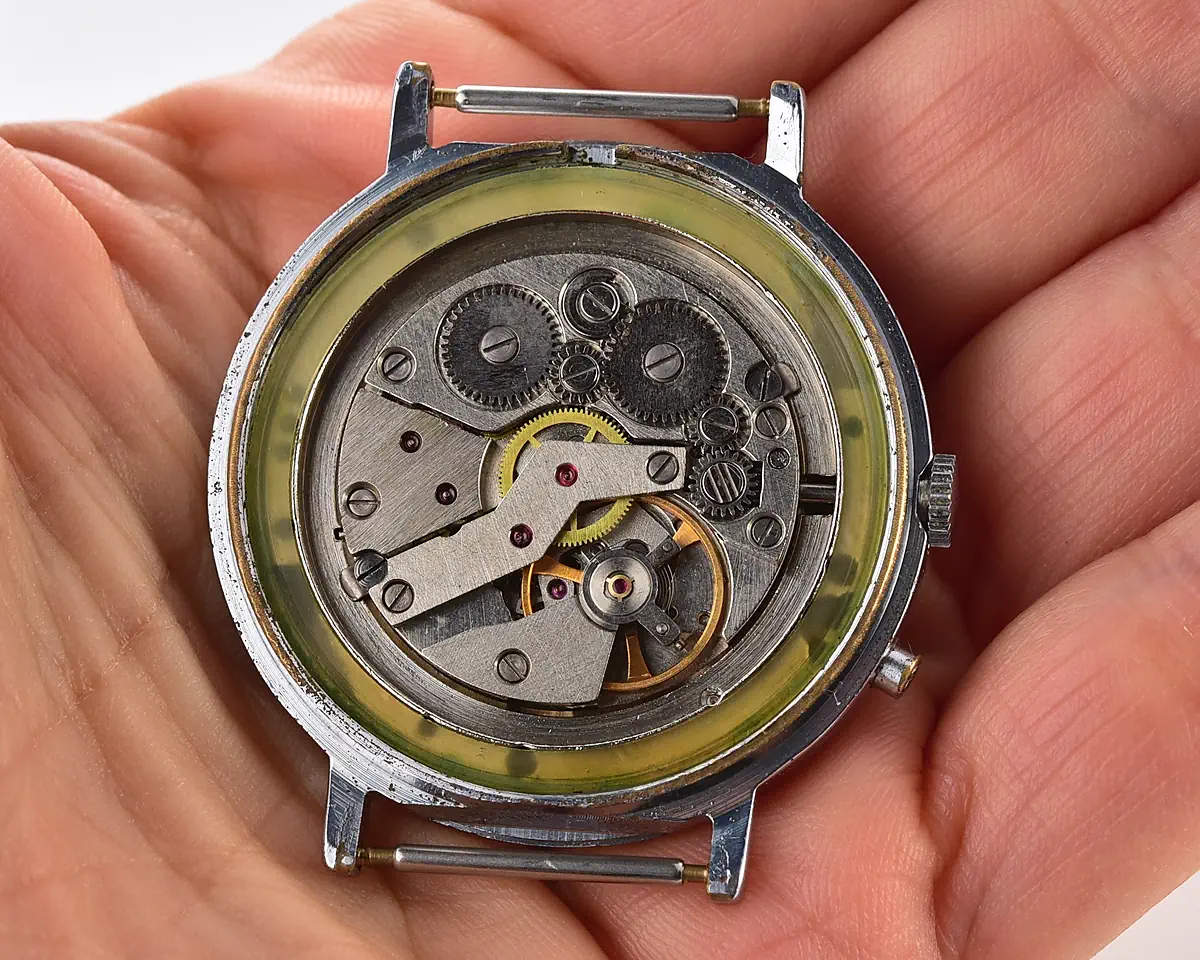
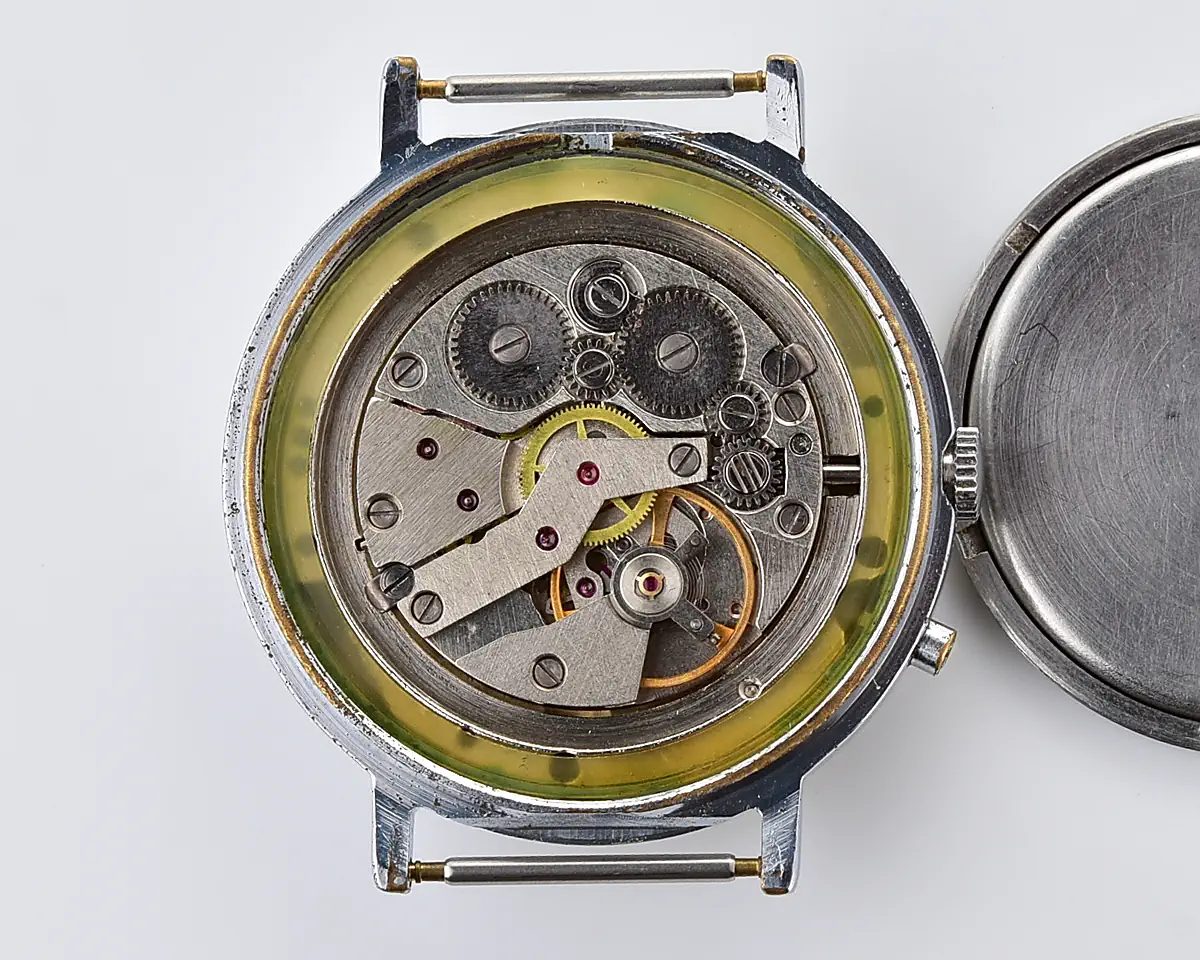
The watch is mechanical and does not need batteries to operate. Slava mechanical lever movement with manual winding and a day / date calendar; the second crown at 2 o’clock serves the day calendar.
MANUFACTURE DATE 1990s
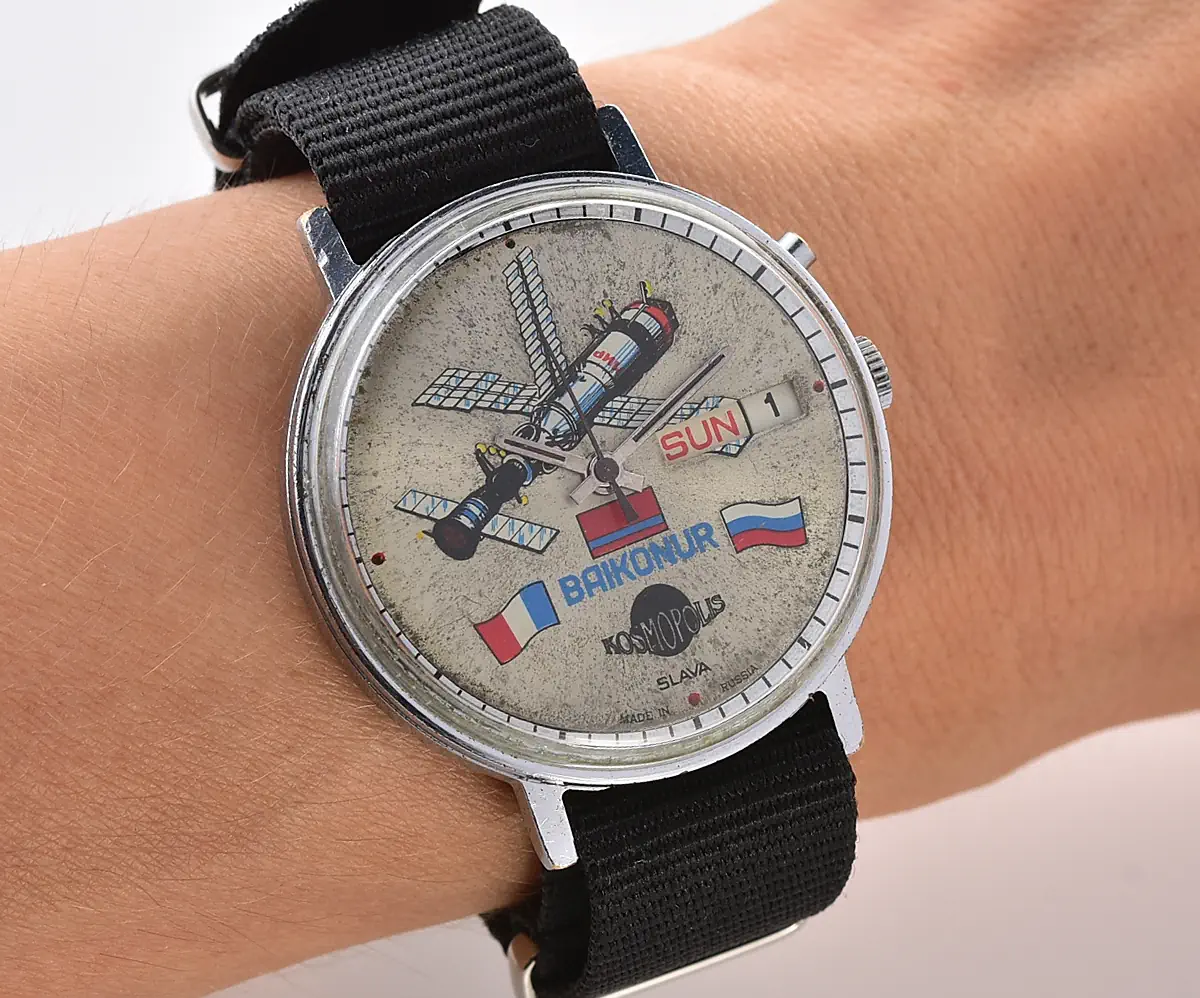
CASE SIZE 43mm x 40.5mm (with crown)
THICKNESS 11mm
LUG WIDTH 18mm
TYPE Mechanical
FUNCTIONS Hours, Minutes, Seconds, Day / Date calendar
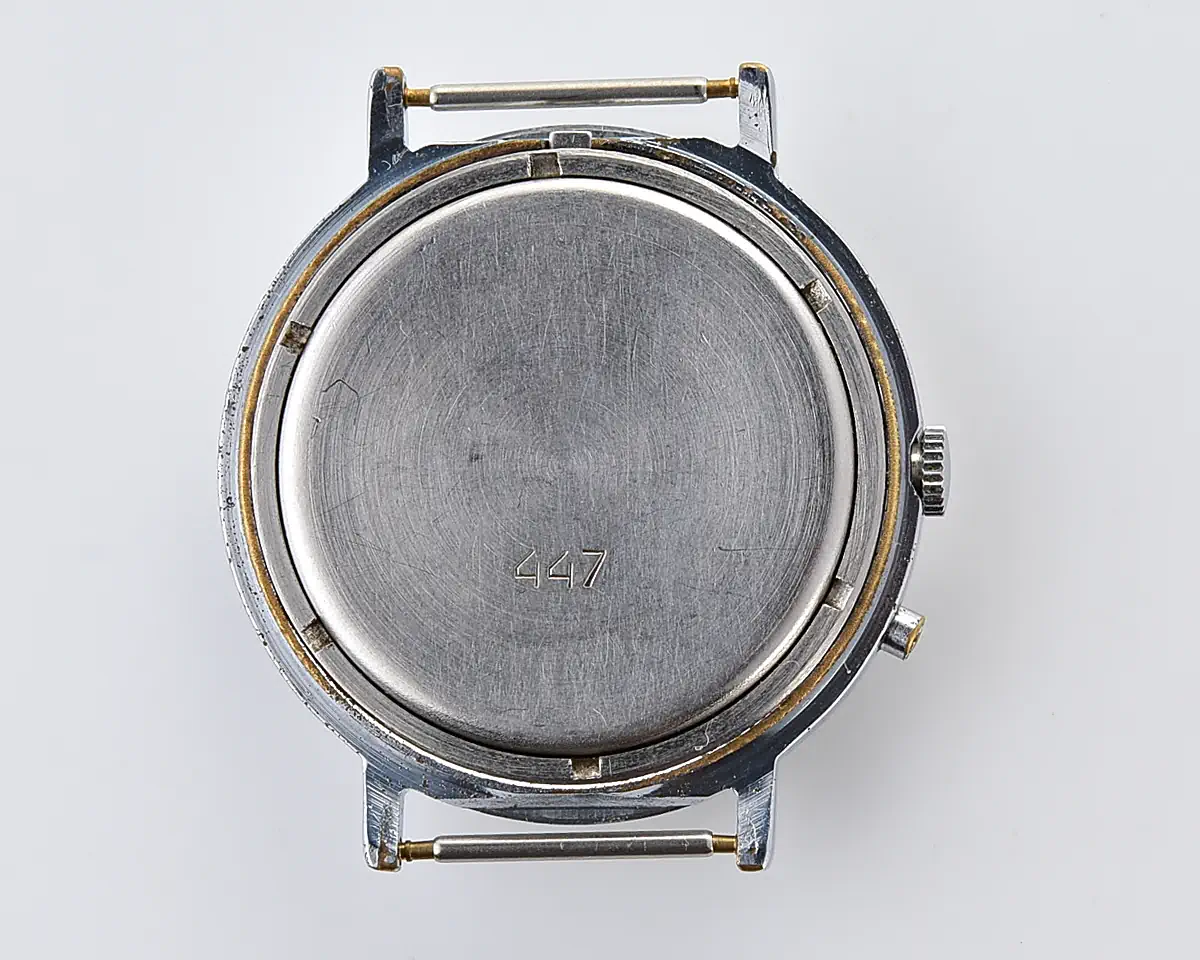
CONDITION The dial carries an even, speckled patina across its whole surface; the printed station, flags and lettering are complete and still bright. The chrome-plated case shows plating wear at the edges consistent with its age. Plain steel snap-on case back, stamped only with the number 447.
This watch has recently been serviced by a professional watchmaker and keeps good time.
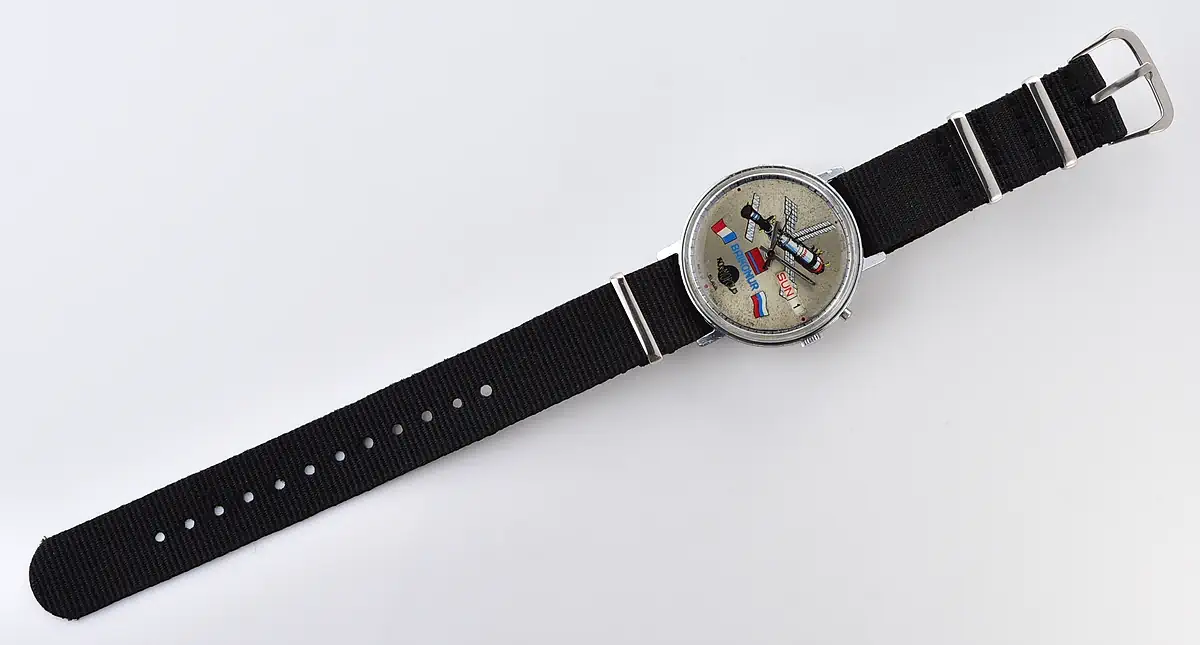
Comes complete with a new black nylon NATO strap.
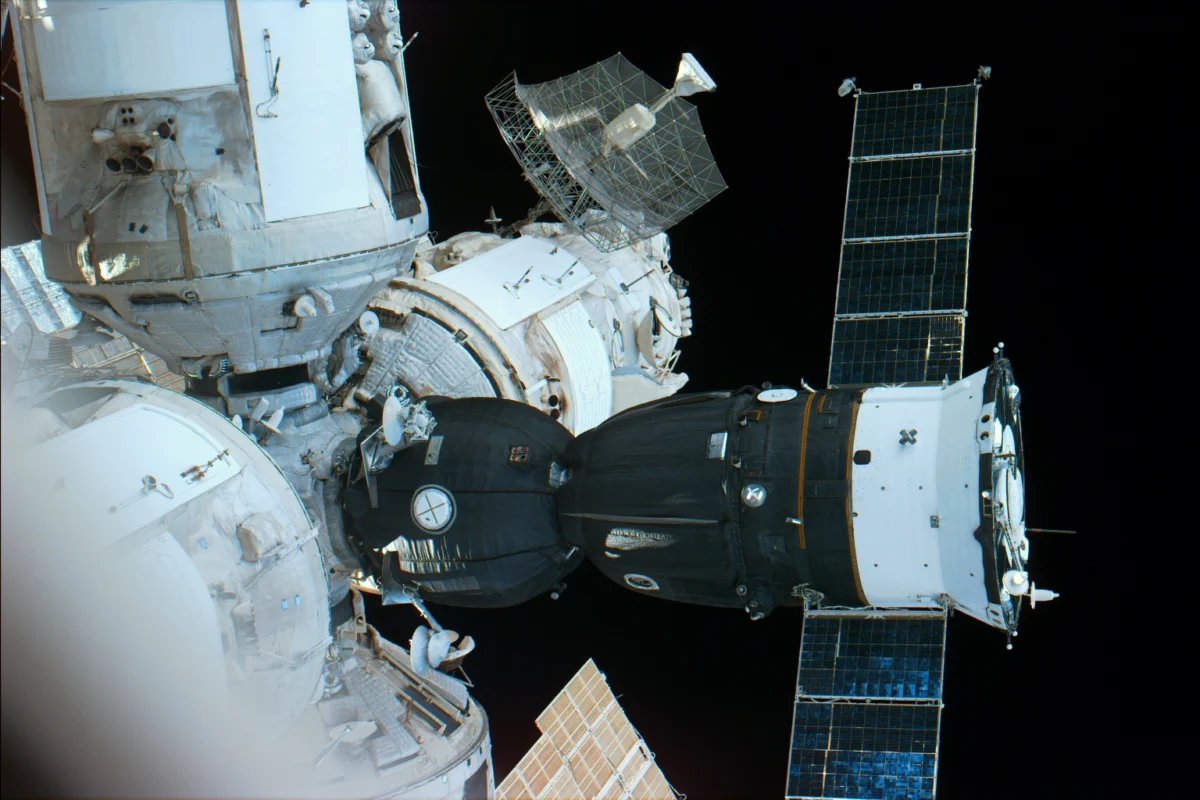
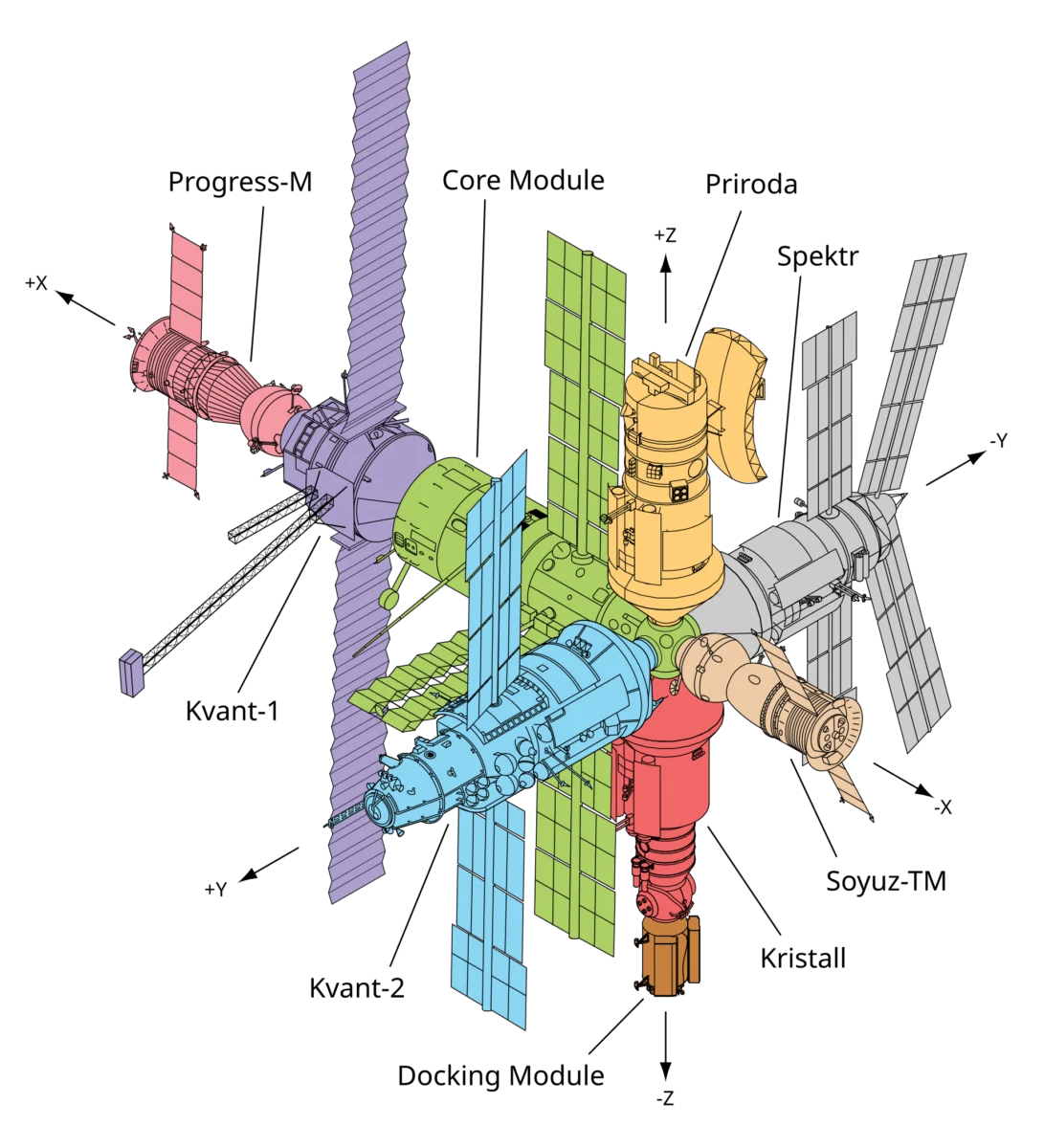
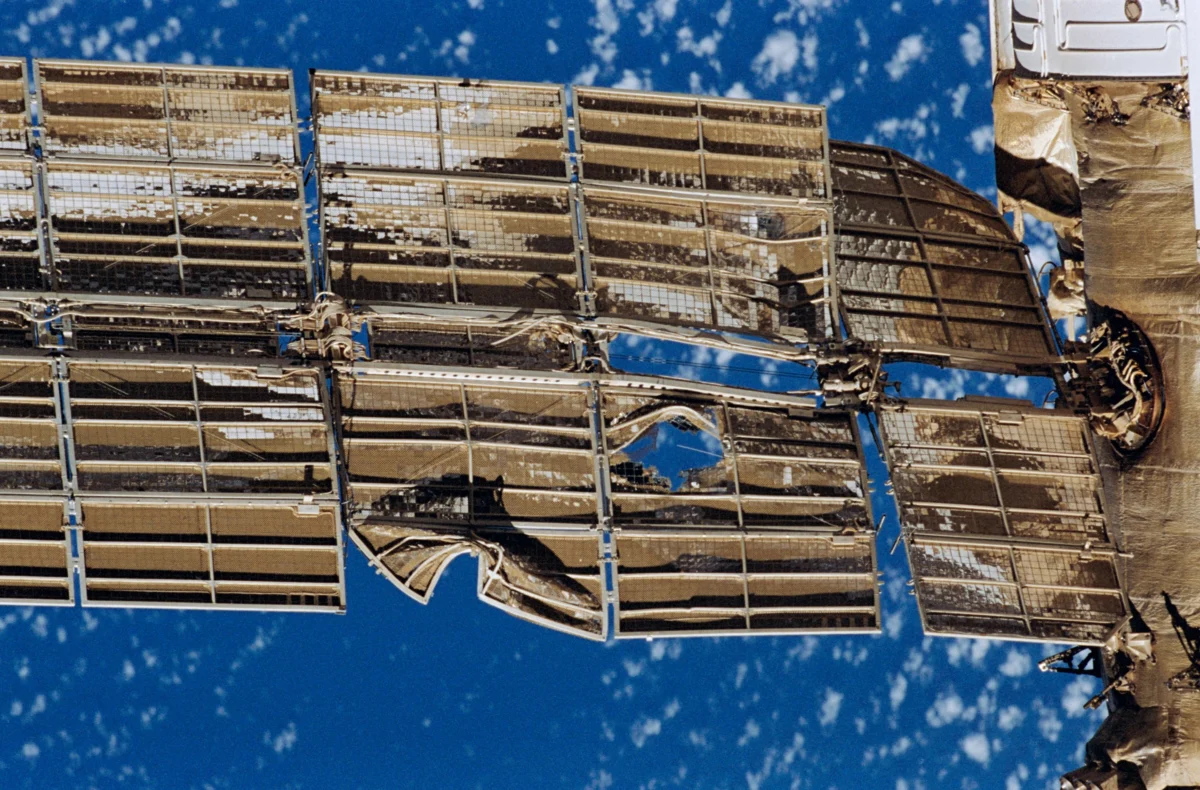
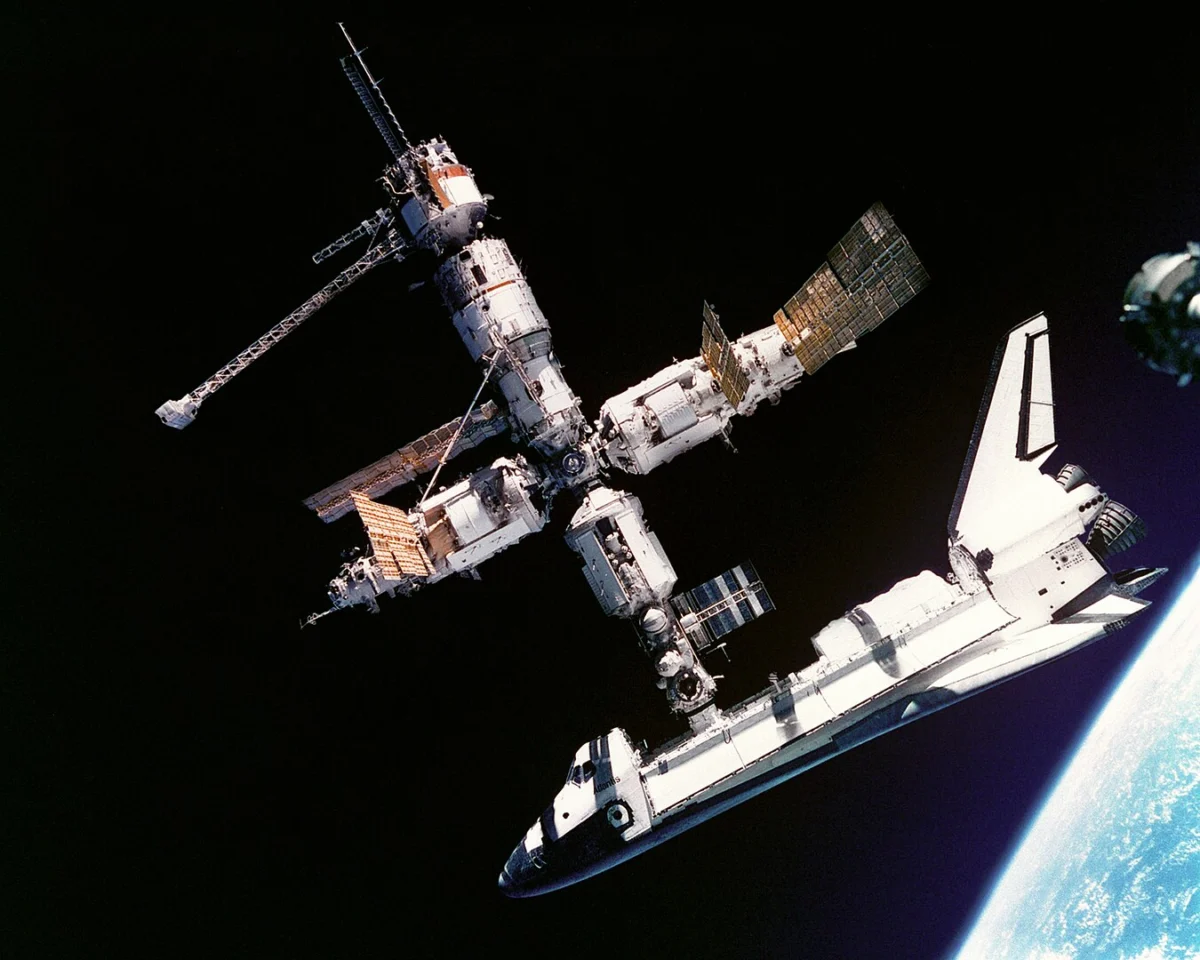
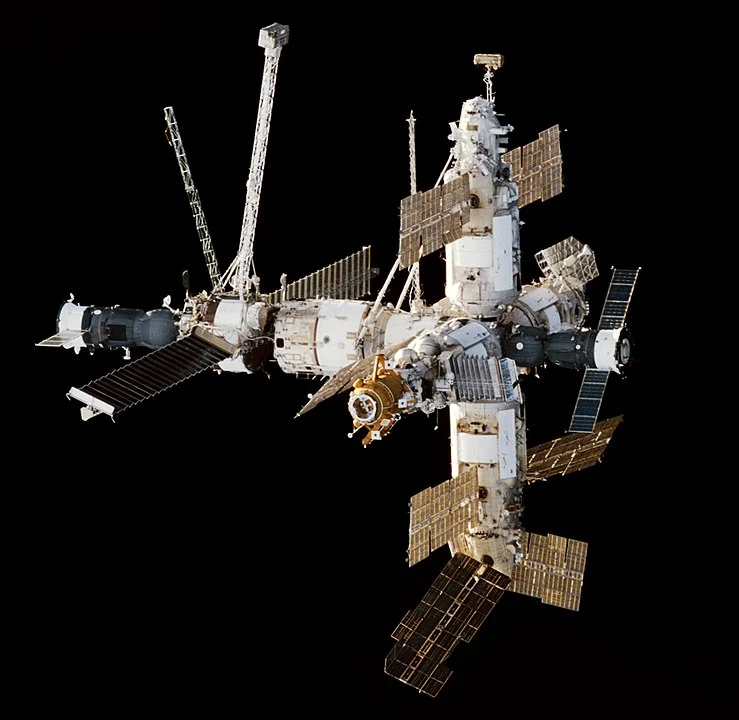
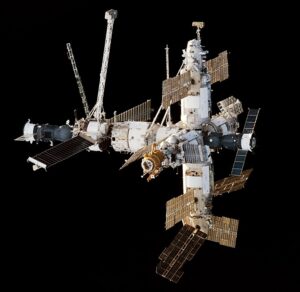 Space station MIR (pictured on the dial) –
(Russian: Мир, IPA: [ˈmʲir]; lit. ‘peace‘ or ‘world‘) was a space station operated in low Earth orbit from 1986 to 2001, first by the Soviet Union and later by the Russian Federation. Mir was the first modular space station and was assembled in orbit from 1986 to 1996. It had a greater mass than any previous spacecraft. At the time it was the largest artificial satellite in orbit, succeeded by the International Space Station (ISS) after Mir‘s orbit decayed. The station served as a microgravity research laboratory in which crews conducted experiments in biology, human biology, physics, astronomy, meteorology, and spacecraft systems with a goal of developing technologies required for permanent occupation of space.
Mir was the first continuously inhabited long-term research station in orbit and held the record for the longest continuous human presence in space at 3,644 days, until it was surpassed by the ISS on 23 October 2010.
Expeditions
See also: List of Mir Expeditions
Mir was visited by a total of 28 long-duration or “principal” crews, each of which was given a sequential expedition number formatted as EO-X. Expeditions varied in length (from the 72-day flight of the crew of EO-28 to the 437-day flight of Valeri Polyakov), but generally lasted around six months. Principal expedition crews consisted of two or three crew members, who often launched as part of one expedition but returned with another (Polyakov launched with EO-14 and landed with EO-17). The principal expeditions were often supplemented with visiting crews who remained on the station during the week-long handover period between one crew and the next before returning with the departing crew, the station’s life support system being able to support a crew of up to six for short periods. The station was occupied for a total of four distinct periods; 12 March–16 July 1986 (EO-1), 5 February 1987 – 27 April 1989 (EO-2–EO-4), the record-breaking run from 5 September 1989 – 28 August 1999 (EO-5–EO-27), and 4 April–16 June 2000 (EO-28). By the end, it had been visited by 104 different people from twelve different nations, making it the most visited spacecraft in history (a record later surpassed by the ISS).
This watch ships from 🇺🇦 Ukraine with tracking number
Modes of payment:
- PayPal
- Credit Cards (VISA, MasterCard, American Express, Discover)
- bitcoin
We guarantee the item you receive looks and works exactly as advertised — or your money back.






About the watch factory
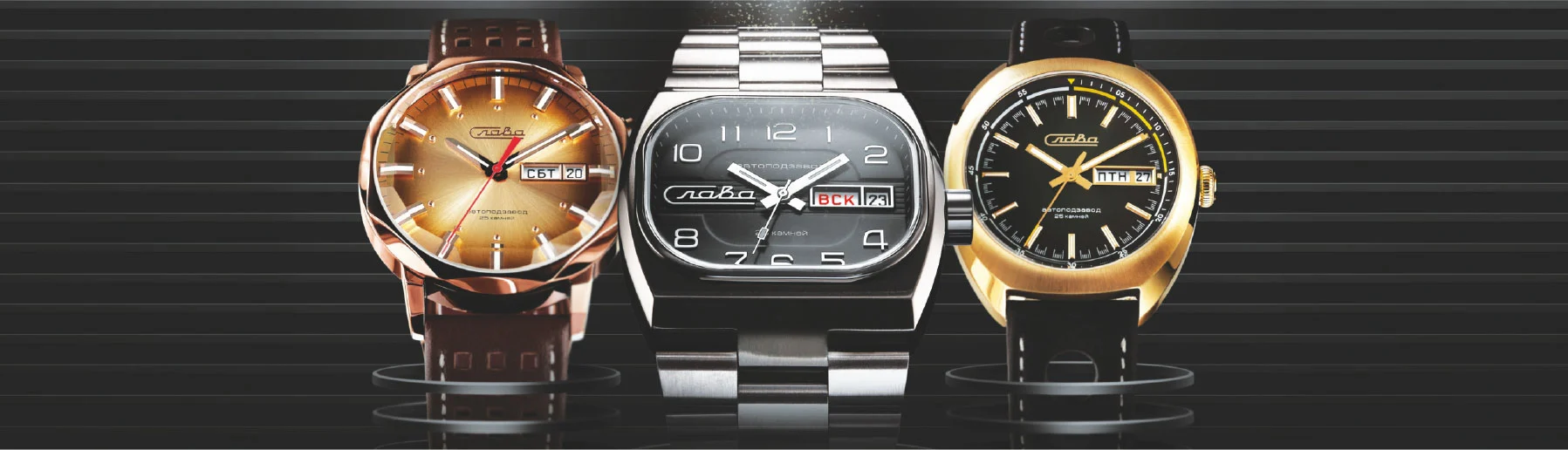
Slava (Russian: Cлава, meaning “Glory”) watches were classic “civil” Russian watches commonly referred to as “Slava Lava!”.
The Slava factory (known originally as the Second Moscow Watch Factory) was the second non-military watch maker established in the Soviet Union, in 1924.
The watches of this brand have always been meant for civilian consumption, without military or aerospace pretensions. As of today the factory no longer produces.