Description
SEIKO solar quartz watch
MADE IN JAPAN
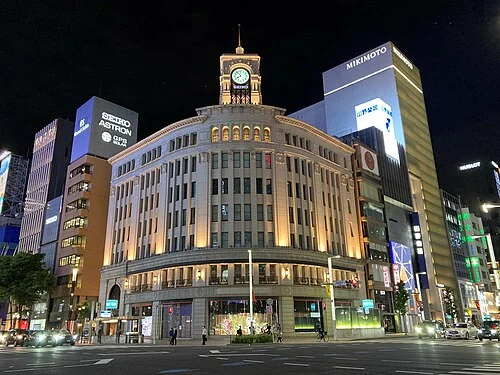
“Seiko” (精工) is a Japanese word meaning “precision,” “exquisite workmanship,” or “refined craftsmanship.”
It comes from the characters:
- 精 (sei) – fine, precise, refined
- 工 (ko) – craft, workmanship
Originally, Seiko’s watchmaking division was called Seikosha (精工舎), meaning “House of Precision.”
The name first appeared on a watch dial in 1924, shortened from Seikosha and keeping the core meaning; the company itself was renamed Hattori Seiko in 1983 and Seiko Corporation in 1990.
So the brand name literally ties directly to the idea of precision engineering—which is exactly what the company wanted to be known for in its watches.
About Seiko Solar and the 5K Calibres
Seiko’s first solar analogue watch arrived in 1977 — caliber 4826, with twelve small photovoltaic cells arranged around the dial as a visible chapter ring. Citizen had beaten Seiko to a production analogue solar watch by a year with the 1976 Crystron Solar Cell, and the early cells were still too weak and too large to hide, so both makers had to design around them rather than conceal them. What followed over the next three decades was largely a materials problem: making the panel efficient enough to disappear underneath an ordinary-looking dial.
By the 1990s that problem was solved. The panel sits directly beneath the dial, invisible from the front, converting daylight or ordinary indoor lighting into electricity and storing it in a rechargeable titanium-lithium-ion cell rather than a disposable battery. The case back stays shut for years at a time instead of being opened every couple of years for a new cell.
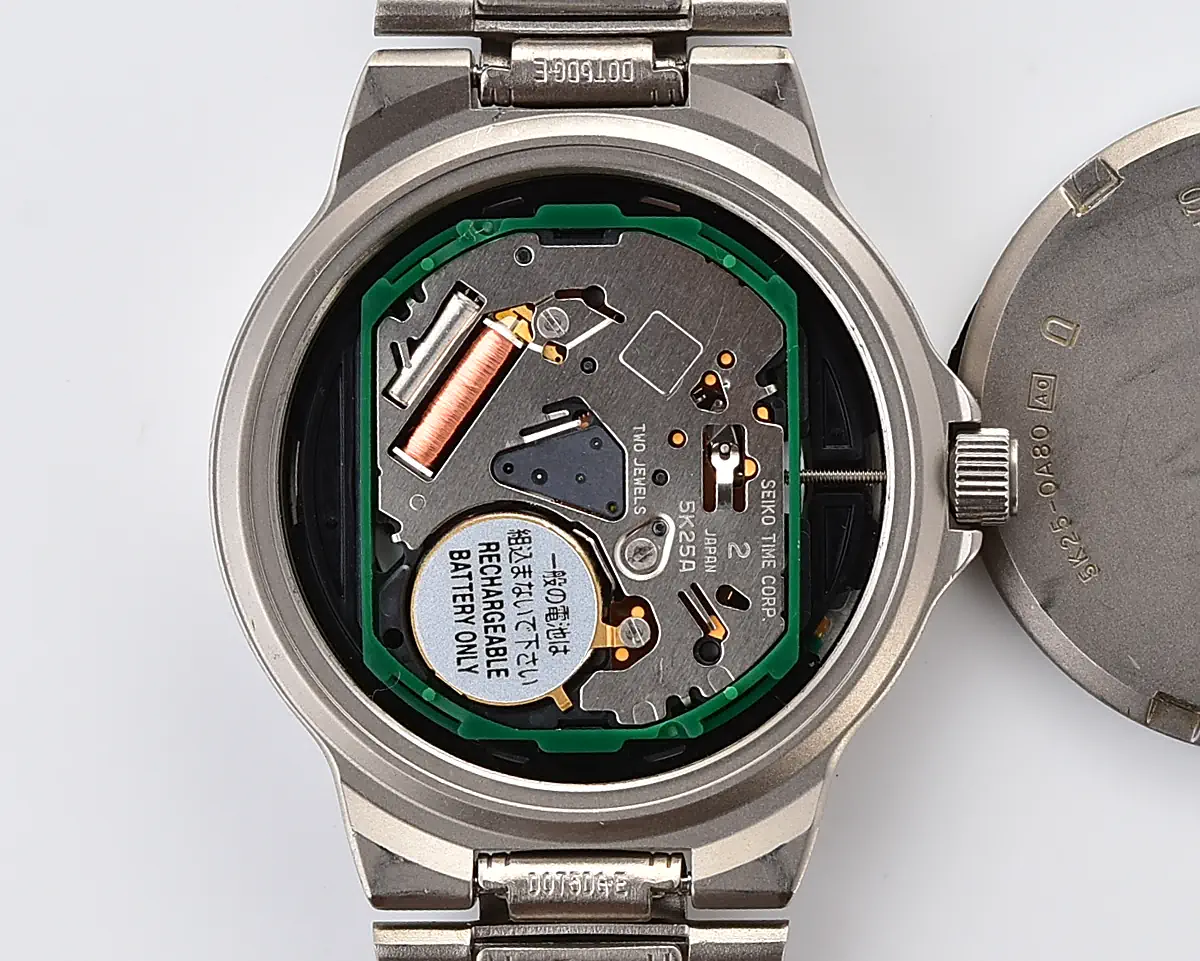
The 5K calibres are the generation that carried the system through the second half of the 1990s, before the V-series took over. Caliber 5K25 is the plain three-hand-and-date member of the family: a 32,768 Hz quartz oscillator driving a step motor, two jewels, and no regulation system, rated by Seiko to within 15 seconds a month at normal temperatures. A full charge runs it for about six months in the dark. It also has the two habits that make a solar Seiko easy to live with — an instant-start function that gets the hands moving within seconds of seeing strong light, and an energy-depletion warning that drops the seconds hand into two-second steps while roughly three days of charge remain, so the watch tells you it is hungry well before it stops.
About This Watch
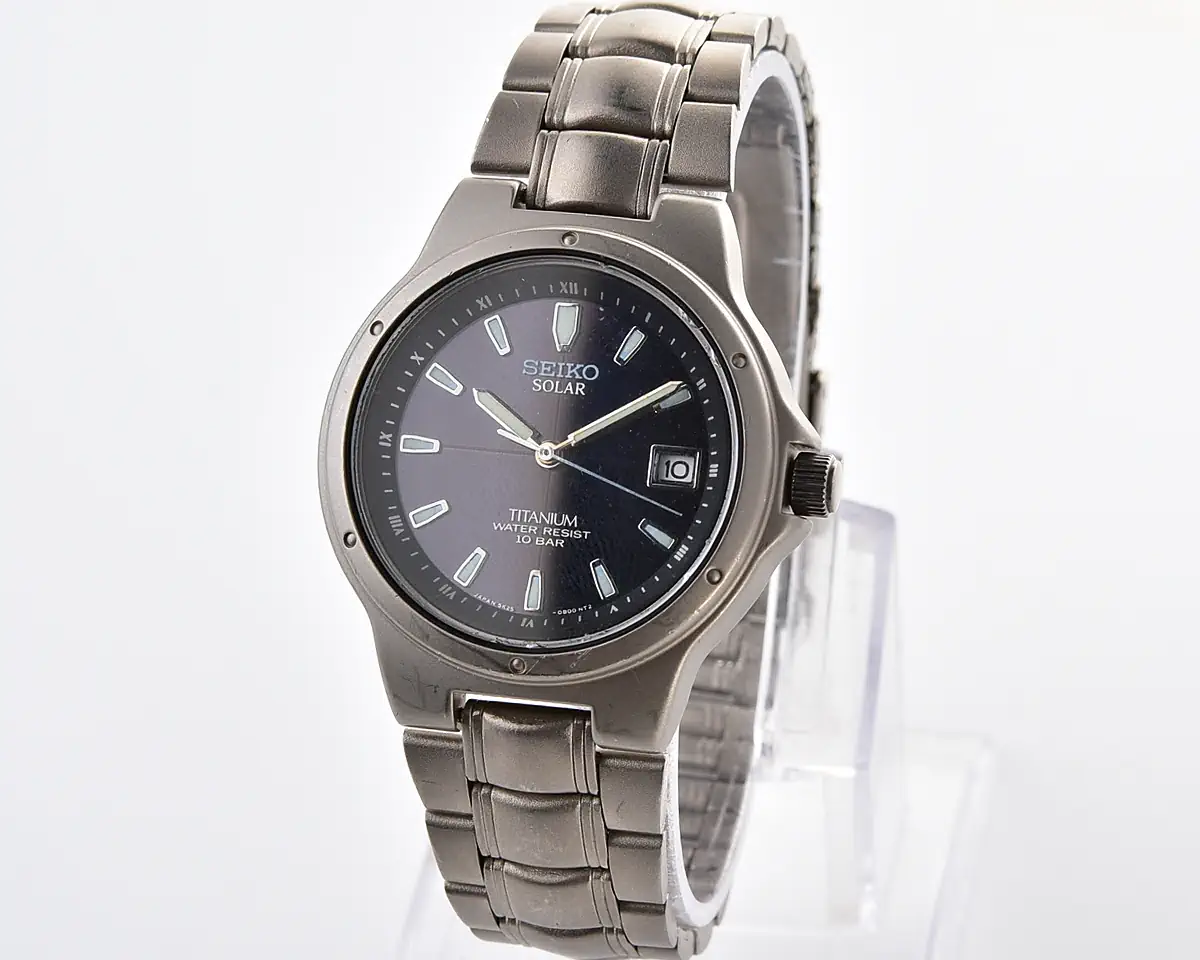
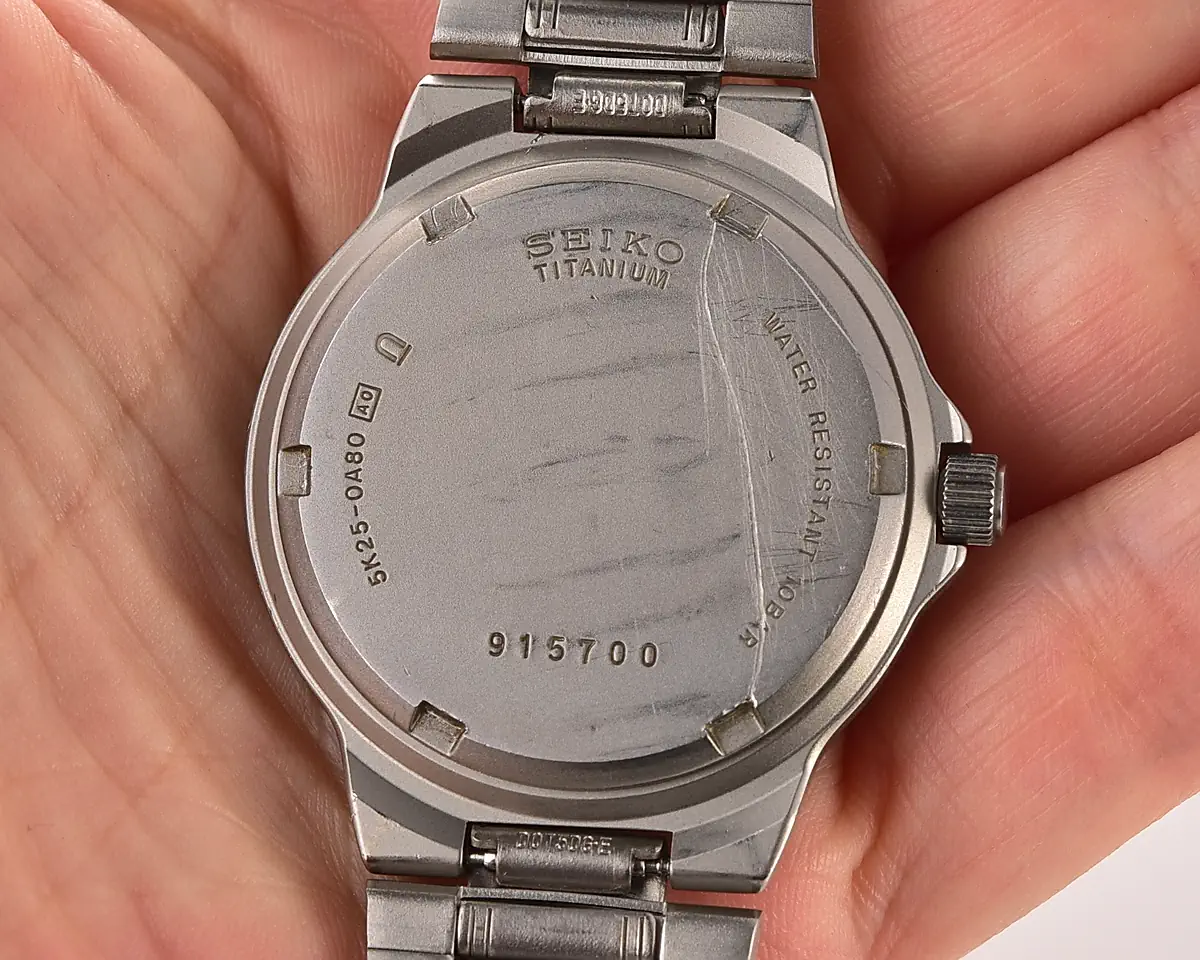
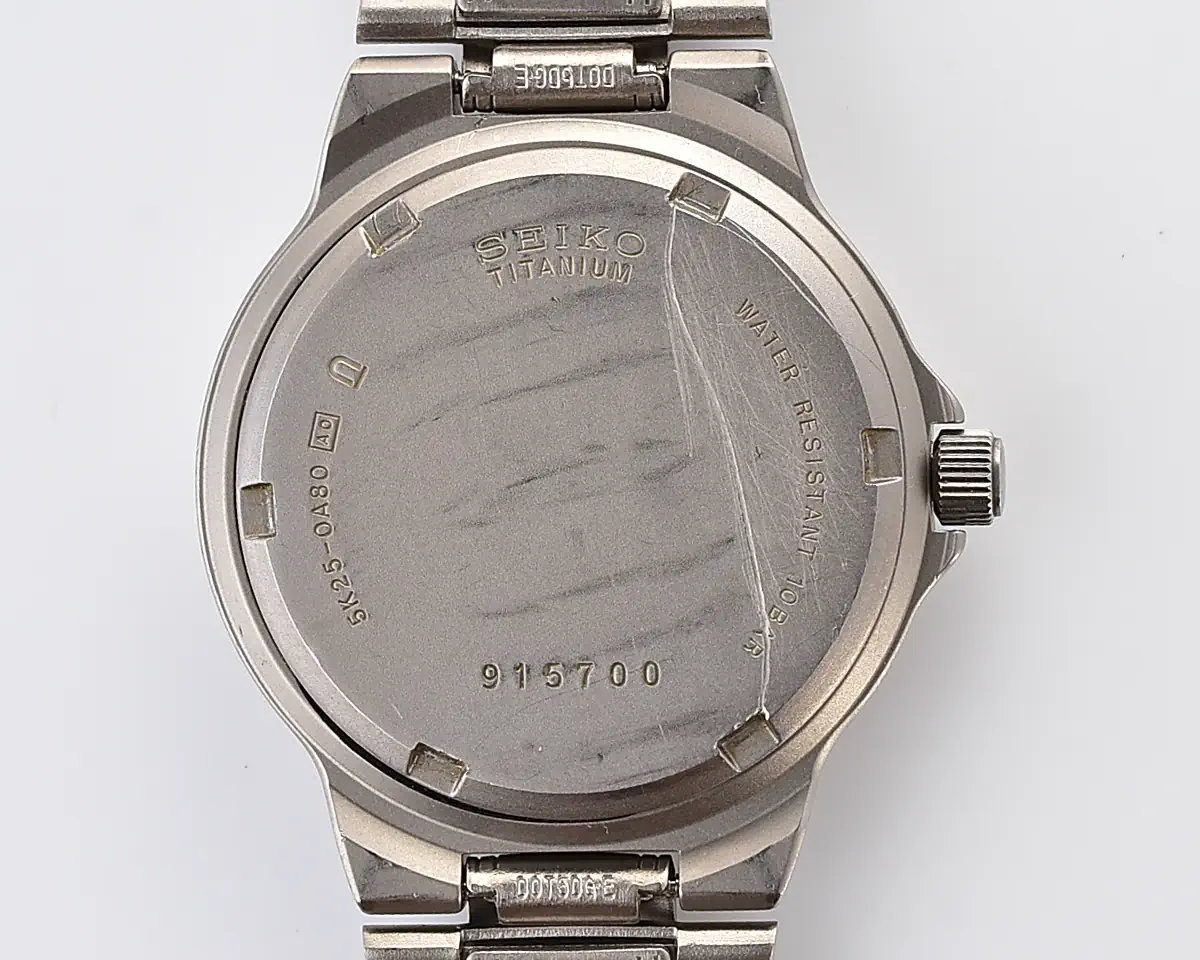
This one is reference 5K25-0A80, with serial 915700 stamped on the case back. Seiko’s serial convention reads the first two characters as year-digit and month — a “9” for a year ending in nine, a “1” for January — and since caliber 5K25 was a 1990s product, that places its manufacture in January 1999. The dial carries no line name, only SEIKO and SOLAR, so the case reference is what identifies it.
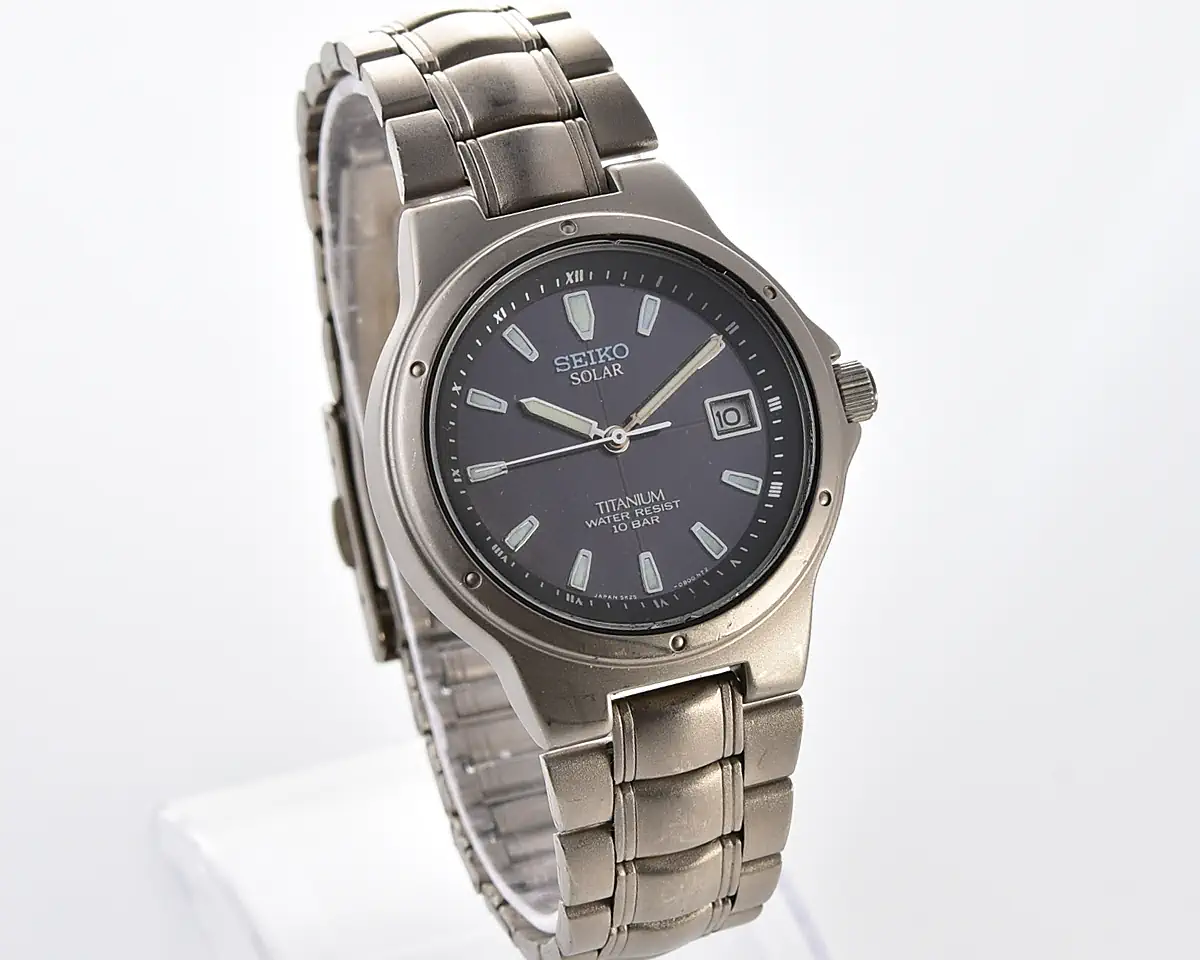
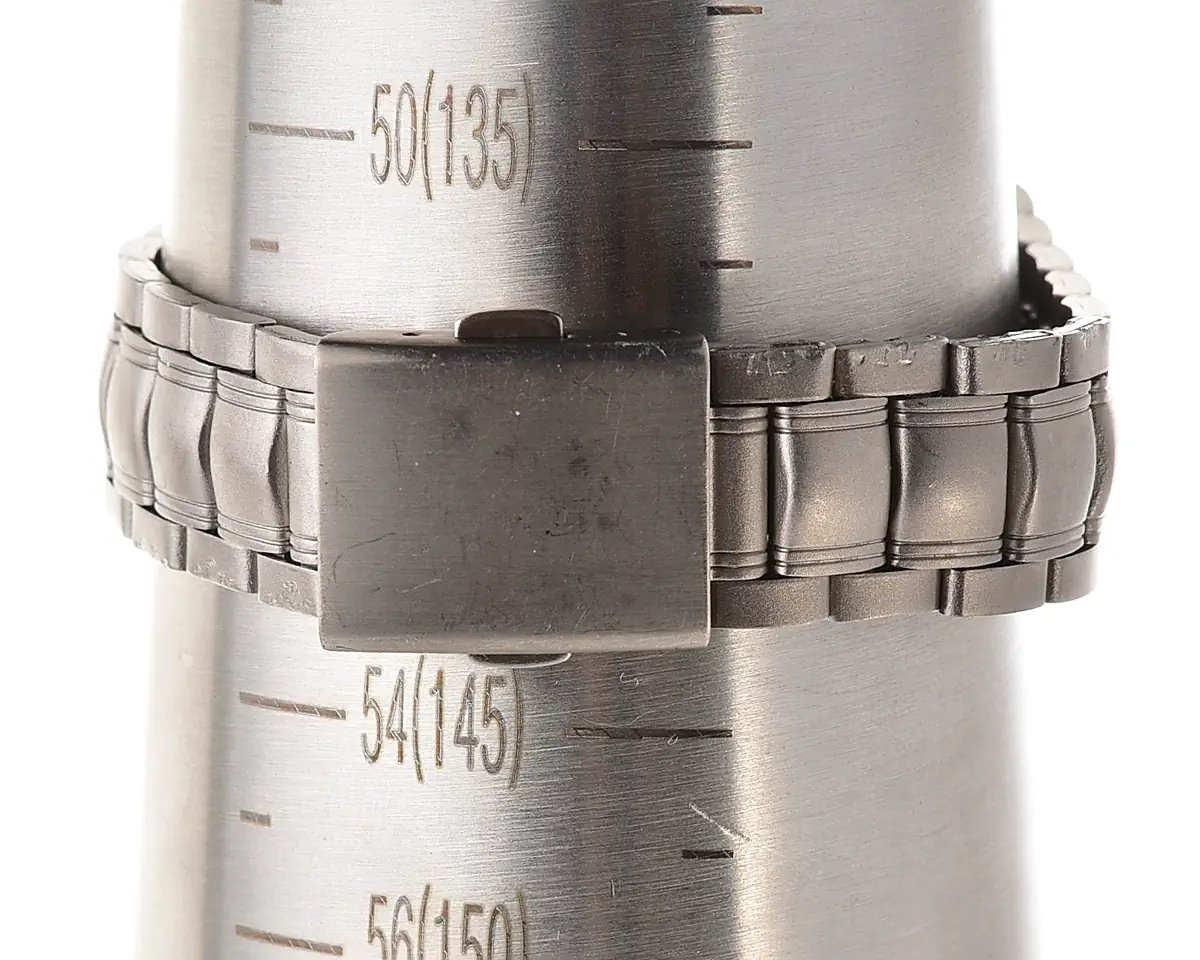
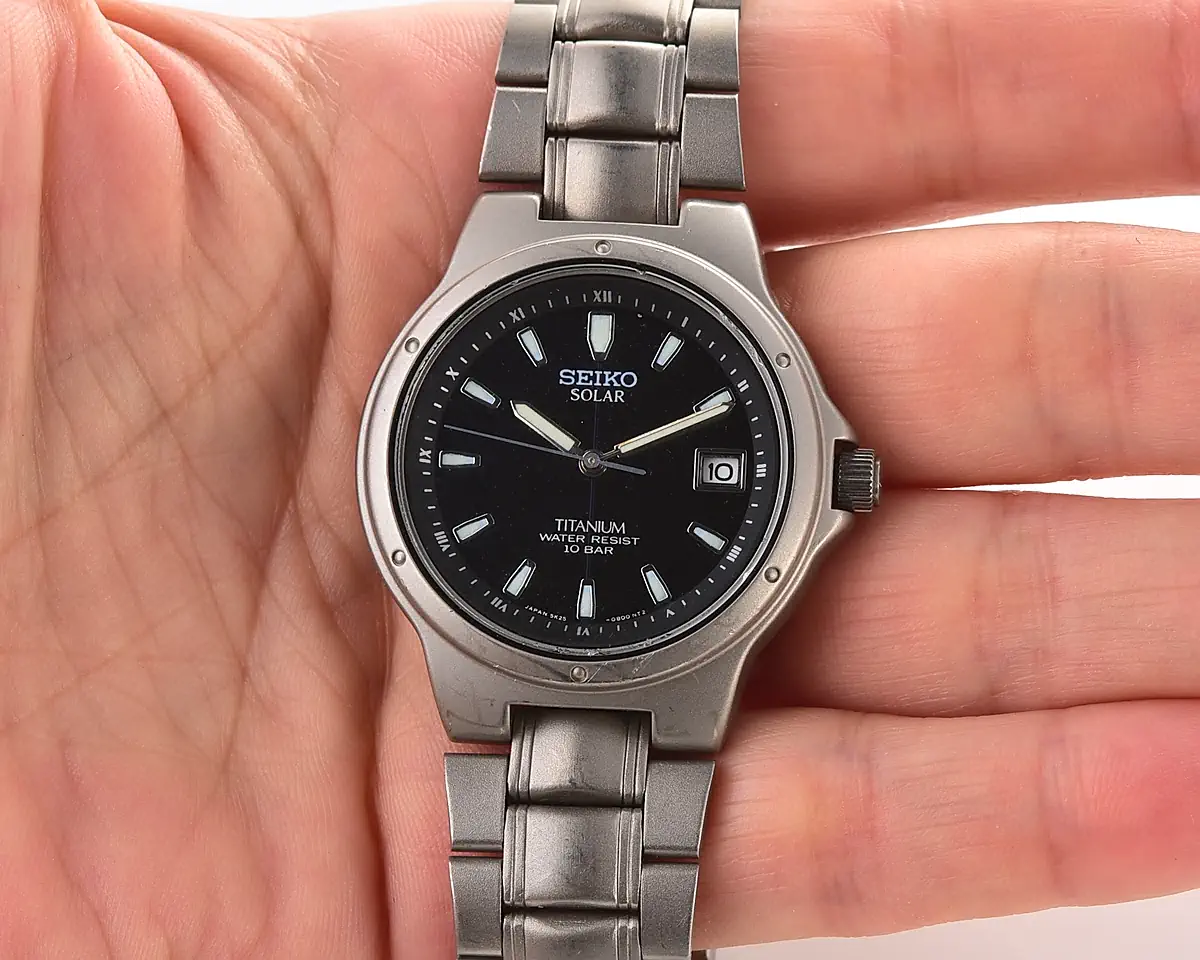
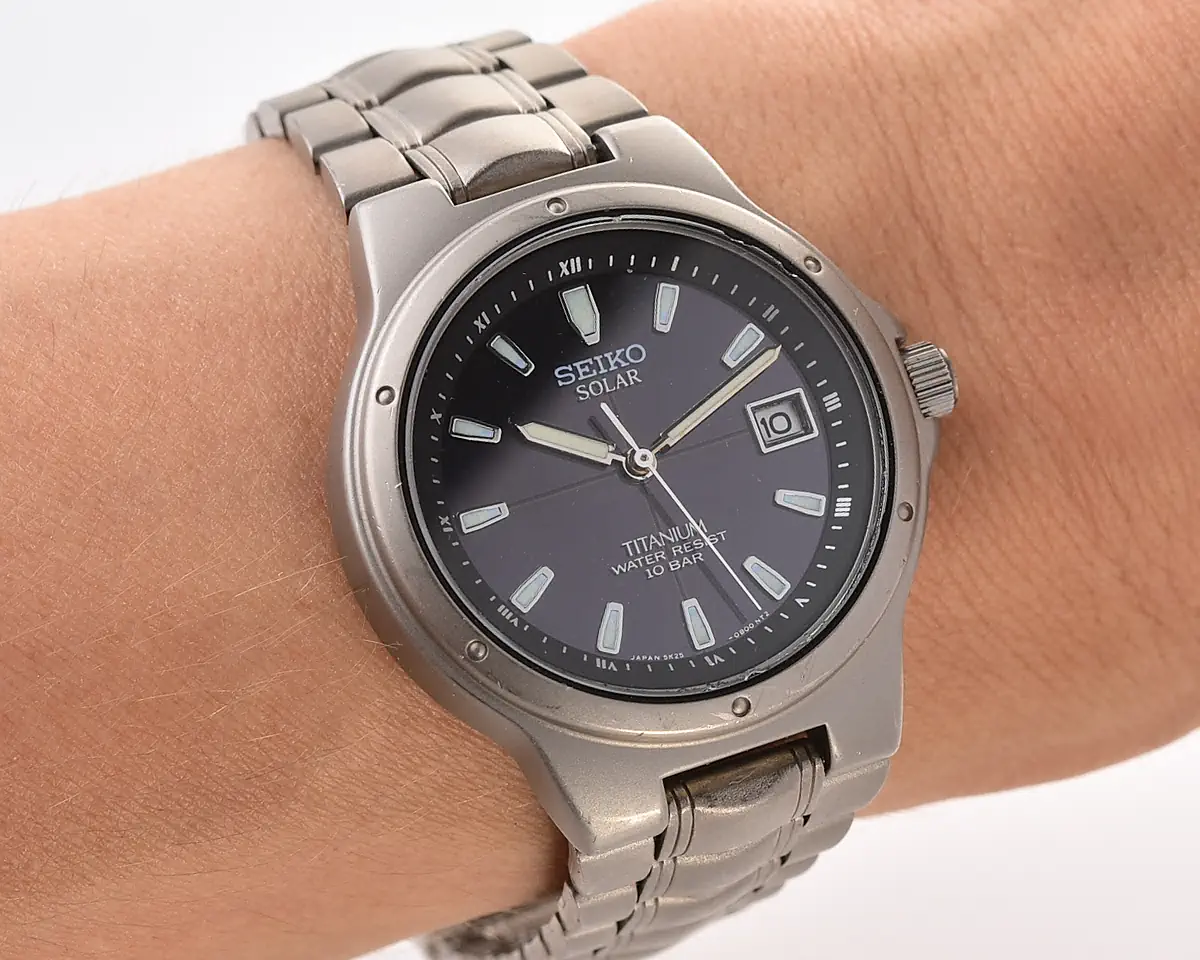
Everything you handle on it is titanium. The case back says so outright — SEIKO TITANIUM, WATER RESISTANT 10 BAR — and the bracelet is cut from the same metal, which is why the watch weighs so much less than its size leads you to expect. Titanium also takes a different finish from steel: a softer, greyer, more matte surface that does not flash the way polished steel does. In the sizing photograph, where the bracelet sits against a steel measuring cone, the difference in tone is obvious.
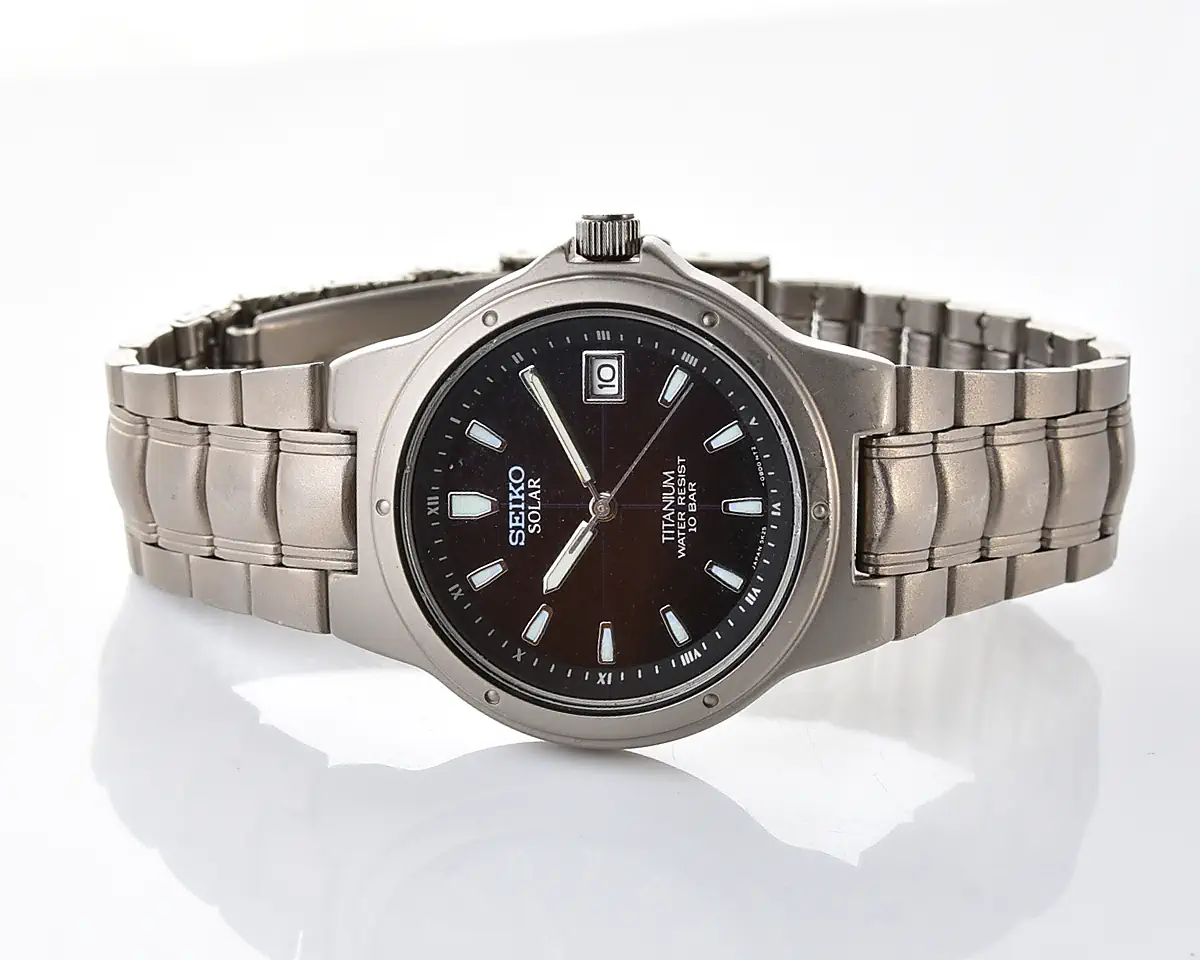
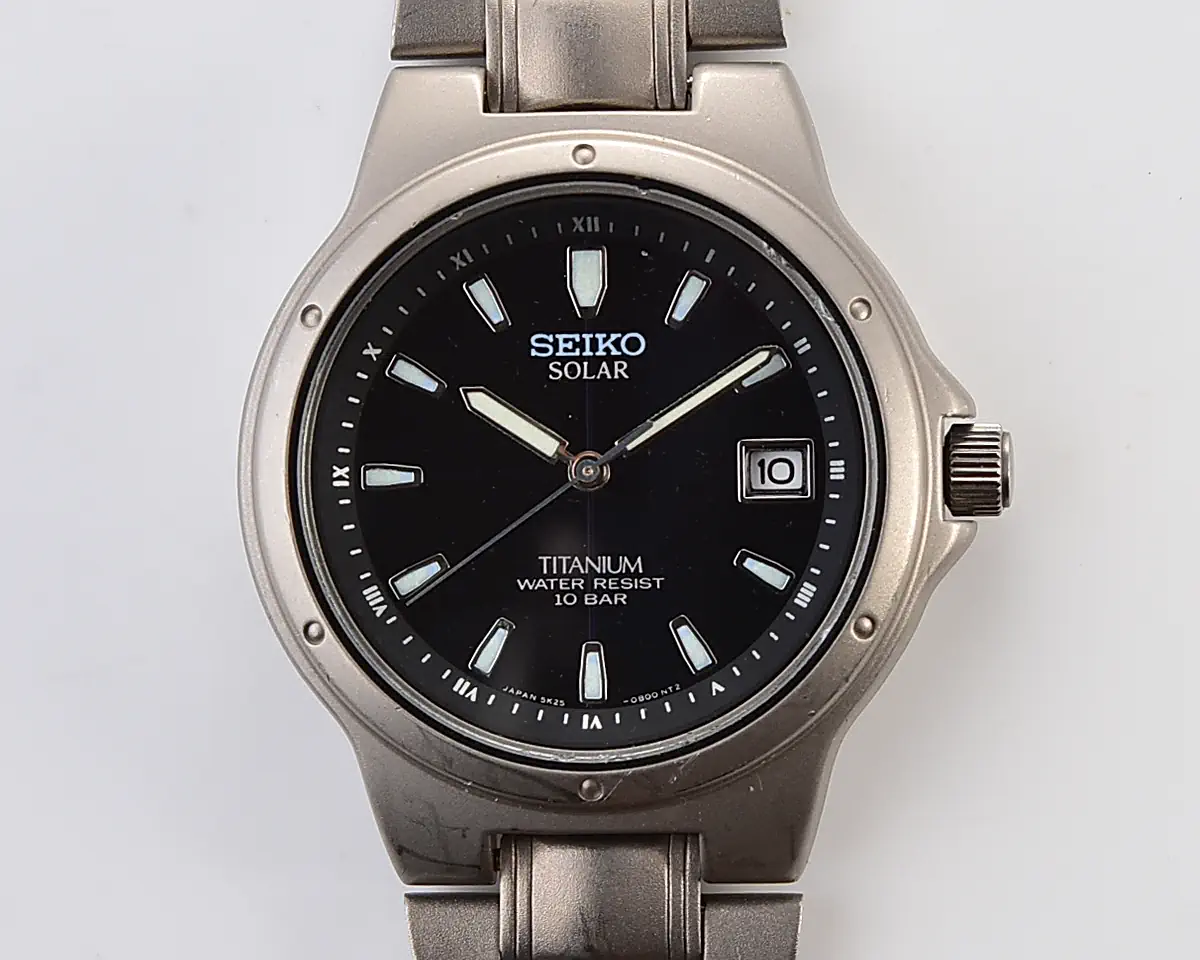
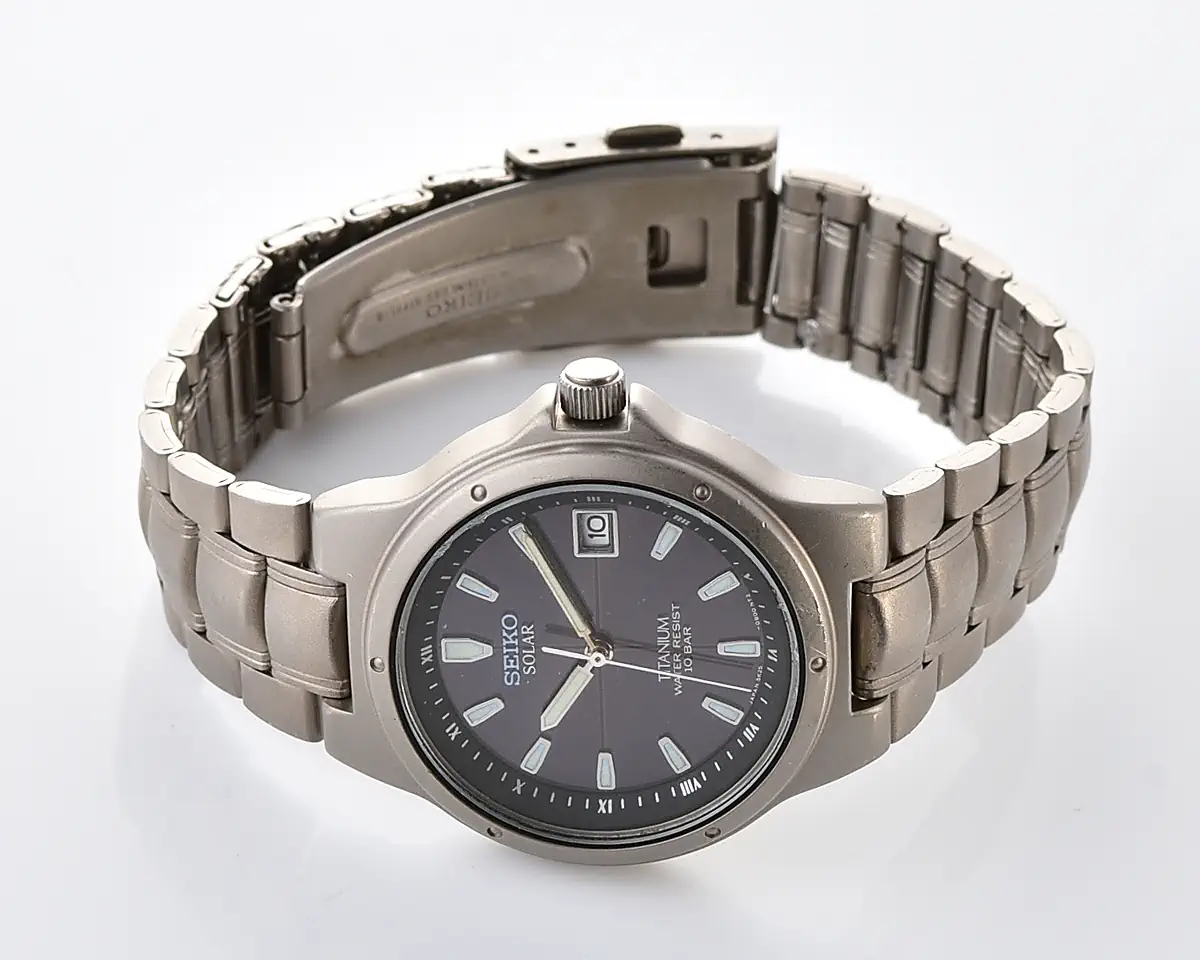
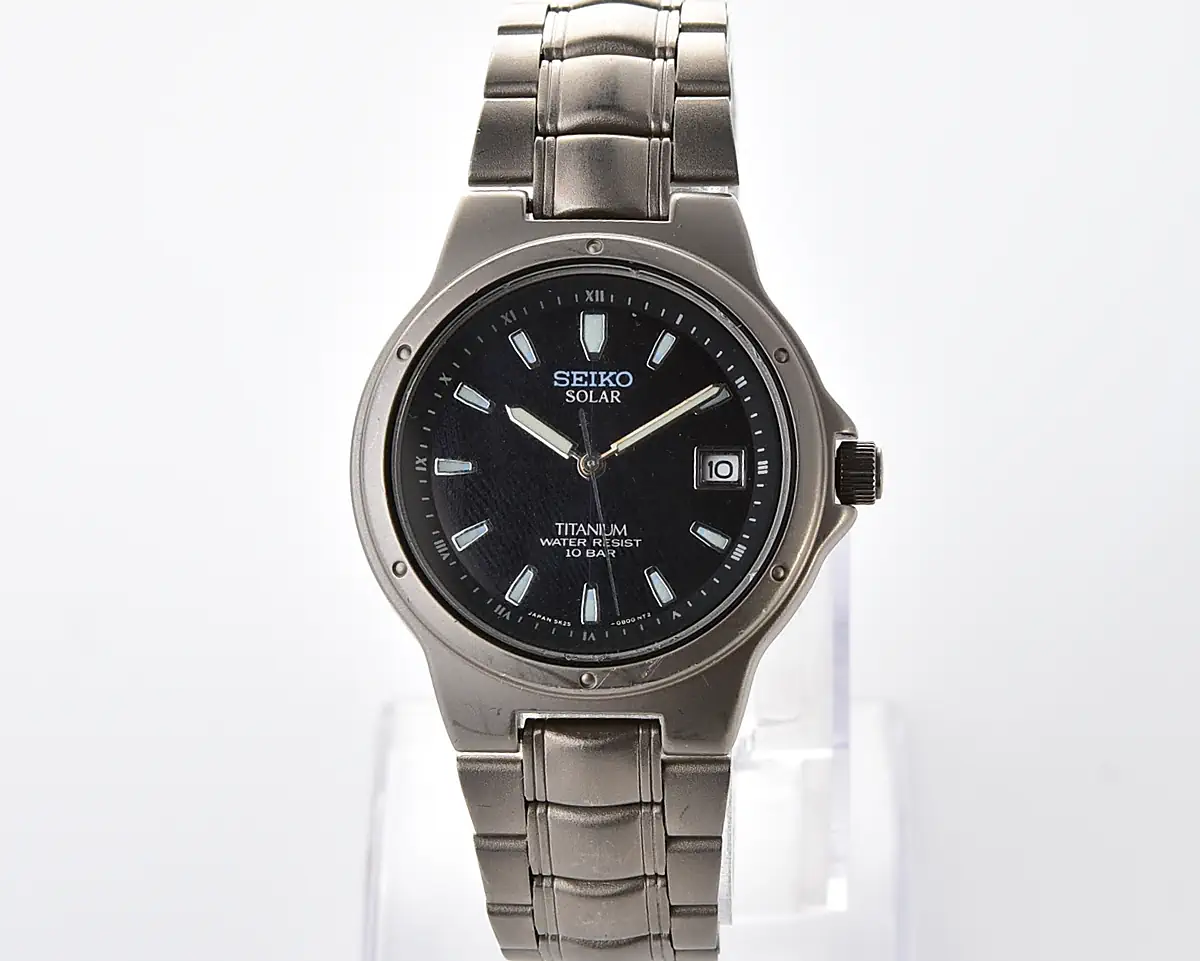
The dial is the part that photographs badly and wears well. Straight on it reads black. Tilt it and a deep blue cast rises through it, strongest across the upper half, so it can look like two different watches depending on how you are holding your arm. Applied luminous batons mark the hours, a printed chapter ring carries fine outlined Roman numerals, and the date sits in a framed window at three. The hands are luminous batons matched to the markers, with a slim sweep seconds hand. The case is a rounded cushion with exposed screws set into the bezel and a signed crown at three.
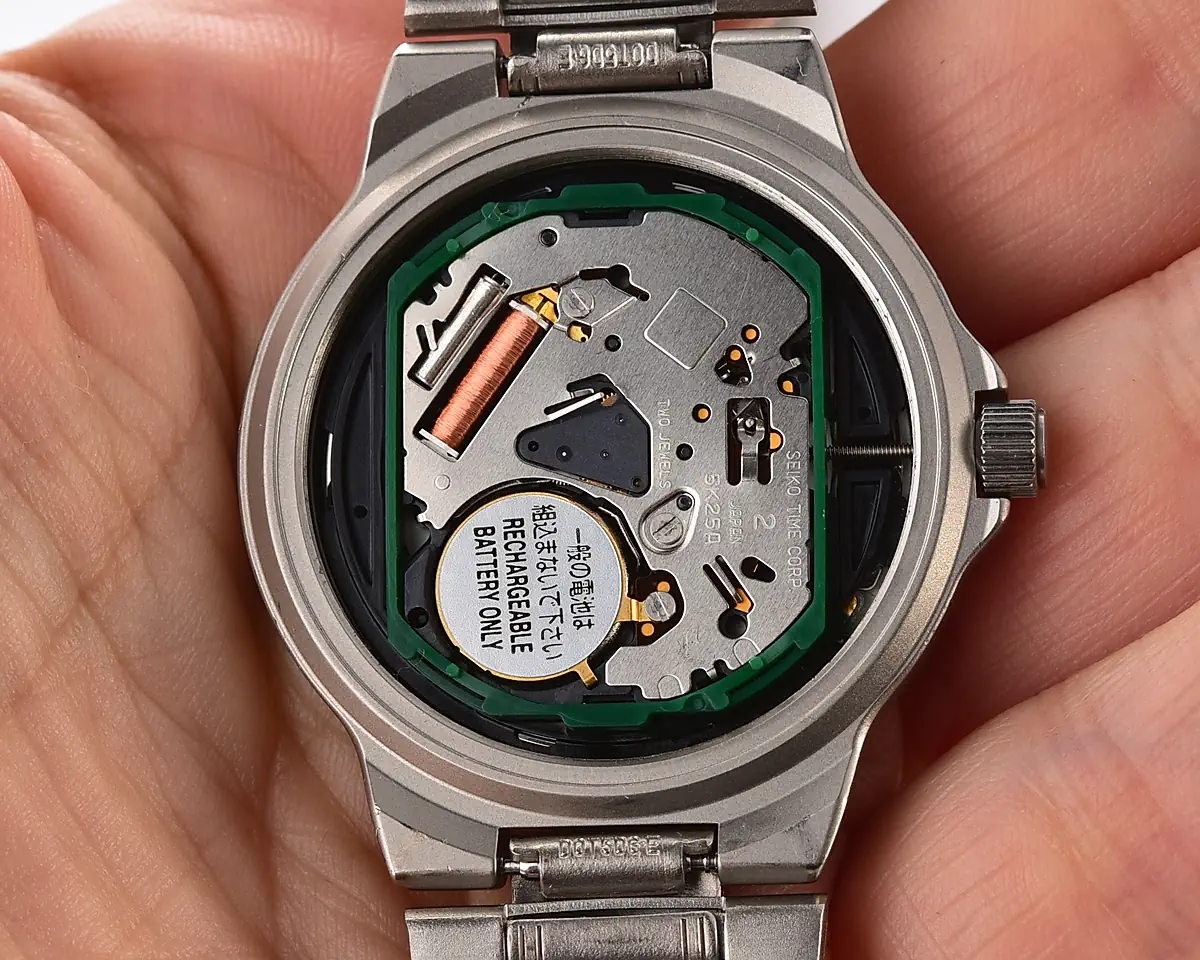
Inside is Seiko caliber 5K25A. The movement plate is stamped TWO JEWELS, SEIKO TIME CORP., JAPAN. The solar panel sits under the dial; the rechargeable cell sits under the movement, carrying Seiko’s own RECHARGEABLE BATTERY ONLY warning. There is no battery to change — and no ordinary battery that belongs in it.
Technical Specifications
- Brand: Seiko
- Line: Not marked on the dial — Seiko Solar (titanium), 5K series
- Reference Number: 5K25-0A80
- Movement: Seiko caliber 5K25A, solar-charged quartz, 2 jewels, step motor; accurate to within 15 seconds per month, approx. 6-month power reserve from a full charge
- Serial Number: 915700
- Production Date: January 1999
- Case Material: Titanium
- Case Diameter: Approx. 35 mm (excluding crown)
- Dial: Black with a deep blue cast at an angle; applied luminous baton markers, printed Roman-numeral chapter ring, date window at 3
- Crystal: Not marked
- Case-back: Titanium, engraved SEIKO TITANIUM · WATER RESISTANT 10 BAR · 5K25-0A80 · 915700
- Country of Manufacture: Japan
Condition Report
The dial is clean and unmarked, the printing crisp, and all the luminous markers are intact and even in colour. The hands are straight and match the markers. The date wheel is clean and sits correctly in its frame.
The case shows honest handling wear for a working watch of this age. The most visible mark is a long curved scratch across the case back, plain in the case-back photographs; the bezel top and the case flanks carry lighter scattered marks. Titanium scuffs more readily than steel and does not take a polish the same way, so this is largely how the metal ages rather than damage. The crystal is clear, with no chips and nothing that catches the light across the dial.
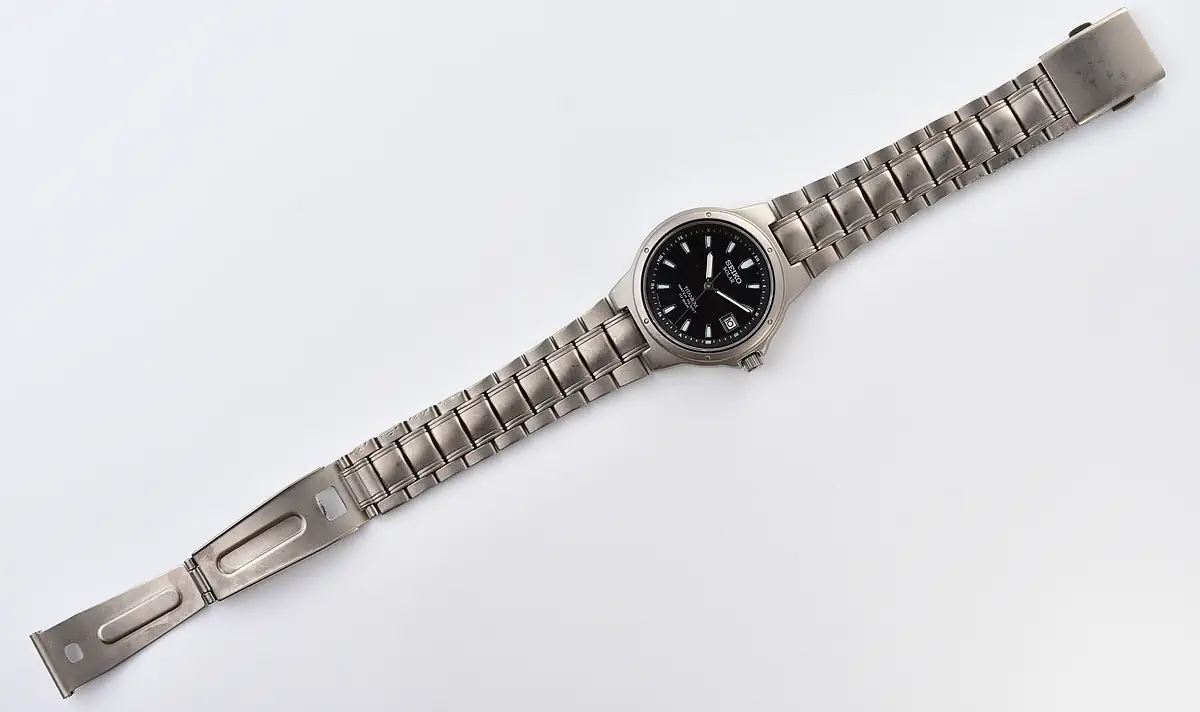
The bracelet is the original Seiko one, with a signed folding clasp; the clasp cover carries the light scuffing clasps always collect. As it sits now it closes at roughly 140 mm (about 5½ inches) — the sizing photograph shows it on a measuring cone, so you can judge it against your own wrist before you buy.
This watch has recently been serviced by a professional watchmaker and keeps good time.
Comes complete with original titanium bracelet*.
(*)Note: Stock bracelets are often shortened by previous owners and may not fit you(see bracelet size in the product images).
This watch ships from 🇺🇦 Ukraine with tracking number
Why Collectors Want This Watch Today
This is not a rare watch and it was never meant to be a special one. Seiko built the 5K solar family in volume, and examples still turn up regularly. What makes it worth owning is that it quietly solves two everyday annoyances at once.
The first is the battery. A quartz watch kept in a drawer is a watch that dies in the drawer, and every cell change is another chance for a case back to be scratched or a gasket to be pinched. This one charges from the light in an ordinary room, and it has run on the same sealed cell since the 1990s.
The second is weight. At around 35 mm on a full titanium bracelet, it sits on the wrist at a fraction of what a steel watch of the same size weighs — often enough to win over people who dislike wearing a watch at all. Add 10 BAR of water resistance and a dial that shifts from black to blue as you move, and you get an unusually easy watch to wear every day, which is exactly what it was built to be.
Modes of payment:
- PayPal
- Credit Cards (VISA, MasterCard, American Express, Discover)
- bitcoin
We guarantee the item you receive looks and works exactly as advertised — or your money back.
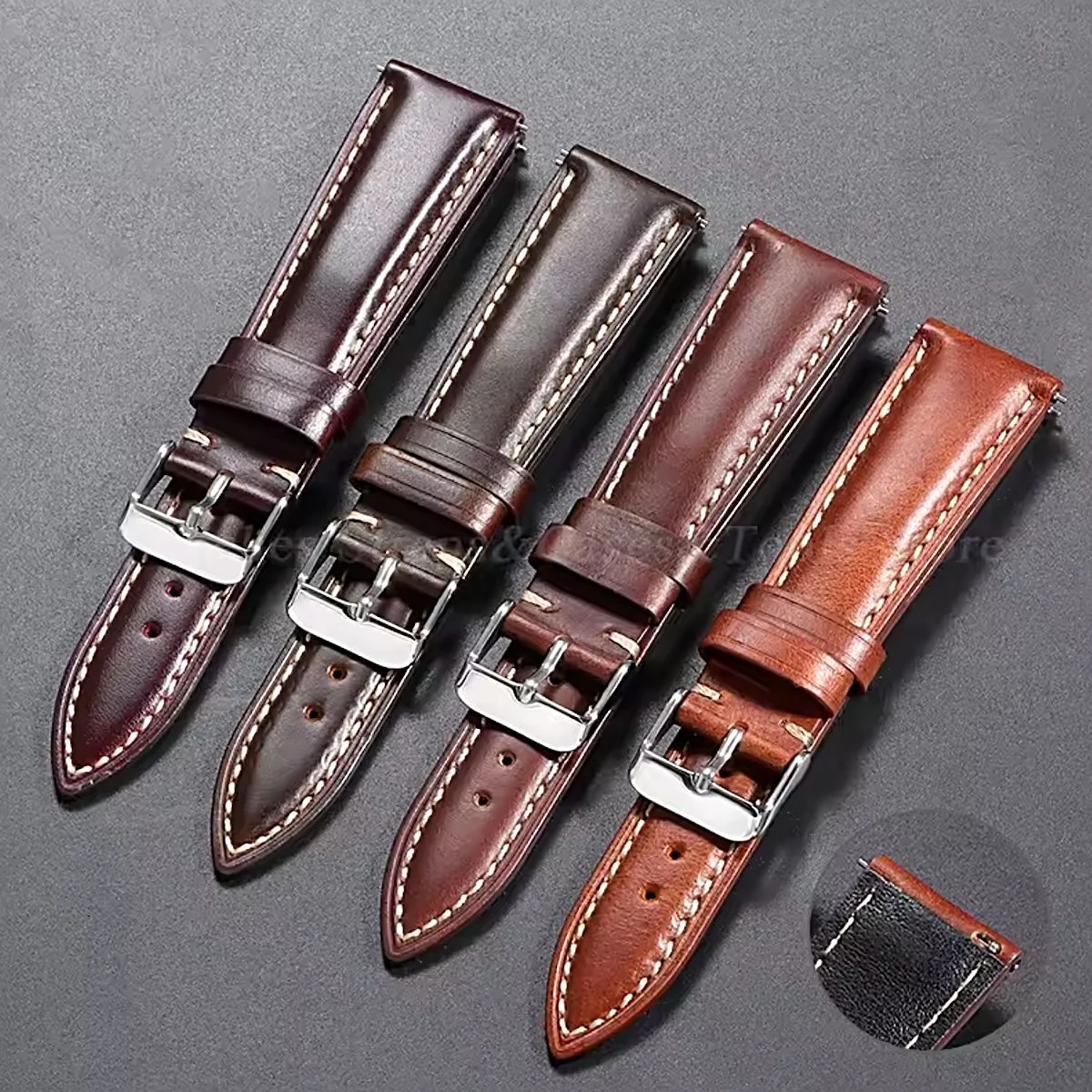
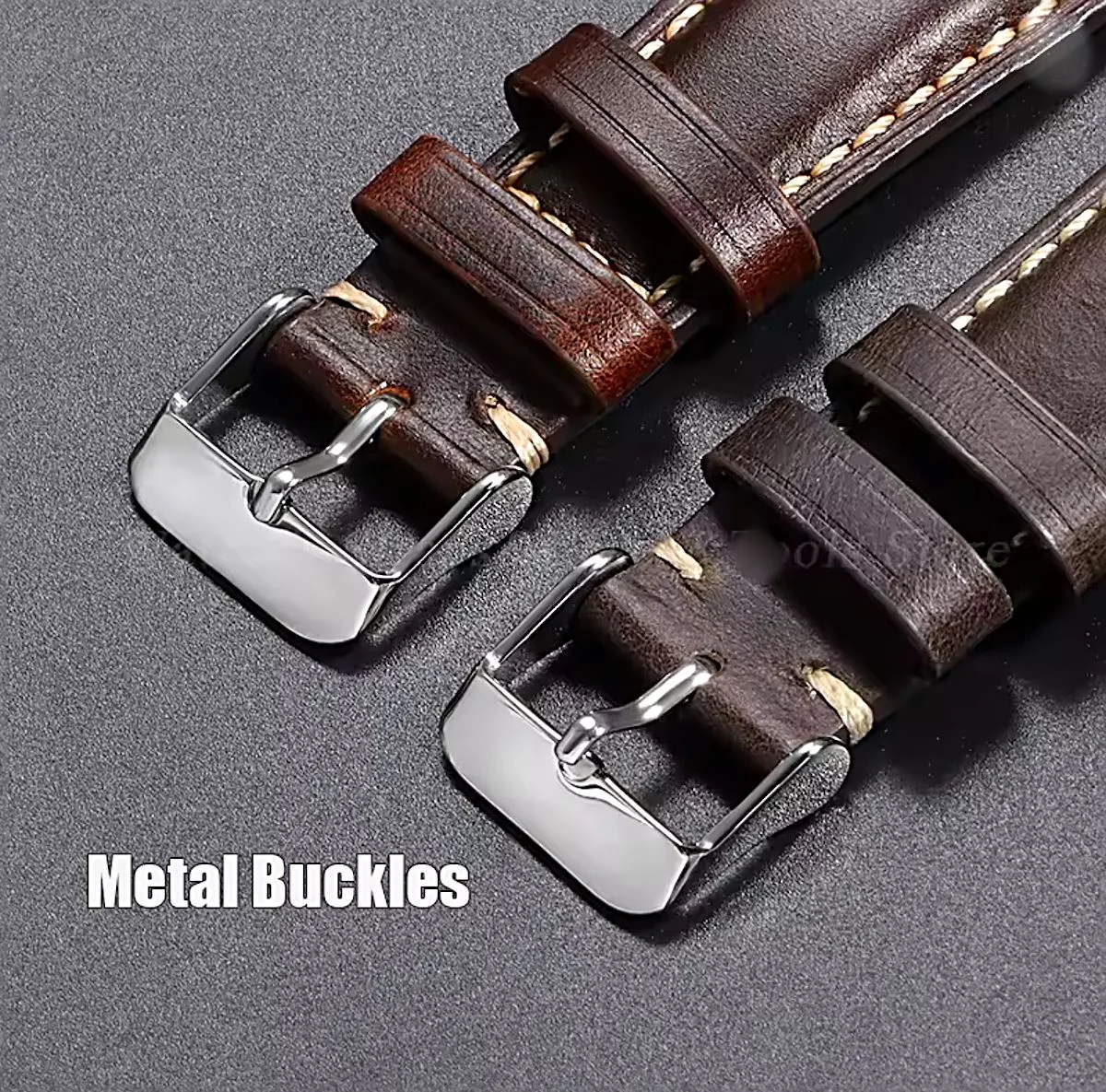
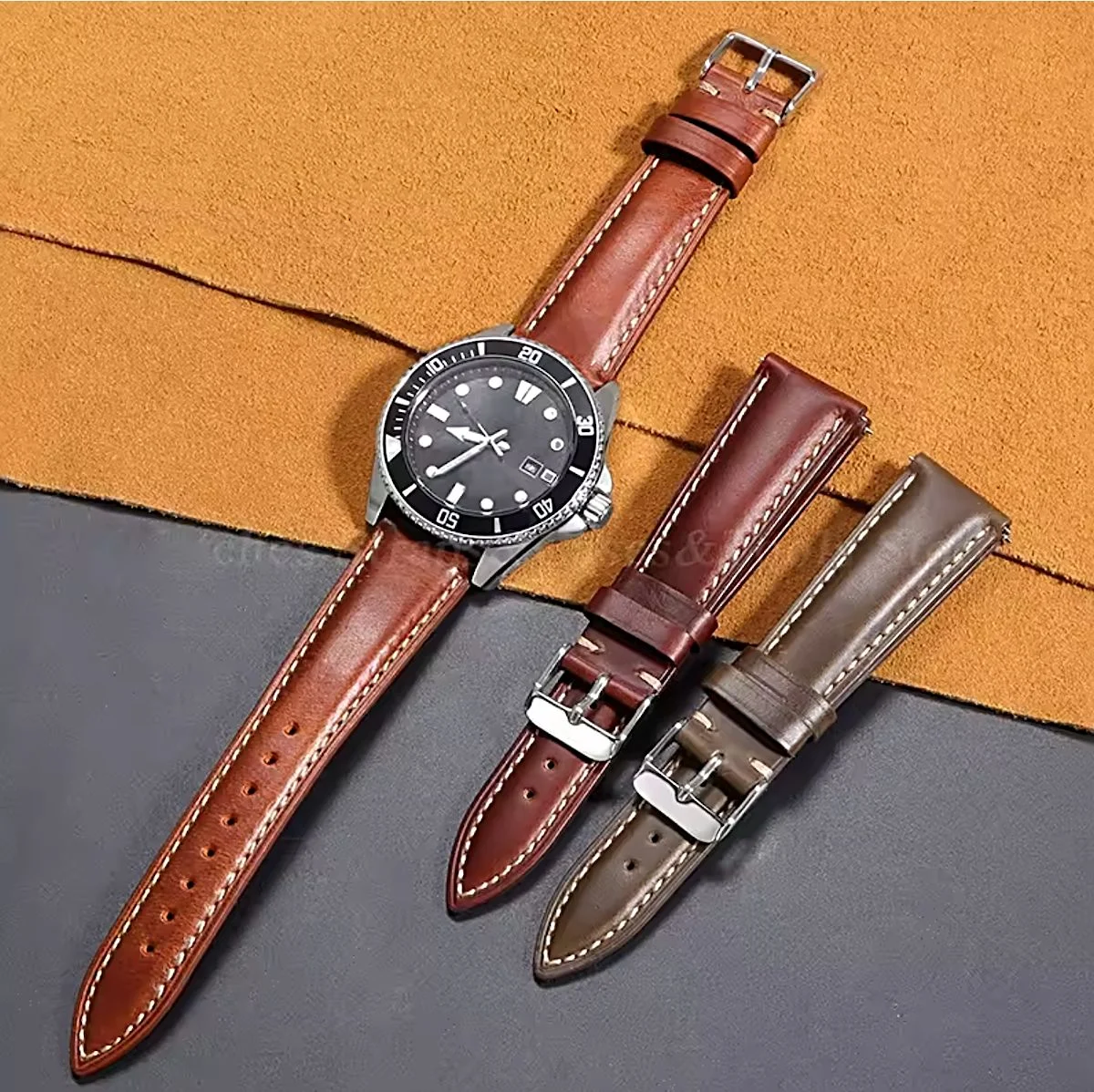
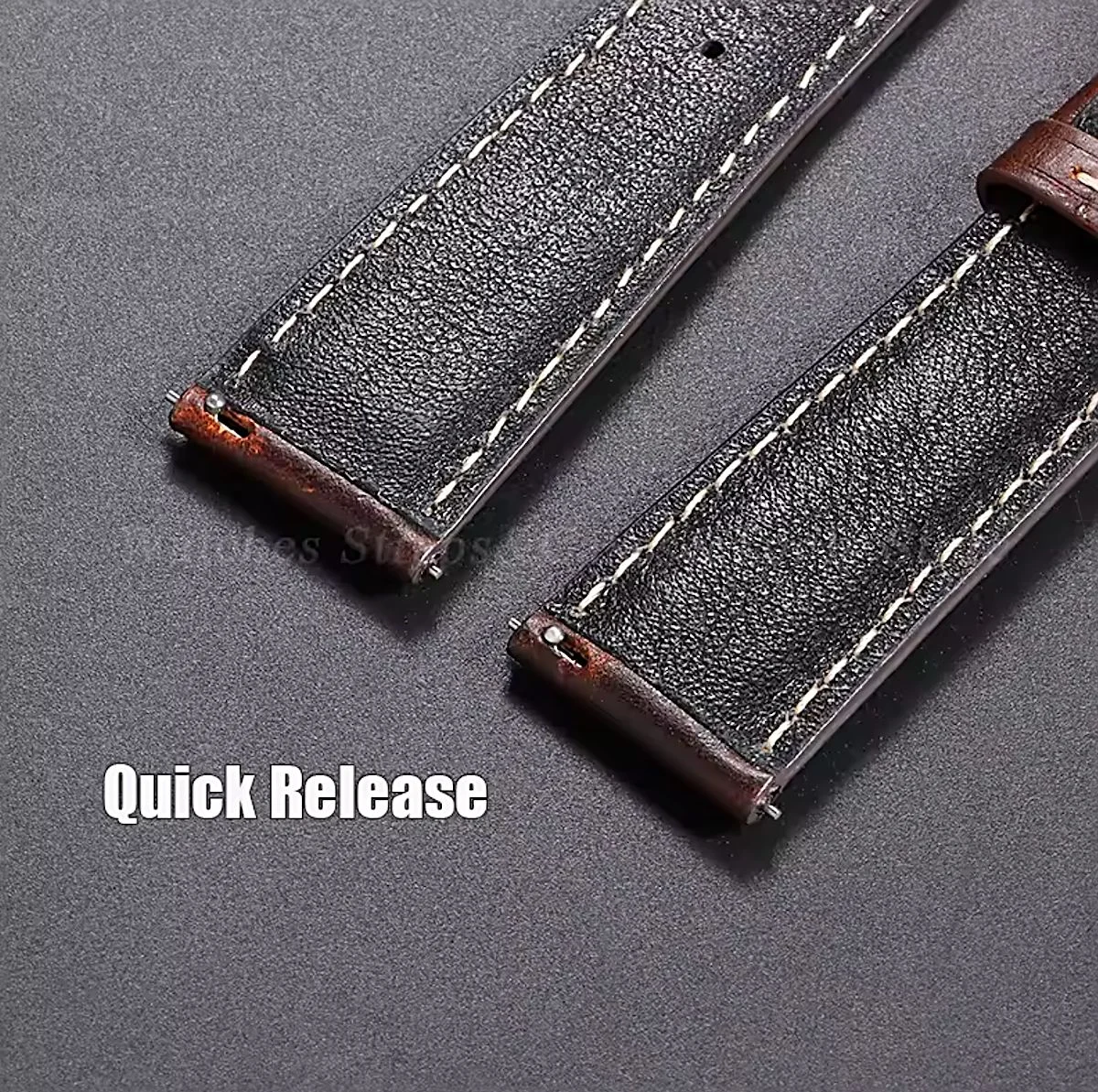
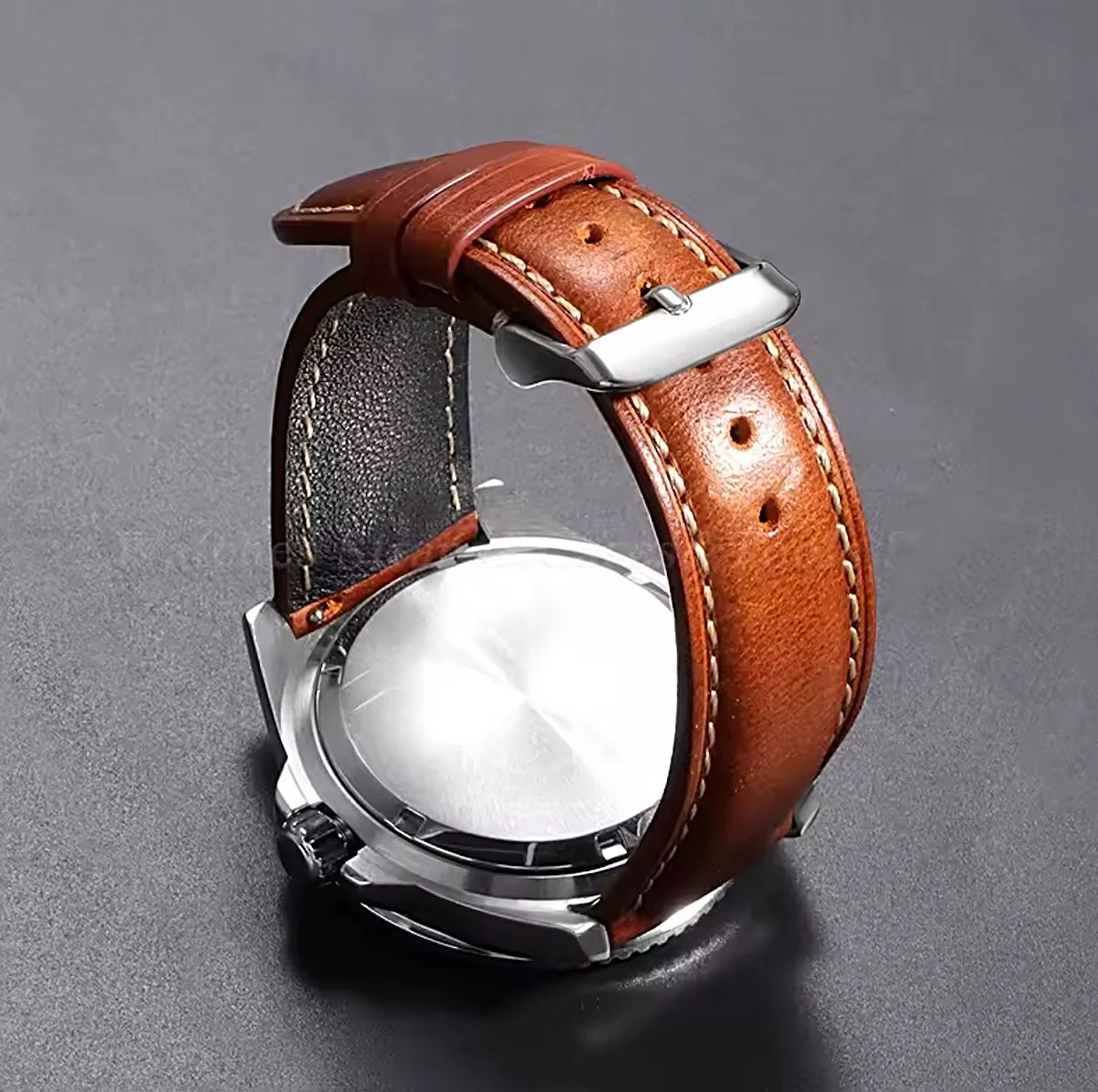
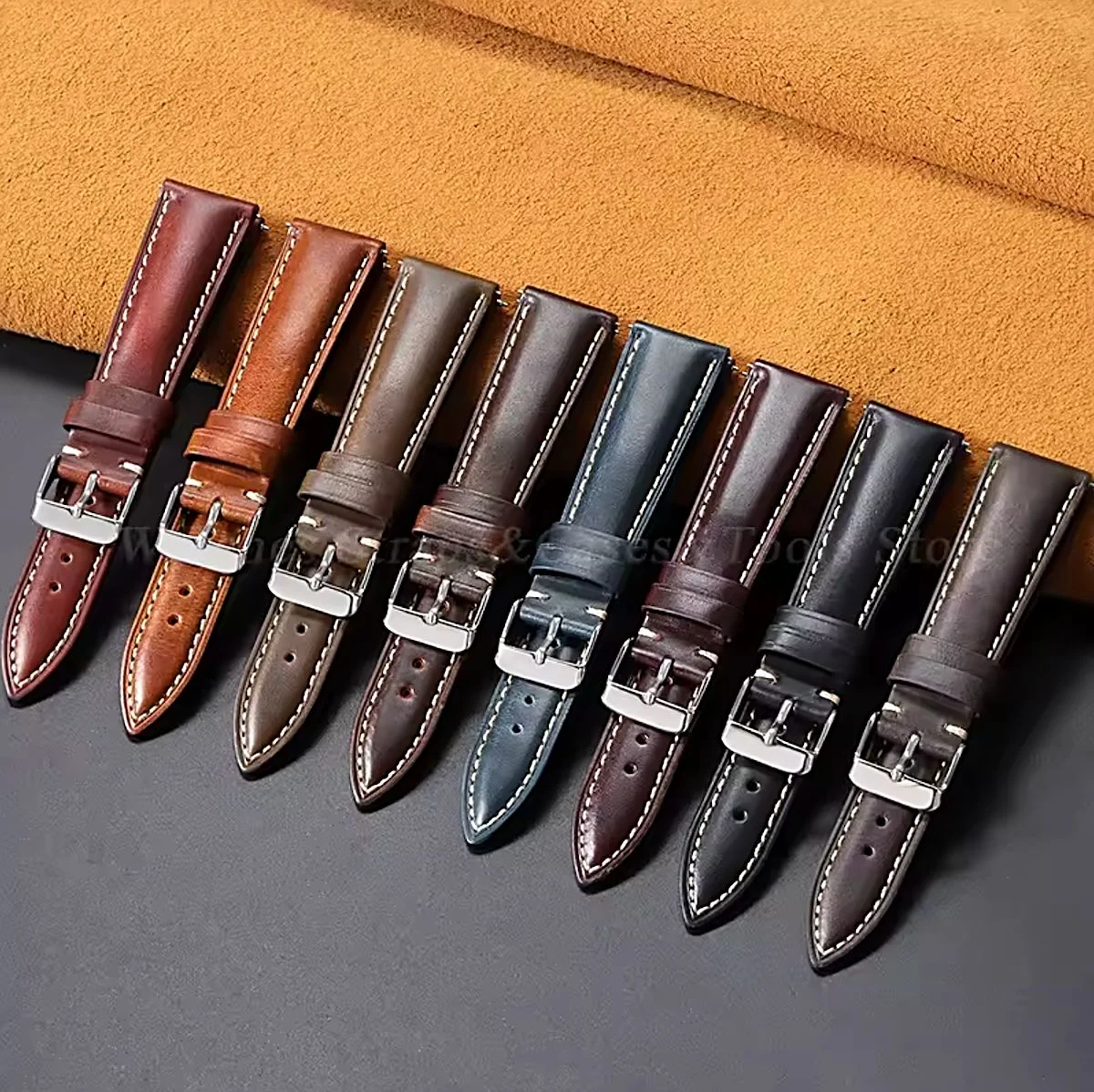
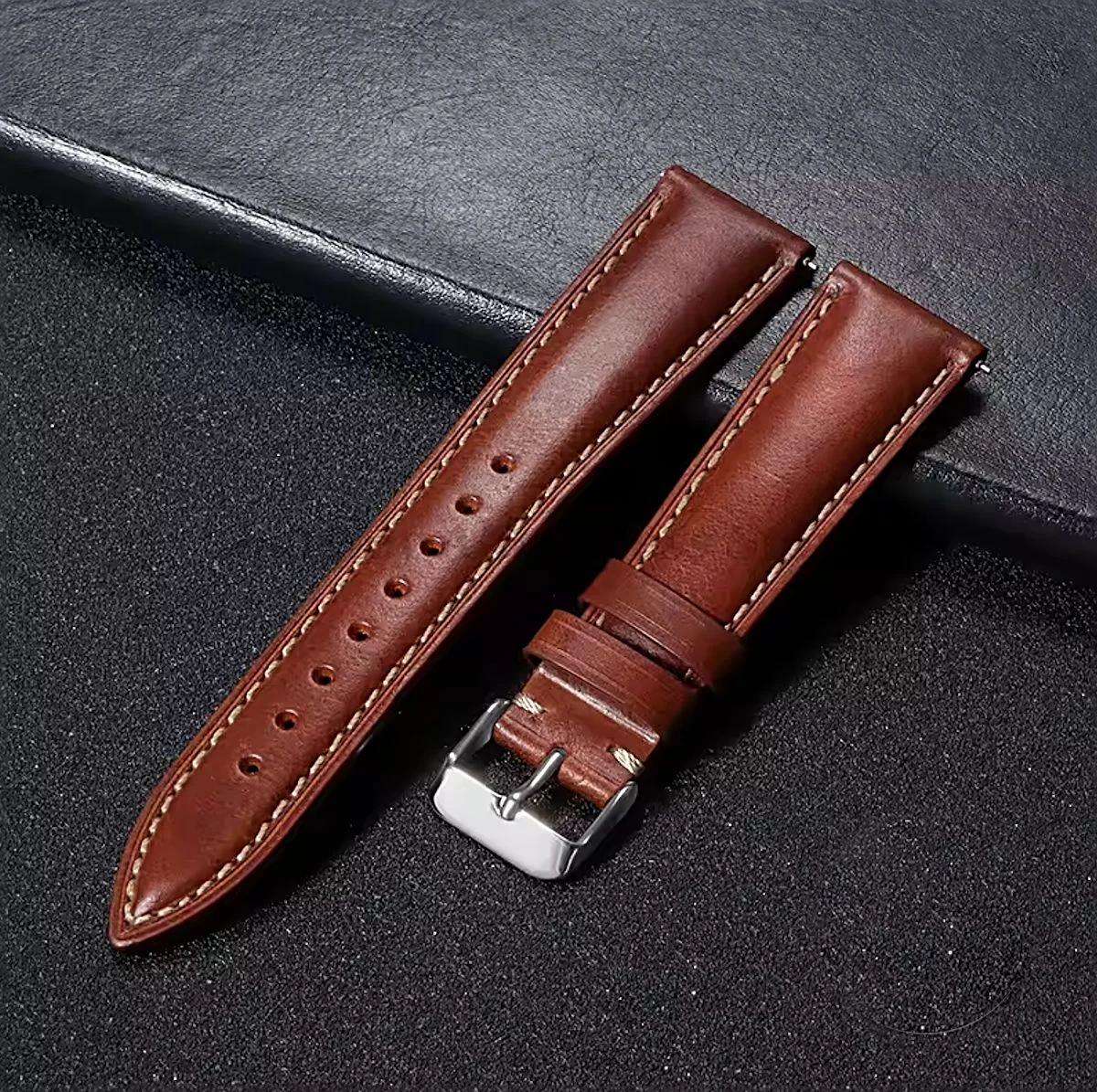
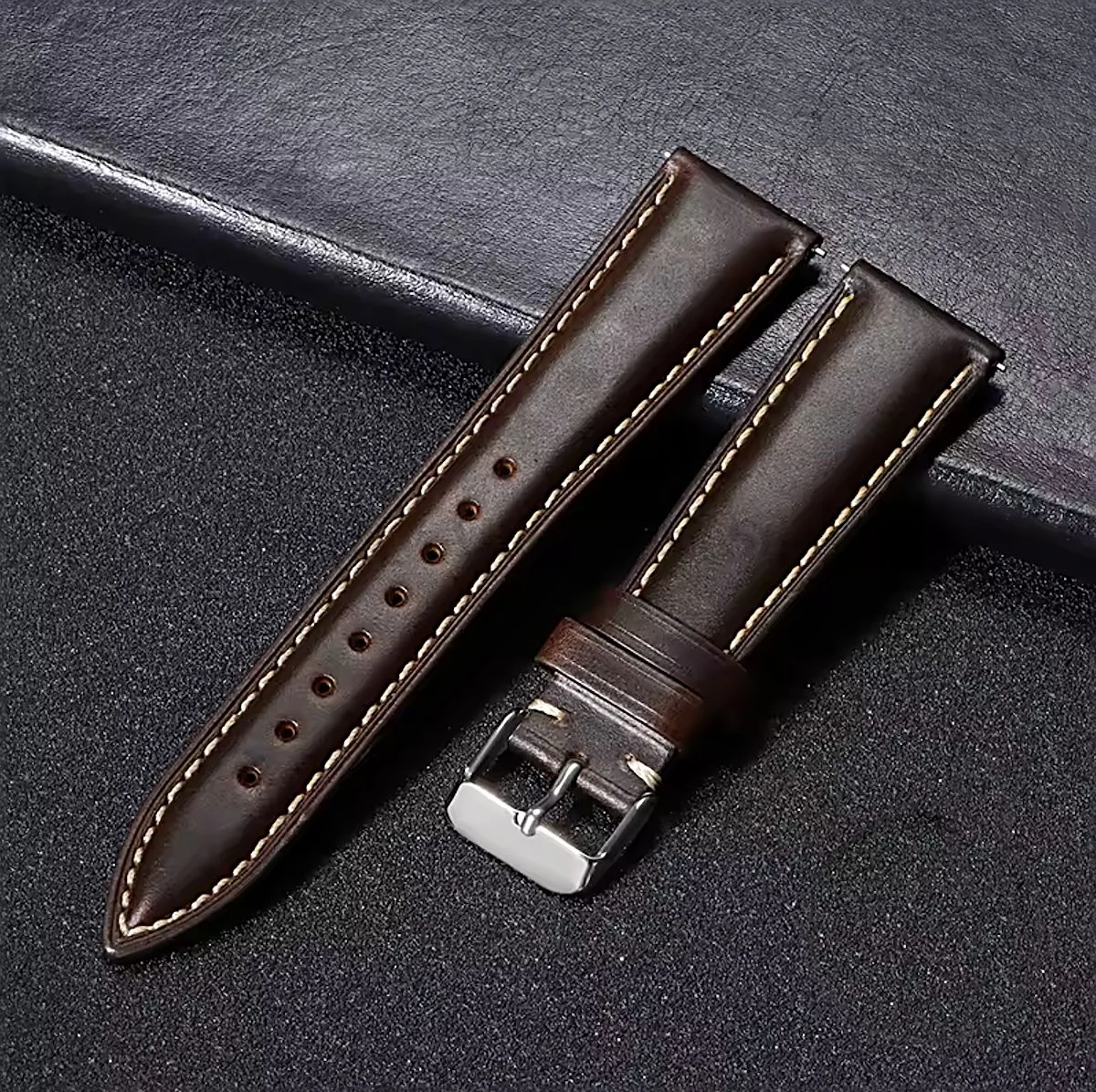
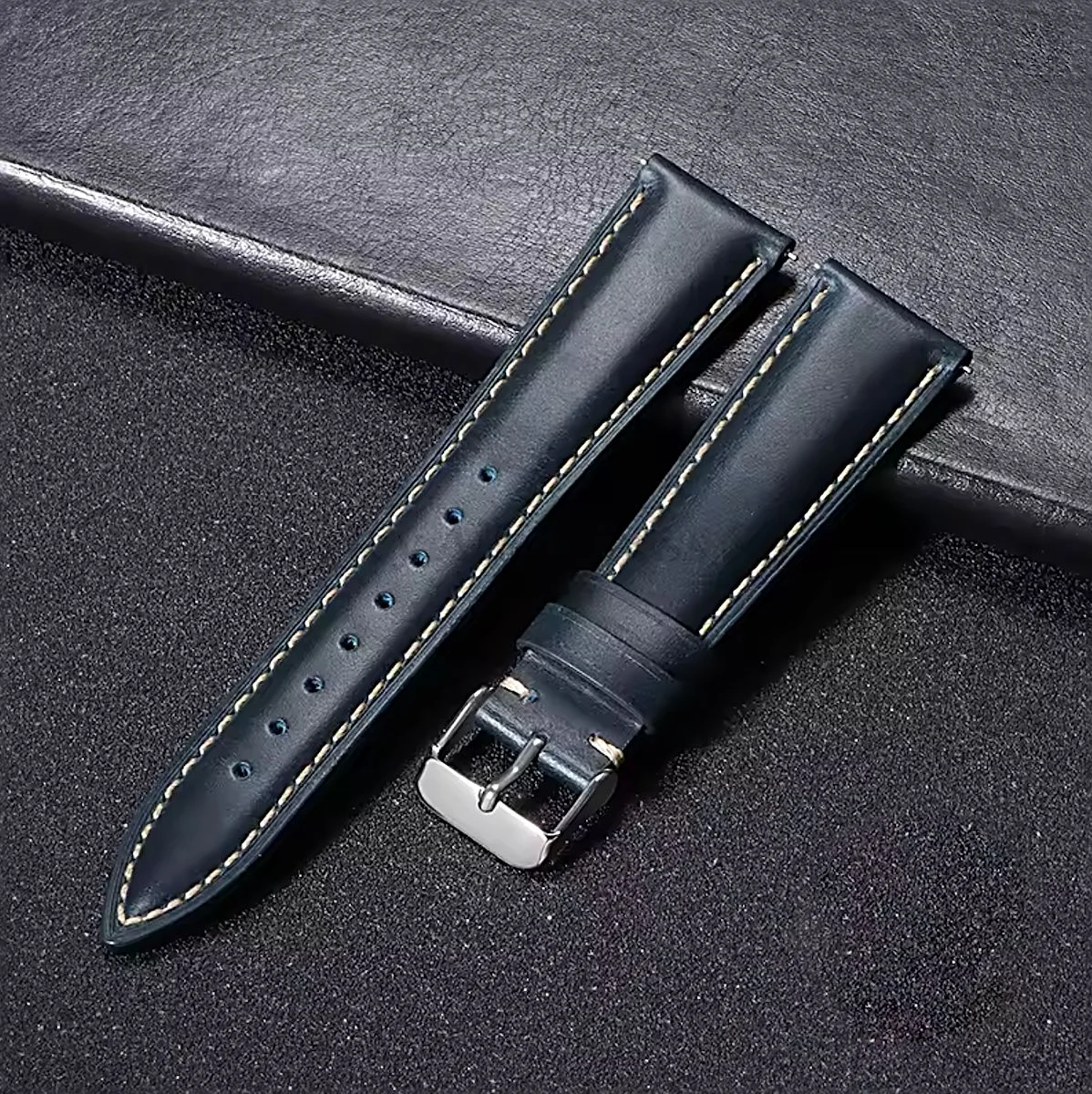
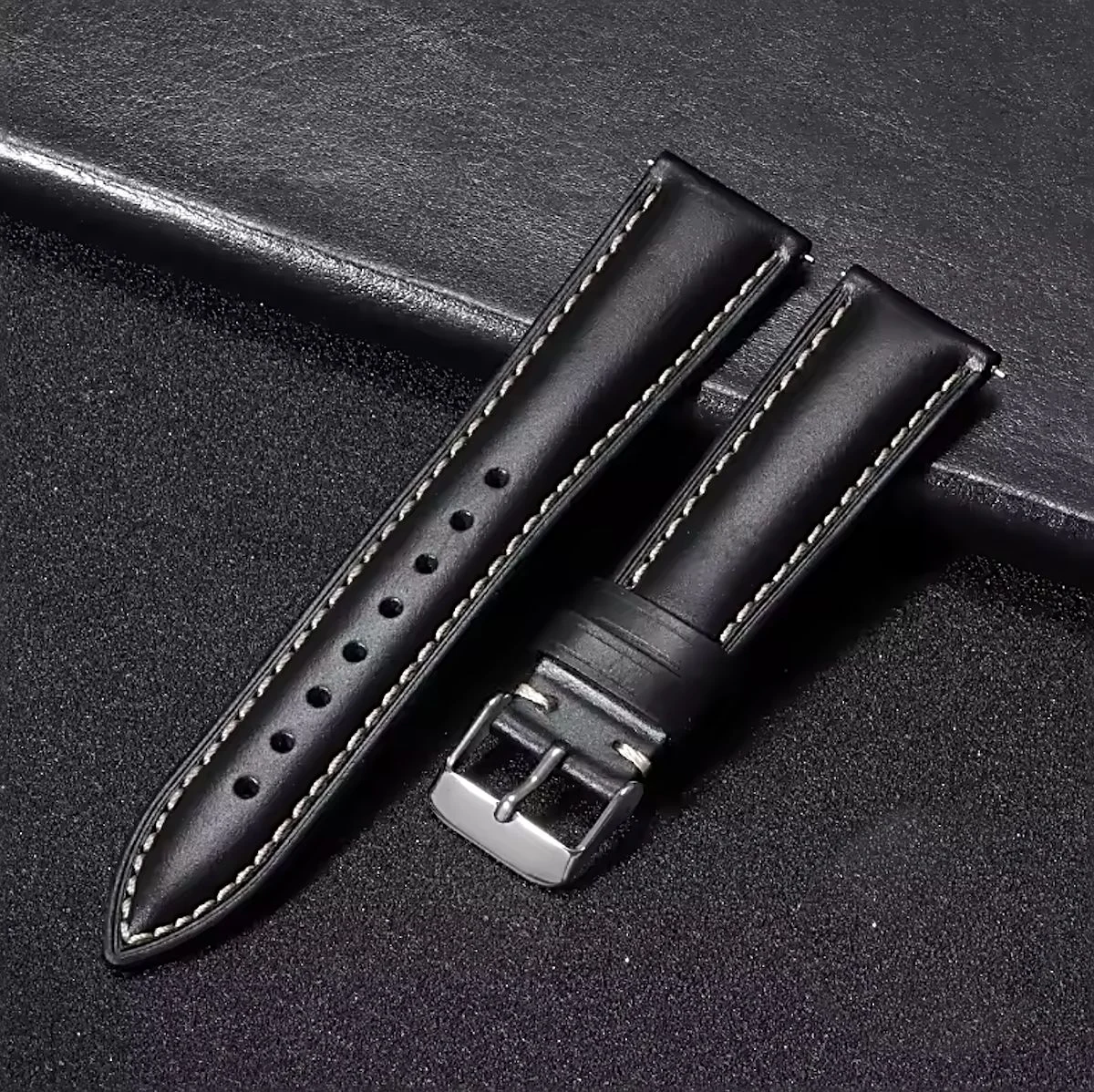
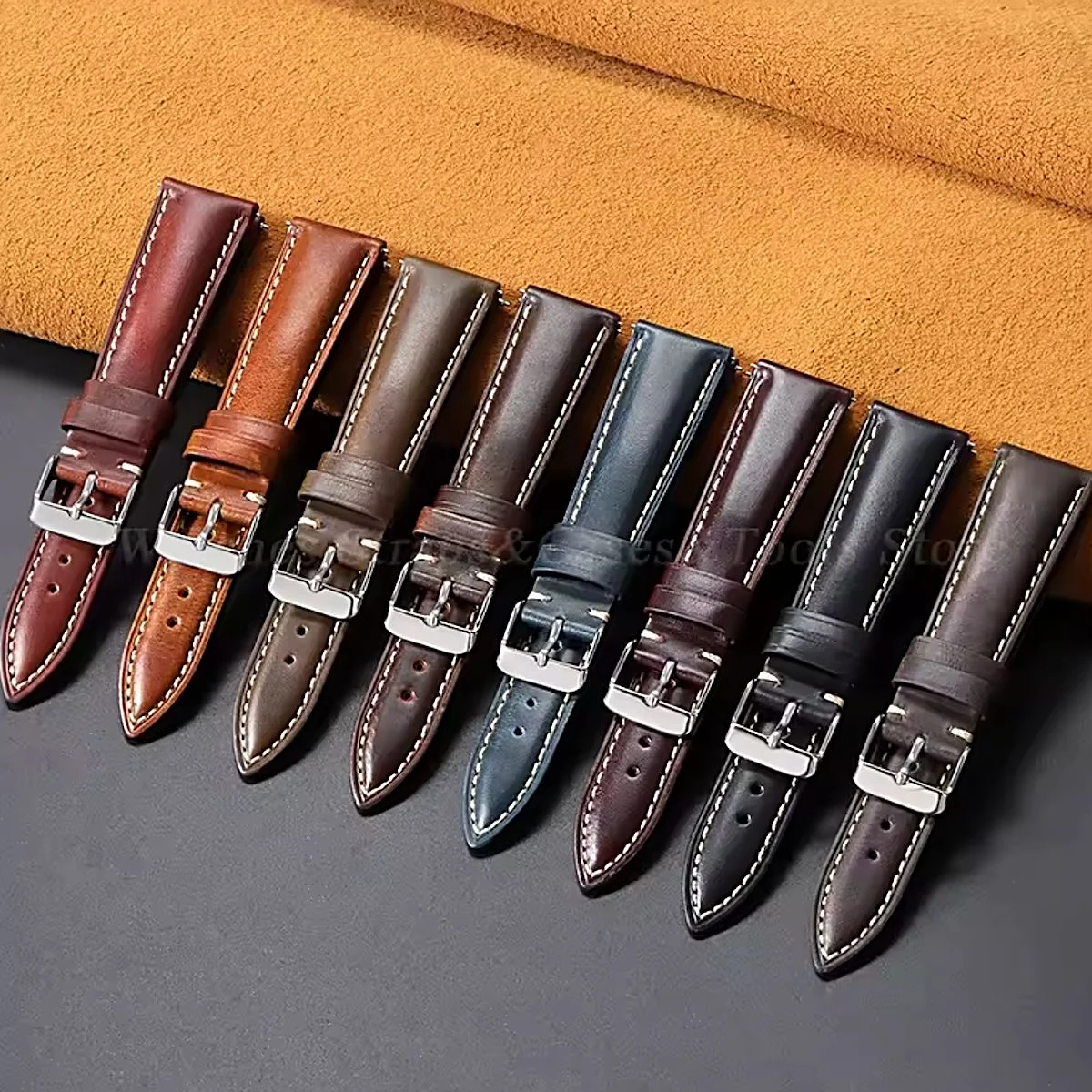
Seiko lug-width matched leather straps — 18 / 19 / 20 mm
About the watch factory
Seiko Group Corporation (セイコーグループ株式会社, Seikō Gurūpu kabushiki gaisha), commonly known as Seiko, is a Japanese maker of watches, clocks, electronic devices, and semiconductors. Founded in 1881 by Kintarō Hattori in Tokyo, Seiko introduced the world’s first commercial quartz wristwatch in 1969.
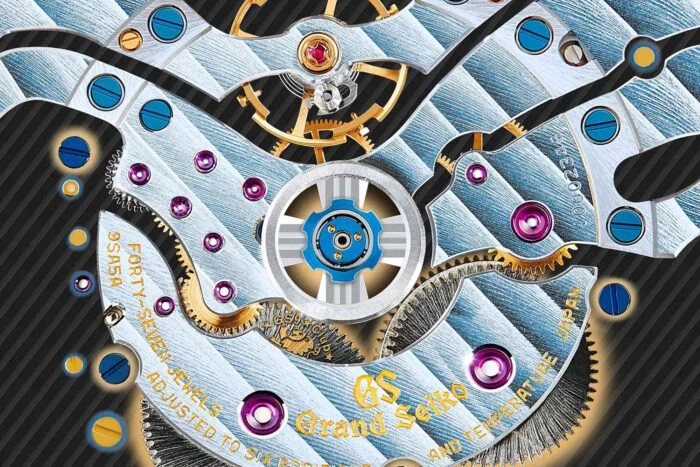
Seiko is widely known for its wristwatches. Seiko is one of the few watch companies that is fully vertically integrated. Seiko is able to design and develop all the components of a watch, as well as assemble, adjust, inspect and ship them in-house. Seiko’s mechanical watches consist of approximately 200 parts, and the company has the technology and production facilities to design and manufacture all of these parts internally.
Seiko offers one of the widest ranges of watch technologies in the world—quartz, kinetic, solar, mechanical, and Spring Drive—spanning everything from affordable everyday pieces to six-figure haute horlogerie. Over the decades it has launched multiple global brands, including Lorus, Pulsar, and Alba, while elevating its prestige through innovations like Spring Drive, which helped push Seiko into higher-end territory. In 2017, Grand Seiko was spun off into its own standalone luxury brand, while Credor remains part of Seiko’s own lineup, sold primarily in Japan. Seiko’s own global lineup now includes Grand Seiko, King Seiko, Prospex, Astron, Presage, and Seiko 5 Sports.
Among Seiko’s key lines, Seiko 5 (born in 1963) is the gateway mechanical series known for durability and value; Lord Matic defined 1970s style with faceted crystals and colorful dials; Astron remains Seiko’s flagship GPS-solar tech line; Presage focuses on traditional mechanical craftsmanship with enamel and urushi dials; and Prospex delivers professional-grade dive, field, and pilot watches often embraced by enthusiasts. At the top end, Grand Seiko emphasizes precision, Zaratsu polished design, and movements like Spring Drive, while King Seiko—revived in the 2020s—brings back sharp, elegant 1960s styling with modern calibres.
Finally, Credor represents Seiko’s pinnacle of artisanal watchmaking, producing low-volume pieces in precious metals and showcasing Japanese decorative arts and haute complications from the Micro Artist Studio. Beyond watches, Seiko has also produced various electronic devices and, historically, jewelry and eyewear—though those divisions have since shifted to other companies.