Description
SEIKO vintage mechanical watch
MADE IN JAPAN
“Seiko” (精工) is a Japanese word meaning “precision,” “exquisite workmanship,” or “refined craftsmanship.”
It comes from the characters:
- 精 (sei) – fine, precise, refined
- 工 (ko) – craft, workmanship
Originally, Seiko’s watchmaking division was called Seikosha (精工舎), meaning “House of Precision.”
The name first appeared on a watch dial in 1924, shortened from Seikosha and keeping the core meaning; the company itself was renamed Hattori Seiko in 1983 and Seiko Corporation in 1990.
So the brand name literally ties directly to the idea of precision engineering—which is exactly what the company wanted to be known for in its watches.
About the Seikomatic-R Line
🕰️ The Seiko Seikomatic line was a flagship series of high-quality automatic watches produced primarily throughout the 1960s. It represented Seiko’s transition into the modern era of self-winding timepieces, and sat at the top of the company’s mainstream automatic ranges.
The Seikomatic Line: The “Business Class” Ancestor
Seikomatic was designed for the “modern business professional” of the 1960s. Its most iconic design choice was the recessed crown at the 4 o’clock position. Because those early automatic calibers had no hand-winding at all — the crown only set the time and calendar — Seiko could recess it out of the way, creating a sleek, “crownless” silhouette that wouldn’t snag on shirt cuffs. That crownless styling belongs to the earlier 62-series Seikomatics and the cal. 840 Slimdate. The later 83-series watches like this one moved the crown back to the conventional 3 o’clock position once the movement gained manual hand-winding, so the crown here is a normal, fully accessible one.
- The Name: It’s a portmanteau of “Seiko” and “Automatic.” At the time, automatic winding was a high-tech feature, so Seiko branded these watches to highlight that they didn’t need manual winding.
- The Design Philosophy: Seikomatics were designed for the “New Lifestyle” of the 1960s—aimed at office workers and professionals. Early Seikomatics tucked a small crown low on the case at the 4 o’clock position, where it set the time and calendar but was never used for winding — a detail Seiko dropped on the later 83-series models like this one, which wear a conventional crown at 3 o’clock.
- The “Weekdater”: The most famous Seikomatic is the “Weekdater,” which added a day-of-the-week display alongside the date. This was a massive status symbol for business people in the ’60s.
The Seiko Seikomatic-R – (produced roughly between 1965 and 1969) was Suwa’s slim-line answer to the thick 62-series automatics that came before it.
Seiko never documented what the “R” stands for. What is documented is the engineering behind it: during this era Seiko was set on making automatic watches thinner, and the 83-series ran a full millimetre thinner than the 62-series it followed.
- The Slim Profile: While earlier “standard” Seikomatics used the 62-series movement (which was thick and “automatic only”), the Seikomatic-R used the 83-series movement. This was an integrated automatic movement designed from the ground up to be slim, allowing the watch to sit comfortably under a business suit cuff.
- The Business Executive Market: The line was specifically marketed to the emerging class of Japanese “salarymen” and executives. It was a step above the “Sportsmatic” (entry-level) but just below the “King Seiko” (luxury).
Historical Significance
- The Internal Rivalry: At the time, Seiko’s two factories (Suwa and Daini) were in a fierce internal competition to produce the best watches. Daini’s answer to it was the “Seikomatic-P” of 1967, built around the 33-jewel cal. 5106A.
- The Precursor to “Business-A”: From late 1967 Seiko began replacing the Seikomatic-R dial name with “Seiko Business-A,” but the two ran side by side and Seikomatic-R watches continued to be assembled into 1969. It makes the “R” branded watches a comparatively narrow window of production.
About This Watch
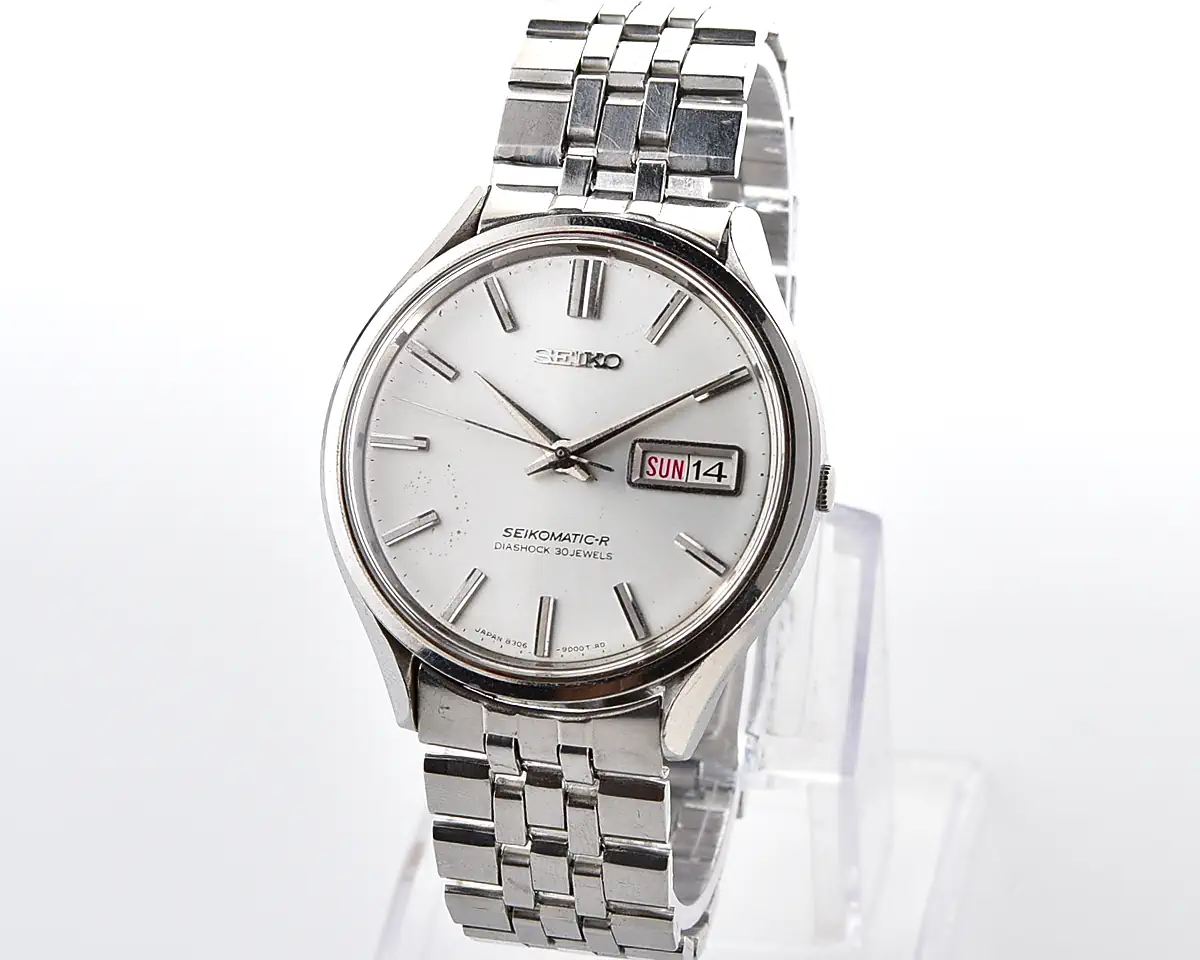
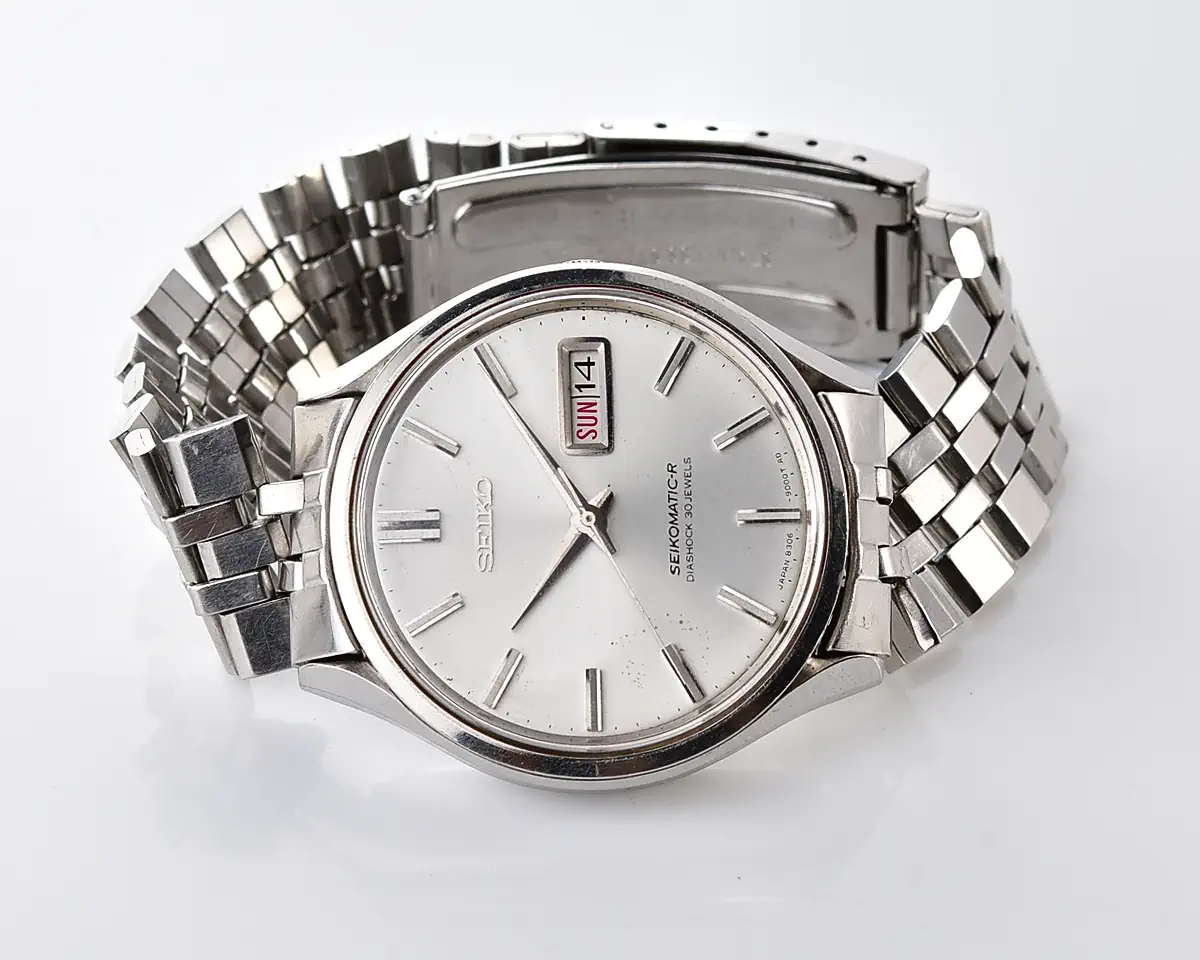
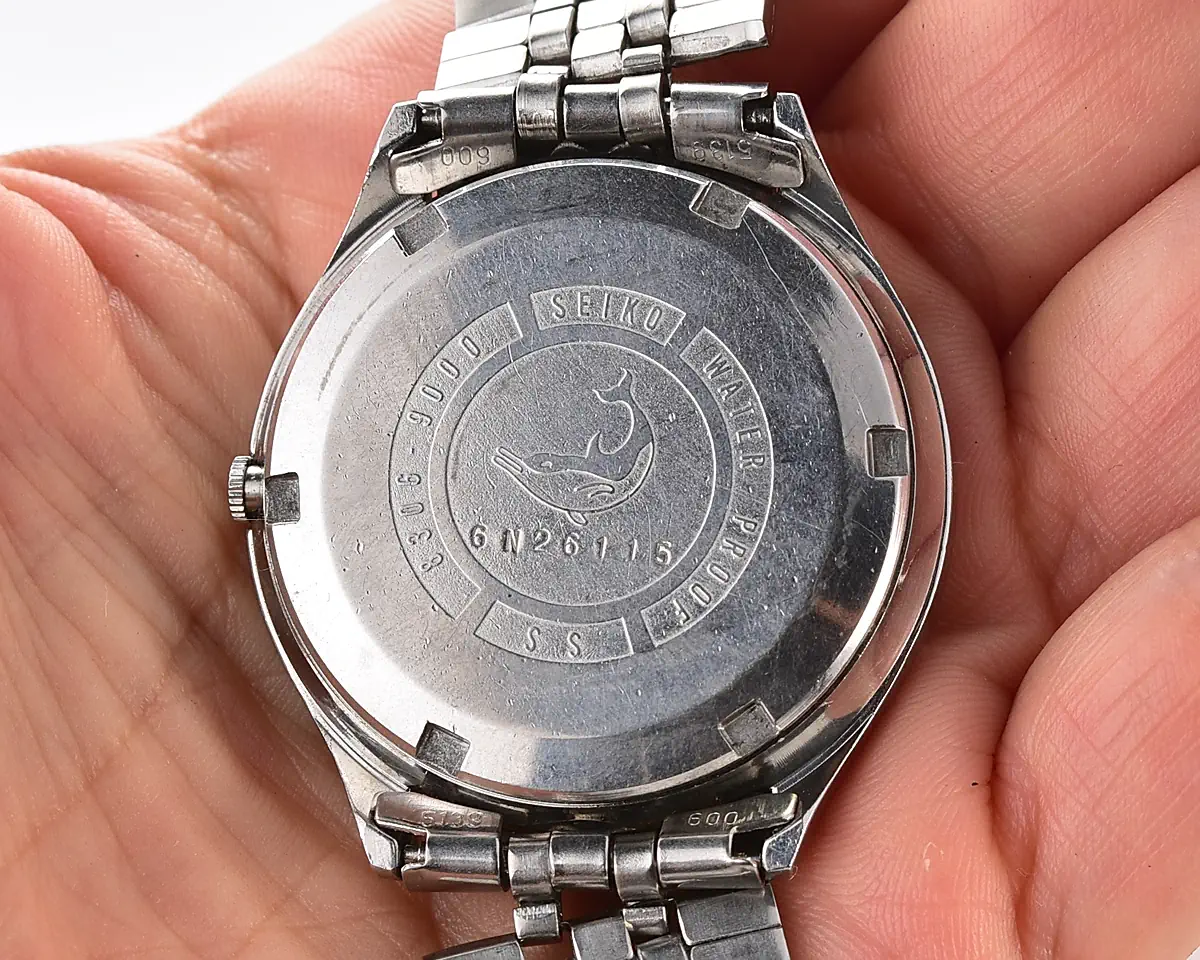
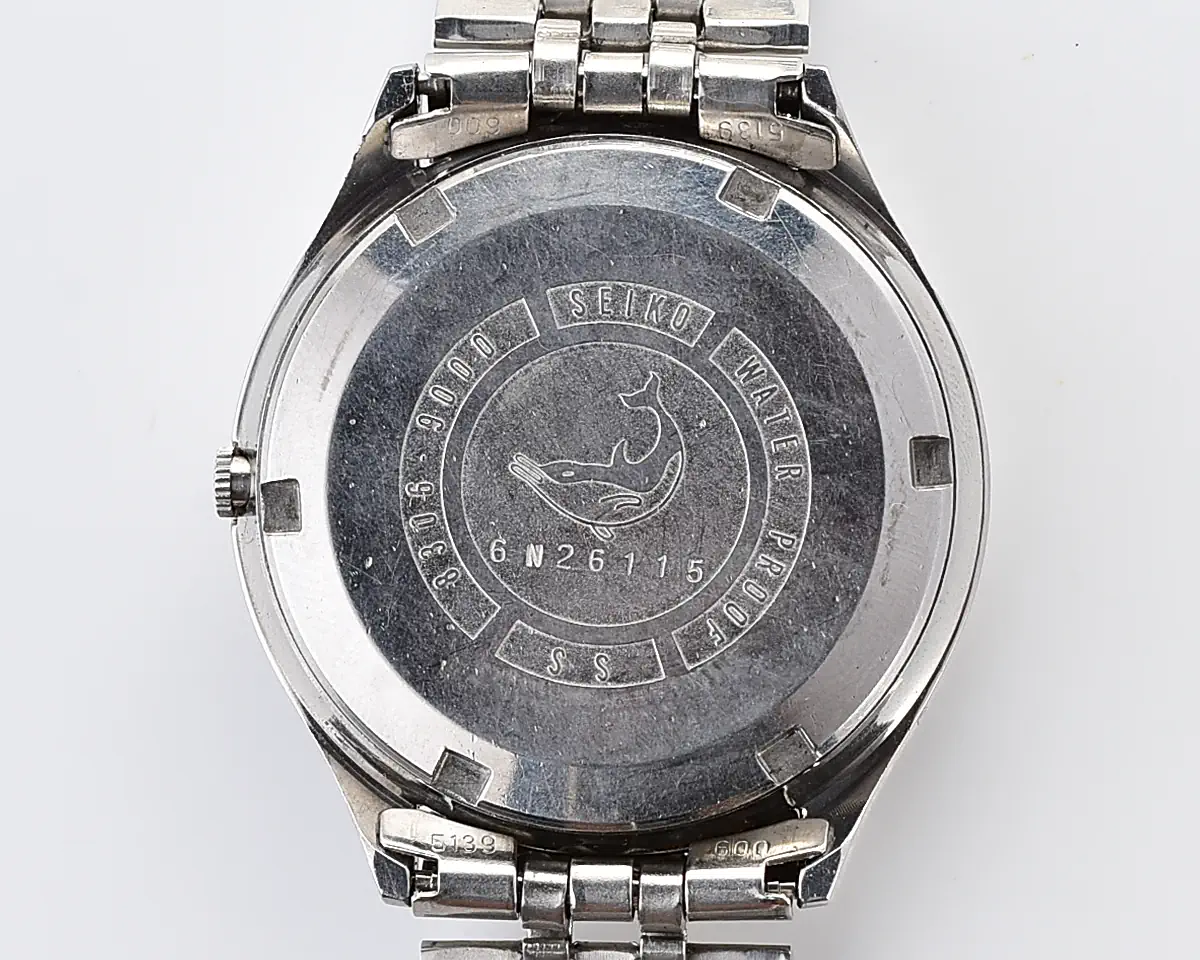
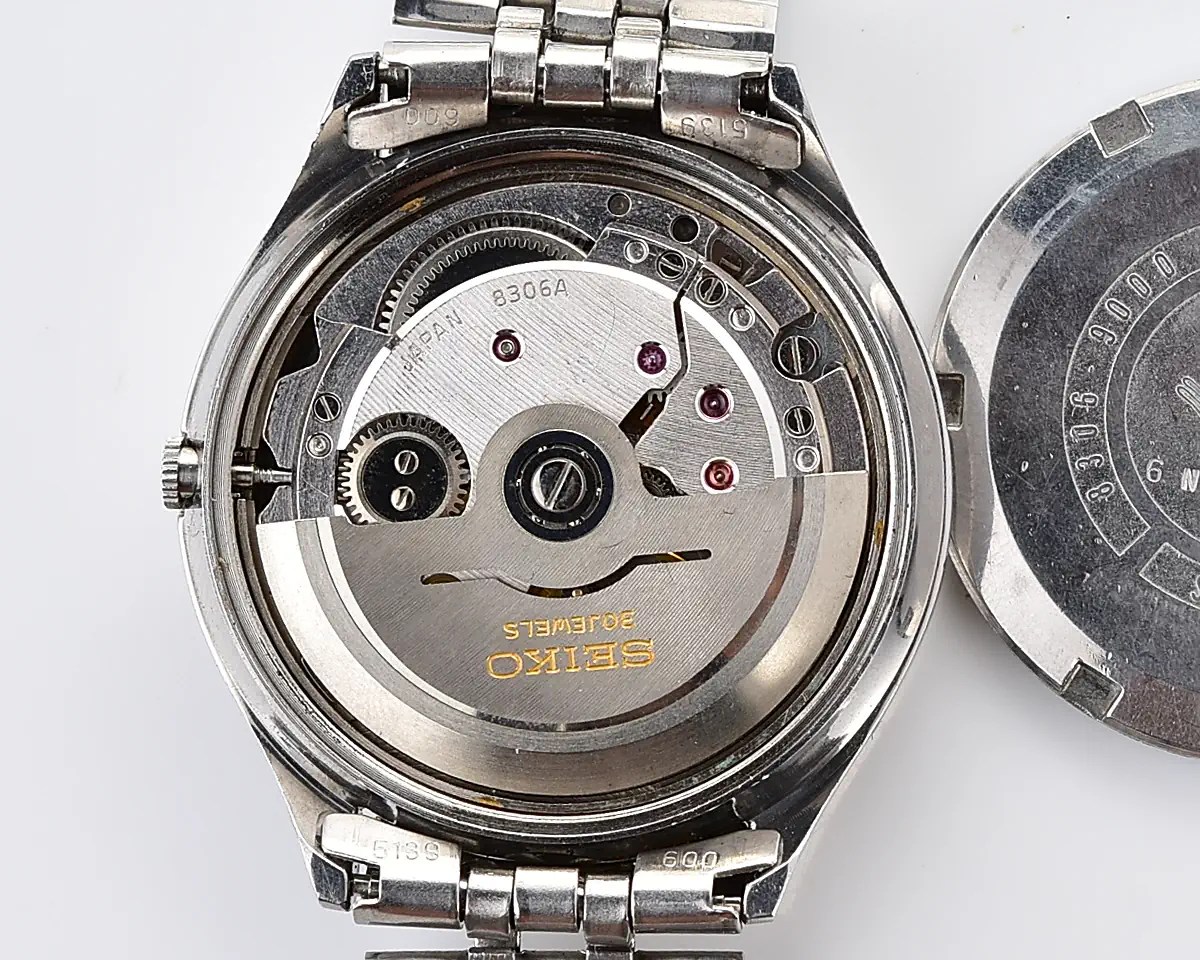
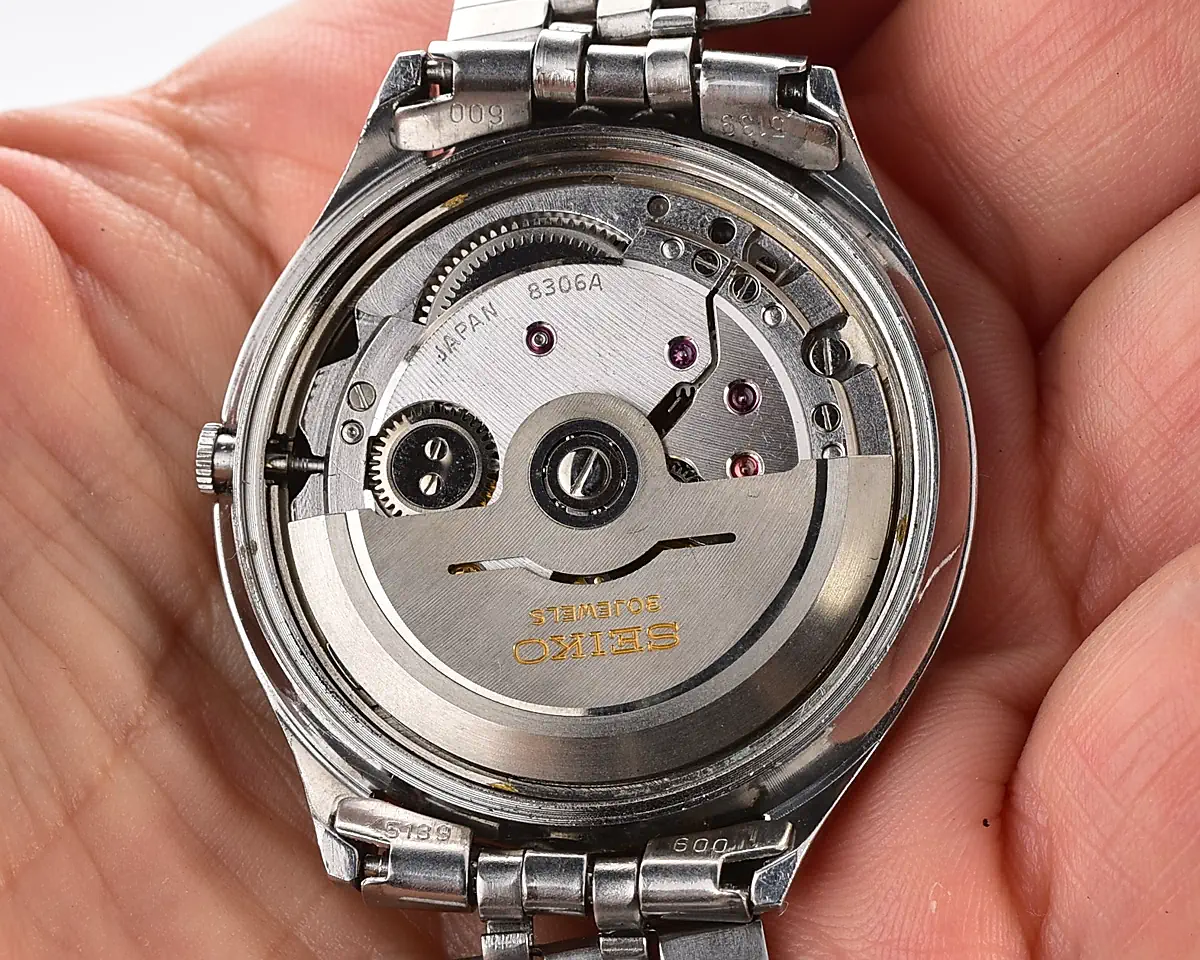
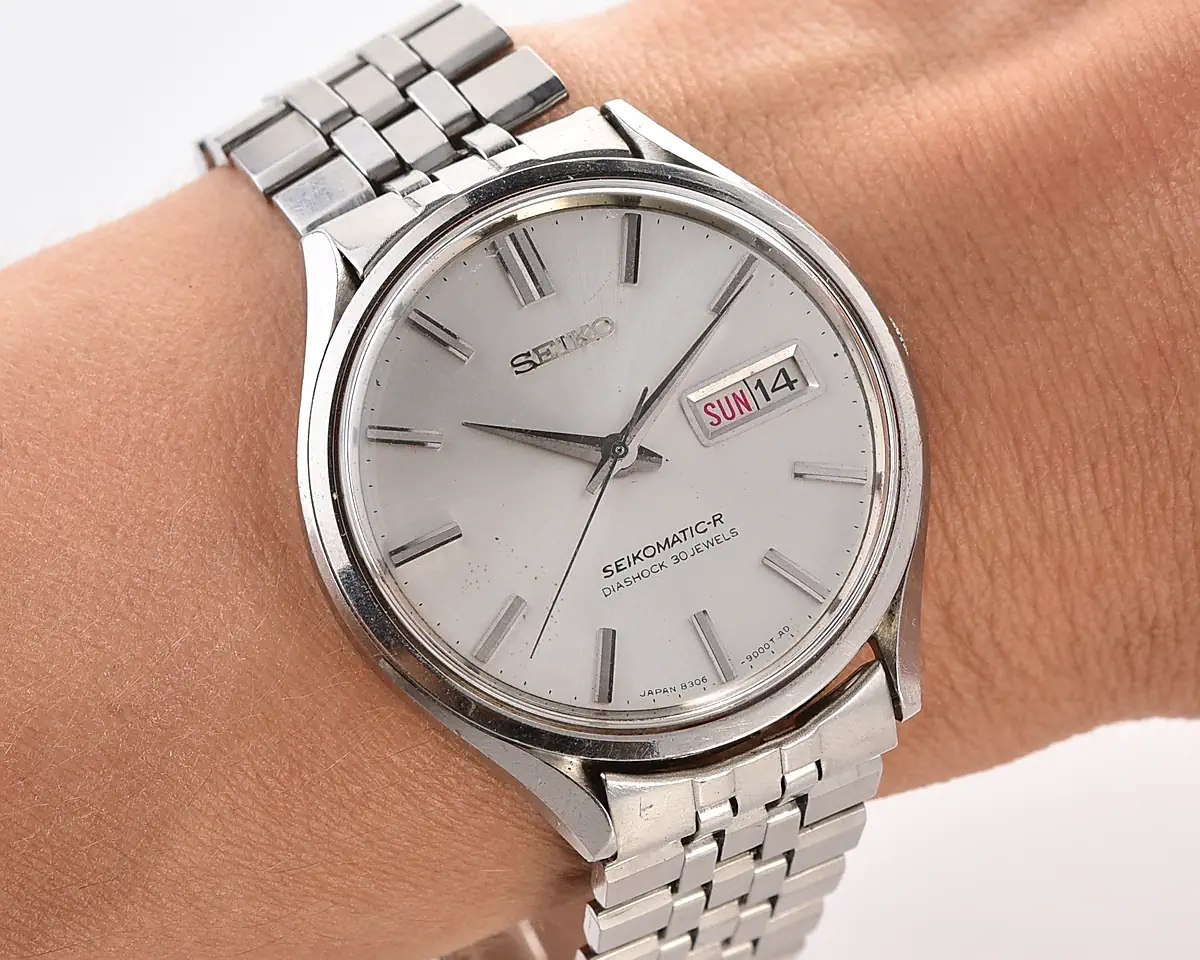
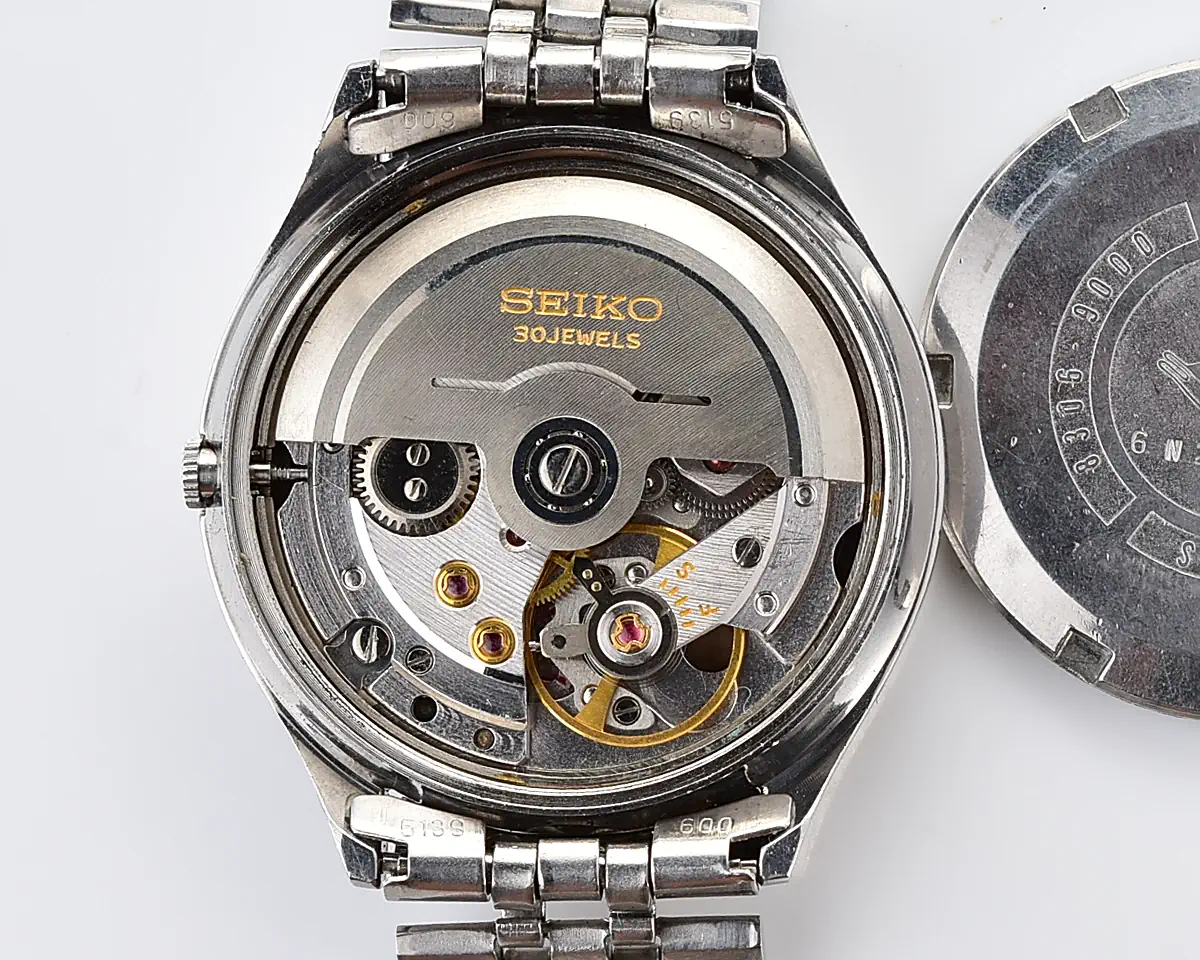
This Seikomatic-R is the day-date member of the family, and it carries the details collectors look for on a mid-1960s example: the ref. 8306-9000 case with Seiko’s embossed dolphin medallion on the back, and the 30-jewel caliber 8306A inside.
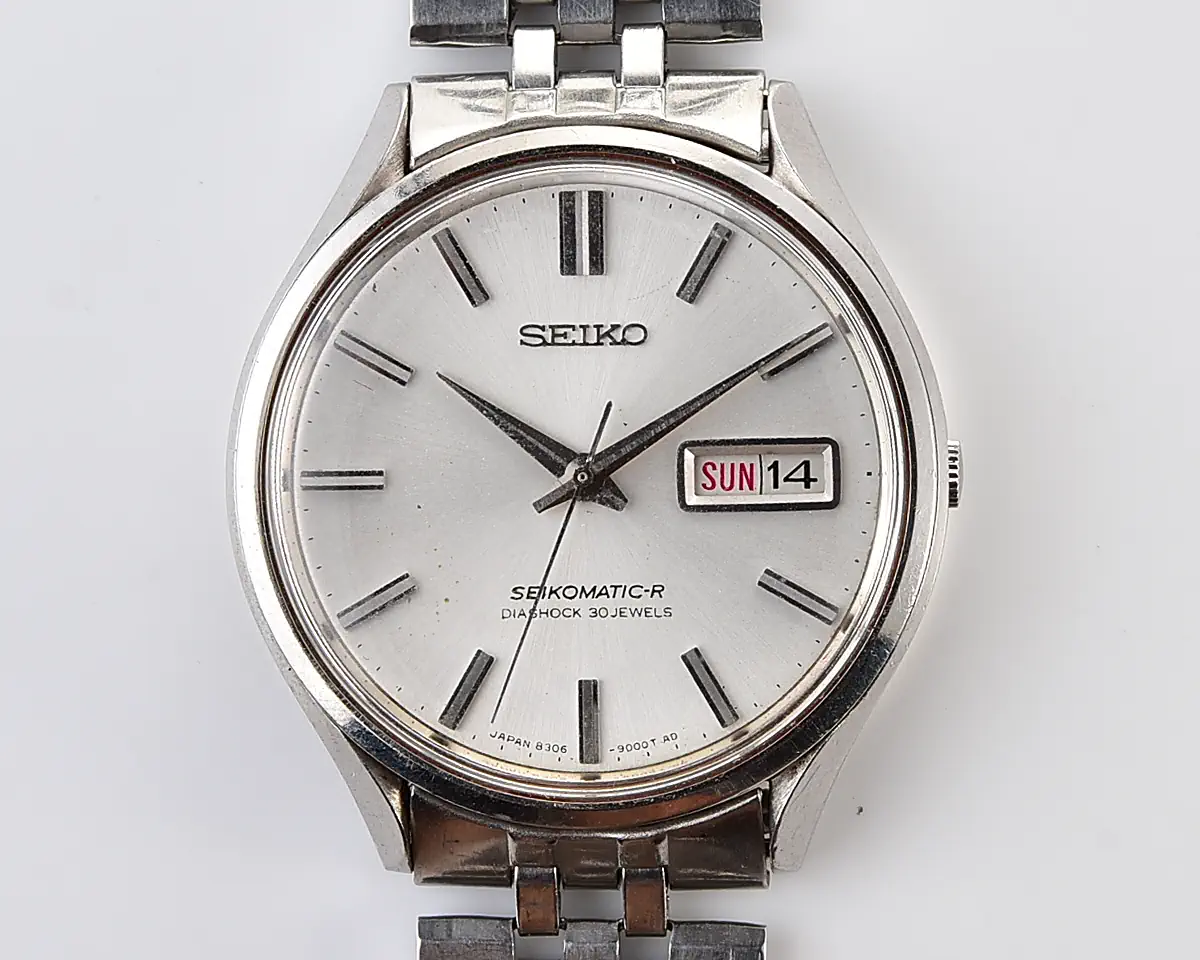
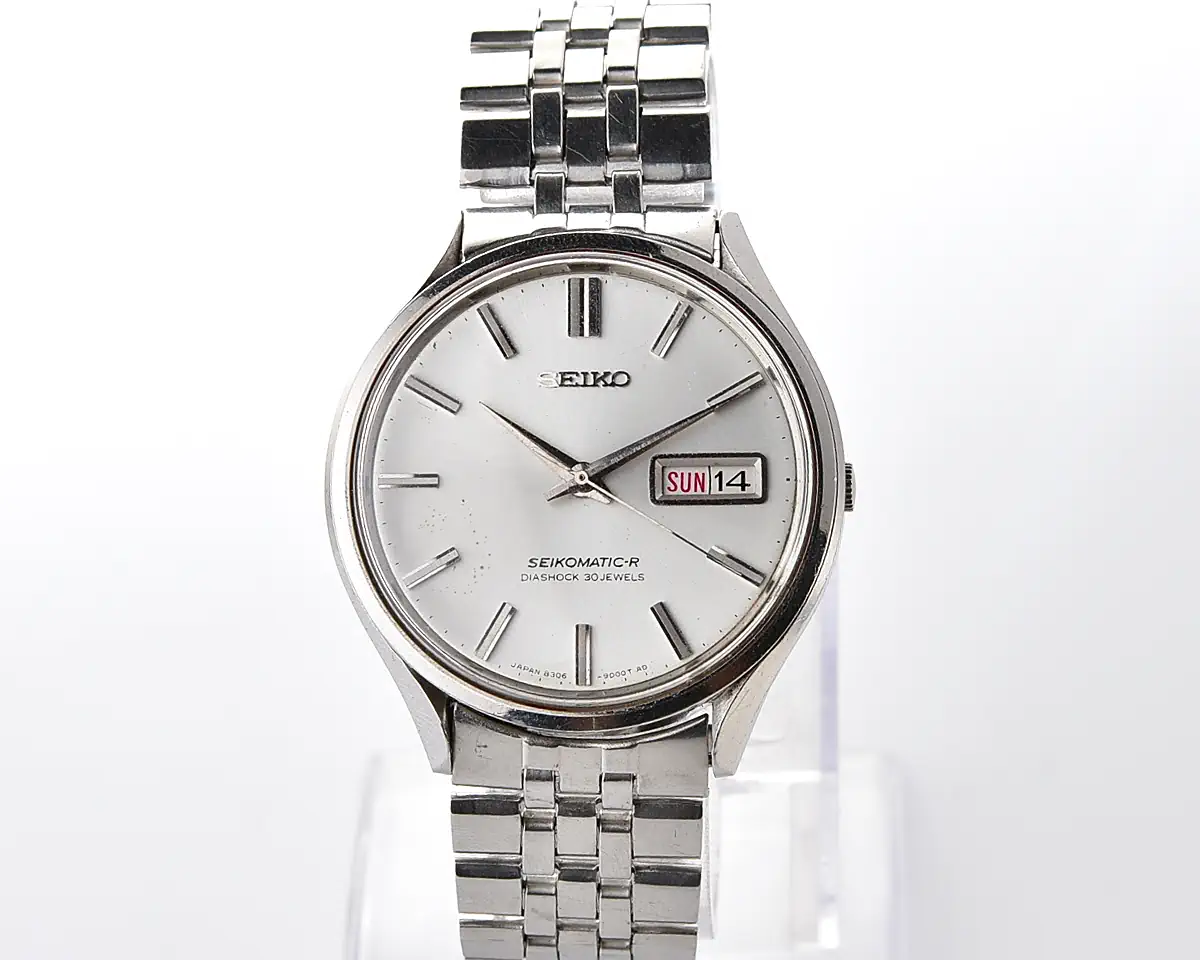
The case back serial 6N26115 dates it to November 1966 — the 6 is the year, the N is Seiko’s code for November. The outer back is stamped SEIKO WATER PROOF, SS and 8306-9000 around the dolphin, and all of it is still crisp and easy to read. The dial repeats the reference in its own code at six o’clock: JAPAN 8306-9000T AD.
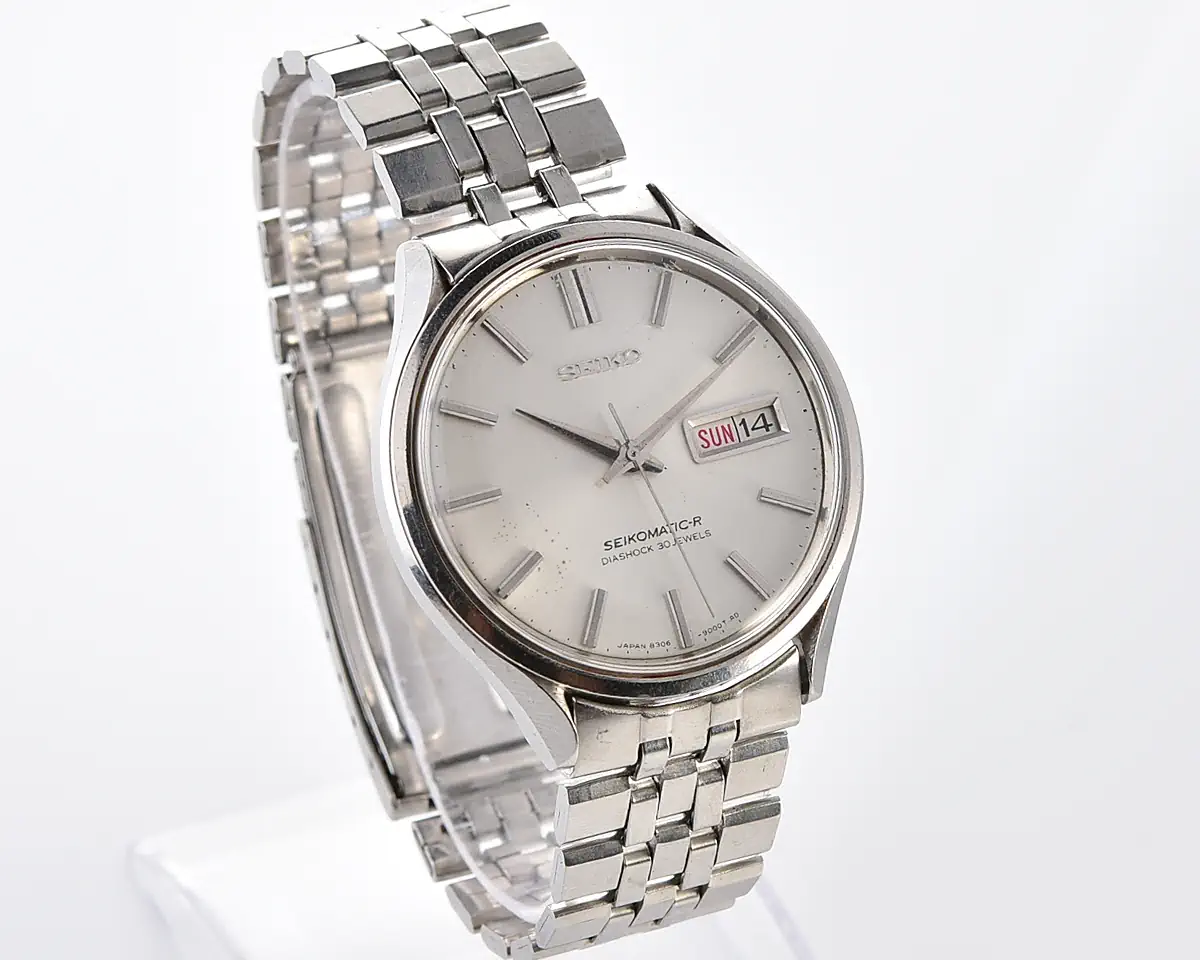
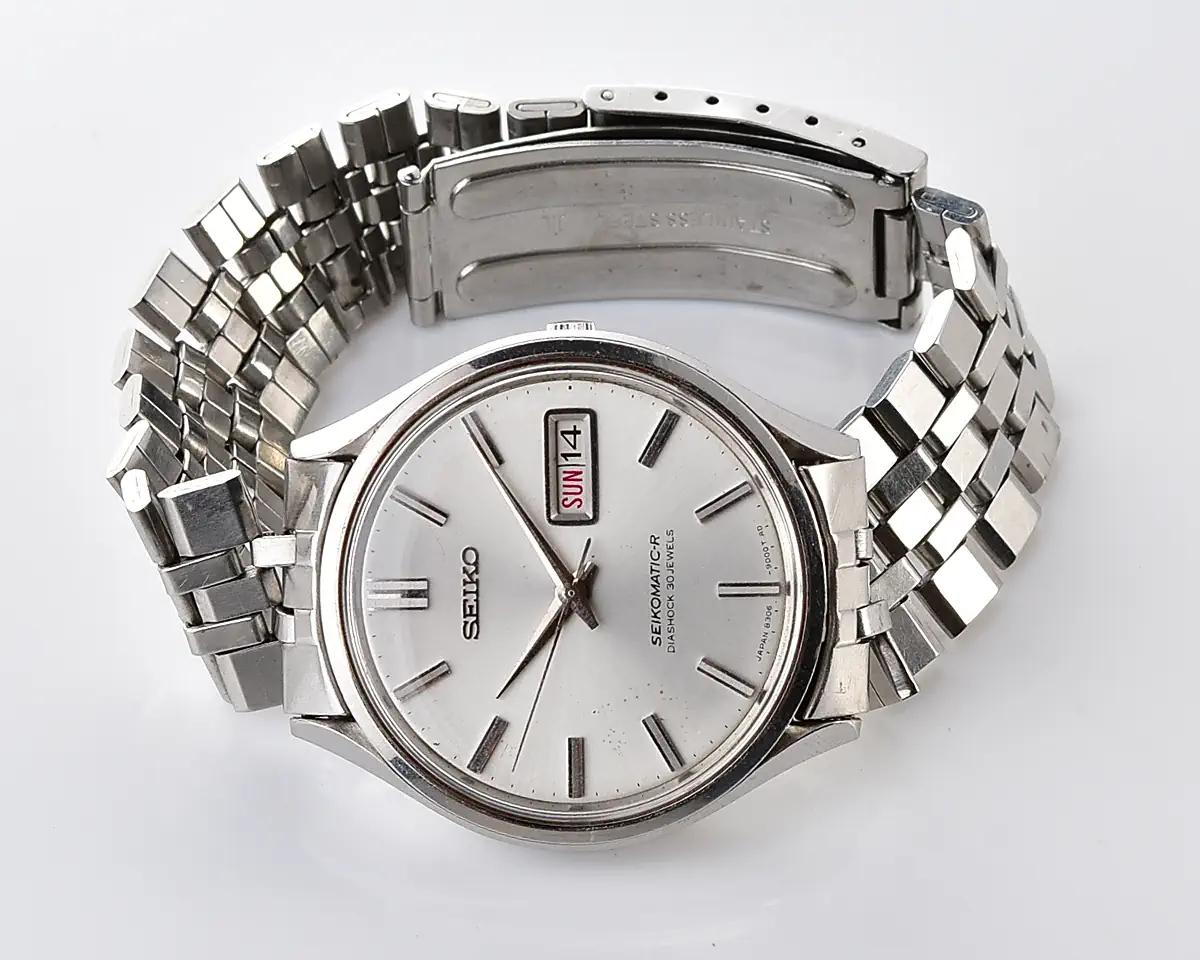
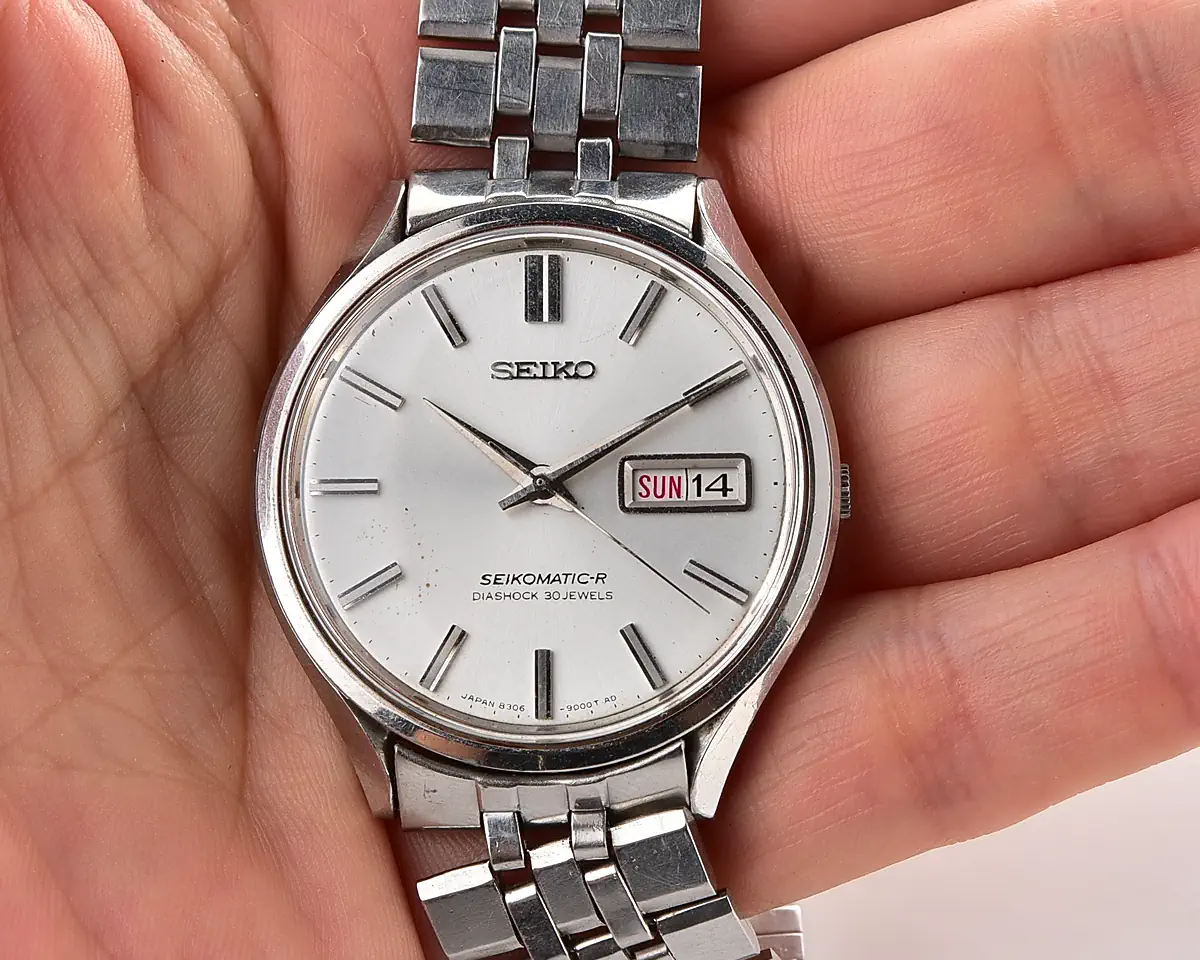
The dial is a silver sunburst with applied faceted baton indices and slim baton hands, and the day-date sits in a framed window at three o’clock — the day wheel prints SUN in red, Seiko’s usual marking for Sunday. Below centre the dial reads SEIKOMATIC-R over DIASHOCK 30JEWELS.
The caliber 8306A is an automatic beating at 18,000 vph with Diashock protection, and — unlike the earlier Seikomatics — it also winds by hand, which is exactly why the crown on this watch sits conventionally at 3 o’clock rather than being tucked away at 4. The movement plate is signed JAPAN 8306A and SEIKO 30JEWELS across the rotor.
Technical Specifications
- Brand: Seiko
- Line: Seikomatic-R
- Reference Number: 8306-9000
- Movement: Caliber 8306A, automatic with manual hand-winding, 30 jewels, 18,000 vph, Diashock
- Serial Number: 6N26115
- Production Date: November 1966
- Case Material: Stainless steel
- Case Diameter: Approx. 35 mm (excluding crown)
- Dial: Silver sunburst with applied faceted baton indices, day-date at 3 o’clock
- Crystal: Acrylic
- Case-back: Steel screw-back with embossed Seiko dolphin medallion, stamped SEIKO WATER PROOF / SS / 8306-9000
- Country of Manufacture: Japan
Condition Report
This watch is in good, honest vintage condition for a piece approaching sixty years old.
Dial: the silver sunburst finish is intact and the printing is sharp, but there is light scattered spotting across the lower-left of the dial, most visible between the 7 and 9 o’clock markers and in the area under the centre. The hands show some darkening to their polished surfaces.
Case: polished, holding its shape, with light scratches and handling marks over the lugs and bezel consistent with normal wear. The dolphin case back is unpolished and fully legible.
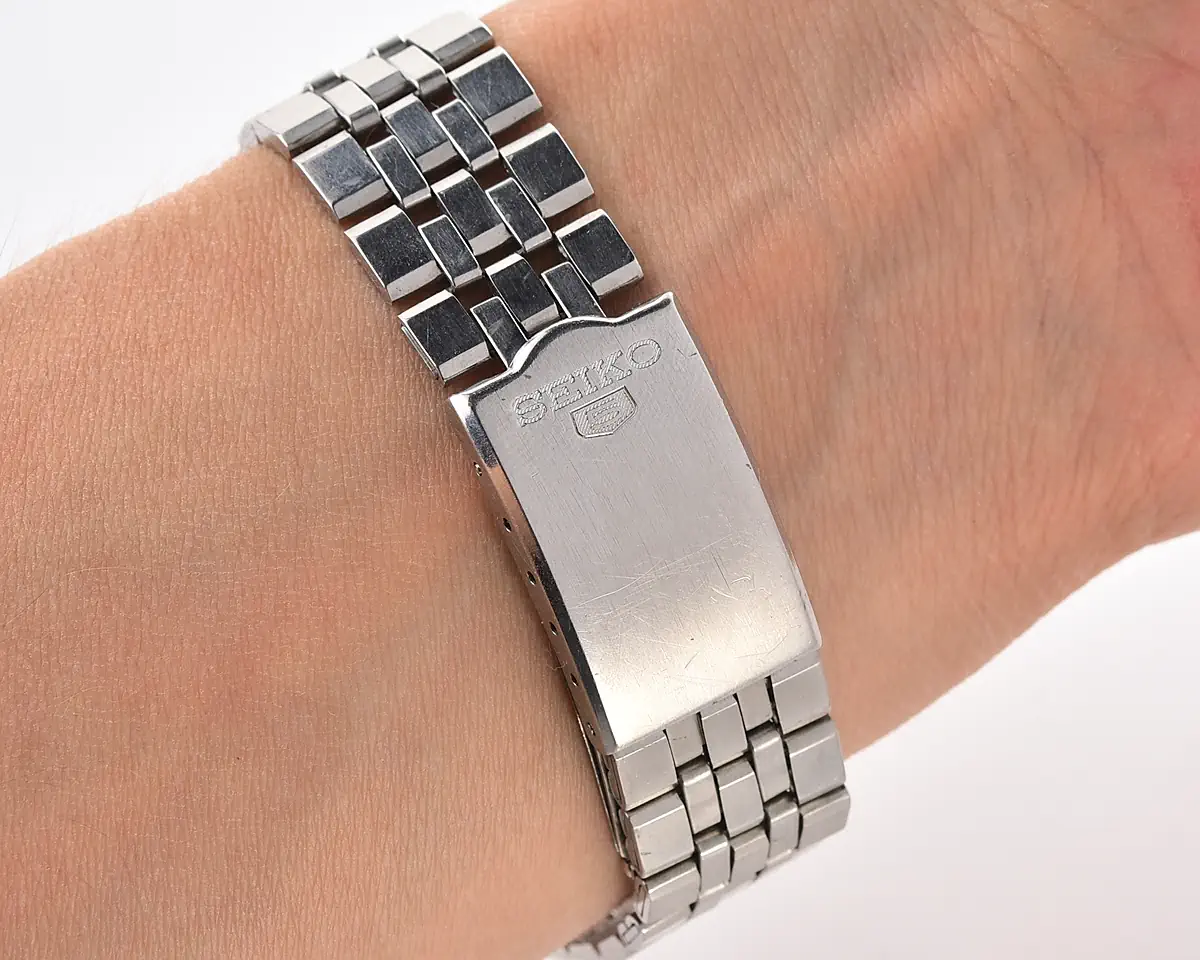
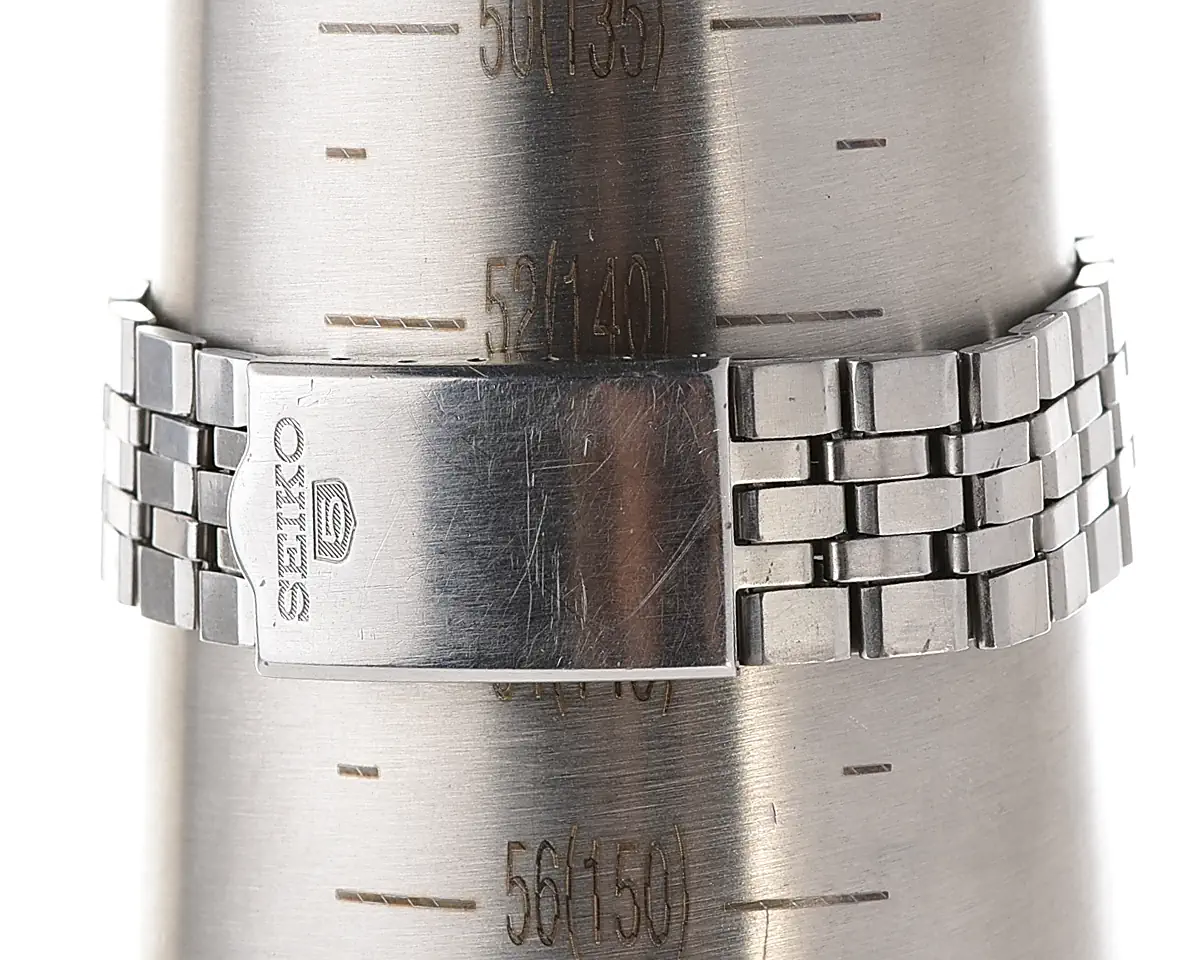
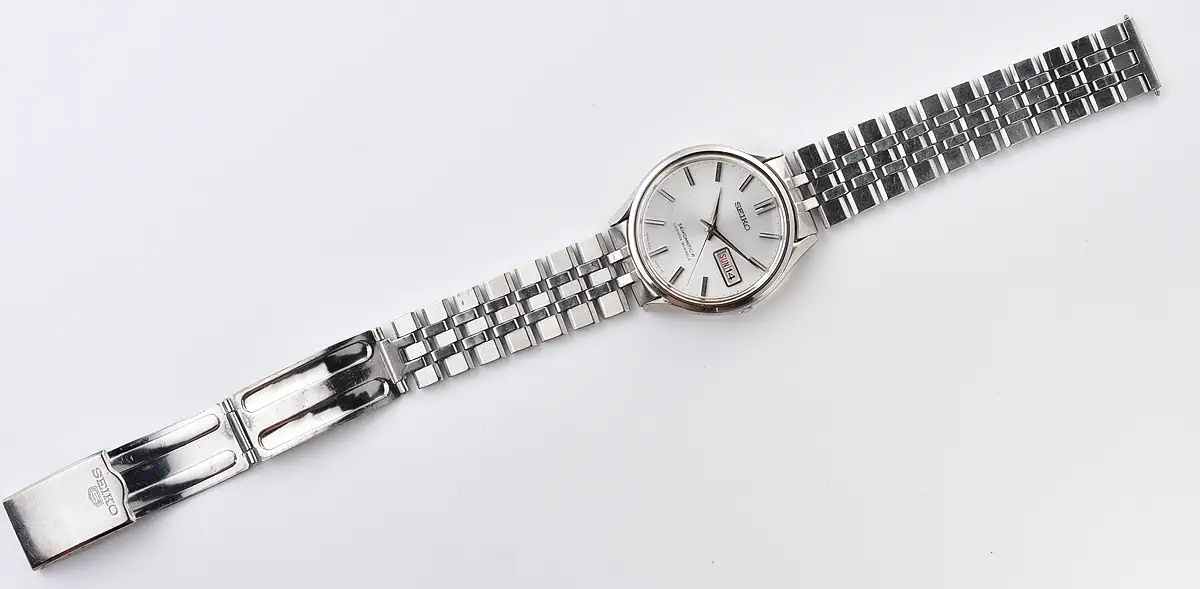
Bracelet: a period Seiko brick-link steel bracelet. The clasp is signed SEIKO and carries the Seiko 5 shield, and the end links are stamped 5139 and 600 — so it is genuine Seiko-made, but the Seiko 5 marking means it came from another Seiko line and is not the bracelet this Seikomatic-R originally left the factory on. It wears well and suits the watch; we would rather tell you than let you find out. There is the usual light stretch and surface scratching on the clasp cover.
This watch has recently been serviced by a professional watchmaker and keeps good time.
Comes complete with vintage Seiko steel bracelet*.
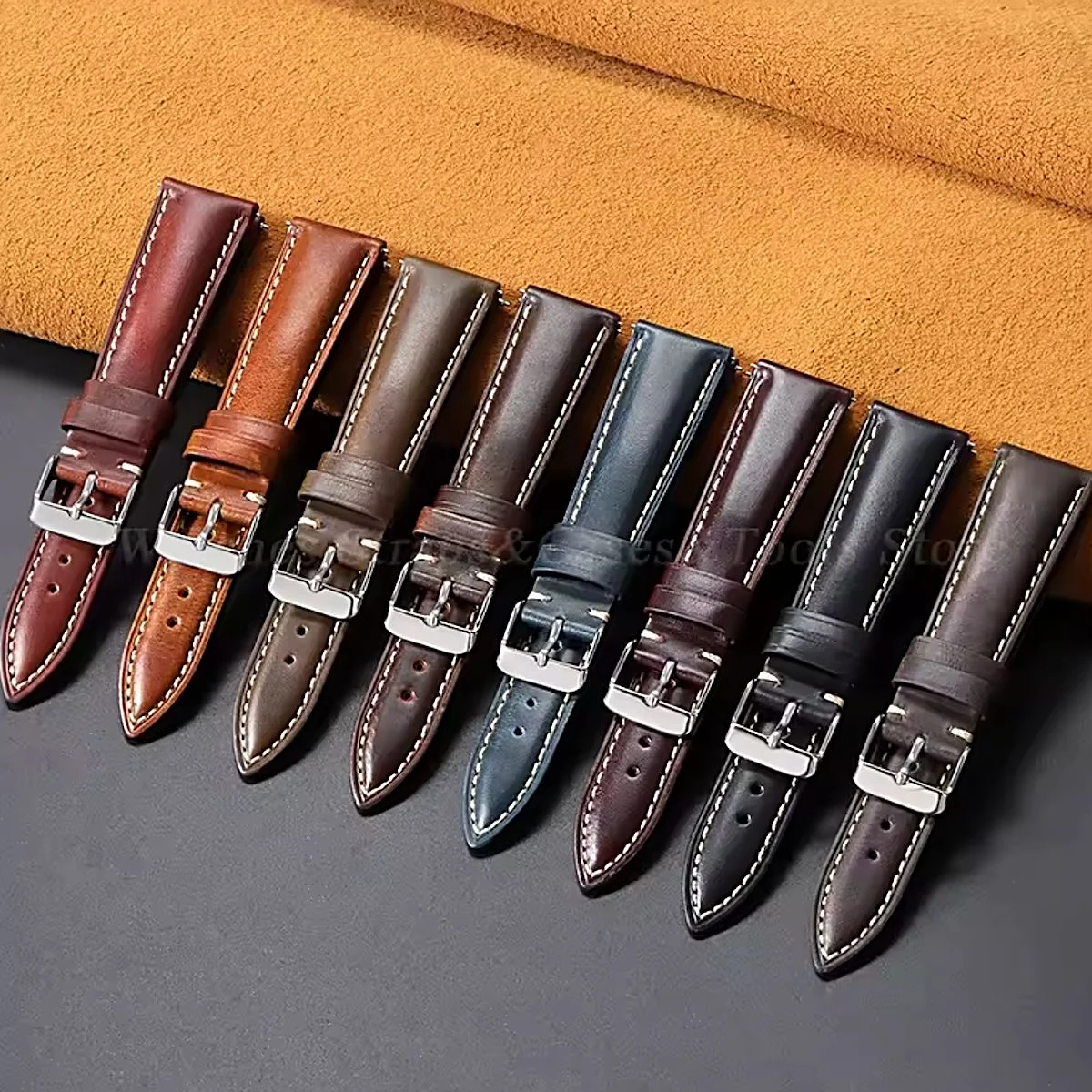
(*)Note: Stock bracelets are often shortened by previous owners and may not fit you(see bracelet size in the product images). We recommend adding a new Seiko lug width matched leather strap with your order.
This watch ships from 🇺🇦 Ukraine with tracking number
Why Collectors Want This Watch Today
The Seikomatic-R offers mid-1960s Seiko engineering well below King Seiko prices. Its 83-series movement is slim, winds by hand and carries 30 jewels, and the day-date is the most practical version of the family.
These are not rare watches; Seiko made them in quantity for the Japanese professional market, and examples come up regularly. What varies is condition, and specifically the case back: the embossed dolphin is the first thing to disappear under a polishing wheel, and a great many surviving examples have a smooth, anonymous back as a result. This one still has a crisp one, along with a legible serial and reference. That, rather than scarcity, is what makes a particular example worth choosing.
Modes of payment:
- PayPal
- Credit Cards (VISA, MasterCard, American Express, Discover)
- bitcoin
We guarantee the item you receive looks and works exactly as advertised — or your money back.
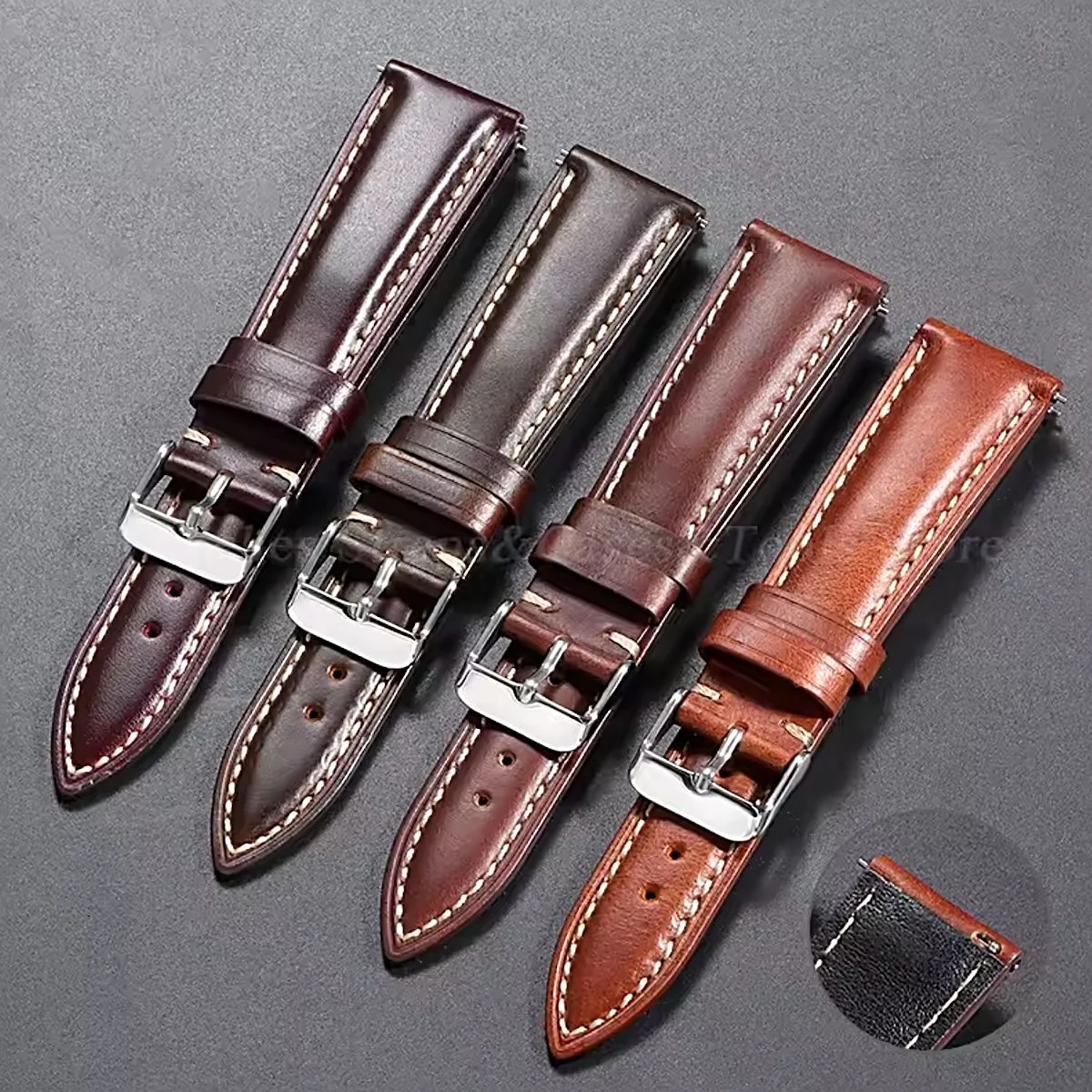
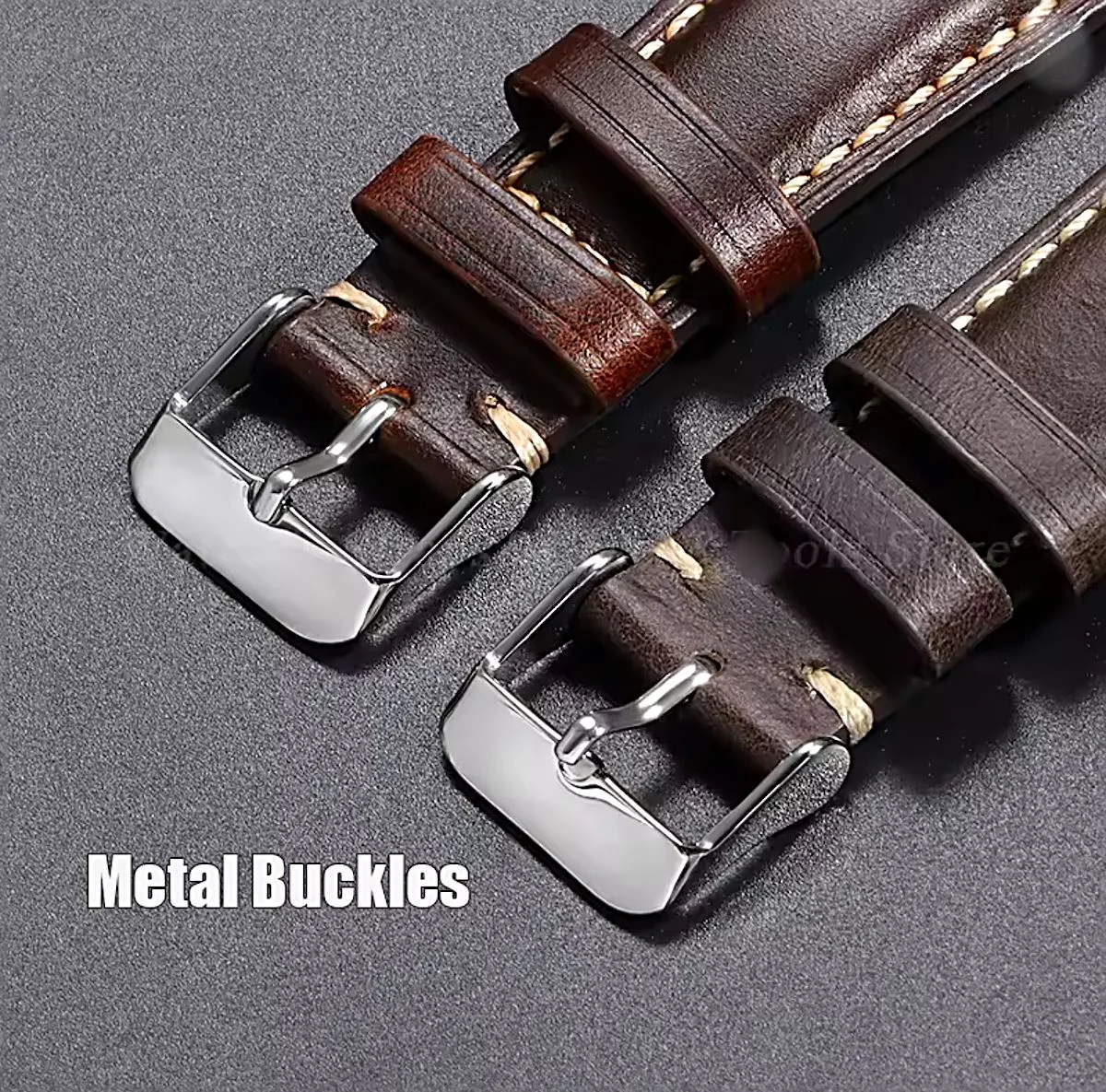
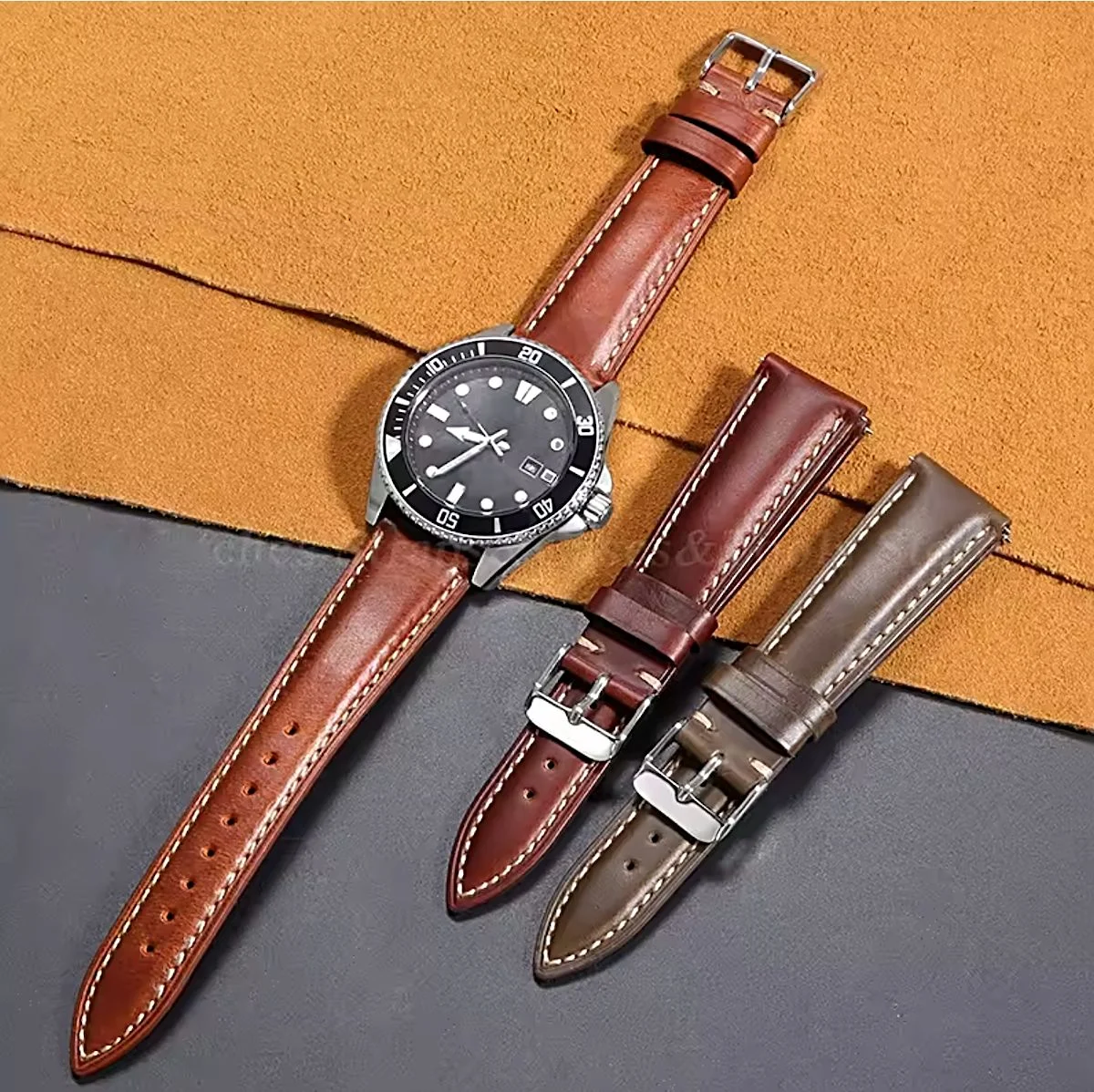
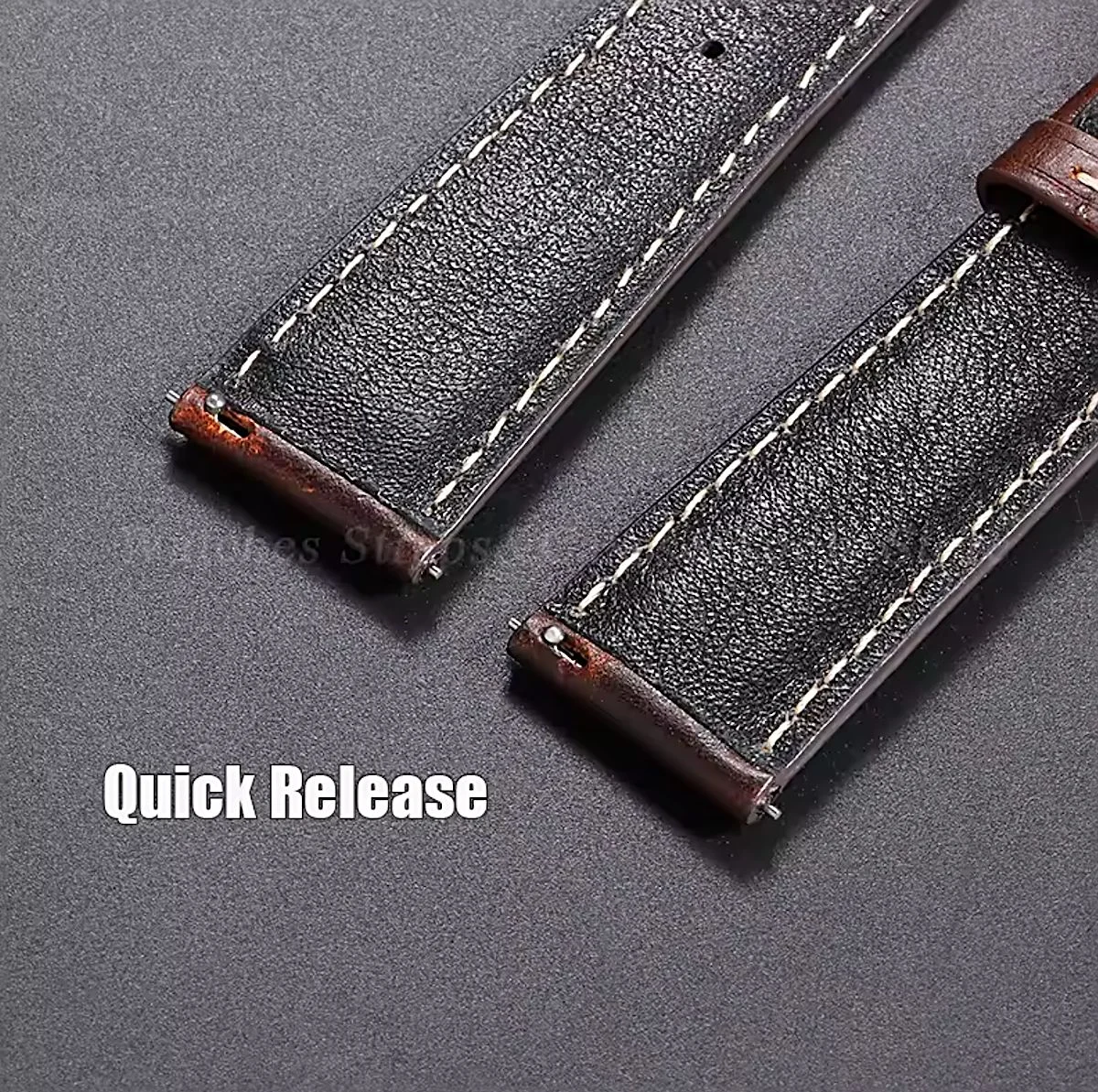
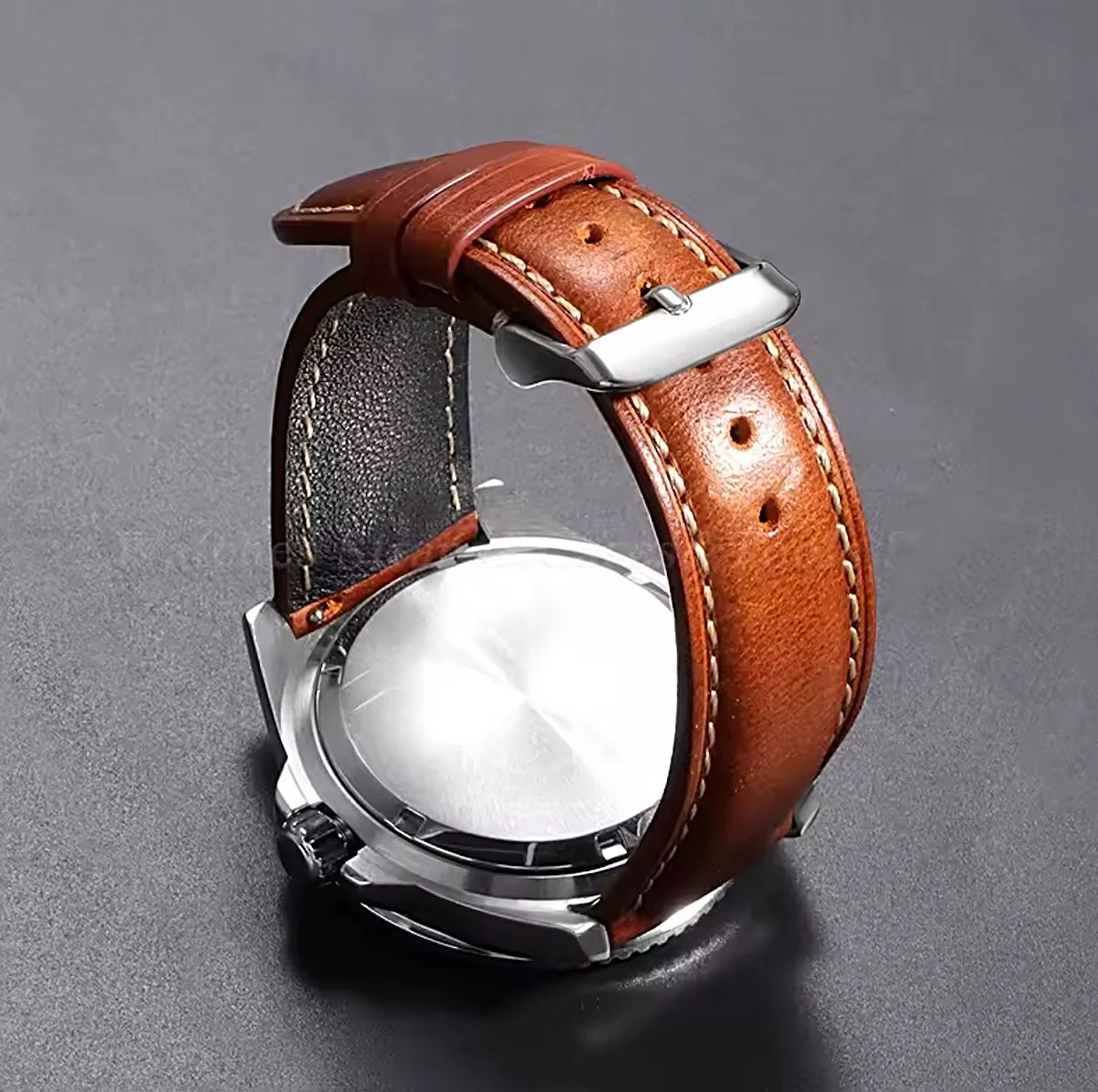
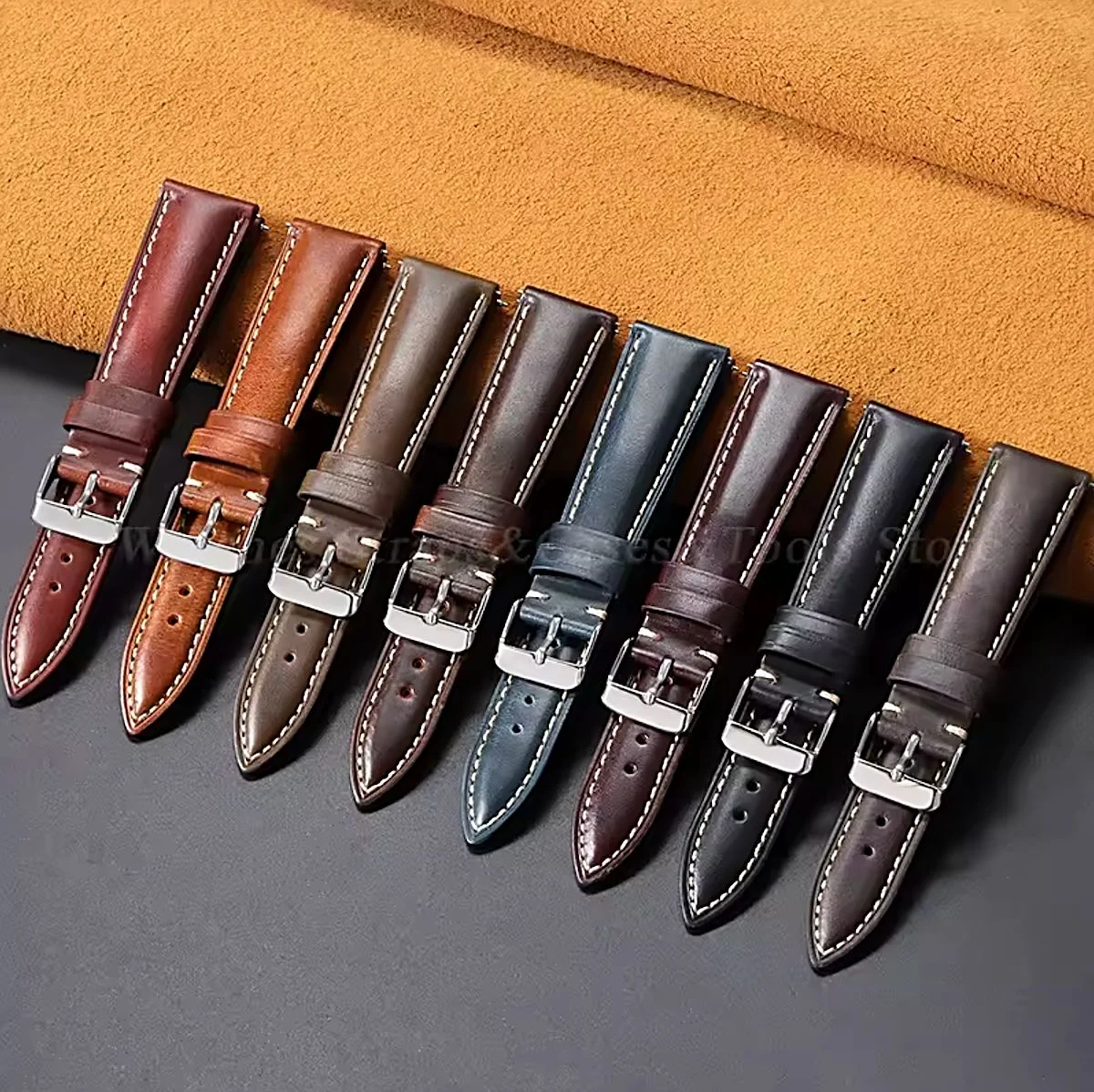
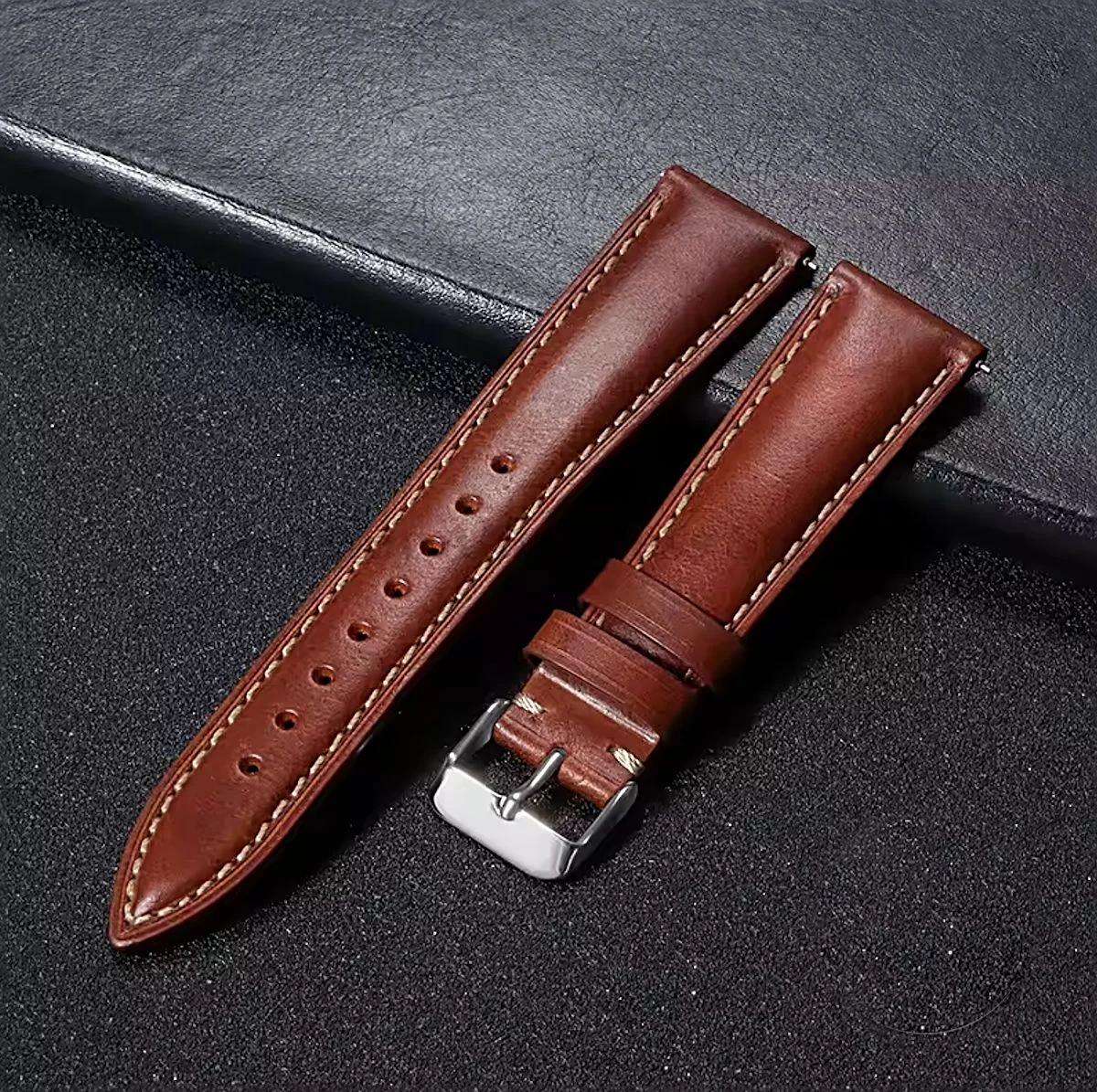
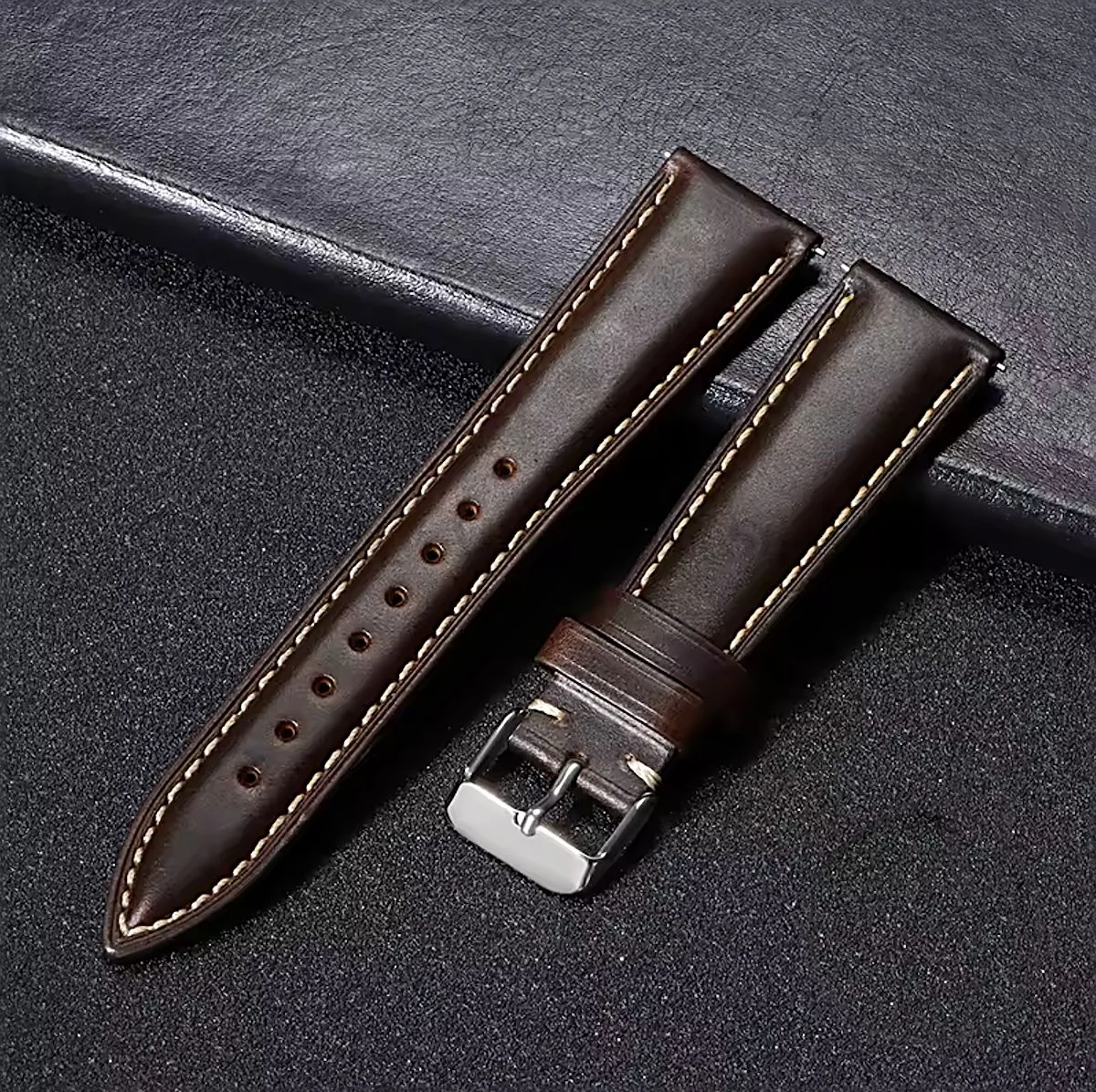
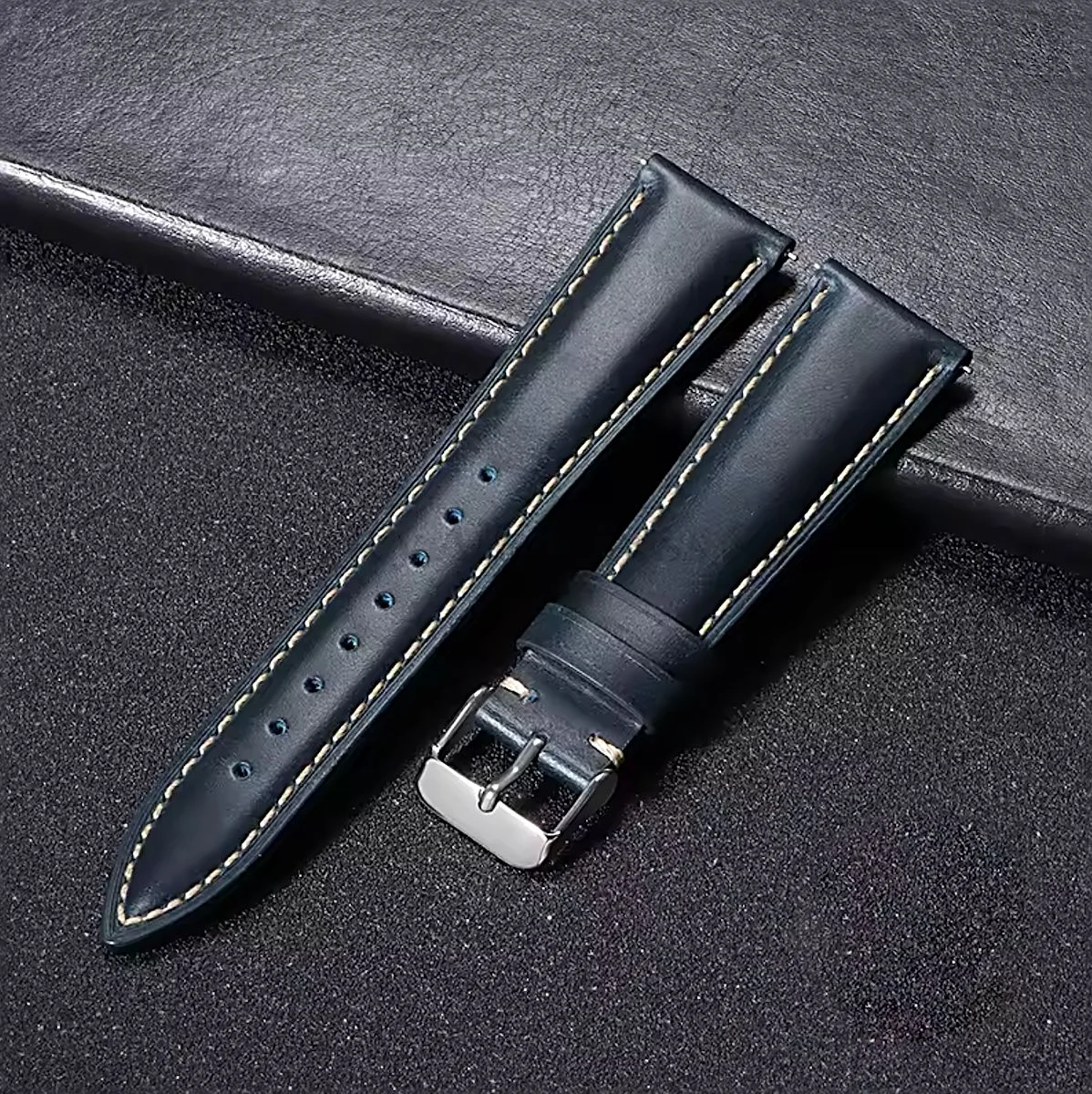
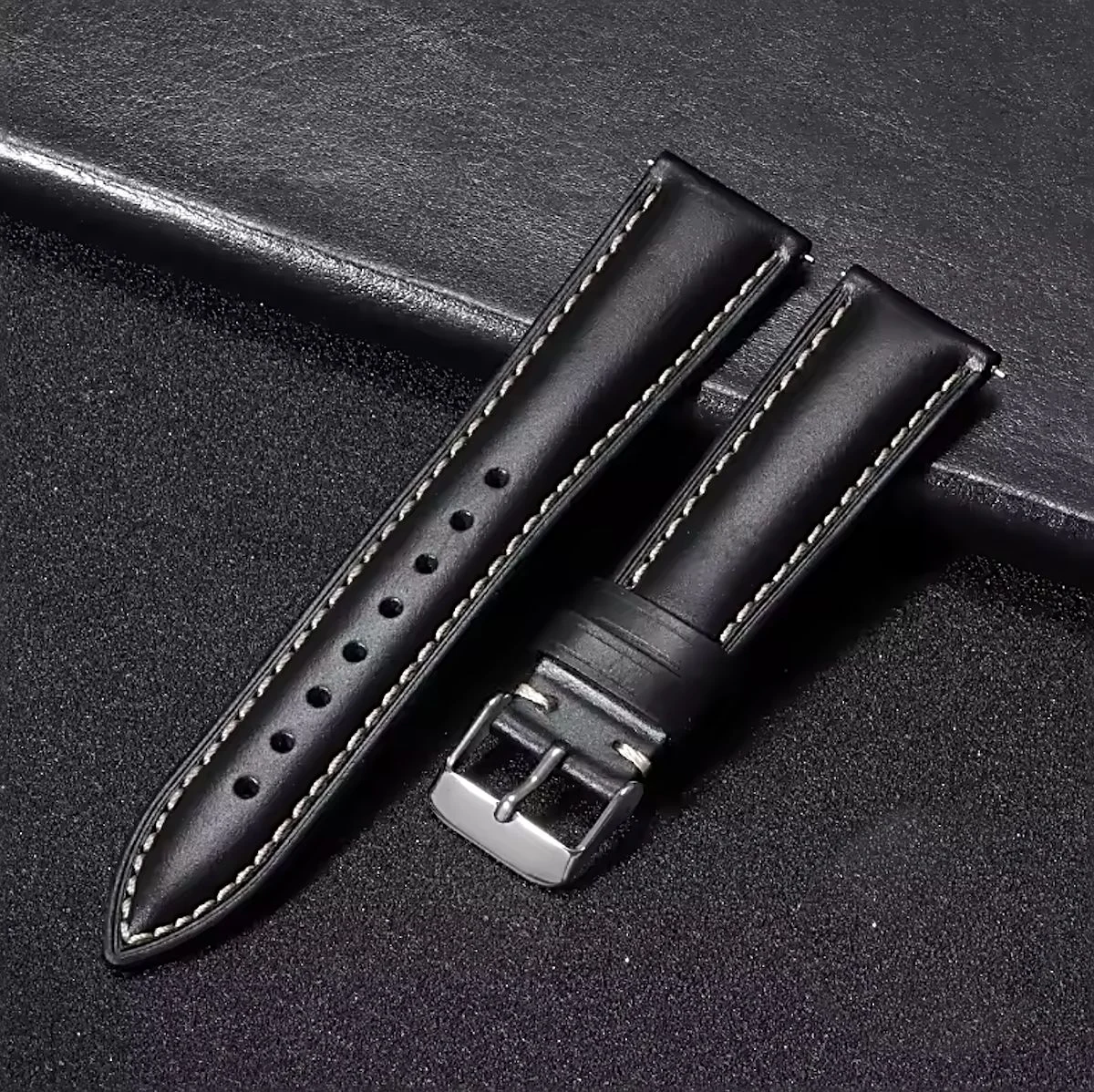
Seiko lug-width matched leather straps — 18 / 19 / 20 mm
About the watch factory
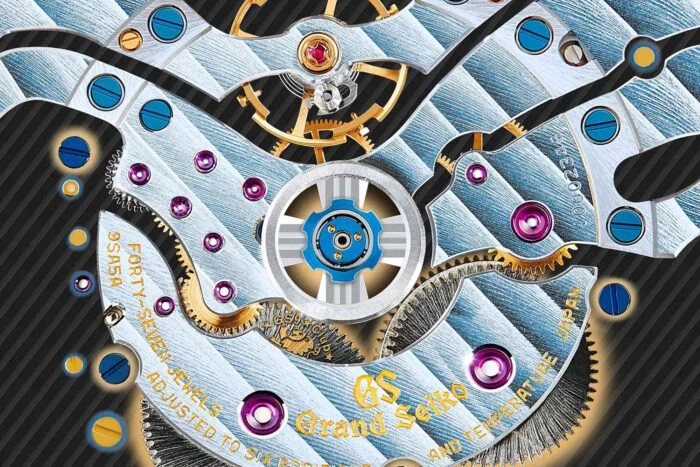
Seiko Group Corporation (セイコーグループ株式会社, Seikō Gurūpu kabushiki gaisha), commonly known as Seiko, is a Japanese maker of watches, clocks, electronic devices, and semiconductors. Founded in 1881 by Kintarō Hattori in Tokyo, Seiko introduced the world’s first commercial quartz wristwatch in 1969.
Seiko is widely known for its wristwatches. Seiko is one of the few watch companies that is fully vertically integrated. Seiko is able to design and develop all the components of a watch, as well as assemble, adjust, inspect and ship them in-house. Seiko’s mechanical watches consist of approximately 200 parts, and the company has the technology and production facilities to design and manufacture all of these parts internally.
Seiko offers one of the widest ranges of watch technologies in the world—quartz, kinetic, solar, mechanical, and Spring Drive—spanning everything from affordable everyday pieces to six-figure haute horlogerie. Over the decades it has launched multiple global brands, including Lorus, Pulsar, and Alba, while elevating its prestige through innovations like Spring Drive, which helped push Seiko into higher-end territory. In 2017, Grand Seiko was spun off into its own standalone luxury brand, while Credor remains part of Seiko’s own lineup, sold primarily in Japan. Seiko’s own global lineup now includes Grand Seiko, King Seiko, Prospex, Astron, Presage, and Seiko 5 Sports.
Among Seiko’s key lines, Seiko 5 (born in 1963) is the gateway mechanical series known for durability and value; Lord Matic defined 1970s style with faceted crystals and colorful dials; Astron remains Seiko’s flagship GPS-solar tech line; Presage focuses on traditional mechanical craftsmanship with enamel and urushi dials; and Prospex delivers professional-grade dive, field, and pilot watches often embraced by enthusiasts. At the top end, Grand Seiko emphasizes precision, Zaratsu polished design, and movements like Spring Drive, while King Seiko—revived in the 2020s—brings back sharp, elegant 1960s styling with modern calibres.
Finally, Credor represents Seiko’s pinnacle of artisanal watchmaking, producing low-volume pieces in precious metals and showcasing Japanese decorative arts and haute complications from the Micro Artist Studio. Beyond watches, Seiko has also produced various electronic devices and, historically, jewelry and eyewear—though those divisions have since shifted to other companies.