Description
SEIKO vintage quartz watch
MADE IN JAPAN
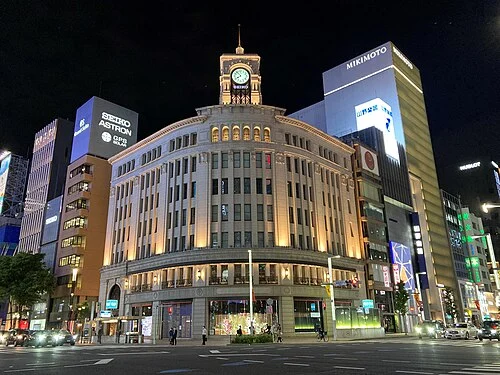
“Seiko” (精工) is a Japanese word meaning “precision,” “exquisite workmanship,” or “refined craftsmanship.”
It comes from the characters:
-
精 (sei) – fine, precise, refined
-
工 (ko) – craft, workmanship
Originally, Seiko’s watchmaking division was called Seikosha (精工舎), meaning “House of Precision.”
The name first appeared on a watch dial in 1924, shortened from Seikosha and keeping the core meaning; the company itself was renamed Hattori Seiko in 1983 and Seiko Corporation in 1990.
So the brand name literally ties directly to the idea of precision engineering—which is exactly what the company wanted to be known for in its watches.
About the Seiko 5933 Quartz Line
Seiko put the world’s first quartz wristwatch, the Astron, on sale in December 1969. Through the 1970s the company worked to make quartz smaller, cheaper and more reliable, and by the end of the decade a quartz movement had become something an ordinary office worker could wear every day rather than a showpiece.
The caliber 5933 belongs to that next step. Built at Seiko’s Daini factory in the early 1980s, it is a compact six-jewel quartz movement with a quick-set day and date, and Seiko fitted it to a family of slim steel dress watches for the Japanese home market, many of them in the squared “TV” case shape that was popular at the time. The dials keep the Seiko quartz emblem at 6 o’clock, and the day wheel is bilingual, English and Japanese Kanji.
About This Watch
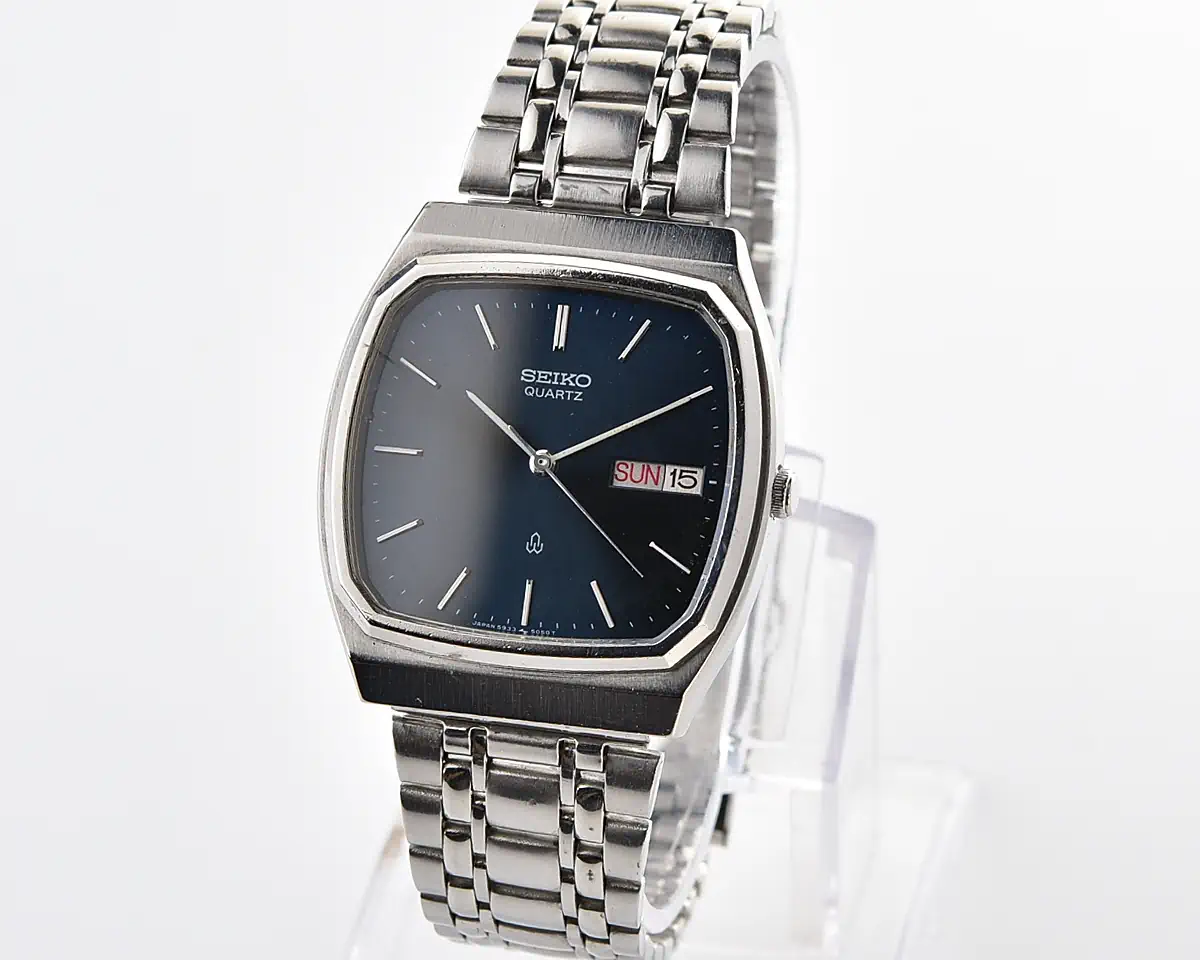
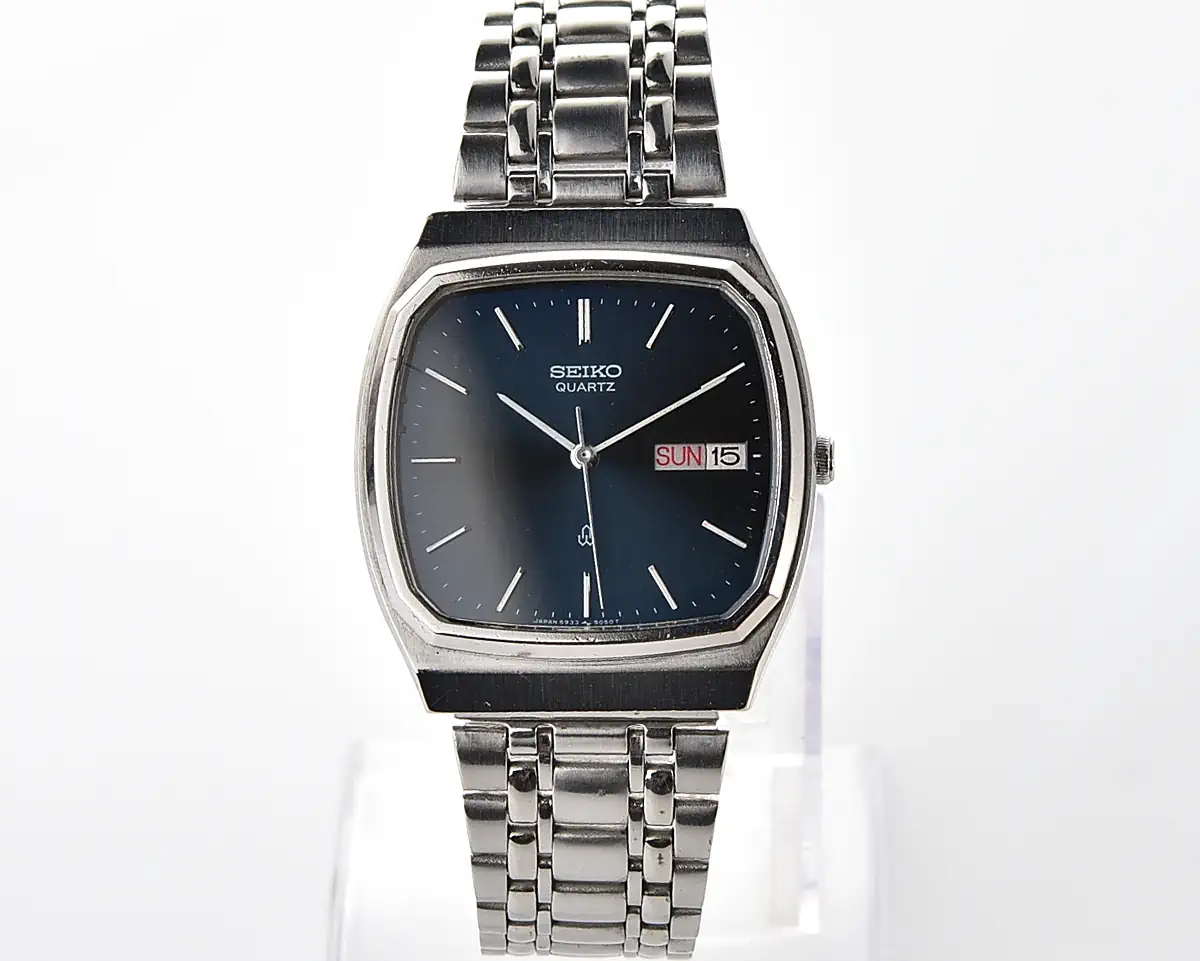
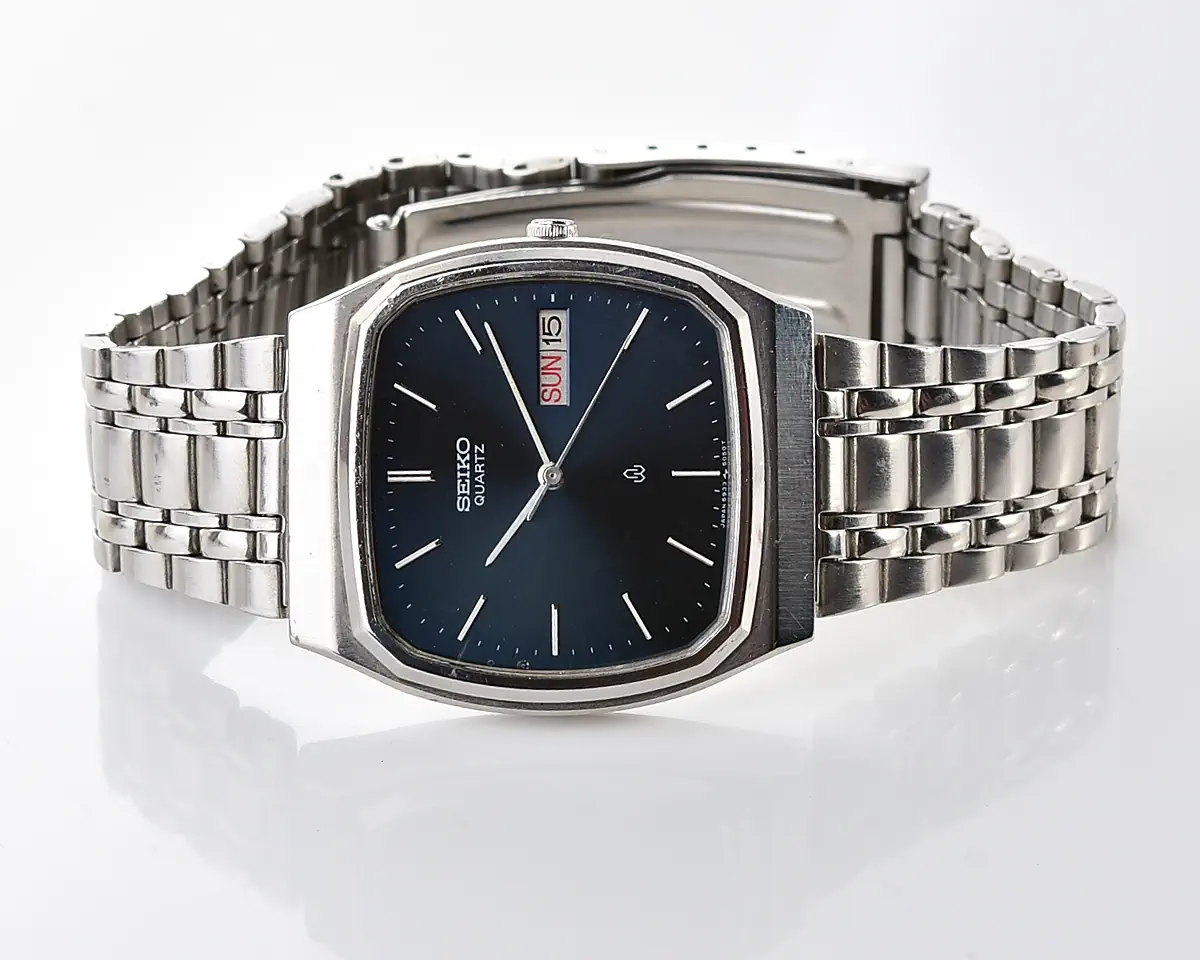
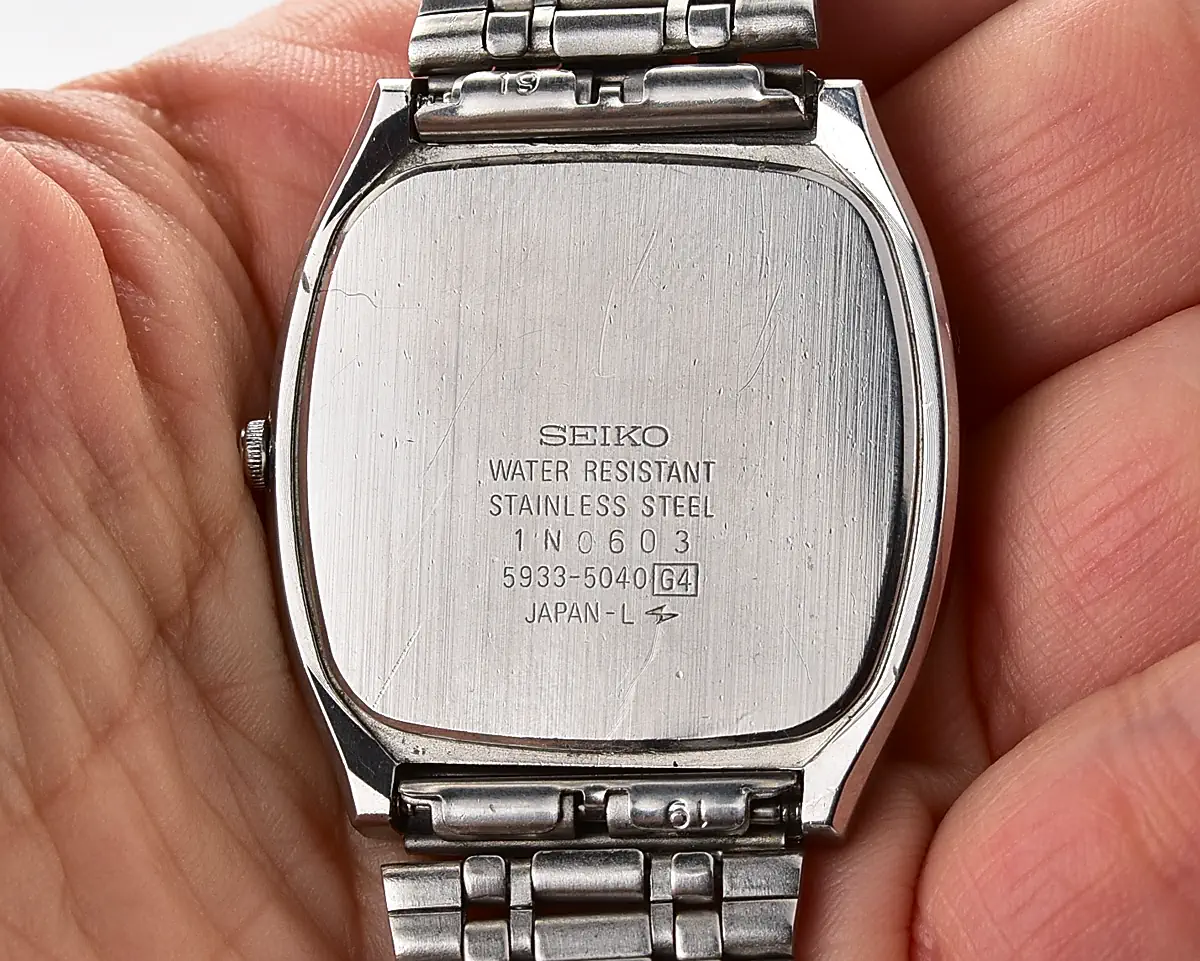
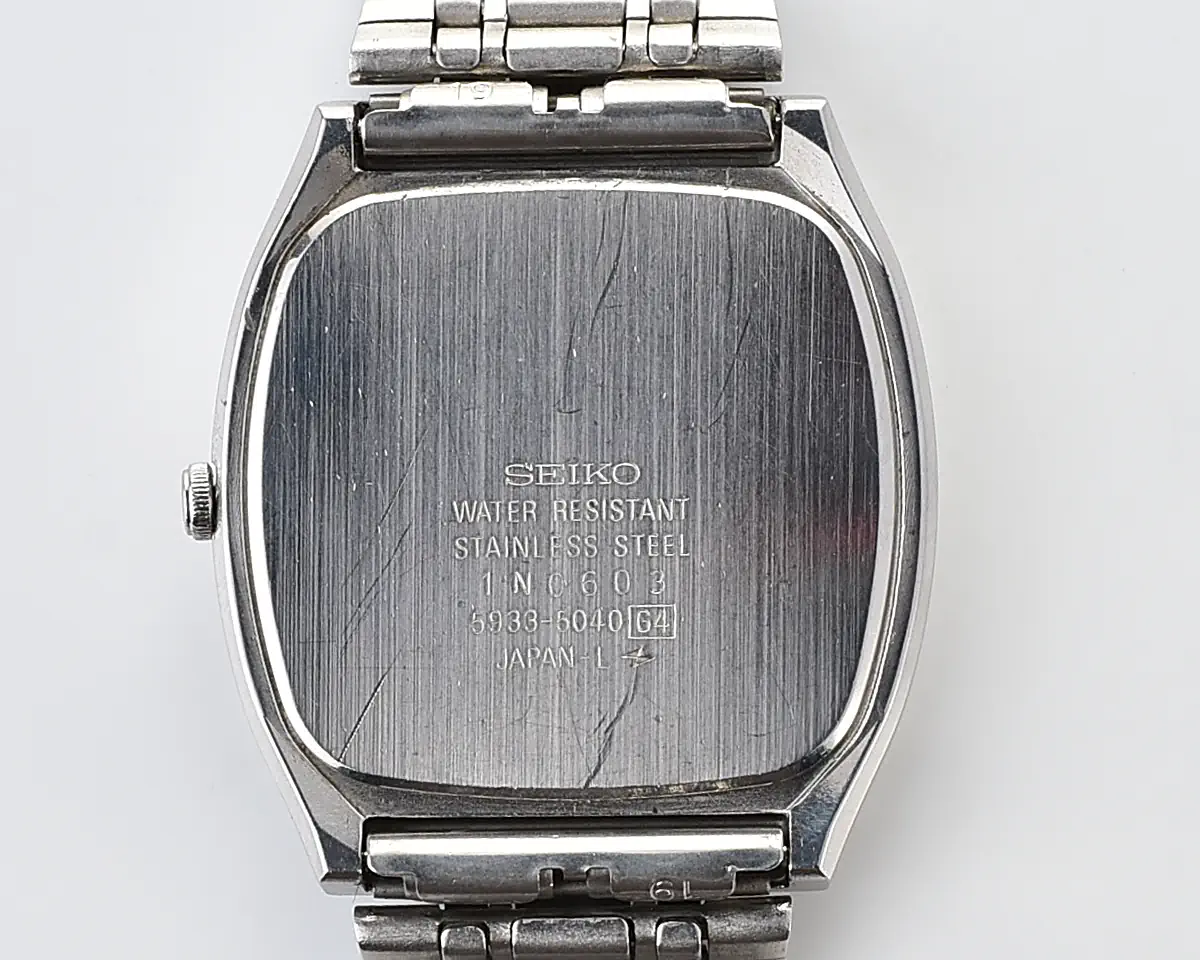
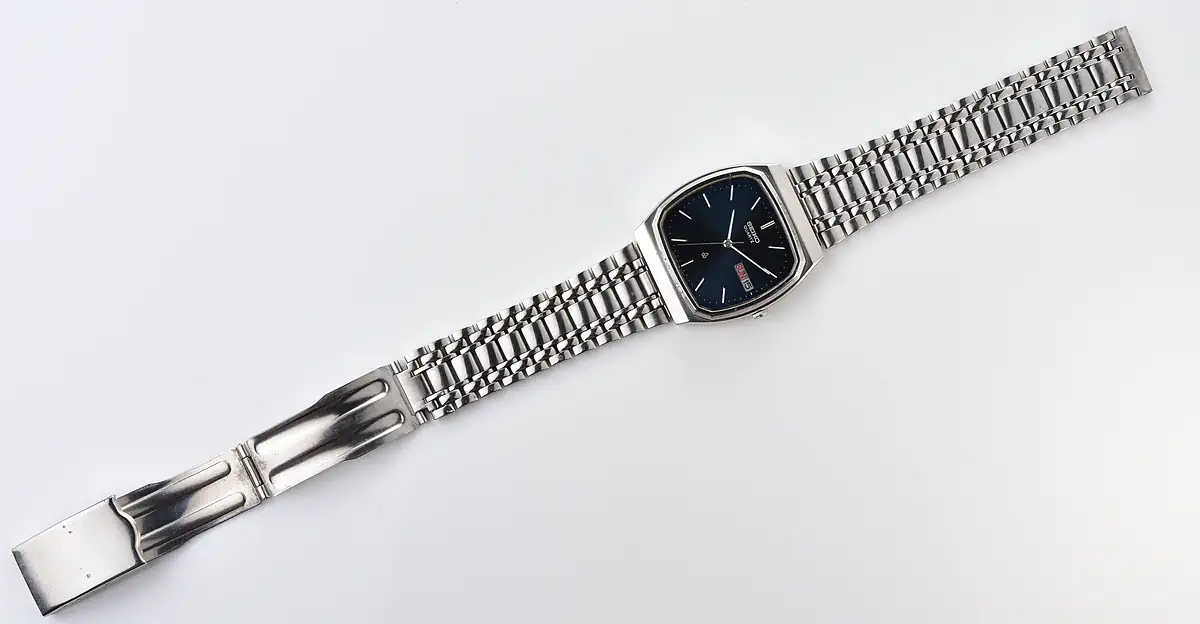
This is a Seiko Quartz, reference 5933-5040. The serial number on the case back is 1N0603: the first digit gives the year and the letter N stands for November, which dates this watch to November 1981.
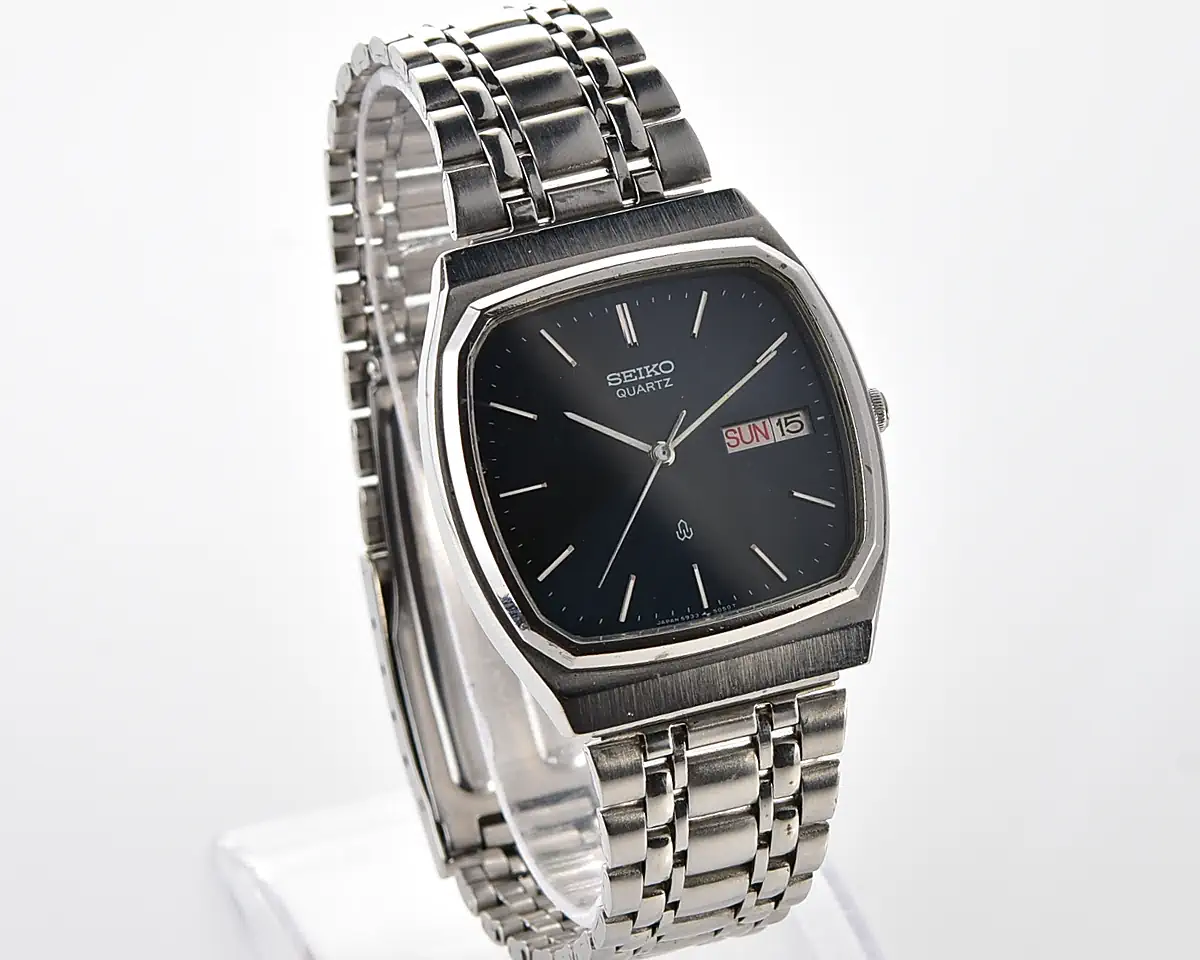
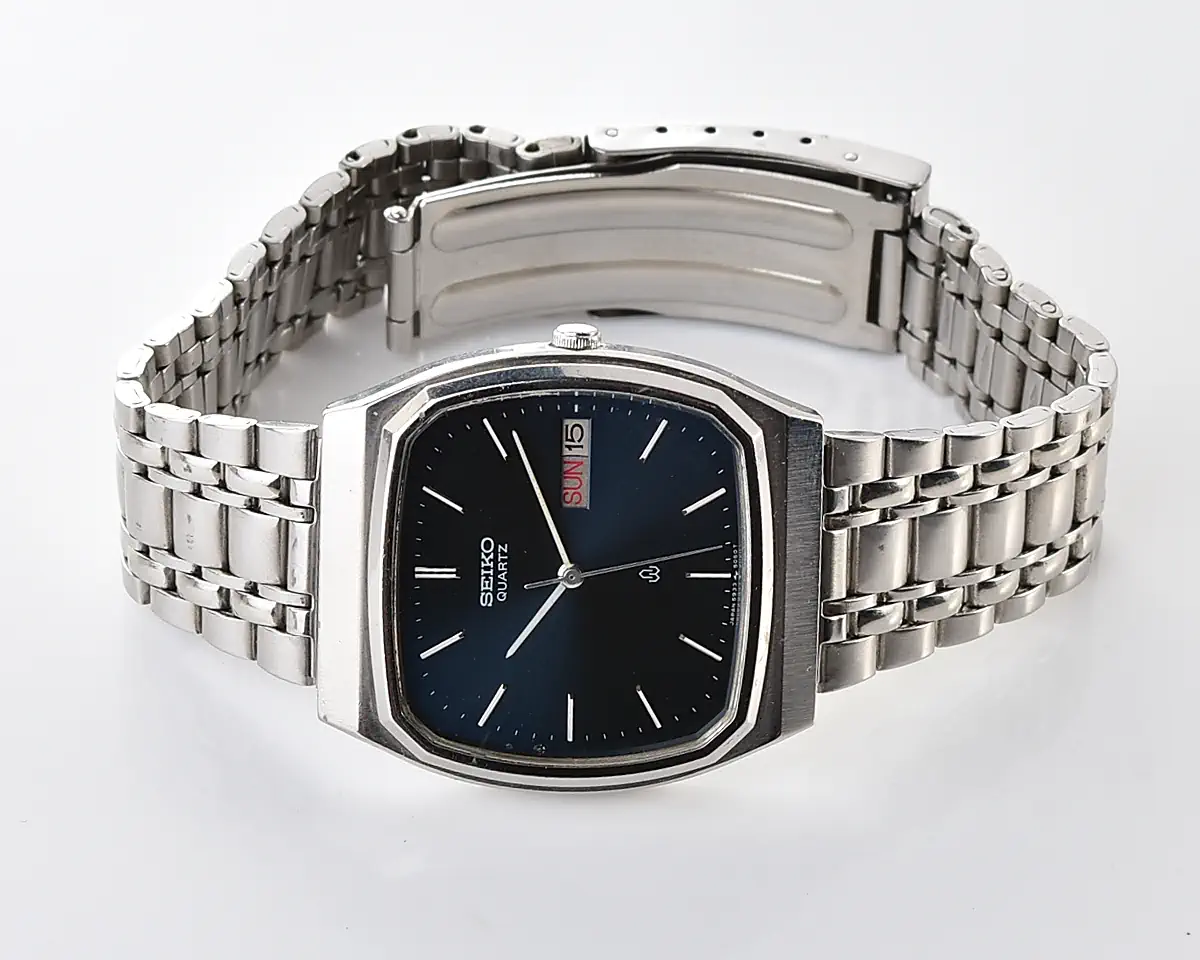
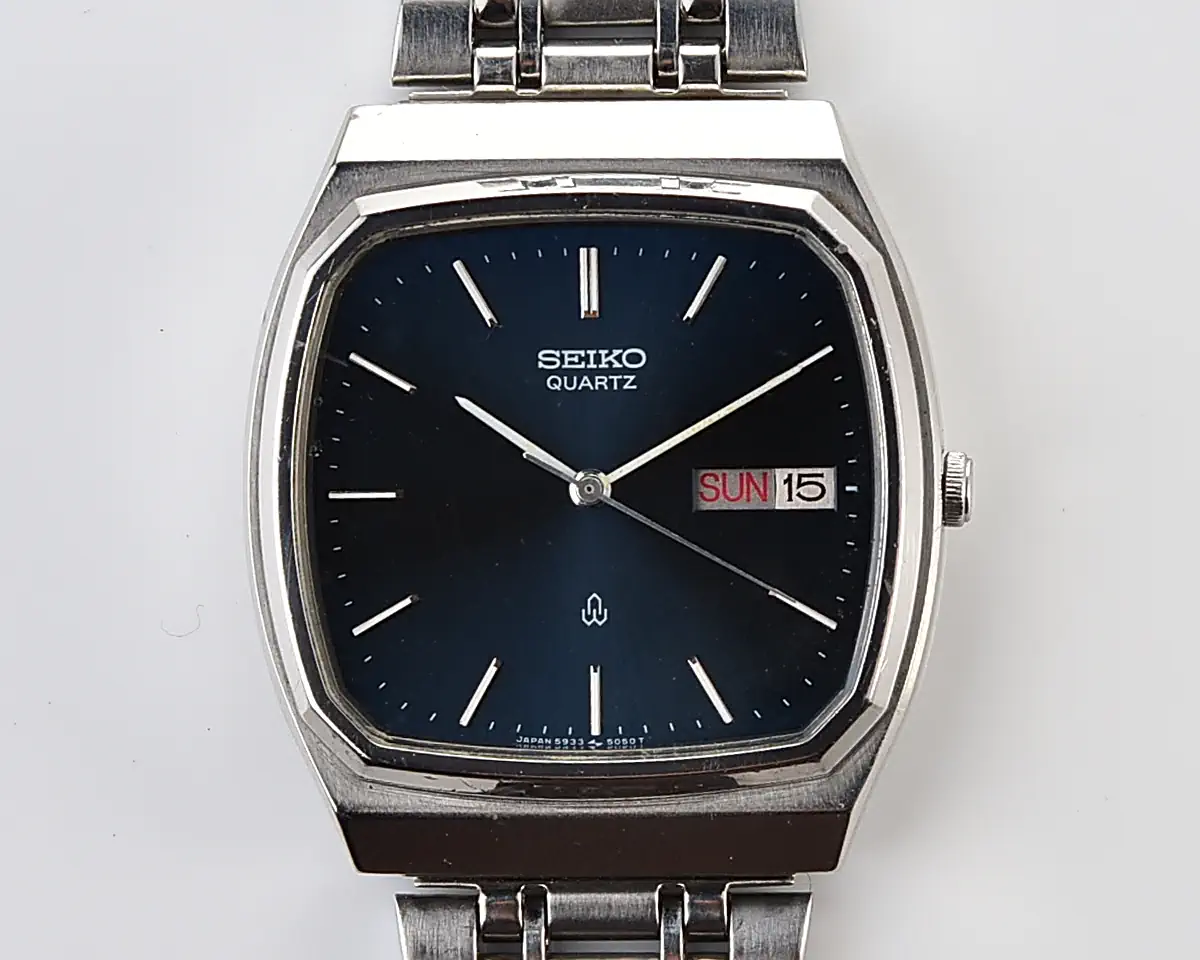
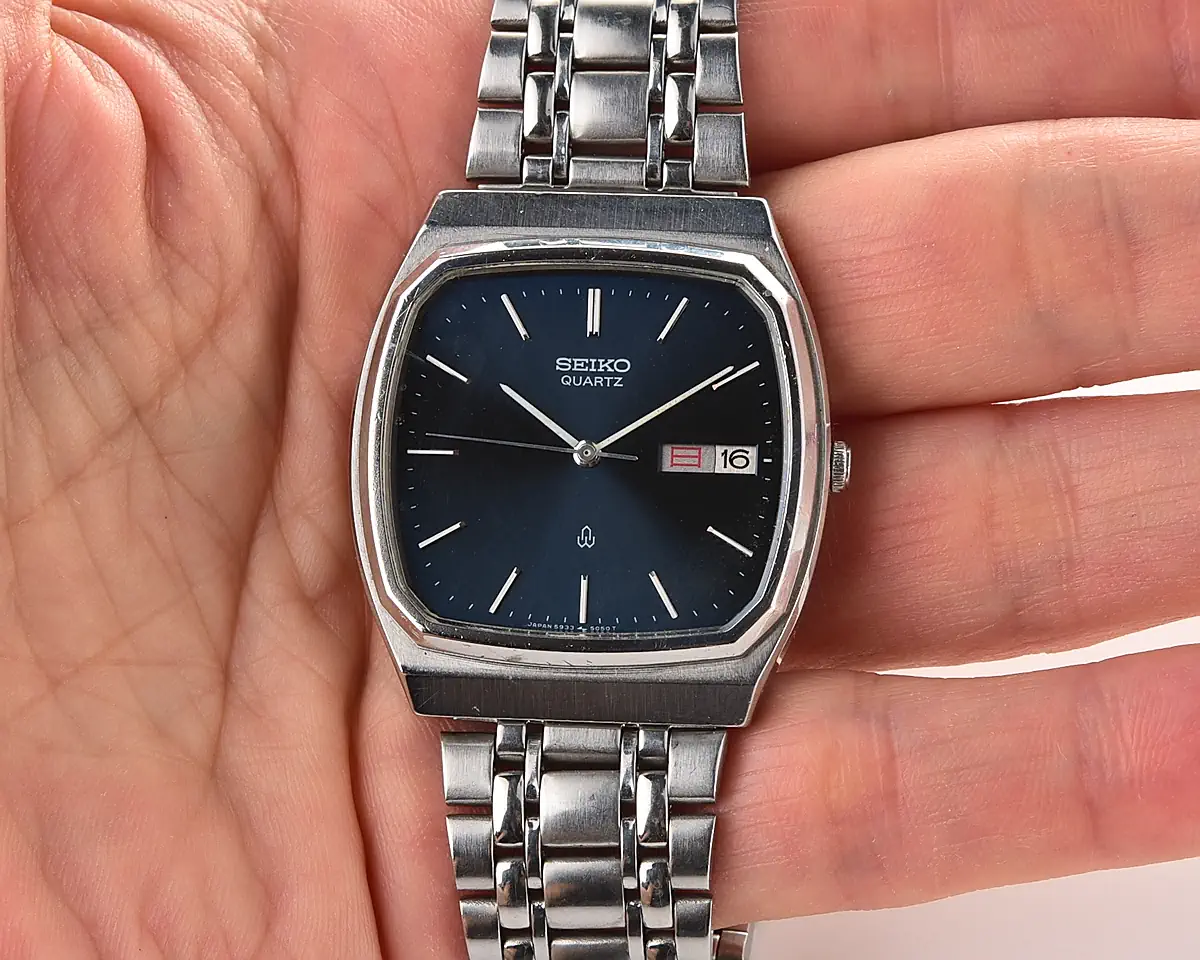
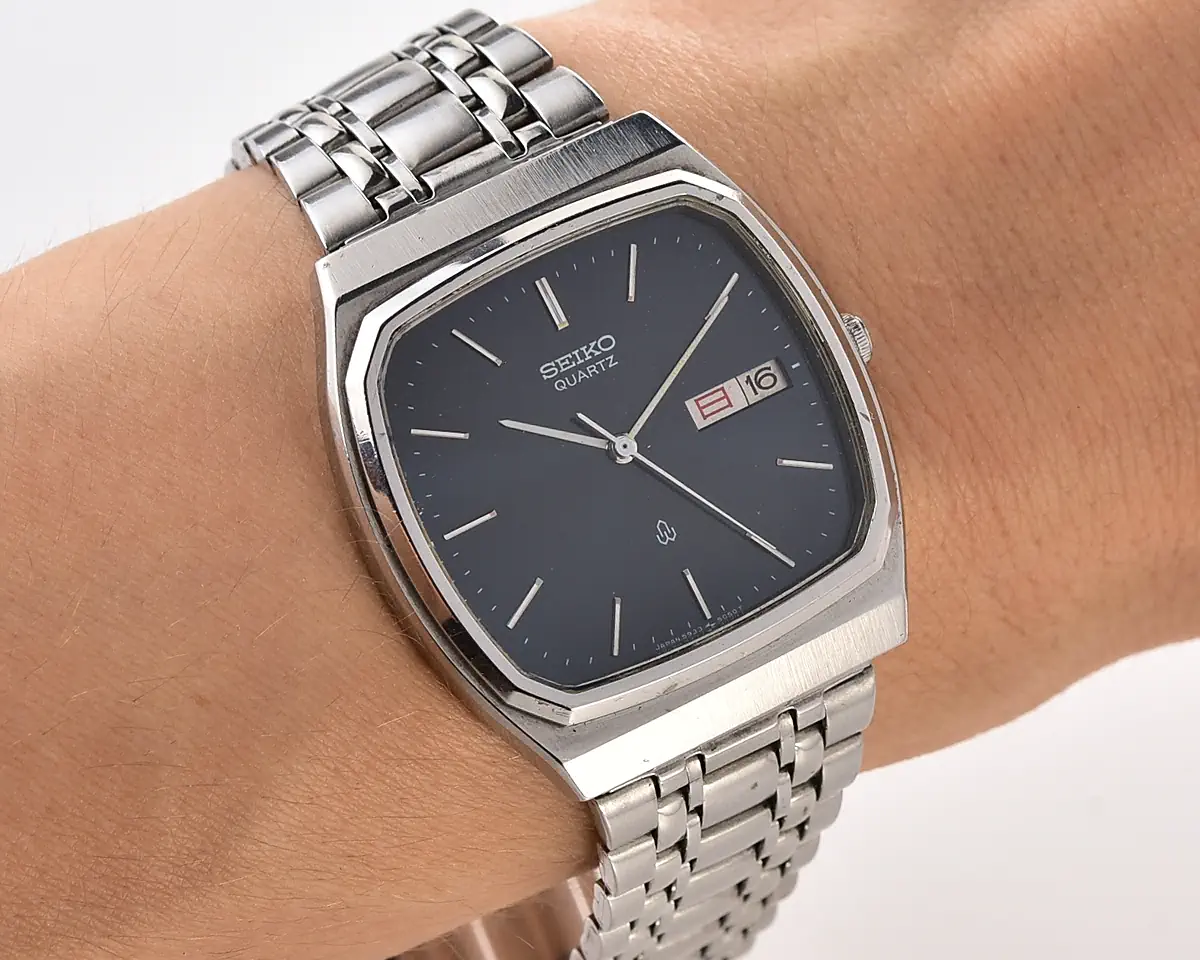
The TV-shaped steel case has brushed top surfaces and a polished, faceted bezel, with the crown at 3 o’clock. The dial is a deep blue sunburst that shades darker towards the edges, with polished steel baton markers, baton hands and a silver seconds hand. The day and date sit in a window at 3 o’clock; the day wheel is bilingual, English and Japanese Kanji, with Sunday printed in red. The dial is signed SEIKO QUARTZ above the quartz emblem and is coded JAPAN 5933-5050 T at the bottom edge.
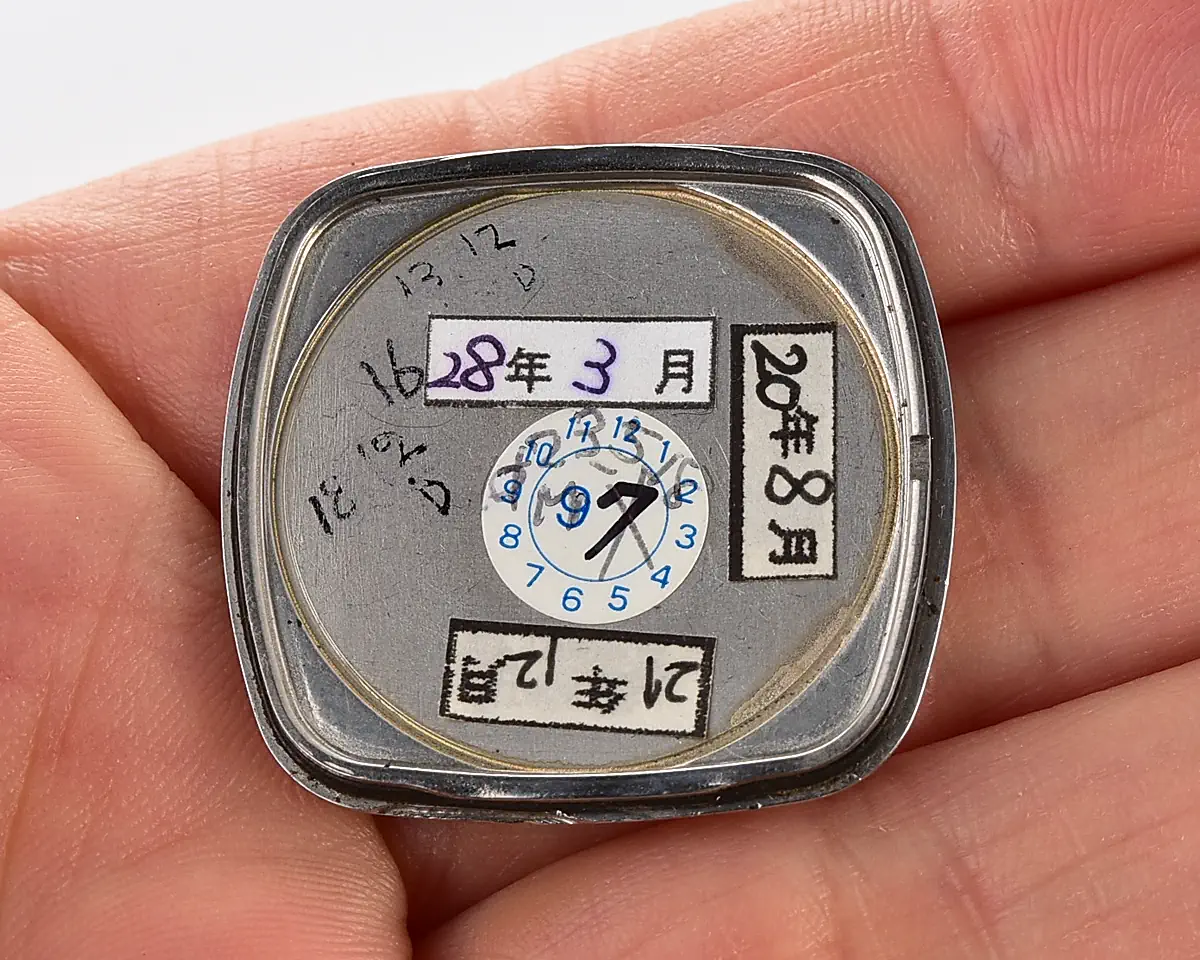
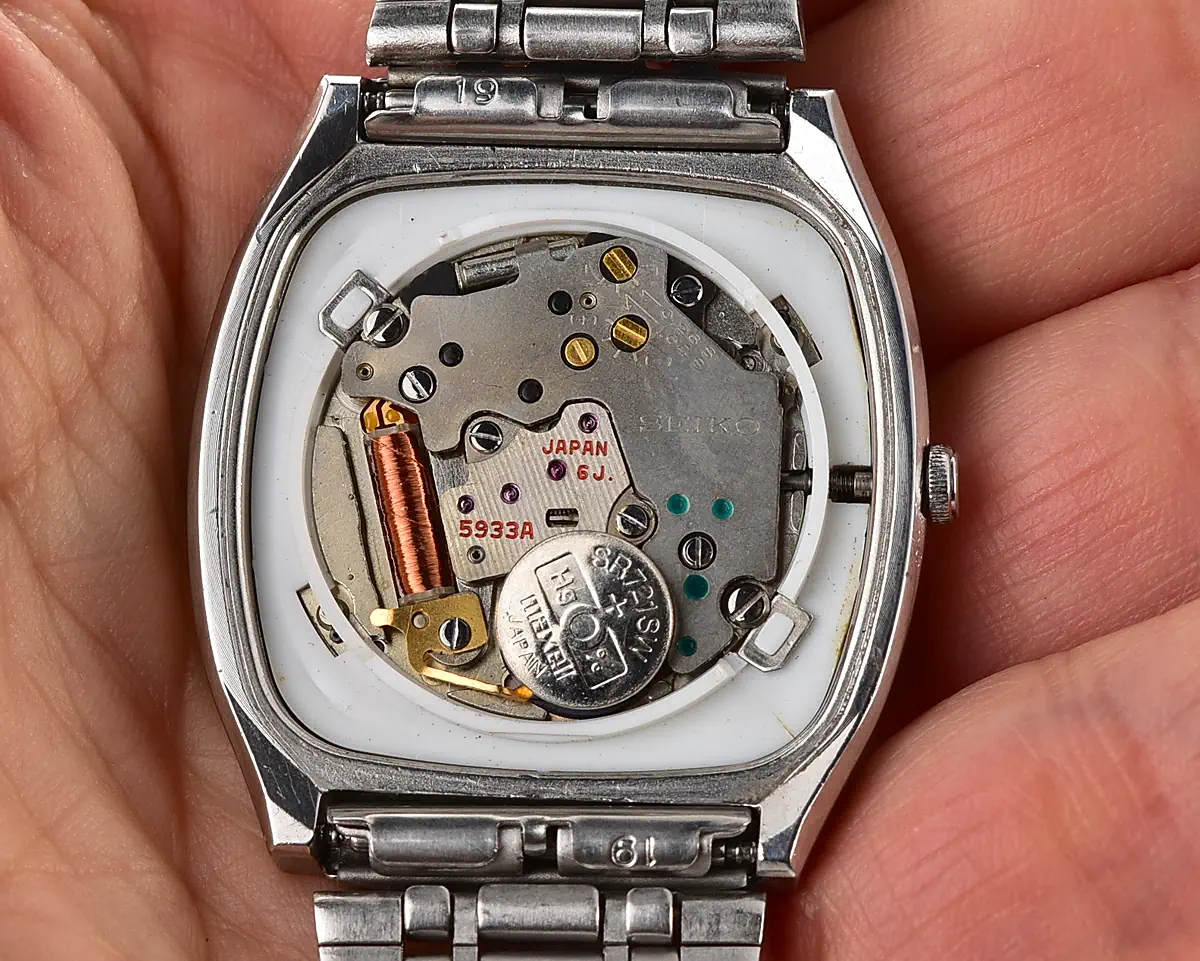
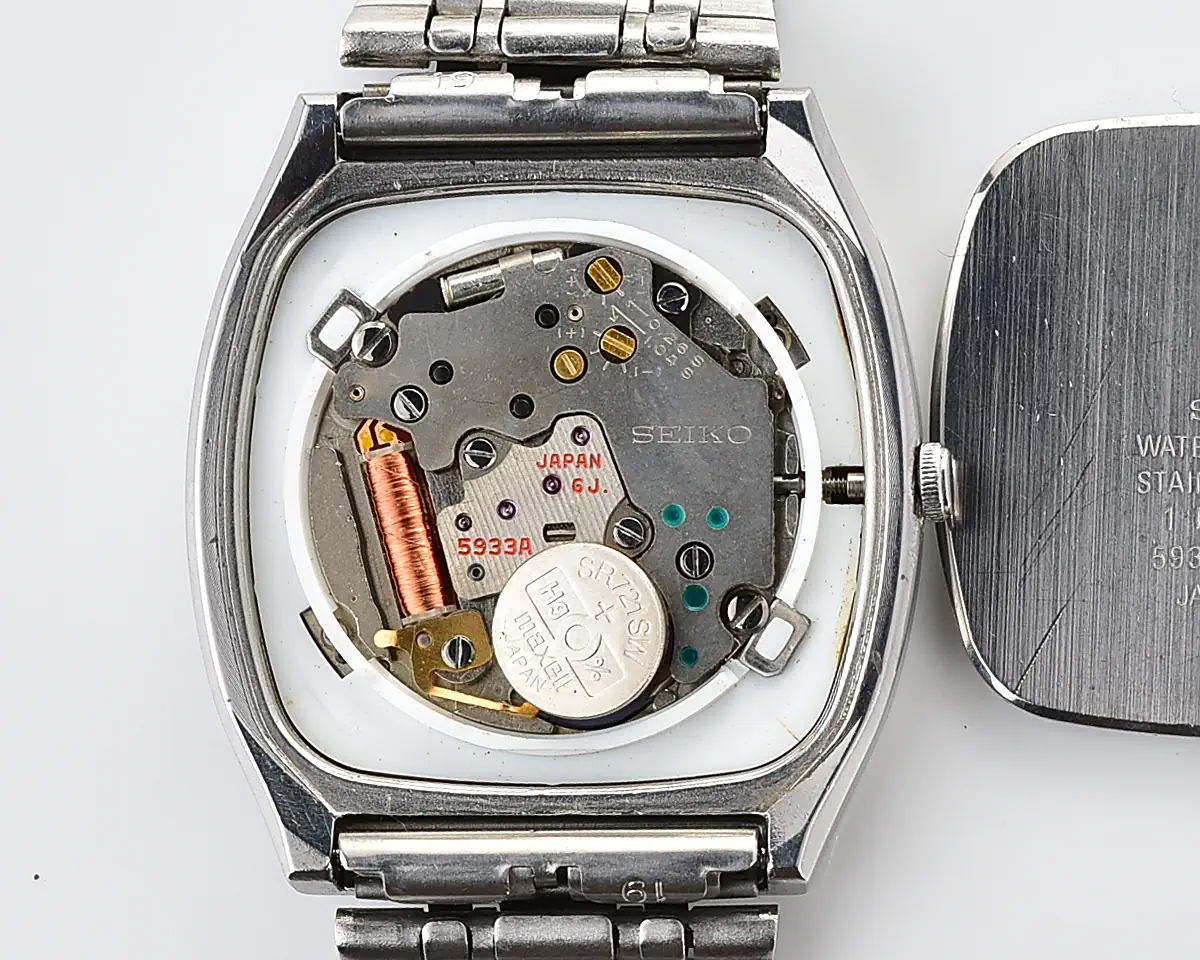
Inside is the caliber 5933A quartz movement. Its plate is stamped 5933A, JAPAN and 6J, and it runs on an SR721SW silver-oxide cell. Inside the case back are handwritten service-date stickers from watch shops in Japan, a sign that this watch was looked after over the years. It is fitted with a stainless steel bracelet on fitted end links stamped 19.
Technical Specifications
- Brand: Seiko
- Line: Seiko Quartz
- Reference Number: 5933-5040
- Movement: Caliber 5933A quartz, 6 jewels, day-date, SR721SW battery
- Serial Number: 1N0603
- Production Date: November 1981
- Case Material: Stainless steel
- Case Size: 36.5x34mm (with crown)
- Thickness: 7.5mm
- Lug Width: 19mm
- Dial: Blue sunburst, polished steel batons, bilingual day-date at 3
- Crystal: Original
- Case-back: Stainless steel, marked SEIKO WATER RESISTANT STAINLESS STEEL 1N0603 5933-5040 JAPAN-L
- Country of Manufacture: Japan
Condition Report
The blue sunburst dial is clean and even, with no spotting visible in the photos, and the hands and markers are bright. The case shows light scratches on the brushed surfaces and small marks on the polished bezel, consistent with careful wear over four decades. The case back has fine surface scratches, and its markings are clear. The bracelet has normal light wear, with scuffs on the clasp cover, and closes securely.
This watch has recently been serviced by a professional watchmaker and keeps good time.
Comes complete with vintage steel bracelet*.
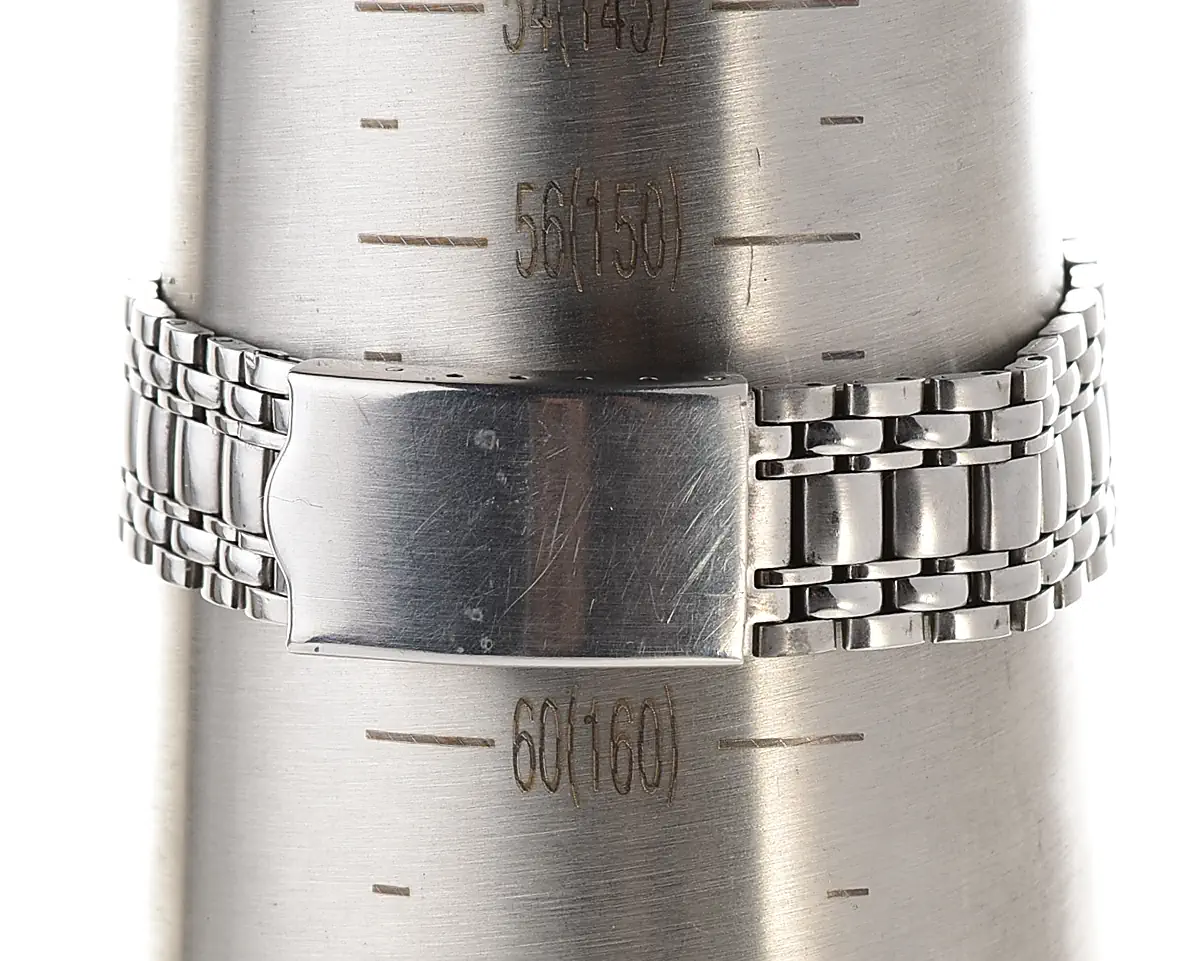
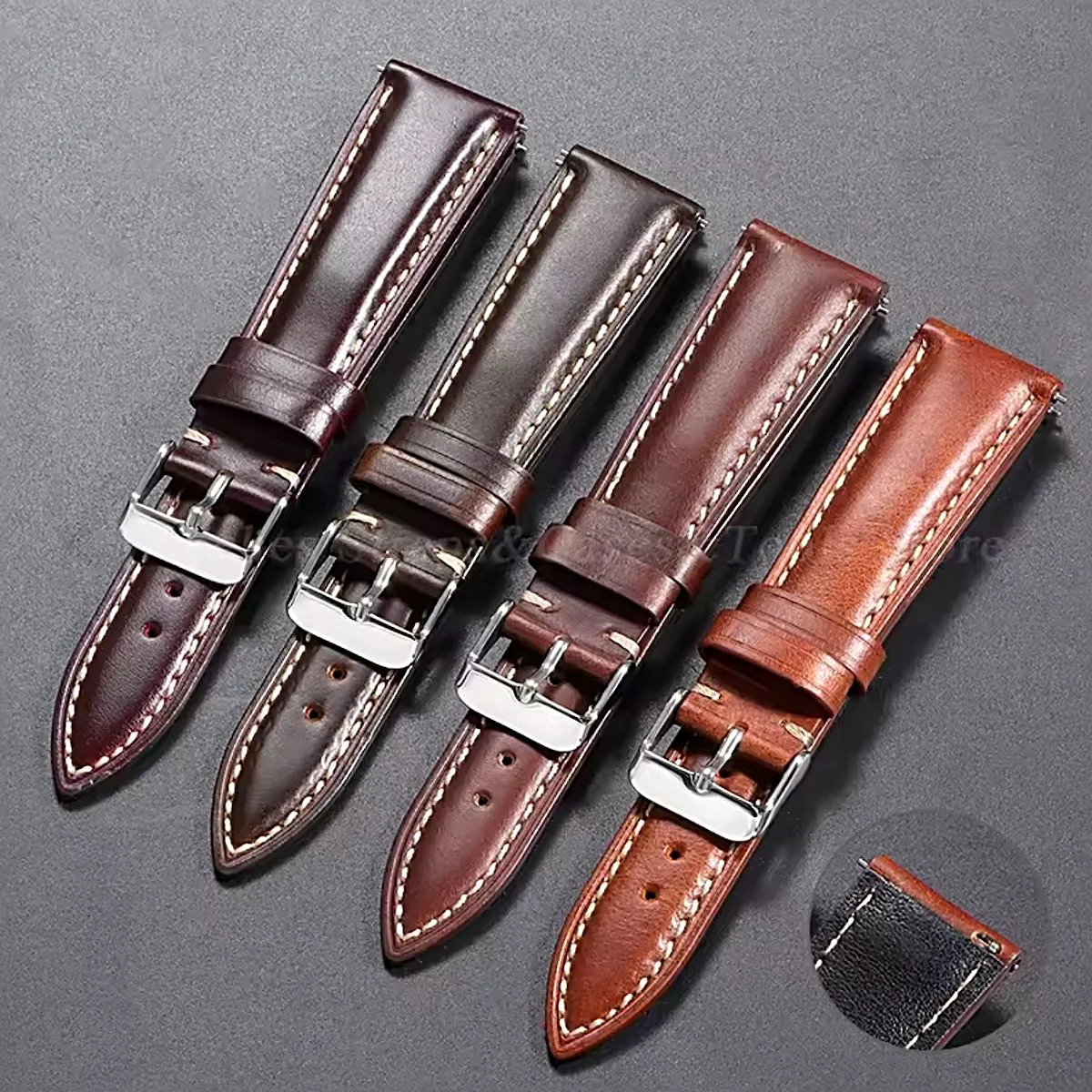
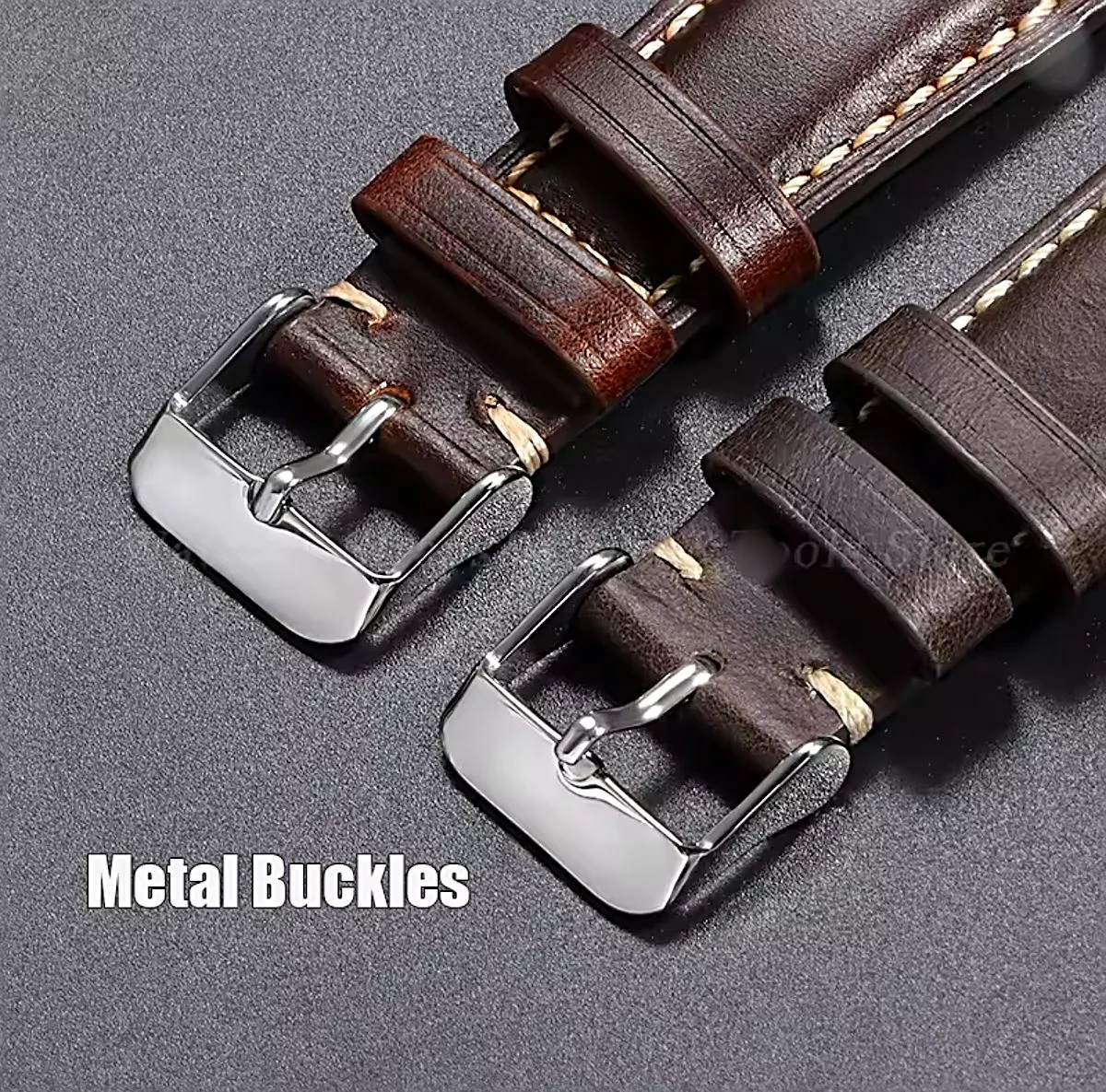
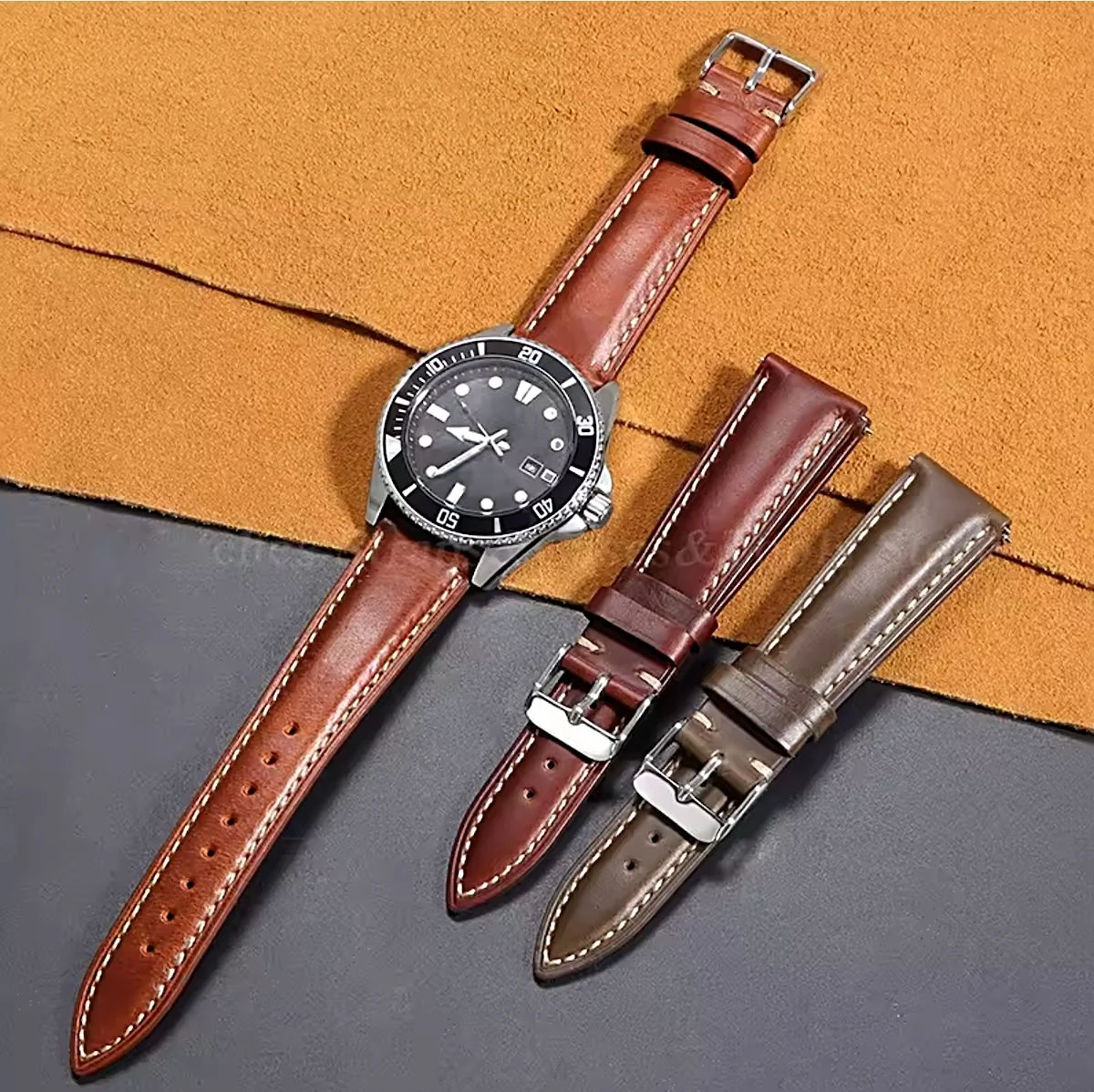
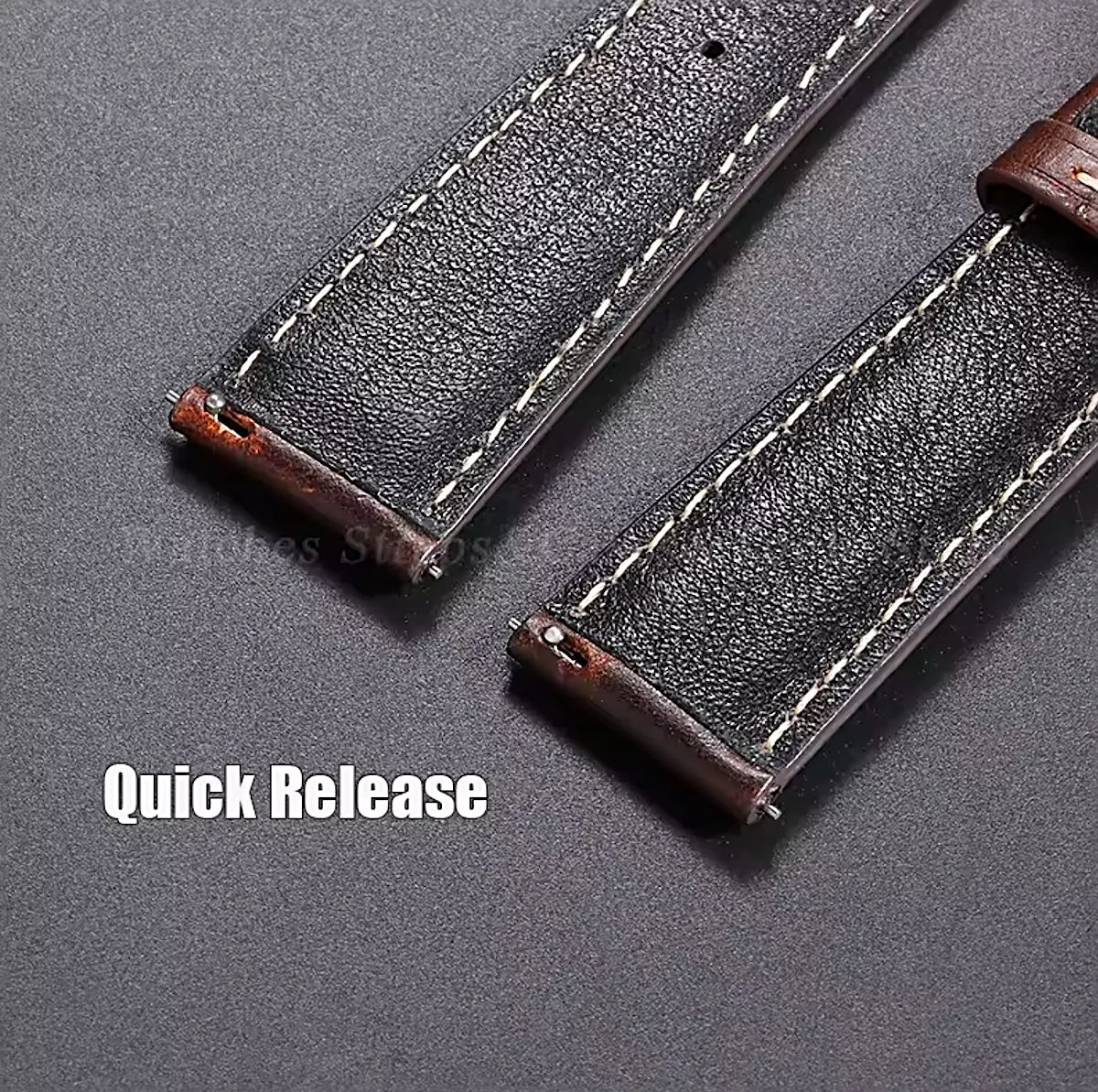
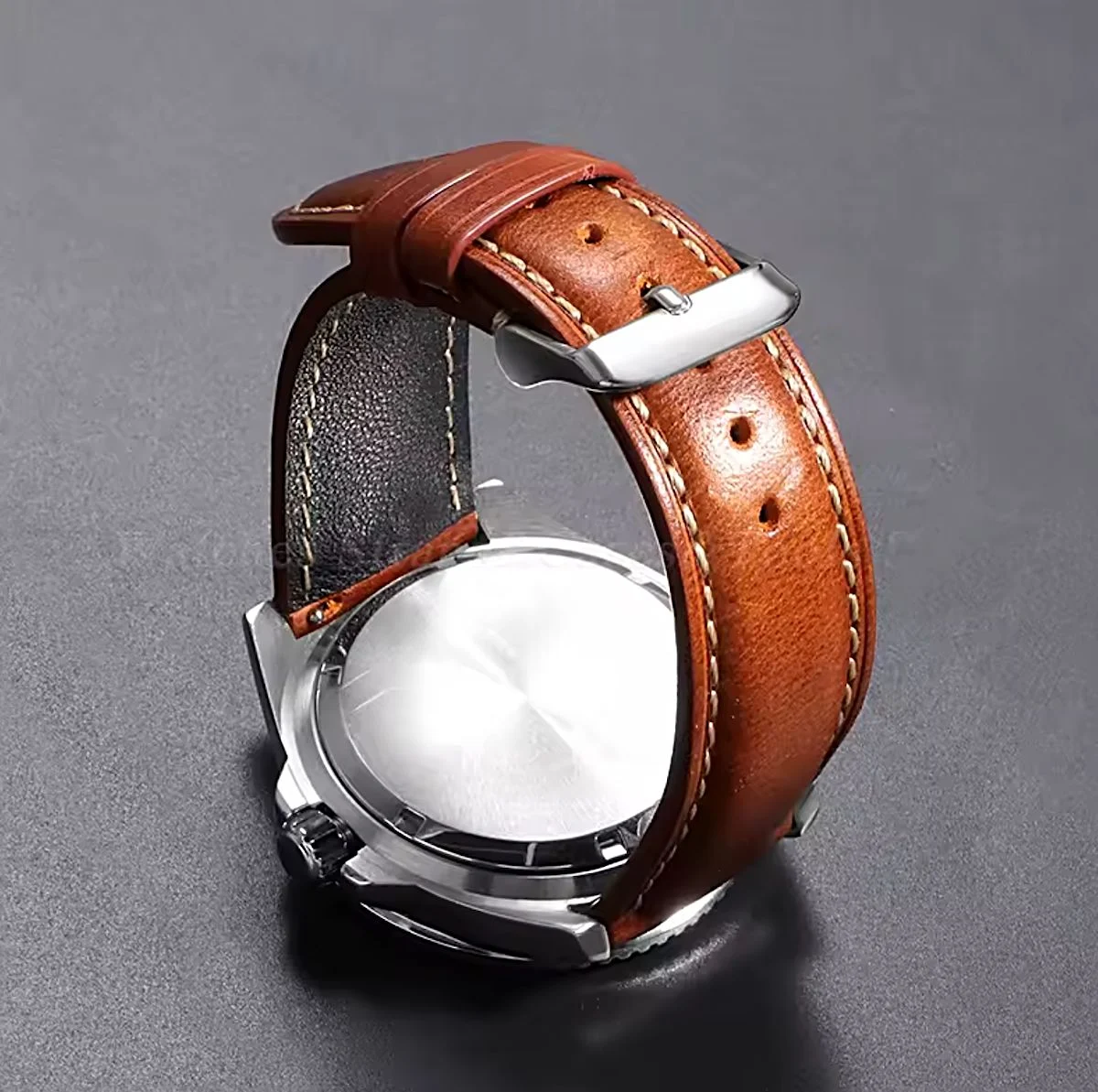
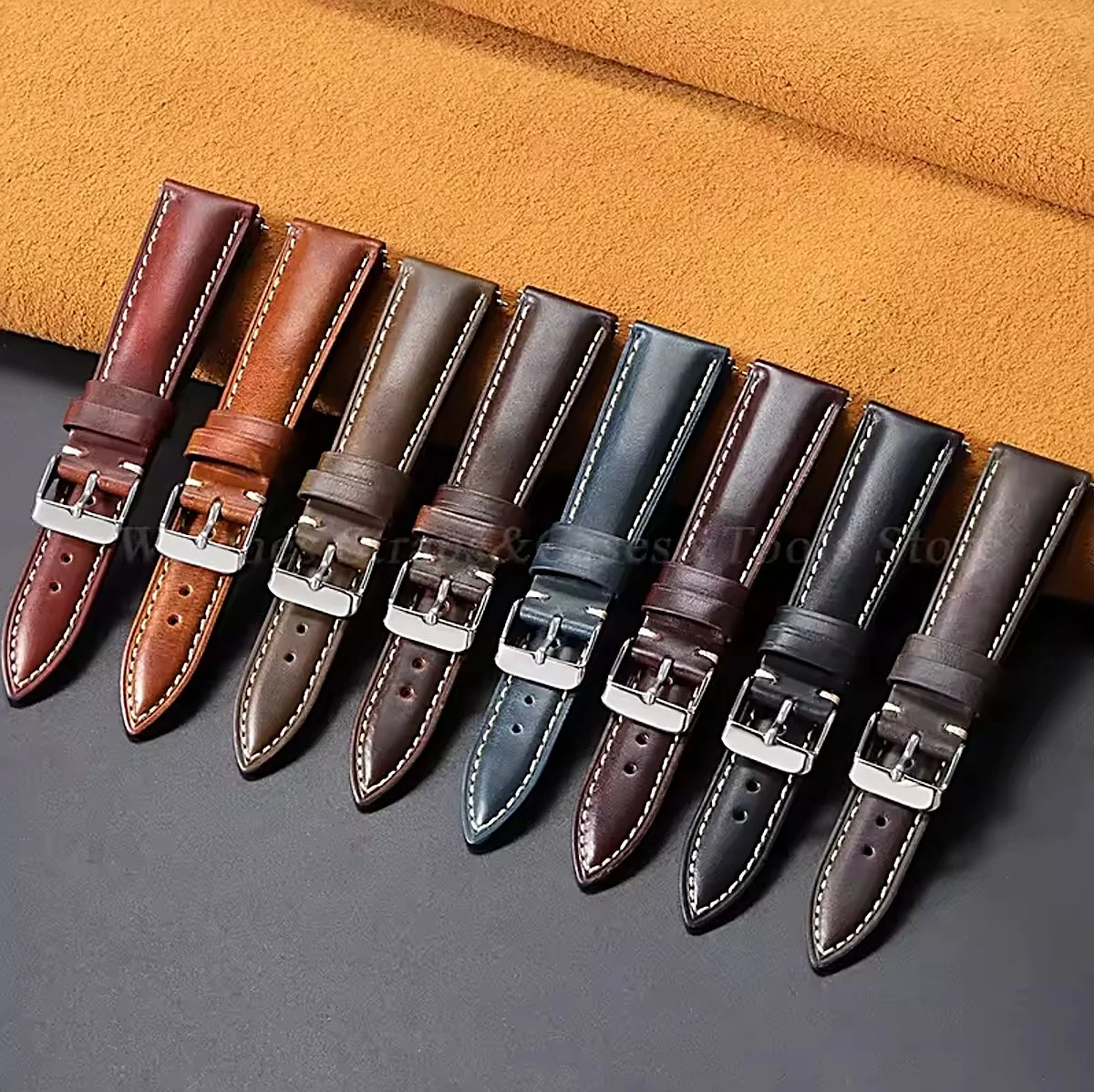
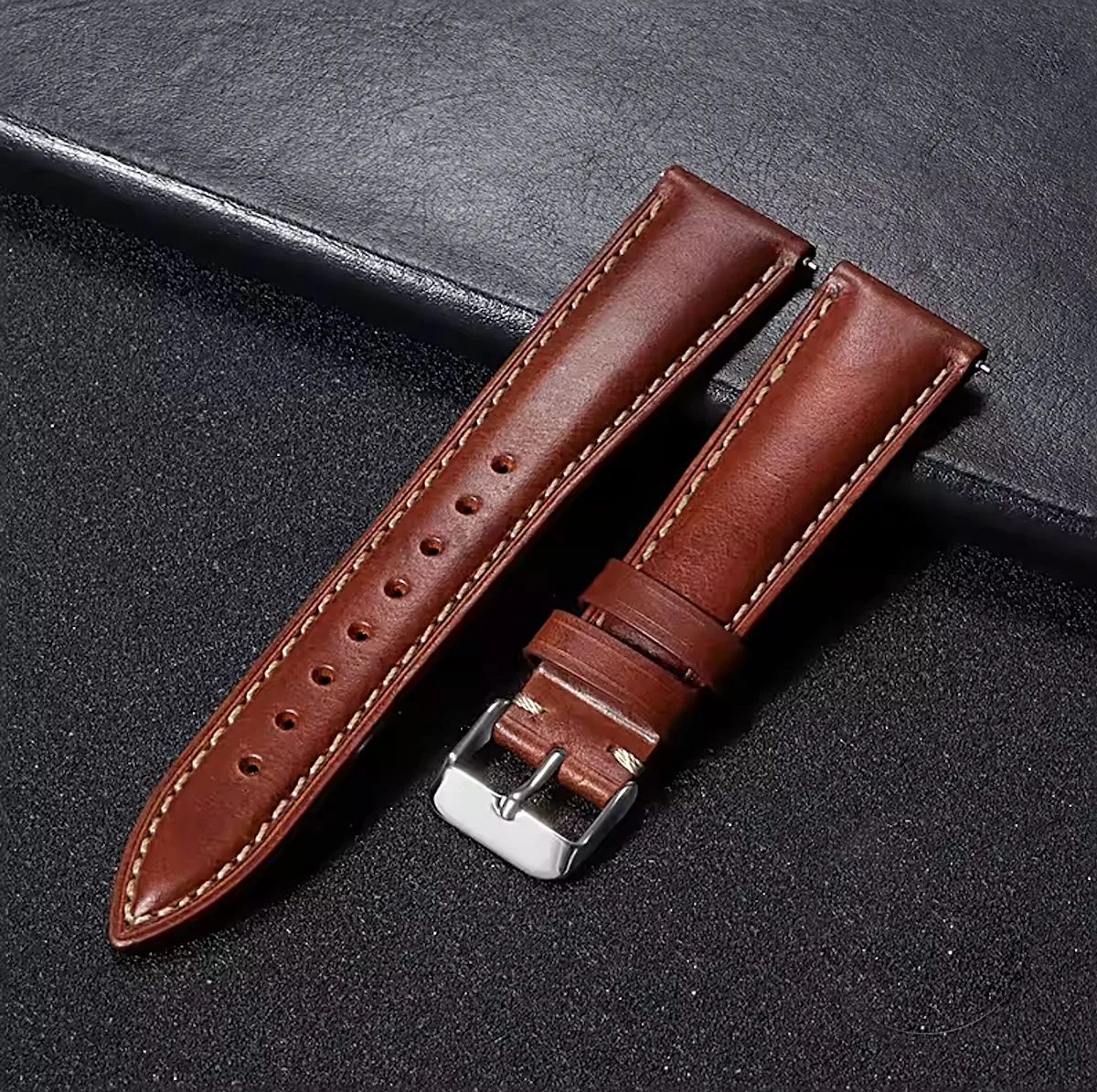
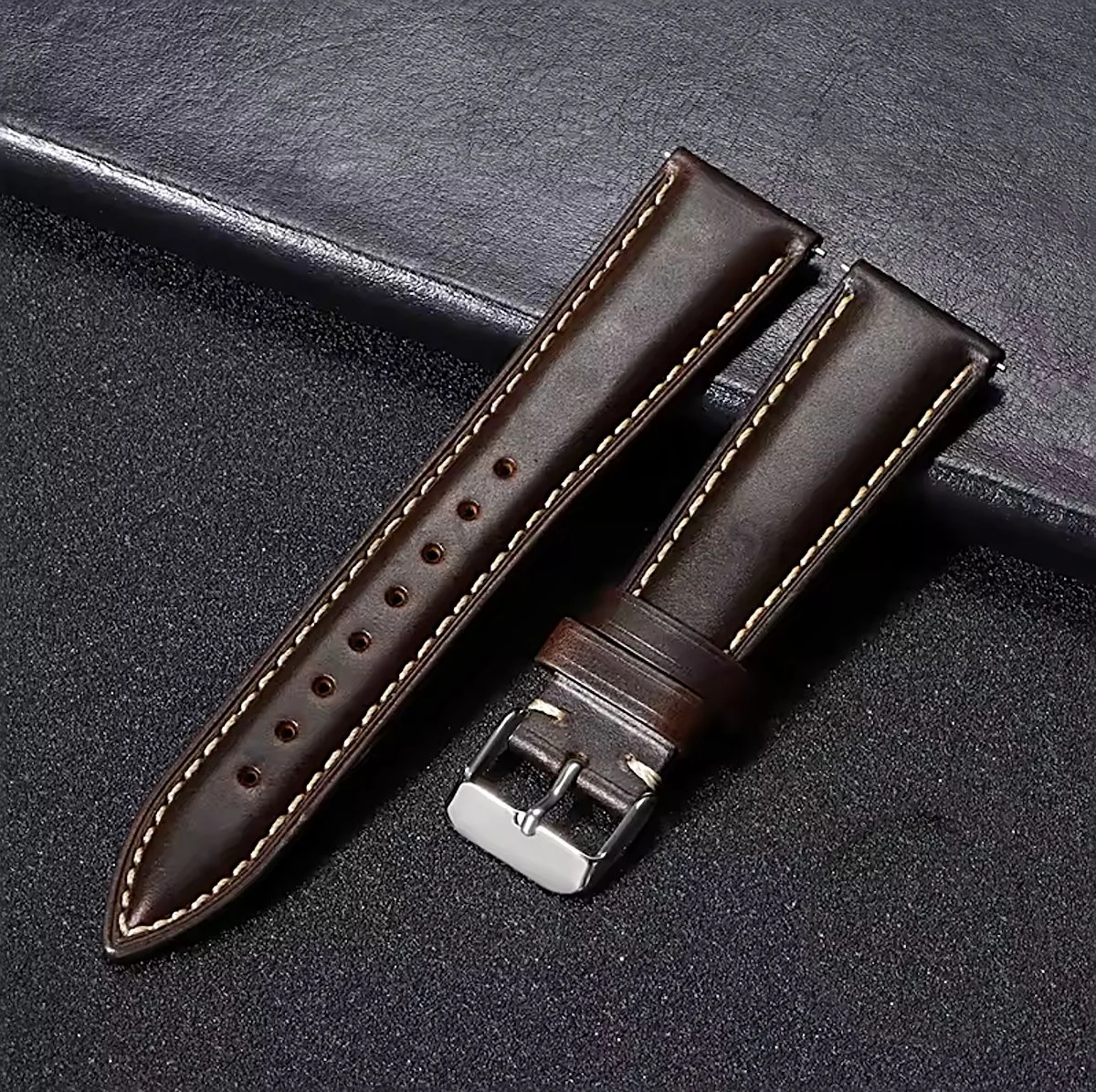
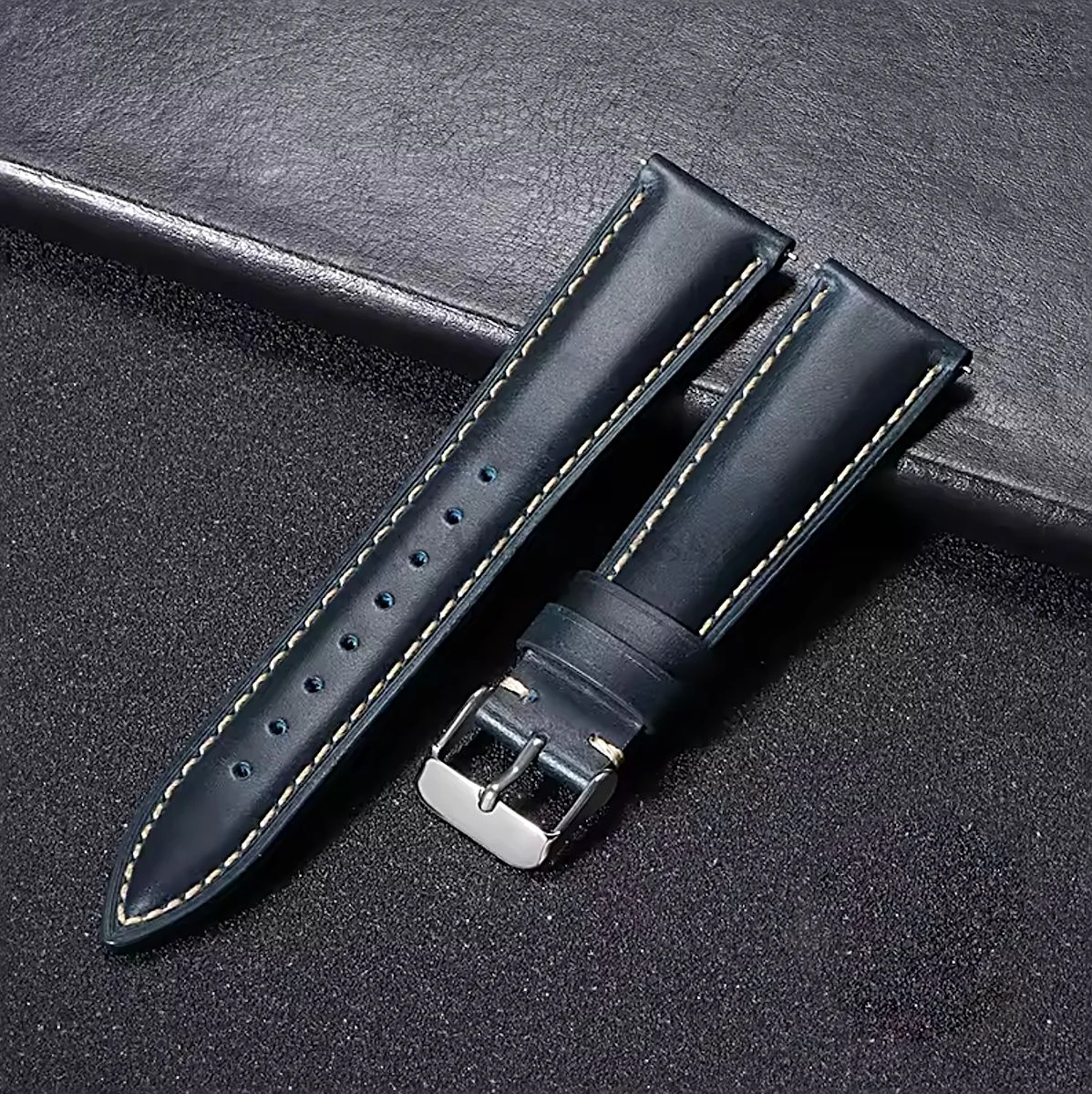
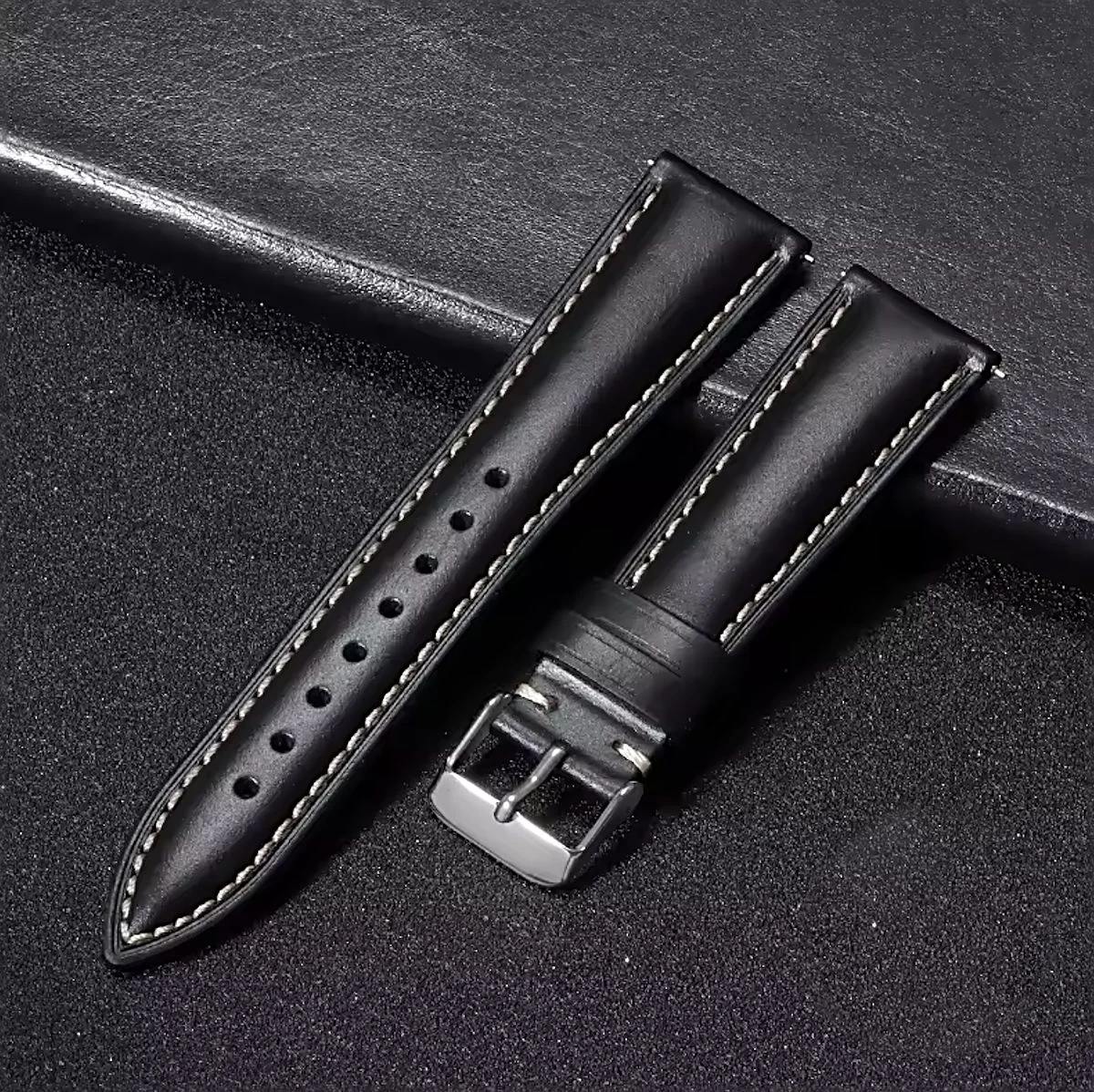
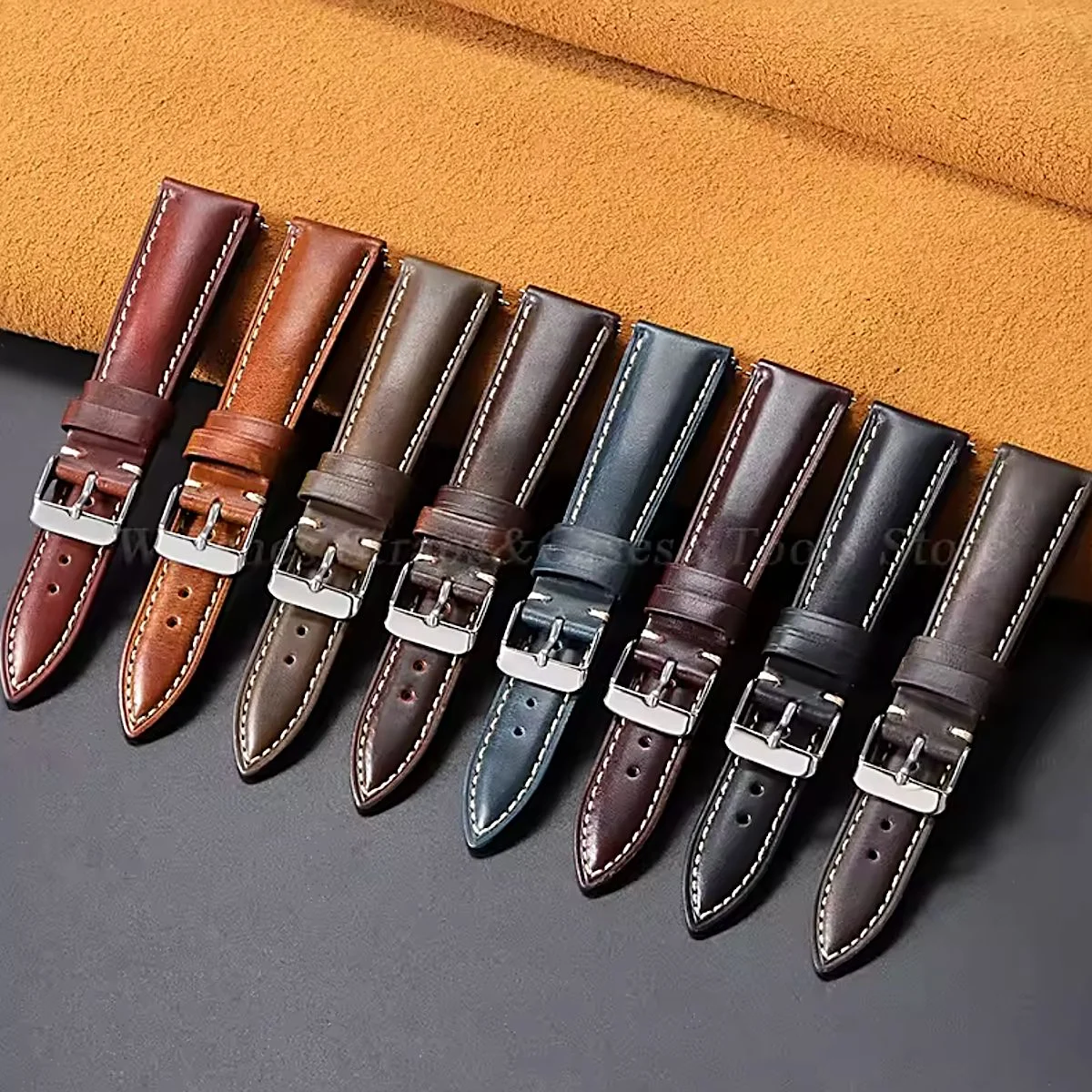
(*)Note: Stock bracelets are often shortened by previous owners and may not fit you(see bracelet size in the product images). We match the strap to this watch’s lug width, so there is nothing for you to measure — just pick a padded leather strap for Seiko from the options at the top of the page.
This watch ships from 🇺🇦 Ukraine with tracking number
Why Collectors Want This Watch Today
Early-1980s Seiko quartz dress watches have the look many people now want from a vintage watch: a slim, squared steel case that sits flat on the wrist, a sunburst dial and a bilingual day wheel, together with the convenience of a battery movement. These are not rare watches, but few turn up still on their bracelet and running well. This November 1981 example shows how Seiko made quartz an everyday watch, and you can wear it every day.
Modes of payment:
- PayPal
- Credit Cards (VISA, MasterCard, American Express, Discover)
- bitcoin
We guarantee the item you receive looks and works exactly as advertised — or your money back.
Seiko lug-width matched leather straps — 18 / 19 / 20 mm
About the watch factory
Seiko Group Corporation (セイコーグループ株式会社, Seikō Gurūpu kabushiki gaisha), commonly known as Seiko, is a Japanese maker of watches, clocks, electronic devices, and semiconductors. Founded in 1881 by Kintarō Hattori in Tokyo, Seiko introduced the world’s first commercial quartz wristwatch in 1969.
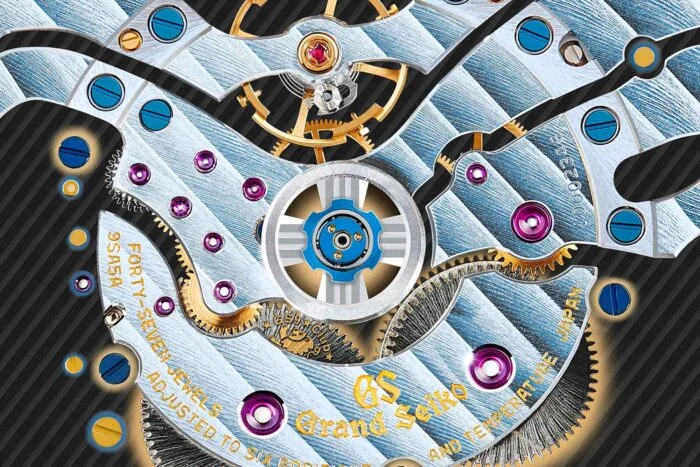
Seiko is widely known for its wristwatches. Seiko is one of the few watch companies that is fully vertically integrated. Seiko is able to design and develop all the components of a watch, as well as assemble, adjust, inspect and ship them in-house. Seiko’s mechanical watches consist of approximately 200 parts, and the company has the technology and production facilities to design and manufacture all of these parts internally.
Seiko offers one of the widest ranges of watch technologies in the world—quartz, kinetic, solar, mechanical, and Spring Drive—spanning everything from affordable everyday pieces to six-figure haute horlogerie. Over the decades it has launched multiple global brands, including Lorus, Pulsar, and Alba, while elevating its prestige through innovations like Spring Drive, which helped push Seiko into higher-end territory. In 2017, Grand Seiko was spun off into its own standalone luxury brand, while Credor remains part of Seiko’s own lineup, sold primarily in Japan. Seiko’s own global lineup now includes Grand Seiko, King Seiko, Prospex, Astron, Presage, and Seiko 5 Sports.
Among Seiko’s key lines, Seiko 5 (born in 1963) is the gateway mechanical series known for durability and value; Lord Matic defined 1970s style with faceted crystals and colorful dials; Astron remains Seiko’s flagship GPS-solar tech line; Presage focuses on traditional mechanical craftsmanship with enamel and urushi dials; and Prospex delivers professional-grade dive, field, and pilot watches often embraced by enthusiasts. At the top end, Grand Seiko emphasizes precision, Zaratsu polished design, and movements like Spring Drive, while King Seiko—revived in the 2020s—brings back sharp, elegant 1960s styling with modern calibres.
Finally, Credor represents Seiko’s pinnacle of artisanal watchmaking, producing low-volume pieces in precious metals and showcasing Japanese decorative arts and haute complications from the Micro Artist Studio. Beyond watches, Seiko has also produced various electronic devices and, historically, jewelry and eyewear—though those divisions have since shifted to other companies.