Description
Vintage Seiko 5 ref. 2706-0250 — Automatic Day-Date Mechanical Watch
MADE IN JAPAN
“Seiko” (精工) is a Japanese word meaning “precision,” “exquisite workmanship,” or “refined craftsmanship.”
It comes from the characters:
精 (sei) – fine, precise, refined
工 (ko) – craft, workmanship
Originally, Seiko’s watchmaking division was called Seikosha (精工舎), meaning “House of Precision.”
The name first appeared on a watch dial in 1924, shortened from Seikosha and keeping the core meaning; the company itself was renamed Hattori Seiko in 1983 and Seiko Corporation in 1990.
So the brand name literally ties directly to the idea of precision engineering—which is exactly what the company wanted to be known for in its watches.
The Seiko 5
🕰️ The Seiko 5 (1963–present)
The Seiko 5 launched in 1963 as Seiko’s answer to a simple question: could you build a reliable, self-winding watch good enough for everyday professional use and sell it at a price that ordinary people could actually afford? The answer became one of the most successful watch lines in history.
The name comes from five built-in guarantees that Seiko pledged on every model in the line:
- Automatic winding
- Day-date display
- Water resistance
- Recessed crown (at 2, 4, or later positions — out of the way, protected)
- Shock resistance (Diashock, Seiko’s proprietary alternative to the Swiss Incabloc)
These weren’t marketing points — they were engineering commitments. Every Seiko 5 had to deliver all five, or it didn’t carry the name.
The 2706 Caliber Era (early 1970s)
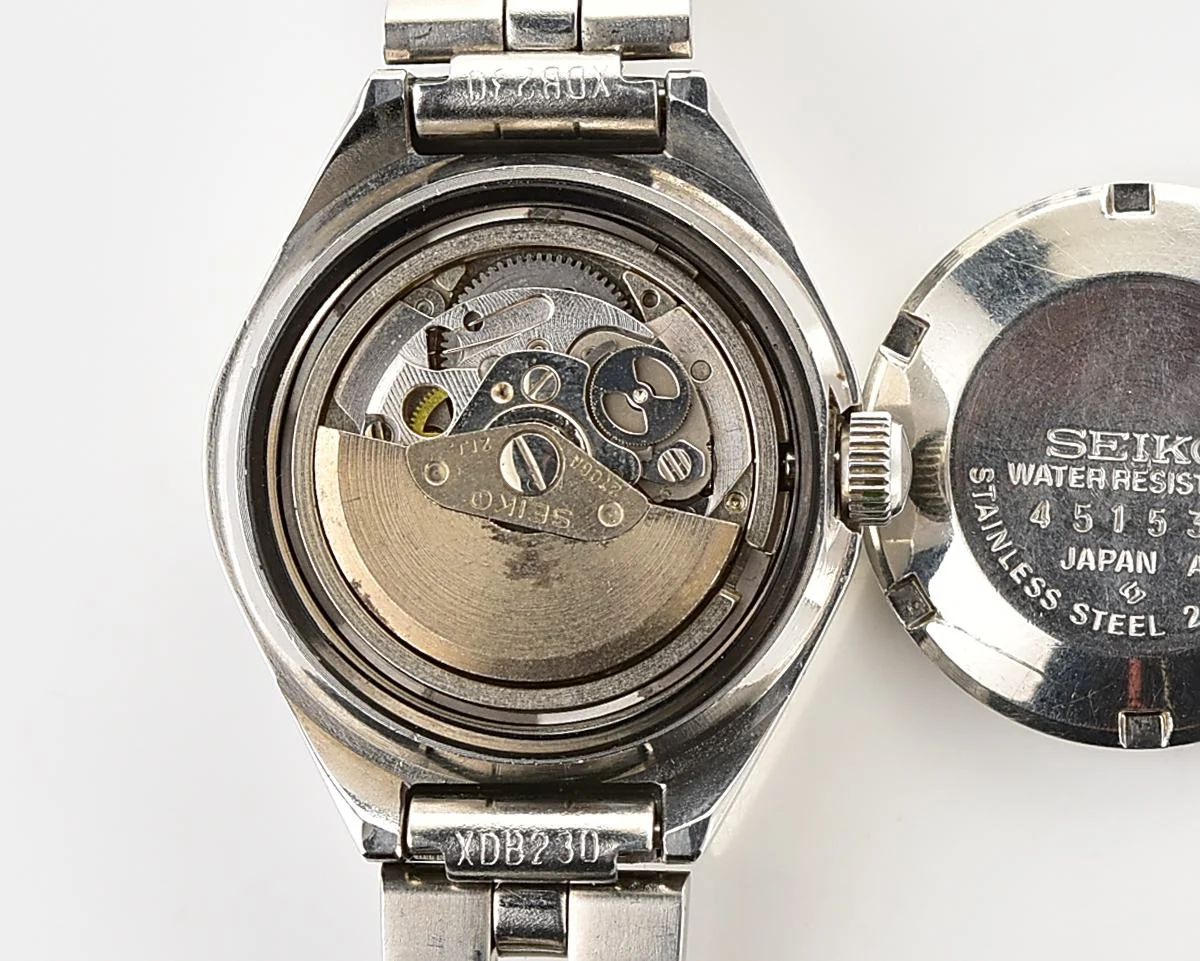
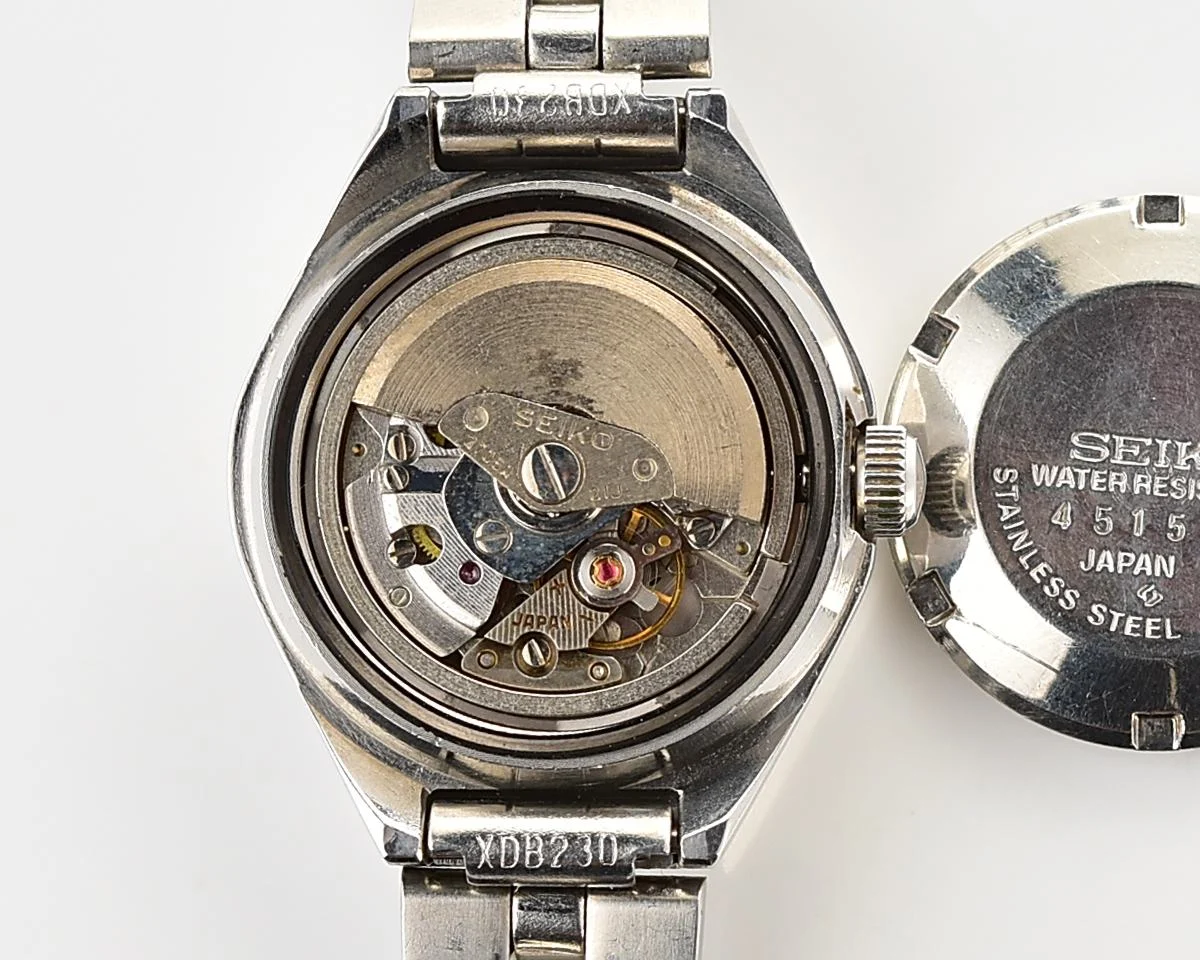
The caliber 2706A used in this watch represents Seiko 5 at the height of its technical confidence. A 21-jewel automatic with an instantaneous day-date display, running at 21,600 vph — this is a step up from the entry-level Seiko 5 movements of the same era. The movement was used across a range of Seiko 5 references through the early-to-mid 1970s, and it holds regulation well after a proper service.
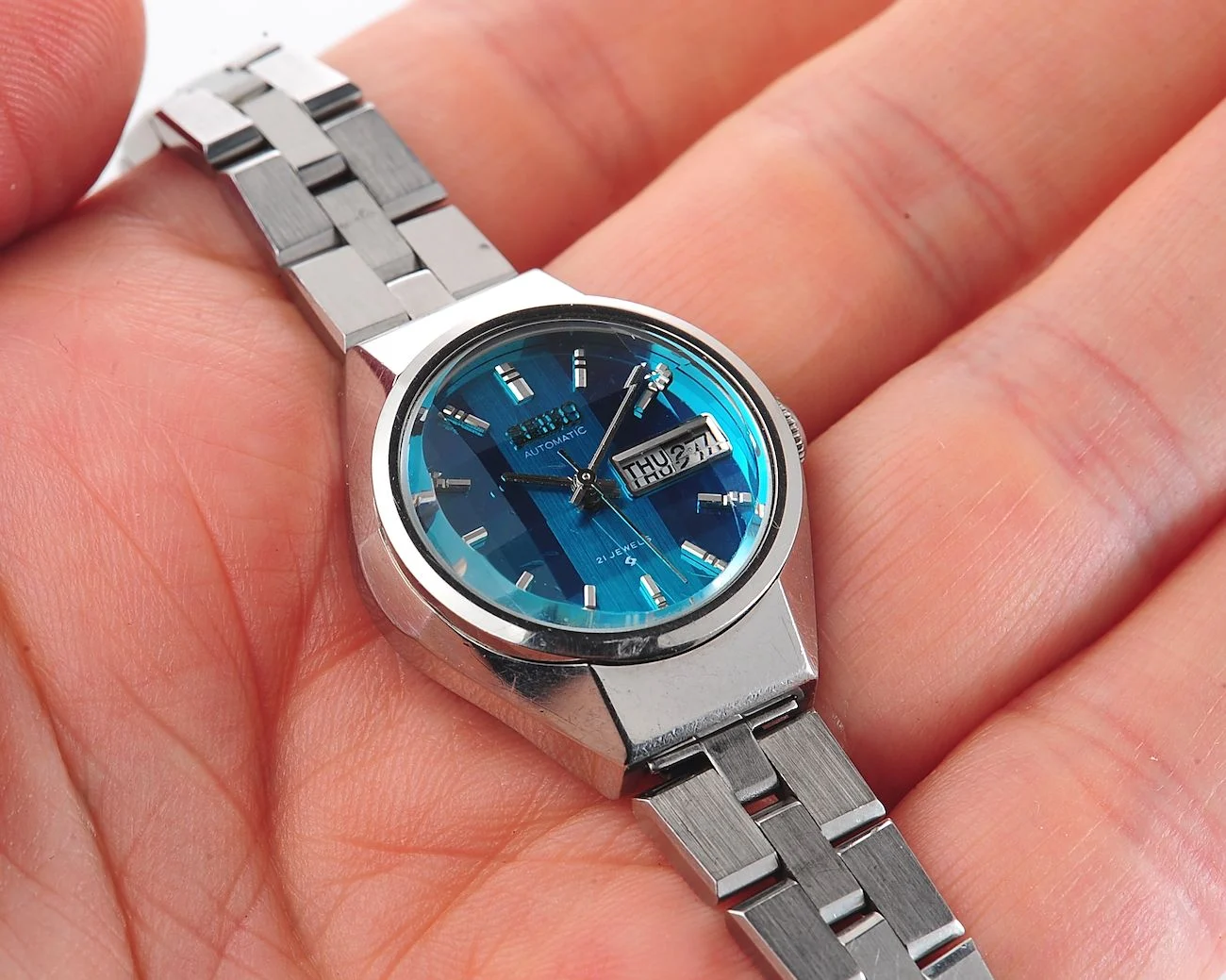
The 2706 Seiko 5s from this period are compact watches — sized for smaller wrists — with clean integrated-bracelet designs and, in special variants like this one, extraordinary dials that no longer appear in Seiko’s current catalog.
About This Watch
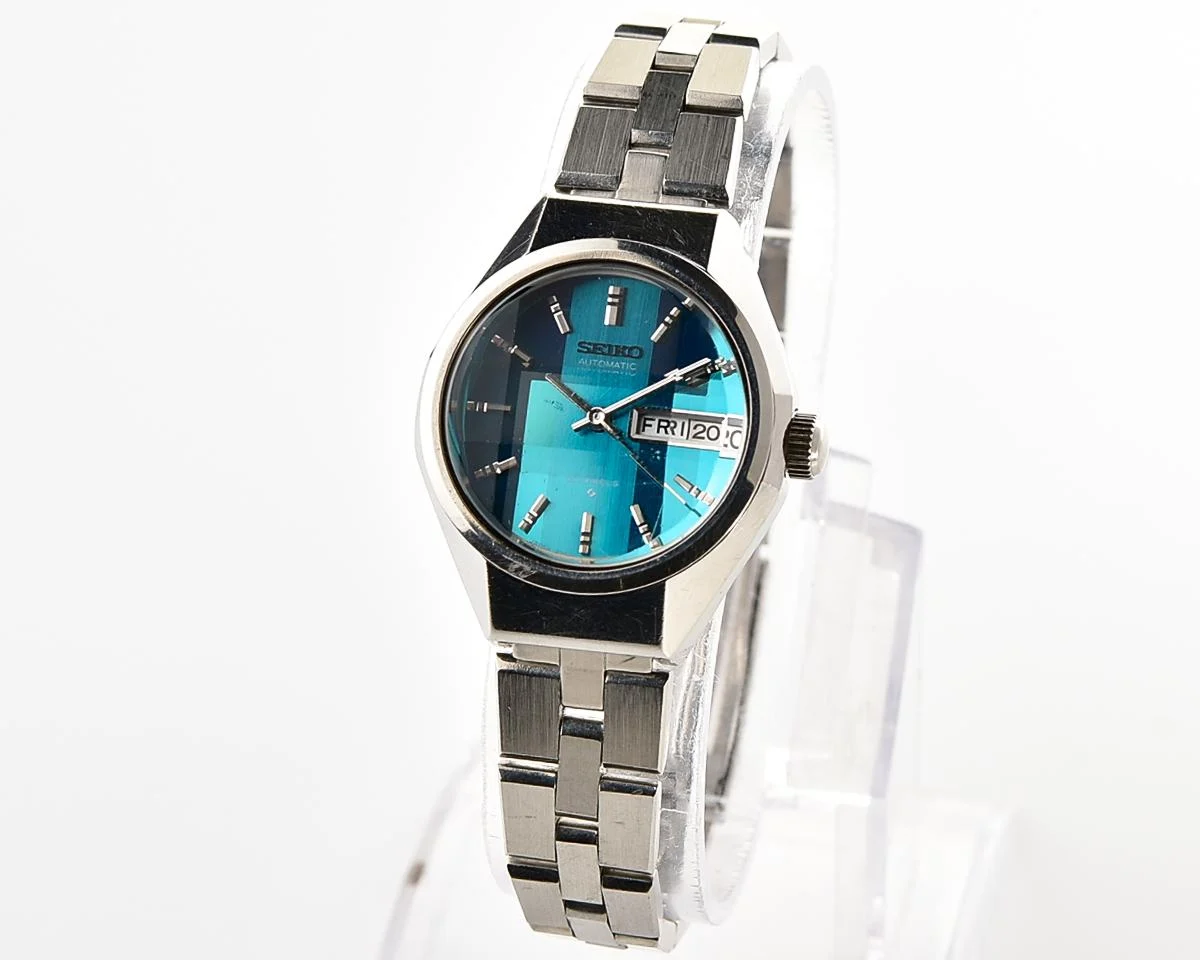
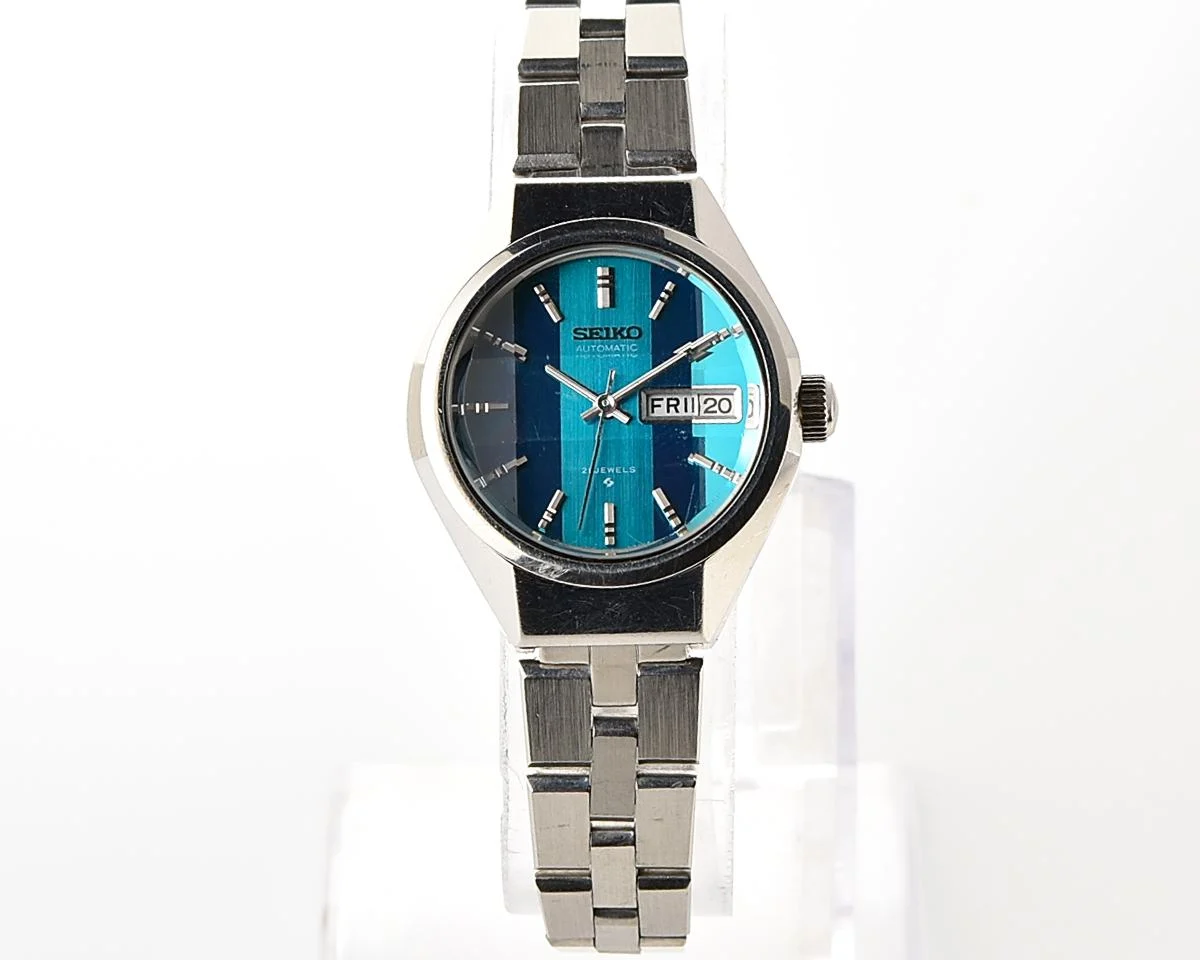
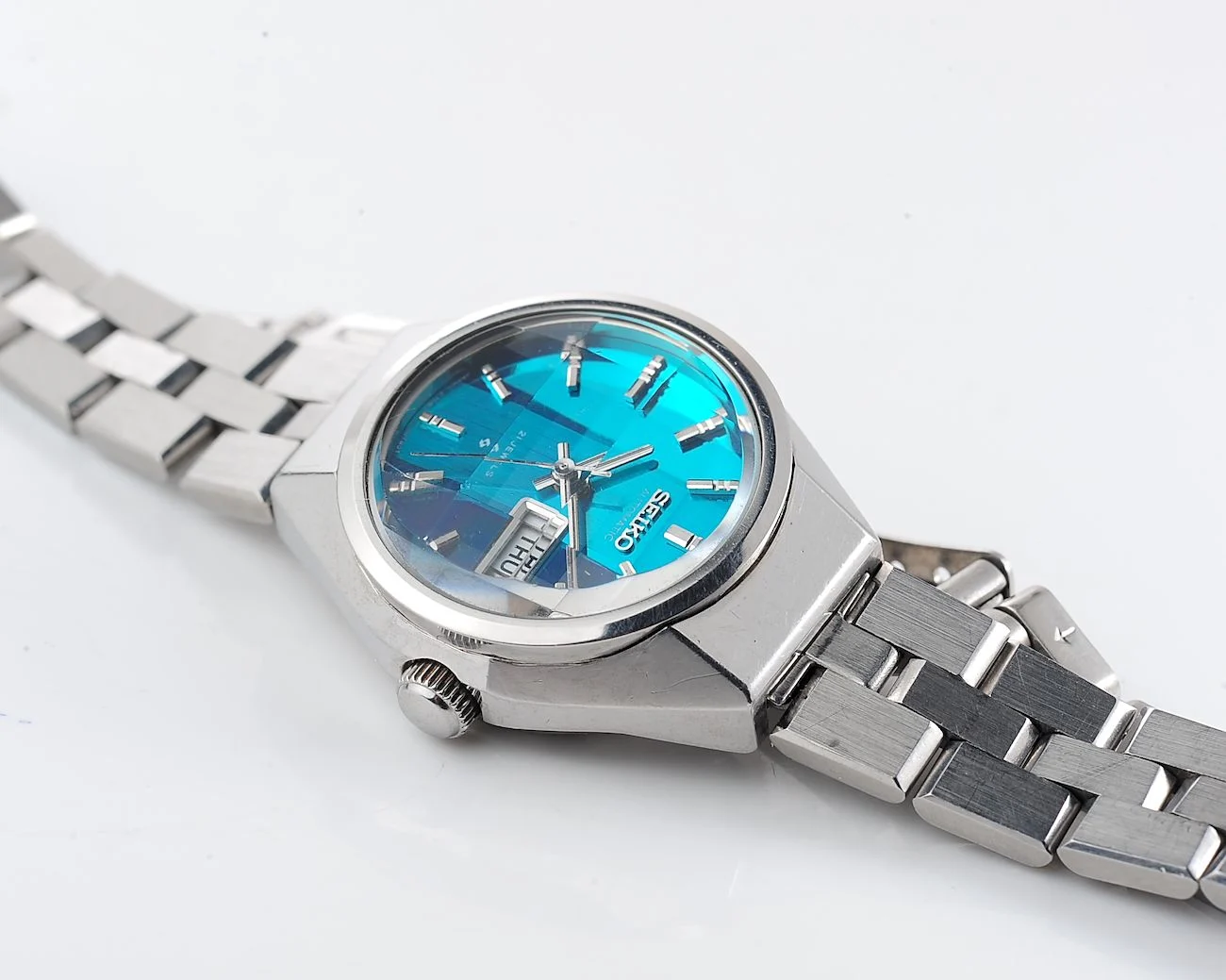
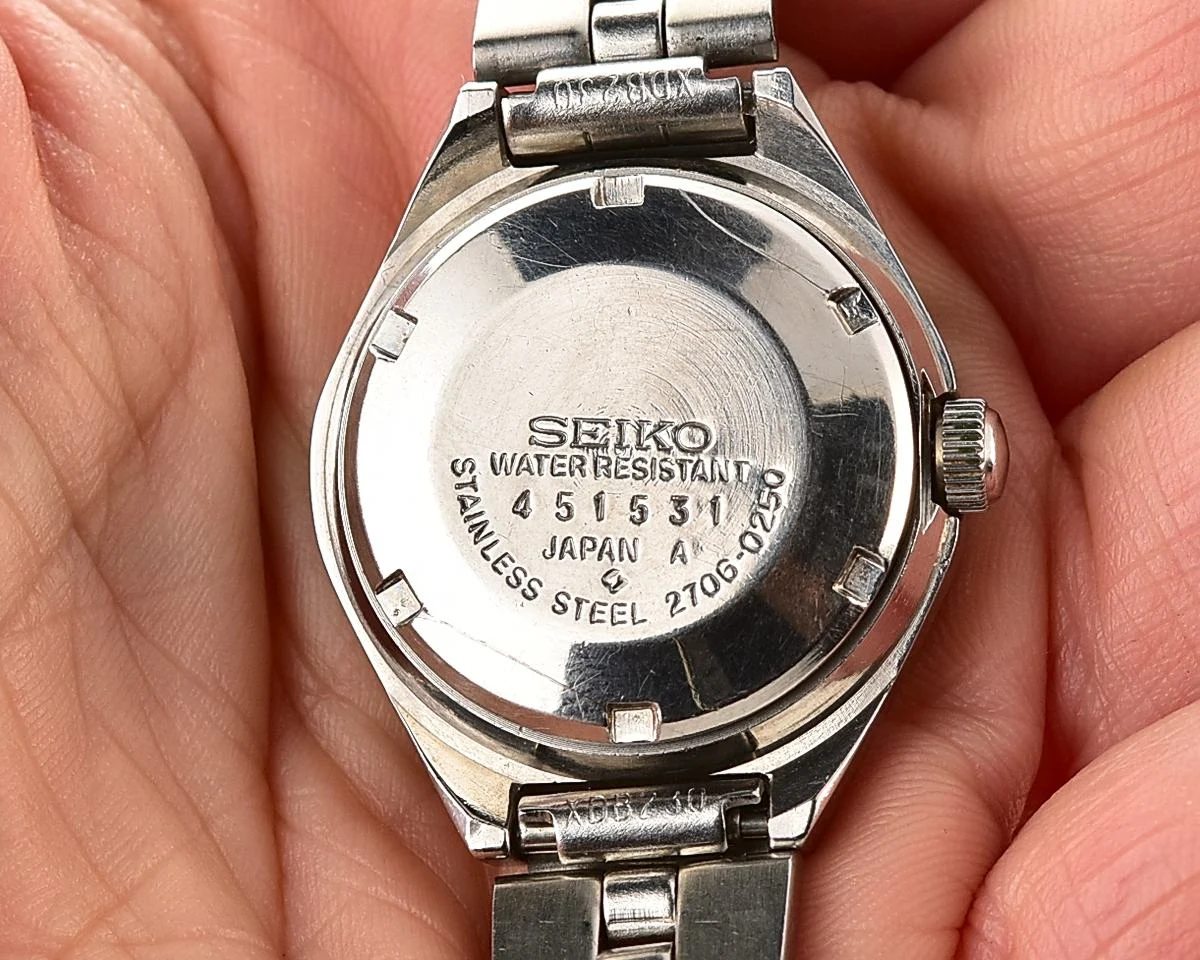
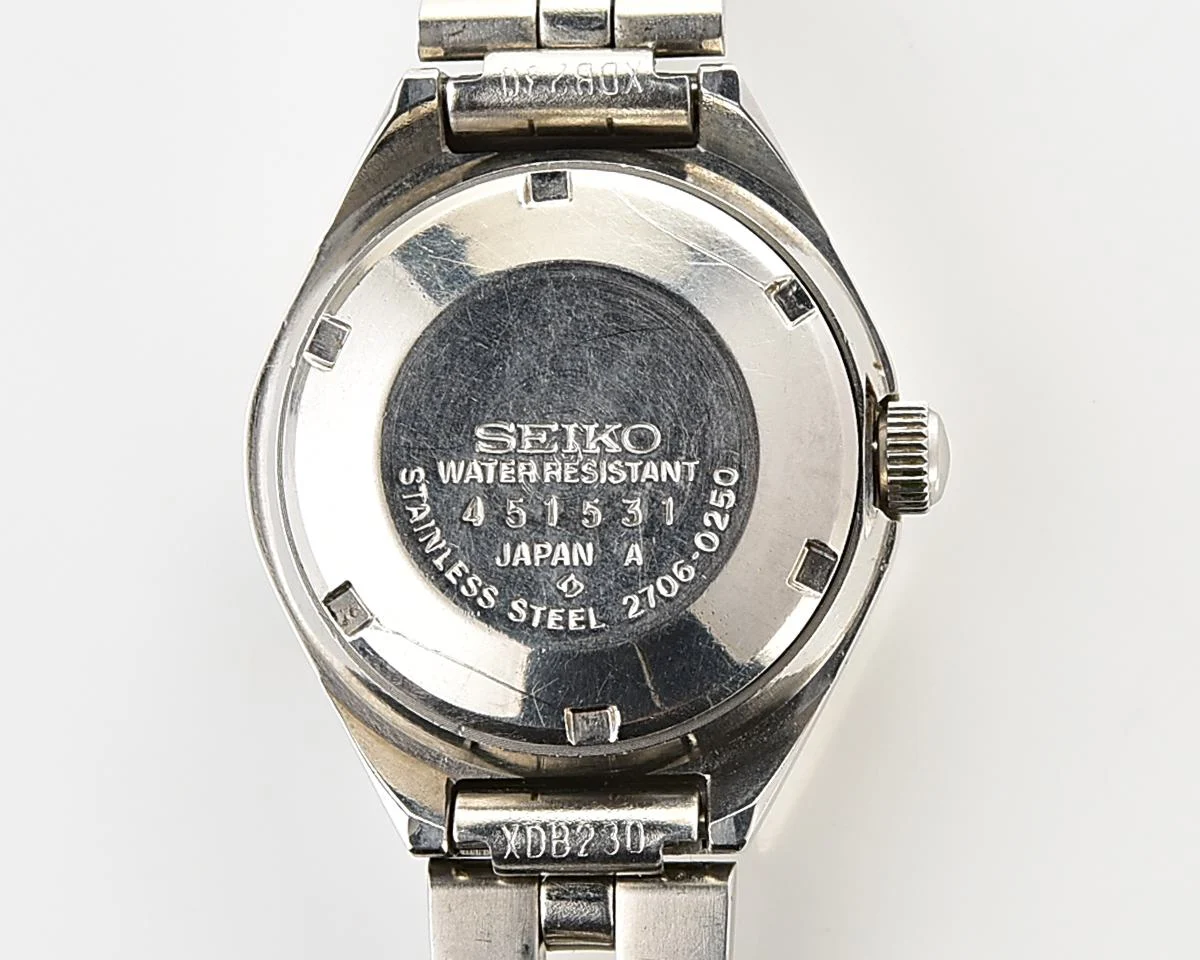
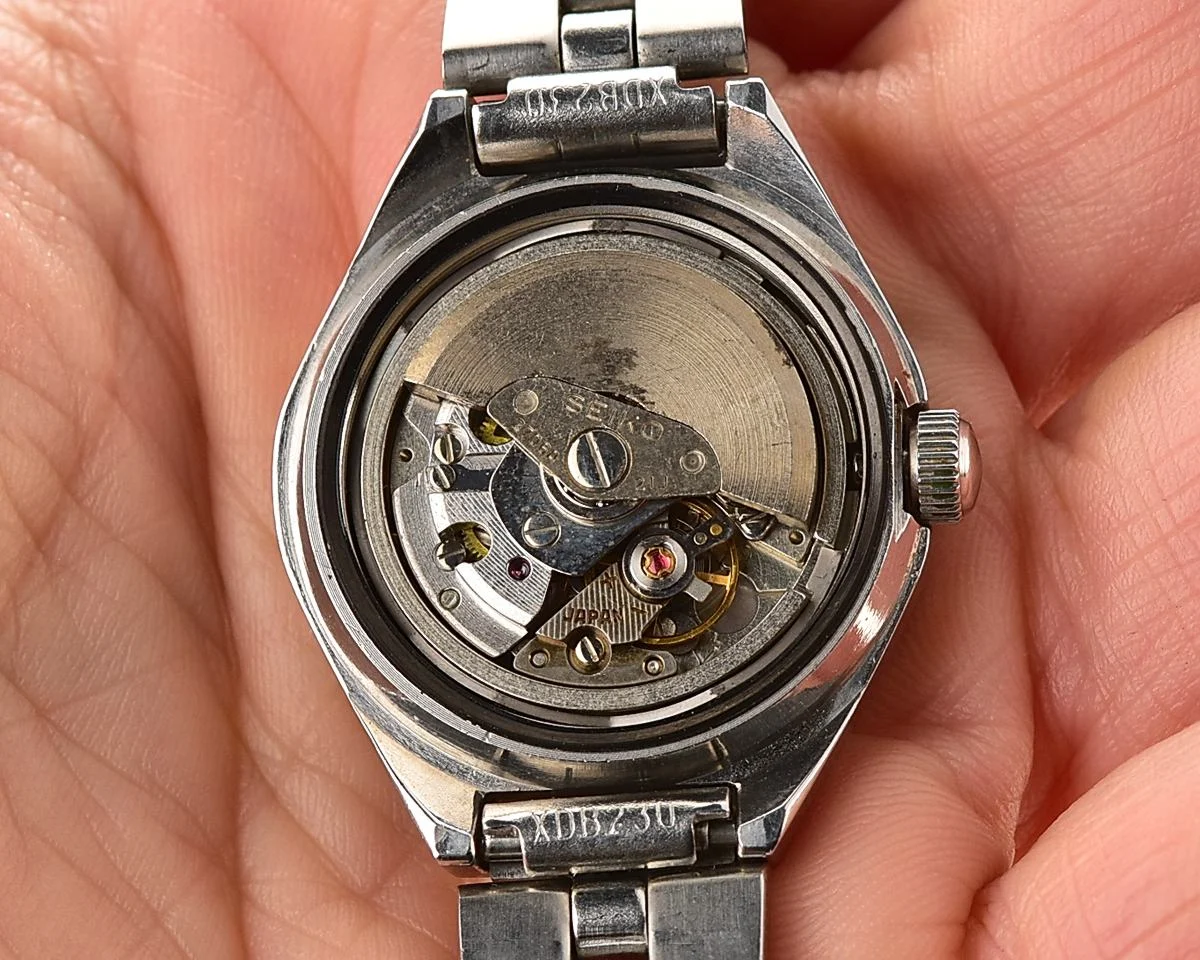
This is a Seiko 5 ref. 2706-0250, produced in May 1974 (serial 451531), fitted with caliber 2706A — 21 jewels, automatic winding, instantaneous day-date at 3 o’clock.
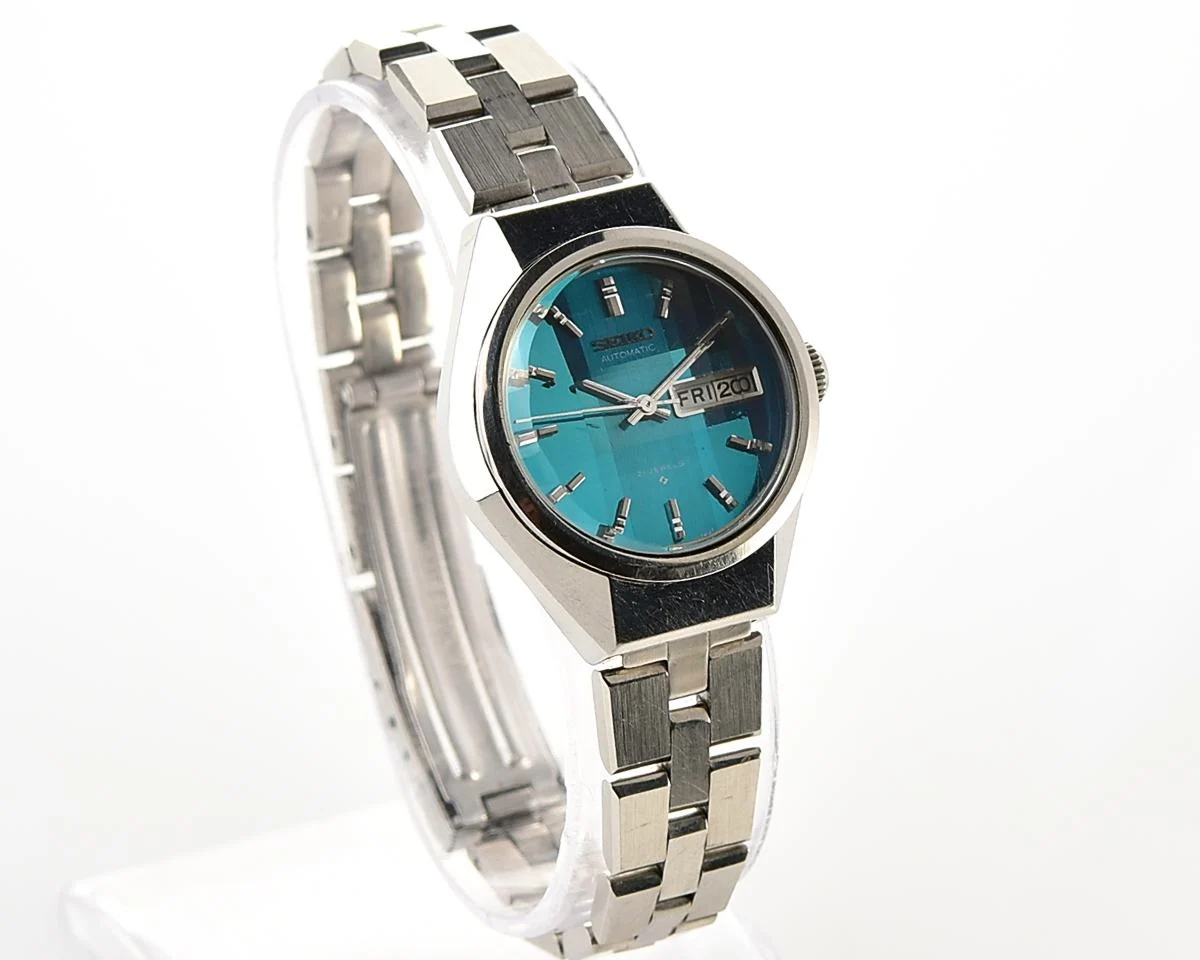
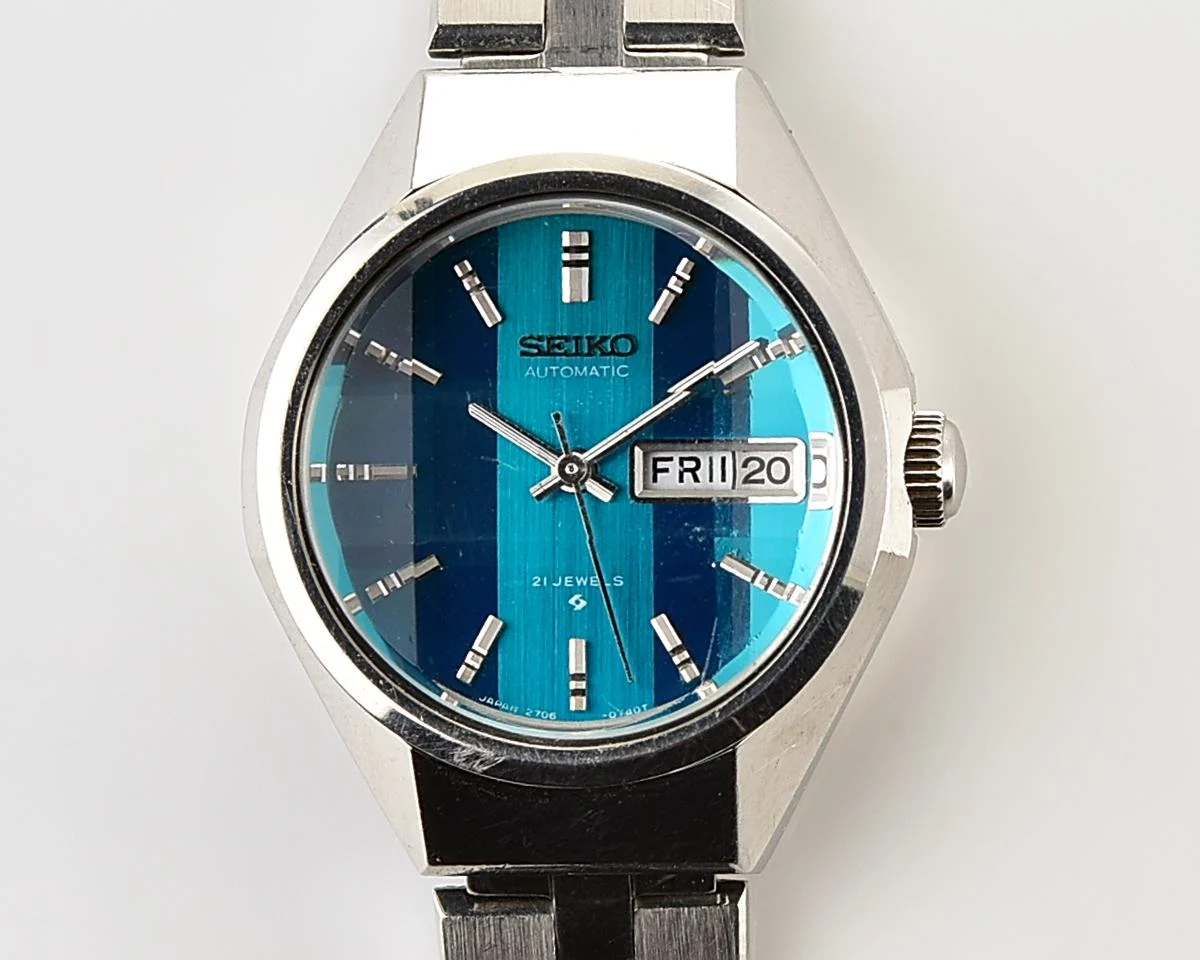
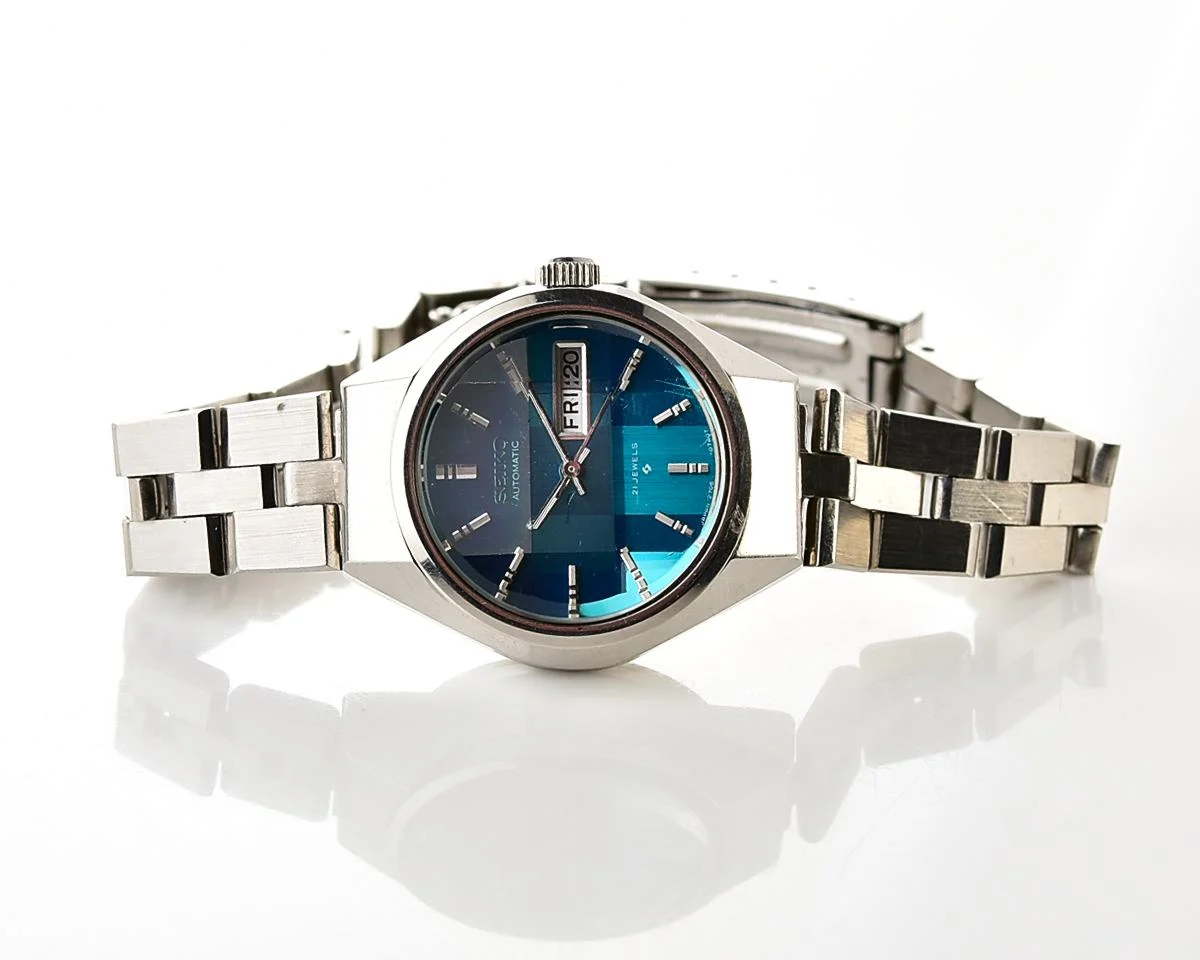
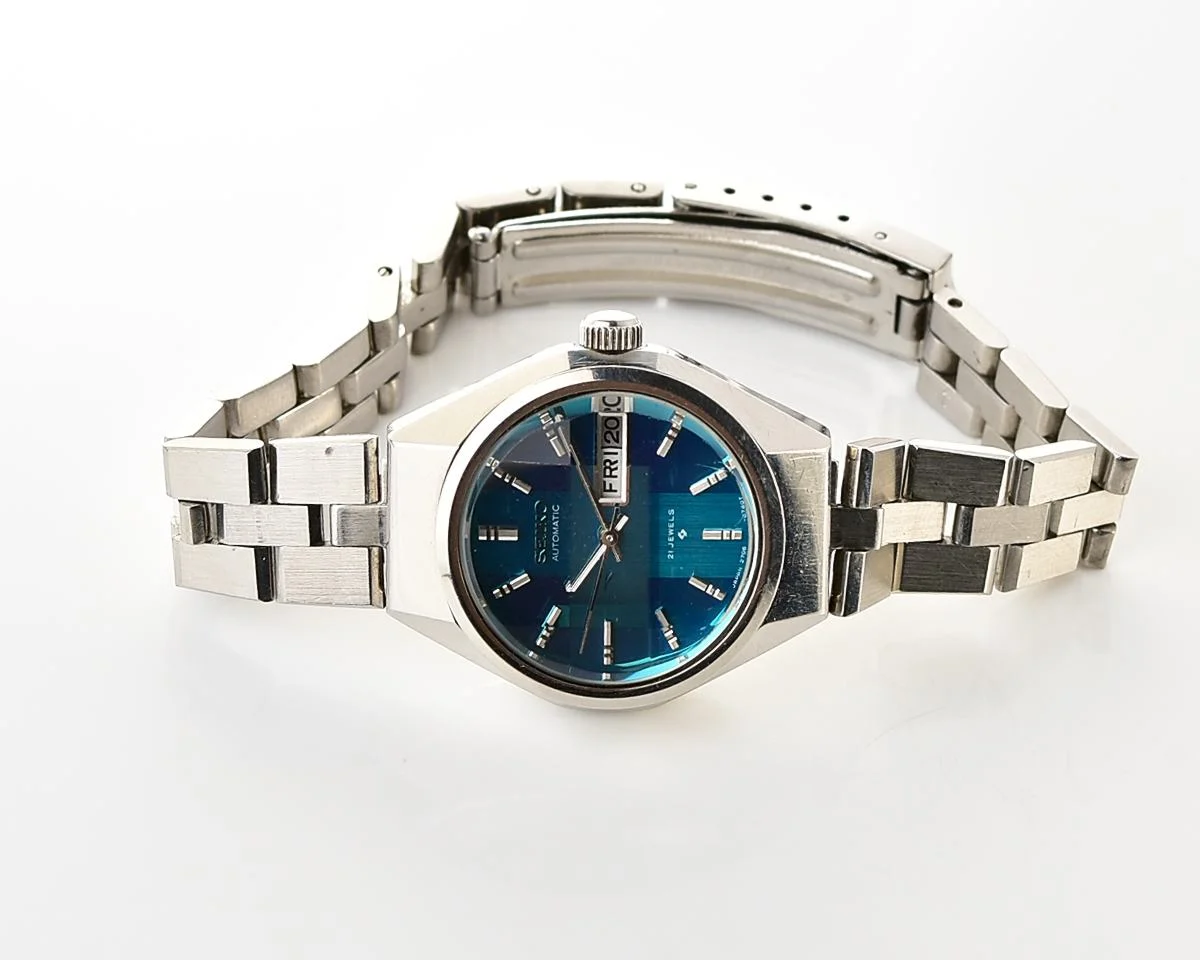
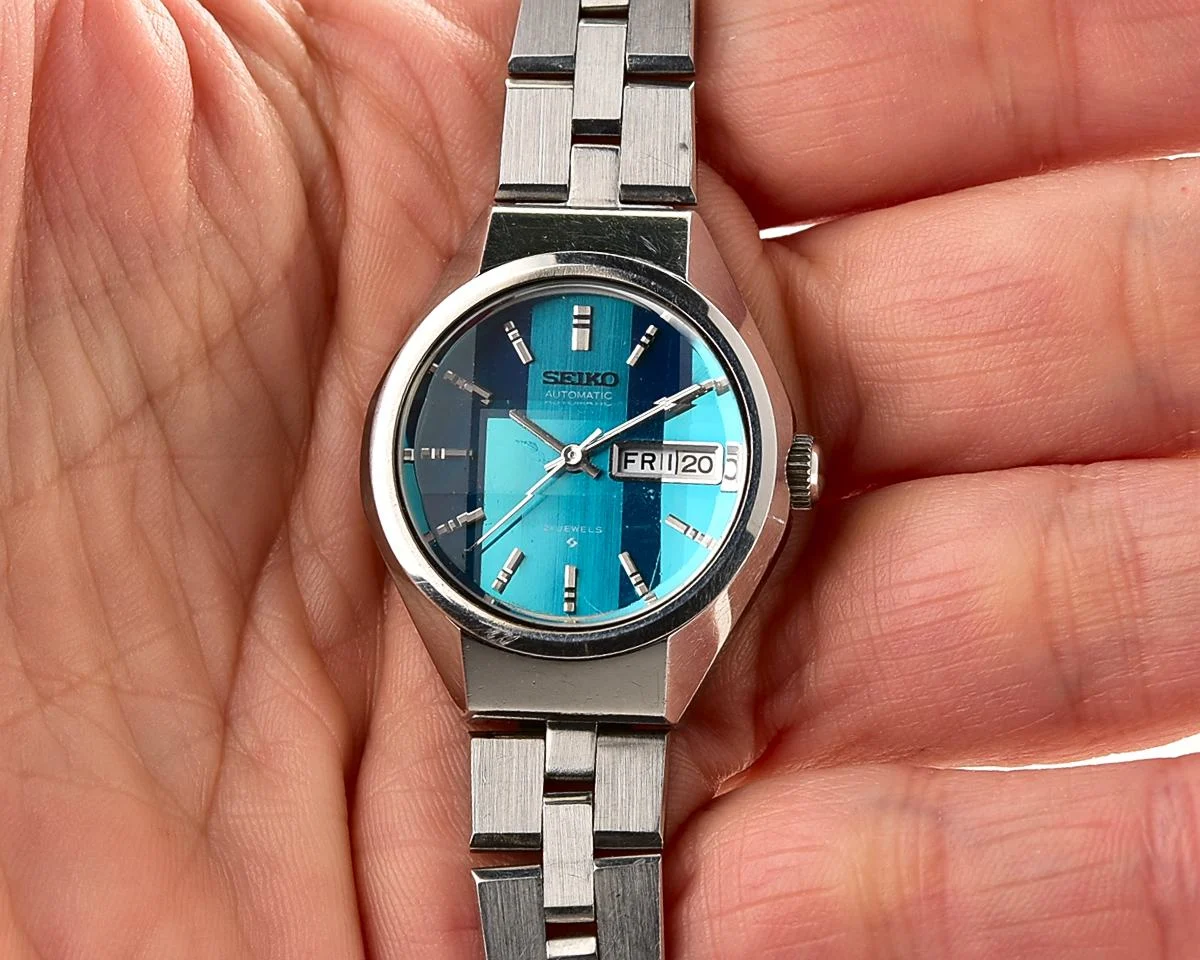
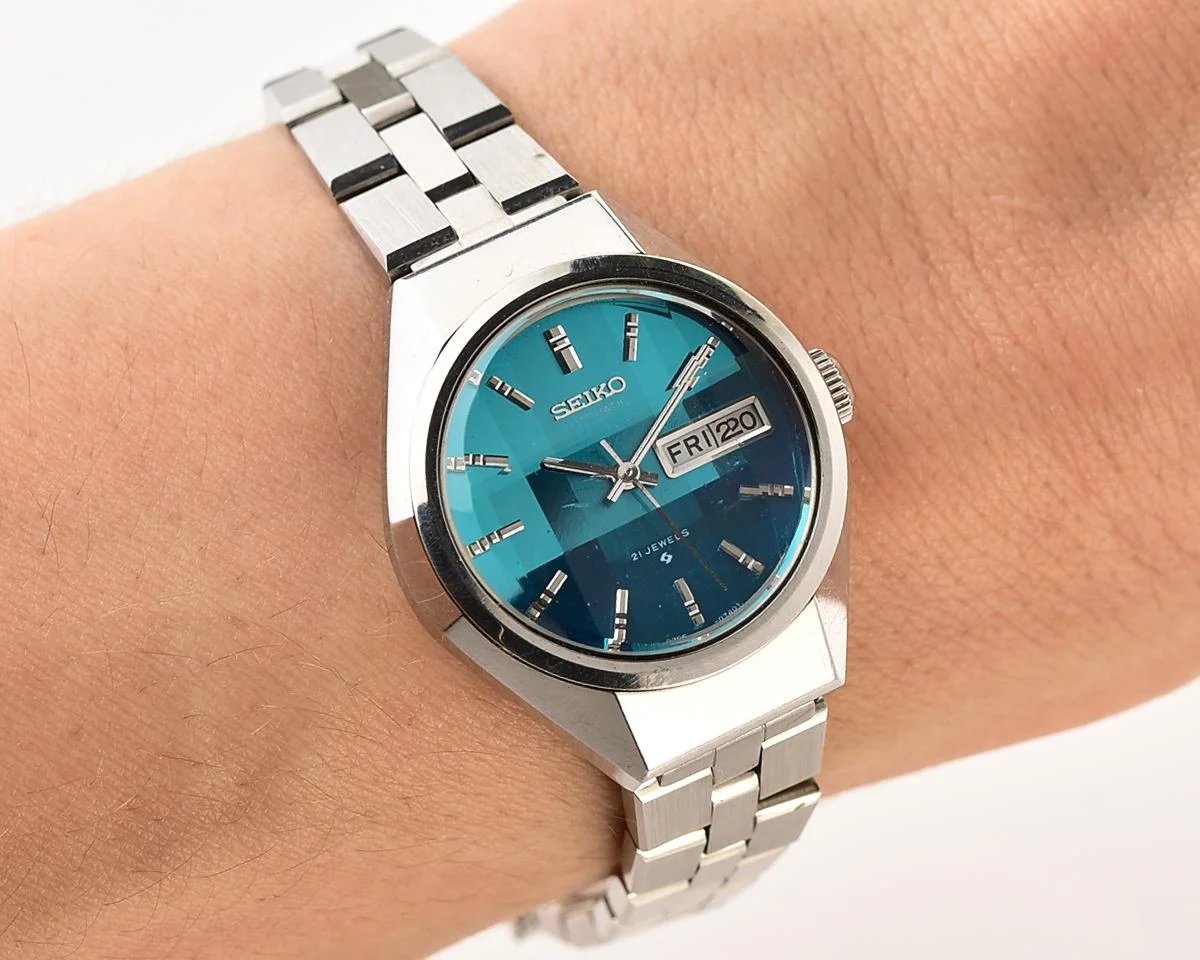
What makes this particular example exceptional is the dial. Seiko called this a “cut glass” dial — and once you see it in person, the name makes complete sense. The surface is divided into vertical panels of alternating deep navy and vivid turquoise, each panel brushed in a slightly different direction so the colors shift as the light angle changes. In direct light it is an intense teal-blue; at an angle, the darker panels absorb the light and the lighter ones glow. No two photos quite capture it the same way, which is part of the appeal.
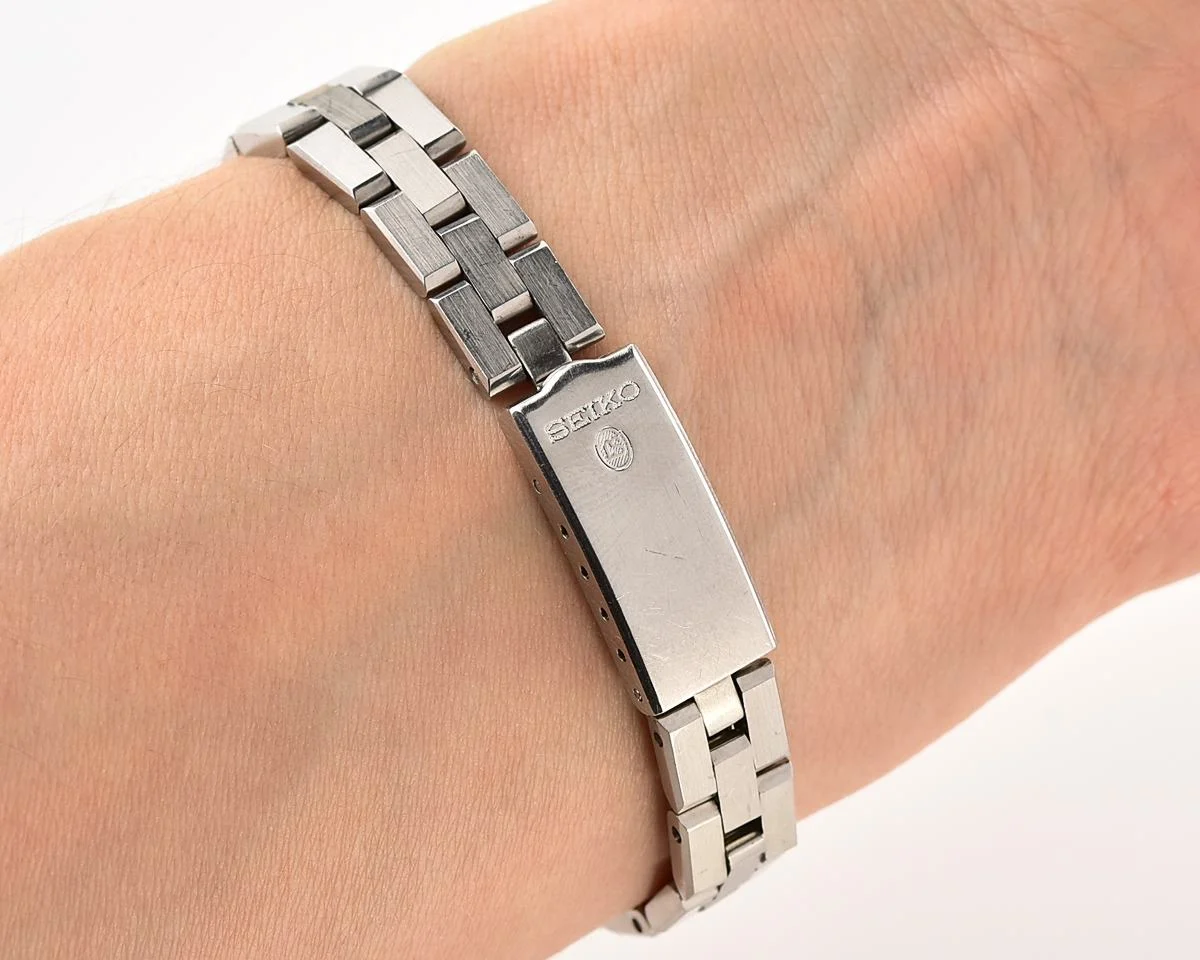
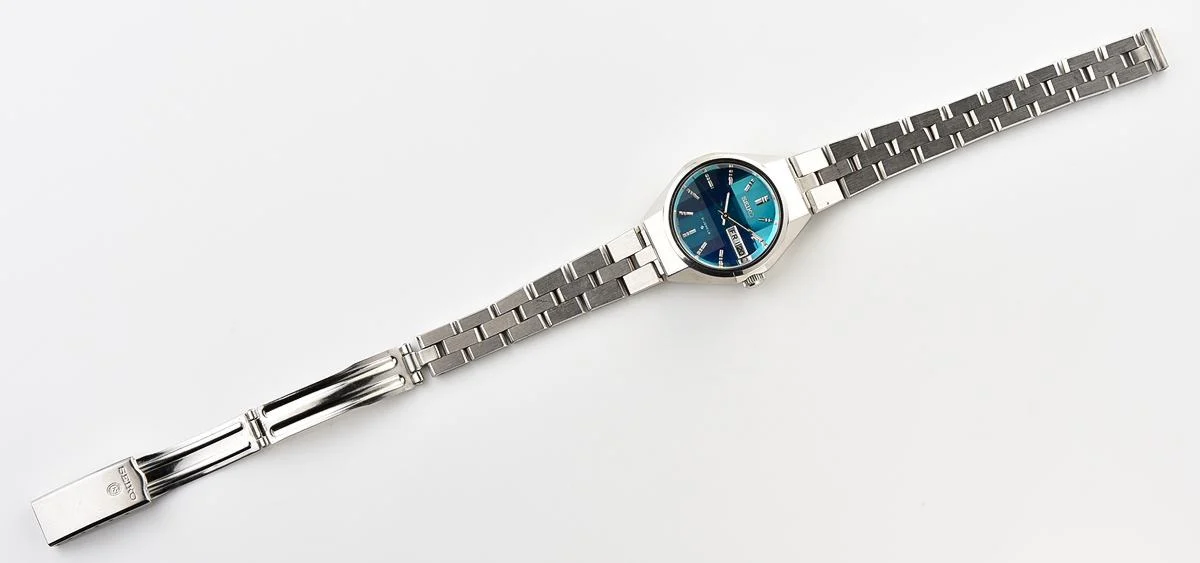
The bracelet is the original Seiko XDB230 — a solid integrated stainless steel bracelet with brushed center links and a signed deployant clasp. The watch and bracelet are a matched set, and the bracelet sizing tag (XDB230, marked on both the clasp and the spring-bar lug) is still legible, confirming originality.
Technical Specifications
| Brand | Seiko |
| Line | Seiko 5 |
| Reference | 2706-0250 |
| Movement | Caliber 2706A, 21 jewels, automatic |
| Serial Number | 451531 |
| Production Date | May 1974 |
| Case Material | Stainless steel |
| Case Size | ~26 mm diameter (without crown) |
| Dial | Turquoise “cut glass” prismatic multi-panel, baton indices |
| Crystal | Acrylic |
| Complications | Day-Date at 3 o’clock |
| Bracelet | Original Seiko XDB230 integrated stainless steel |
| Caseback | Stainless steel screw-back; WATER RESISTANT; JAPAN A; ref. 2706-0250 |
| Country | Japan |
Condition Report
This watch has recently been serviced by a professional watchmaker and keeps good time.
The dial is in very good condition — color is vivid and fully intact, no fading or spotting. The crystal shows age-appropriate light wear. The case and bracelet show honest patina consistent with ~50 years of life: light surface scratches on the case flanks and bracelet links, nothing that diminishes the presentation. The clasp functions correctly.
The previous service history of this watch prior to our ownership is not known.
Stock bracelets on watches this age are often shortened by previous owners. Please check the photos carefully and feel free to ask for a measurement before purchasing.
This watch ships from 🇺🇦 Ukraine with tracking number
Why Collectors and Enthusiasts Want This Watch Today
The “cut glass” dial Seiko 5s from the early 1970s have developed a genuine following among vintage collectors, and for good reason. The dial design — those vertical prismatic panels that shift between deep navy and turquoise as the light changes — was a production variant within the standard Seiko 5 range. It appears in the reference databases and on the secondary market, but you don’t encounter them often in this condition.
What makes this reference particularly appealing to collectors is the combination: a properly sized compact case (26mm, wearable on smaller wrists without looking oversized), the original integrated bracelet intact and matching, a well-specified 21-jewel automatic caliber, and a dial that photographs beautifully but rewards even more in person. These aren’t watches that were made in small numbers — but finding one with the original bracelet, original dial in this condition, and a fresh service is a different matter.
Modes of payment:
- PayPal
- Credit Cards
- bitcoin
We guarantee the item you receive looks and works exactly as advertised — or your money back.
About the watch factory
Seiko Group Corporation (セイコーグループ株式会社, Seikō Gurūpu kabushiki gaisha), commonly known as Seiko, is a Japanese maker of watches, clocks, electronic devices, and semiconductors. Founded in 1881 by Kintarō Hattori in Tokyo, Seiko introduced the world’s first commercial quartz wristwatch in 1969.
Seiko is widely known for its wristwatches. Seiko is one of the few watch companies that is fully vertically integrated. Seiko is able to design and develop all the components of a watch, as well as assemble, adjust, inspect and ship them in-house. Seiko’s mechanical watches consist of approximately 200 parts, and the company has the technology and production facilities to design and manufacture all of these parts internally.
Seiko offers one of the widest ranges of watch technologies in the world—quartz, kinetic, solar, mechanical, and Spring Drive—spanning everything from affordable everyday pieces to six-figure haute horlogerie. Over the decades it has launched multiple global brands, including Lorus, Pulsar, and Alba, while elevating its prestige through innovations like Spring Drive, which helped push Seiko into higher-end territory. In the 2010s, Grand Seiko and Credor were separated into fully independent luxury brands, while Seiko’s own global lineup now includes Grand Seiko, King Seiko, Prospex, Astron, Presage, and Seiko 5 Sports, with Credor remaining primarily Japan-focused.
Among Seiko’s key lines, Seiko 5 (born in 1963) is the gateway mechanical series known for durability and value; Lord Matic defined 1970s style with faceted crystals and colorful dials; Astron remains Seiko’s flagship GPS-solar tech line; Presage focuses on traditional mechanical craftsmanship with enamel and urushi dials; and Prospex delivers professional-grade dive, field, and pilot watches often embraced by enthusiasts. At the top end, Grand Seiko emphasizes precision, Zaratsu polished design, and movements like Spring Drive, while King Seiko—revived in the 2020s—brings back sharp, elegant 1960s styling with modern calibres.
Finally, Credor represents Seiko’s pinnacle of artisanal watchmaking, producing low-volume pieces in precious metals and showcasing Japanese decorative arts and haute complications from the Micro Artist Studio.