
Description
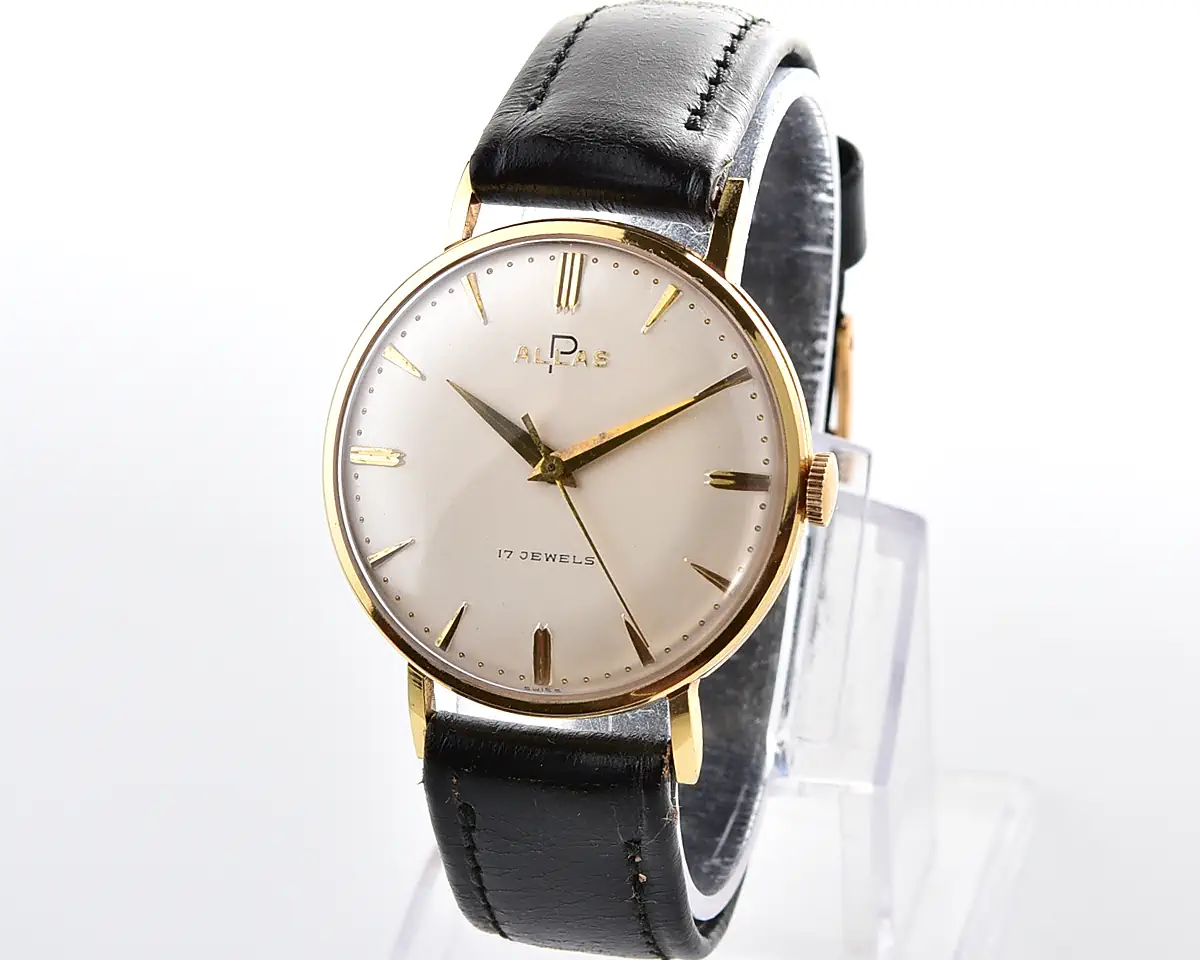
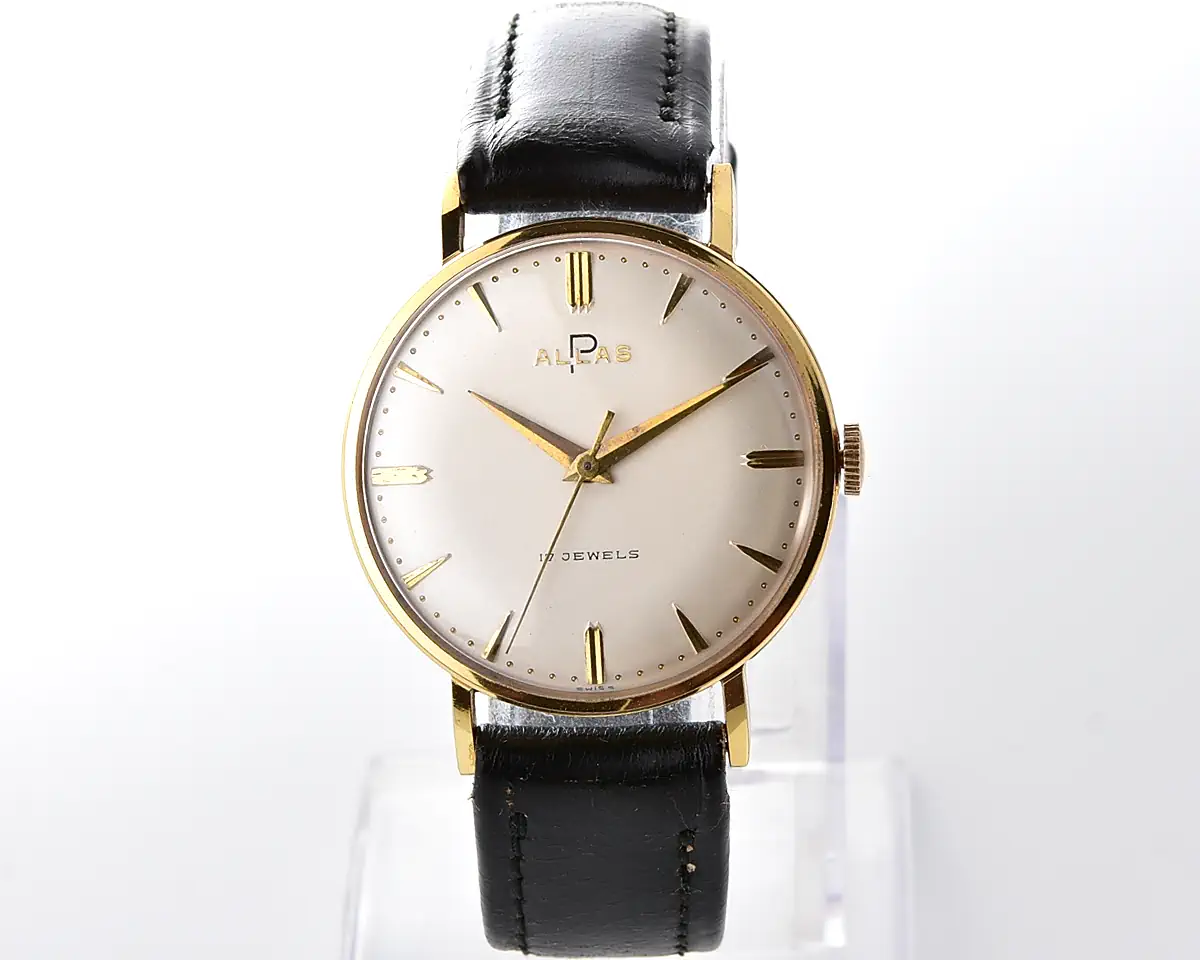
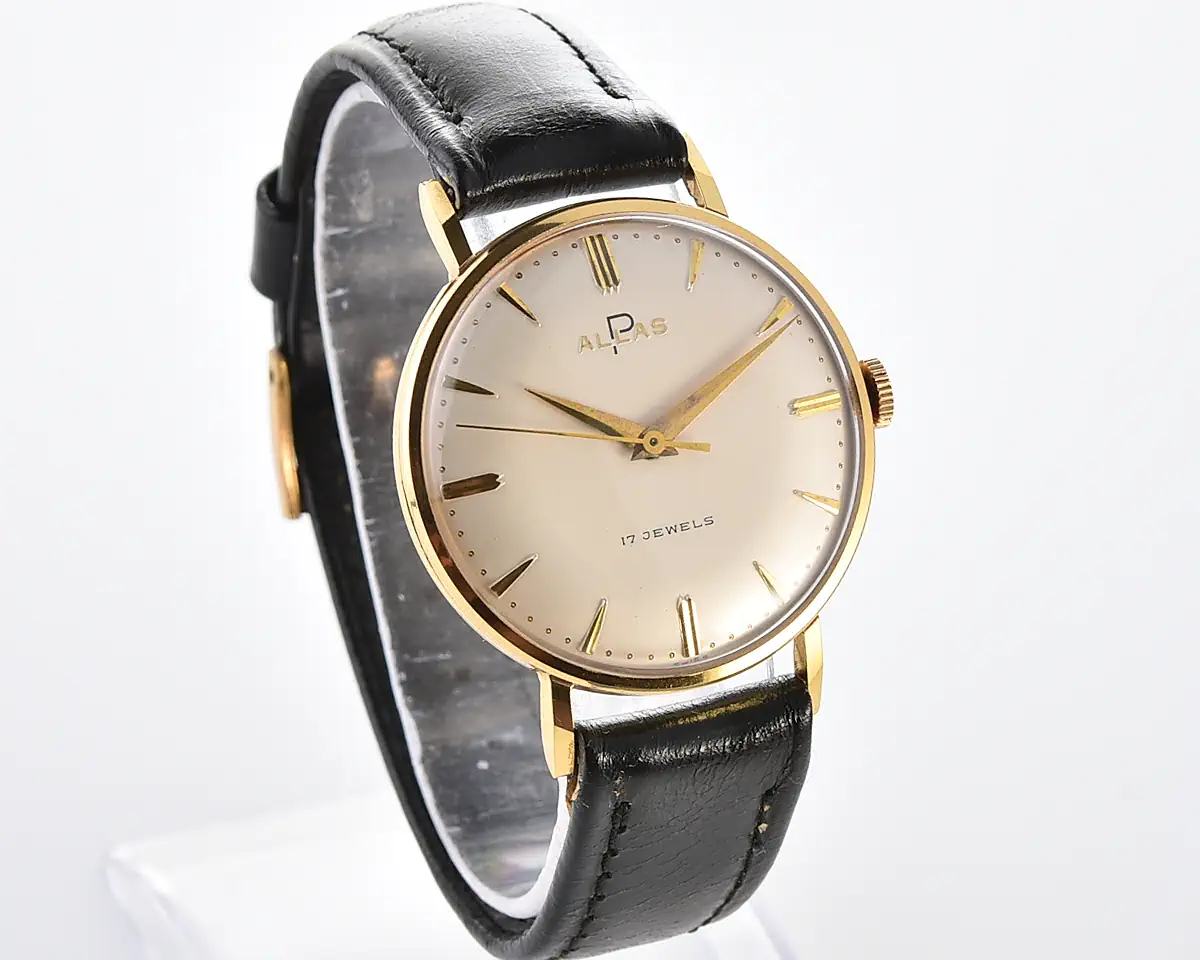
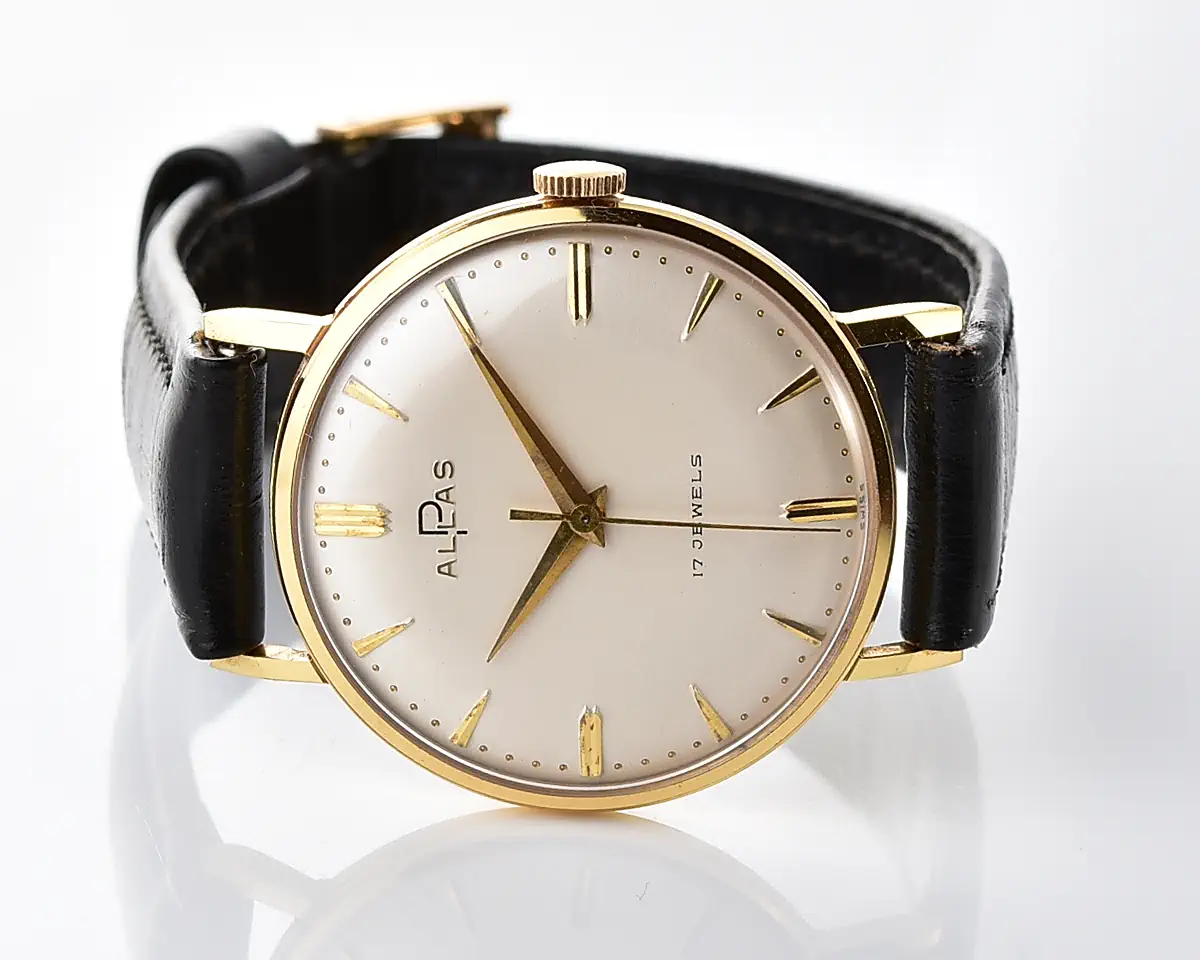
PALLAS vintage mechanical watch
MADE IN SWITZERLAND!
“Pallas” is Pallas Athena — the Greek goddess of wisdom, craft and skilled work. Swiss watch houses of the early twentieth century reached for classical names the way car makers later reached for constellations, and Pallas appears in the Swiss horological trademark registers from the first years of the 1900s onward.
The Swiss brand is recorded as Pallas Watch Co Ltd of La Chaux-de-Fonds, in the heart of the Jura watchmaking valleys, and the same mark was registered again in the 1940s by houses in Biel/Bienne. It is worth knowing that an unrelated German firm in Pforzheim also used the Pallas name on watches and cases — this one is the Swiss watch, marked SWISS at six o’clock and PALLAS WATCH Co on the movement itself.
About Swiss Pallas Watches
Pallas belonged to the great middle of the Swiss industry — the établisseurs, houses that designed their own dials and cases and built their watches around finished ébauches bought from the specialist movement factories of the Jura. That was how the overwhelming majority of affordable Swiss watches were made in the 1950s and 1960s, and this watch shows the system working exactly as intended: the movement is a Felsa — one of the serious Grenchen ébauche houses of the Ebauches SA group — finished and signed for Pallas.
The company left little documentation behind and did not survive the quartz years, so Pallas today is a collector’s footnote rather than a headline. What survives is the product: clean, restrained mid-century dress watches built on the same components as the better-known names that were buying from the same suppliers.
About This Watch
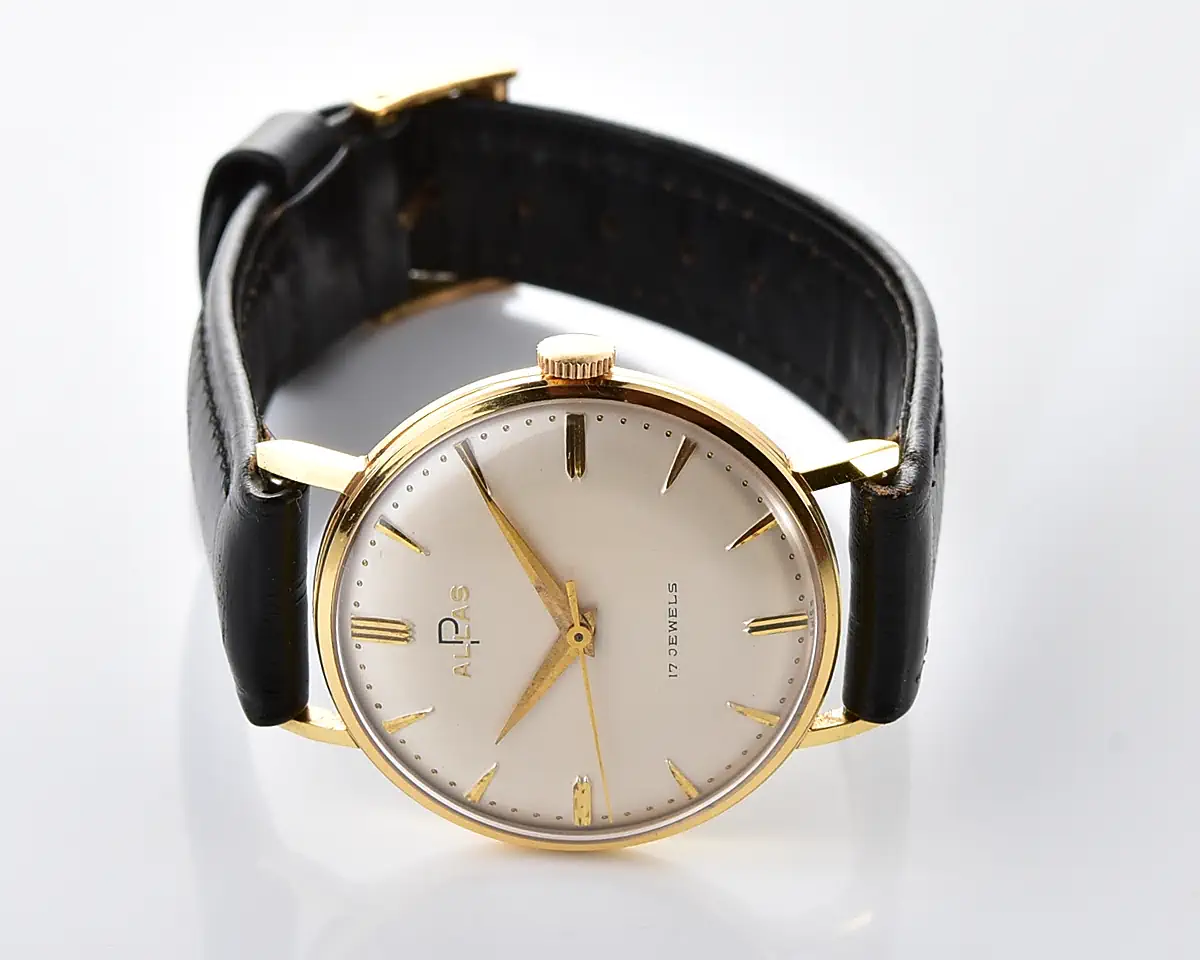
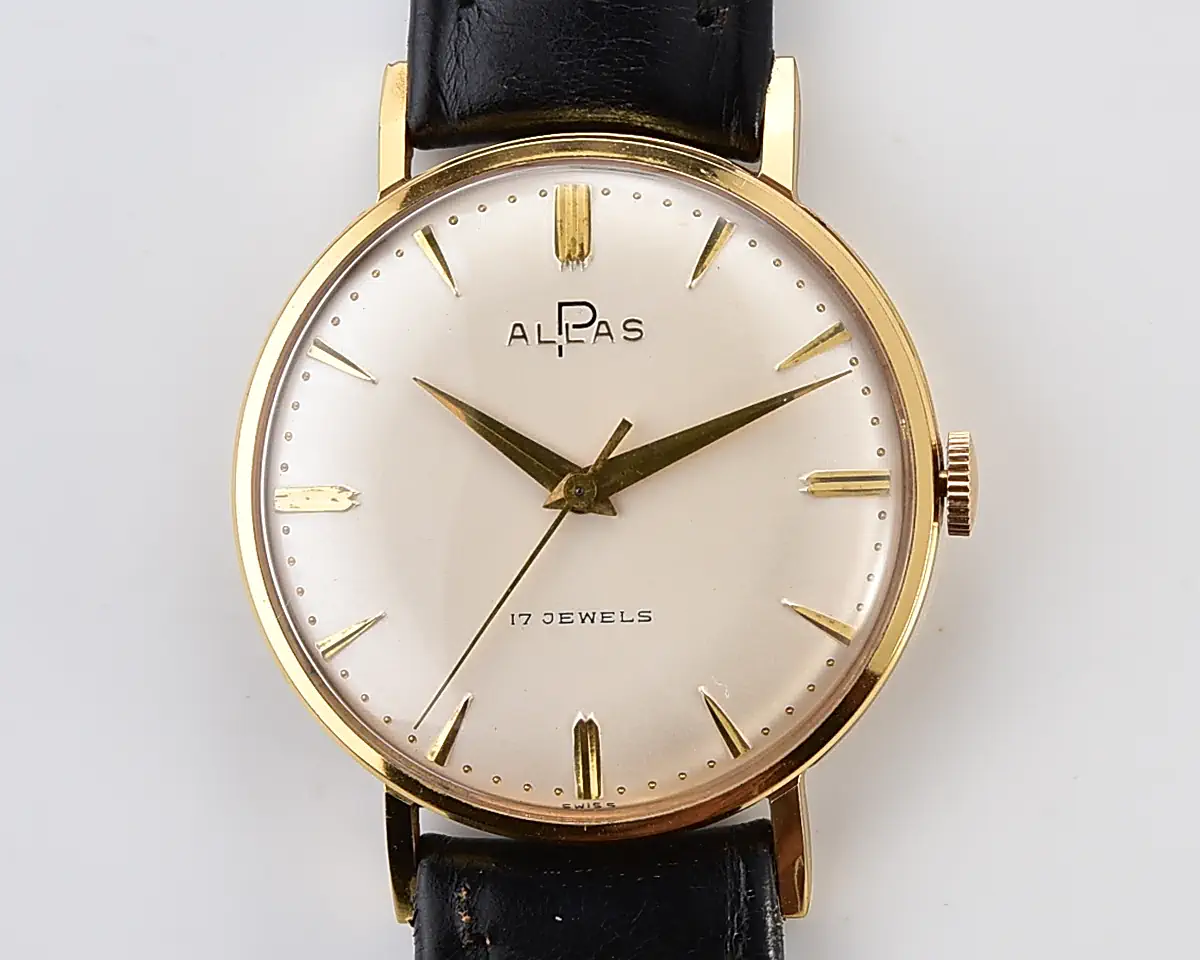
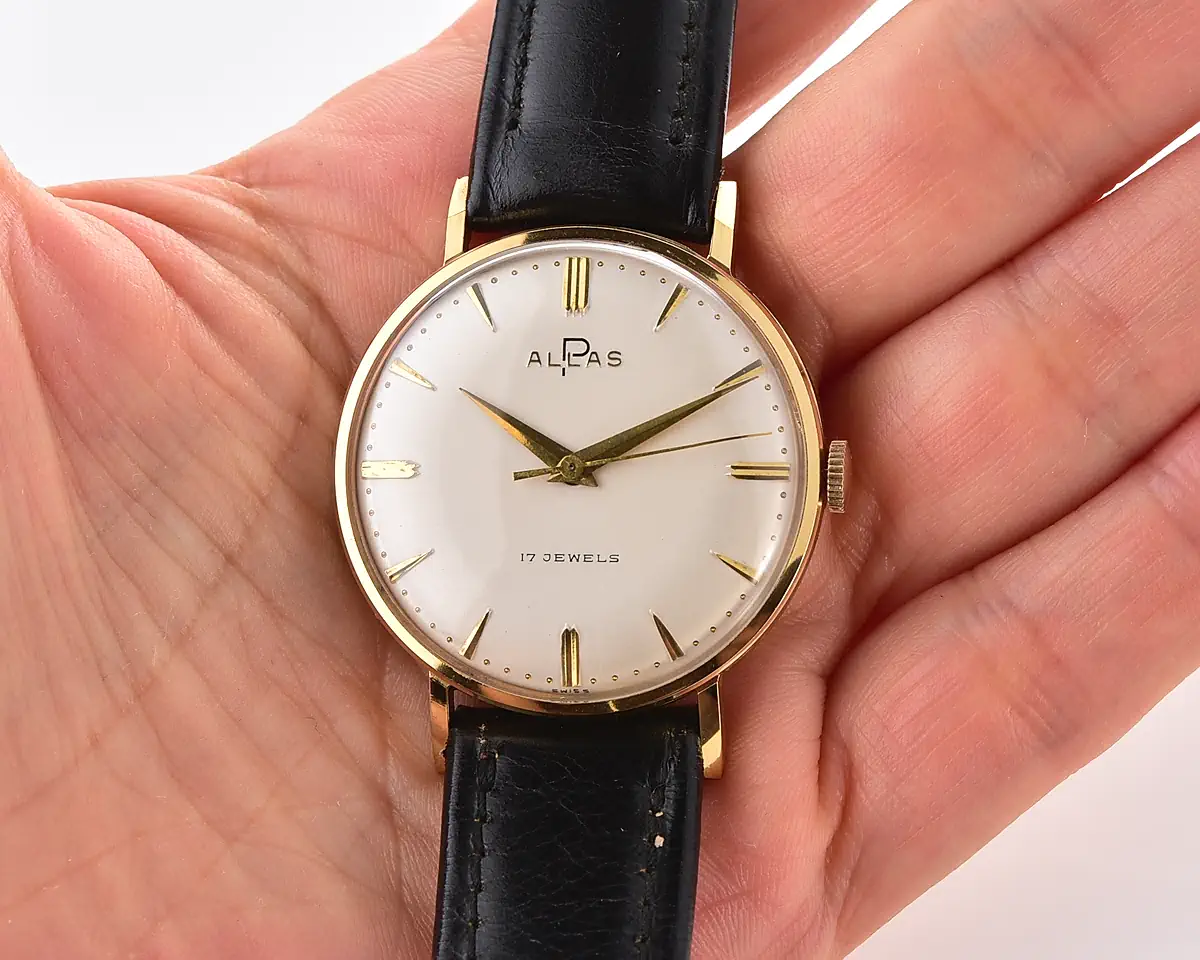
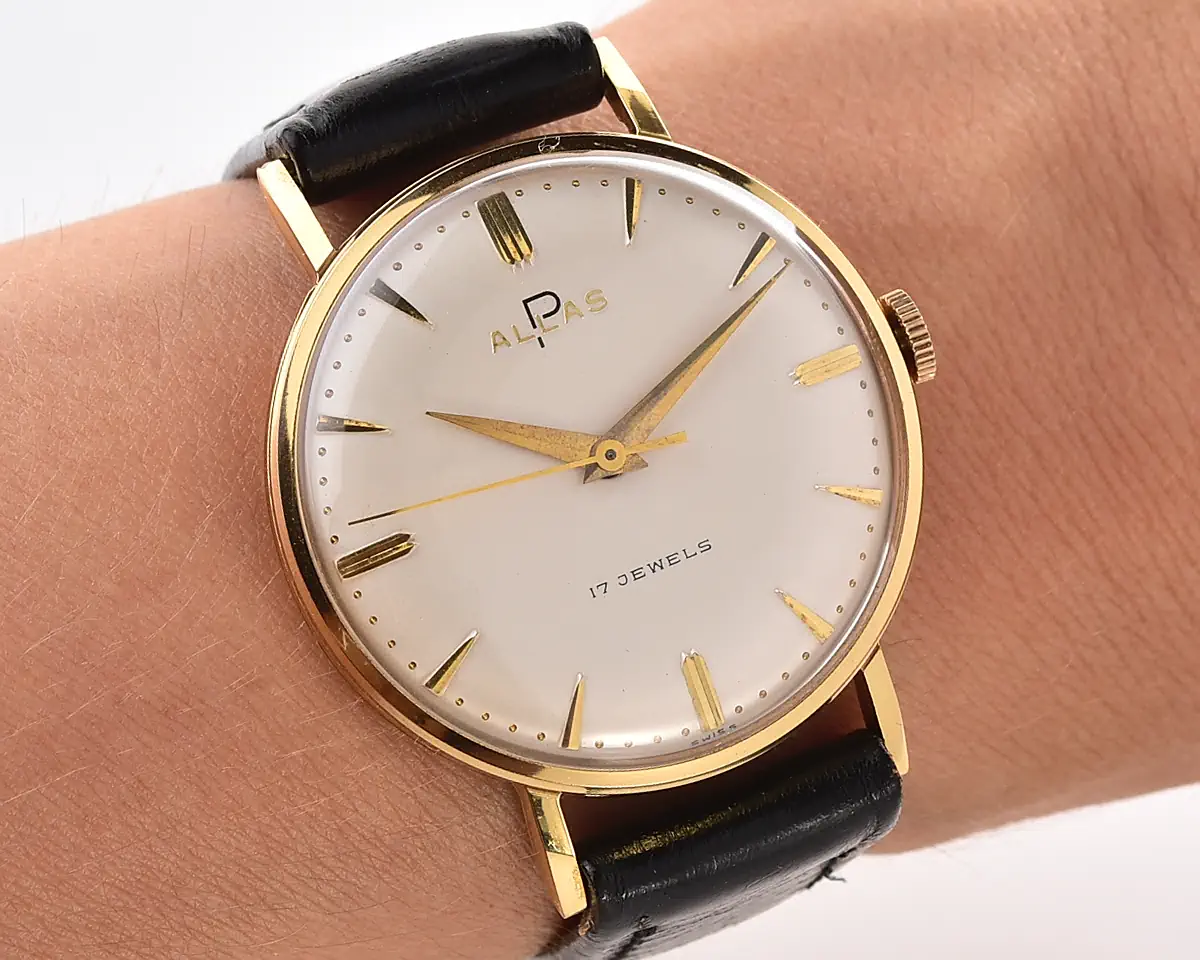
This is a Pallas gold-plated dress watch from the 1950s, and it is a quietly confident piece of design. The dial is a warm silver, almost unmarked, with a fine dotted minute track running around the outside and applied faceted gold baton indices — doubled at twelve — that catch the light as the wrist moves. Slim gold dauphine hands and a hairline centre seconds hand complete it, with 17 JEWELS printed above SWISS at six o’clock. At 34.5mm across and just 9mm thick, the thin polished bezel and faceted lugs give the case an elegant, low profile that slips under a cuff and wears larger than the numbers suggest.
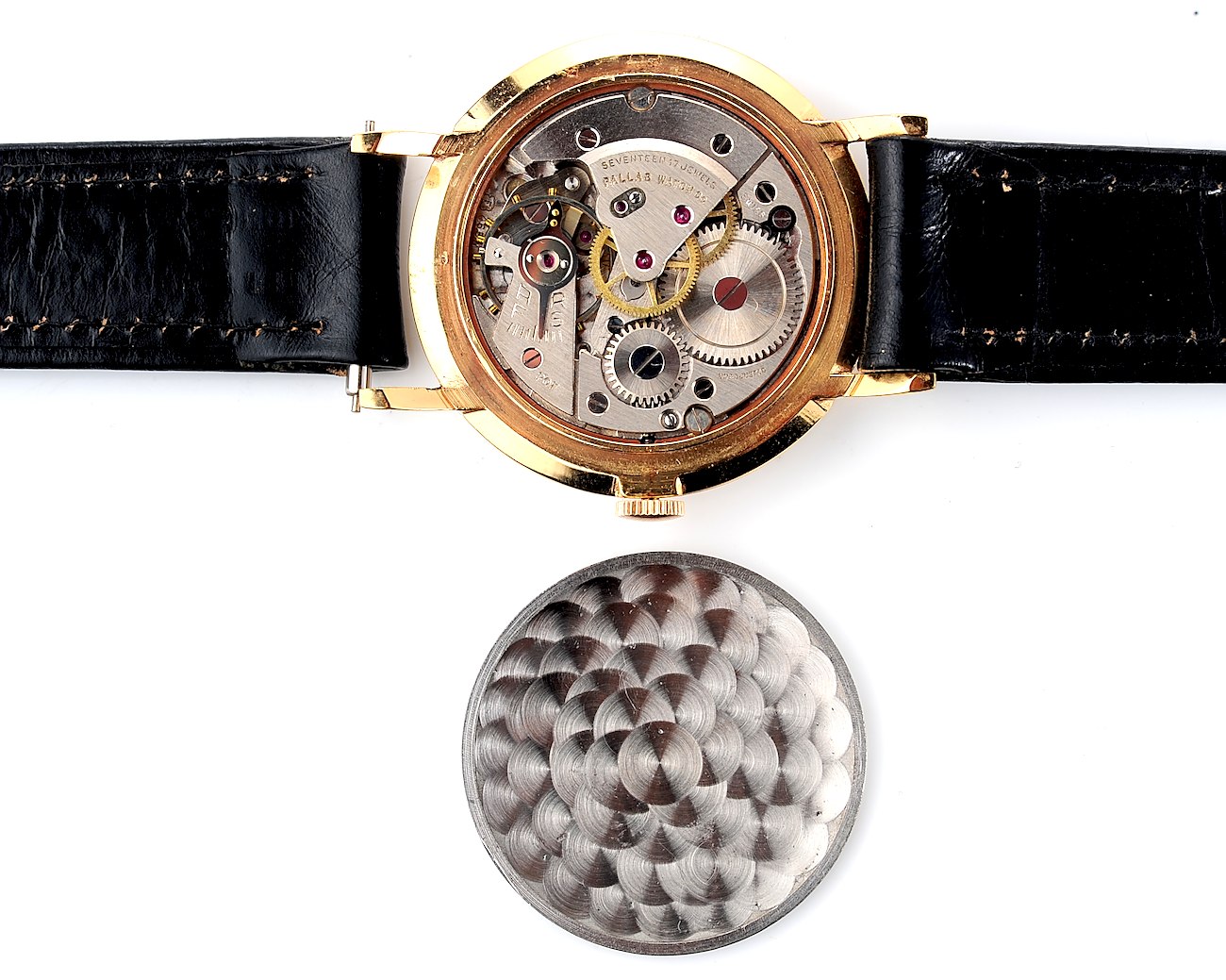
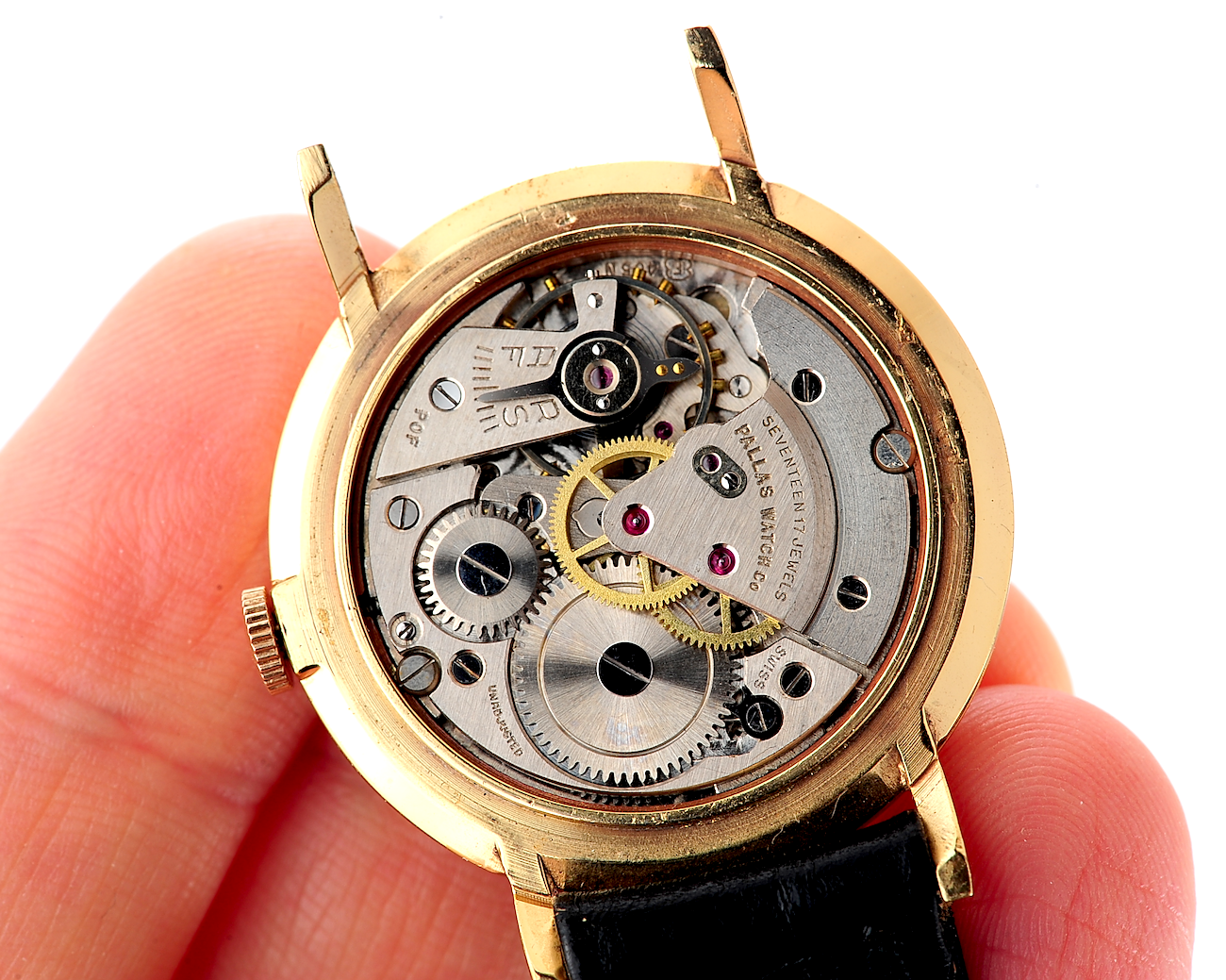
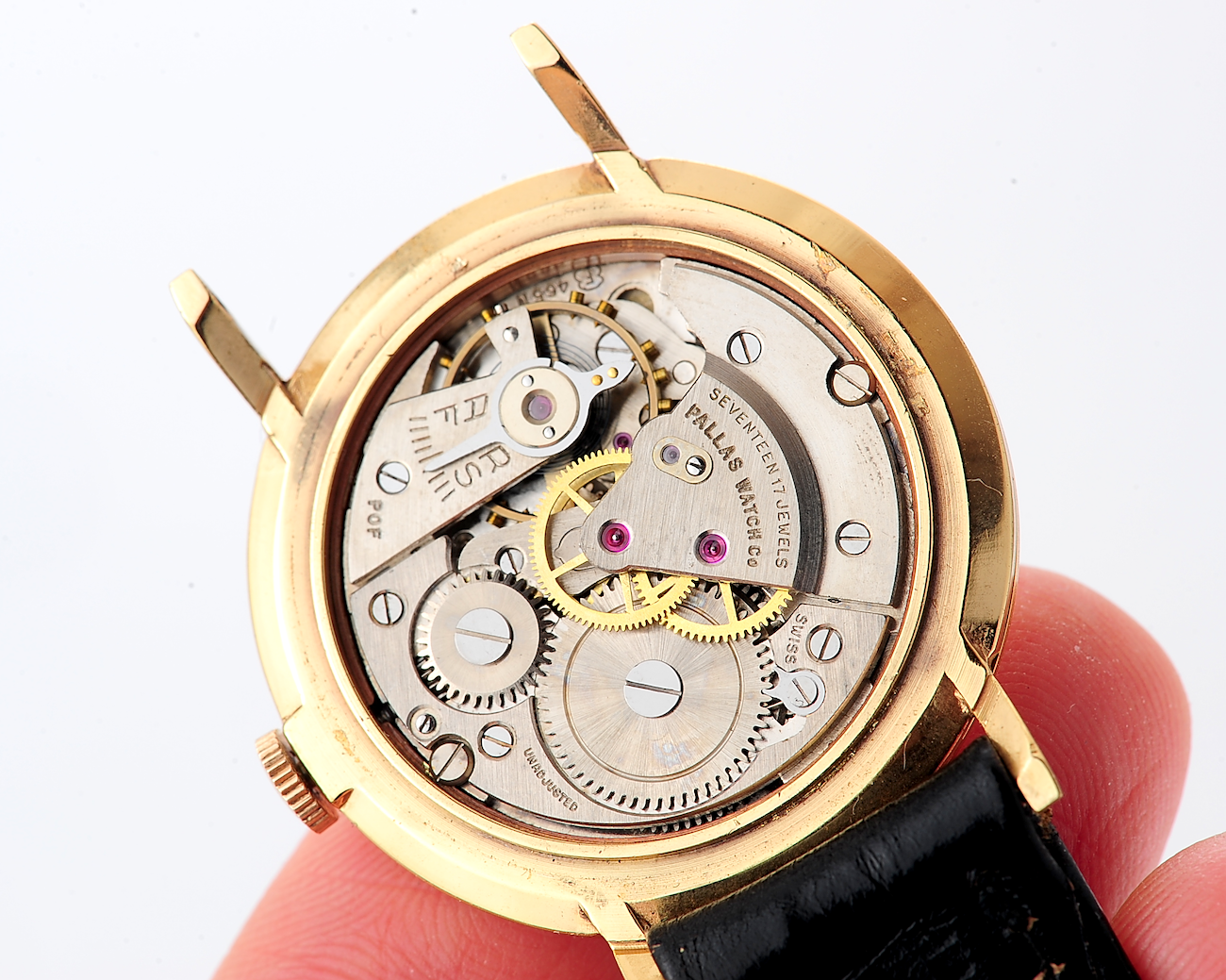
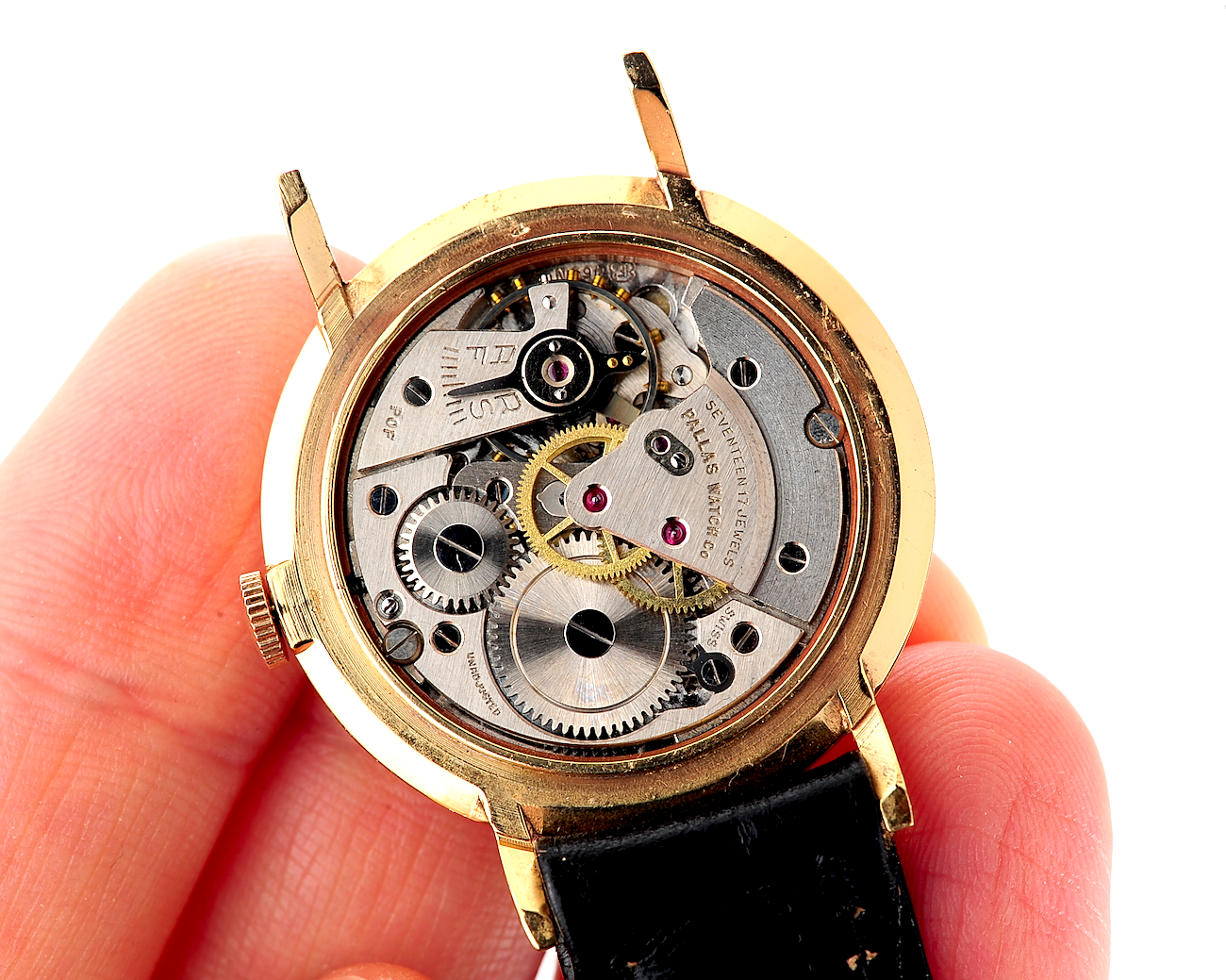
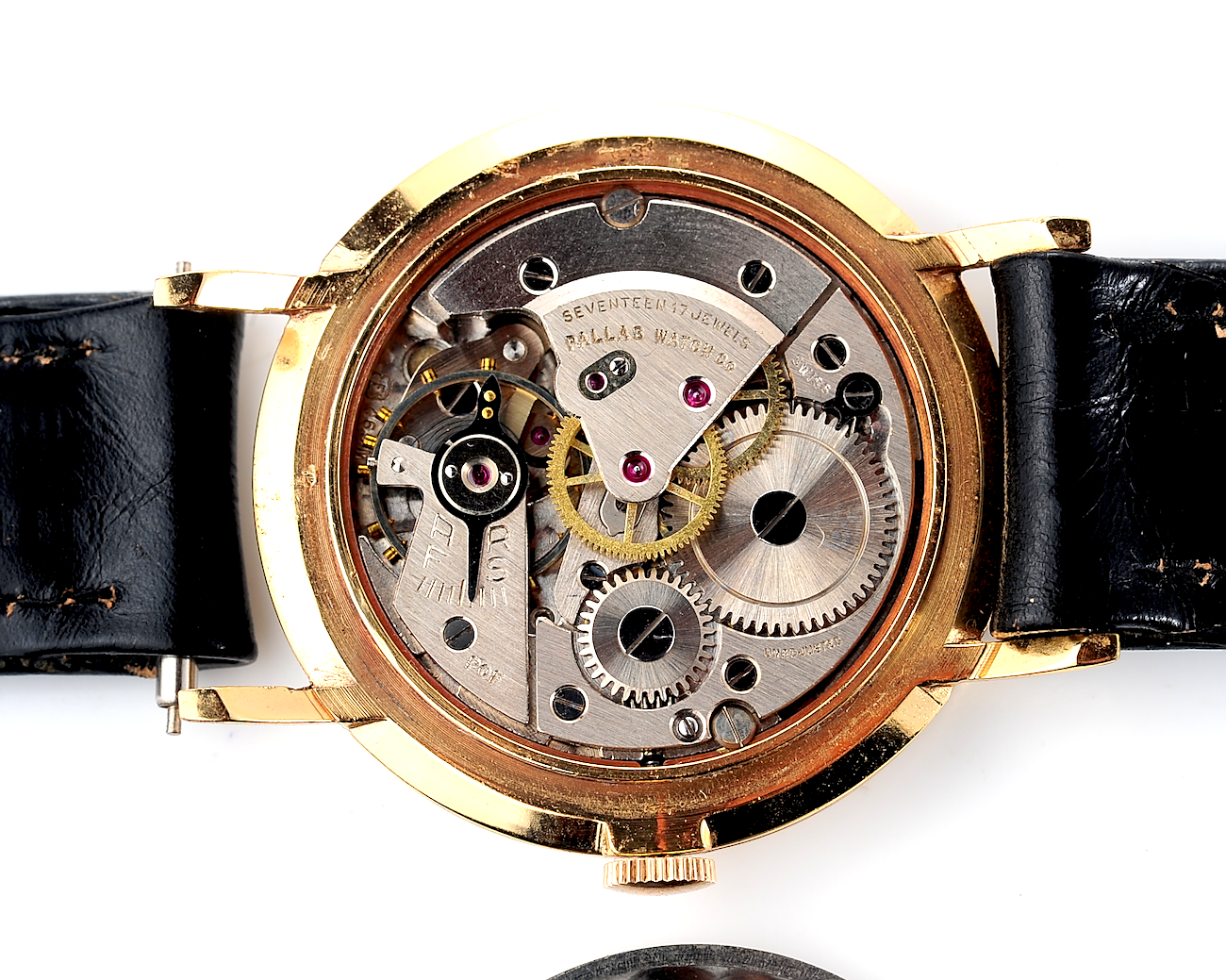
Under the case-back is the Felsa calibre 465N, an 11½-line hand-wound movement from the 1950s with a direct-driven centre seconds hand, beating at 18,000 vibrations per hour with about 38 hours of reserve. The N matters: it denotes Felsa’s higher grade of the calibre, fitted with a screw balance — the gold timing screws are clearly visible around the balance rim in the photographs — alongside the long, finely graduated regulator arm that collectors recognise this movement by. The bridges are straight-grained nickel and signed SEVENTEEN 17 JEWELS · PALLAS WATCH Co · SWISS · UNADJUSTED.
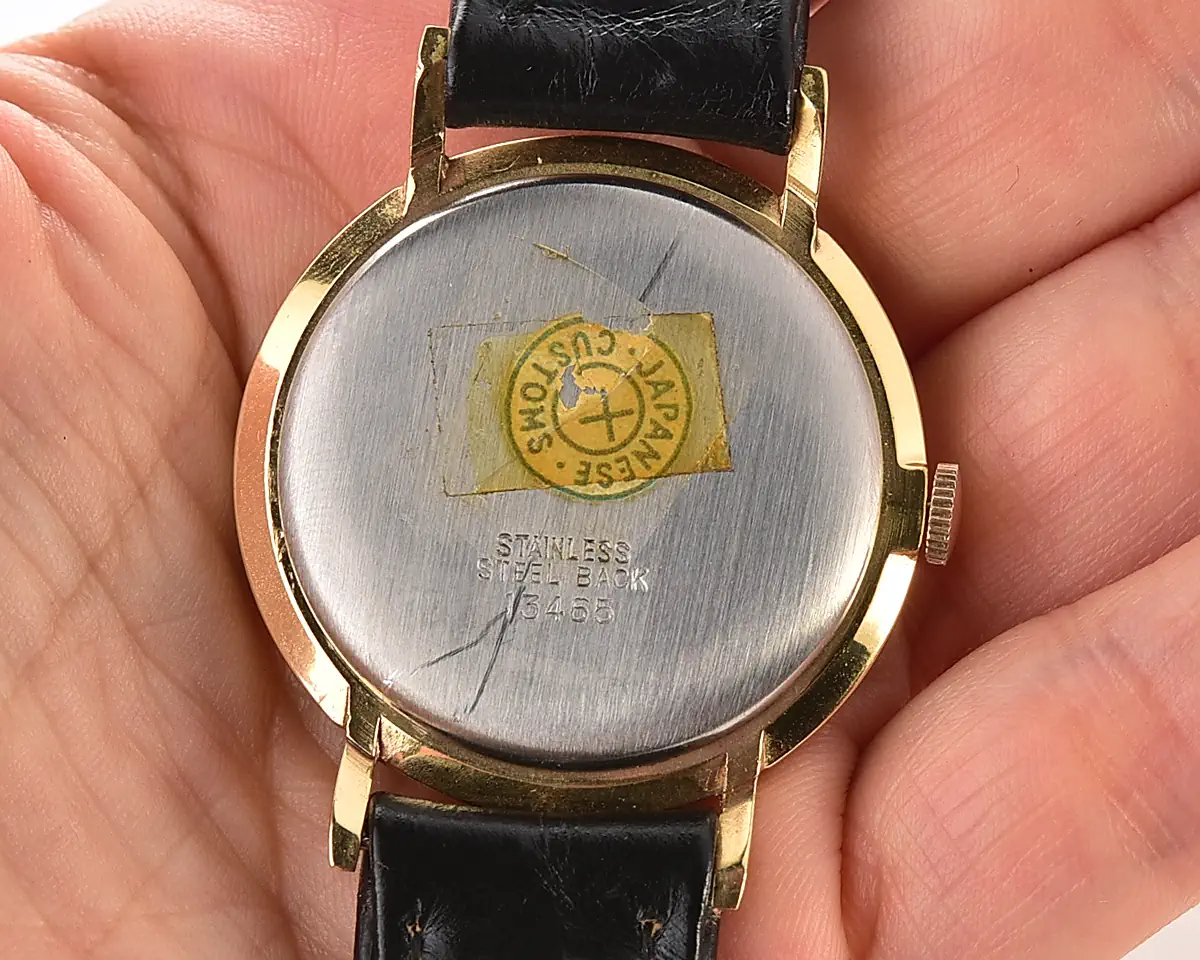
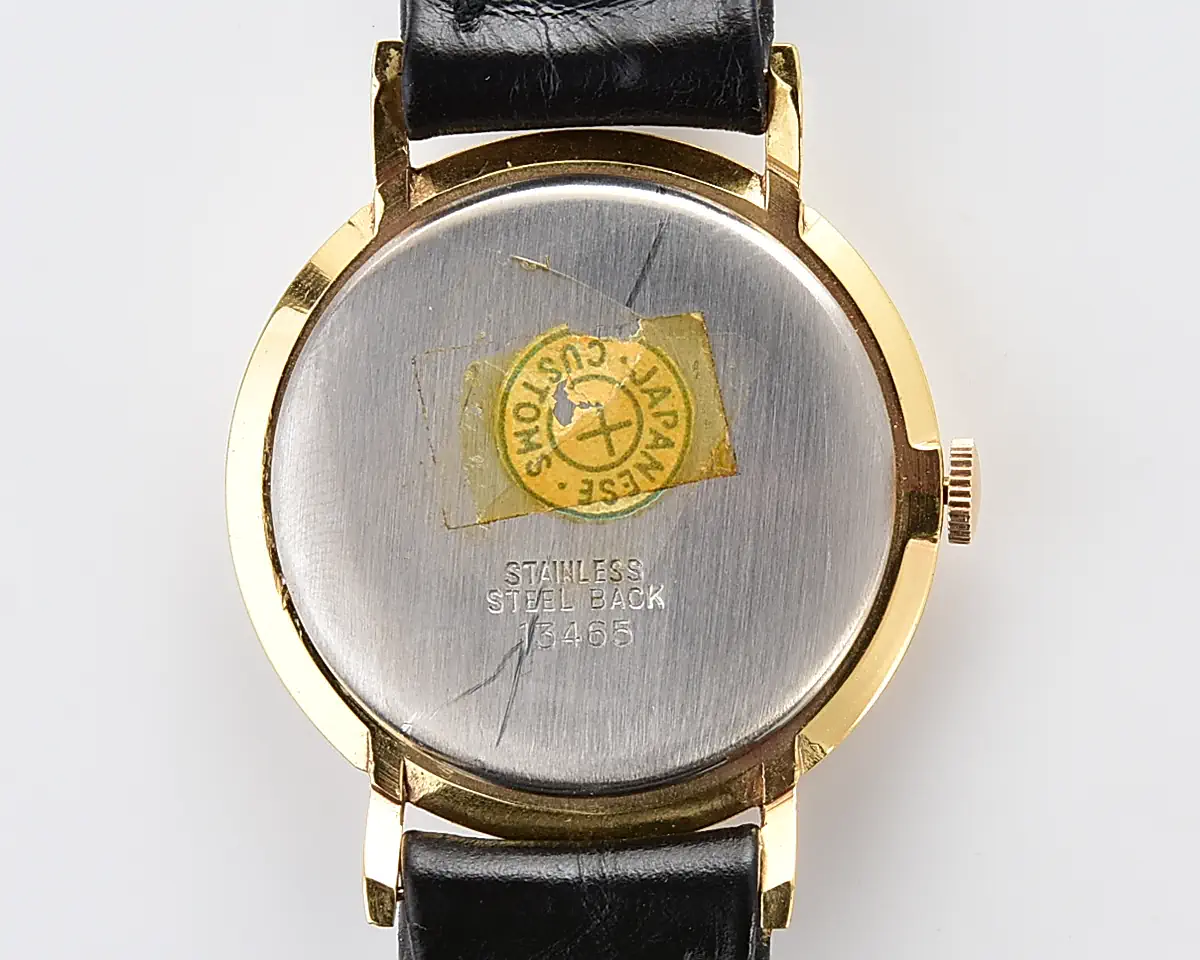
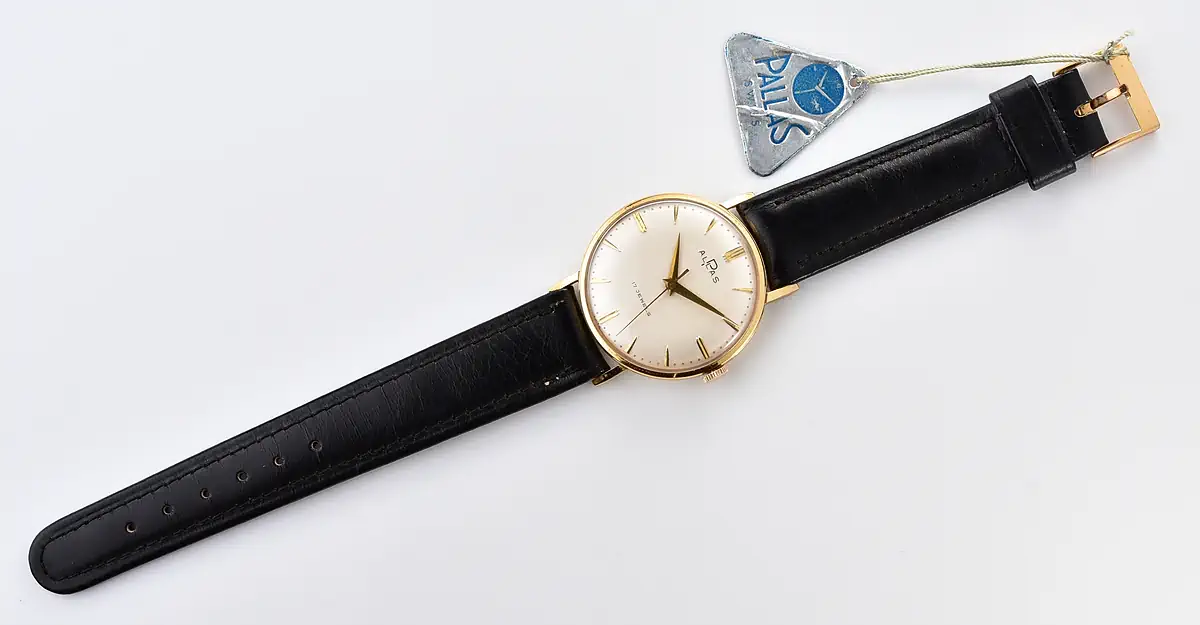
The best detail is on the outside of that back. The stainless steel case-back is stamped with the case number 13465 — and still carries its original Japanese Customs import seal, the small green-and-gold duty sticker applied to imported watches when they cleared Japanese customs. This Pallas was sold new into Japan and spent its life there before reaching us, which is exactly the kind of provenance detail that usually gets polished off during a service. It has been left alone. The watch also still has its original triangular Pallas hangtag, visible in the photos.
Technical Specifications
- Brand: Pallas (Switzerland)
- Line: Gold-plated dress watch
- Case Number: 13465 (stamped on the case-back)
- Movement: Felsa cal. 465N, 11½ lines, 17 jewels, manual wind, screw balance, direct-driven centre seconds
- Frequency: 18,000 vibrations per hour
- Power Reserve: approx. 38 hours
- Movement Signature: SEVENTEEN 17 JEWELS · PALLAS WATCH Co · SWISS · UNADJUSTED
- Production Date: circa 1950s
- Case Material: Gold-plated bezel and lugs, with stainless steel snap-on back
- Case Diameter: 34.5mm (excluding crown)
- Thickness: 9mm
- Dial: Silver, applied faceted gold baton indices, doubled at 12, dotted minute track, centre seconds
- Hands: Gold dauphine, with slim centre seconds
- Crystal: Acrylic
- Case-back: Stamped “STAINLESS STEEL BACK 13465”; retains its original Japanese Customs import seal
- Market: Swiss export to Japan
Condition Report
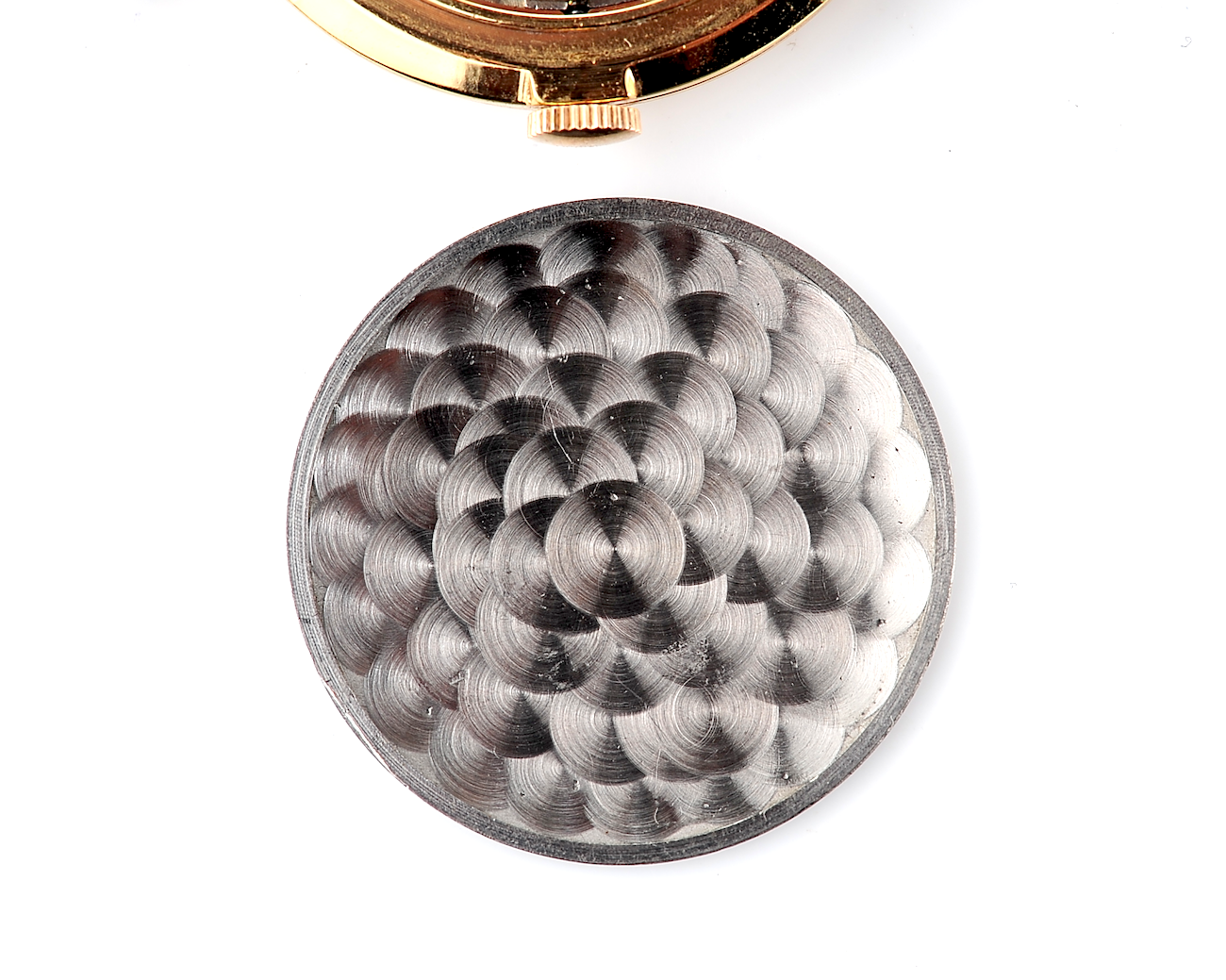
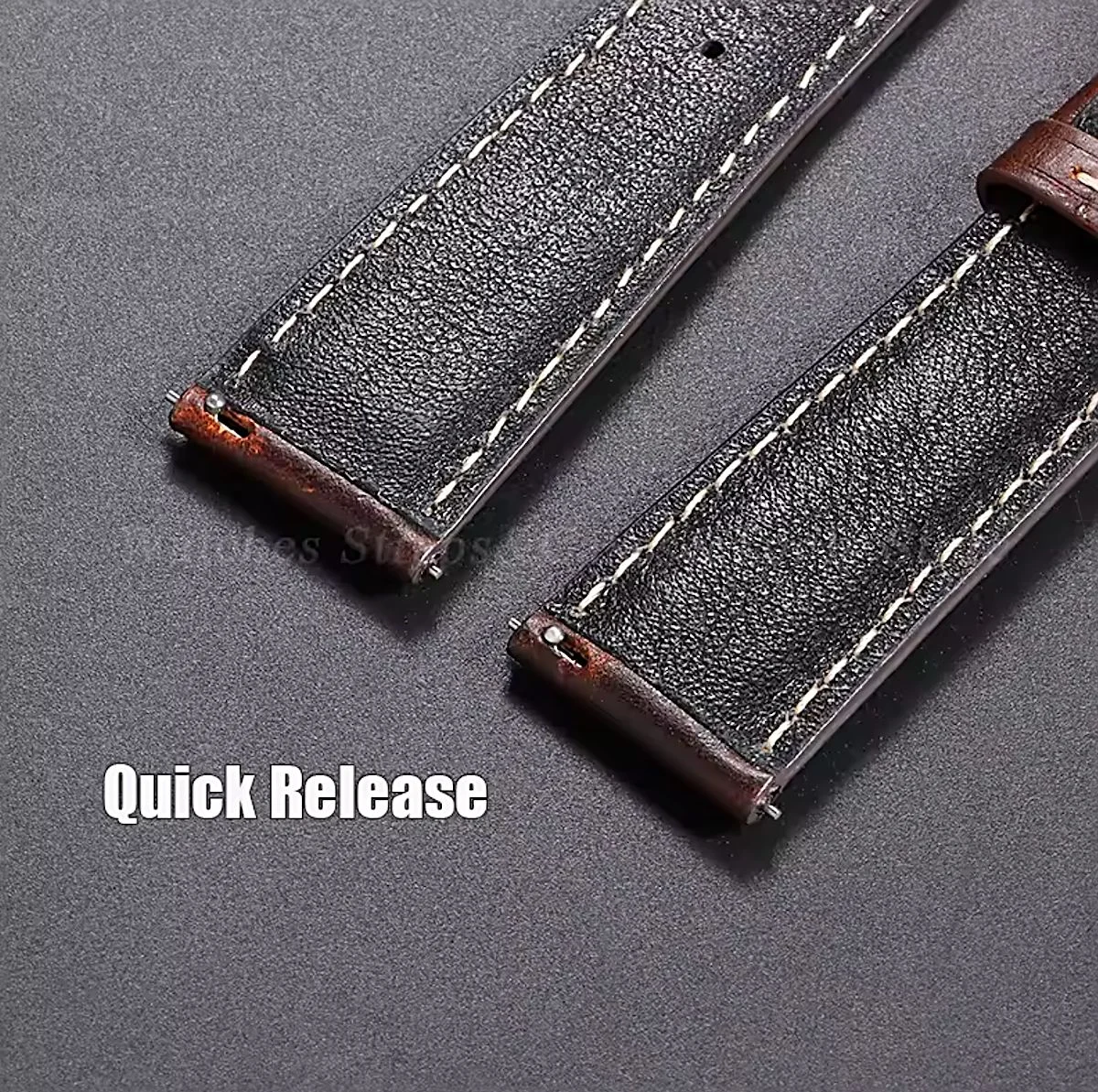
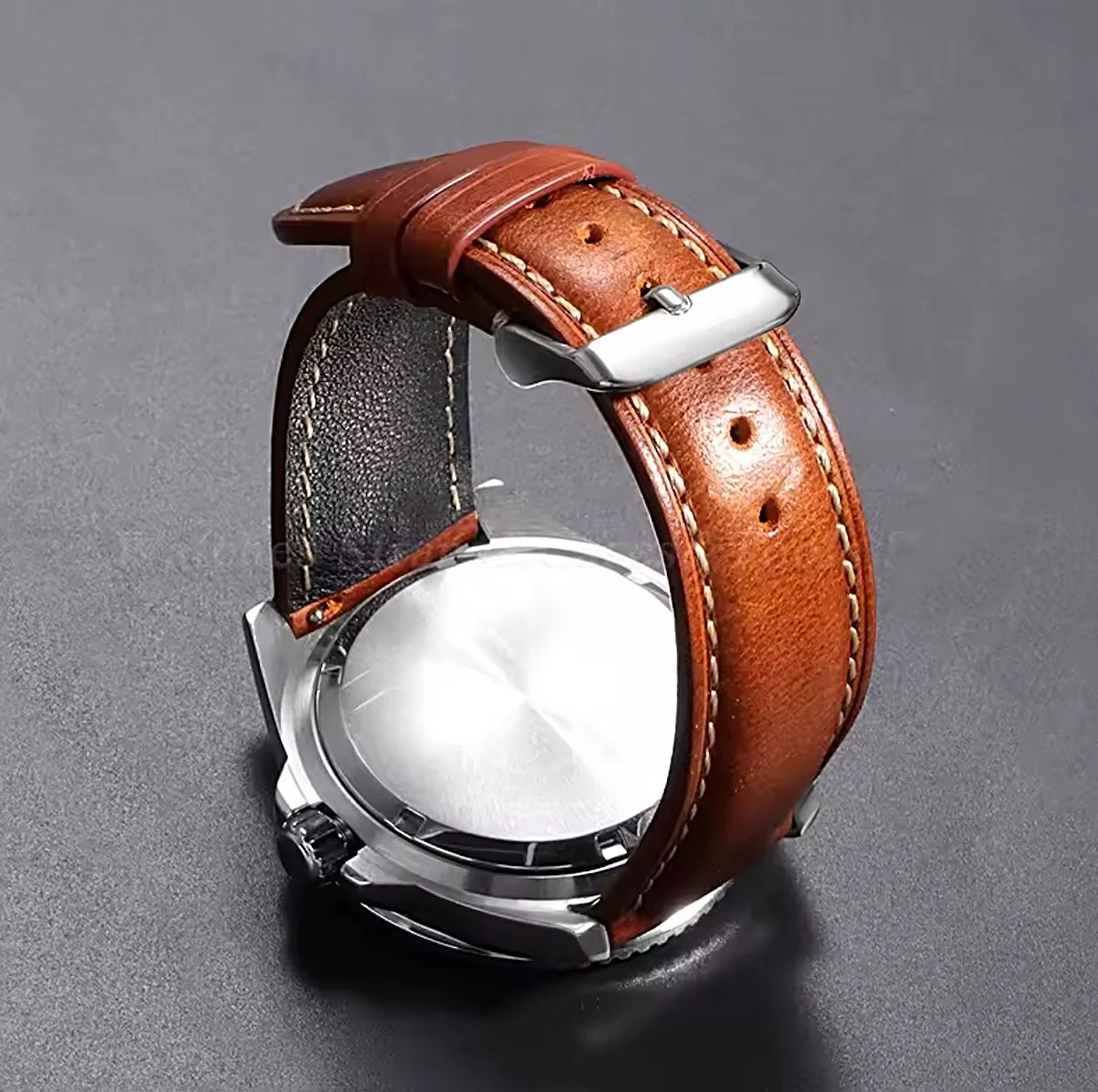
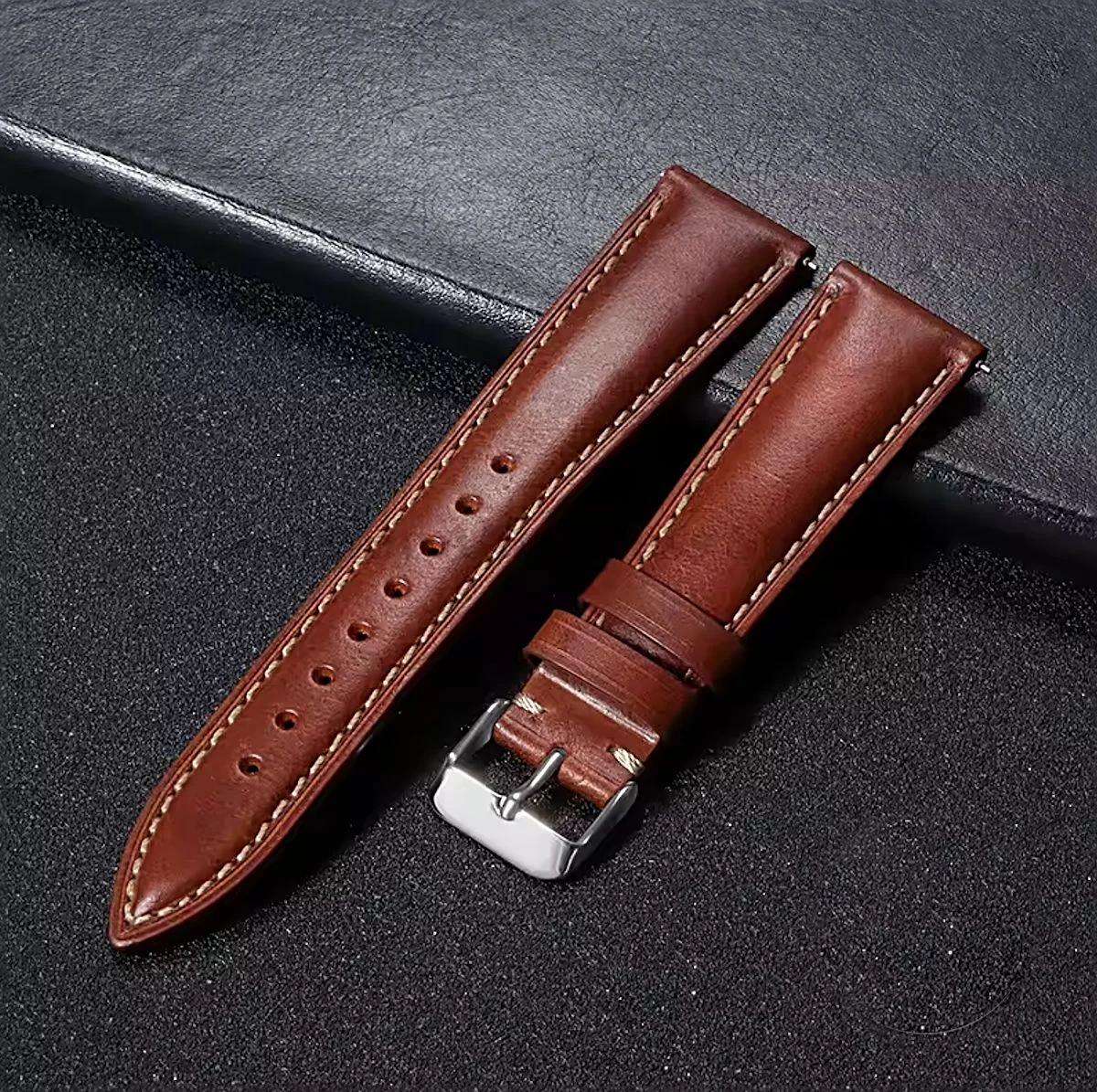
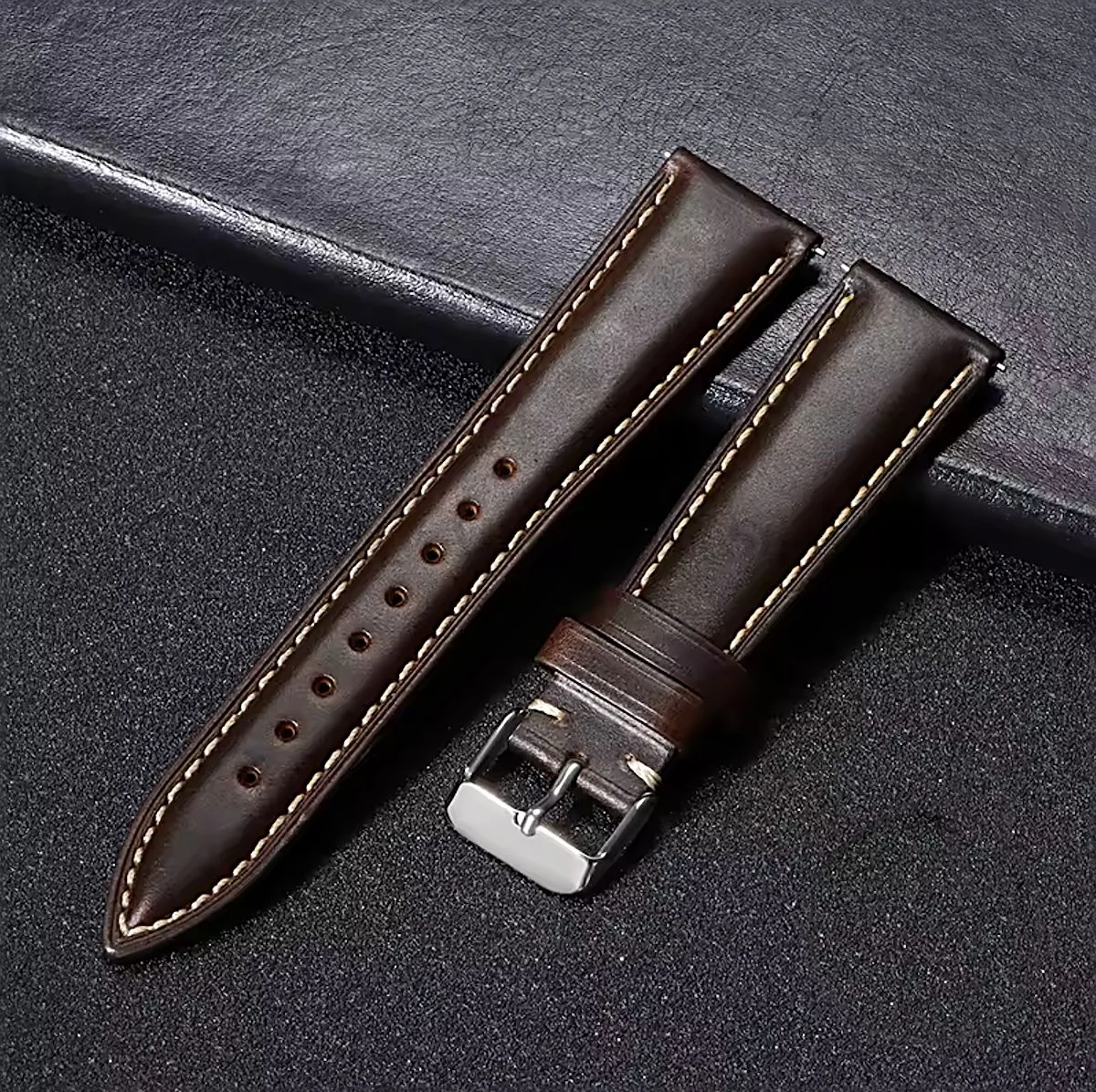
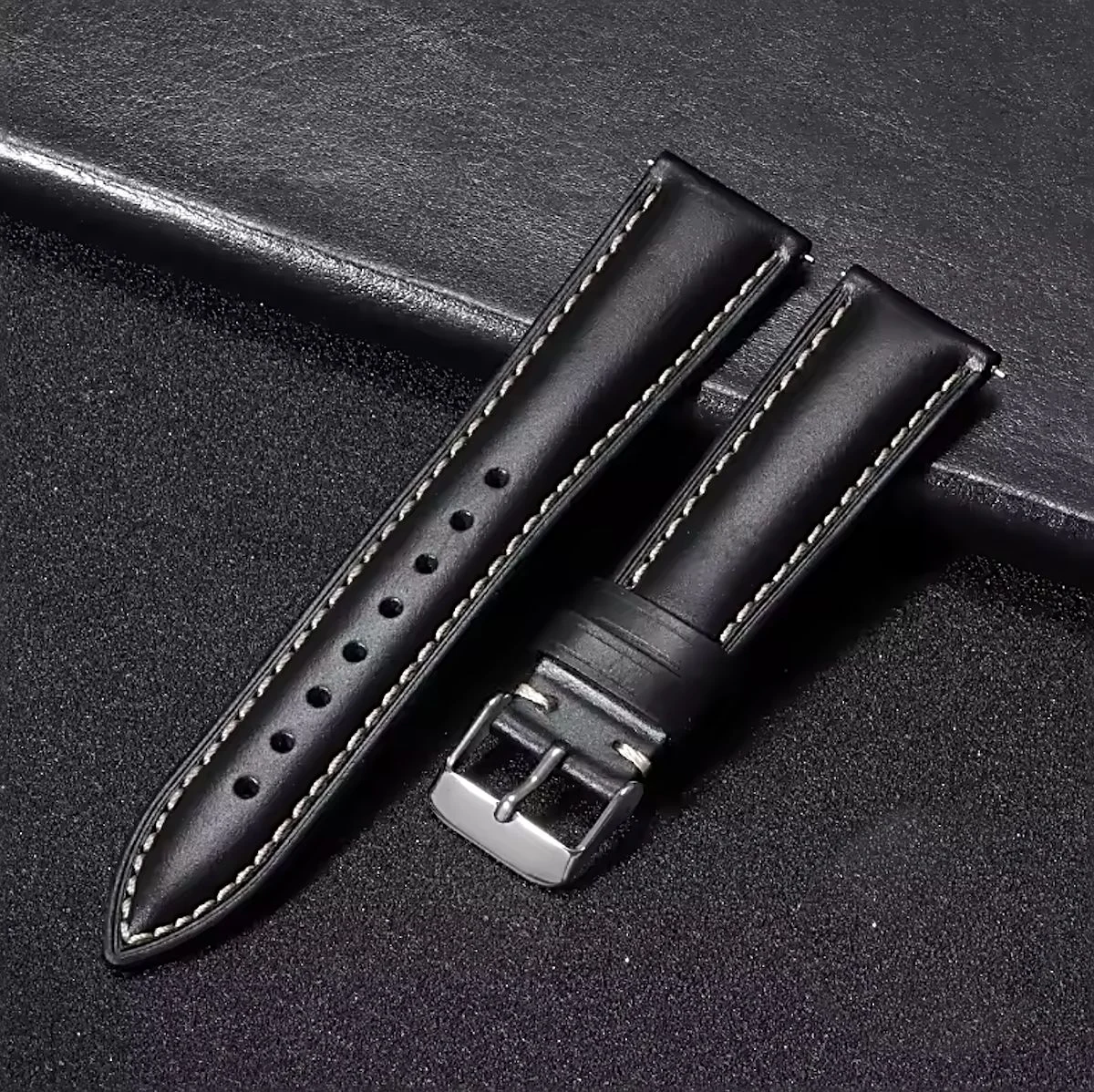
The dial is in excellent condition — the silver surface is clean and even, the applied gold indices are all present and sharp, and the printing is crisp. The only blemish worth naming is on the index at nine o’clock, which shows a small area of spotting; it is visible in the close-up photos. The dauphine hands are bright with only light age spotting. The gold-plated case is strong, with the plating intact across the bezel and lugs and only minor handling marks. The stainless steel back shows fine hairlines and a few light scratches from decades of wear, and the Japanese Customs seal is worn and partly torn but still legible; the inside of the back carries a decorative circular-grained finish, photographed here. The movement is clean and bright, with sharp bridge engraving and no corrosion. The acrylic crystal is clear. It comes on the black vintage leather strap shown, which still carries the watch’s original Pallas hangtag; the strap shows light honest wear.
This watch has recently been serviced by a professional watchmaker and keeps good time.
Comes with vintage leather strap included.
This watch ships from 🇺🇦 Ukraine with tracking number
Why Collectors Want This Watch Today
Nobody buys a Pallas for the name, and that is the appeal. What you get is an honest 1950s Swiss dress watch — a screw-balance Felsa calibre, an applied silver dial, a gold-plated case in good order — at a fraction of what the same watch costs once a well-known signature is on the dial. Watches under the Pallas name come up for sale only occasionally, but they carry no collector premium at all, so this is value rather than rarity. The surviving Japanese Customs seal and the original hangtag add a small, genuine piece of documented history that most watches of this age lost long ago. Serviced and running well, it is ready to be worn rather than shelved.
Modes of payment:
- PayPal
- Credit Cards (VISA, MasterCard, American Express, Discover)
- bitcoin
We guarantee the item you receive looks and works exactly as advertised — or your money back.
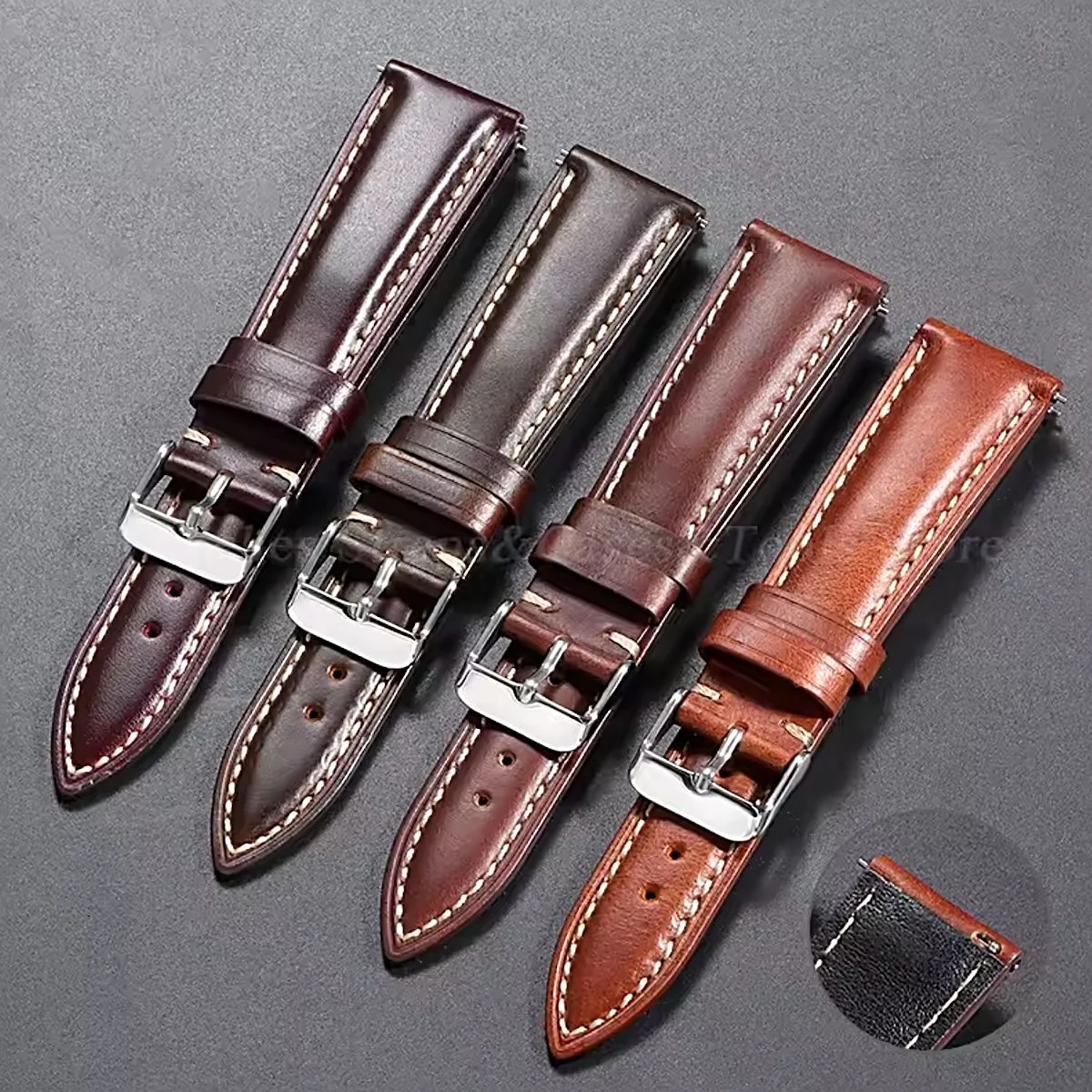
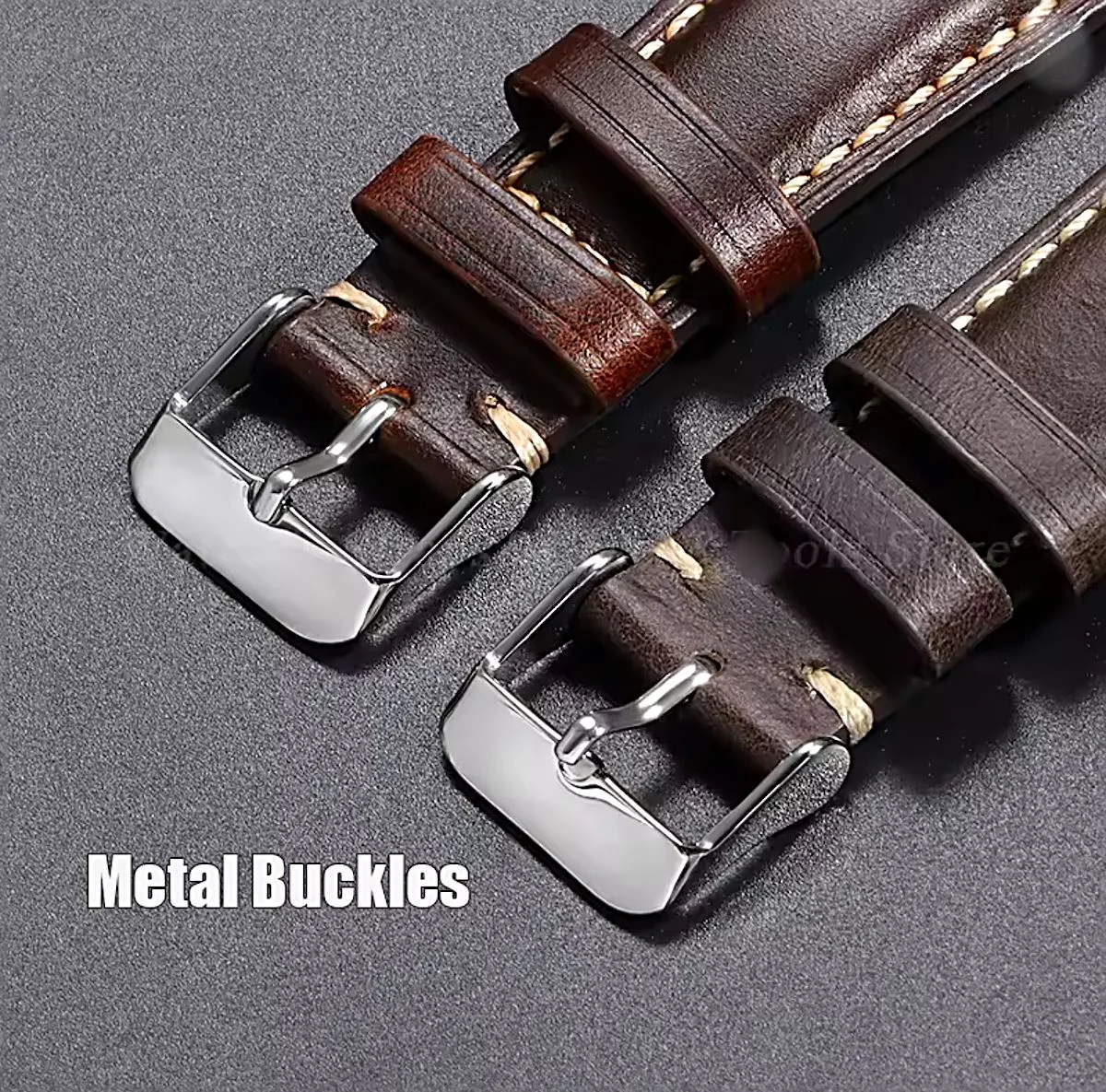
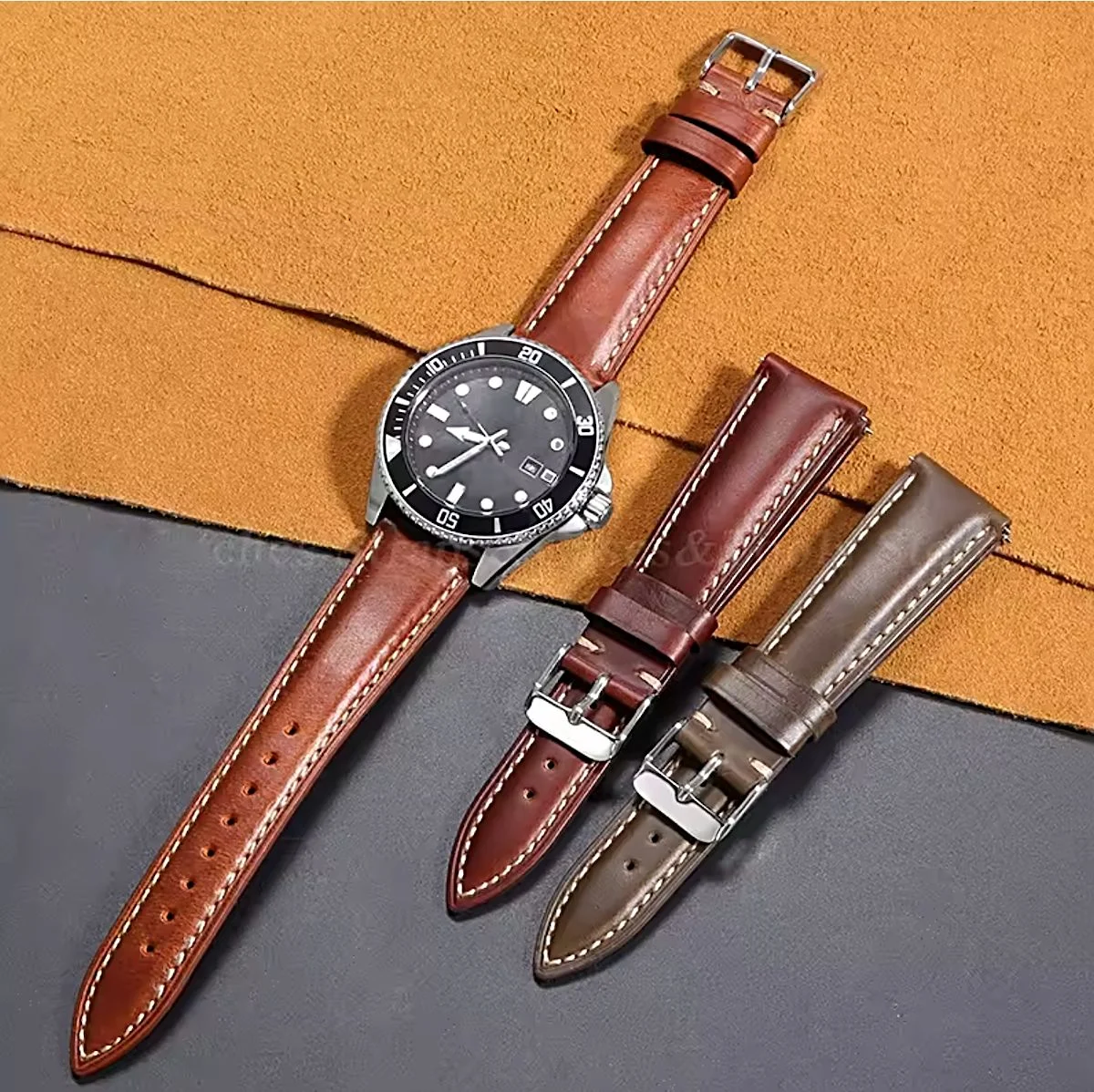
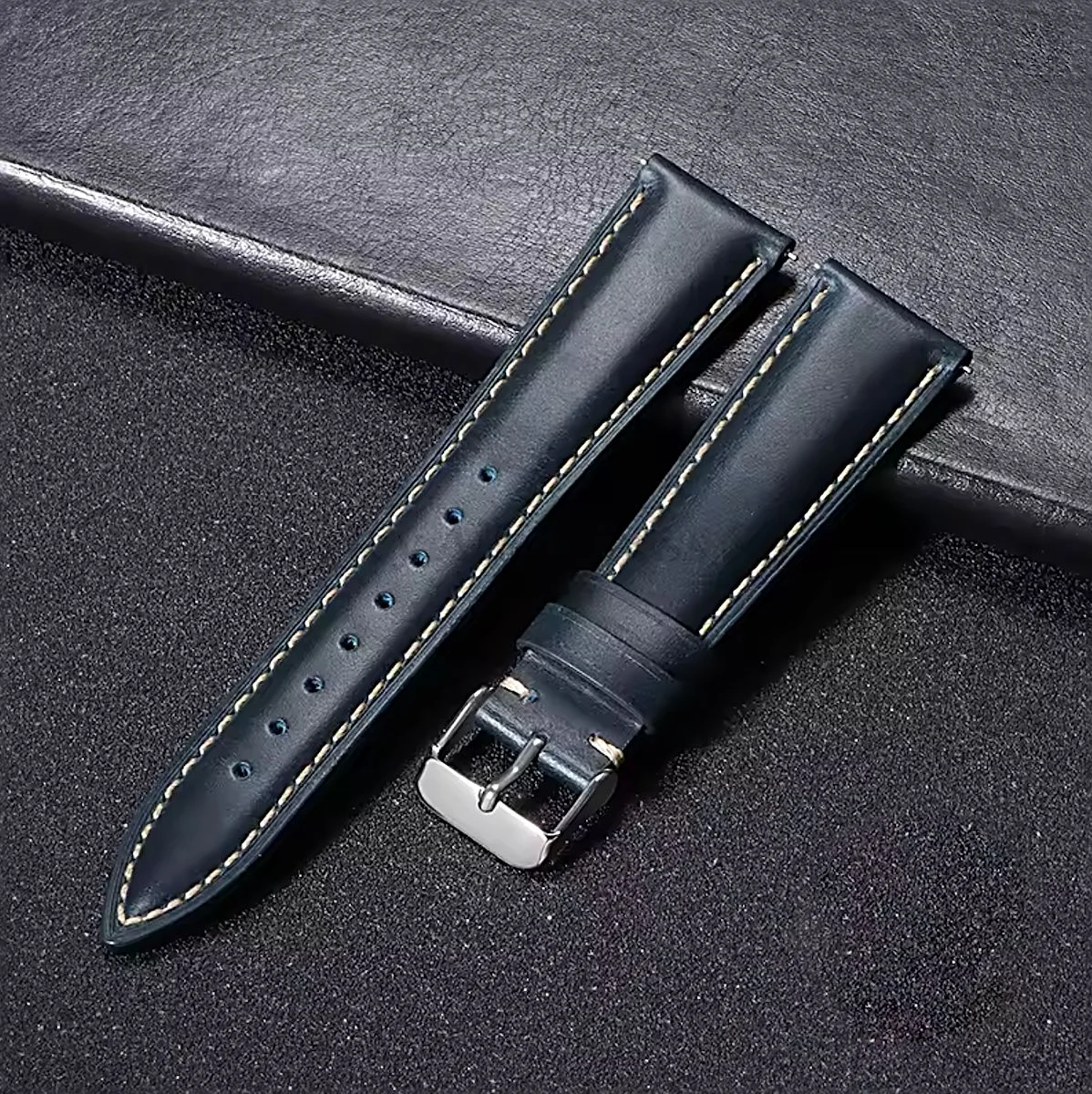
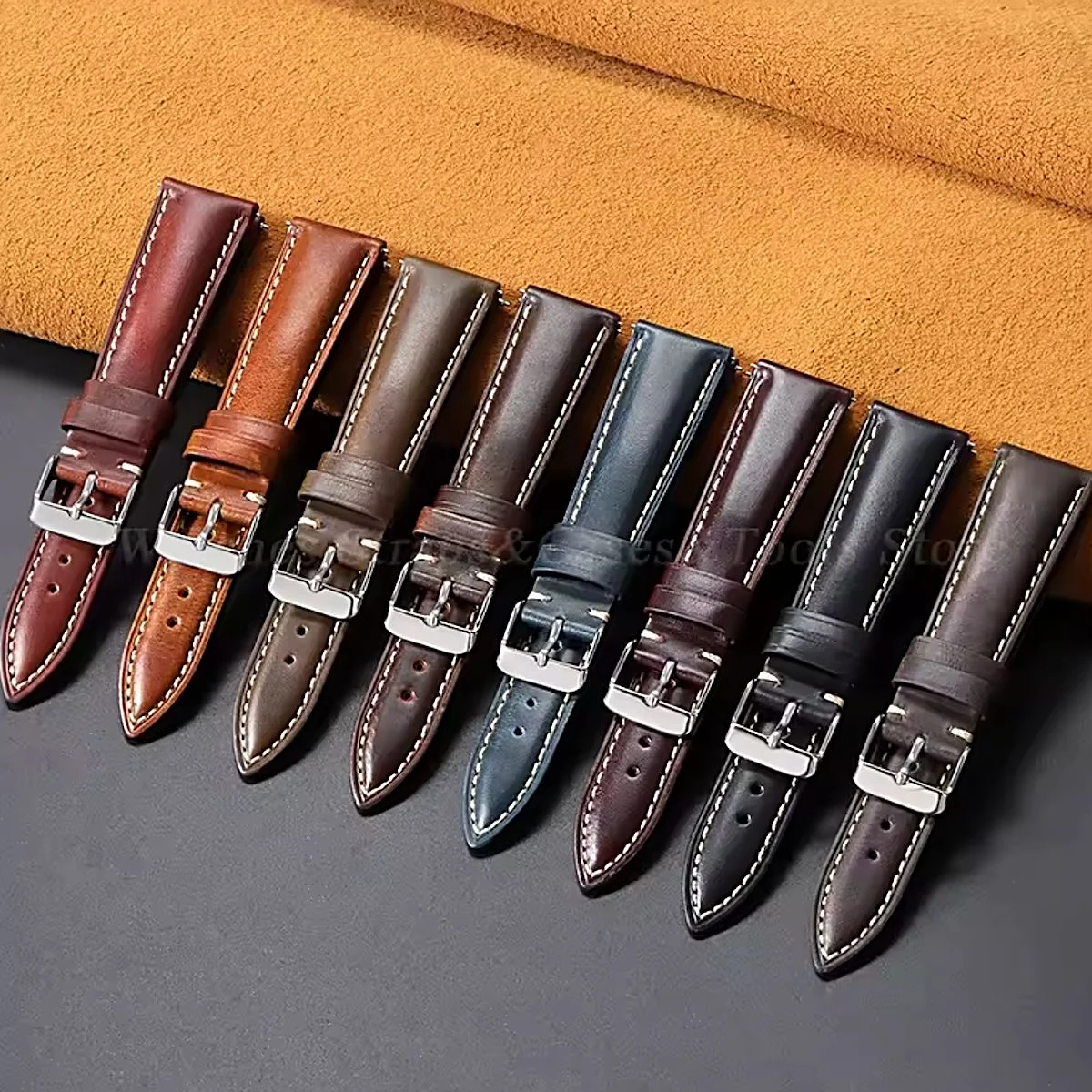
Lug width matched leather straps: 18mm - 19mm - 20mm
About the watch factory
Pallas is one of the several hundred Swiss watch names that filled the middle of the market through the twentieth century and then vanished with it. The mark is recorded for Pallas Watch Co Ltd of La Chaux-de-Fonds — the town that has produced Swiss watches since the eighteenth century and is now a UNESCO World Heritage site for exactly that reason — and it was registered again in the mid-1940s by watch houses in Biel/Bienne, the other great watchmaking city of the Jura arc.
Like most firms of its size, Pallas was an établisseur rather than a manufacture: it bought finished movements from the specialist ébauche factories, then designed, cased and finished the watches itself and sold them through its own distribution — including, as this example shows, export into Japan. The movement here came from Felsa SA of Grenchen, founded in 1918 and part of the Ebauches SA group from 1928 — a serious ébauche maker, best remembered for the Bidynator of 1942, the first successful Swiss automatic system to wind the mainspring in both directions. Pallas itself left behind no archive and no serial-number registers, so its watches cannot be dated to the year the way a Seiko or an Omega can; what dates them is the calibre and the design. The quartz crisis of the 1970s swept away the entire class of Swiss house Pallas belonged to, which is why a clean, serviced, running example is now the only real record the company has left.