Description
Longines Flagship Ultronic Ref. 4806-1
Overview
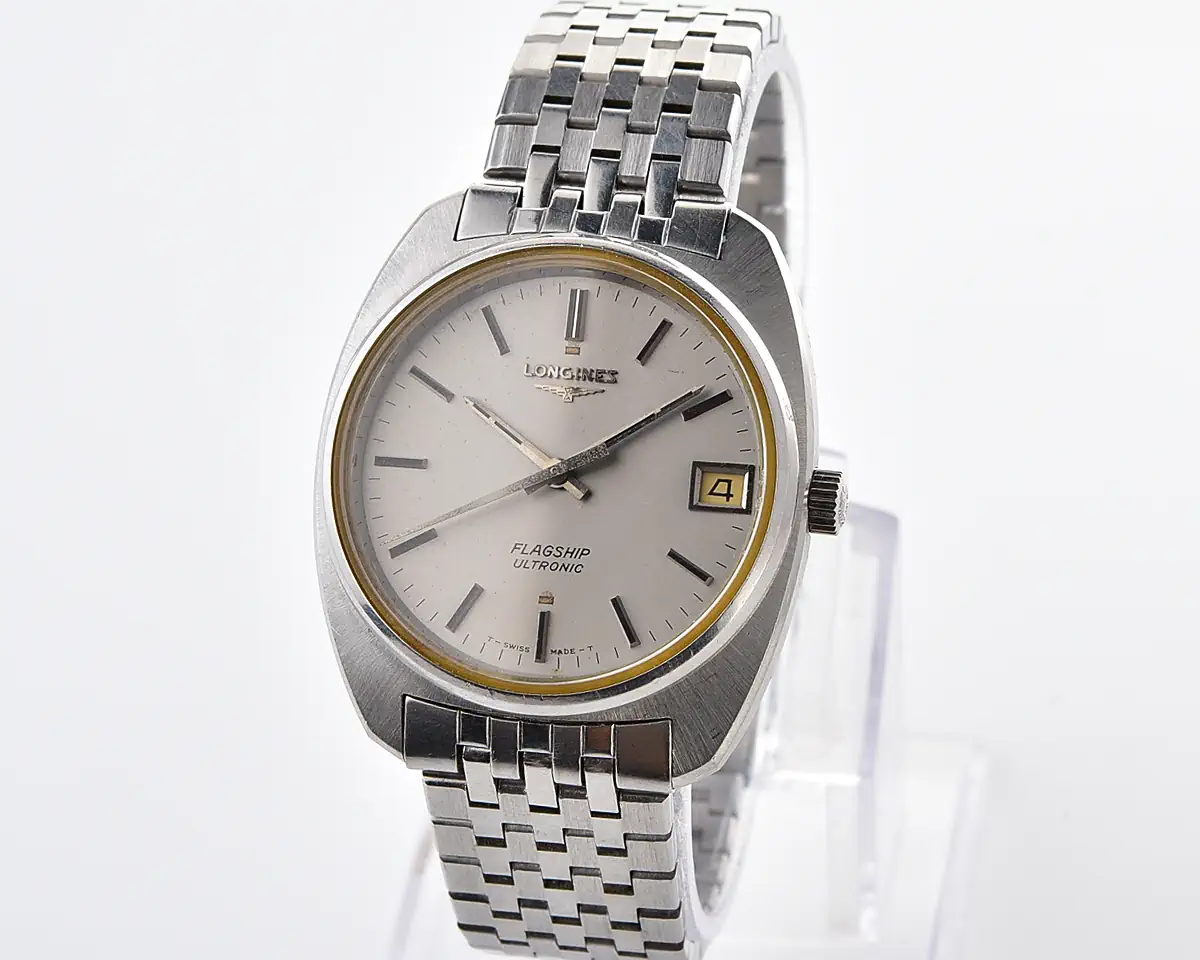
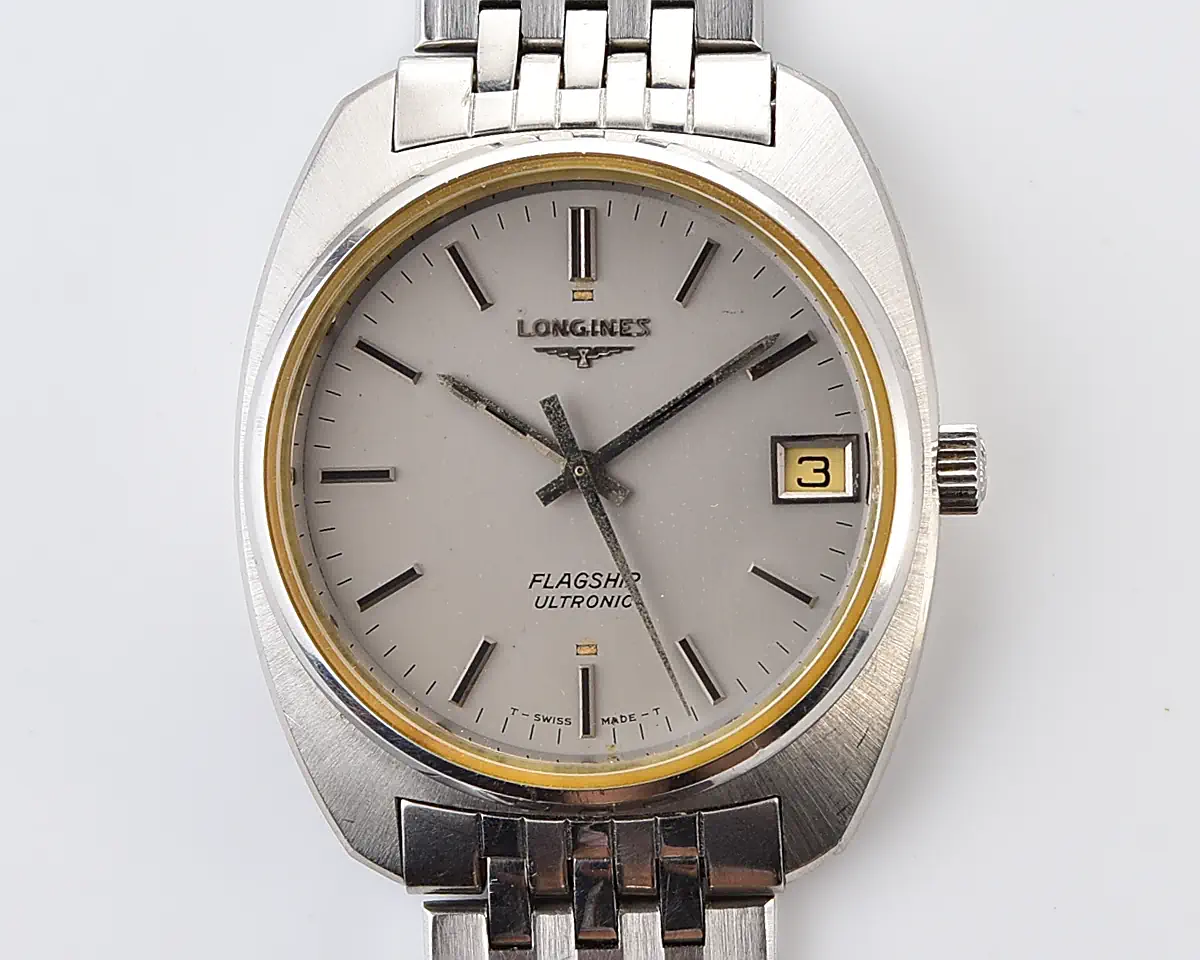
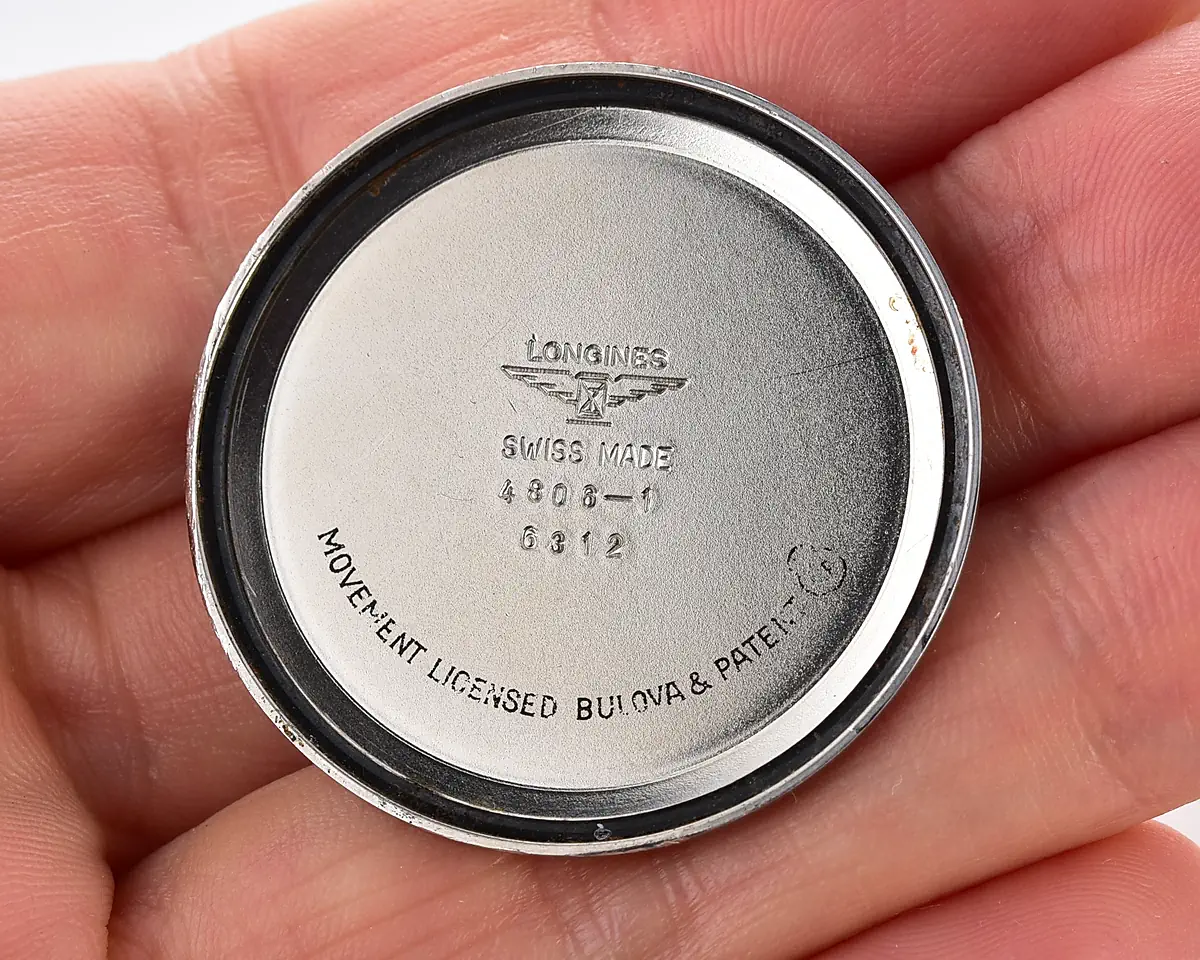
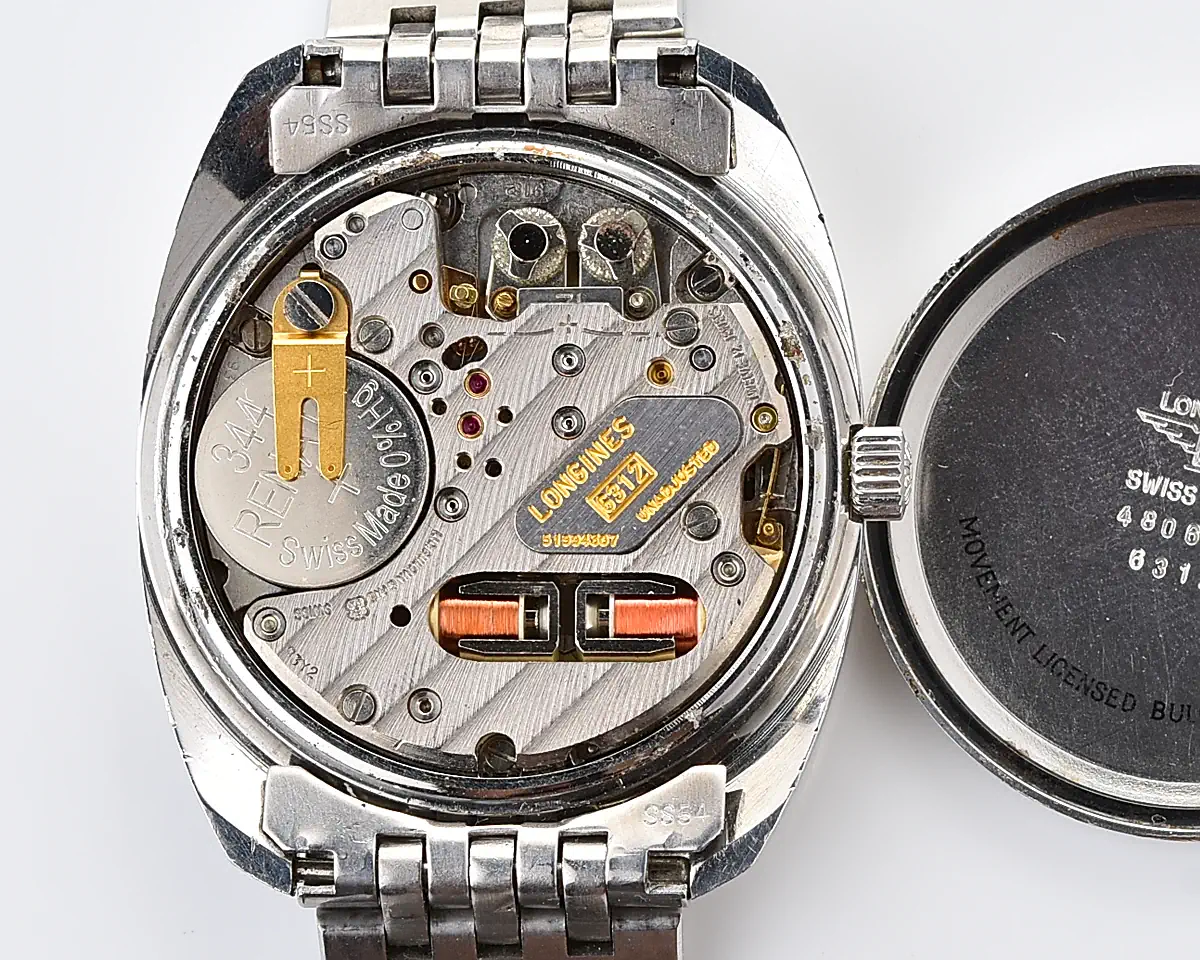
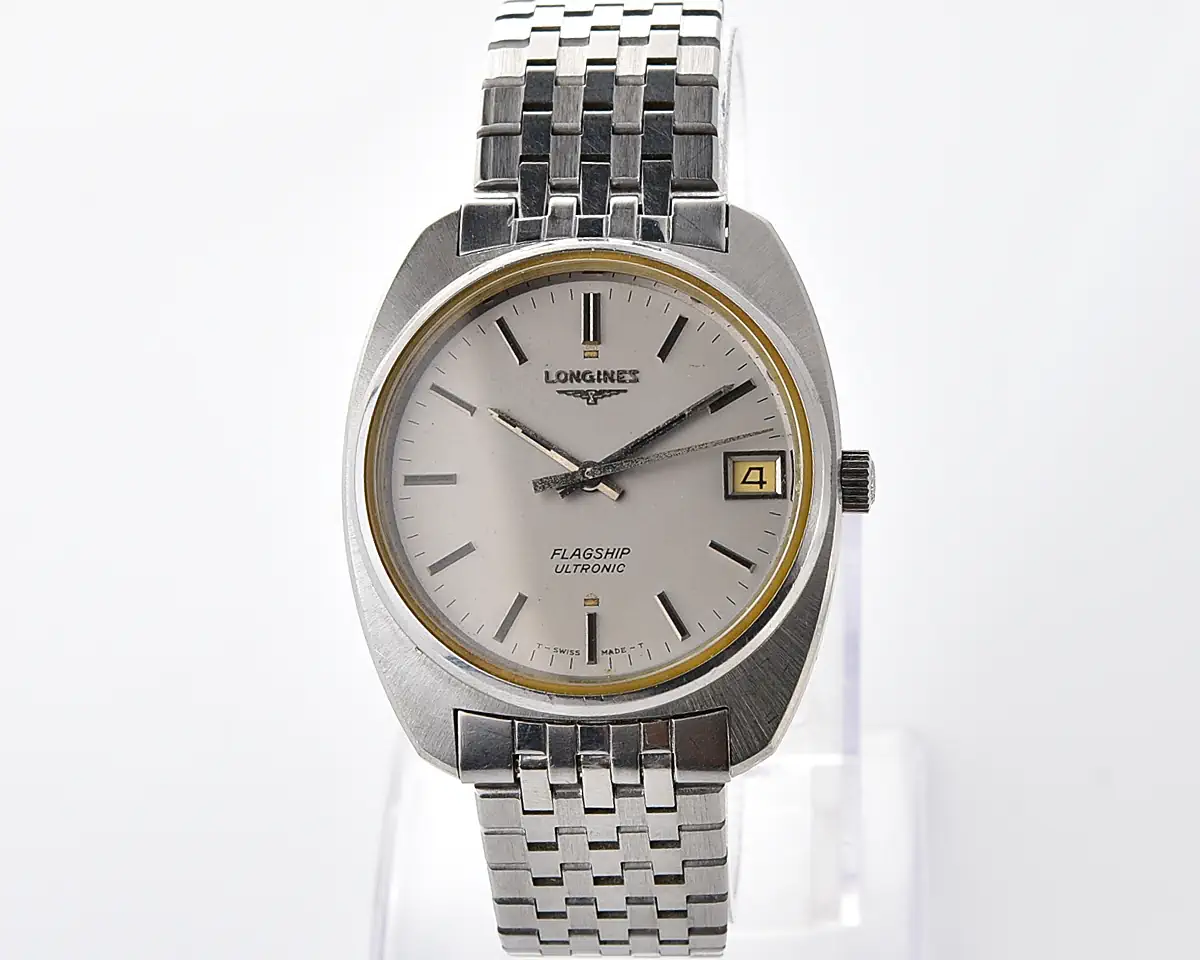
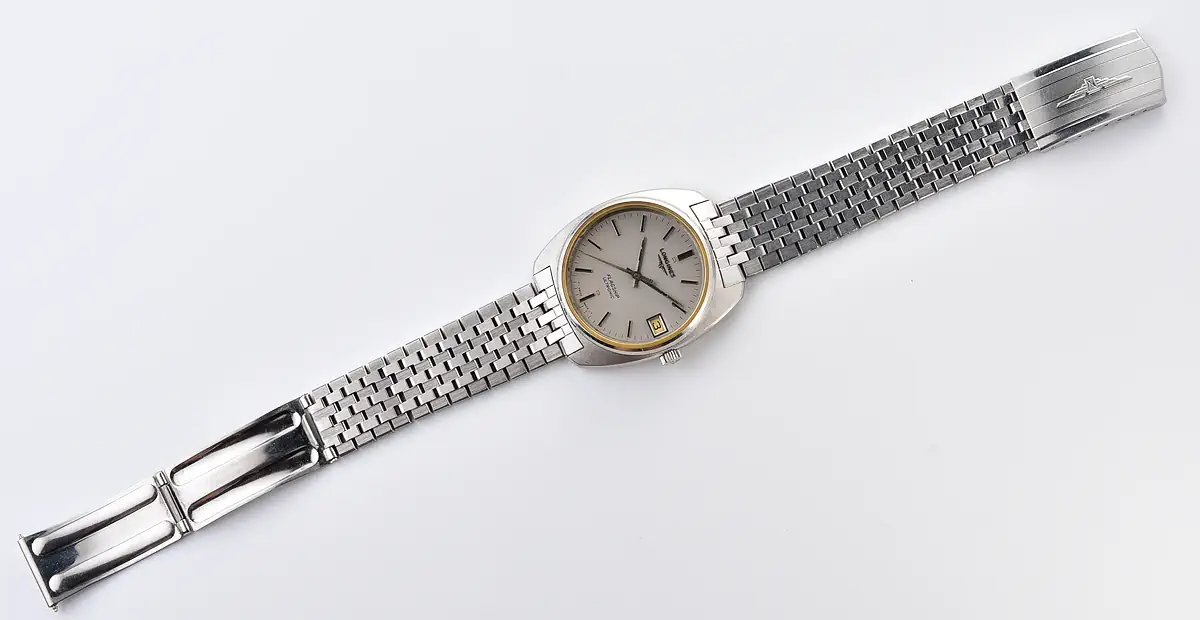
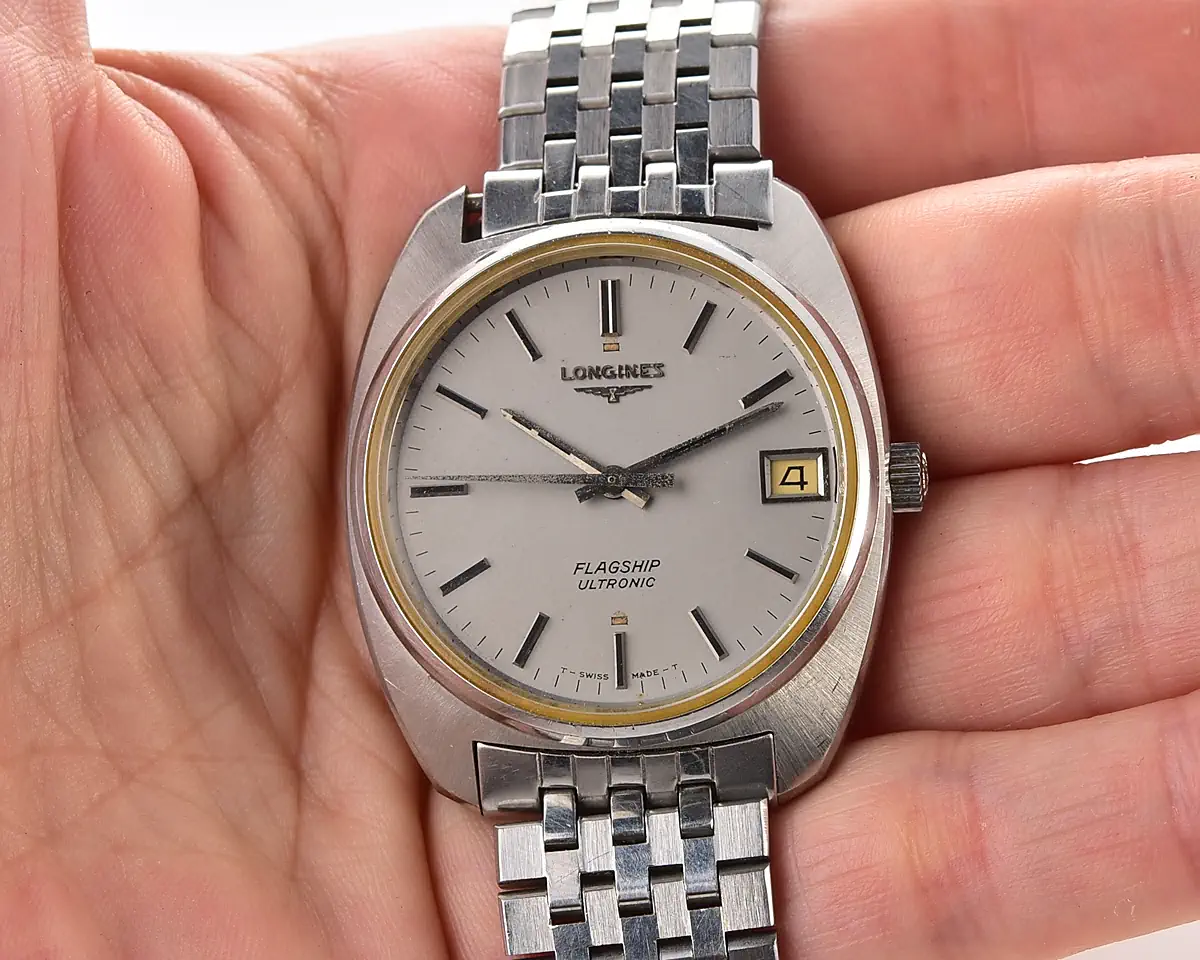
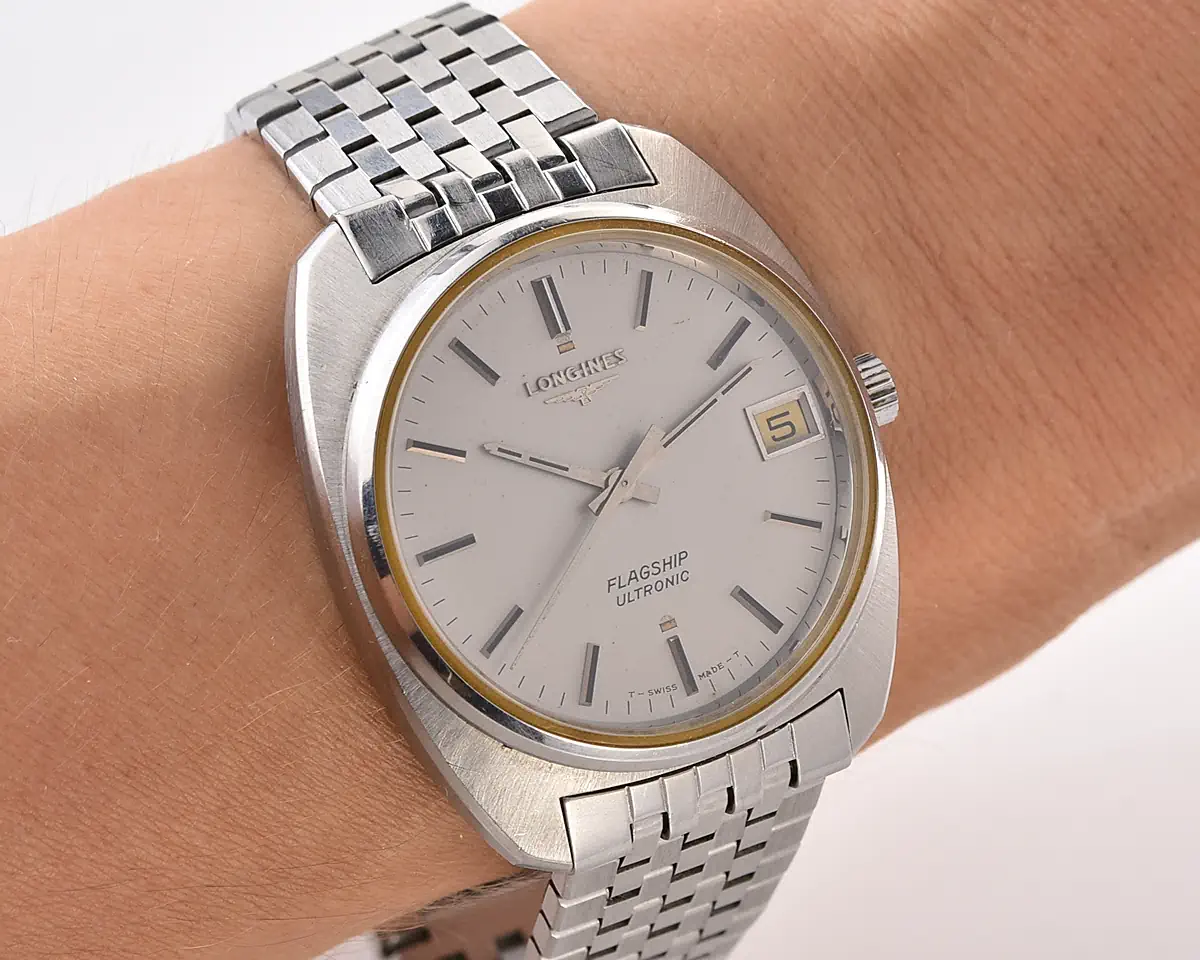
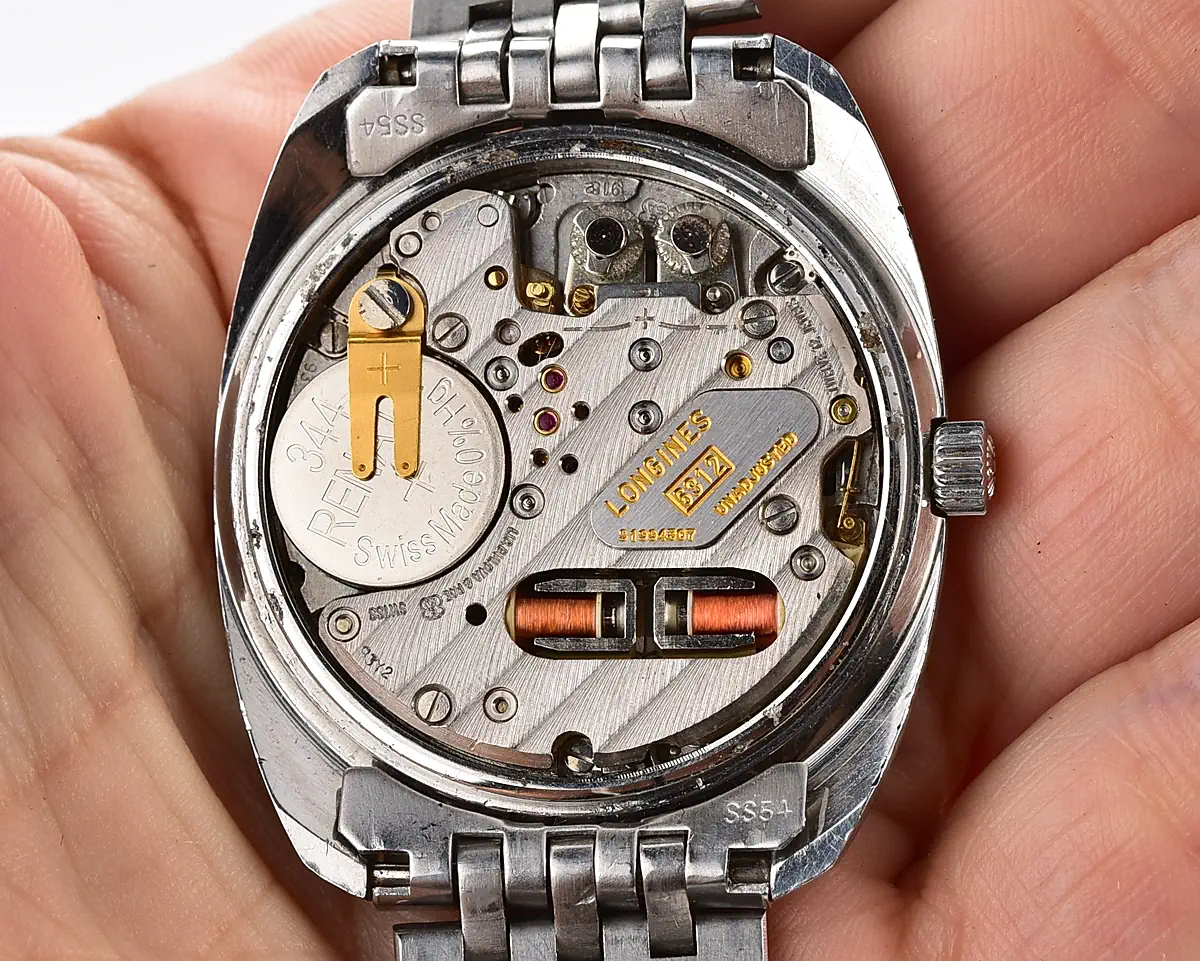
When electronics came for the mechanical watch at the end of the 1960s, Longines answered with a tuning fork rather than a quartz crystal. The Ultronic put that technology into the house’s long-running Flagship dress line: a brushed stainless steel cushion case, a silver-grey dial ringed in gold tone, and a movement that hums instead of ticking. Inside is the ESA 9162 “Mosaba” tuning-fork calibre, signed by Longines as Cal. 6312 and built under Bulova Accutron licence — the inner case back still carries the stamp MOVEMENT LICENSED BULOVA & PATENTS. Its fork vibrates 300 times a second, so the seconds hand glides across the dial without a single step.
Technical Specifications
- Manufacturer: Longines (Saint-Imier, Switzerland)
- Model: Flagship Ultronic
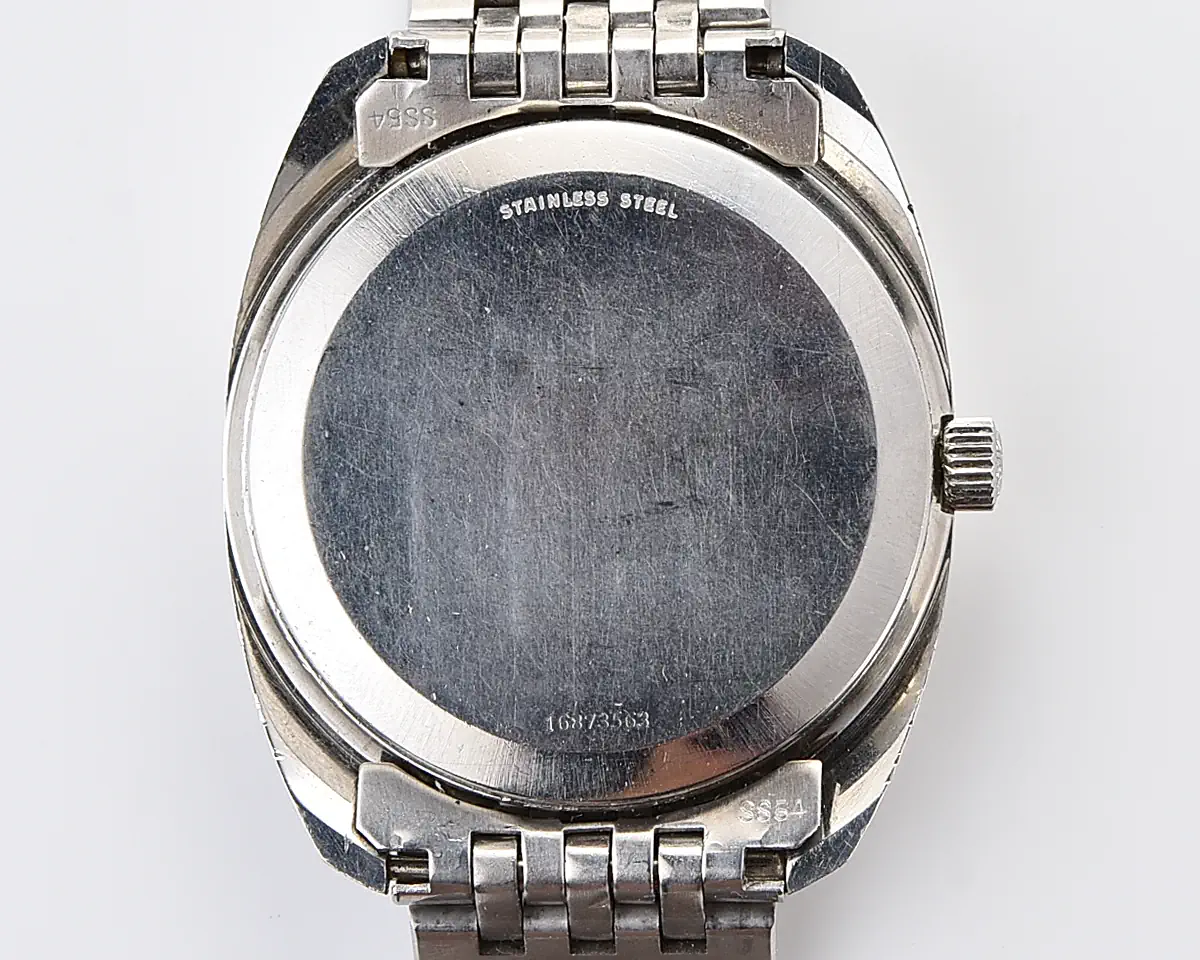
- Reference: 4806-1, stamped inside the case back together with the calibre number 6312
- Year: Early 1970s — movement serial in the 51.99 million range (the last digits are not fully legible in the photographs). No factory archive extract accompanies this watch, so the period is given as a range rather than an exact date.
- Case Material: Stainless steel — the case back is marked STAINLESS STEEL and numbered 16873563
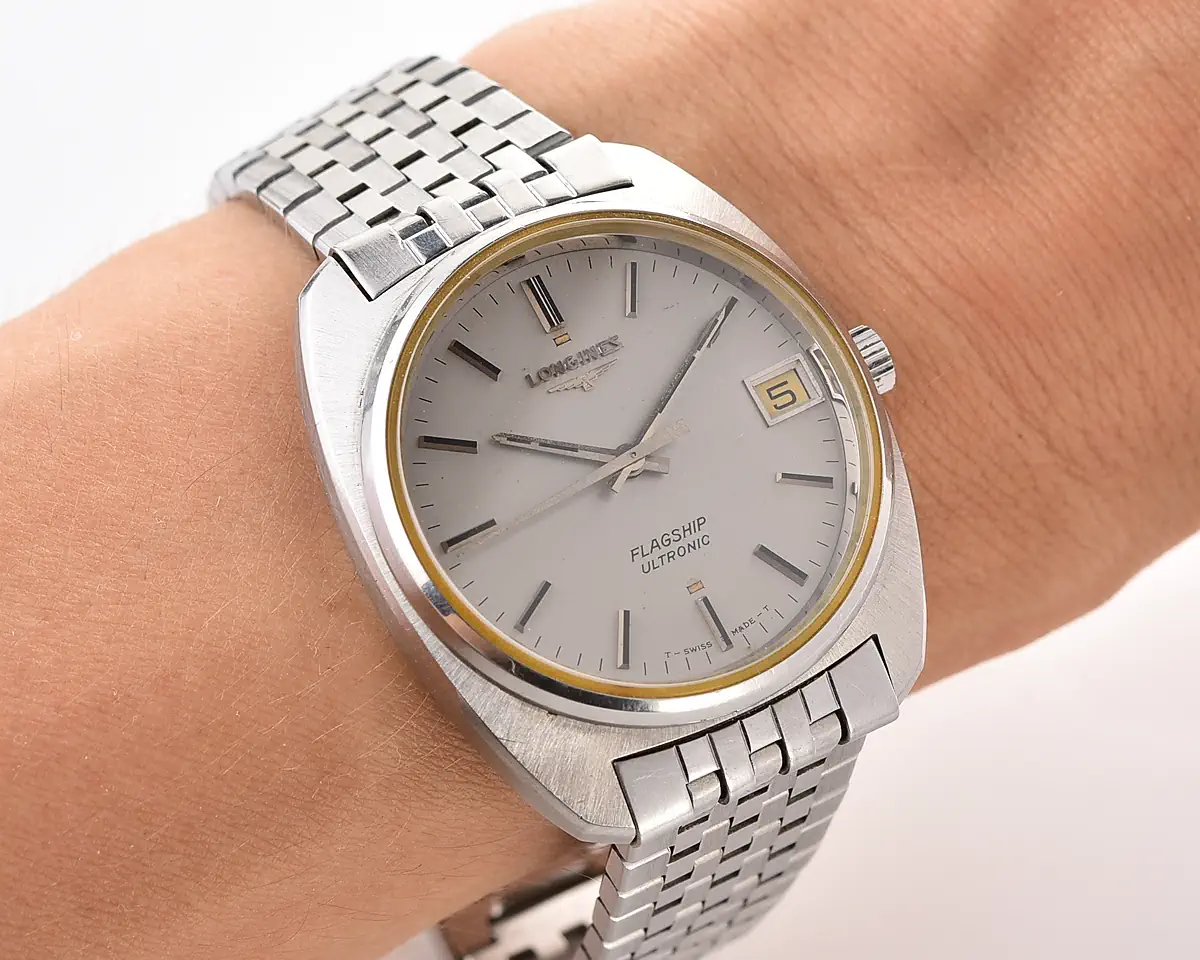
- Case Diameter: Approx. 36 mm (excluding crown)
- Movement Type: Electronic tuning fork, battery powered — neither quartz nor mechanical
- Calibre: Longines 6312 (ESA 9162 “Mosaba”), marked UNADJUSTED on the plate
- Frequency: 300 Hz — the fork vibrates 300 times per second
- Jewels: 12
- Features: Date at 3 o’clock with quickset corrector, hacking seconds, and the smooth gliding seconds hand only a tuning fork produces
- Power: 344 silver-oxide cell; a fresh Renata 344 is fitted
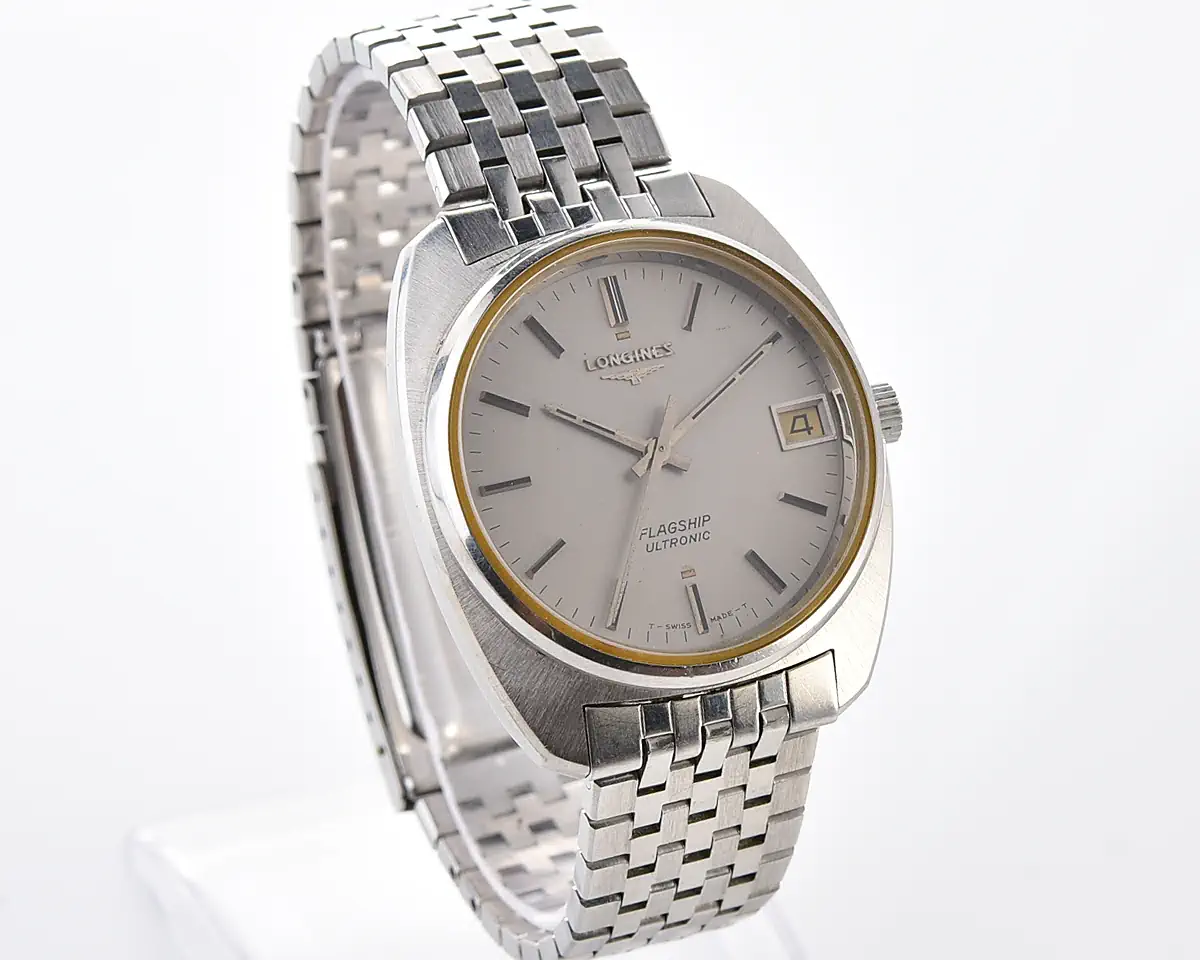
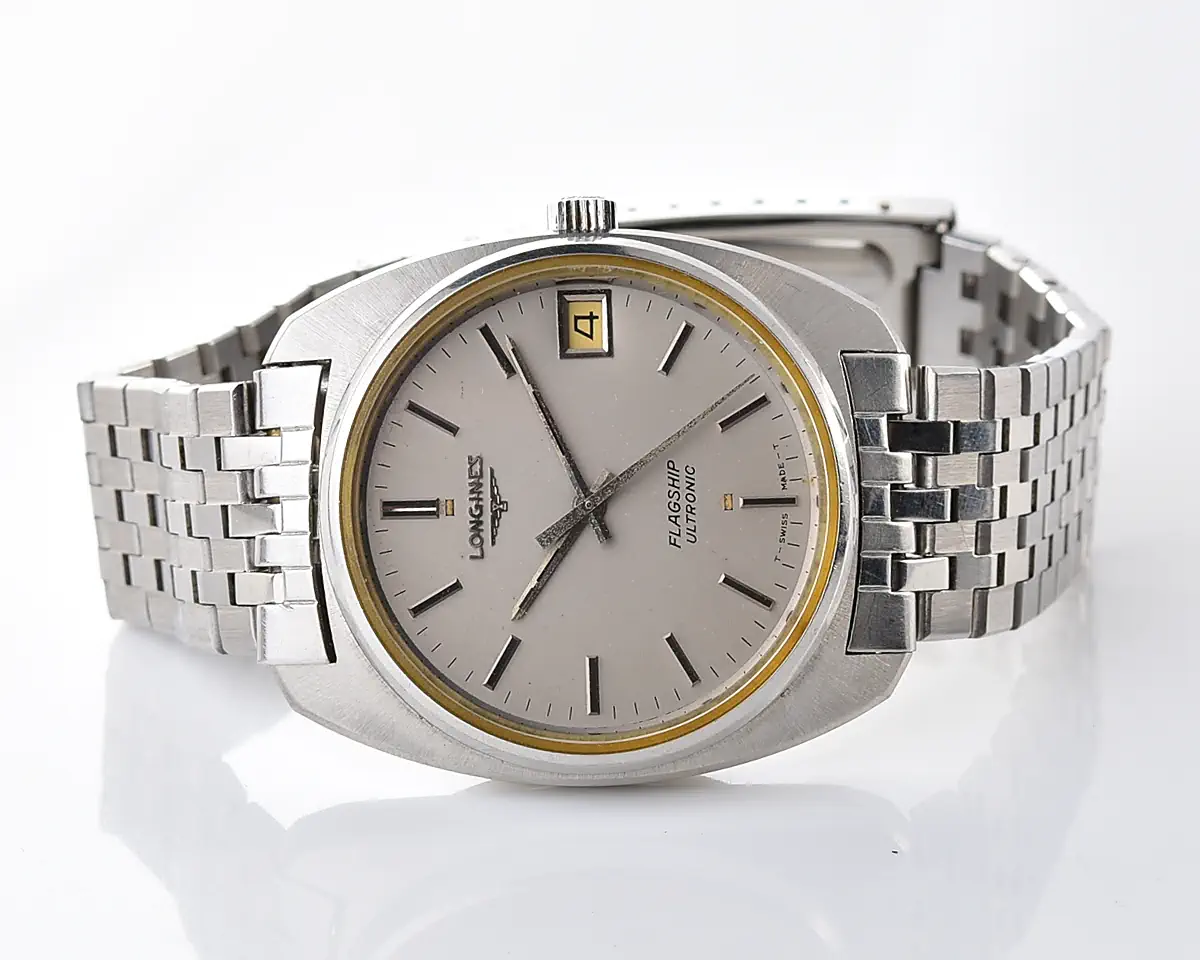
- Dial: Silver-grey with a gold-tone inner ring, applied faceted baton indices, FLAGSHIP / ULTRONIC printed below the centre, and “T SWISS MADE T” at 6 o’clock — the T markings denote tritium luminous plots
- Crystal: Domed acrylic
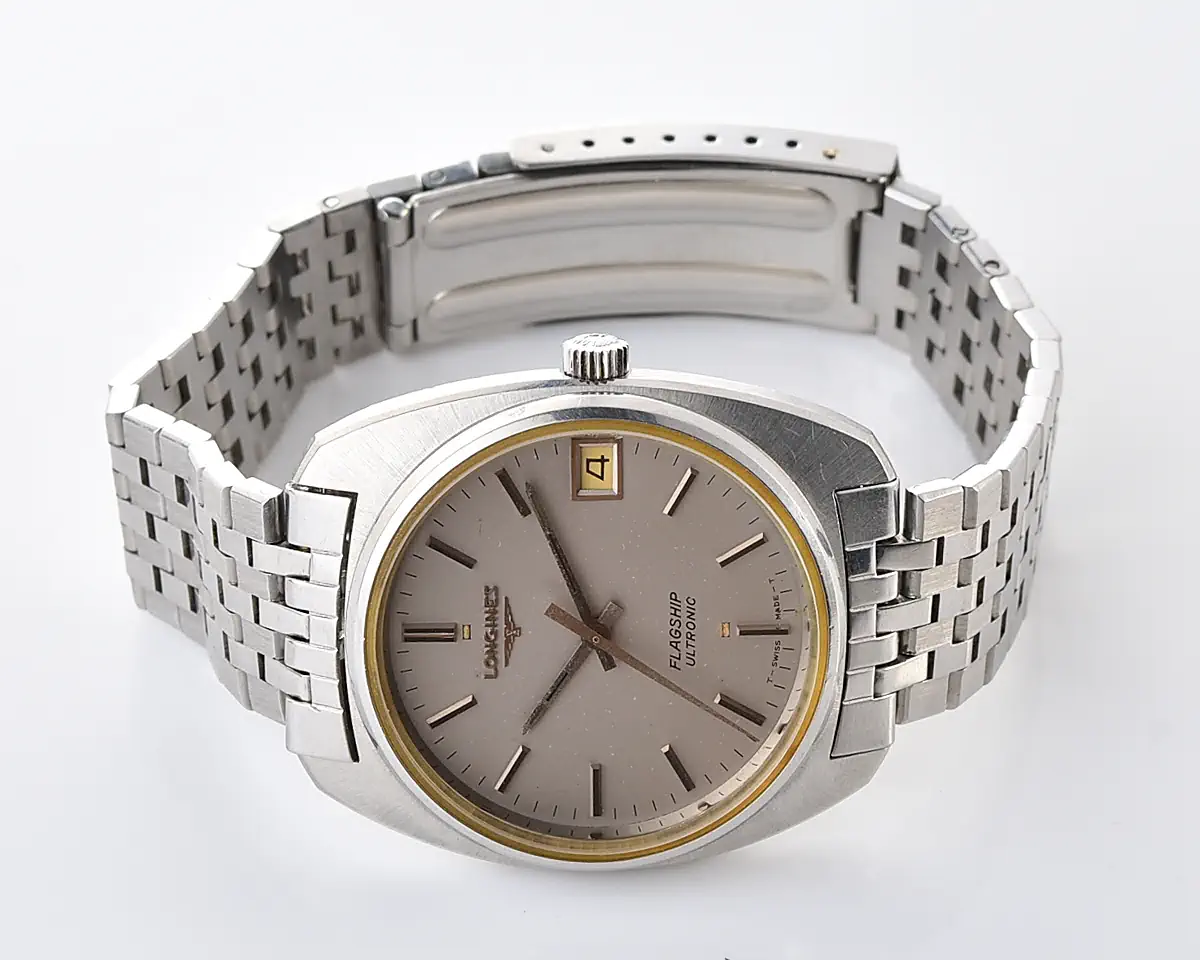
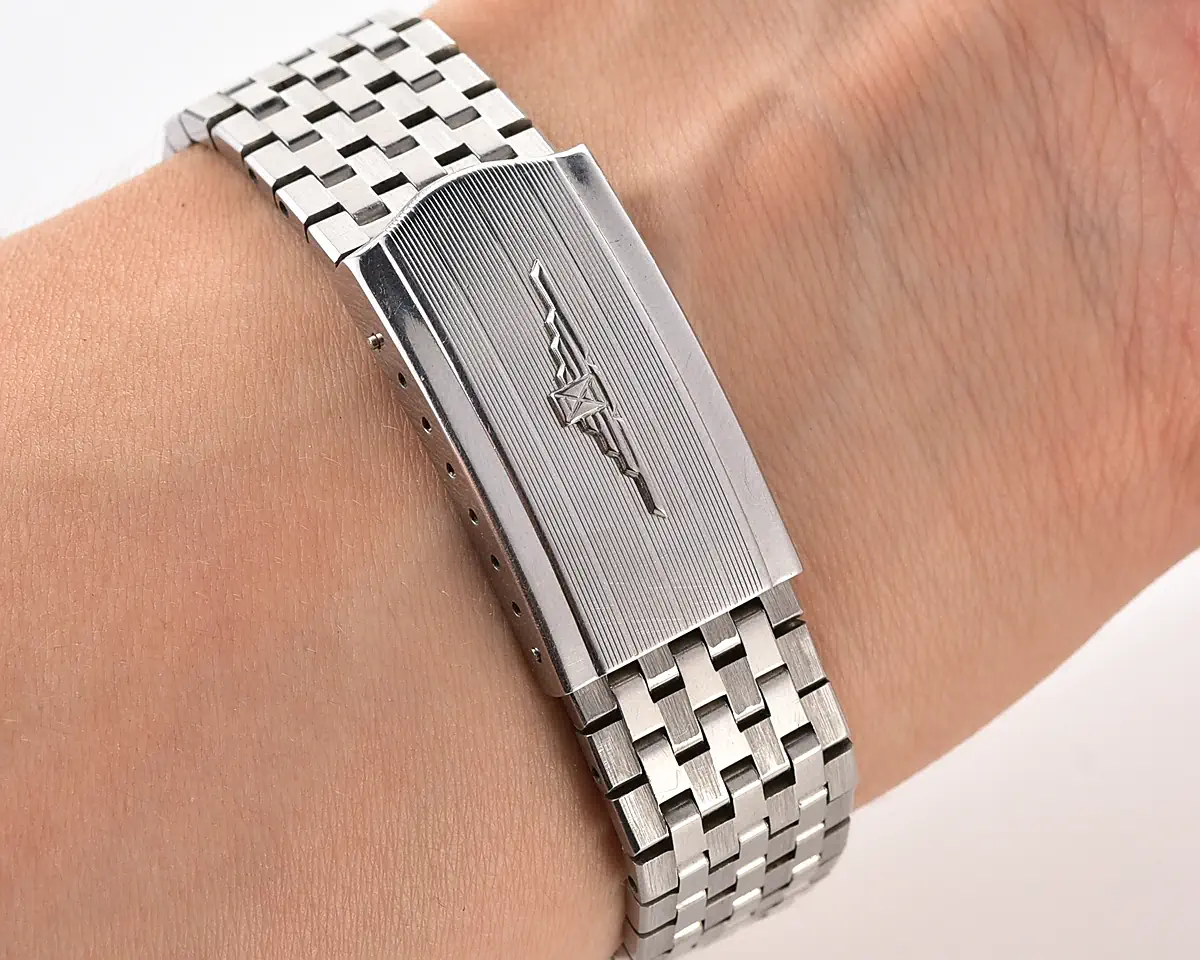
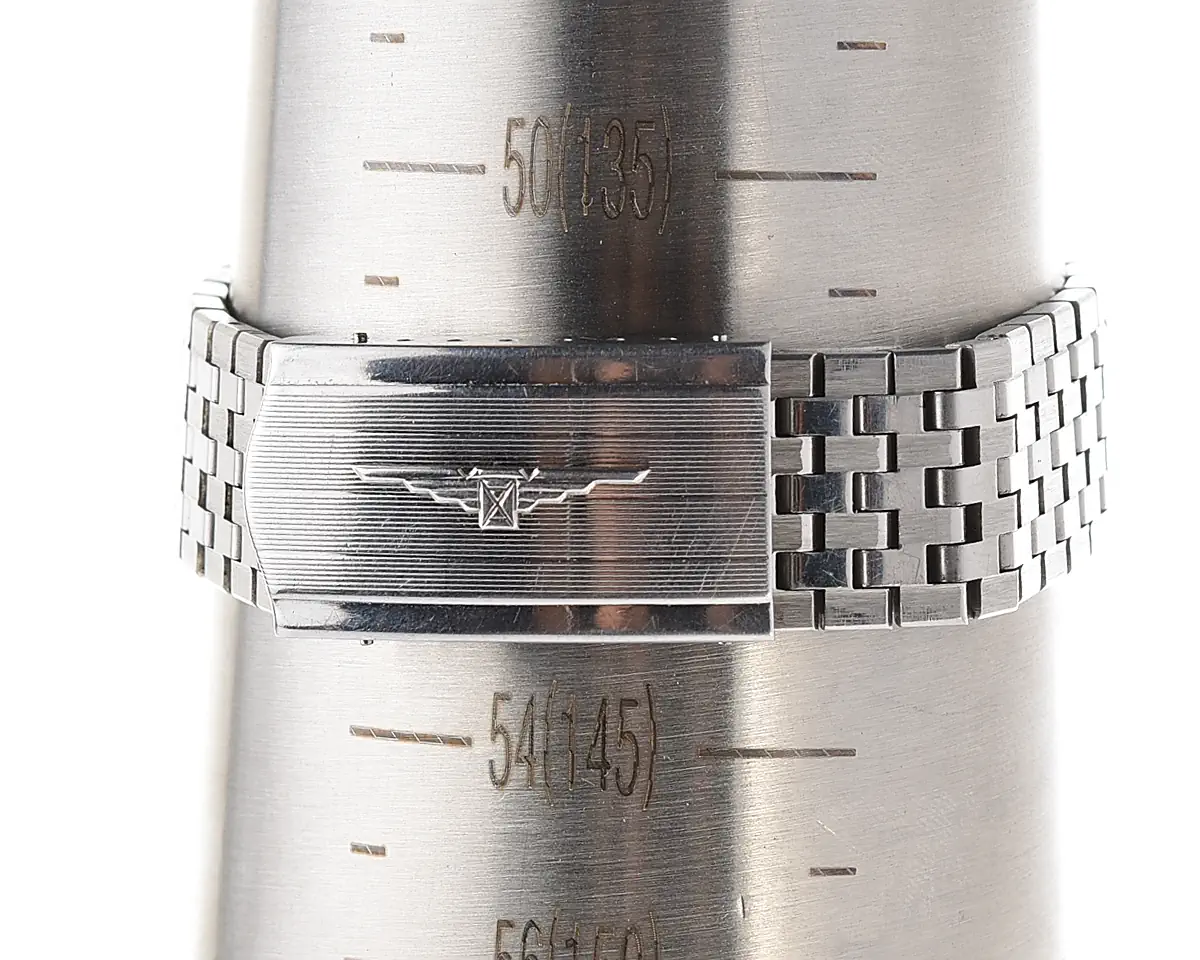
- Bracelet: Steel bracelet with a Longines-signed winged-hourglass folding clasp
Condition Report
- Movement: Longines 6312 tuning fork, clean and complete with both coils intact. This watch has recently been serviced by a professional watchmaker and keeps good time.
- Dial/Hands: The dial is clean and even in tone, with only faint specks visible under magnification. The hands have darkened where the tritium sits — a normal, honest sign of age on a watch of this period.
- Case: Sharp cushion case with its brushed top surfaces and polished flanks intact. There is light scratching across the case back and a few small marks on the bezel edge and lugs, consistent with careful use.
- Bracelet: Original bracelet with the signed Longines clasp. It is photographed on our sizing cylinder so you can judge its length.
Listing Highlights
- The tuning fork is the real story. From 1969 to the middle of the 1970s the ESA 9162 was the Swiss industry’s licensed version of Bulova’s Accutron tuning-fork principle, and it is often described as the most refined of the tuning-fork calibres: accurate enough for chronometer certification and, thanks to its balanced fork, far less sensitive to position than a balance wheel. Quartz ended that line of development within a few years, and because these movements need a specialist to service them, a serviced and running example is a very different proposition from one sold as-is.
- It is also a Flagship — Longines’ dress line since 1957 — so it reads as a quiet 36 mm cushion-cased dress watch until the seconds hand starts to glide.
This watch ships from 🇺🇦 Ukraine with tracking number
Modes of payment:
- PayPal
- Credit Cards (VISA, MasterCard, American Express, Discover)
- bitcoin
We guarantee the item you receive looks and works exactly as advertised — or your money back.
Swiss watches
are known for their long history of precision engineering and repairable mechanical design. Switzerland became the center of watchmaking from the 16th century onward, developing a system of specialized workshops that perfected reliable movements, jewelled bearings, and accurate regulation. Over time, Swiss makers excelled at chronographs and complications, creating watches that could be serviced and kept running for decades rather than treated as disposable objects.
“Swiss Made” is a legally protected label that indicates Swiss control over the movement, assembly, and final inspection, reinforcing a reputation for consistency and quality. Importantly, Swiss watches have always existed at many levels—from affordable tool watches using robust movements like Landeron or ETA, to high horology from brands such as Patek Philippe—so the reputation is not limited to luxury alone.

Longines Brand & History

The Heritage of Longines: A Legacy of Precision
Founded in 1832 by Auguste Agassiz in the Swiss town of Saint-Imier, Longines stands as one of the most significant pillars in the history of horology. With a legacy spanning nearly two centuries, the brand has navigated the evolution of timekeeping from hand-assembled pocket watches to the industrialized precision of the modern era. Their “winged hourglass” logo, registered in 1889, holds the distinction of being the oldest unchanged active trademark in the International Registry at WIPO, symbolizing a steadfast commitment to quality that has endured for generations.
The Architect of Modern Chronographs
Longines’ historical identity was forged in the pursuit of absolute technical utility. In the early 20th century, while many houses remained focused on aesthetics, Longines became the architect of modern sports and aviation timing. In 1913 they developed the Caliber 13.33Z, generally credited as the first movement designed specifically for a wrist chronograph, and later the legendary Caliber 13ZN, which took the patented flyback into series production—a mechanical necessity for pilots who needed to reset their chronographs instantly while navigating.
Pioneers of the High-Beat Era
The brand’s obsession with accuracy culminated in the 1960s with the “high-frequency” revolution. While the industry standard was a beat rate of 18,000 or 21,600 vibrations per hour (vph), Longines pushed mechanical engineering to its physical limit. In 1967, a century after Ernest Francillon opened the Longines factory at Les Longines in 1867 — the firm itself traces back to Auguste Agassiz’s comptoir of 1832 — they released the Ultra-Chron. It was a mechanical triumph designed to rival the emerging electronic and quartz movements, guaranteeing accuracy to within one minute per month. This was achieved through the Caliber 431, a movement that oscillated at 36,000 vph, producing a seconds hand sweep so smooth it appeared virtually seamless to the naked eye.
A Legacy of Exploration
Beyond the workshop, Longines was the preferred instrument for the world’s most daring explorers. From Charles Lindbergh’s solo Atlantic crossing to Admiral Byrd’s expeditions to the South Pole, Longines provided the navigational precision required for survival in the most extreme conditions on Earth. This “Avigation” heritage remains the soul of the brand today, making a vintage Longines not just a timepiece, but a direct link to the golden age of human discovery and mechanical ingenuity.
Why Collectors Buy Vintage Longines
Collectors seek out vintage Longines because the brand offers a genuine horological pedigree and movements of real significance—like the flyback 13ZN and the 36,000 vph Ultra-Chron—at a fraction of the cost of other historic Swiss marques.