Description
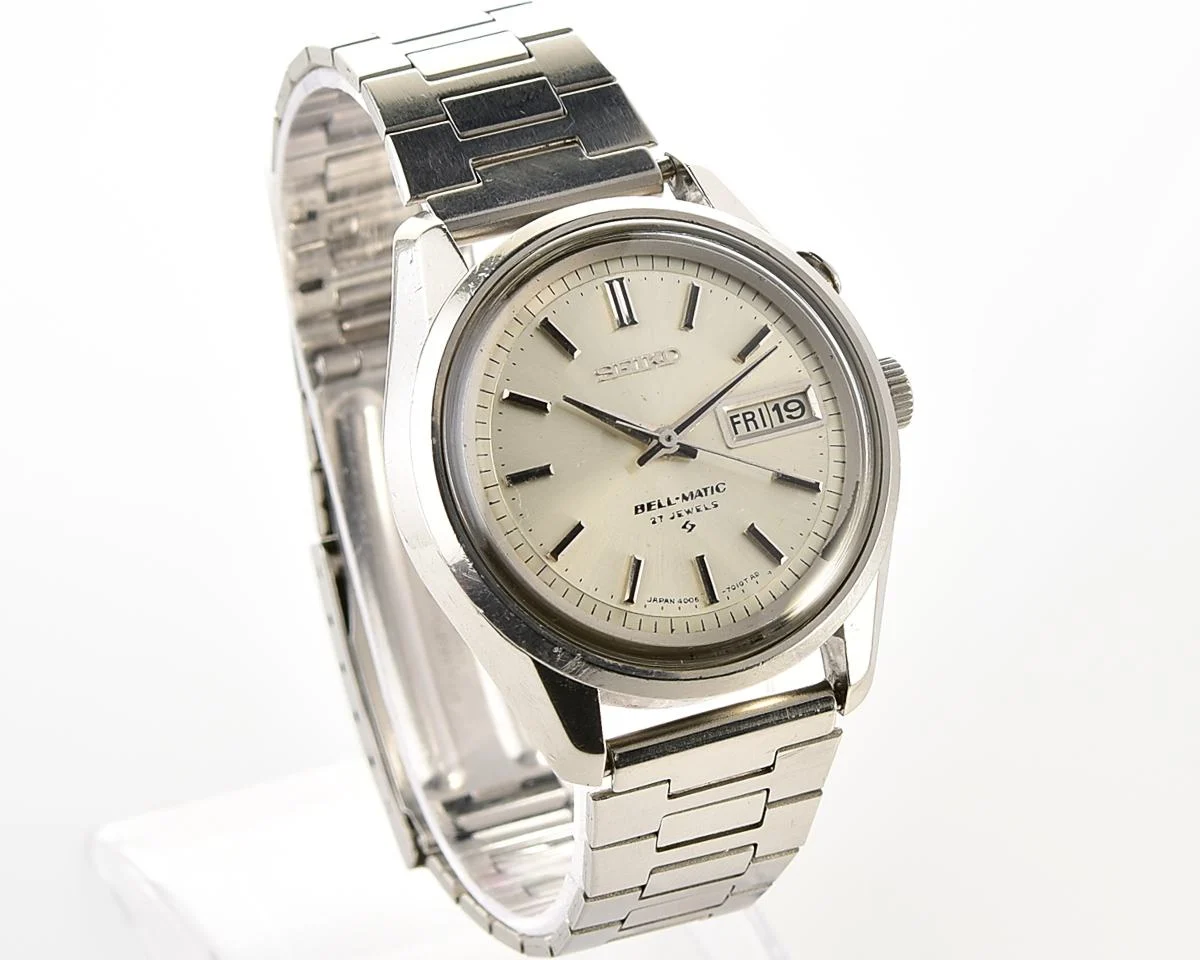
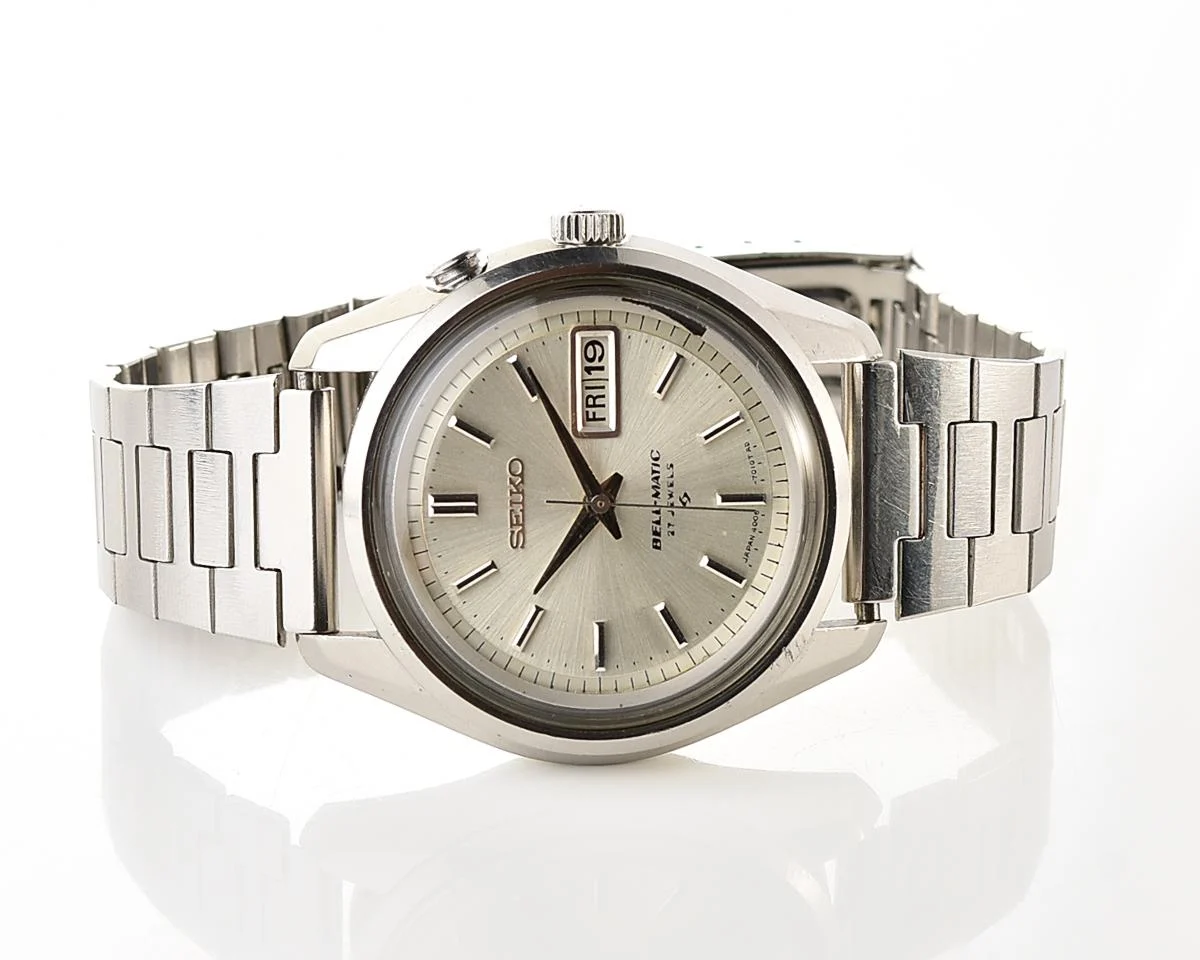
Seiko vintage mechanical watch
MADE IN JAPAN
“Seiko” (精工) is a Japanese word meaning “precision,” “exquisite workmanship,” or “refined craftsmanship.”
It comes from the characters:
- 精 (sei) – fine, precise, refined
- 工 (ko) – craft, workmanship
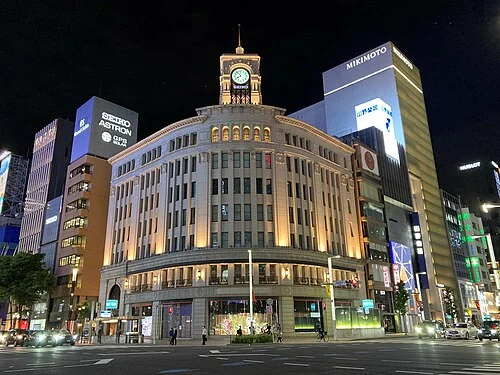
Originally, Seiko’s watchmaking division was called Seikosha (精工舎), meaning “House of Precision.”
The name first appeared on a watch dial in 1924, shortened from Seikosha and keeping the core meaning; the company itself was renamed Hattori Seiko in 1983 and Seiko Corporation in 1990.
So the brand name literally ties directly to the idea of precision engineering—which is exactly what the company wanted to be known for in its watches.
🕰️ Seiko Bellmatic Overview
The Seiko Bell-Matic is a landmark in watchmaking history. When it was released in 1966, it was the world’s first automatic wristwatch to feature an alarm with a centrally pivoted rotor.
While Swiss brands like Vulcain (with the “Cricket”) and Jaeger-LeCoultre (with the “Memovox”) had alarm watches earlier, Seiko’s innovation was creating a fully integrated, automatic alarm watch that was robust enough for daily use by the average person, rather than just as a luxury item.
1. How the “Bell” Works
The Bell-Matic is an entirely mechanical ecosystem. It doesn’t use a battery or a speaker; it uses physics.
- Dual Mainsprings: Inside the watch are two separate power sources. One mainspring keeps the time (wound automatically by your arm’s movement), and a second mainspring powers the alarm (wound manually by turning the crown).
- The Hammer & Spring: When the alarm triggers, a tiny internal hammer vibrates rapidly, striking a circular sounding spring (the “bell”) that runs around the inside of the case.
- The Sound: It doesn’t “ring” like a school bell; it’s a charming, high-frequency buzzing or “cricket” sound that lasts for about 10–12 seconds. You can also feel the vibration on your wrist.
2. The “Jewel Wars” & Collectibility
You’ll see Bell-Matics with three different jewel counts on the dial: 17, 21, or 27 jewels. This is one of the most interesting parts of their history:
- 27 Jewels: These were the early, high-end models. They are the most desirable because they have extra jewels in the calendar mechanism and gear train to reduce friction.
- 21 Jewels: From 1968, Seiko supplied the US market with 21-jewel versions, because high import tariffs applied to watches carrying more jewels. 17 Jewels: The 17-jewel Bell-Matics came later, during the 1970s.
3. Design Variations
Over its 12-year production run (1966–1978), the Bell-Matic came in a huge variety of styles:
- Case Shapes: From the elegant, classic look of the 701x series to the chunky, futuristic “UFO” cases of the 1970s.
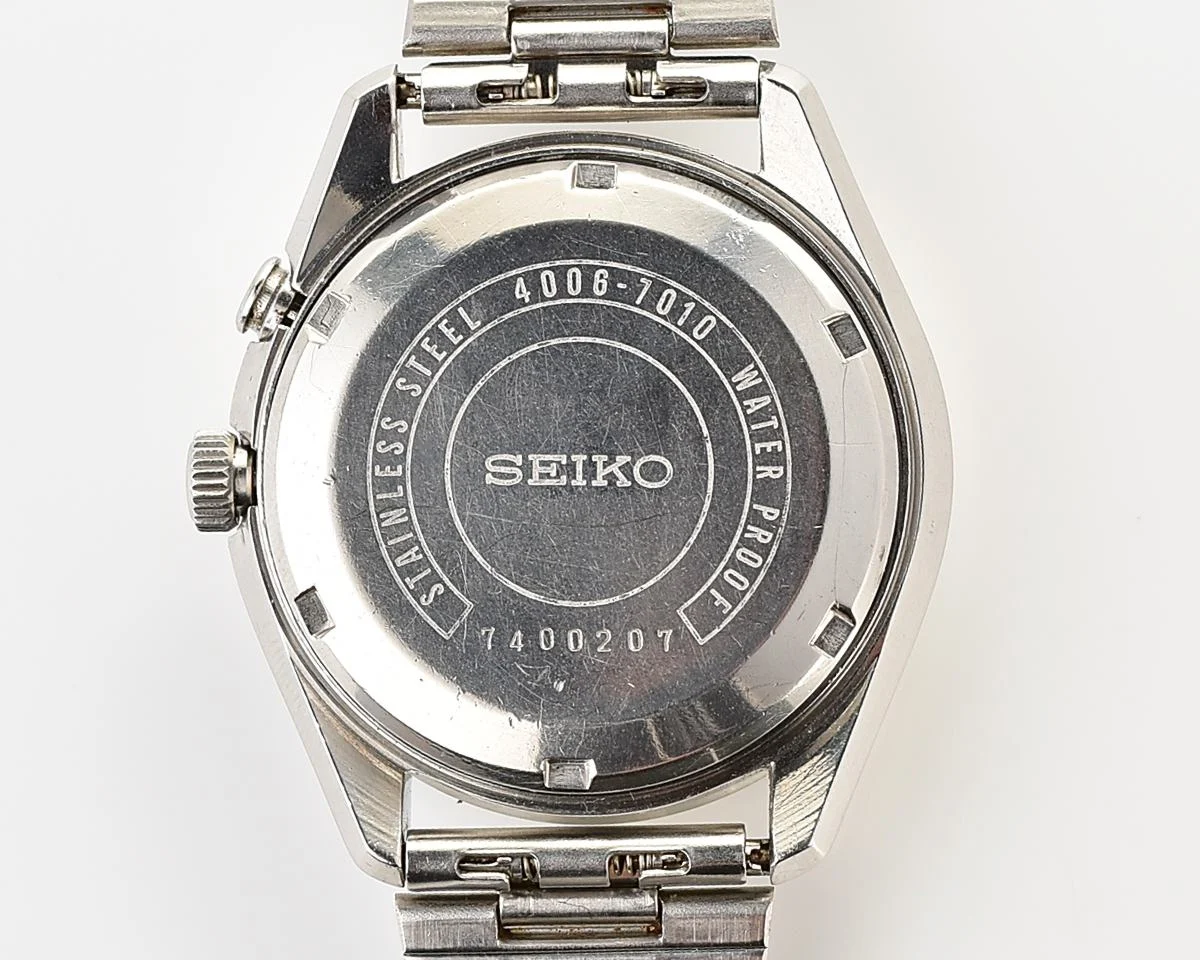
- The “Dolphin” Caseback: Some of the very earliest 4006-7000 models carry a small dolphin etched into the case back. Those are quite rare — note that the 7010 case here is a different reference and does not have one.
- The “Business Bell”: For a short time in 1967, Seiko rebranded some models as the “Business Bell,” targeted specifically at the rising Japanese “salaryman.”
4. Why Collectors Love Them
- Interaction: Most vintage watches just sit there. The Bell-Matic requires you to wind the alarm and set the alarm ring, making it a very “tactile” hobby.
- Complexity: It manages to cram a day, a date, an automatic movement, and a mechanical alarm into a case that is usually only 38mm–39mm wide—a feat of engineering even by today’s standards.
- The “Conversation Piece”: It is one of the few mechanical watches that can actually “talk” to people nearby when the alarm goes off.
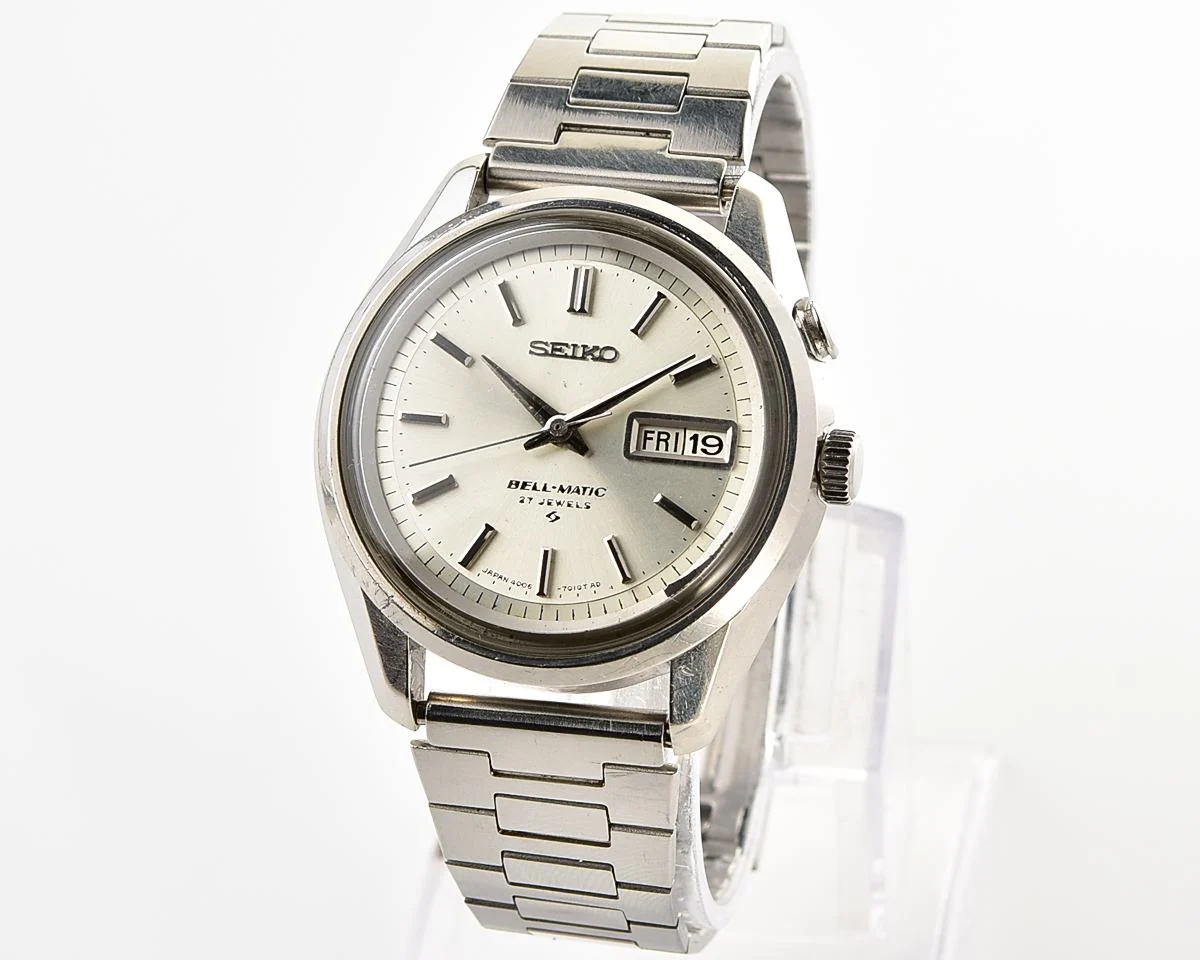
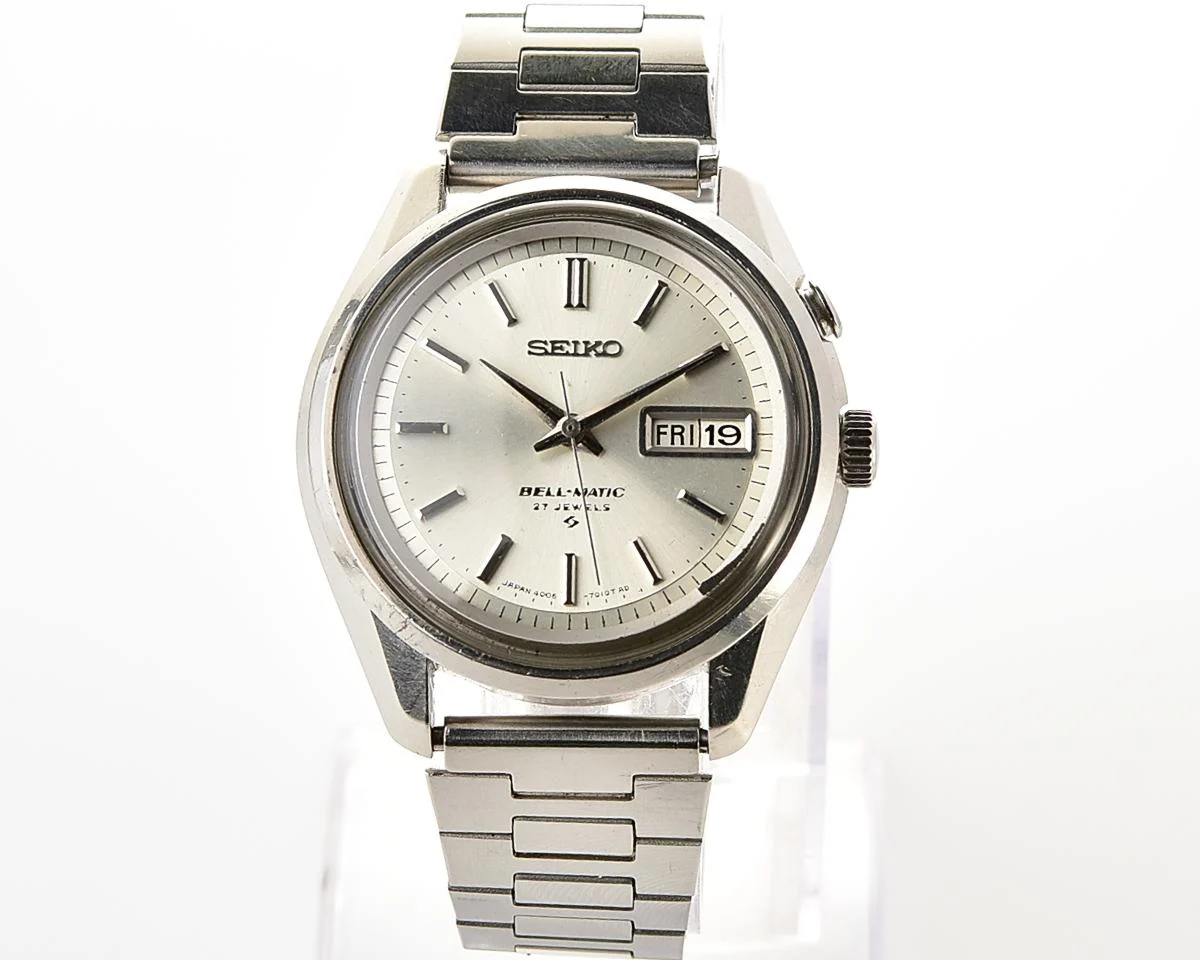
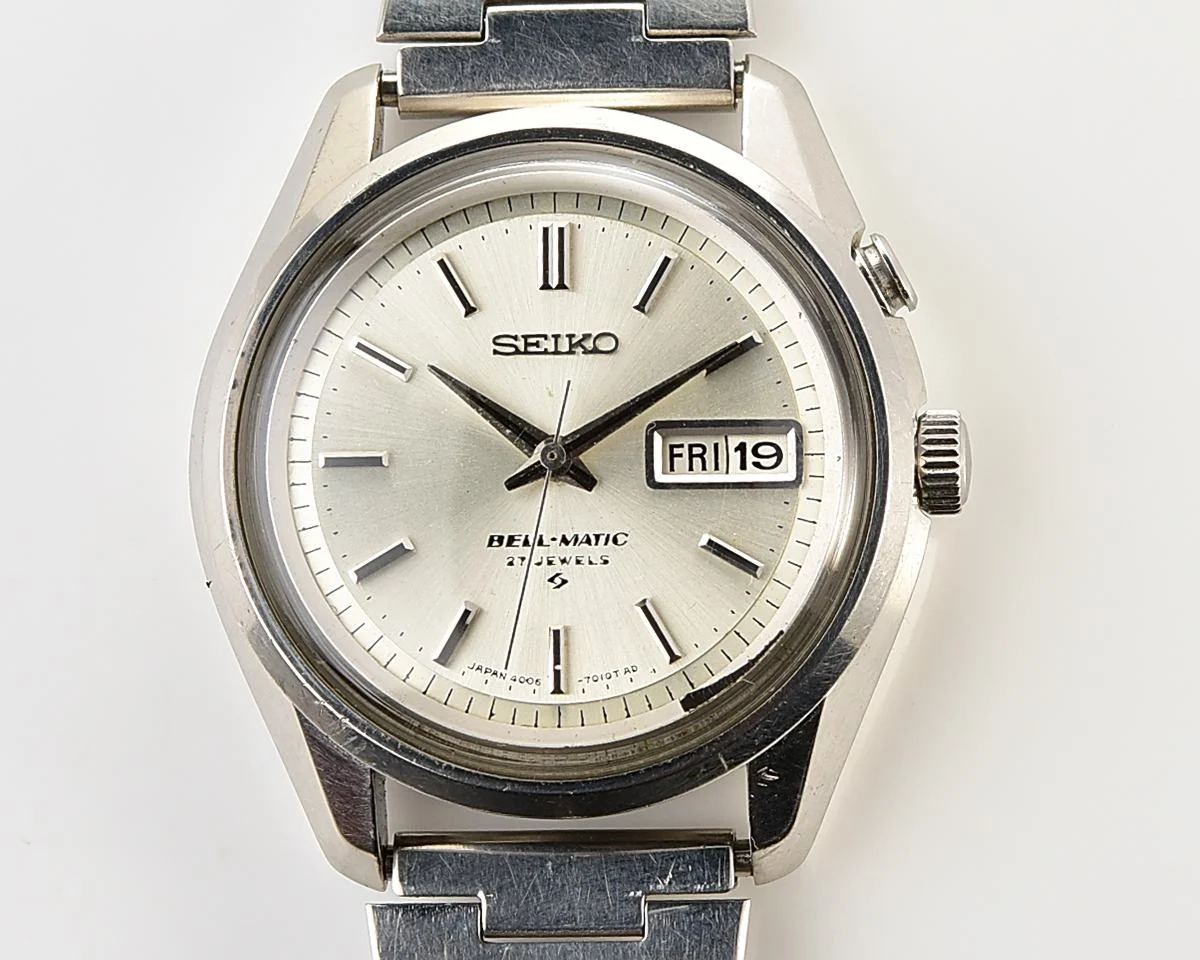
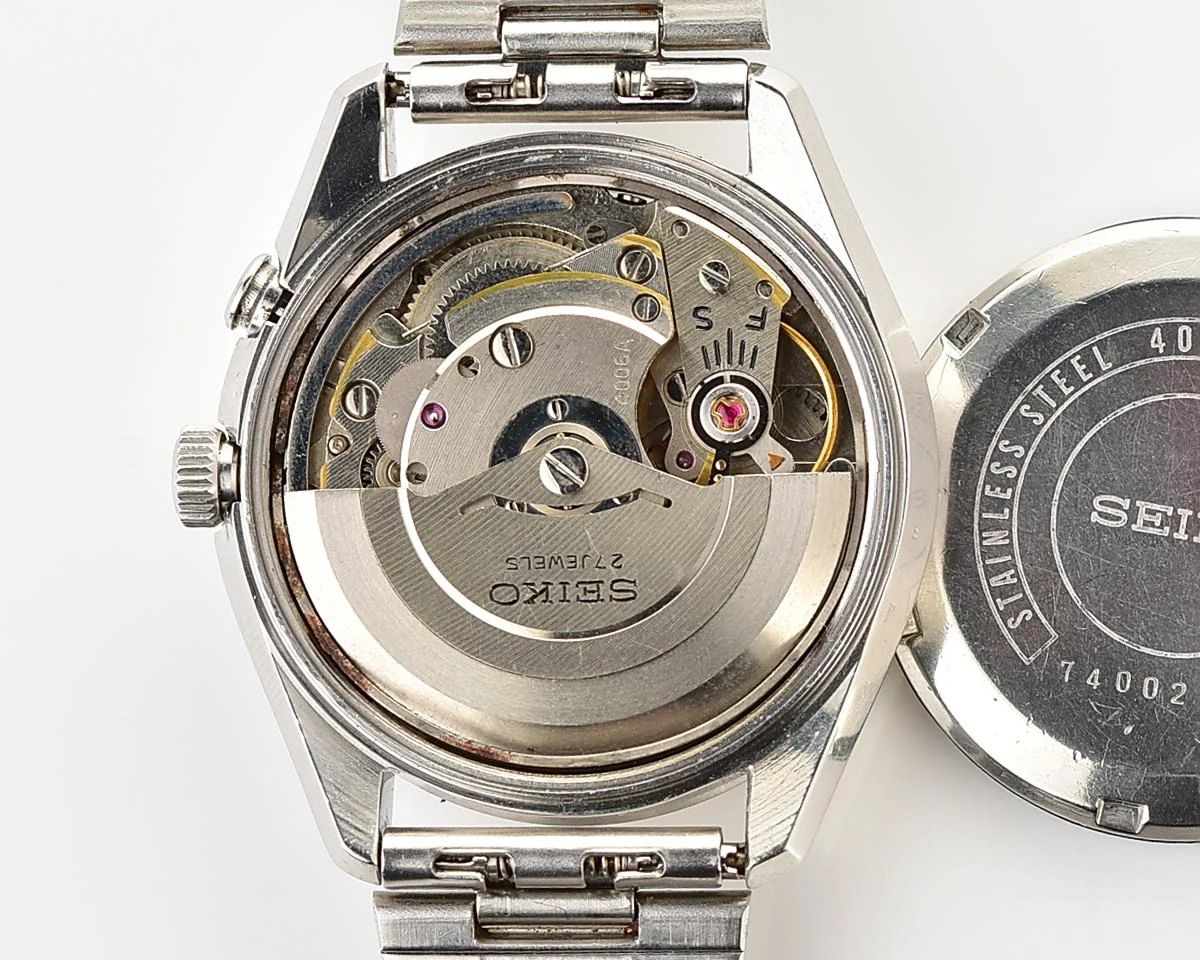
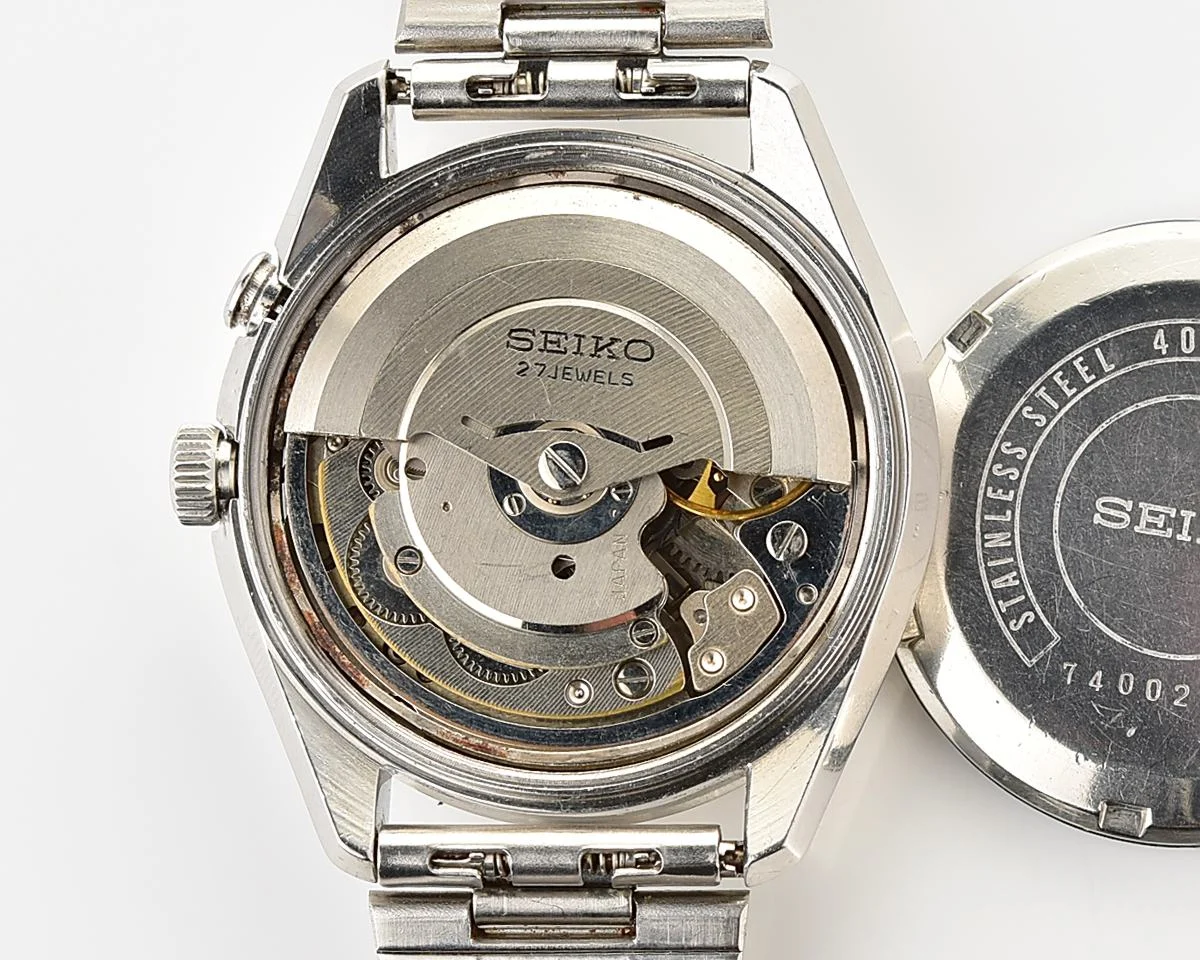
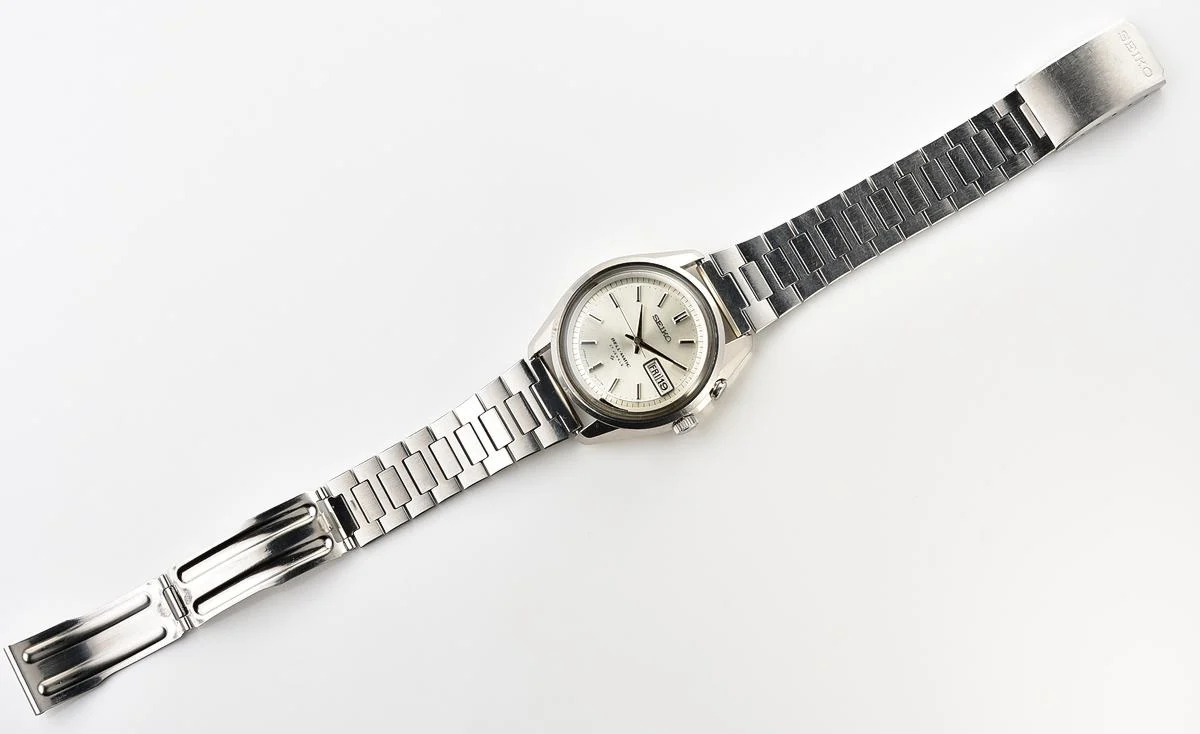
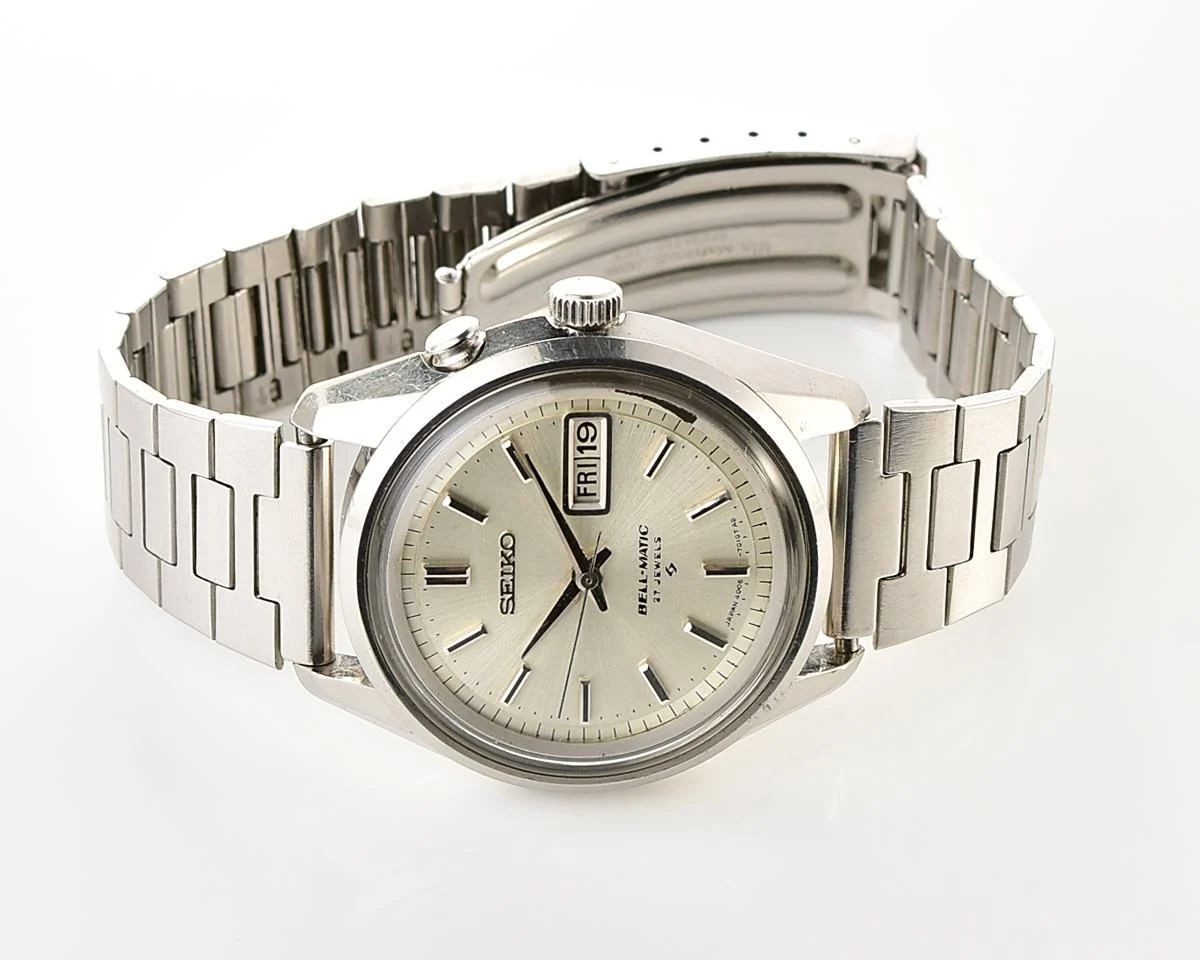
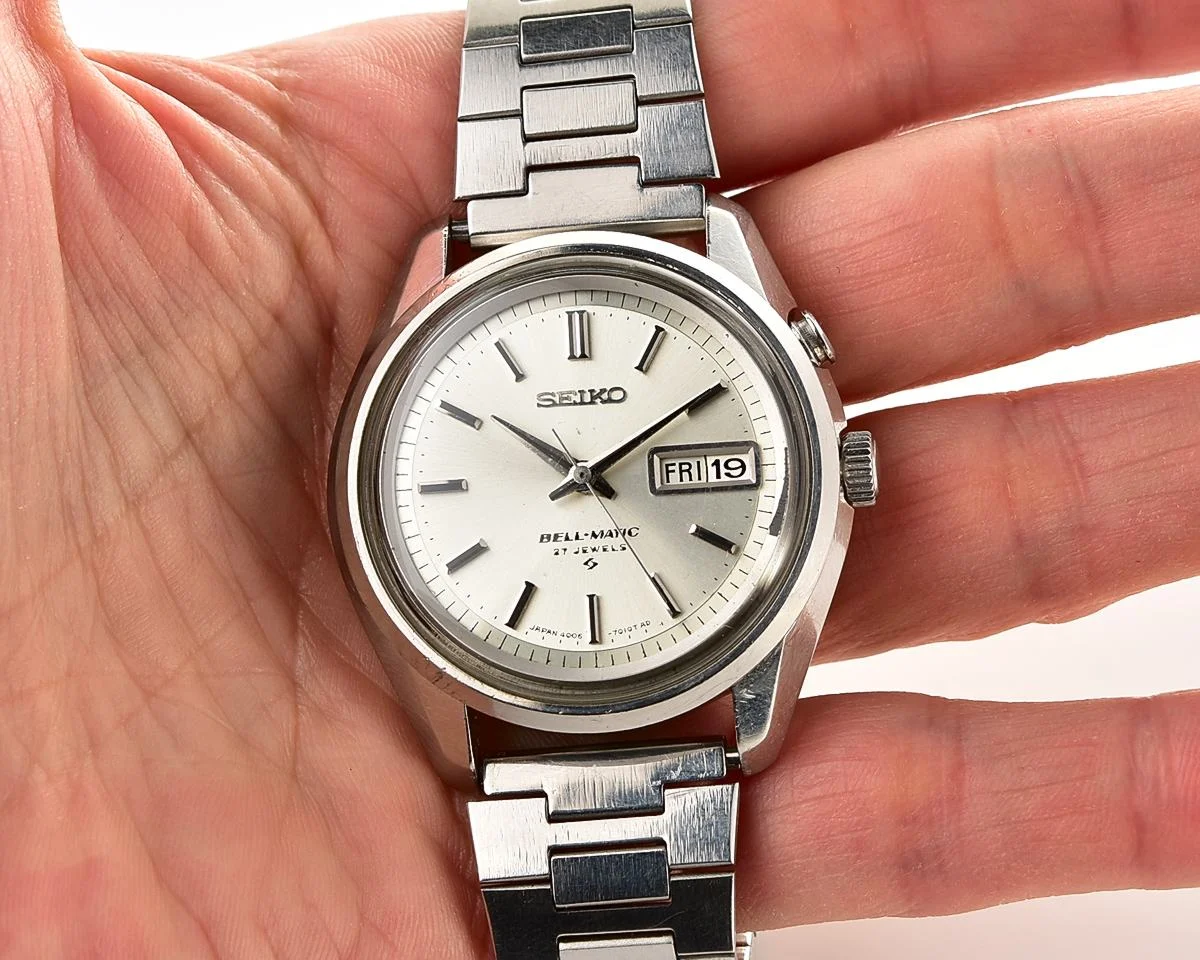
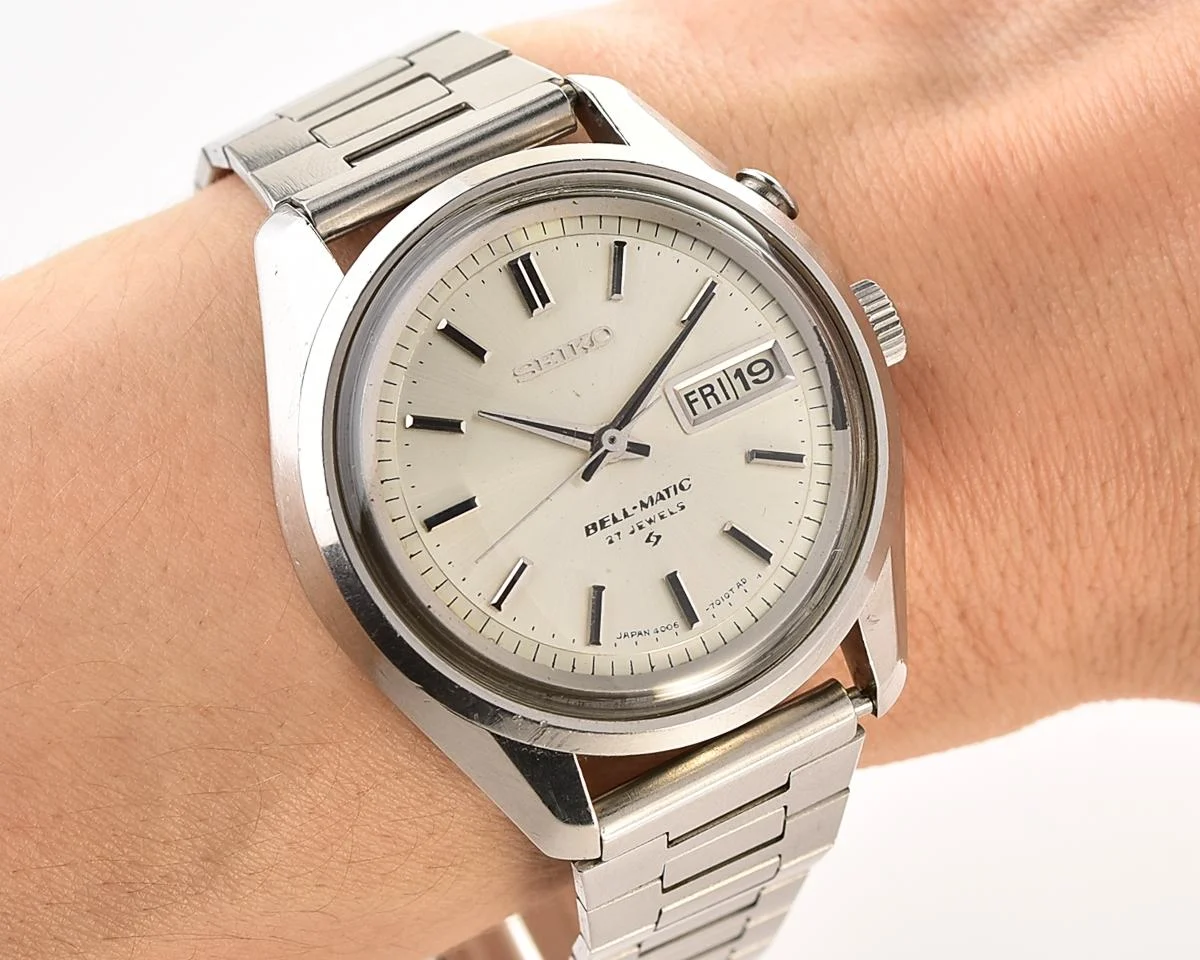
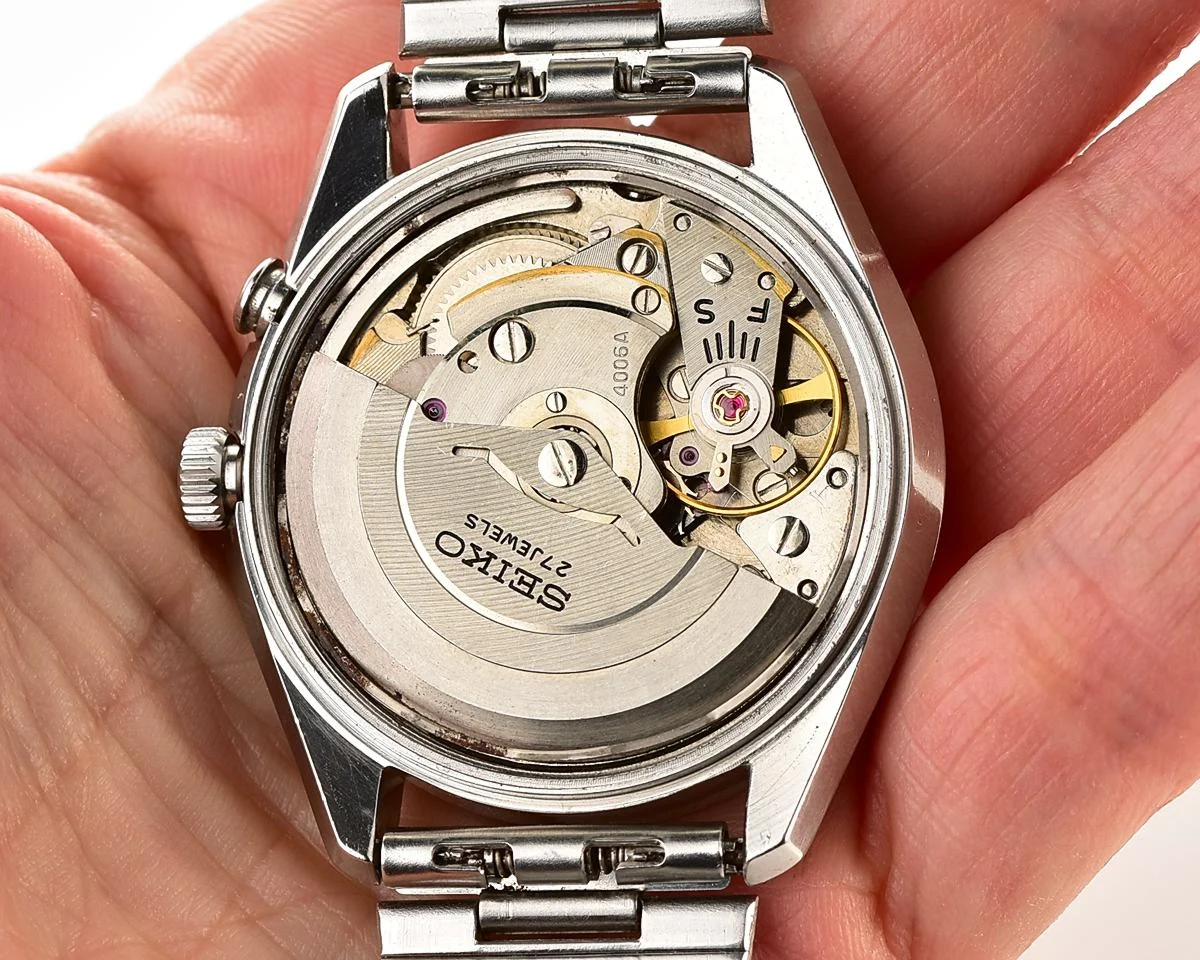
Beautiful Seiko Bell-Matic 4006-7010, a legendary model in the world of vintage watch collecting. This specific version is particularly special because it features the 27-jewel movement, which was the highest jewel count Seiko ever put into the Bell-Matic line.
- Note on collectibility: The 7010 is the straight-lug case that followed the earlier cushion-cased 700x, and the silver sunburst dial is among the most popular of the many dial variations. JDM 701x models kept the full 27-jewel movement into the mid-1970s, after export versions had already moved to lower jewel counts.
Read more(and listen to the sound of alarm) in excellent article “Seiko Bell-Matic: The Complete Guide“ by the site Beyond the Dial
Reference: 4006-7010
Model: Bell-Matic
Manufacture Date: April 1967
Case diameter: approx. 38mm (excluding crown), approx. 40mm including crown
Lug to lug height: approx. 43mm
Thickness: approx. 13.5mm
LUG WIDTH 19mm
CALIBER Seiko 4006A, 27 jewels
TYPE Mechanical, self winding
FUNCTIONS Hours, Minutes, Seconds, Day/Date Calendar, Alarm
This watch has recently been serviced by a professional watchmaker and keeps good time.
Condition note — alarm index: The alarm index on the inner setting ring appears to have been re-marked by hand rather than factory-printed: it sits on top of the printed scale and is heavier and blunter than the index normally seen on this reference. The alarm itself sets and sounds exactly as it should, and nothing else on the dial is affected. We have priced the watch accordingly.
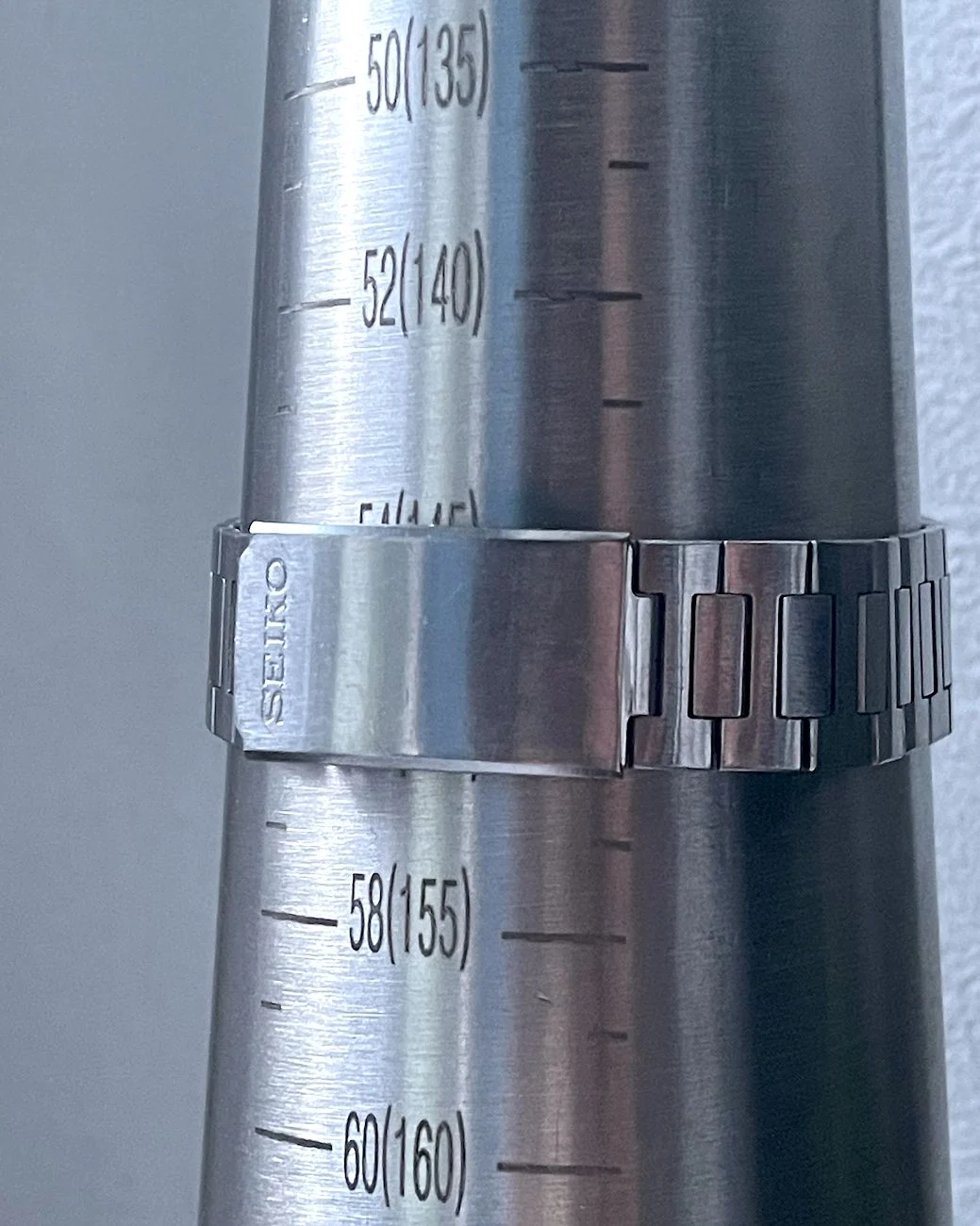
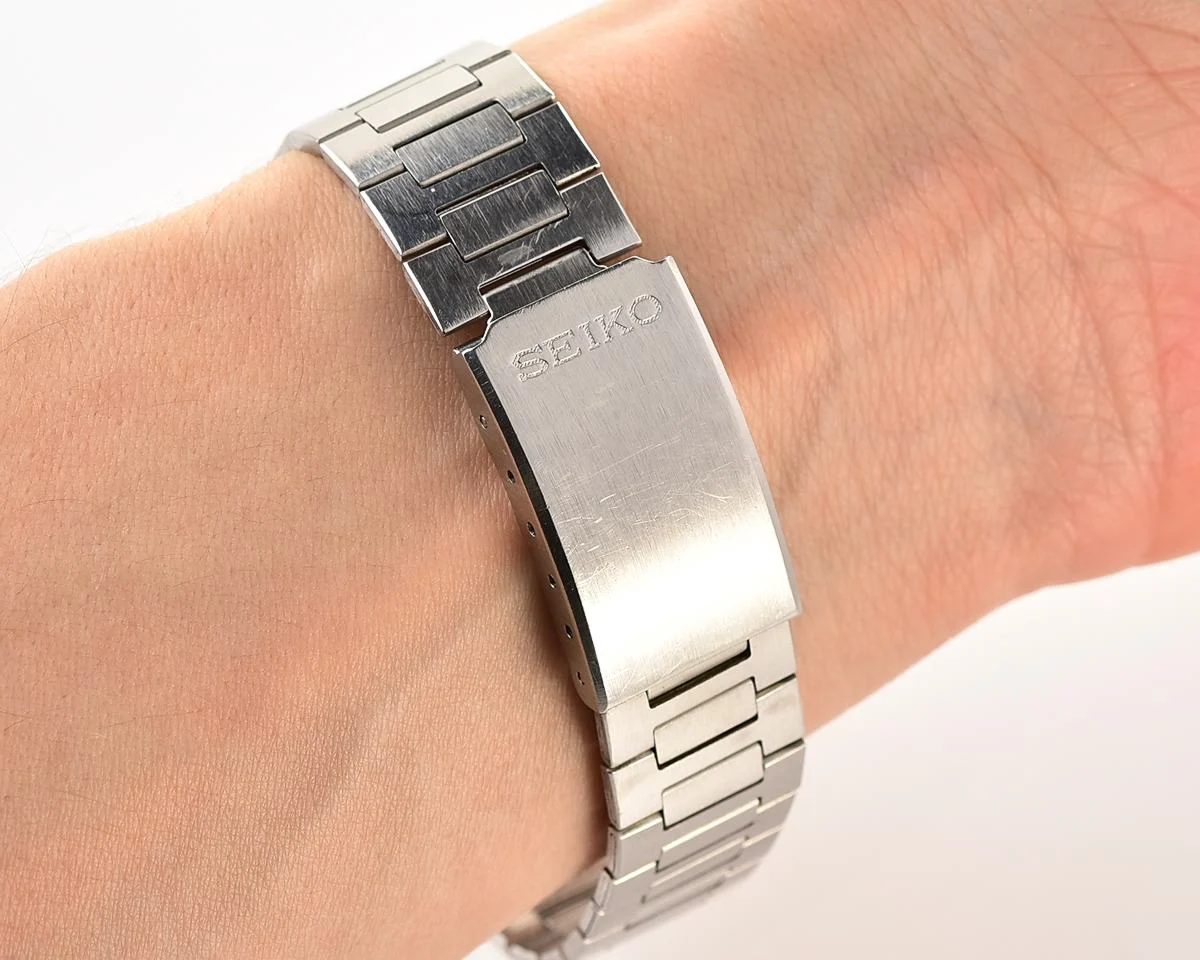
Comes complete with a Seiko-signed stainless steel bracelet*.
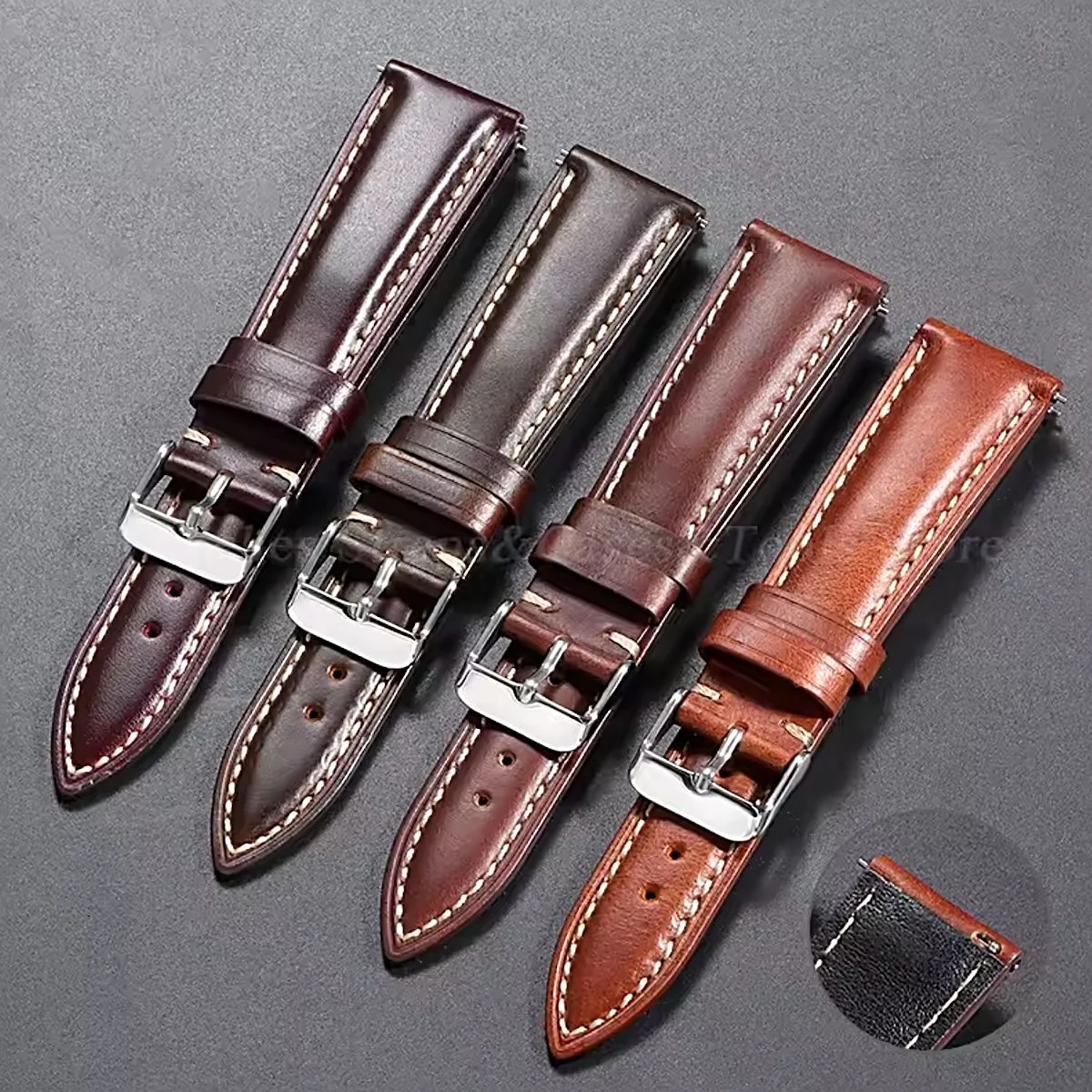
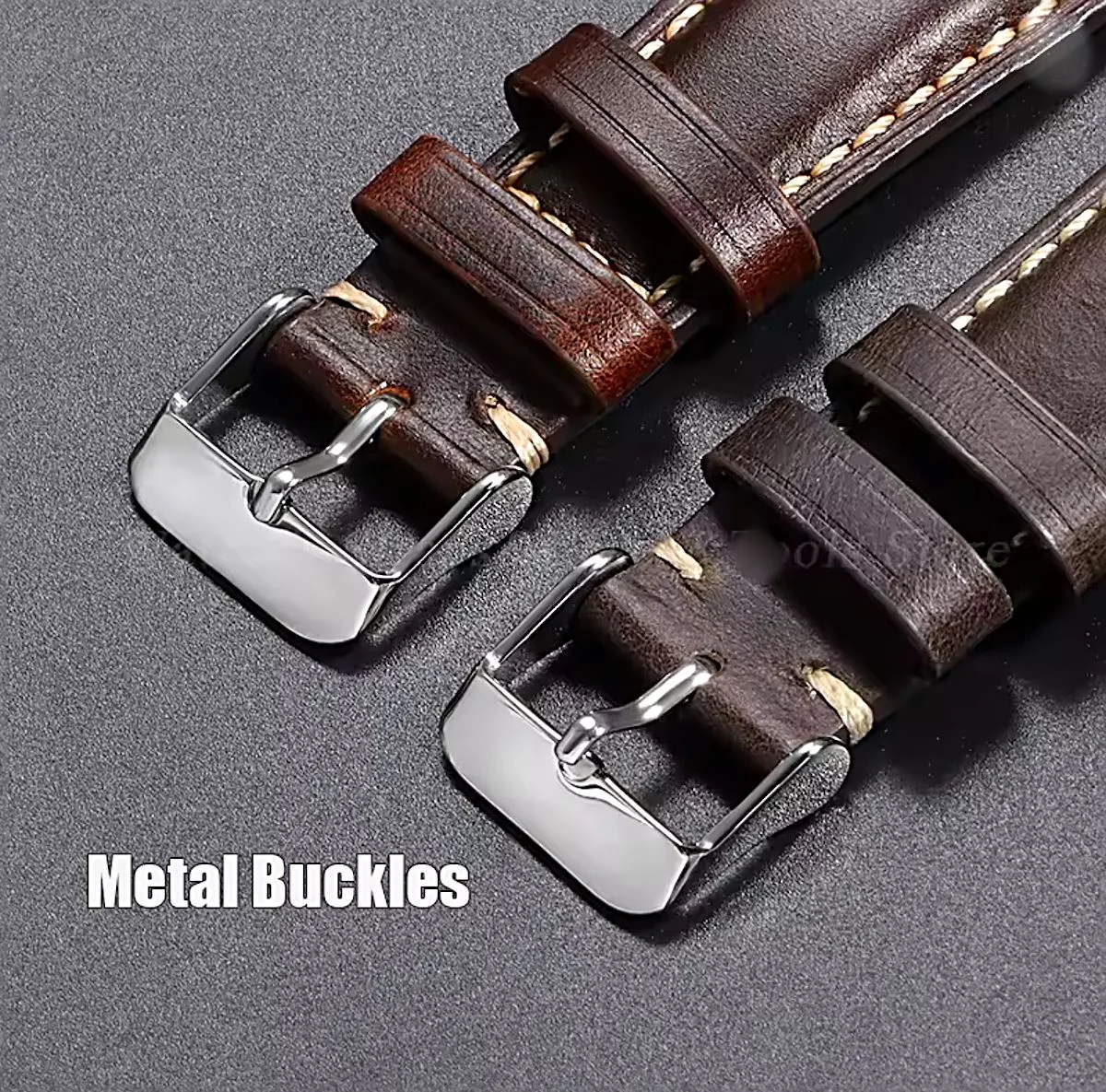
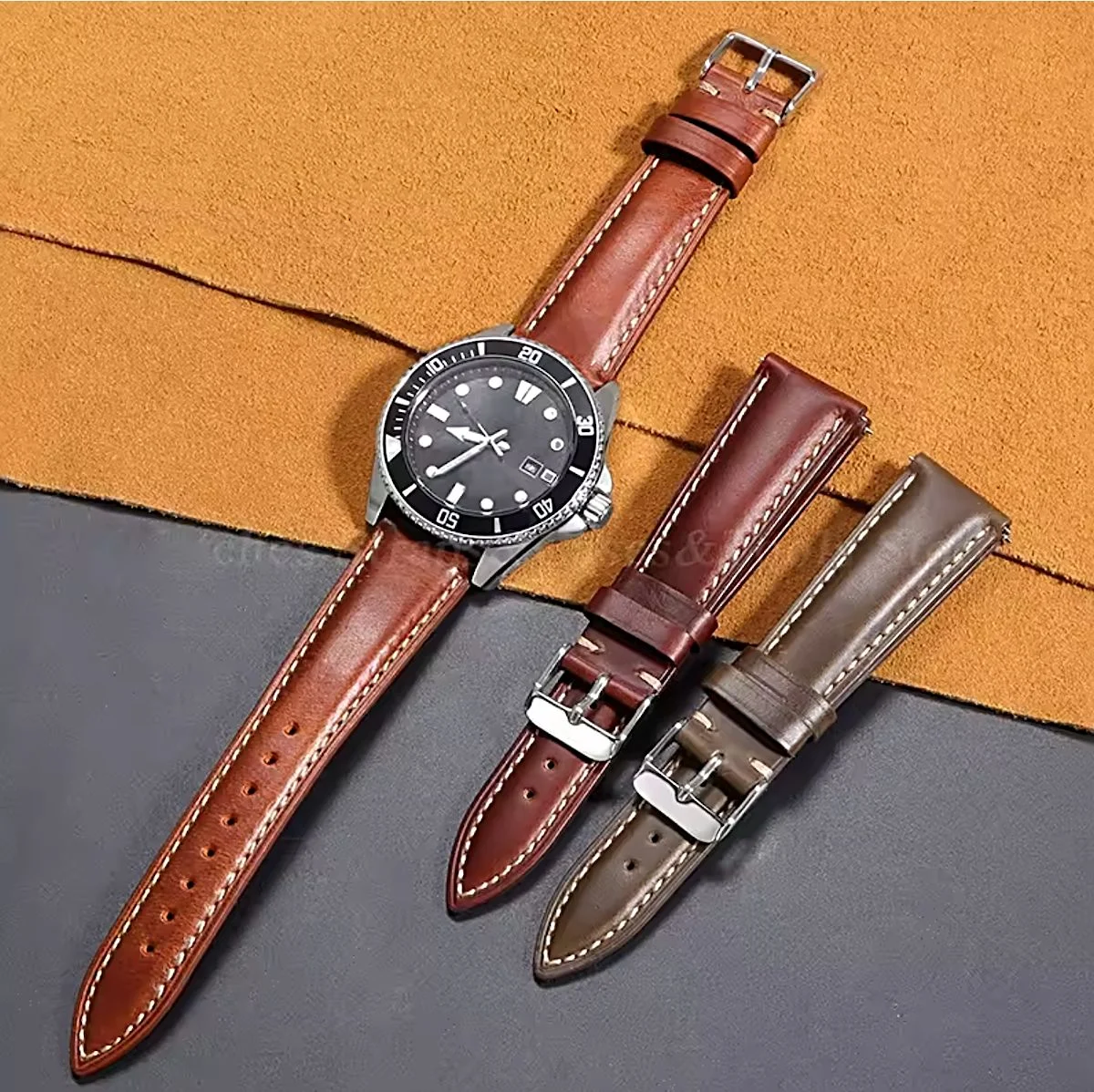
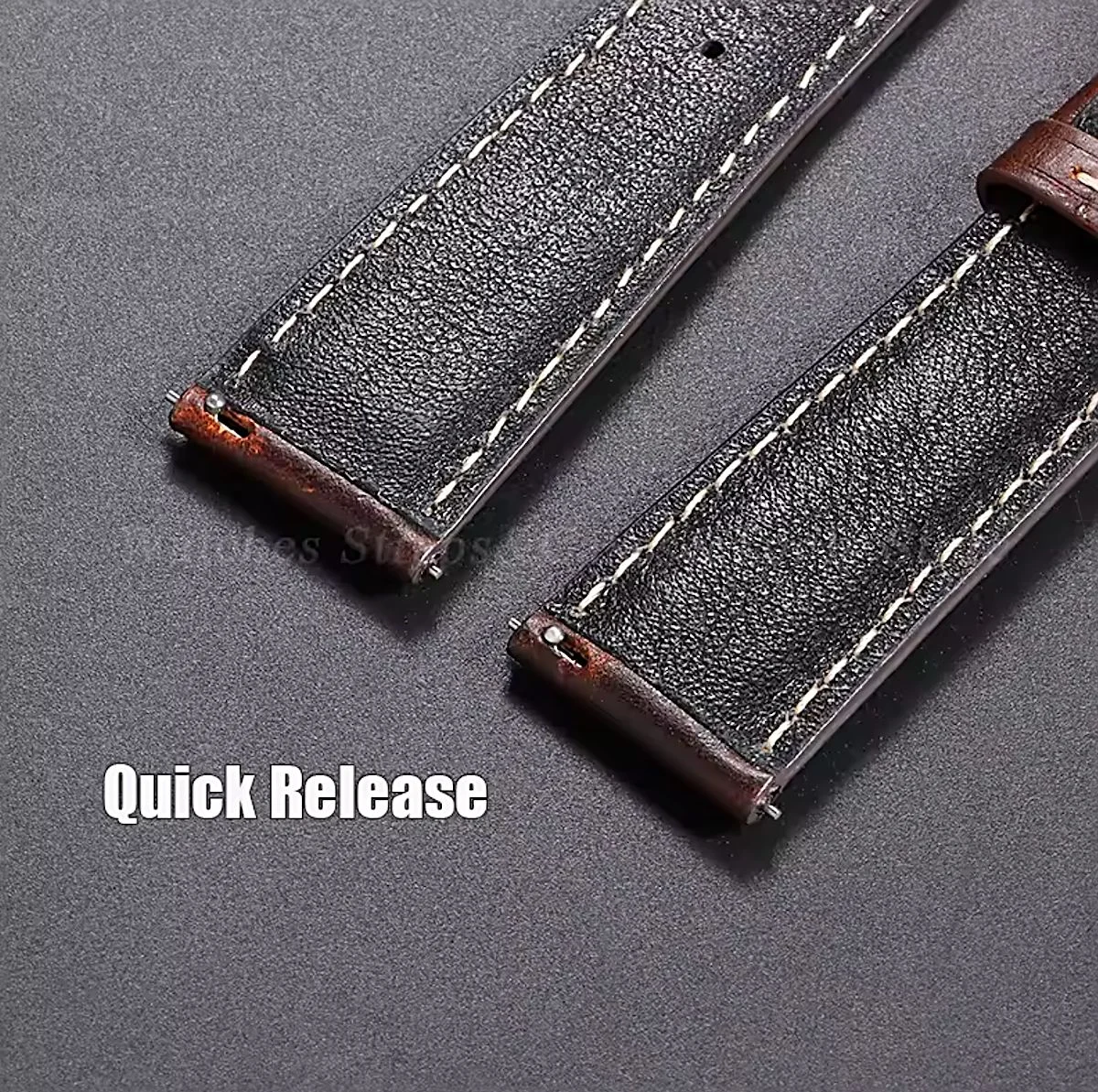
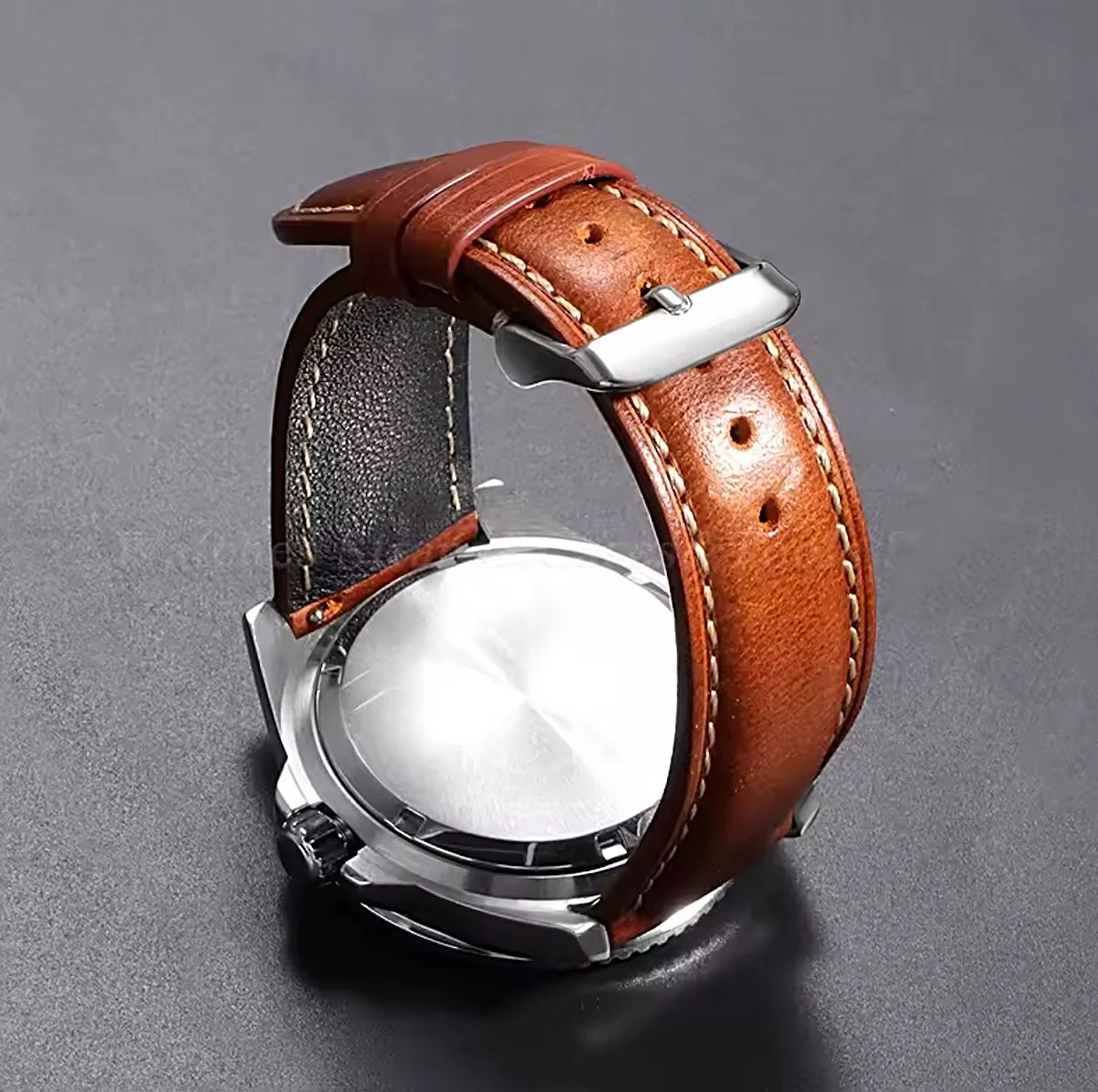
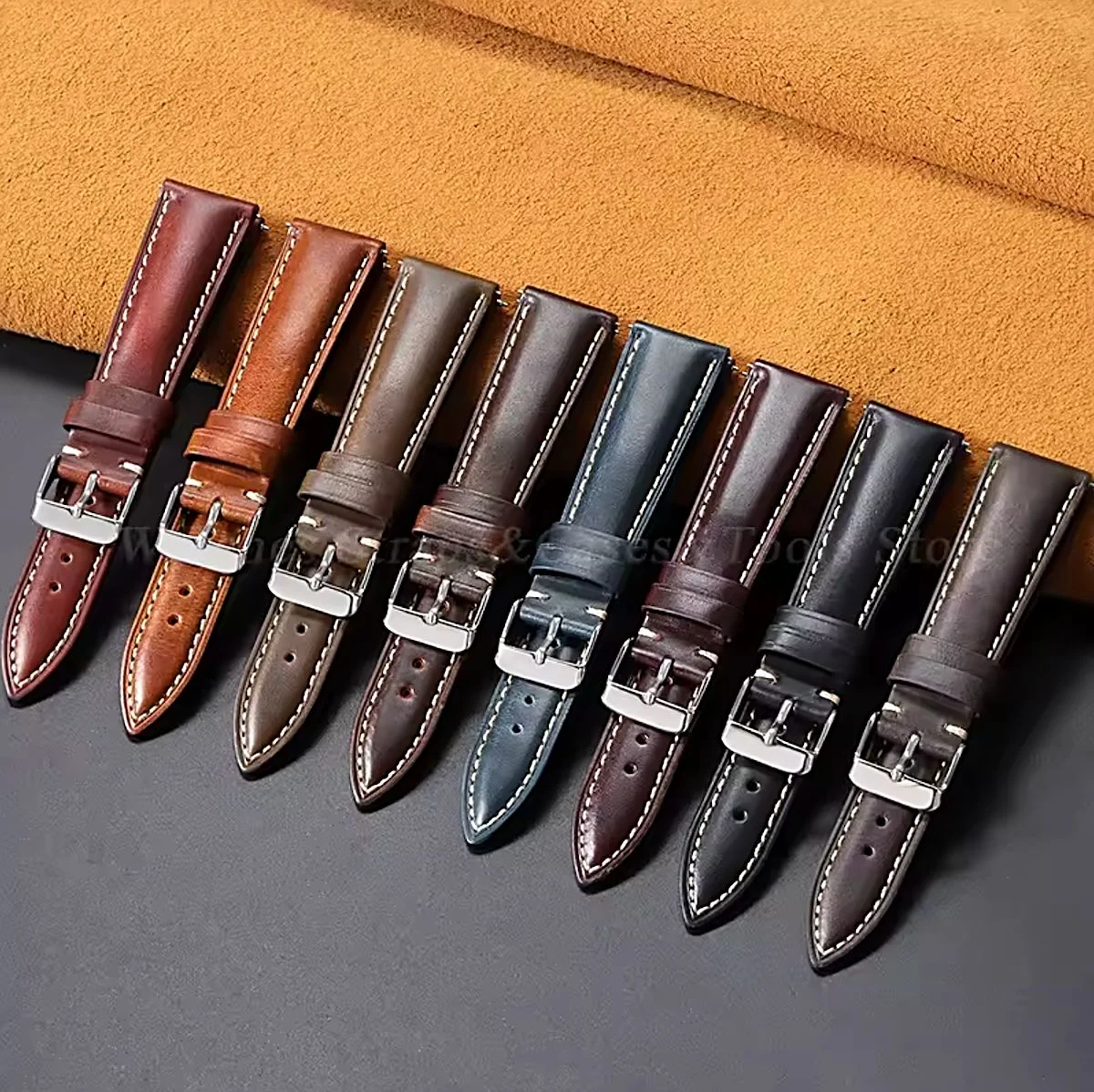
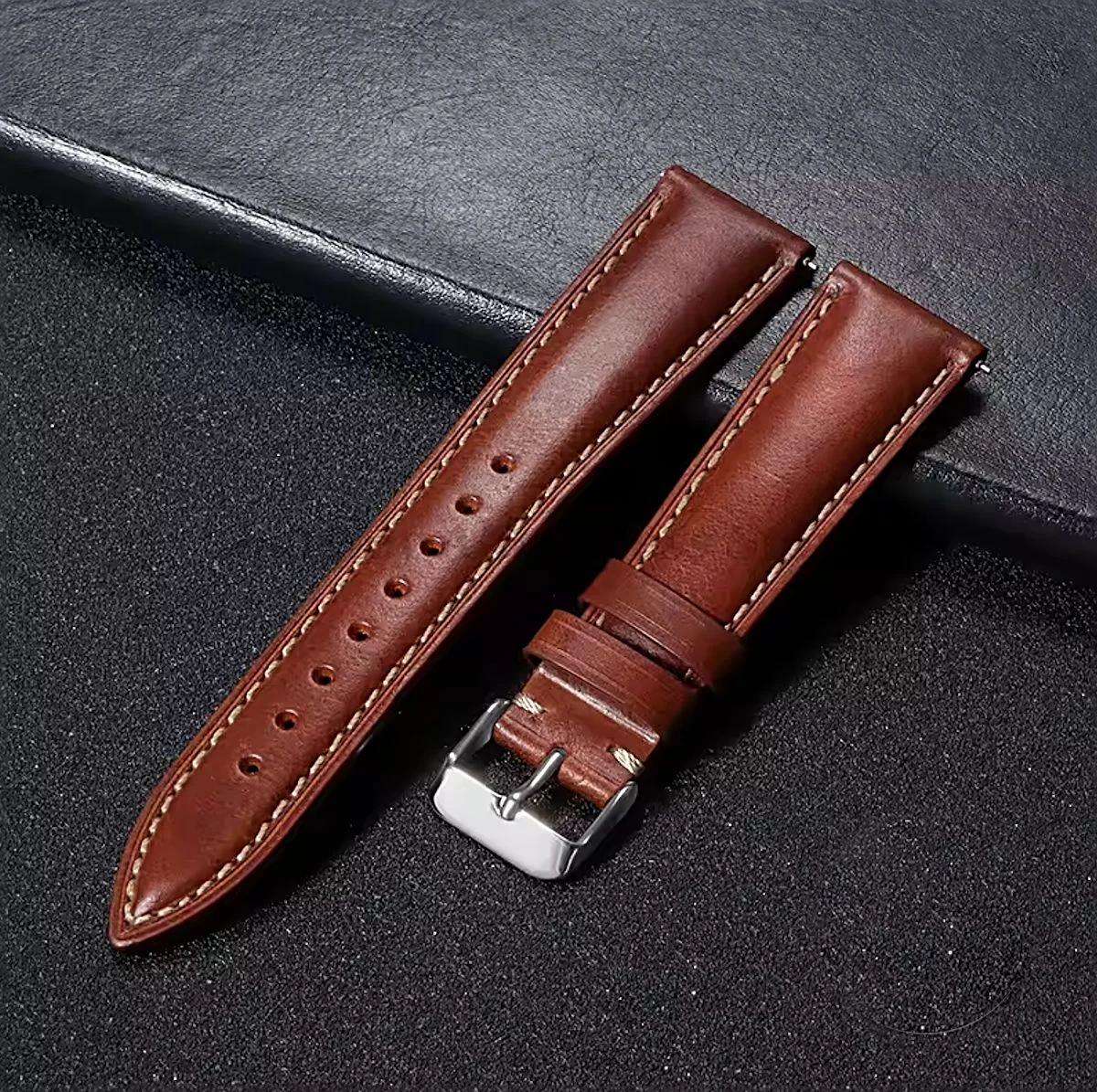
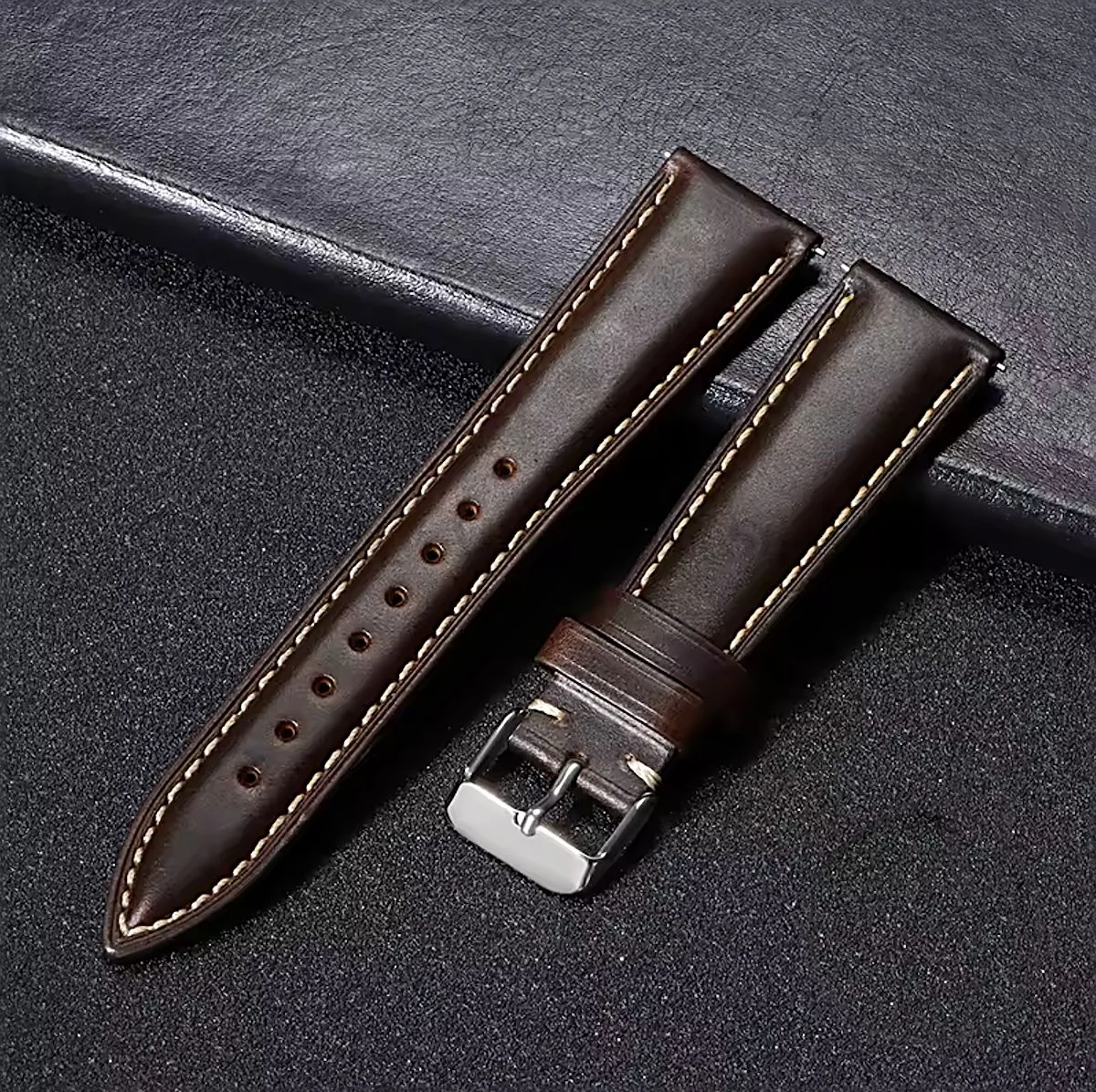
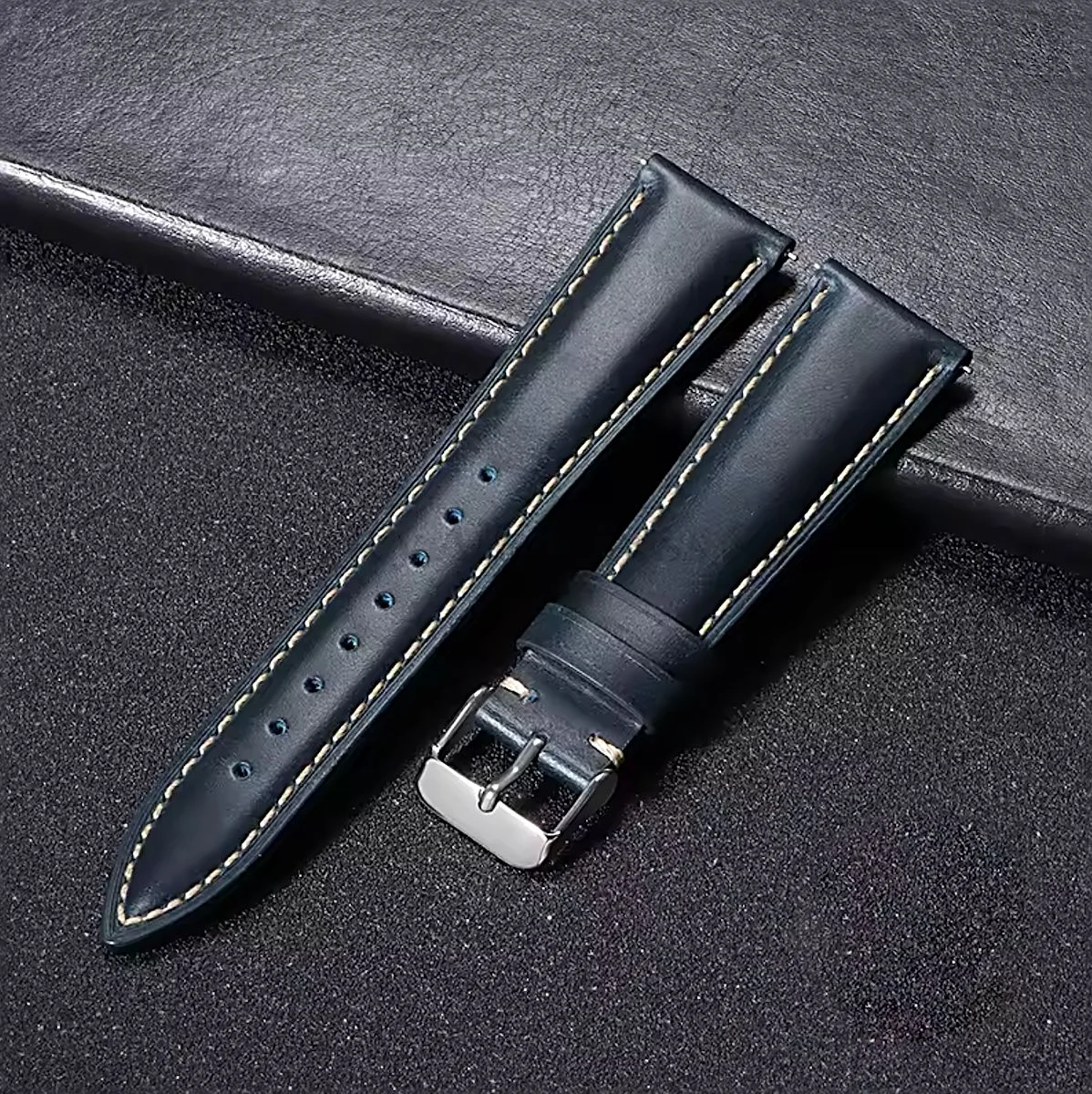
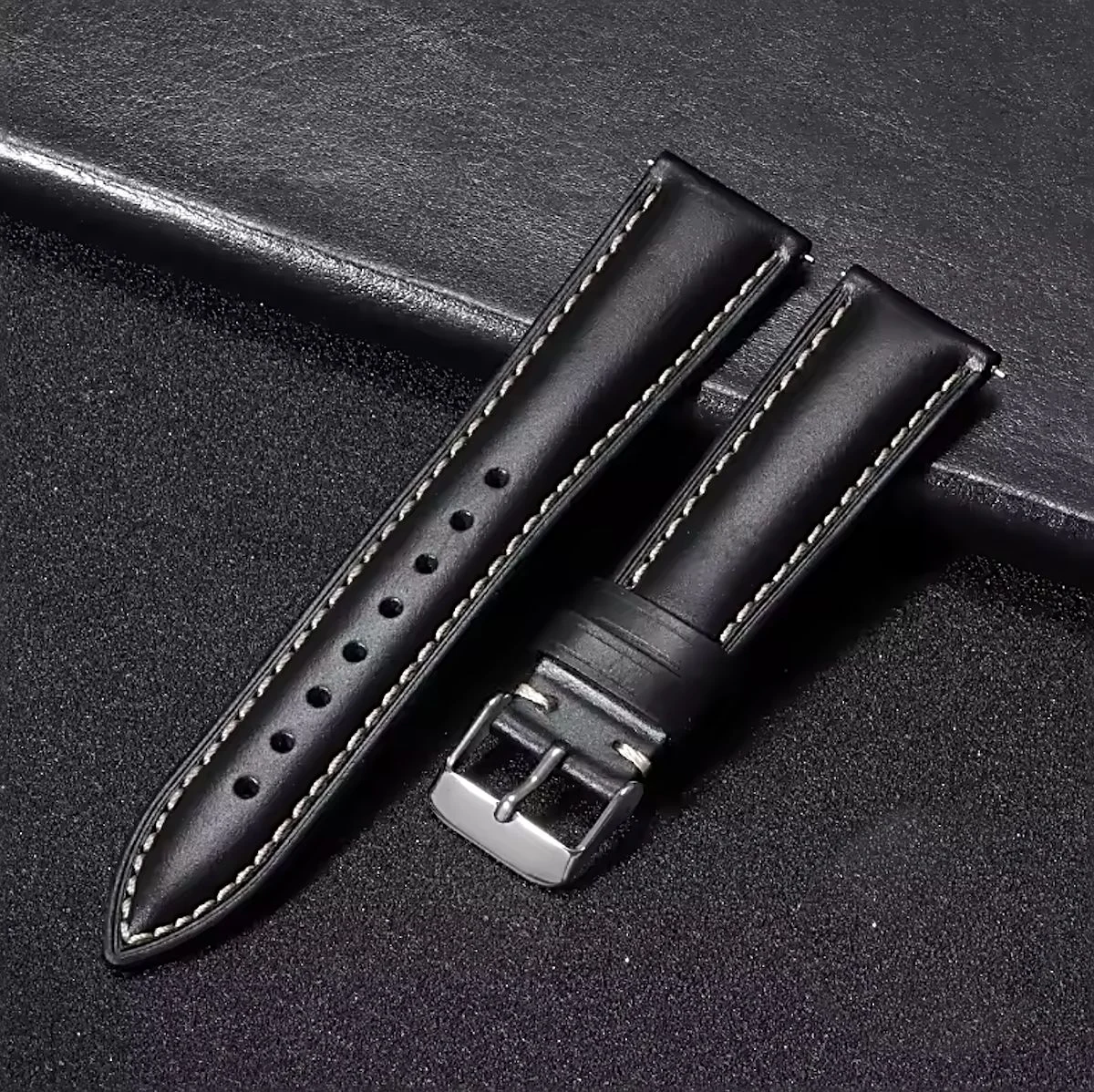
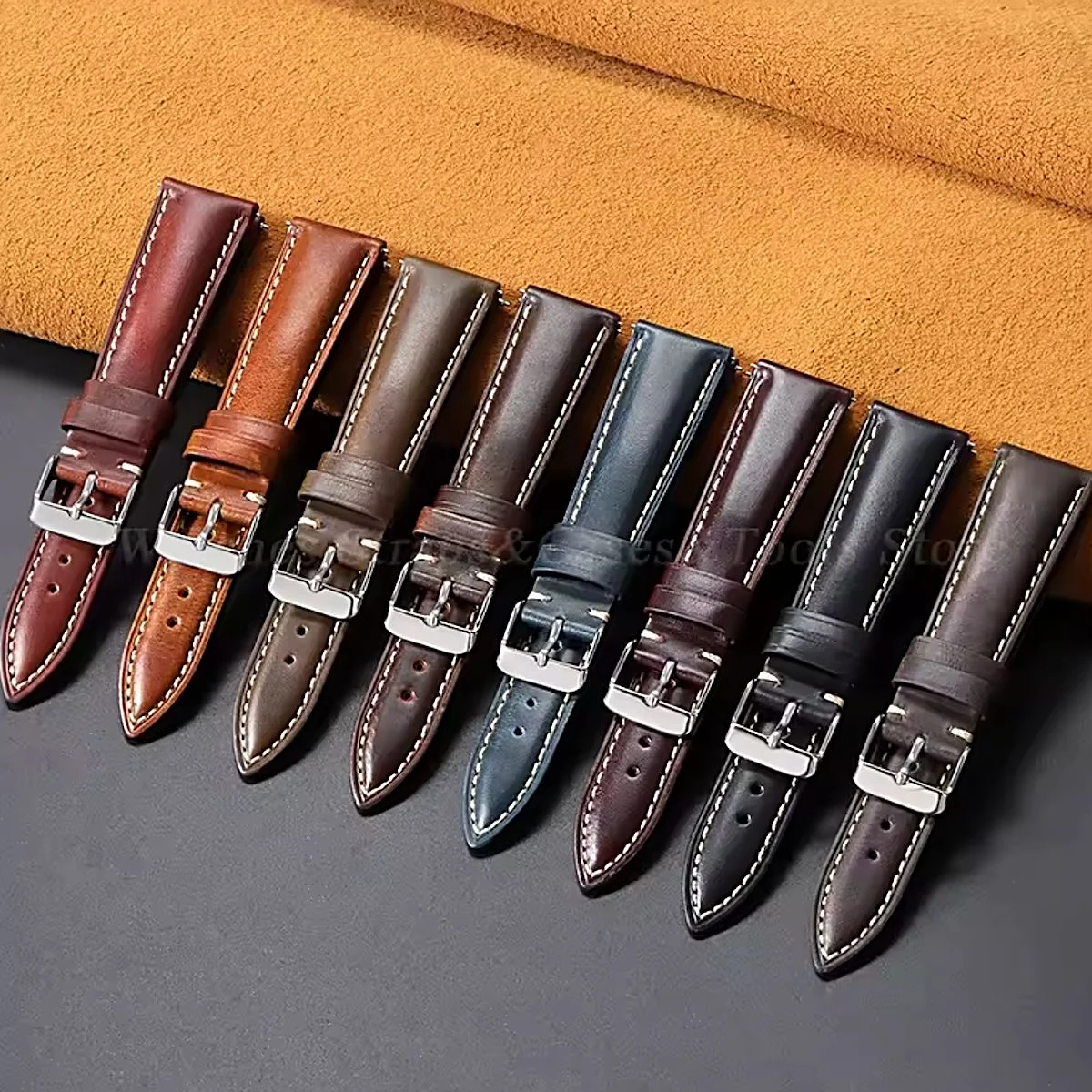
(*) We match the strap to this watch’s lug width, so there is nothing for you to measure — just pick a padded leather strap for Seiko from the options at the top of the page.
This watch ships from 🇺🇦 Ukraine with tracking number
Modes of payment:
- PayPal
- Credit Cards (VISA, MasterCard, American Express, Discover)
- bitcoin
We guarantee the item you receive looks and works exactly as advertised — or your money back.
Quick Guide: How to Operate Seiko Bell-Matic
The Bell-Matic has a unique set of controls that can be a bit confusing at first:
| Part | Action | Function |
| Pusher (2:00) | Pull Out | Activates the alarm. |
| Pusher (2:00) | Press In | Deactivates the alarm OR quick-sets the Date (pushing it repeatedly). |
| Crown (3:00) | Position 0 (In) | Rotate to wind the Alarm Spring (the watch movement itself is automatic). |
| Crown (3:00) | Position 1 (Mid) | Rotate to turn the internal Alarm Ring (the red/black triangle). |
| Crown (3:00) | Position 2 (Out) | Sets the time. |
Tip: To change the Day of the week, you usually have to cycle the hands past midnight (24-hour rotation), as there is no quick-set for the day—only for the date.
Important Warning for Owners
Because the movement (Caliber 4006A) is complex, never change the date using the pusher between 9:00 PM and 3:00 AM. The gears are engaged during those hours to flip the day/date automatically, and using the manual quick-set pusher during this window can snap the delicate metal gears inside.
Seiko lug-width matched leather straps — 18 / 19 / 20 mm
About the watch factory
Seiko Group Corporation (セイコーグループ株式会社, Seikō Gurūpu kabushiki gaisha), commonly known as Seiko, is a Japanese maker of watches, clocks, electronic devices, and semiconductors. Founded in 1881 by Kintarō Hattori in Tokyo, Seiko introduced the world’s first commercial quartz wristwatch in 1969.
Seiko is widely known for its wristwatches. Seiko is one of the few watch companies that is fully vertically integrated. Seiko is able to design and develop all the components of a watch, as well as assemble, adjust, inspect and ship them in-house. Seiko’s mechanical watches consist of approximately 200 parts, and the company has the technology and production facilities to design and manufacture all of these parts internally.
Seiko offers one of the widest ranges of watch technologies in the world—quartz, kinetic, solar, mechanical, and Spring Drive—spanning everything from affordable everyday pieces to six-figure haute horlogerie. Over the decades it has launched multiple global brands, including Lorus, Pulsar, and Alba, while elevating its prestige through innovations like Spring Drive, which helped push Seiko into higher-end territory. In the 2010s, Grand Seiko and Credor were separated into fully independent luxury brands, while Seiko’s own global lineup now includes Grand Seiko, King Seiko, Prospex, Astron, Presage, and Seiko 5 Sports, with Credor remaining primarily Japan-focused.
Among Seiko’s key lines, Seiko 5 (born in 1963) is the gateway mechanical series known for durability and value; Lord Matic defined 1970s style with faceted crystals and colorful dials; Astron remains Seiko’s flagship GPS-solar tech line; Presage focuses on traditional mechanical craftsmanship with enamel and urushi dials; and Prospex delivers professional-grade dive, field, and pilot watches often embraced by enthusiasts. At the top end, Grand Seiko emphasizes precision, Zaratsu polished design, and movements like Spring Drive, while King Seiko—revived in the 2020s—brings back sharp, elegant 1960s styling with modern calibres.
Finally, Credor represents Seiko’s pinnacle of artisanal watchmaking, producing low-volume pieces in precious metals and showcasing Japanese decorative arts and haute complications from the Micro Artist Studio. Beyond watches, Seiko has also produced various electronic devices and, historically, jewelry and eyewear—though those divisions have since shifted to other companies.