Description
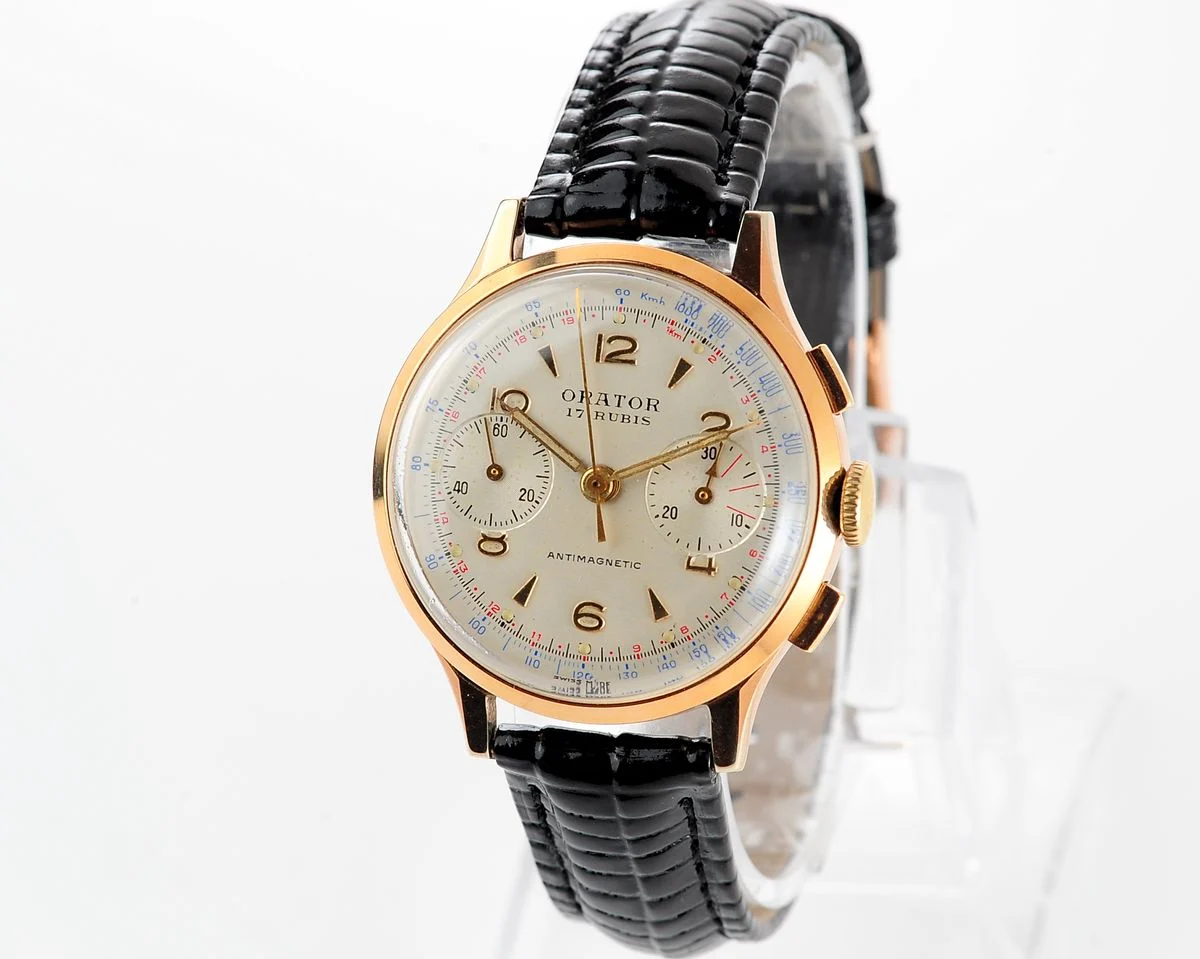
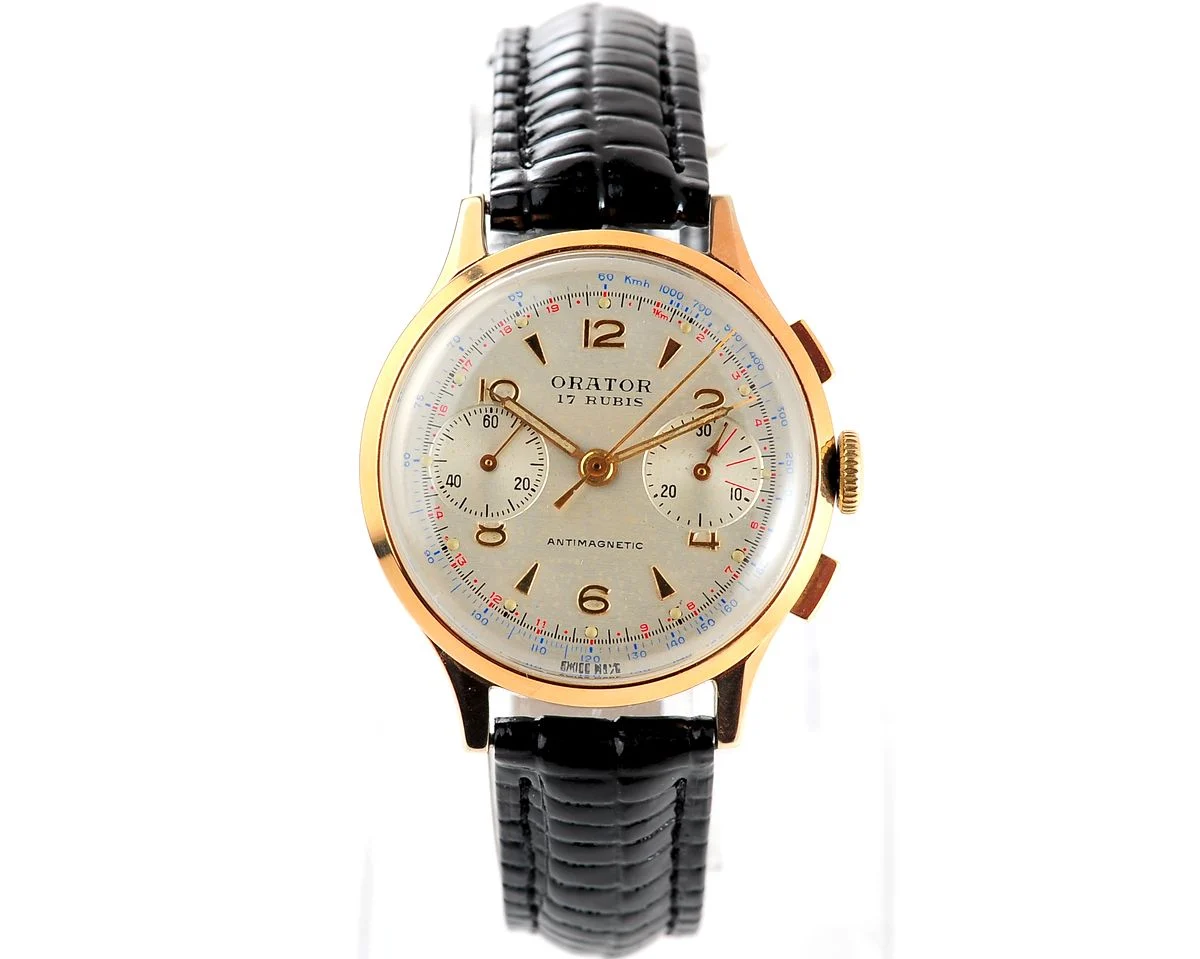
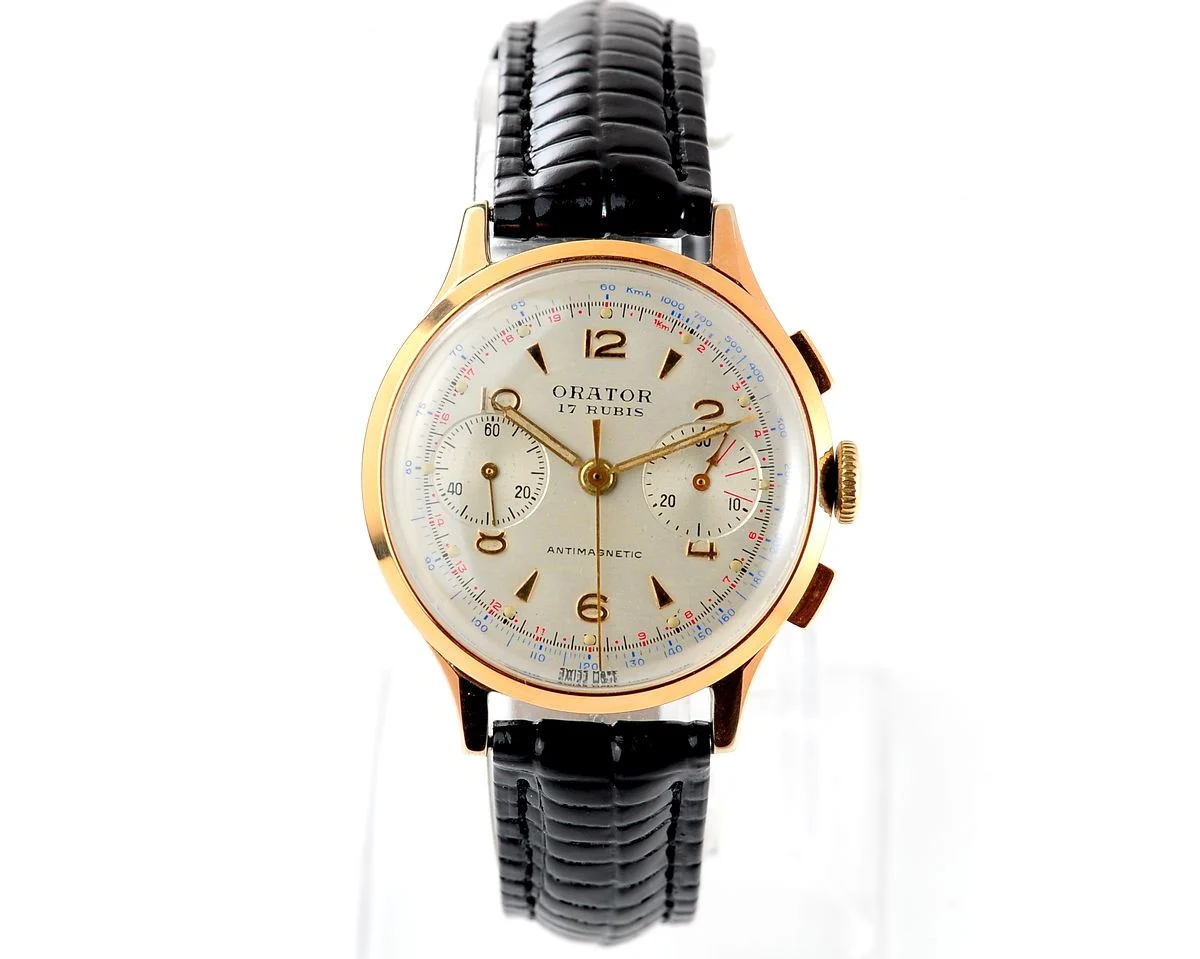
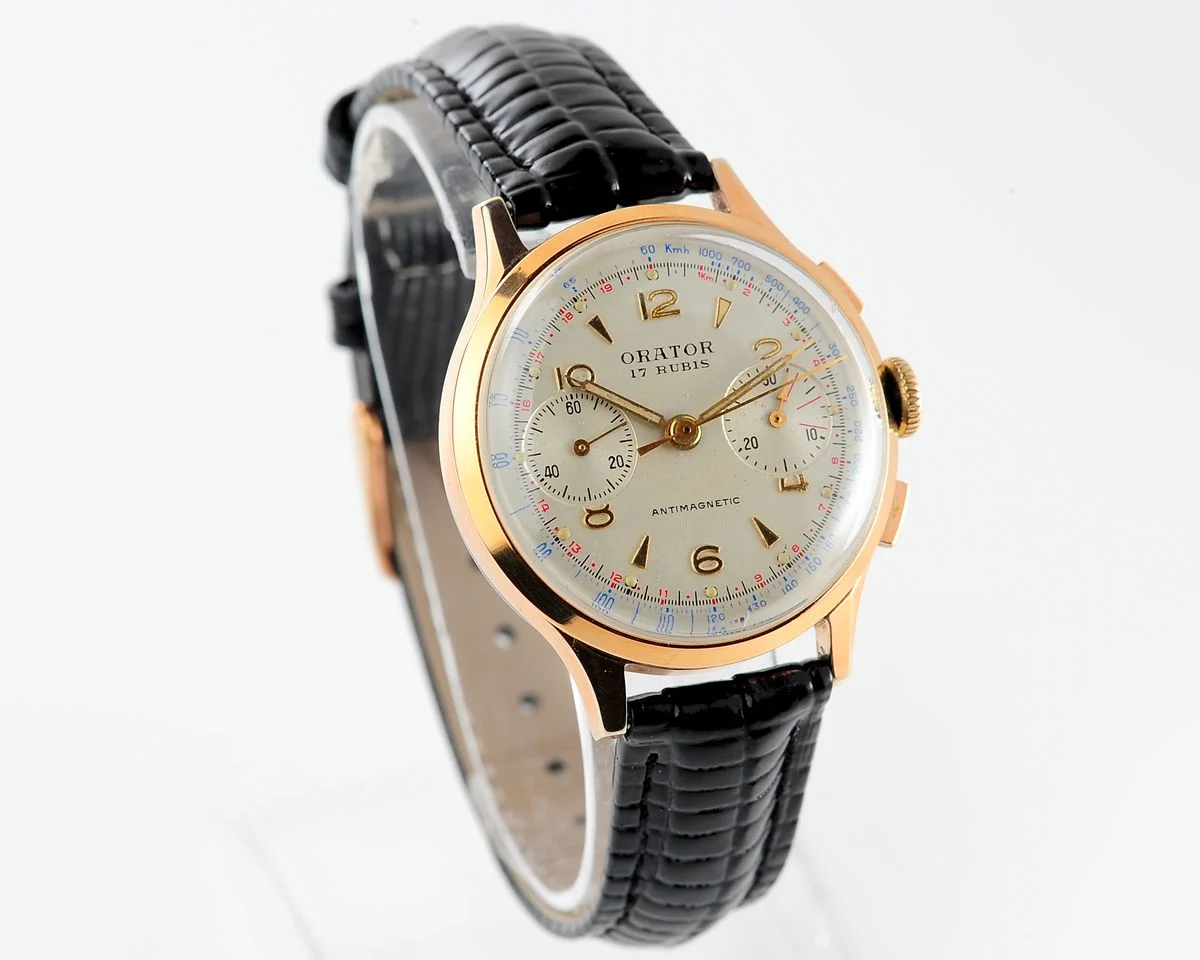
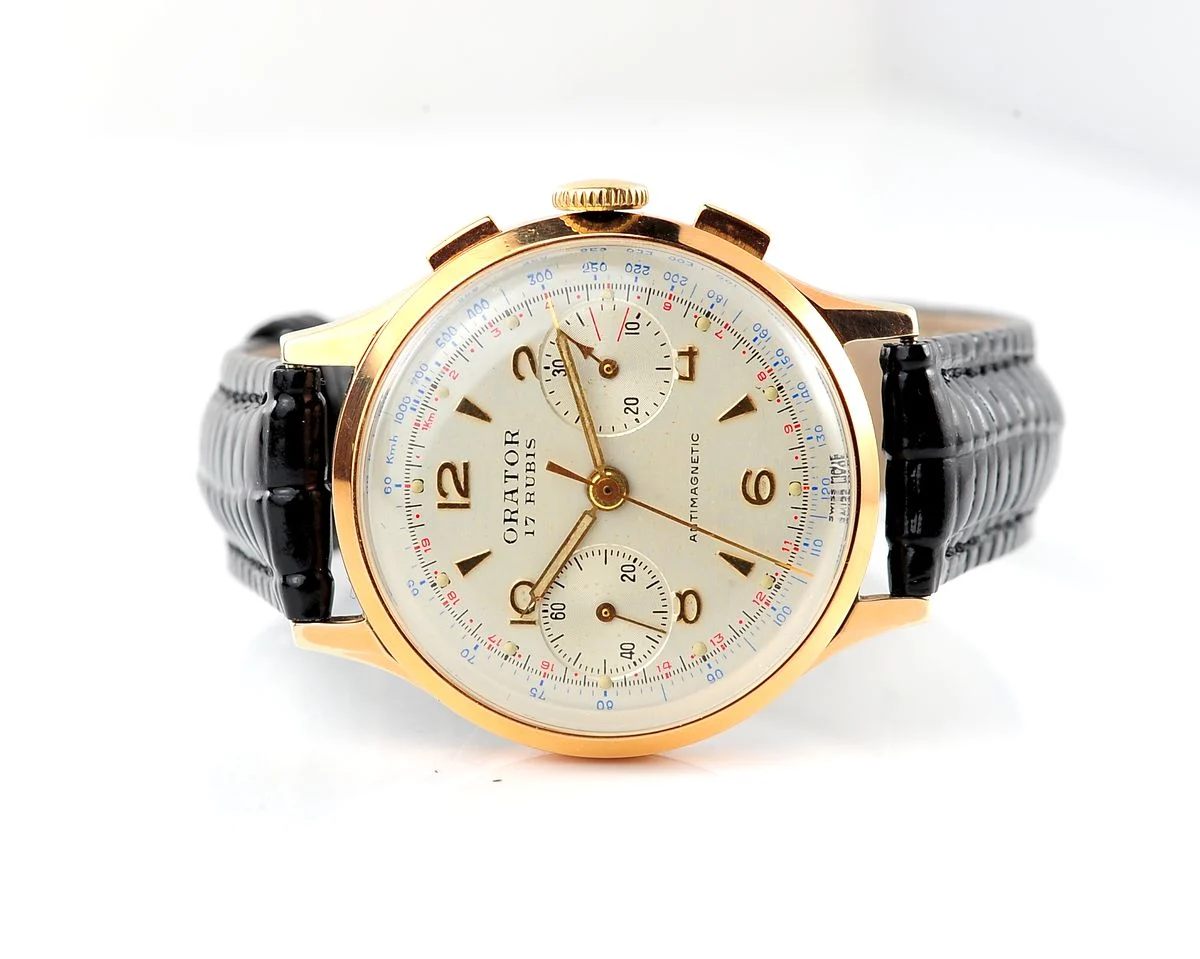
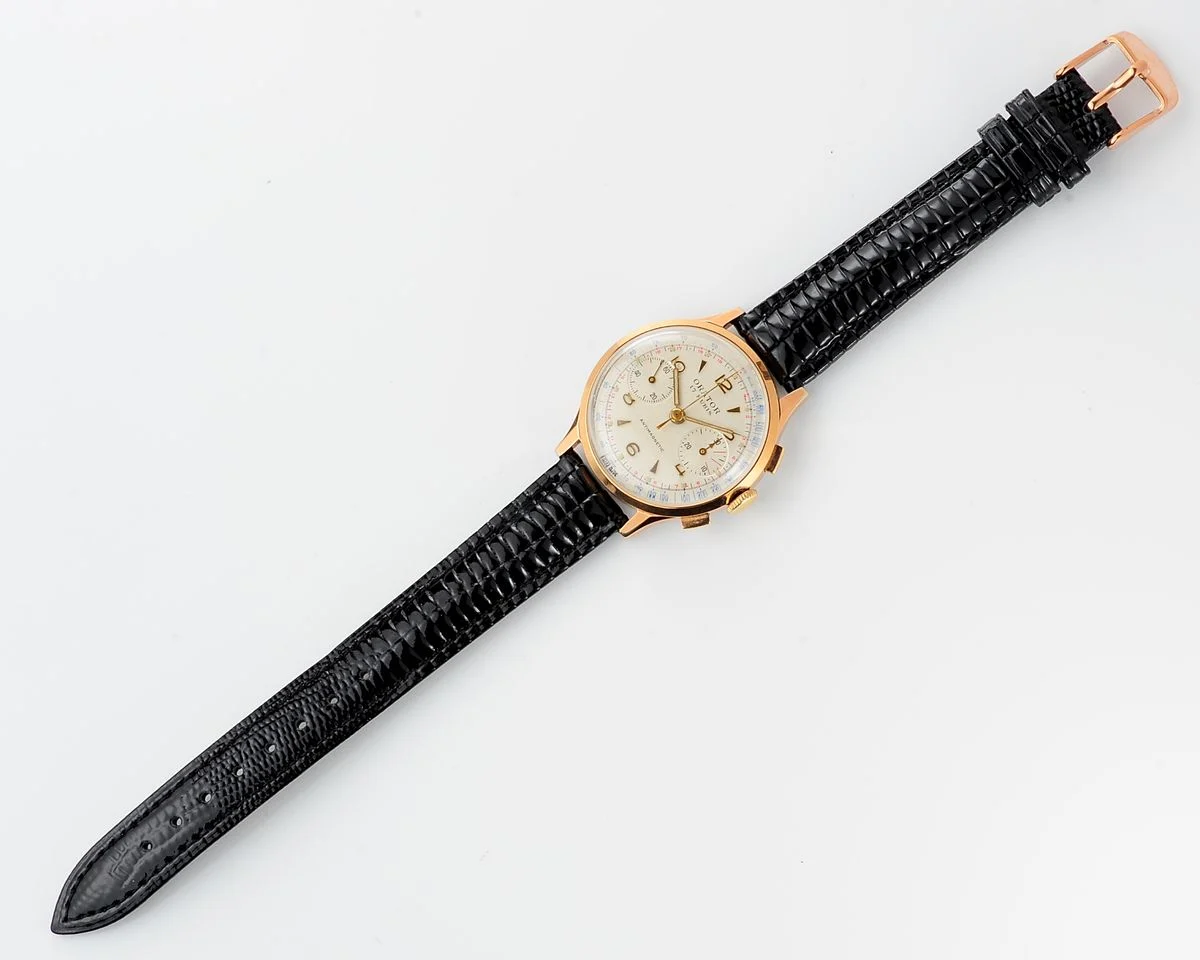
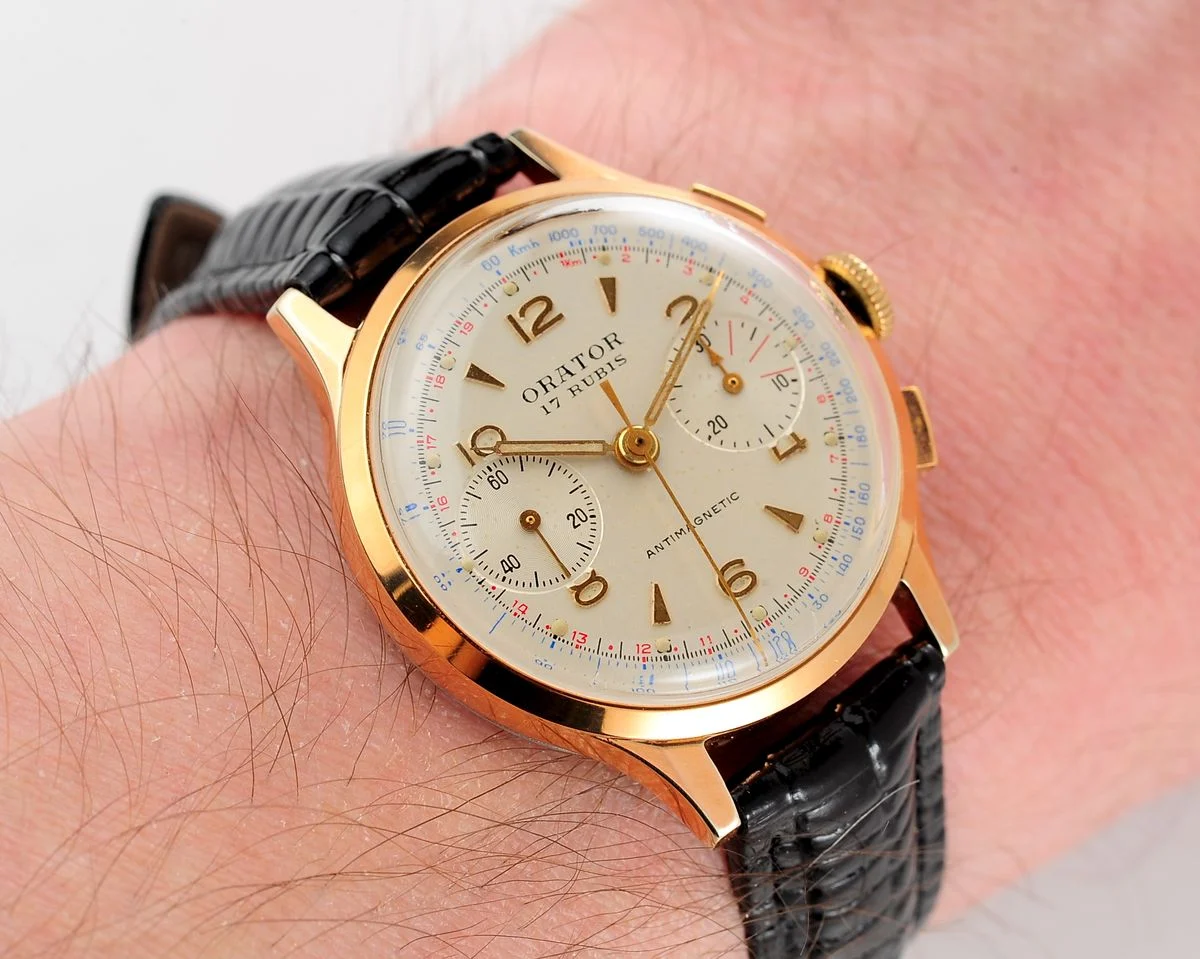
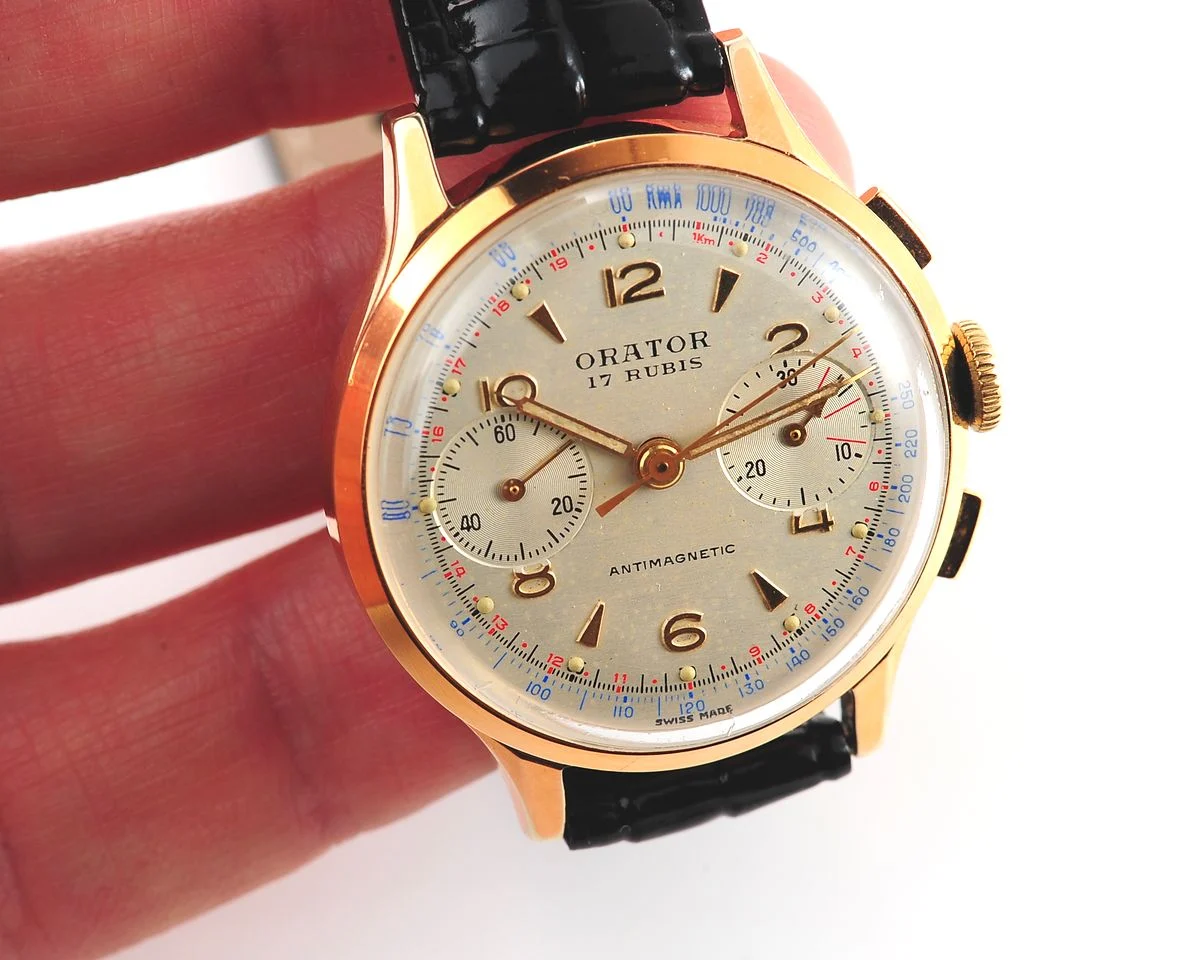
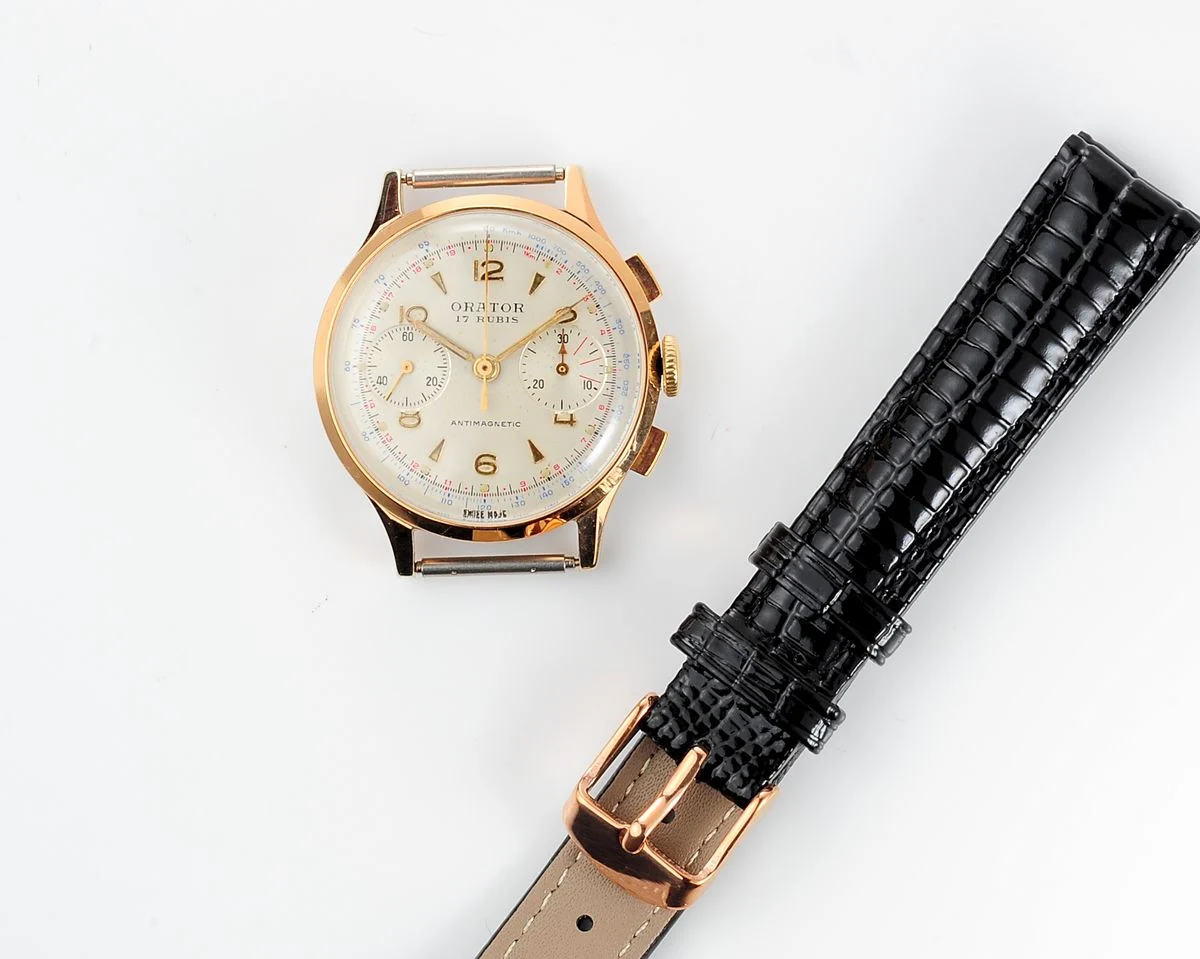
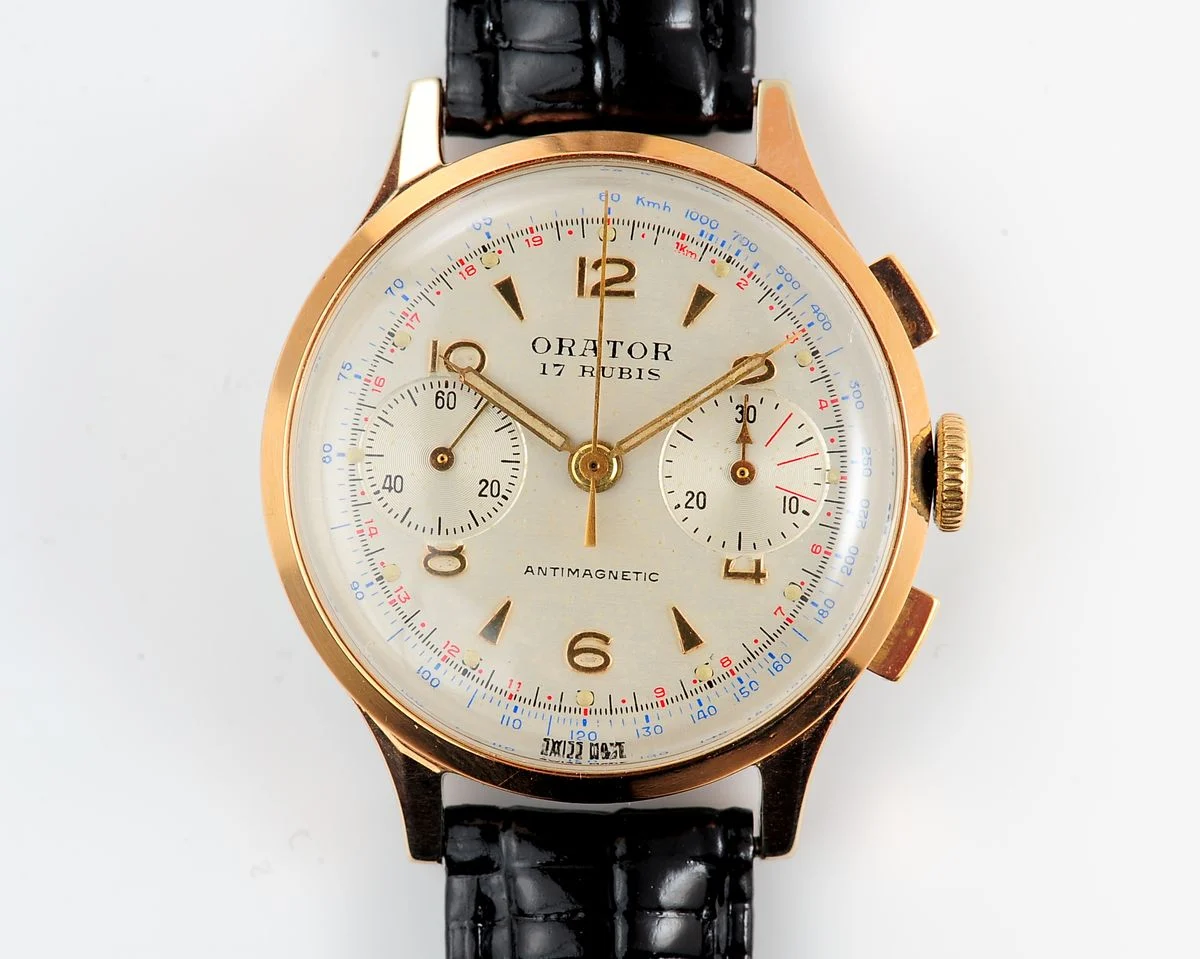
Orator 17 Rubis mechanical chronograph watch
Swiss Made!
Manual-wind Swiss chronograph from circa late 1940s to mid-1950s
About This Collection
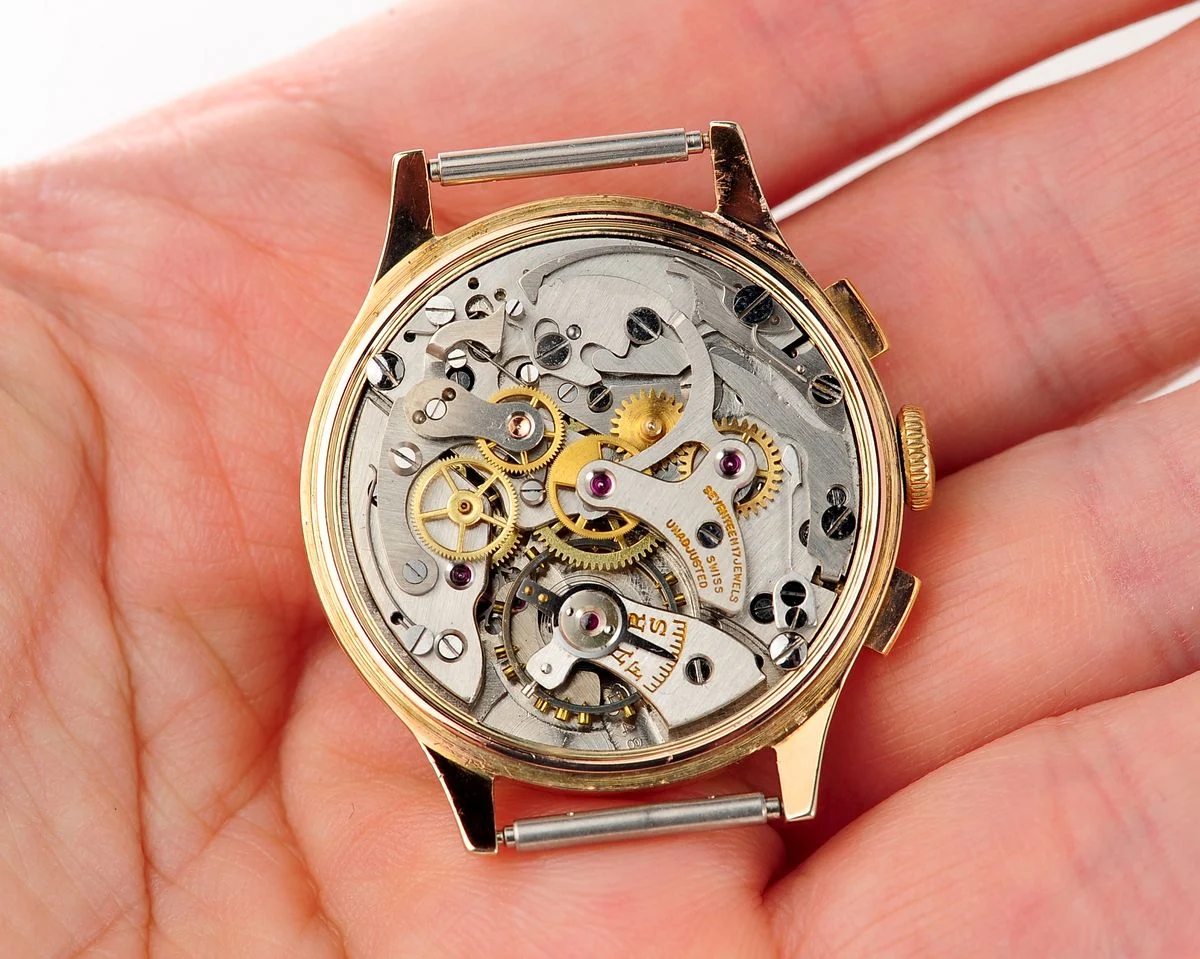
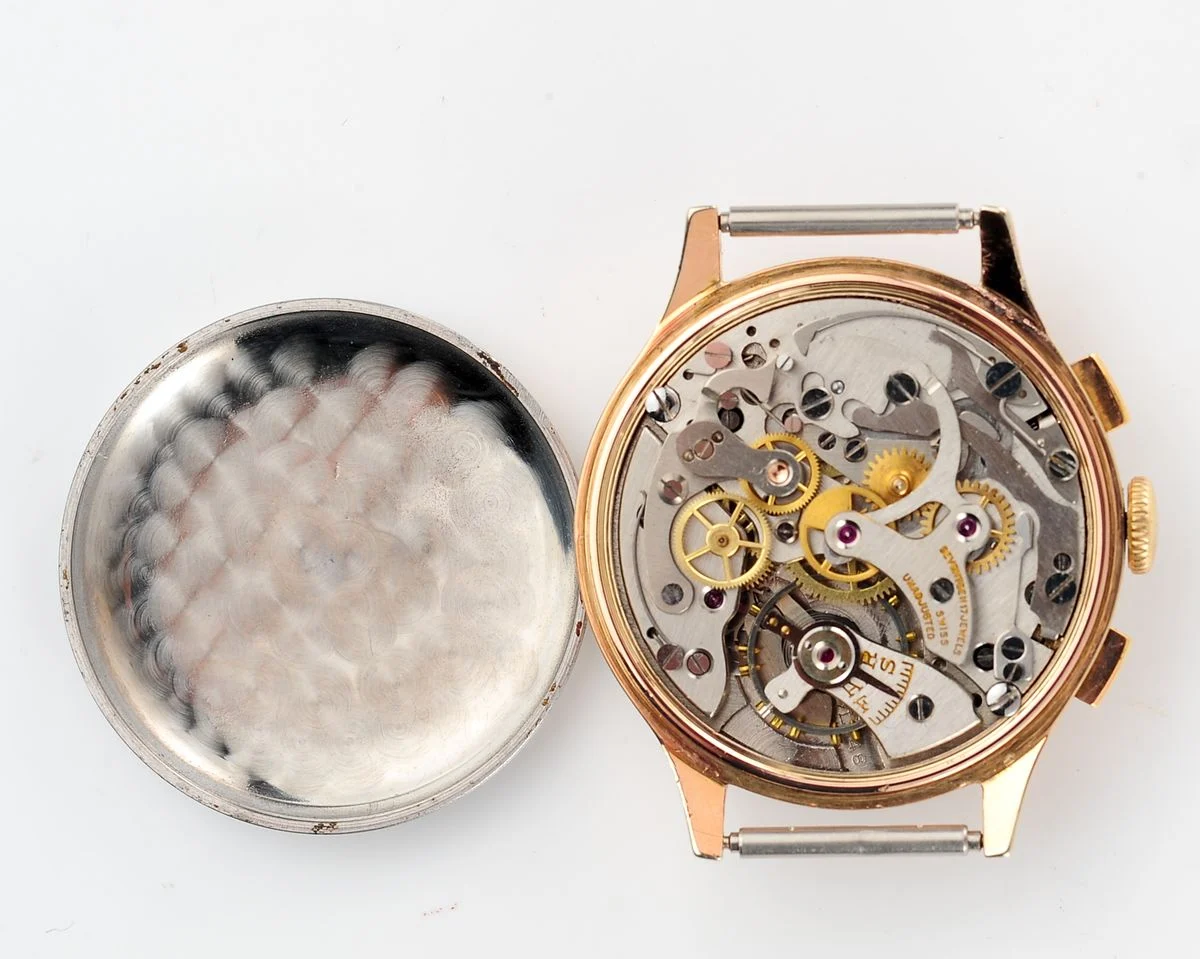
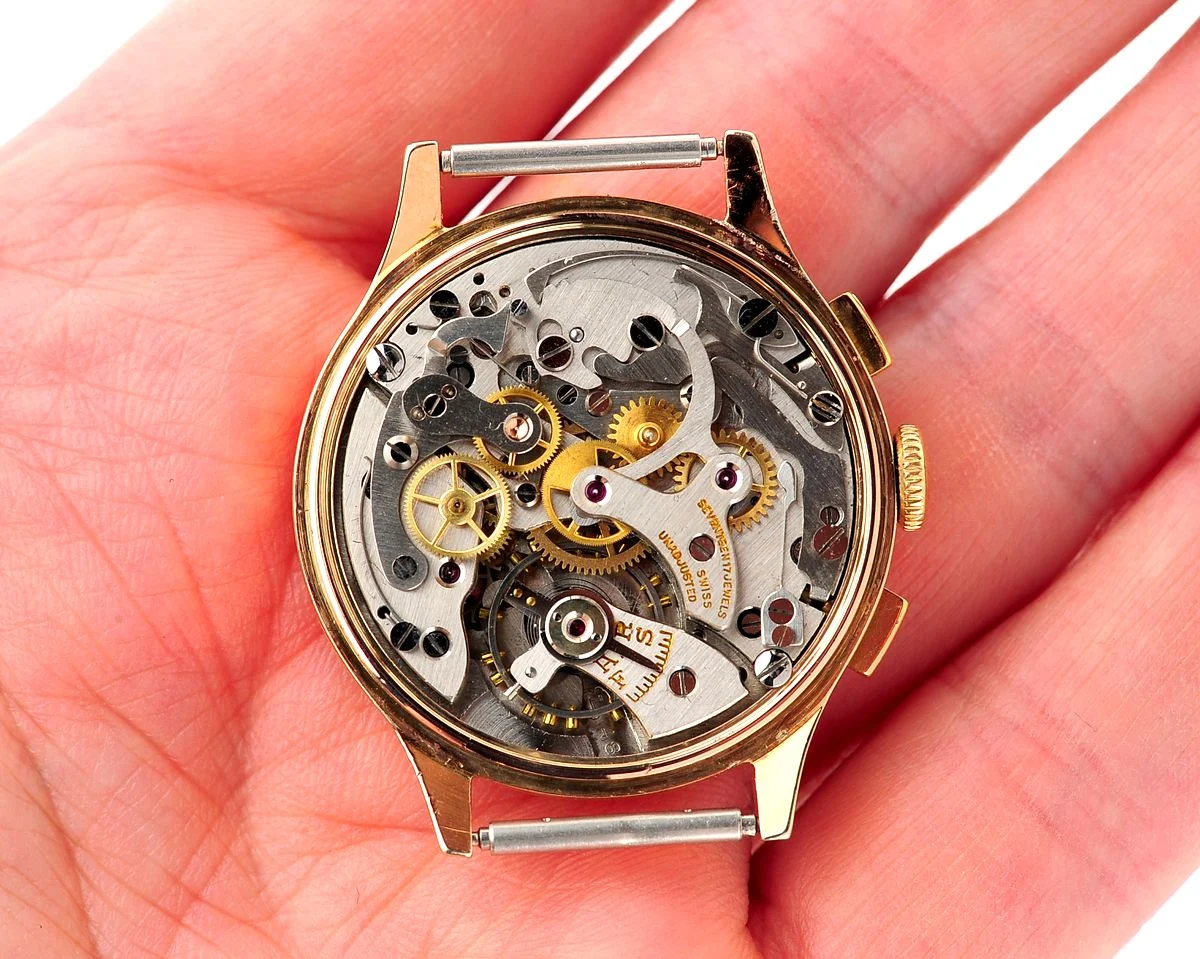
Orator bought its chronograph movements in, as most Swiss houses of its size did, and fitted them into well-finished plated cases. This one runs the Landeron 48 — the cam-switched calibre Landeron built in the millions from 1937, and the movement that made a Swiss chronograph affordable — behind a two-colour dial carrying a tachymeter in km/h and a telemeter. That scale pairing was standard on Swiss chronographs of the 1940s and 50s.
Technical Specifications
-
Brand: Orator
-
Origin: Swiss Made
-
Movement: Manual-wind mechanical chronograph, Caliber Landeron 48
-
Jewels: 17 Rubis (Jewels)
-
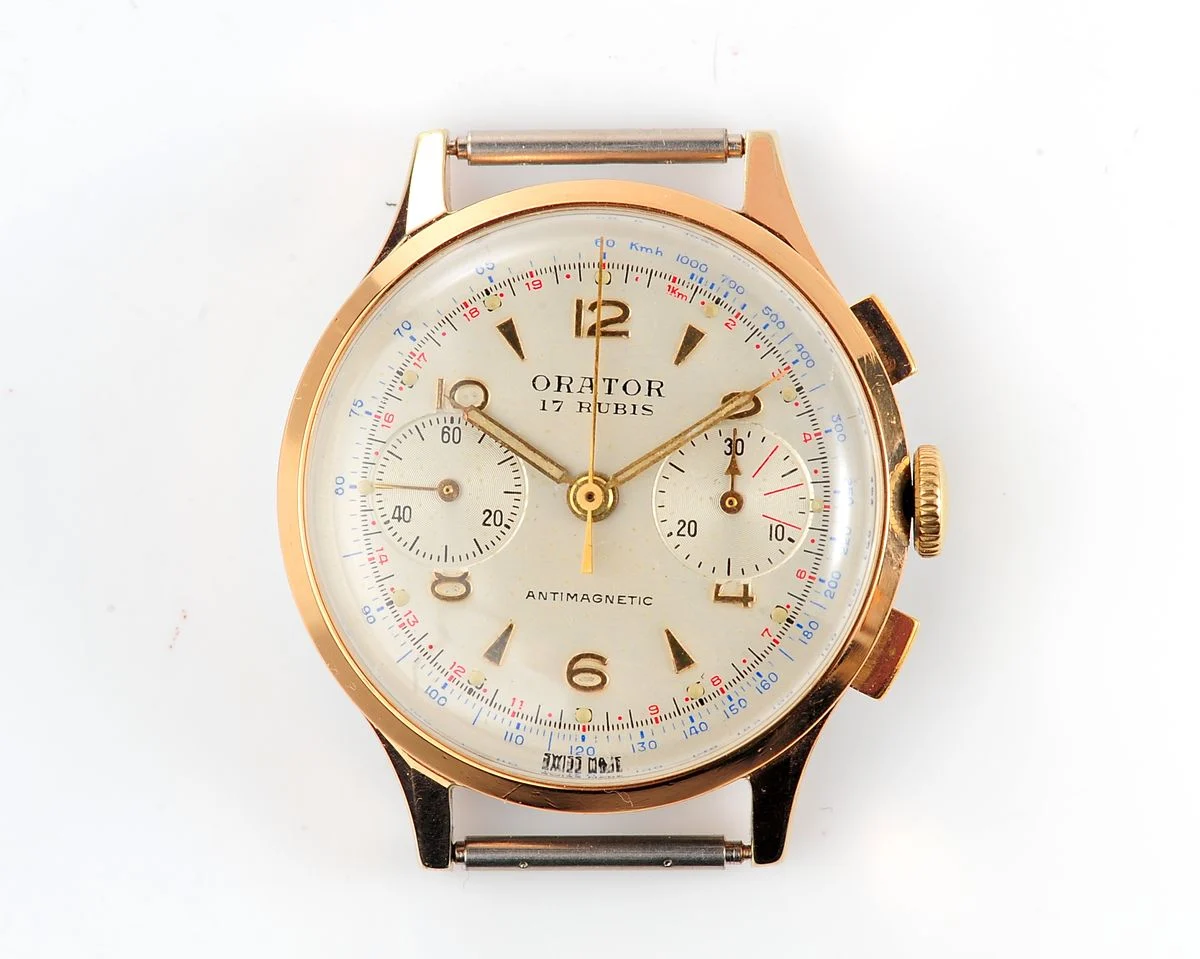
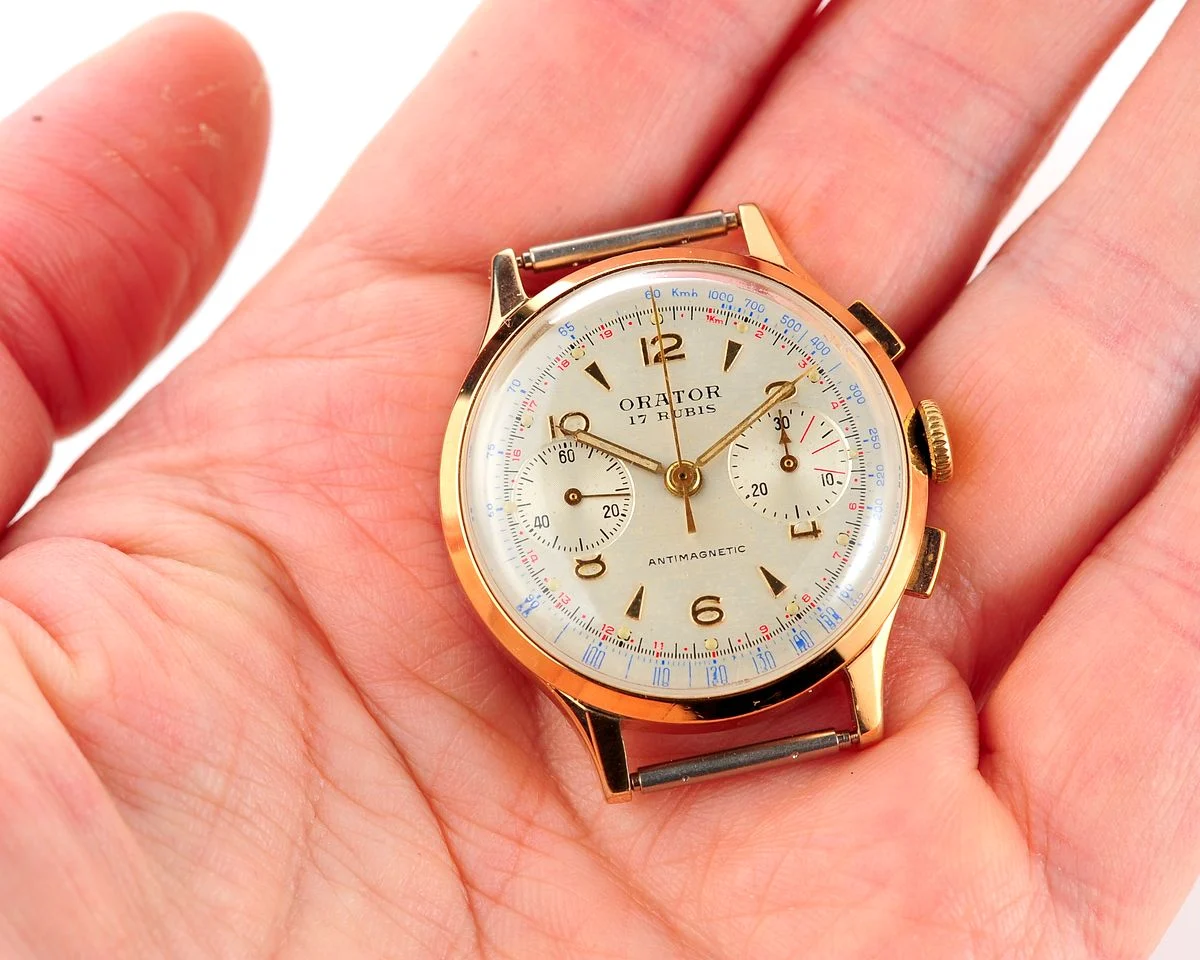
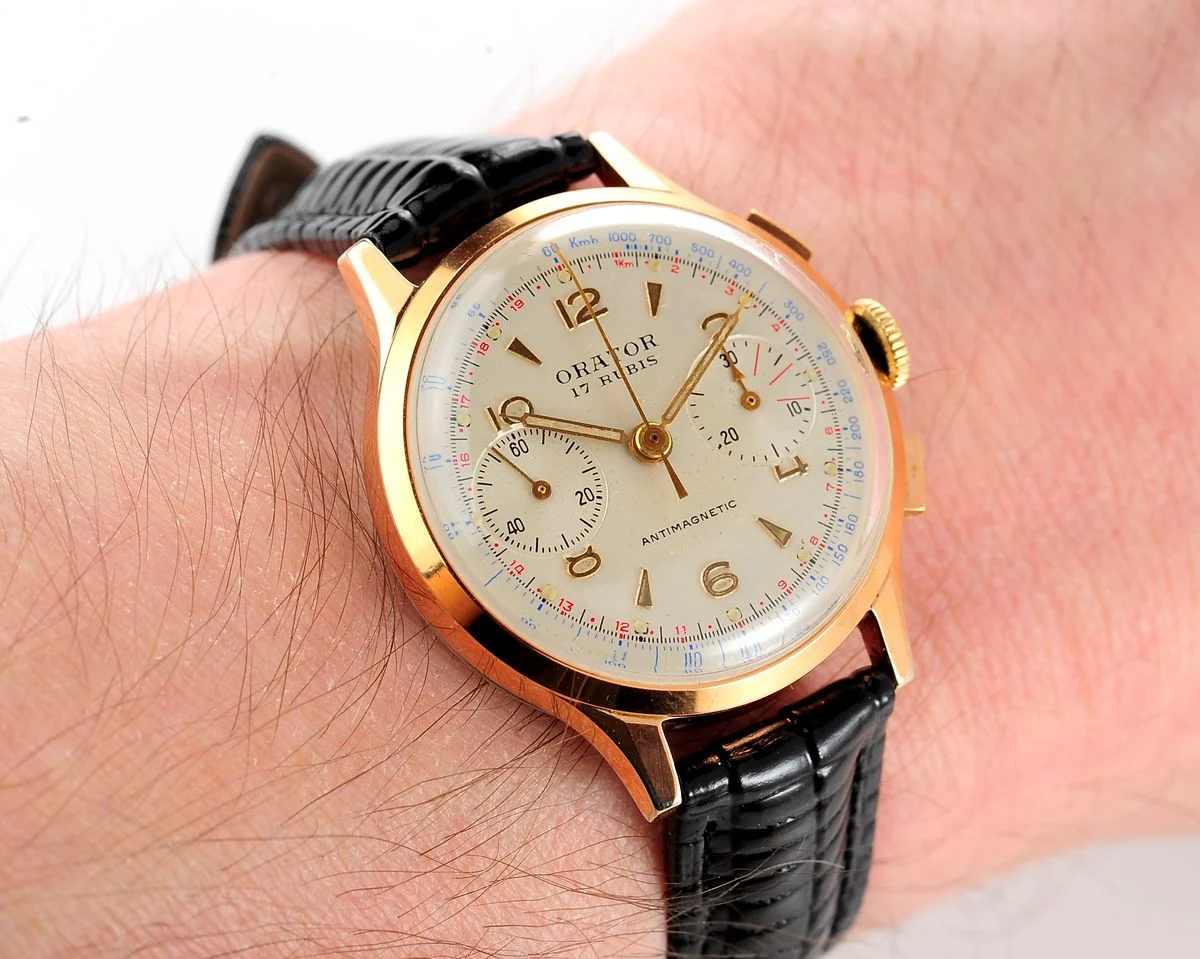
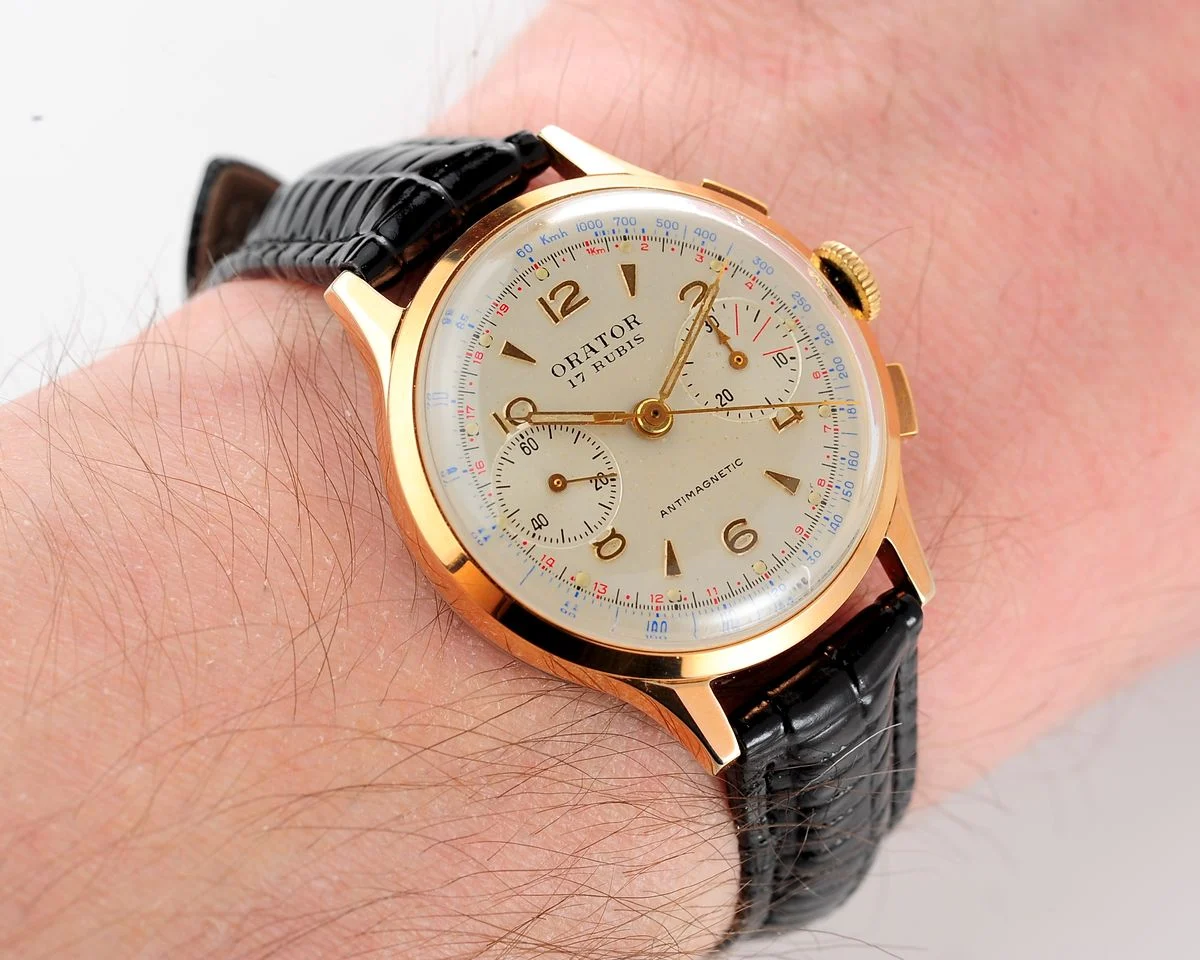
Dial: Silver-tone finish with concentric dual-register layout (60-second and 30-minute sub-dials)
-
Scales: Outer blue Tachymeter (Kmh) and inner red Telemeter scales
-
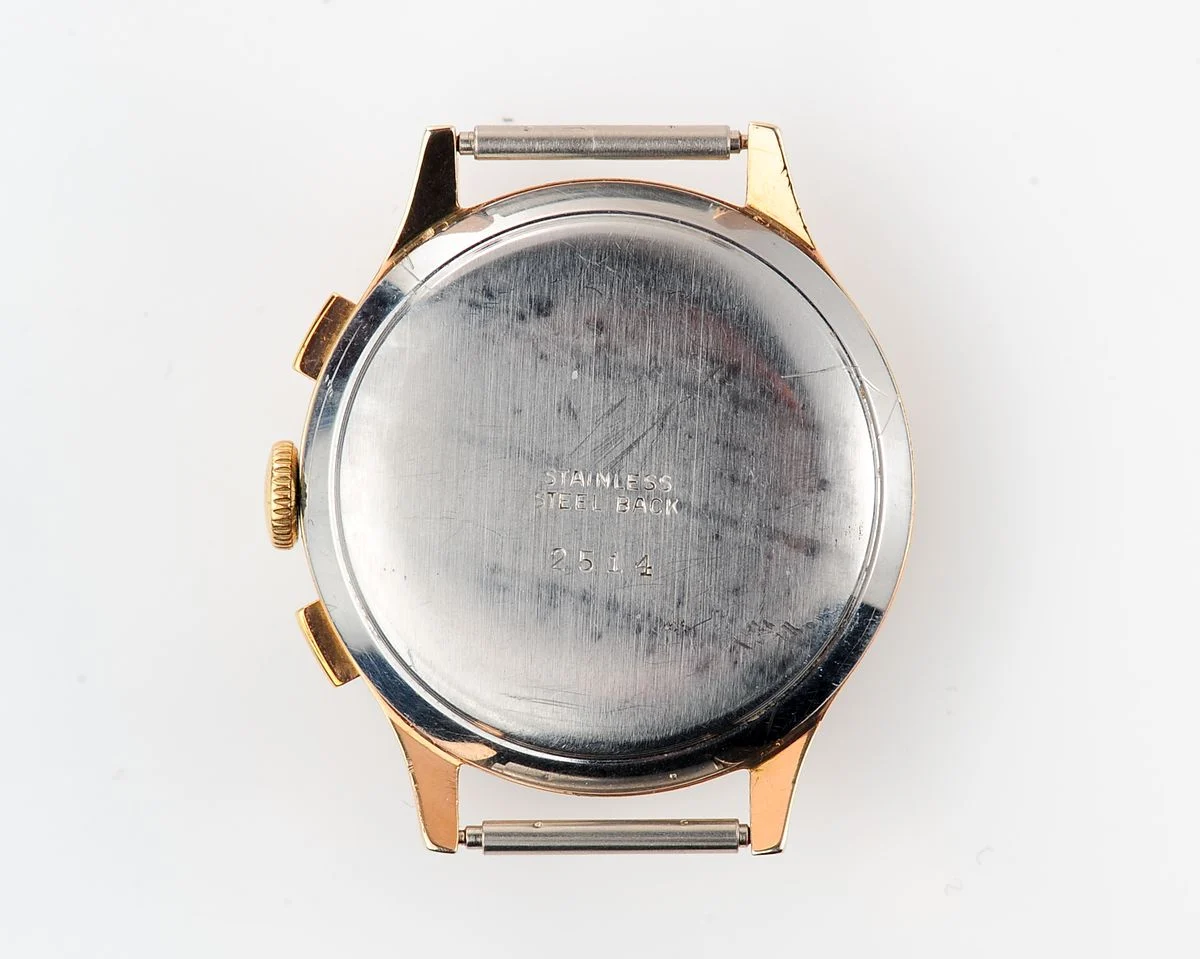
Case: Gold-plated, with a stainless steel back — stamped STAINLESS STEEL BACK and reference 2514
-
Pushers: Classic dual rectangular chronograph pushers
-
Features: Antimagnetic hairspring assembly
Dial layout & functions
-
Two sub-dials:
-
Left (9 o’clock): running seconds
-
Right (3 o’clock): 30-minute chronograph counter
-
-
Central chronograph seconds hand
-
Outer blue scale: tachymeter (km/h)
-
Inner red scale: telemeter (distance via sound)
This combination was extremely popular in the 1940s–50s, especially for aviation, military and sporting watches.
🔧 Landeron 48 movement
-
Manual wind
-
17 jewels
-
Cam-switched chronograph
-
Produced in huge numbers from the late 1930s onward
-
Used by dozens of Swiss brands, including Orator
How it operates (tell-tale sign):
-
Top pusher = start
-
Same pusher = stop
-
Bottom pusher = reset
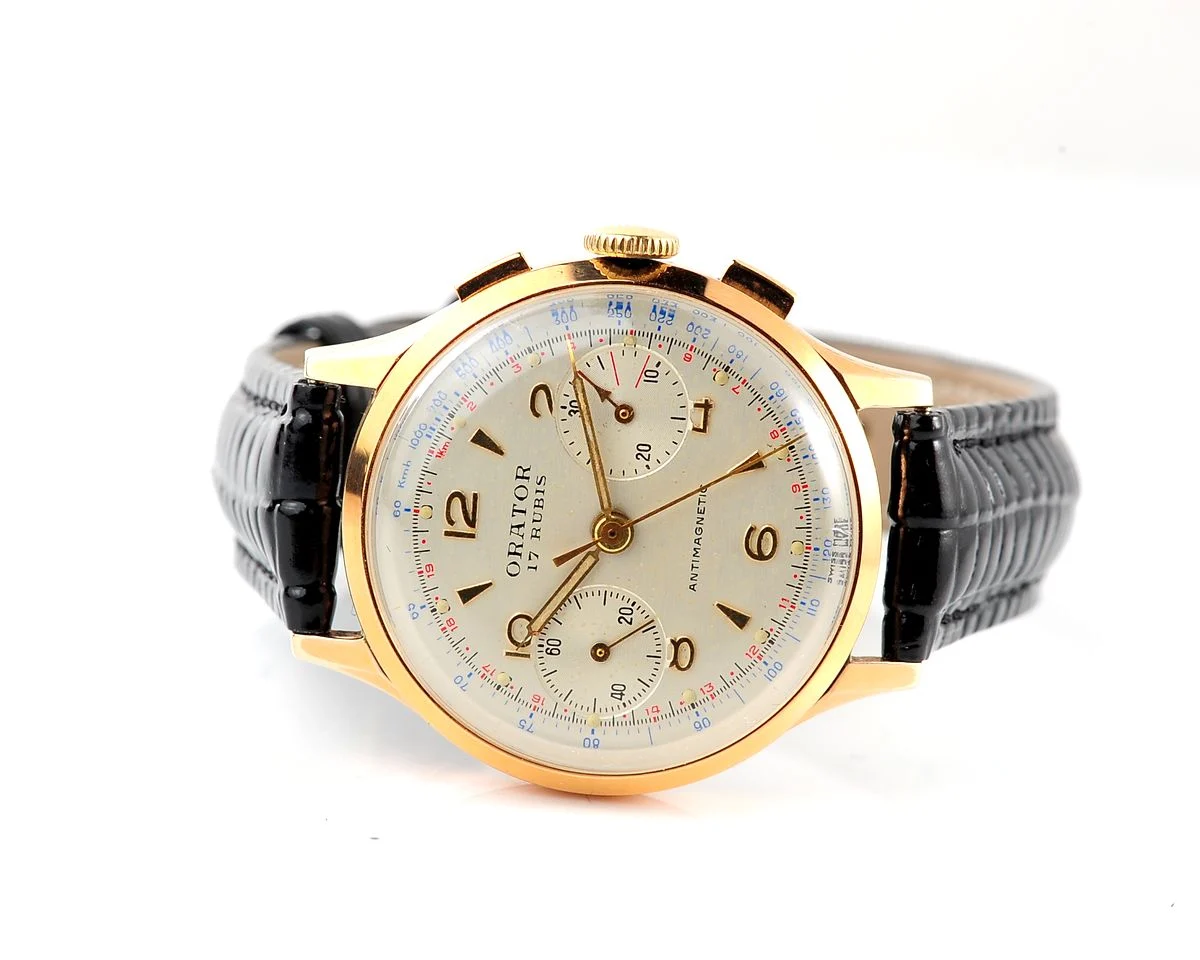
The watch is mechanical and does not need batteries to operate.
Original swissmade “ORATOR” has mechanical lever movement and manual winding.
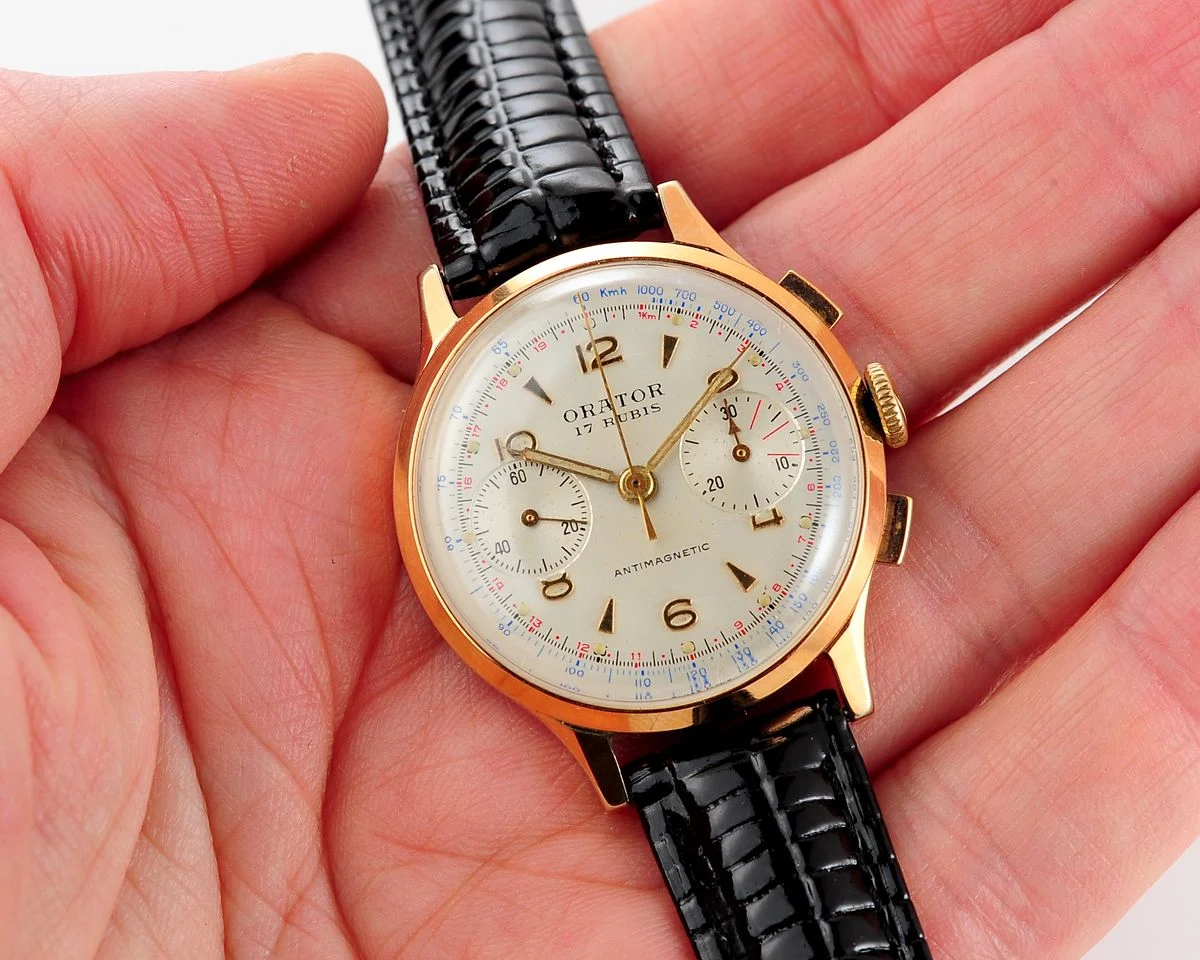
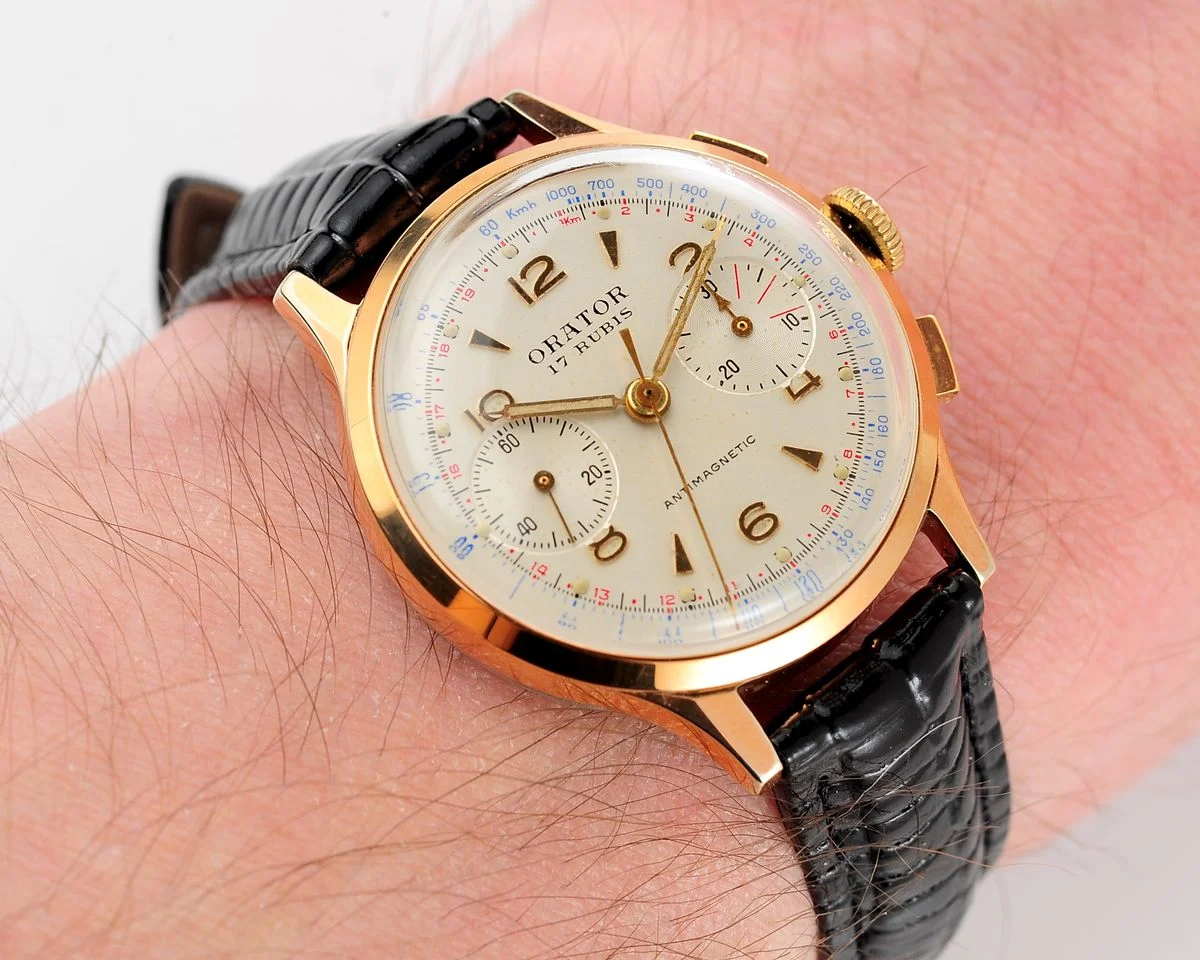
CASE SIZE 41.5mm (lug to lug) x 37.5mm (with crown)
THICKNESS 13mm
LUG WIDTH 16mm
TYPE Mechanical
MOVEMENT Landeron 48
FUNCTIONS Hours, Minutes, Seconds, Central chronograph seconds(stop watch), 30-minute chronograph counter at 3 o’clock
-
Tachymeter – measures speed over a known distance
-
Telemeter – measures distance to an event using sound (e.g., thunder)
This watch has recently been serviced by a professional watchmaker and keeps good time.
⚠️ Important:
You must stop the chronograph before pressing reset — pressing reset while running can damage the mechanism.
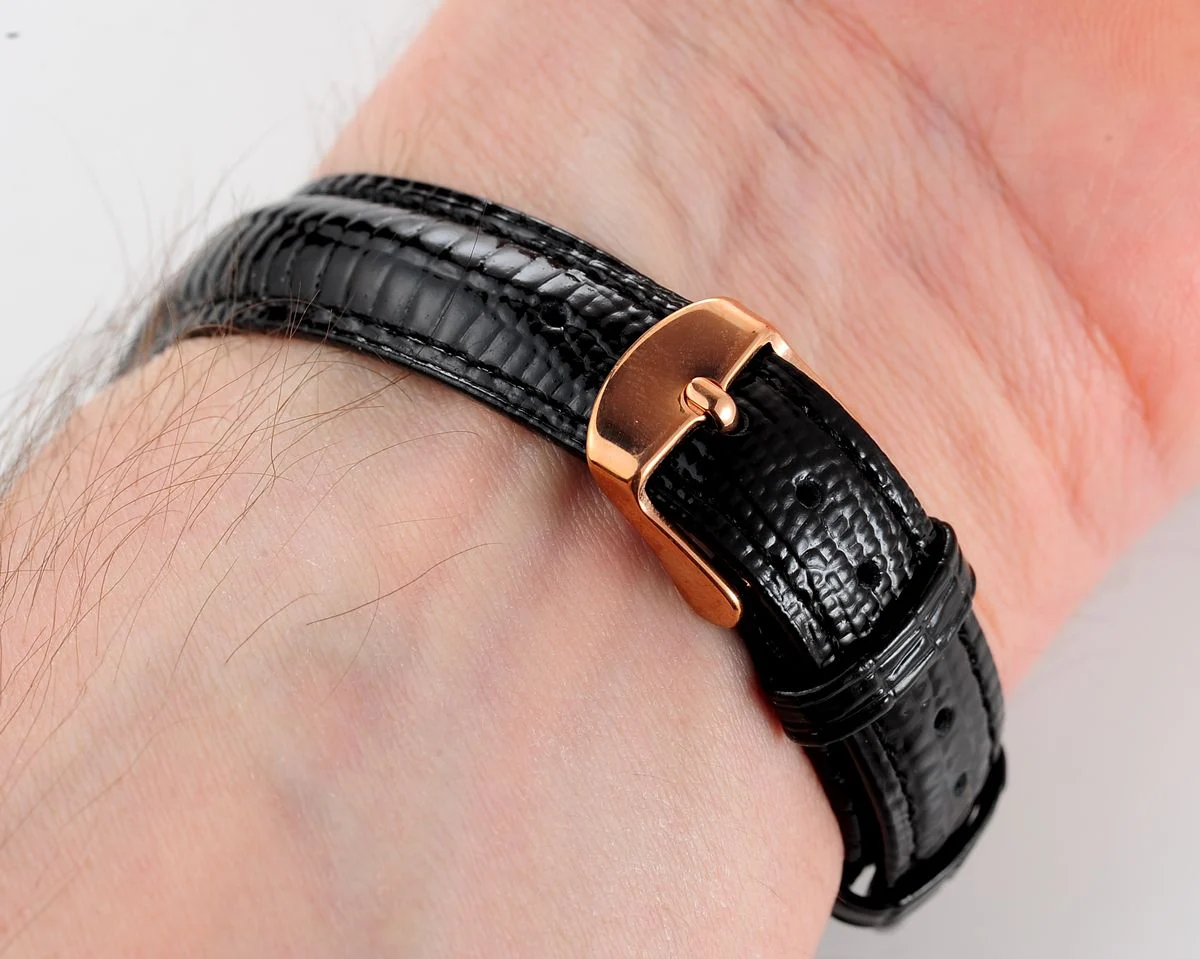
Comes complete with new leather strap.
This watch ships from 🇺🇦 Ukraine with tracking number
Modes of payment:
- PayPal
- Credit Cards (VISA, MasterCard, American Express, Discover)
- bitcoin
We guarantee the item you receive looks and works exactly as advertised — or your money back.
Swiss watches
are known for their long history of precision engineering and repairable mechanical design. Switzerland became the center of watchmaking from the 16th century onward, developing a system of specialized workshops that perfected reliable movements, jewelled bearings, and accurate regulation. Over time, Swiss makers excelled at chronographs and complications, creating watches that could be serviced and kept running for decades rather than treated as disposable objects.
“Swiss Made” is a legally protected label that indicates Swiss control over the movement, assembly, and final inspection, reinforcing a reputation for consistency and quality. Importantly, Swiss watches have always existed at many levels—from affordable tool watches using robust movements like Landeron or ETA, to high horology from brands such as Patek Philippe—so the reputation is not limited to luxury alone.

🕰️ Brand & History
Orator was (and in some revived form is) a Swiss watch brand originally tied to Schild & Co. SA, a Swiss manufacturer based in the Jura — a central region of traditional Swiss watchmaking. The brand dates back to the late 19th century and was active through much of the 20th century. Their watches—especially from the mid-1900s—show Swiss craftsmanship of the era and were appreciated in various sporting and everyday contexts.
Era: Most Orator chronographs with “17 Rubis” on the dial come from the 1940s–1960s period — the prime era of manual-wind mechanical chronos before quartz took over.
-
Mechanical hand-wound chronograph: You start/stop/reset the chronograph via pushers, measuring elapsed time without batteries.
-
Classic vintage styling: Mid-century look with sub-dials (for seconds and chronograph minutes), cream or black faces, and fluted pushers — typical of Swiss watches from the 40s–60s.