Description
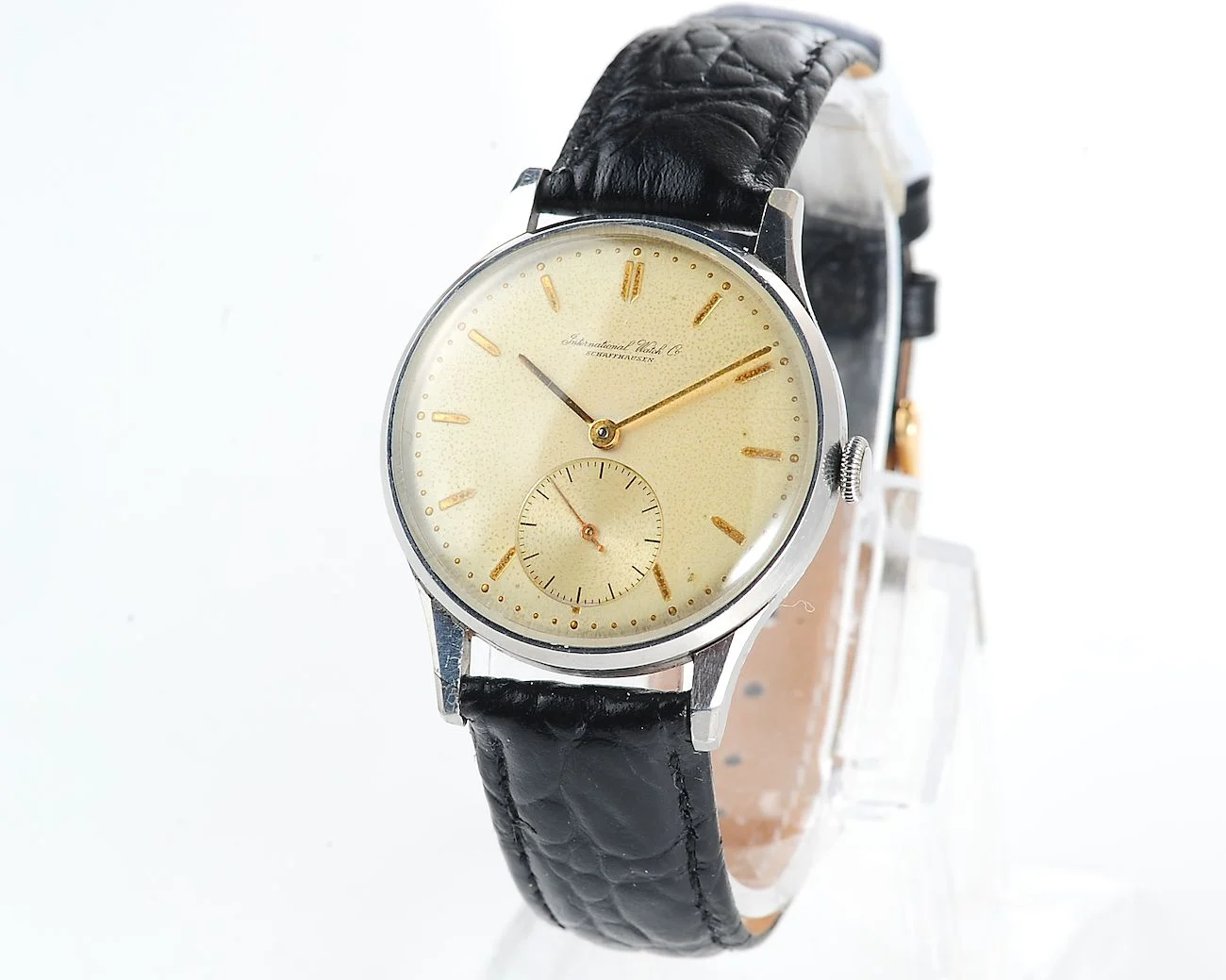
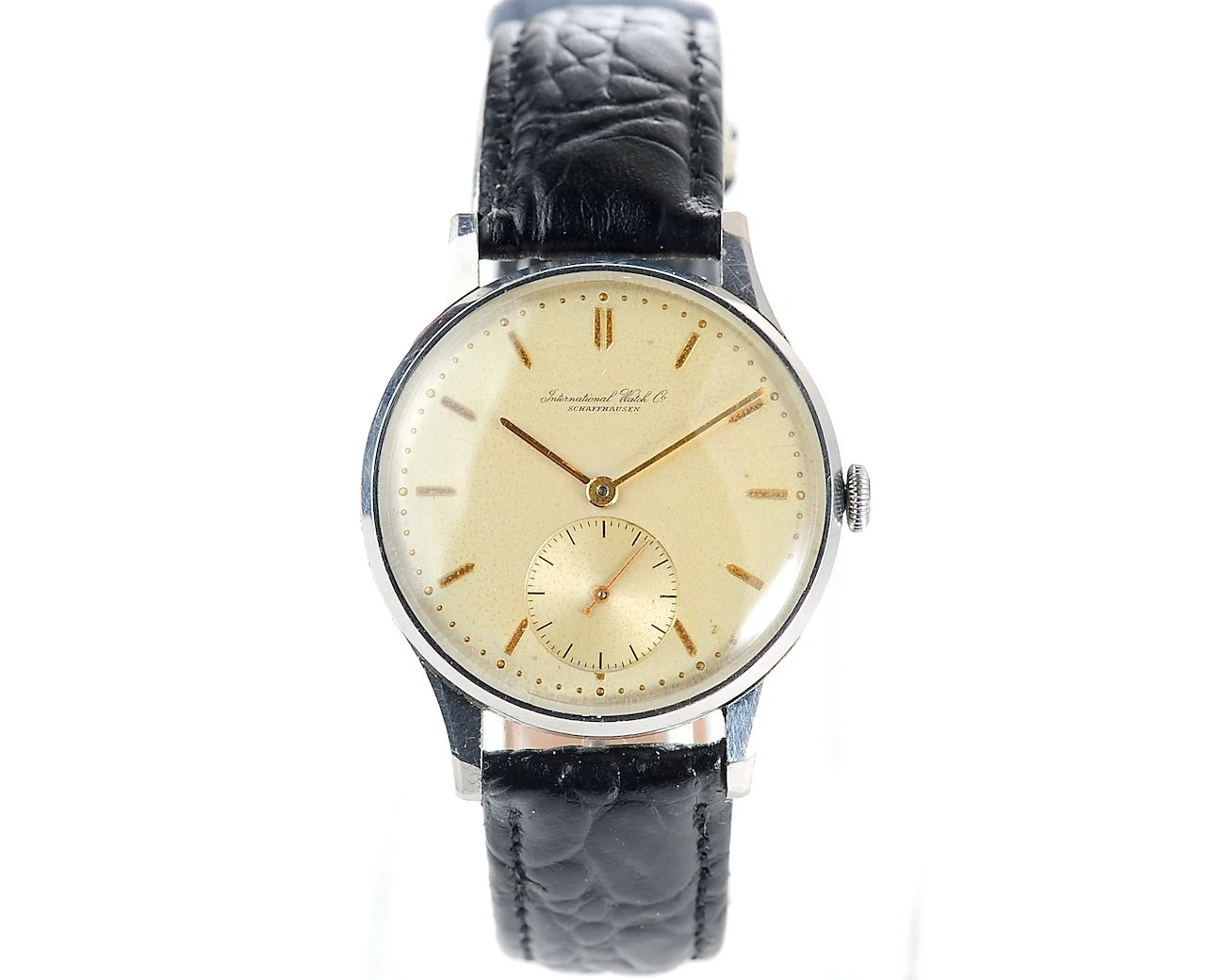
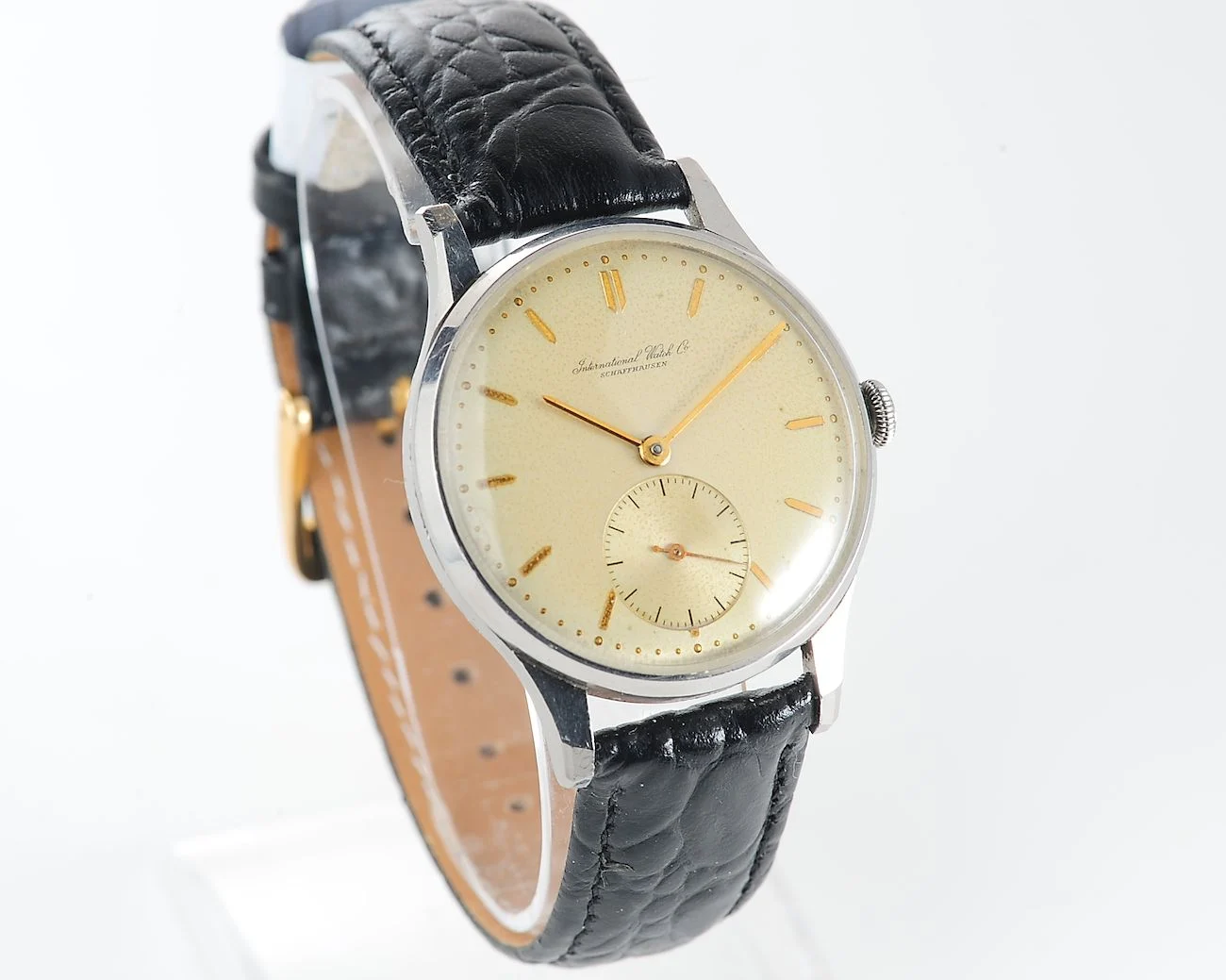
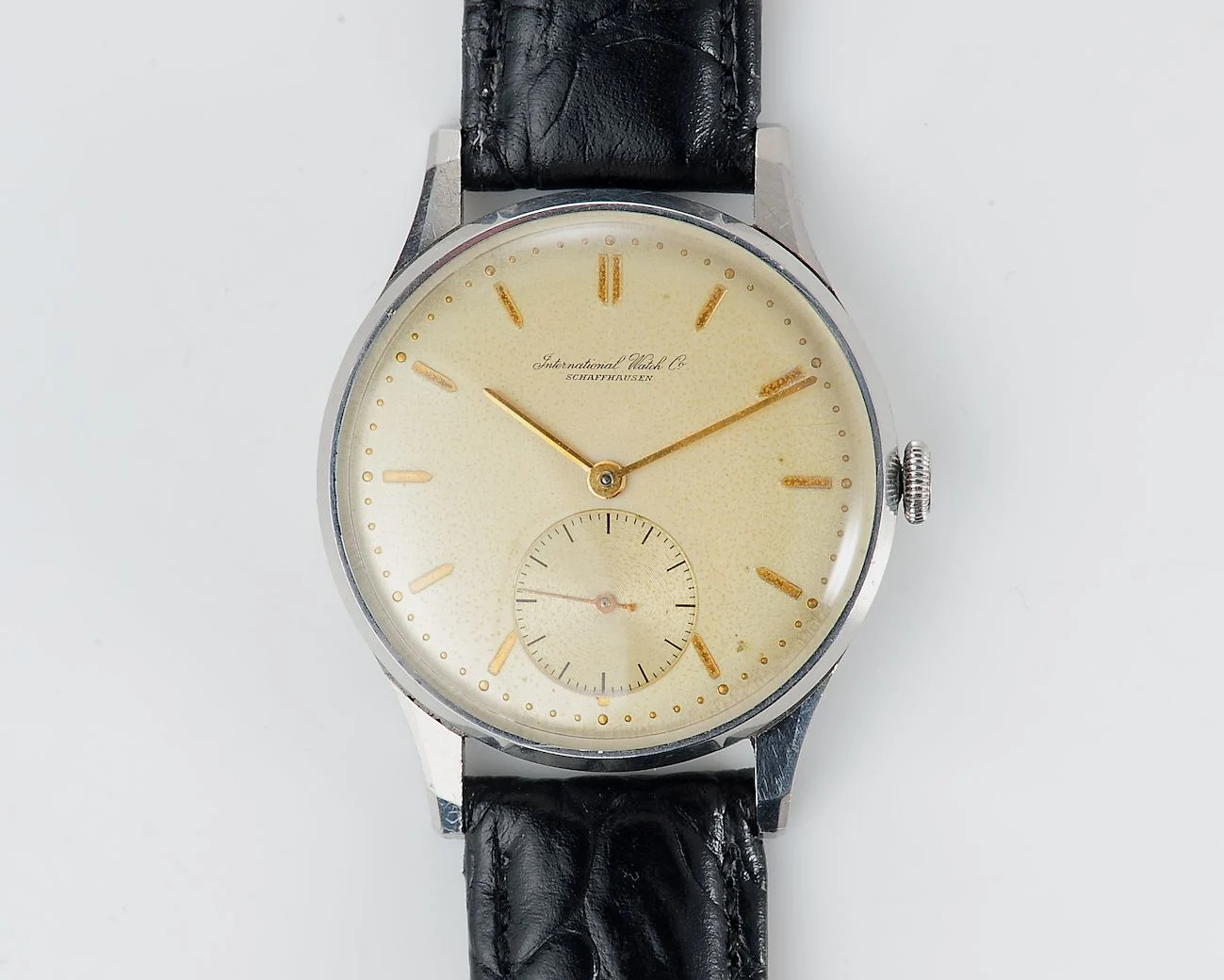
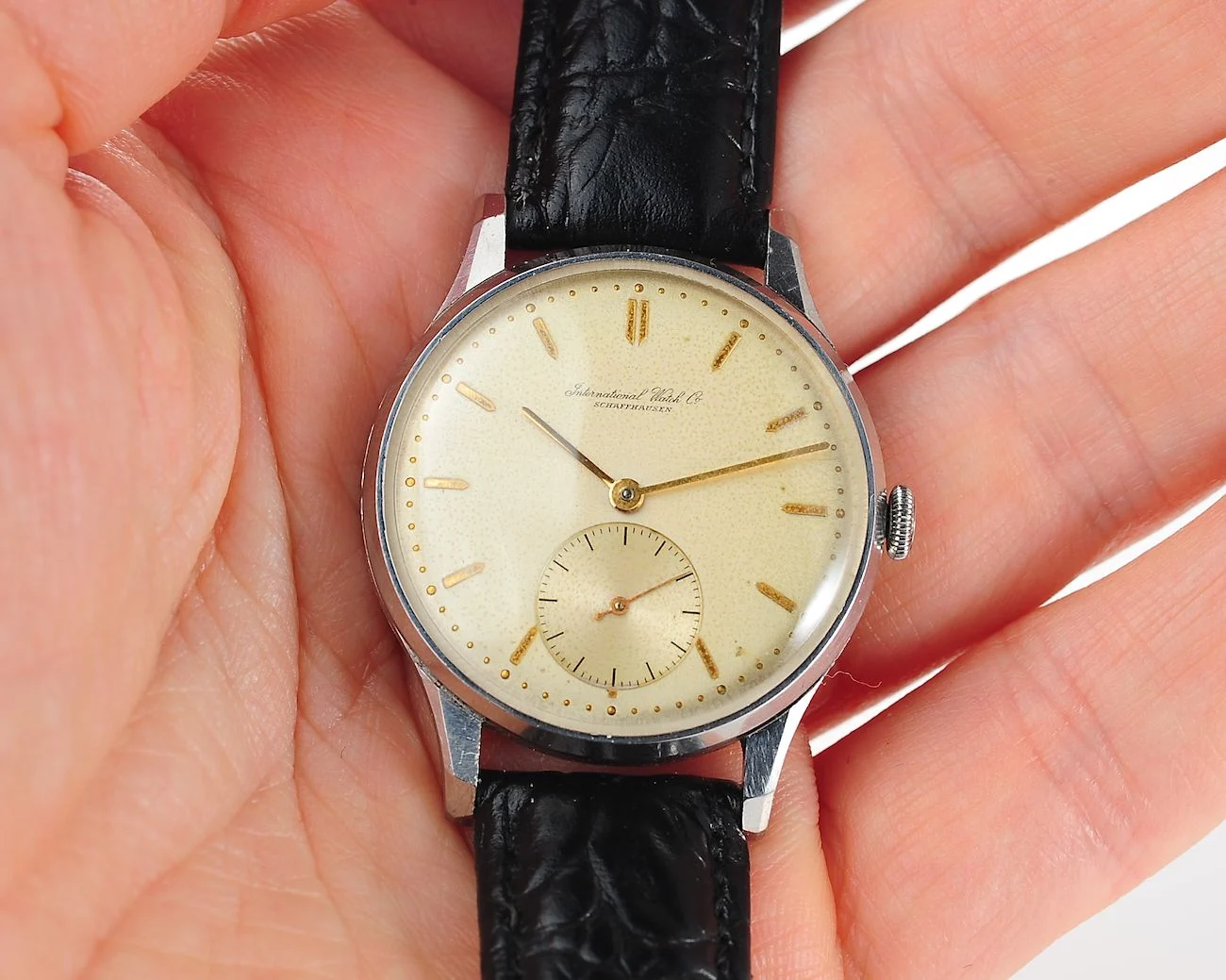
Vintage International Watch Co. (IWC) Schaffhausen dress watch
Swiss Made!
Manual-wind mechanical Swiss wristwatch from late 1940s
Historical Context
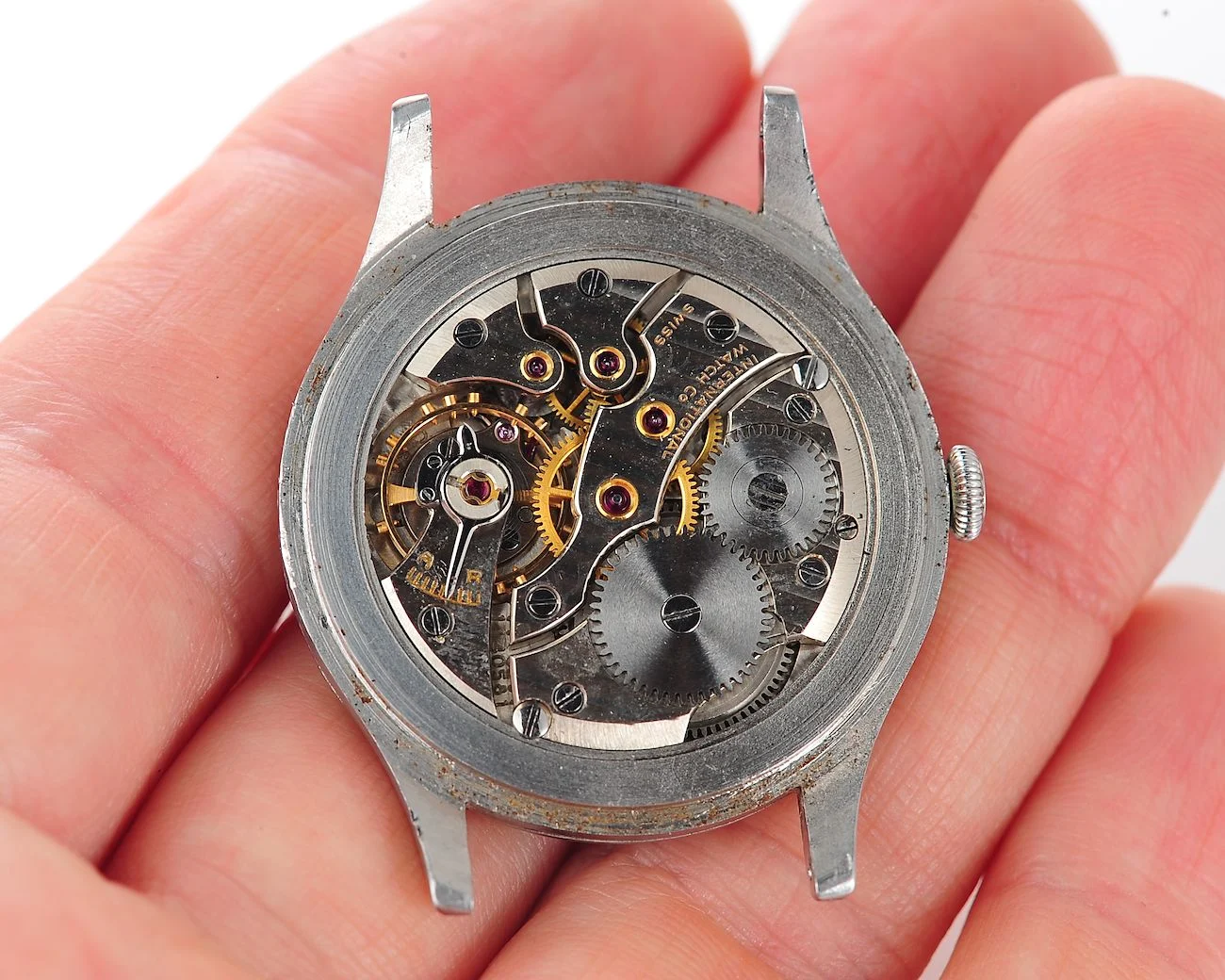
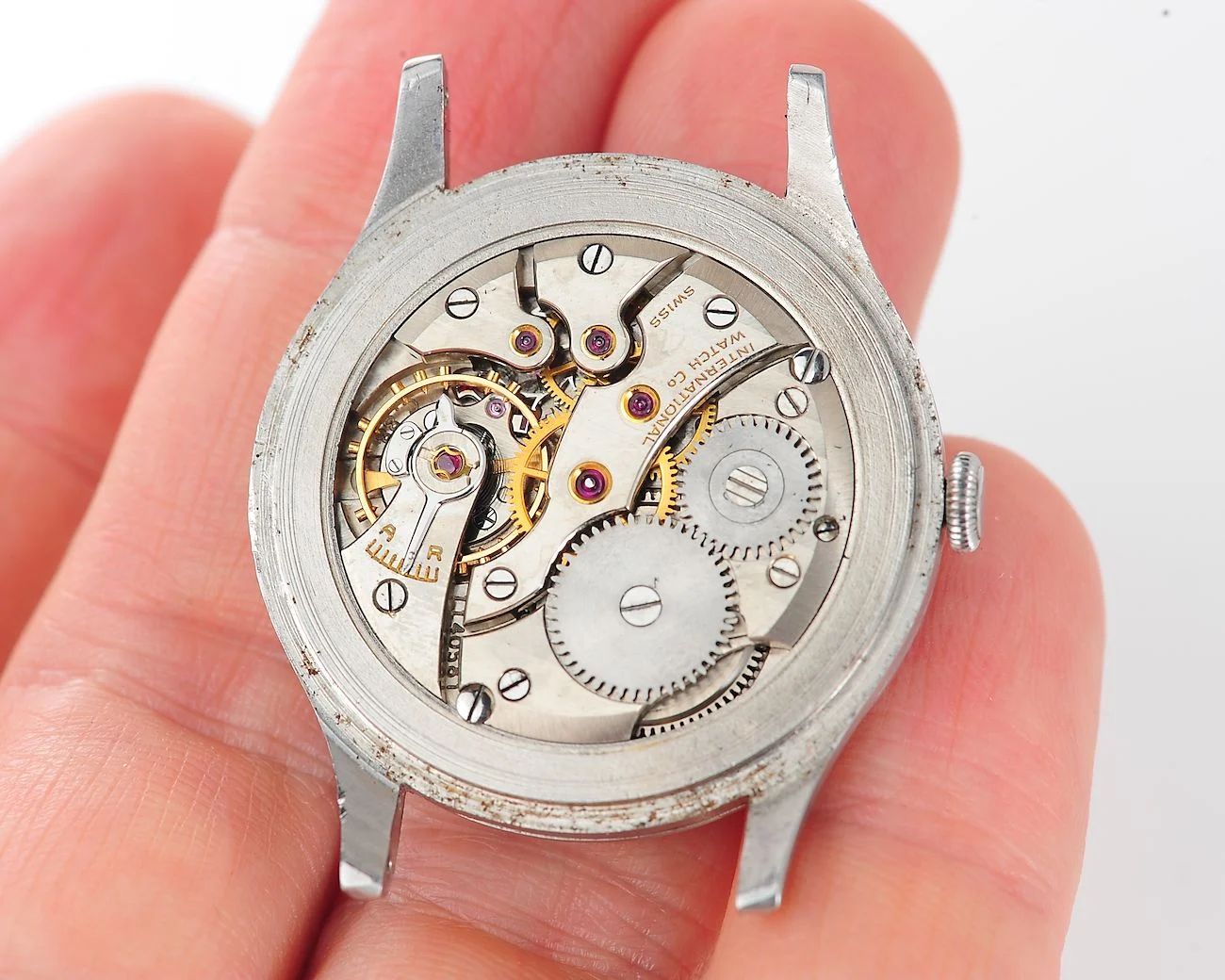
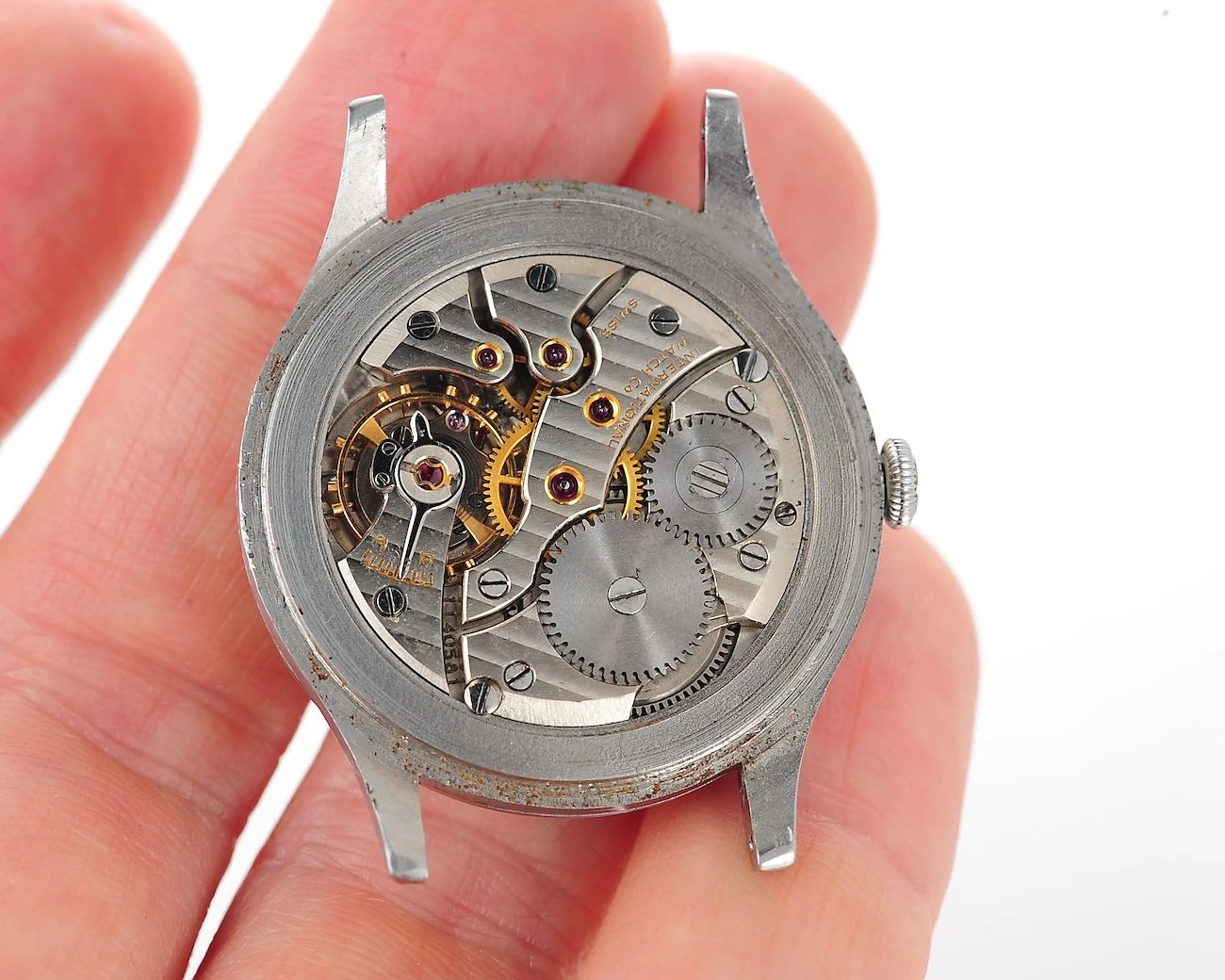
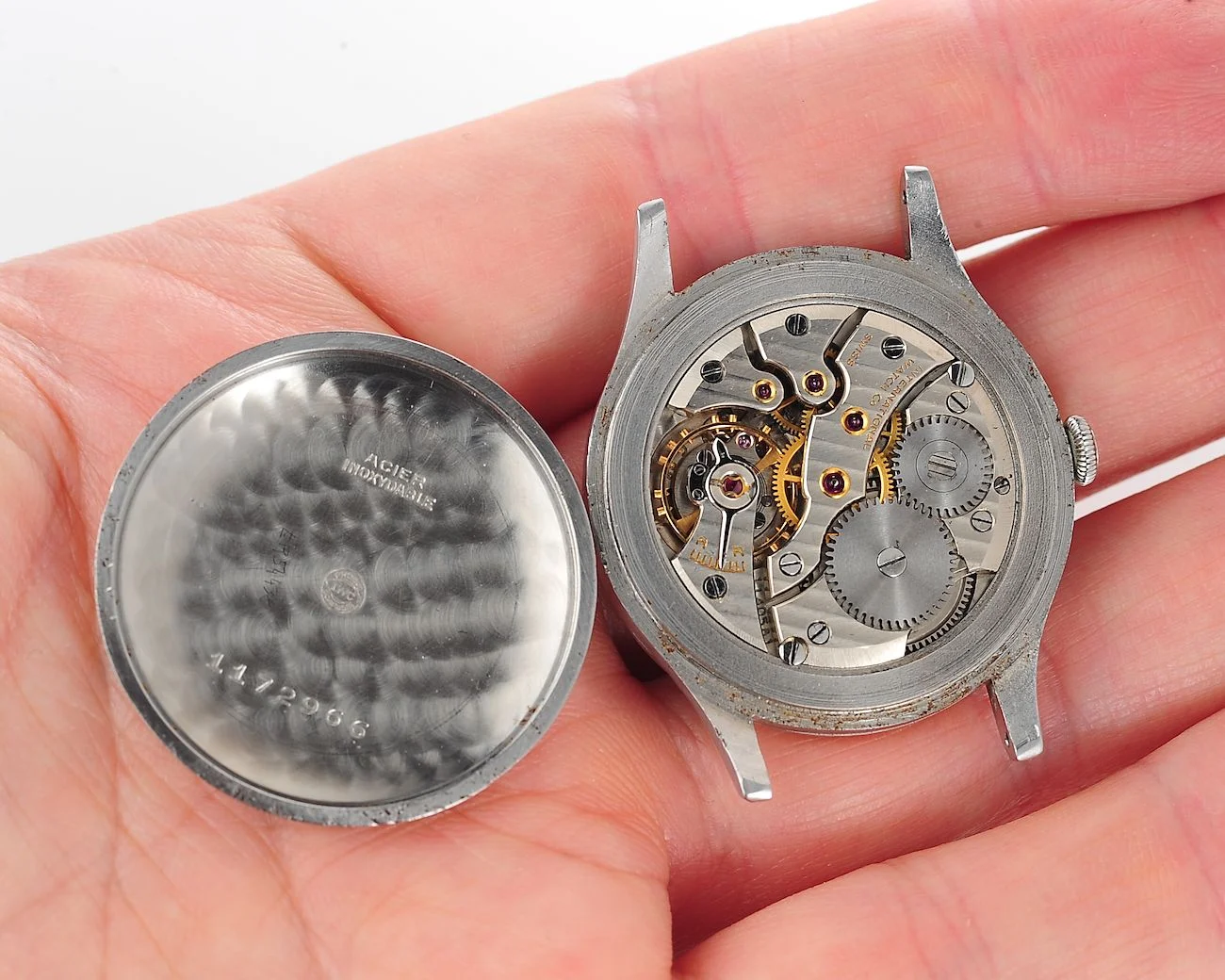
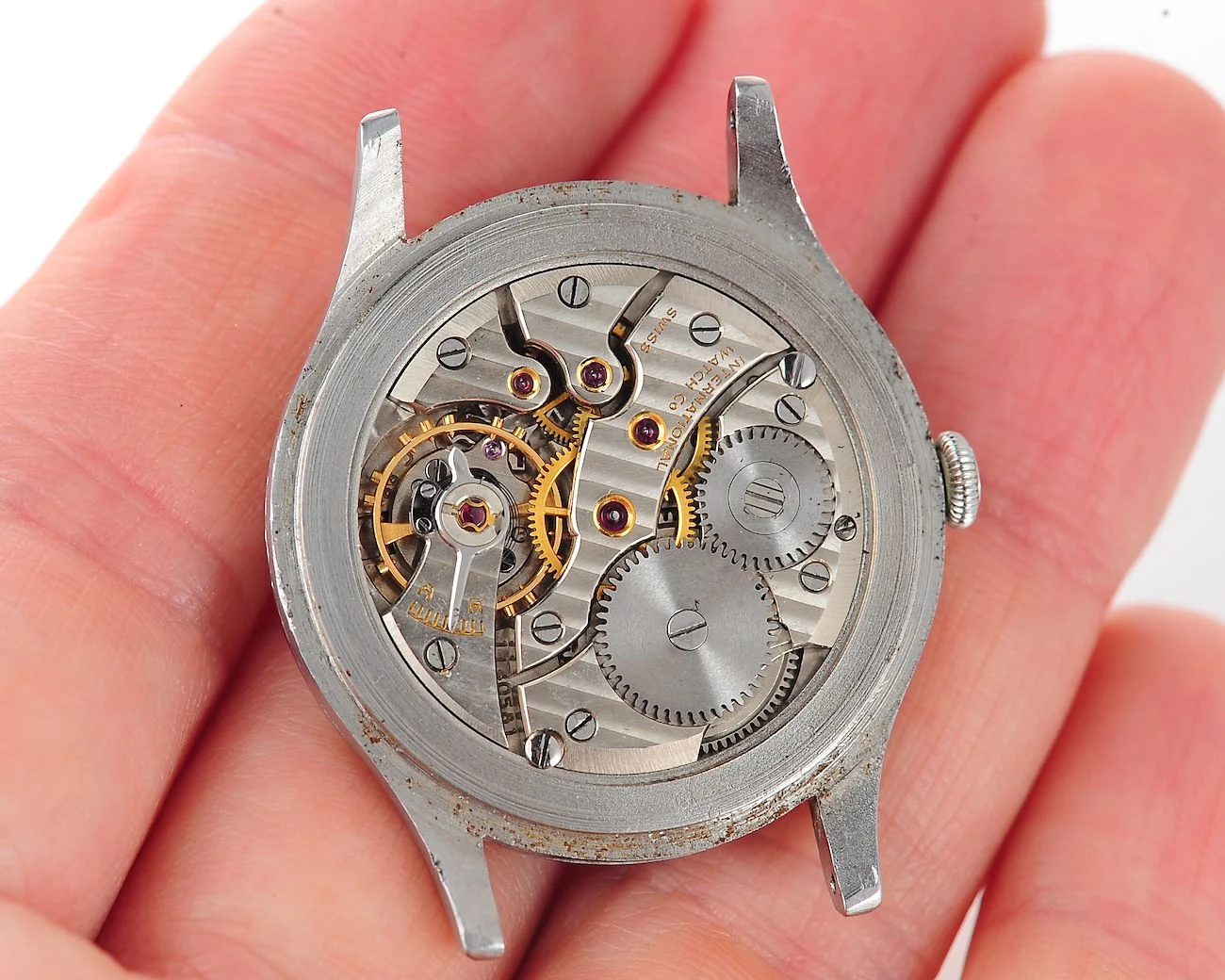
The Calibre 83 is a “transitional” movement—essentially a downsized pocket-watch design, and the last of that generation before IWC moved to the more modern Calibre 88/89 architecture in 1946. These watches are prized for their reliability and the “overbuilt” nature of the movement, which was high-grade enough to be used in British military watches during the war.
IWC Schaffhausen Calibre 83
General Identification
-
Manufacturer: International Watch Co. (IWC) Schaffhausen, Switzerland
-
Model Type: Dress Watch (“Calatrava” style)
-
Circa: 1946–1948 (immediate post-war)
-
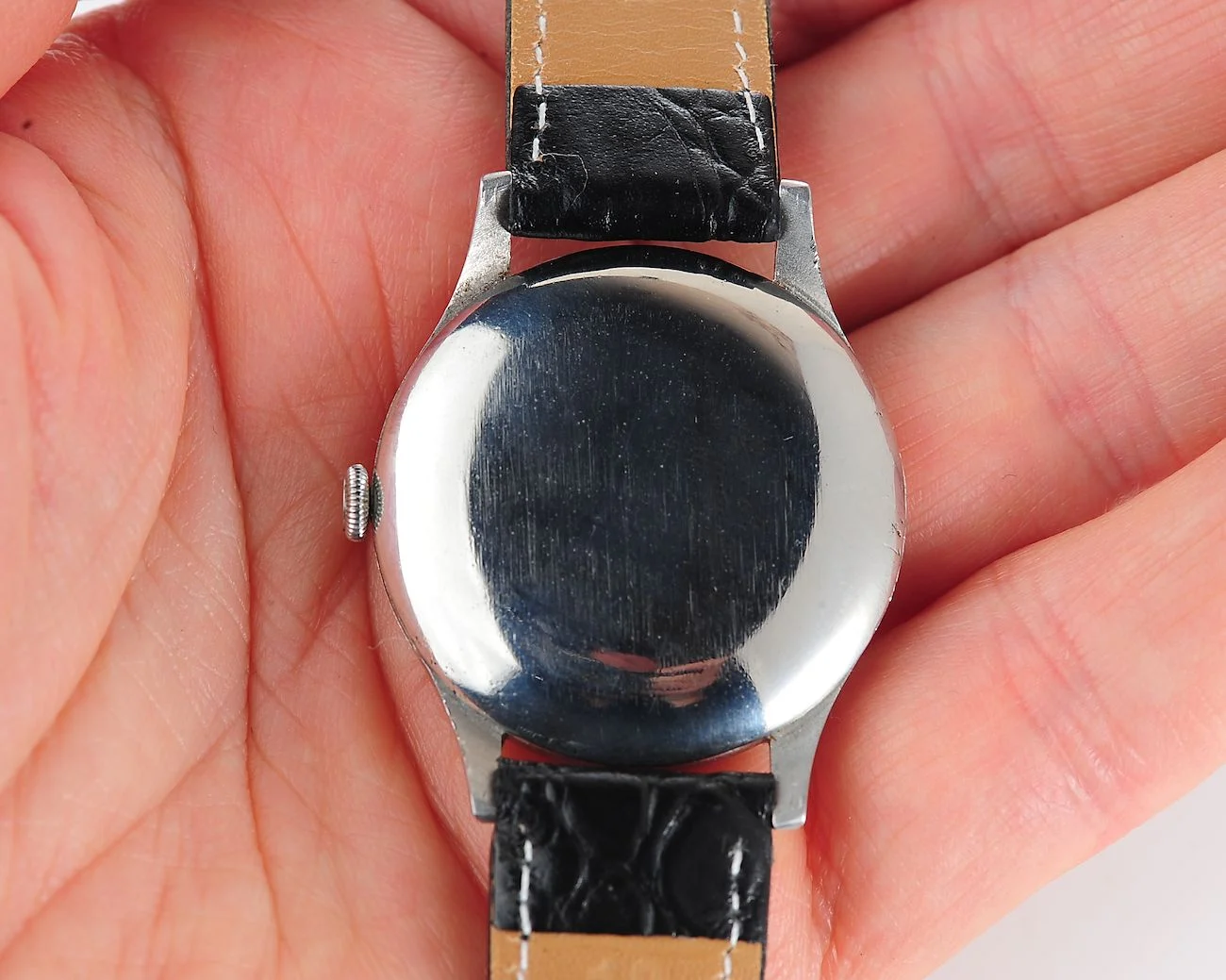
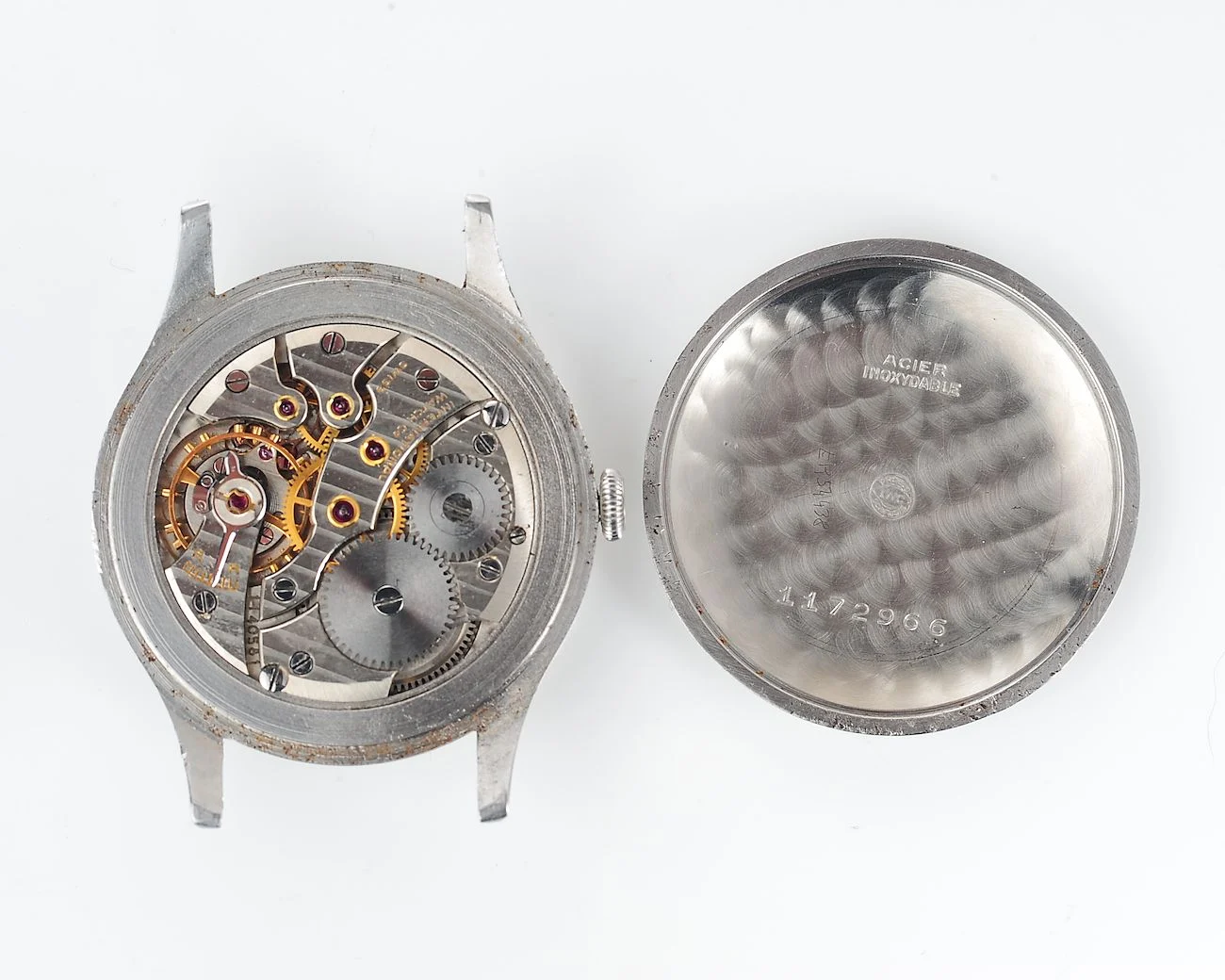
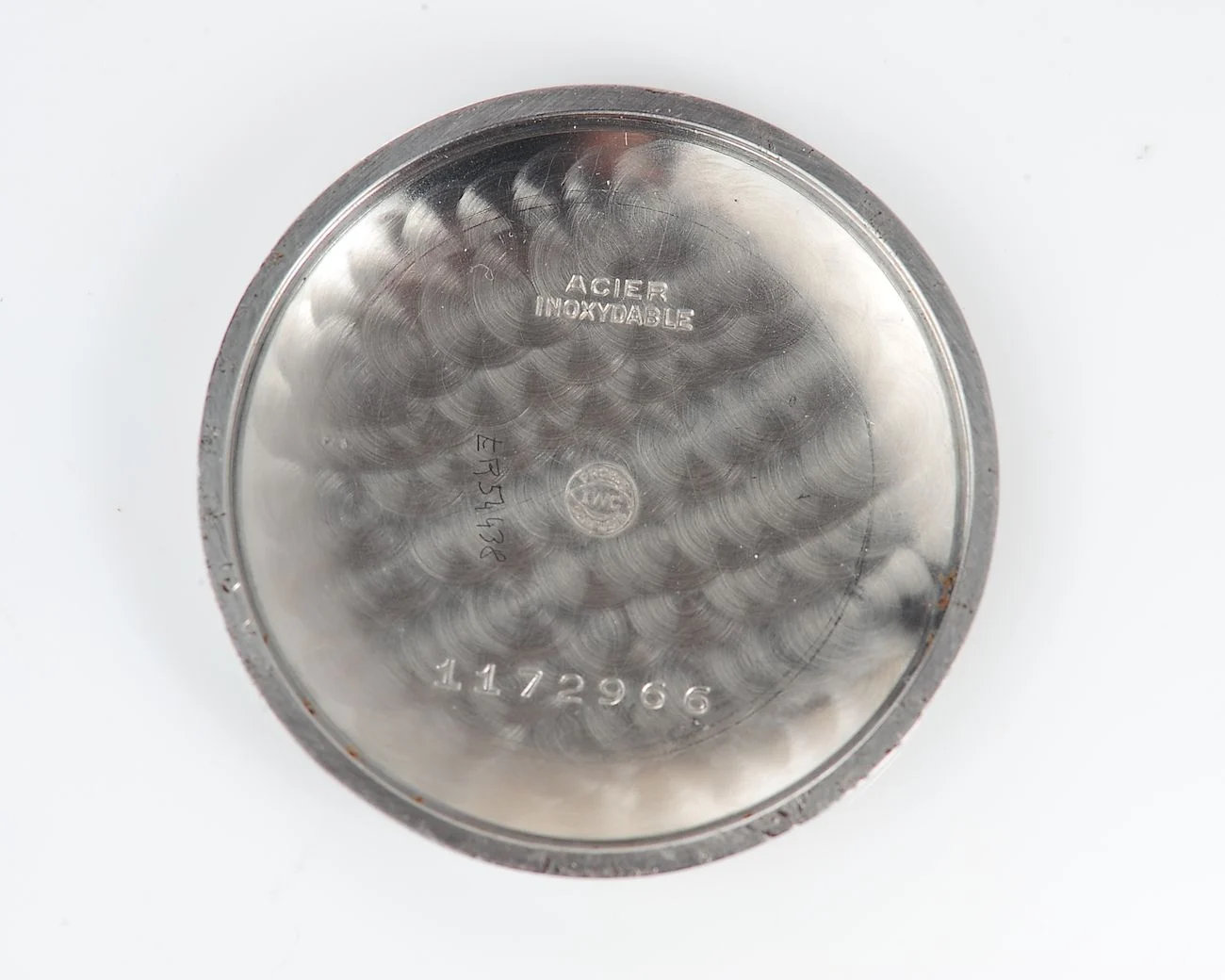
Case Material: Stainless Steel — case back stamped ACIER INOXYDABLE, with the IWC roundel
Movement Profile
-
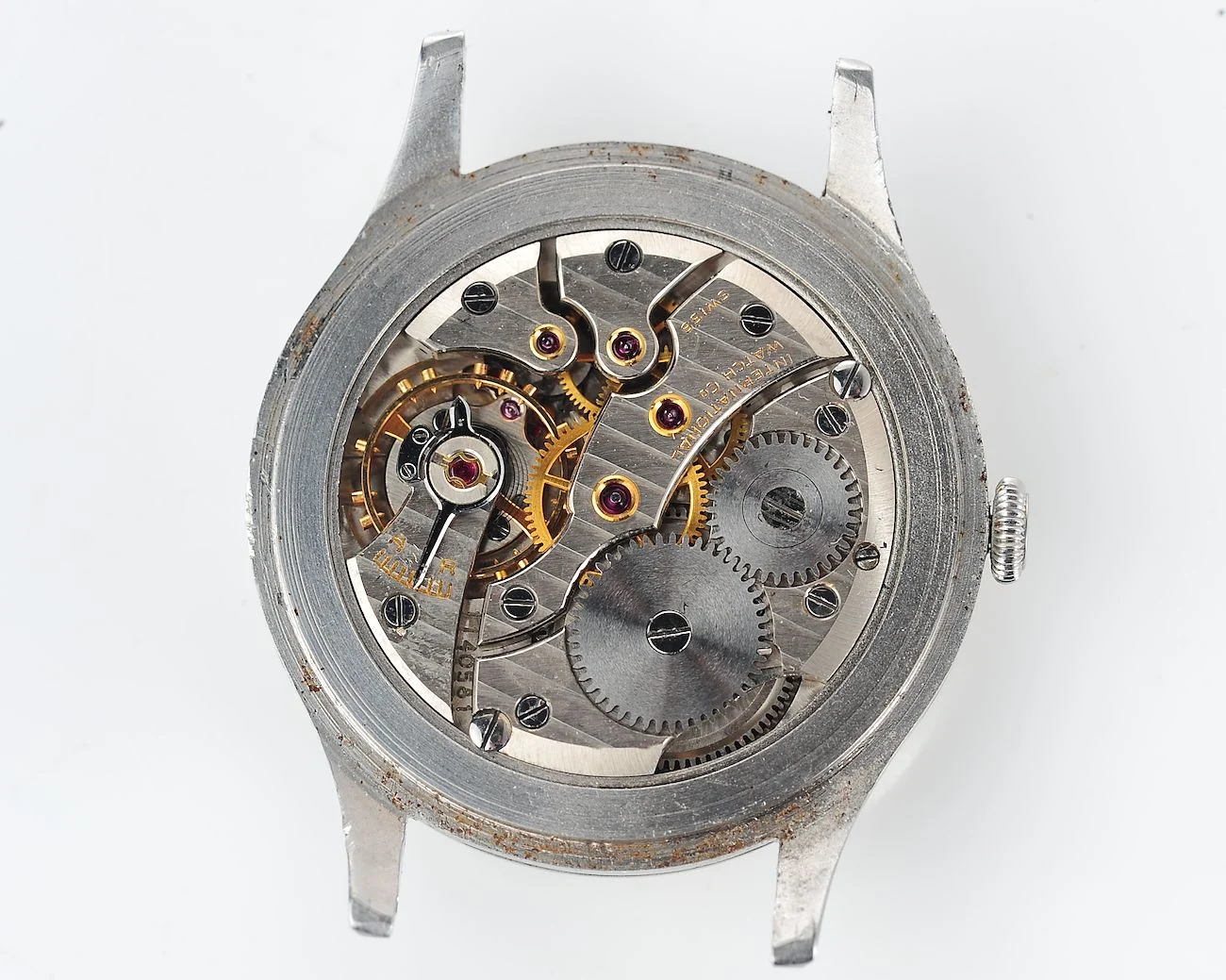
Calibre: IWC Calibre 83 (Manual Wind)
-
Movement Serial: 1140581 (IWC’s 1945–1950 movement series, dating this one to approximately 1947)
-
Technical Details: 11¾ lignes (26.5 mm × 4.1 mm), small seconds at 6 o’clock, 15 jewels in chatons, bimetallic screw balance, Breguet overcoil hairspring, 18,000 bph, approximately 47-hour power reserve.
-
Finishing: Rhodium-plated bridges with Côtes de Genève (Geneva stripes) and bevelled edges; fine perlage on the base plate.
Case & Exterior
-
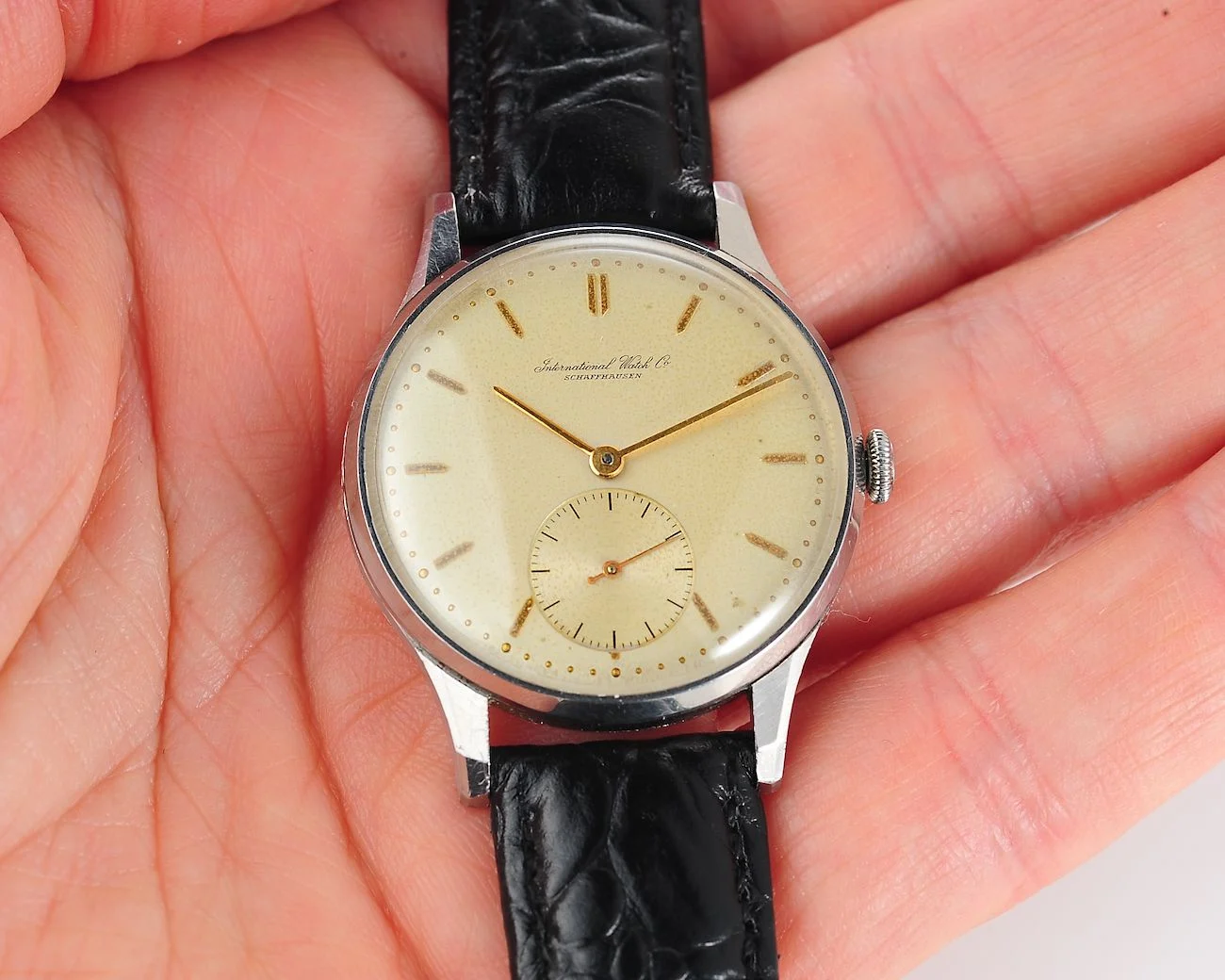
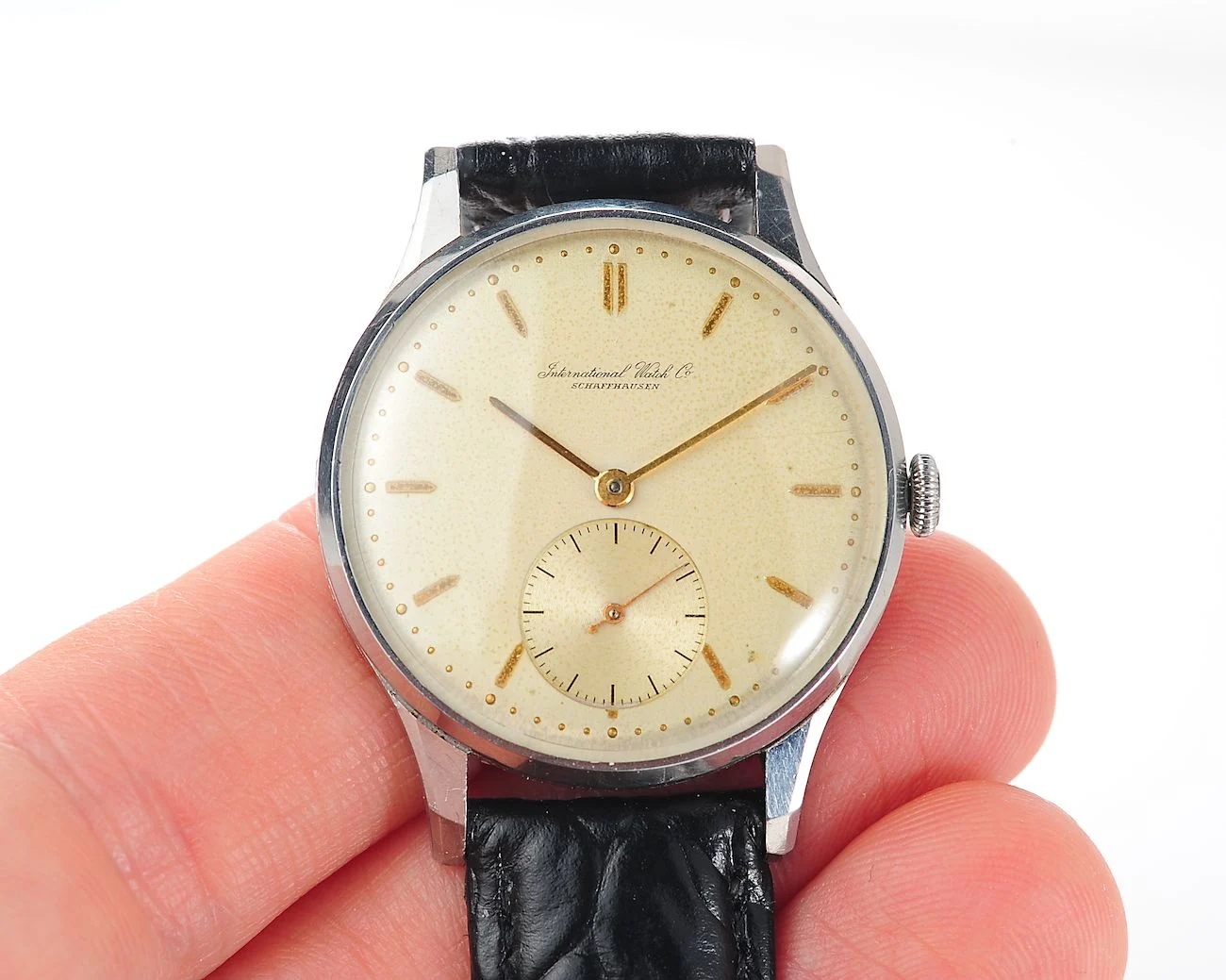
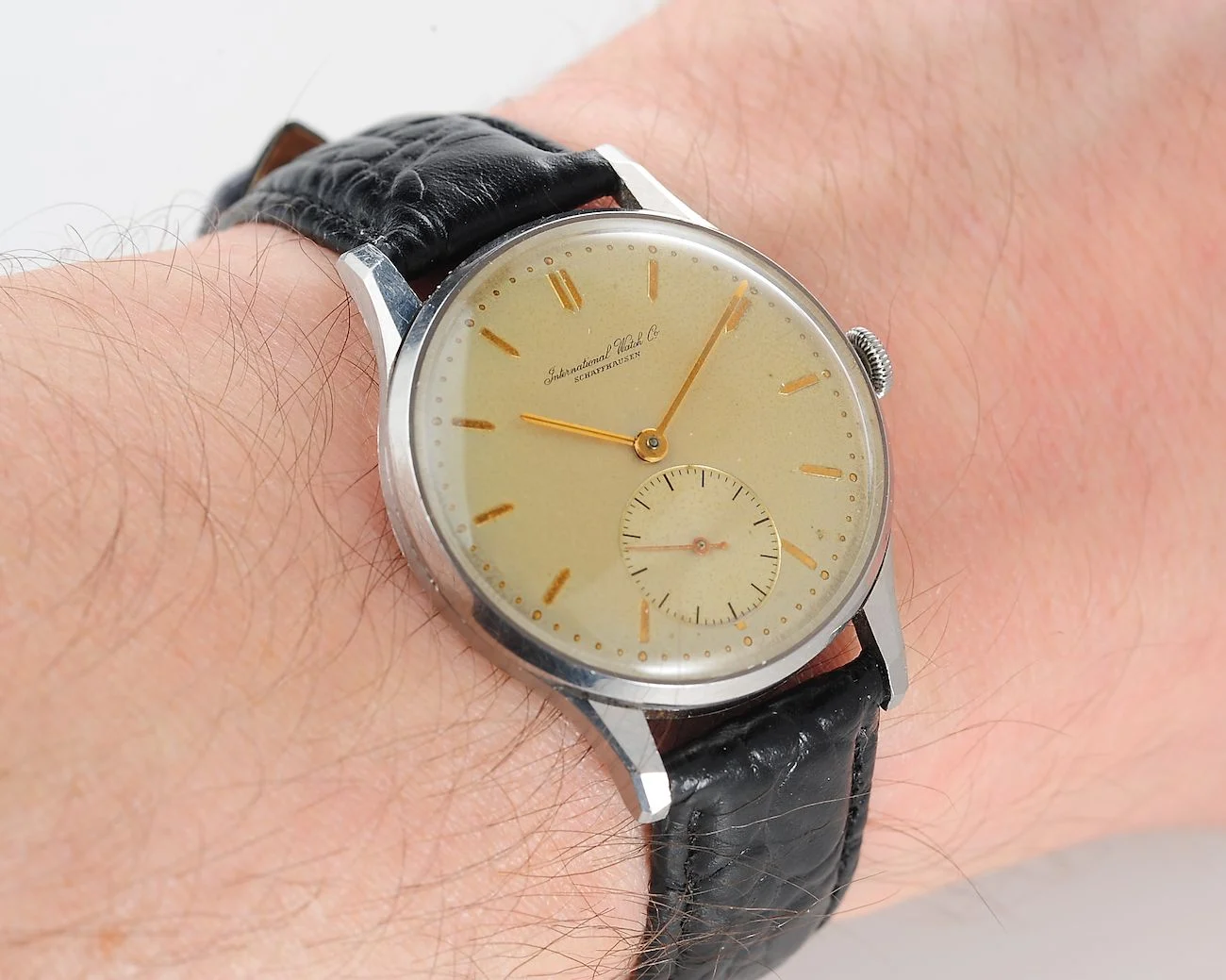
Case Diameter: 34.5 mm excluding the crown, 36.5 mm including it (measured with calipers).
-
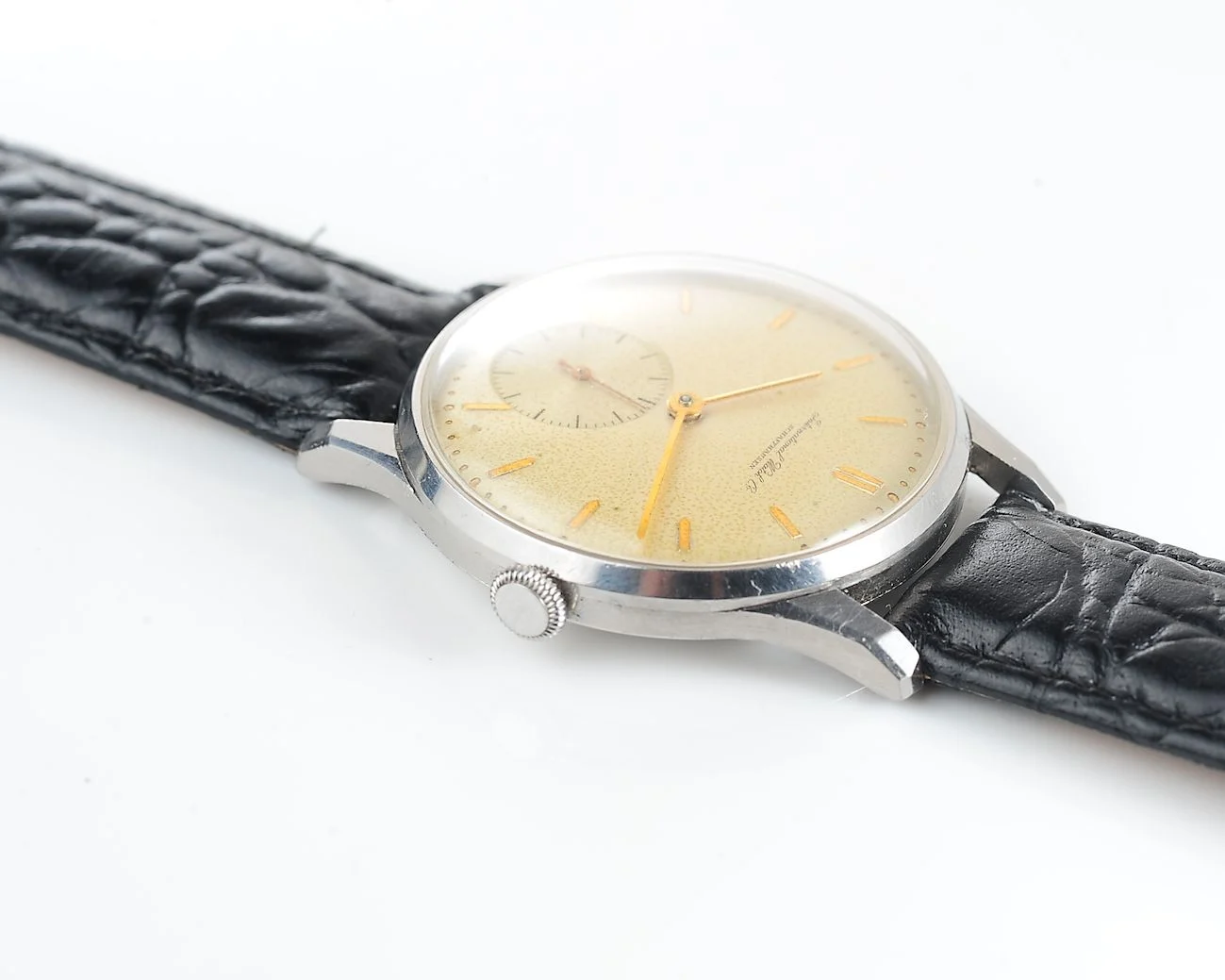
Lug-to-Lug: 43 mm — the long, faceted lugs make it wear larger than the diameter alone suggests.
-
Thickness: 10.5 mm.
-
Case Serial: 1172966 (matches the number stamped inside the case back)
-
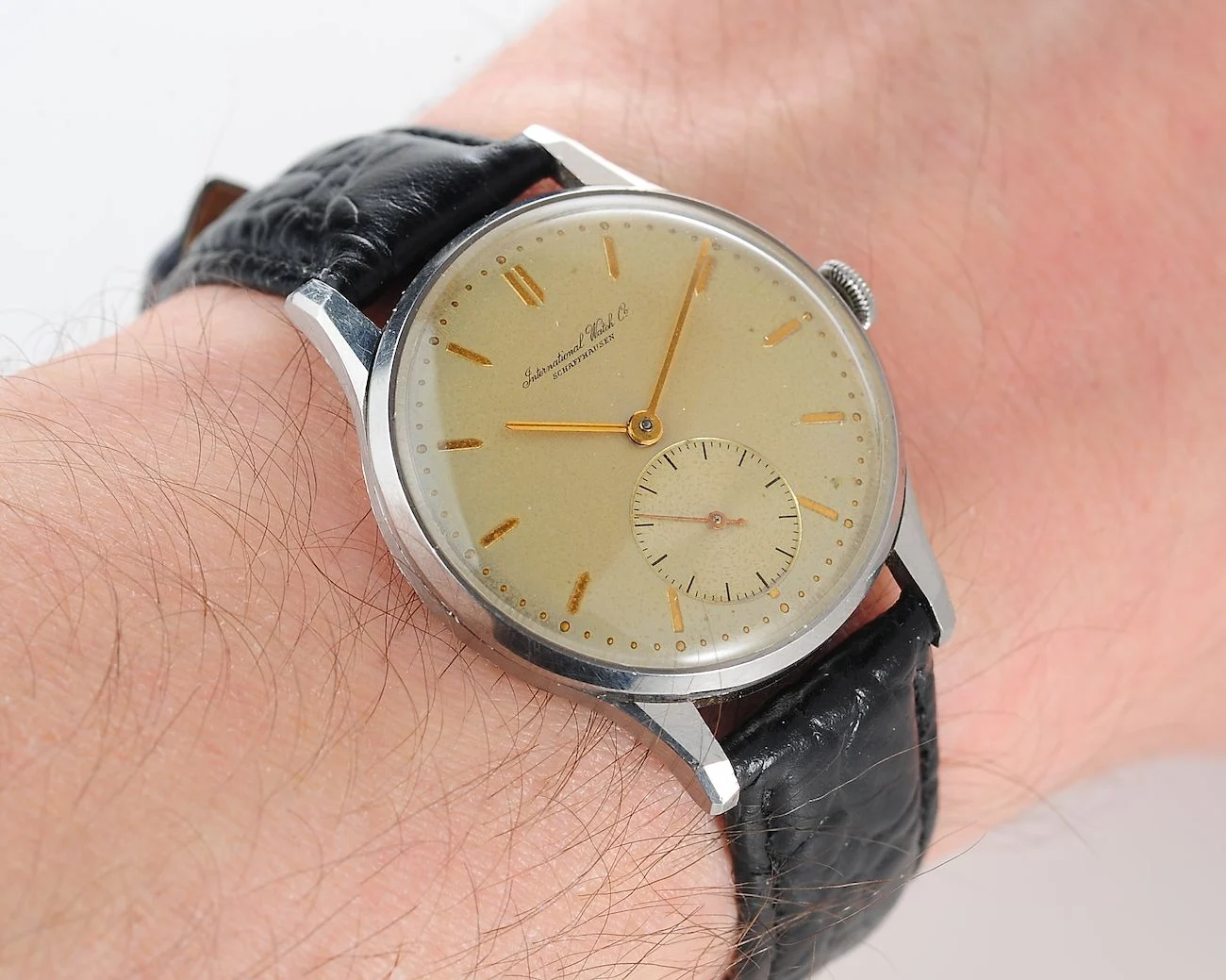
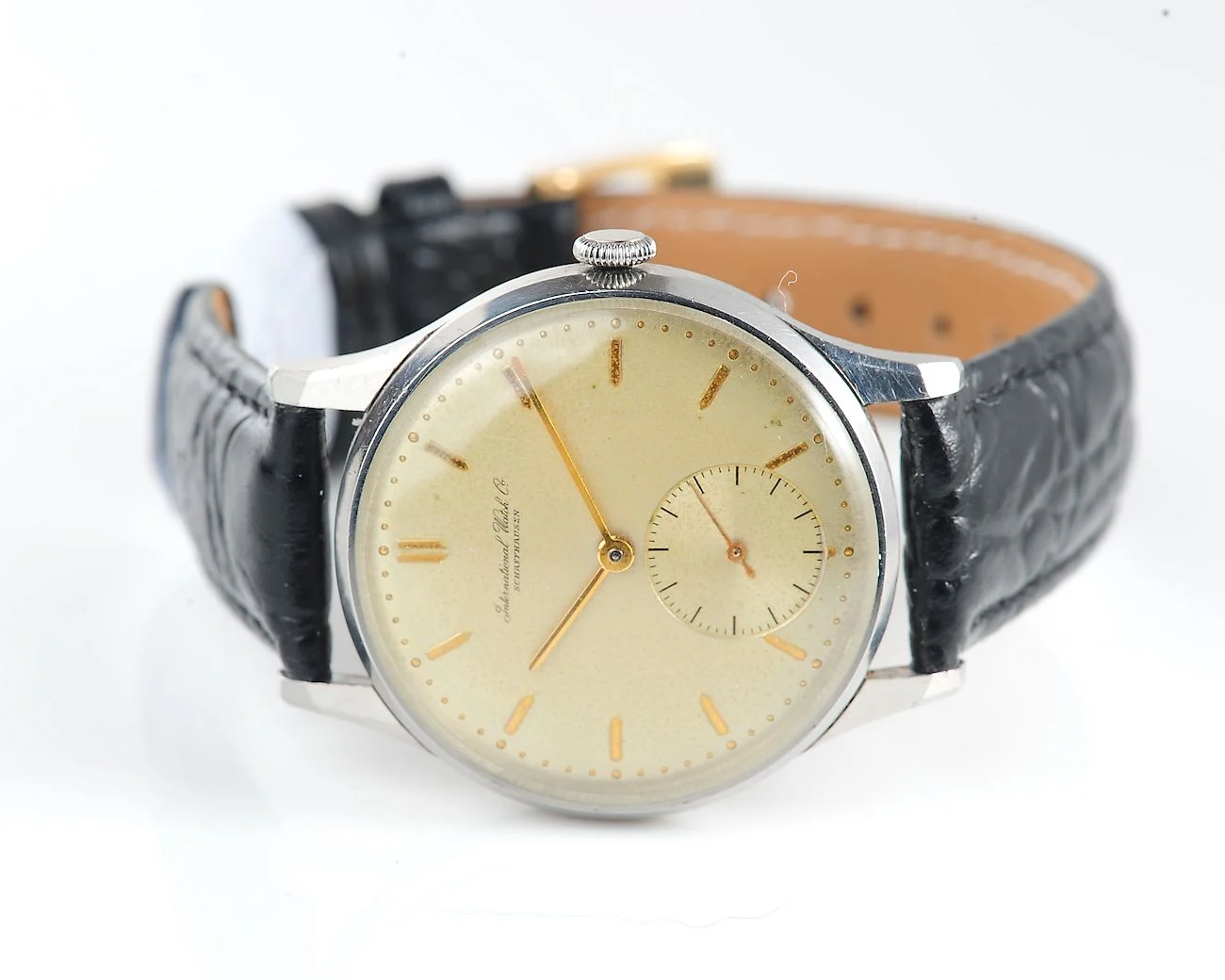
Hands: Gold-plated, slim tapered dauphine/lance style, giving a warm contrast against the steel case. The small-seconds hand is a slightly warmer, coppery tone than the hour and minute hands, so we cannot confirm it is original to the watch.
-
Dial: Original, non-refurbished champagne/silver dial with applied gold baton indices and a gold bead minute track. Signed “International Watch Co. SCHAFFHAUSEN” in period-correct cursive.
-
Dial Markers: Applied gold-plated faceted baton indices at every hour, doubled at 12, with a gold bead minute track around the outer edge. No numerals.
-
Aesthetic Note: Understated by design — gold-toned markers and hands against a plain silvered dial and a brushed steel case, with no numerals and no branding beyond the dial signature.
-
Crown: Knurled, unsigned steel crown.
Condition Notes (Post-Overhaul)
-
Status: Fully overhauled (2026) and functional.
-
Timekeeping: Movement cleaned, lubricated with synthetic oils, and regulated.
-
Aesthetics: Even, light age speckling across the unrestored dial, with a couple of small blemishes below the centre and near 4 o’clock; case retains its original geometry with minor surface character marks consistent with age.
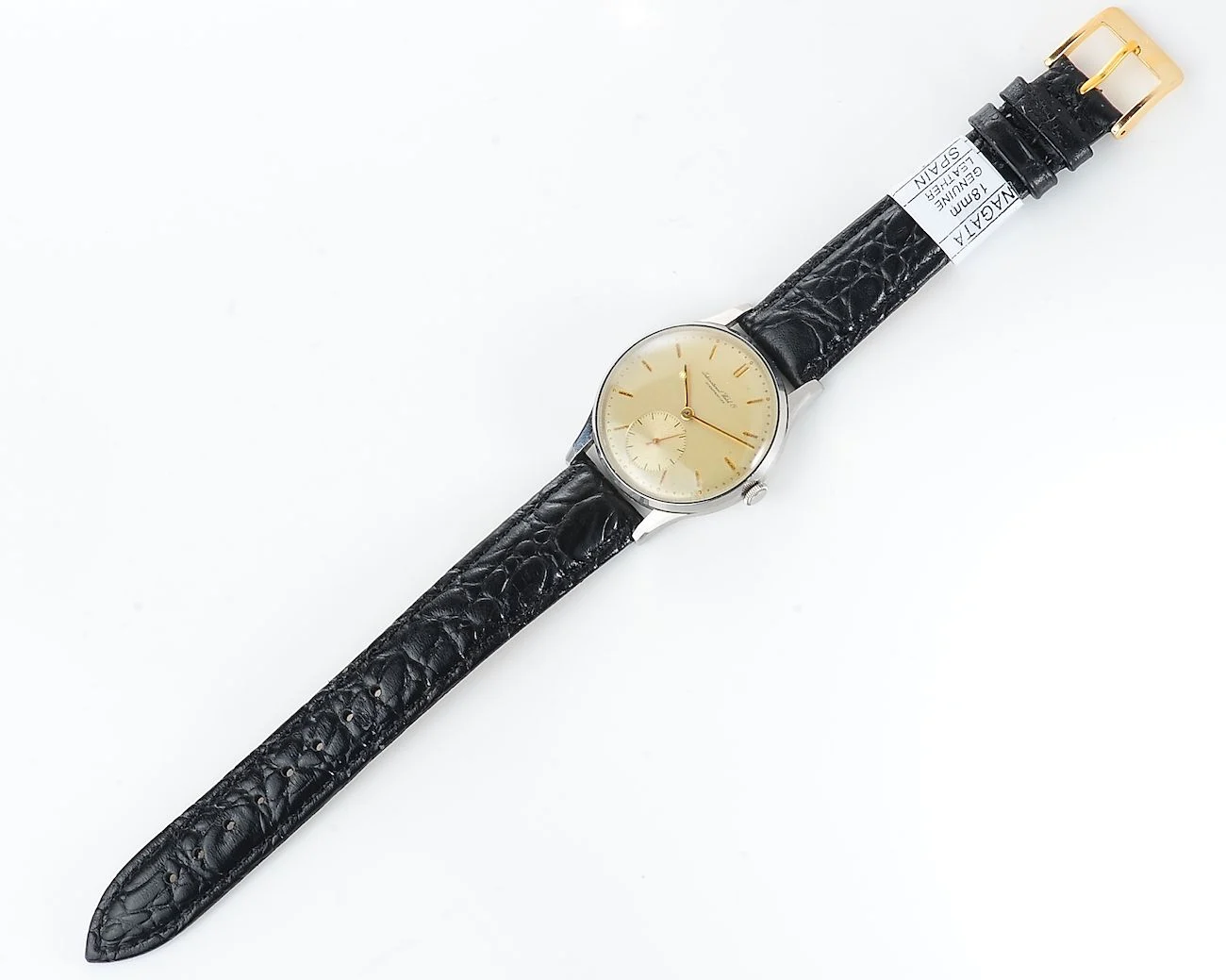
Comes with new Nagata leather strap included.
This watch ships from 🇺🇦 Ukraine with tracking number
Modes of payment:
- PayPal
- Credit Cards (VISA, MasterCard, American Express, Discover)
- bitcoin
We guarantee the item you receive looks and works exactly as advertised — or your money back.
Swiss watches
are known for their long history of precision engineering and repairable mechanical design. Switzerland became the center of watchmaking from the 16th century onward, developing a system of specialized workshops that perfected reliable movements, jewelled bearings, and accurate regulation. Over time, Swiss makers excelled at chronographs and complications, creating watches that could be serviced and kept running for decades rather than treated as disposable objects.
“Swiss Made” is a legally protected label that indicates Swiss control over the movement, assembly, and final inspection, reinforcing a reputation for consistency and quality. Importantly, Swiss watches have always existed at many levels—from affordable tool watches using robust movements like Landeron or ETA, to high horology from brands such as Patek Philippe—so the reputation is not limited to luxury alone.

International Watch Co. (IWC)
🕰️ Brand & History
International Watch Co. (IWC) is one of the most intellectually respected manufacturers in the watch world, primarily because they approach watchmaking from an engineering perspective rather than a jewelry perspective.
1. The “American” Start (Schaffhausen vs. Geneva)
IWC was founded in 1868 by Florentine Ariosto Jones, a watchmaker from Boston. His plan was daring: take modern American mass-production techniques and combine them with legendary Swiss craftsmanship.
Most Swiss brands are located in Western Switzerland (near Geneva), but Jones chose Schaffhausen in the North. This was because he met an industrialist named Heinrich Moser who had built a hydroelectric plant on the Rhine Falls. Jones used that water power to run his factory machines—a move that fundamentally separated IWC from the “home-cottage” industry common in Switzerland at the time.
2. “Probus Scafusia”
If you look at modern IWC crowns or movements, you’ll often see a small seal that says “Probus Scafusia.” This translates to “Good, solid craftsmanship from Schaffhausen.” Unlike Geneva-based brands that focused on ornate decoration, IWC’s identity was built on over-engineering.
-
They became famous for “form following function,” which is why their watches often look clean, legible, and “tool-like” compared to their contemporaries.
3. The Military “Dirty Dozen” Legend
This watch is technically a sibling to one of the most famous military watches in history. During WWII, the British Ministry of Defence (MoD) needed a rugged, waterproof watch for soldiers and commissioned 12 companies to build them (the “Dirty Dozen”).
IWC was one of those 12, and they used the Calibre 83 (the same movement fitted to this watch) for their military model, the Mark X.
Because IWC produced only about 6,000 of these military watches (against roughly 25,000 from Omega), the IWC is among the most sought-after of the twelve. That scarcity belongs to the Mark X itself, though — IWC built around 68,400 Calibre 83 movements in all, the great majority of them for civilian watches like this one.
4. Why Collectors Love Them
IWC is often called “The Engineer’s Watch.” Owning a vintage IWC like this is seen as a “connoisseur’s choice.” It tells the world you value the mechanical integrity and the history of the movement inside as much as the brand name on the dial.