Description
The Heritage of Longines: A Legacy of Precision
Founded in 1832 by Auguste Agassiz in the small Swiss town of Saint-Imier, Longines holds a position of immense historical prestige in the watchmaking world. As one of the few brands that can claim nearly two centuries of continuous operation, their “winged hourglass” logo remains the oldest unchanged active trademark in the International Registry at WIPO.
Technical Mastery
While often positioned today as a brand of “elegance,” Longines’ historical identity was built on extreme technical utility and precision timing:
-
Pioneering Chronographs: Longines produced some of the most sophisticated chronograph movements in history, including the legendary 13ZN, which is still regarded by collectors as one of the finest calibers ever made.
-
Aviation & Exploration: The brand was the preferred choice for early 20th-century pioneers. They developed the Lindbergh Hour Angle watch for Charles Lindbergh to assist in aerial navigation and provided timing equipment for Admiral Byrd’s Antarctic expeditions.
-
The High-Beat Revolution: In the 1960s, Longines was a frontrunner in the “accuracy wars.” While competitors were looking toward electronics, Longines pushed mechanical engineering to its limit with the Ultra-Chron, proving that a high-frequency mechanical movement could achieve chronometer-grade precision that rivaled the early quartz prototypes.
Today, Longines is celebrated for its Heritage line, where it draws upon this vast archive to re-release iconic designs for modern collectors, though vintage originals like the Ultra-Chron remain the most sought-after by purists for their authentic mechanical soul.
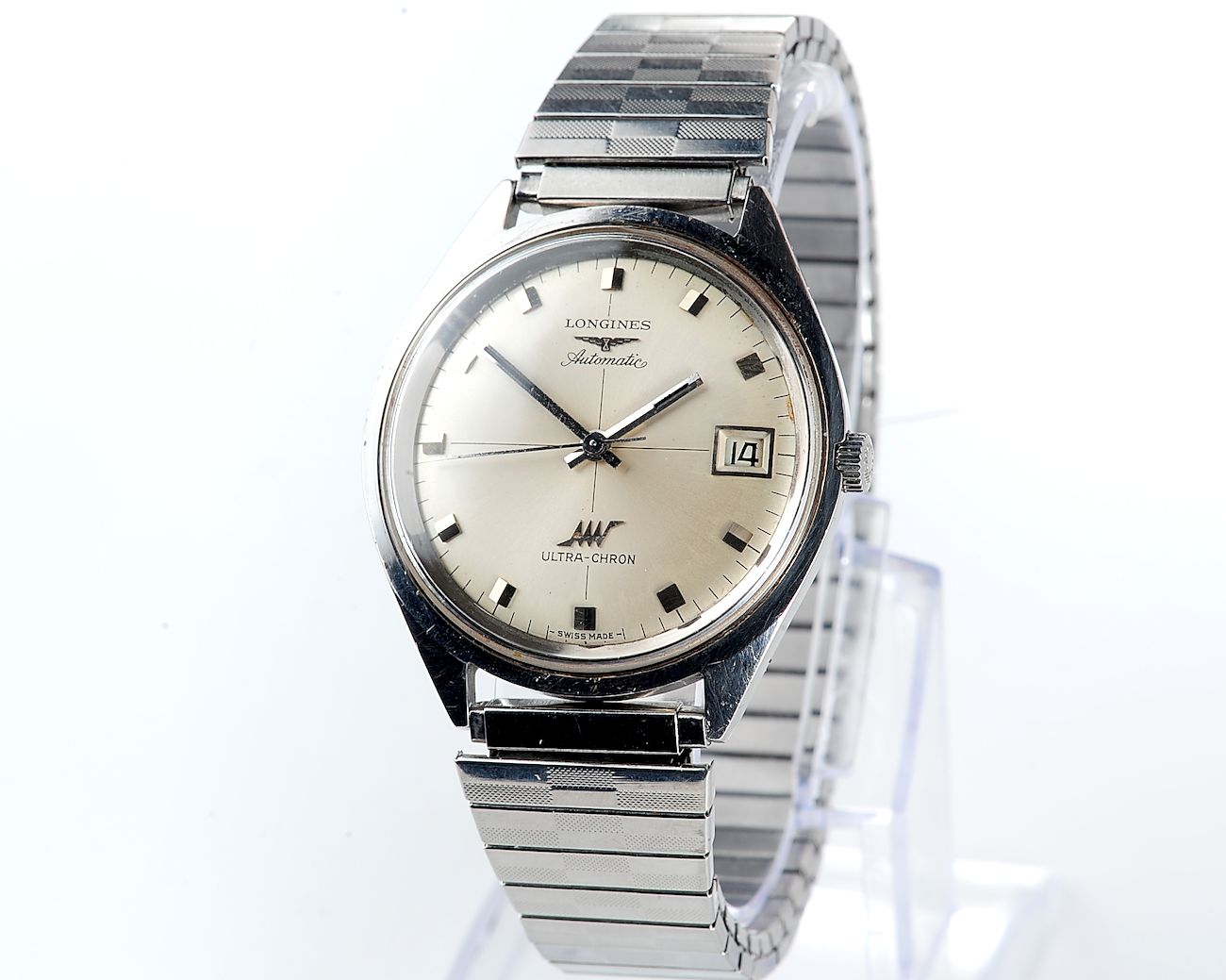
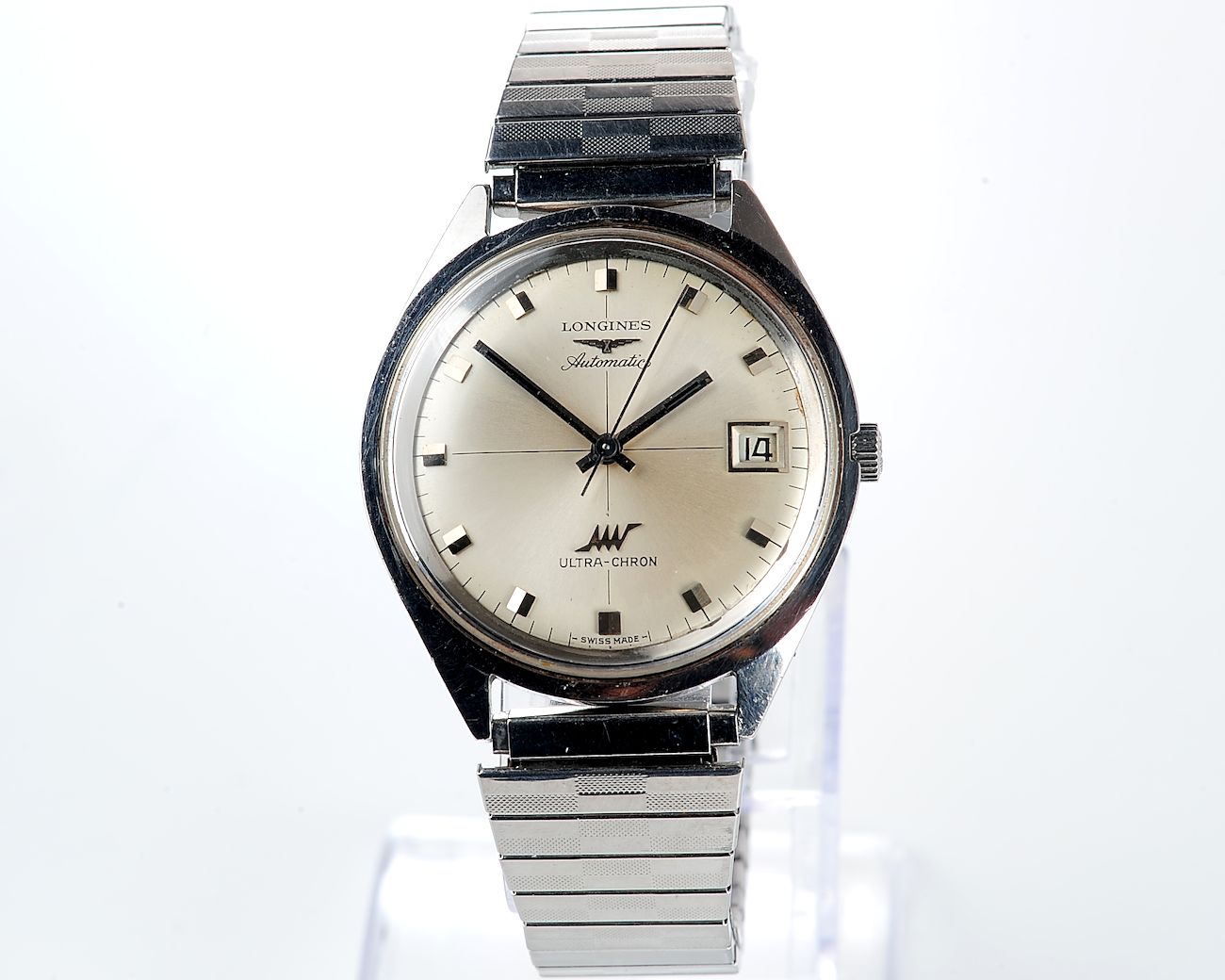
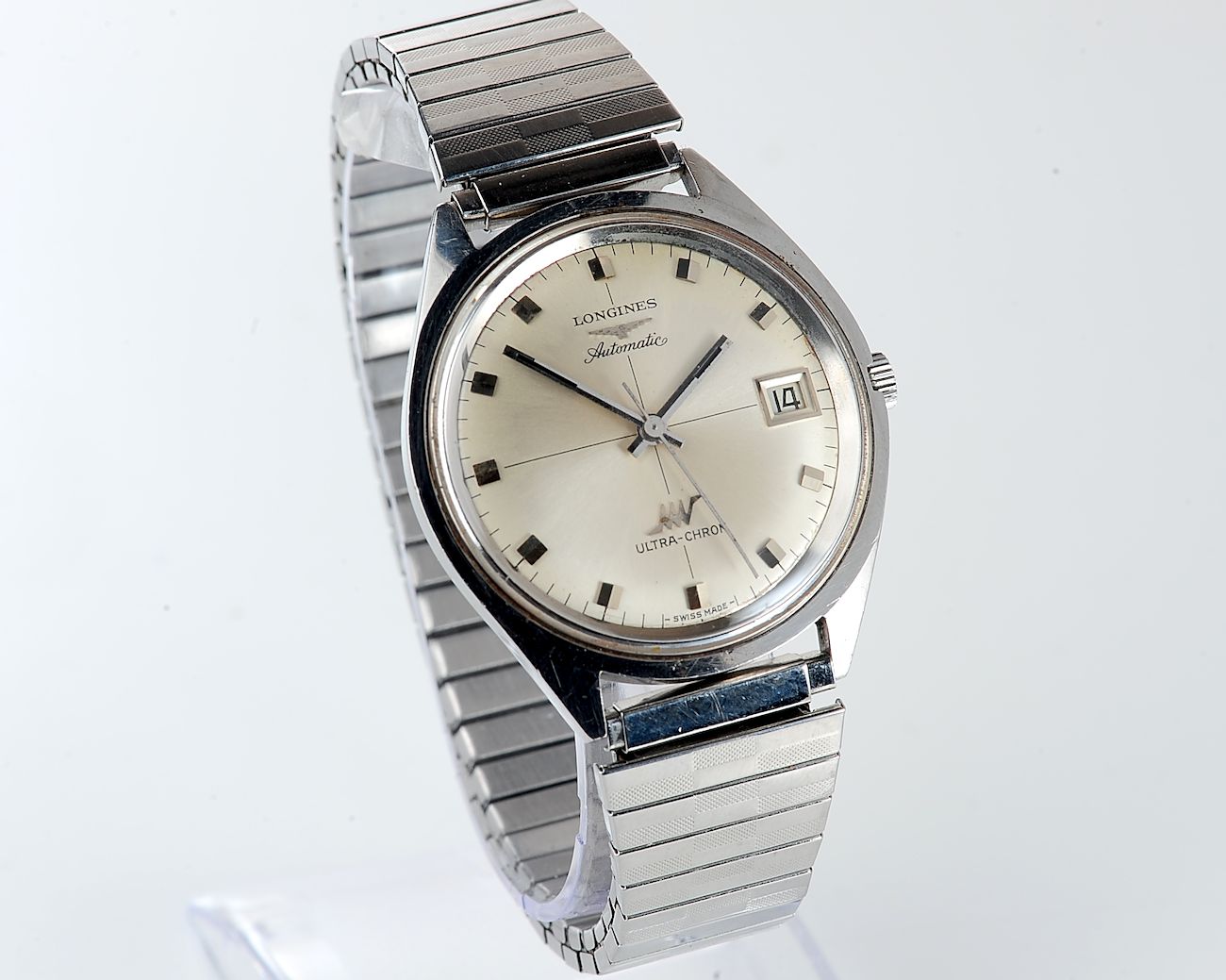
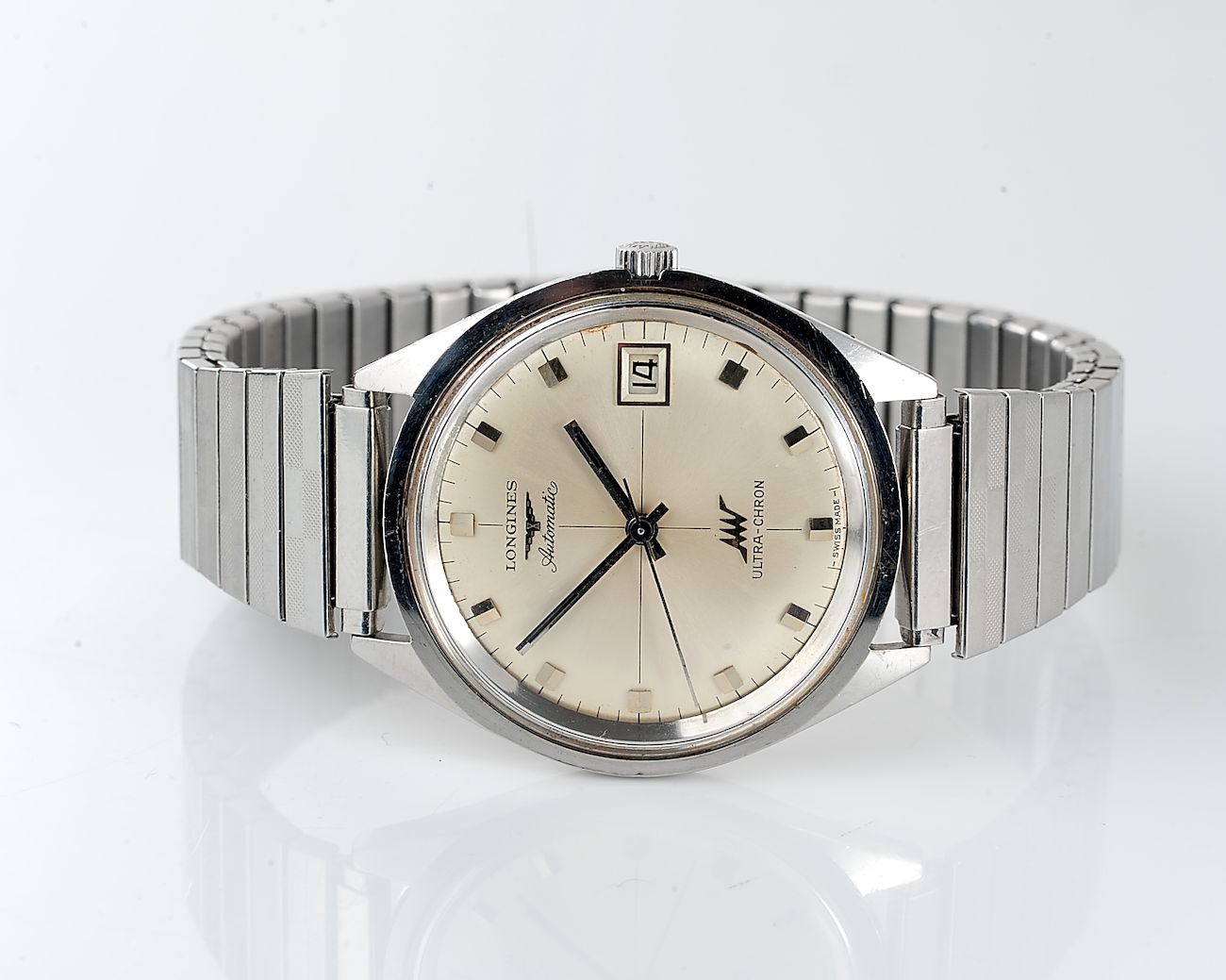
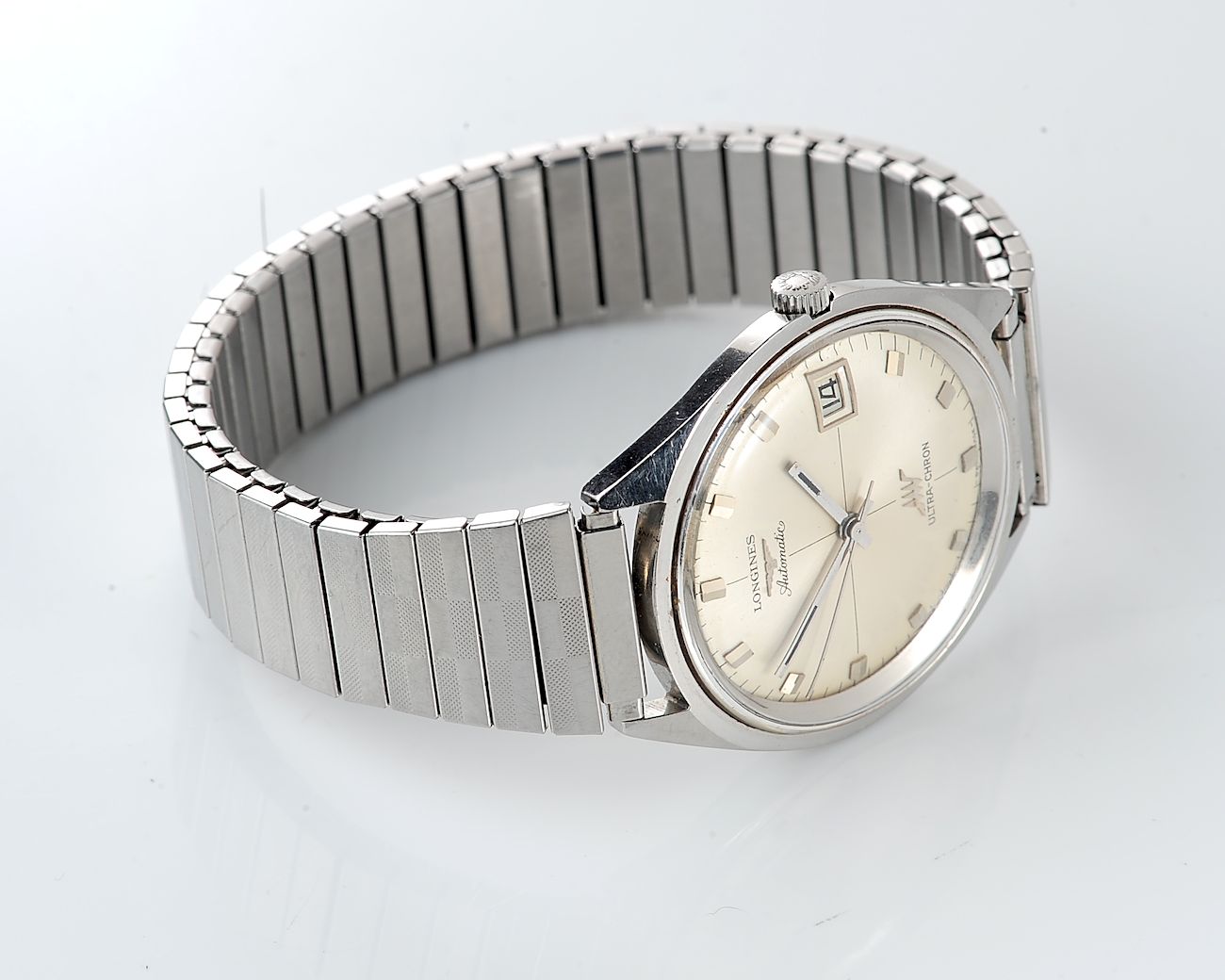
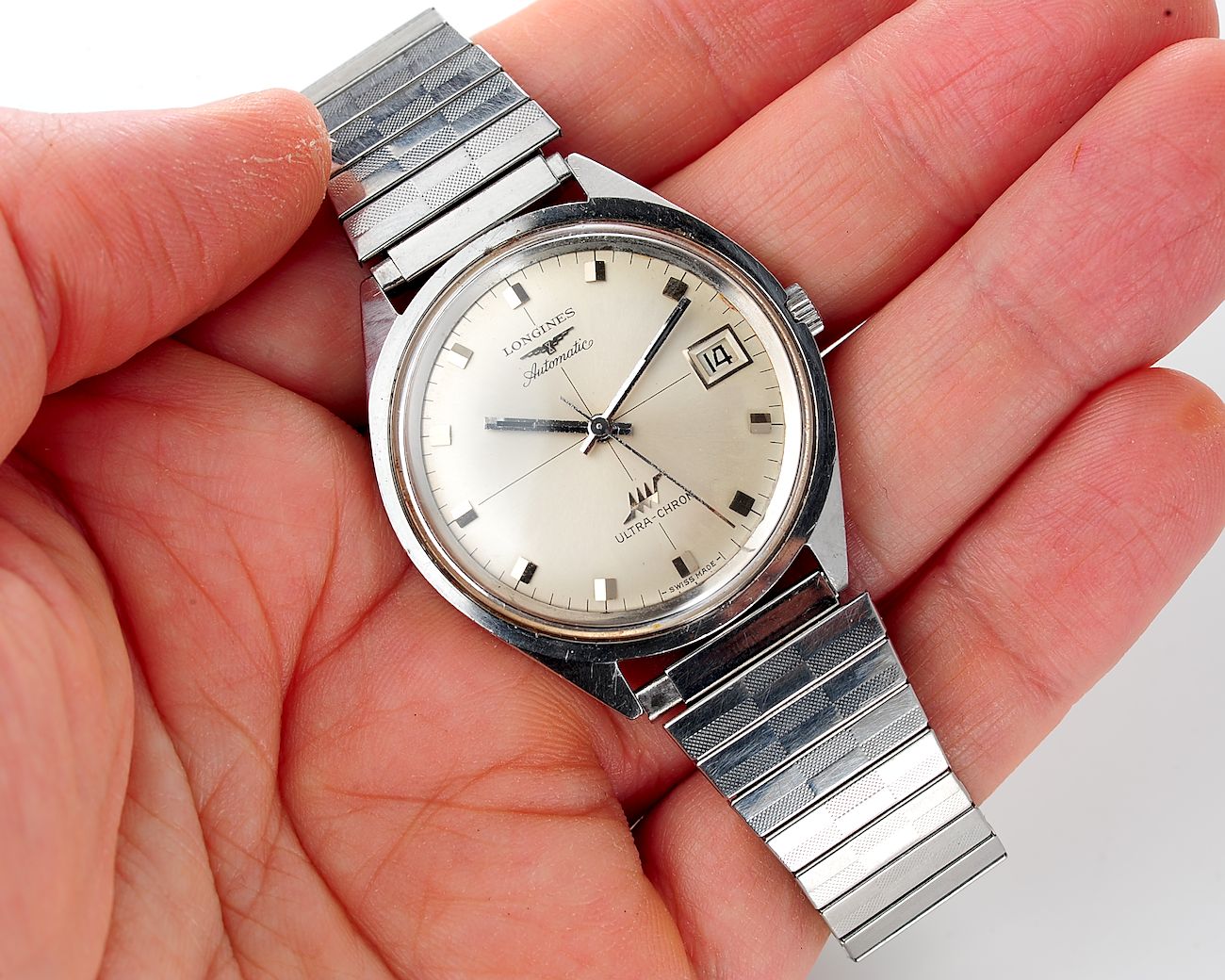
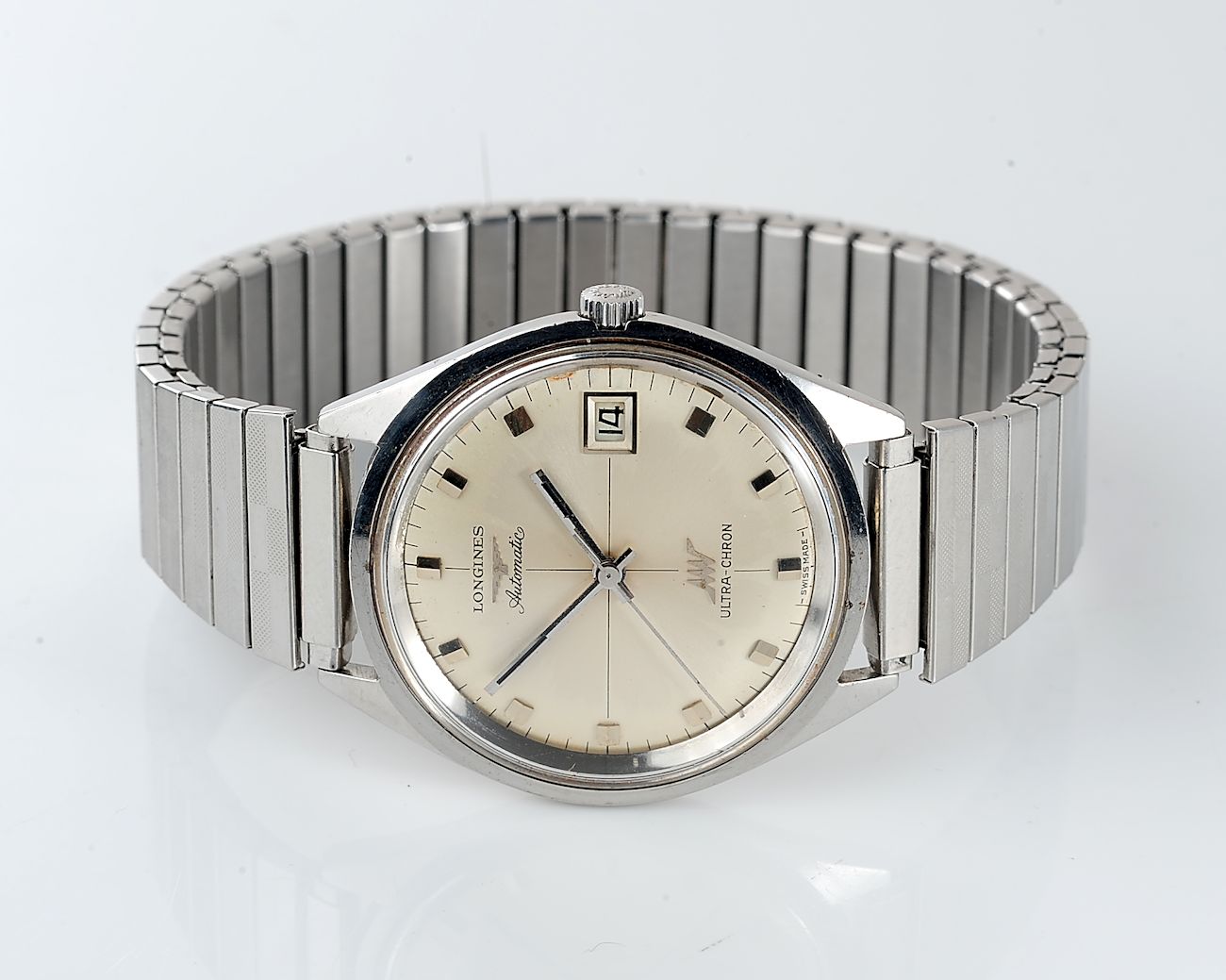
1970 Longines Ultra-Chron Ref. 8301-4
Overview
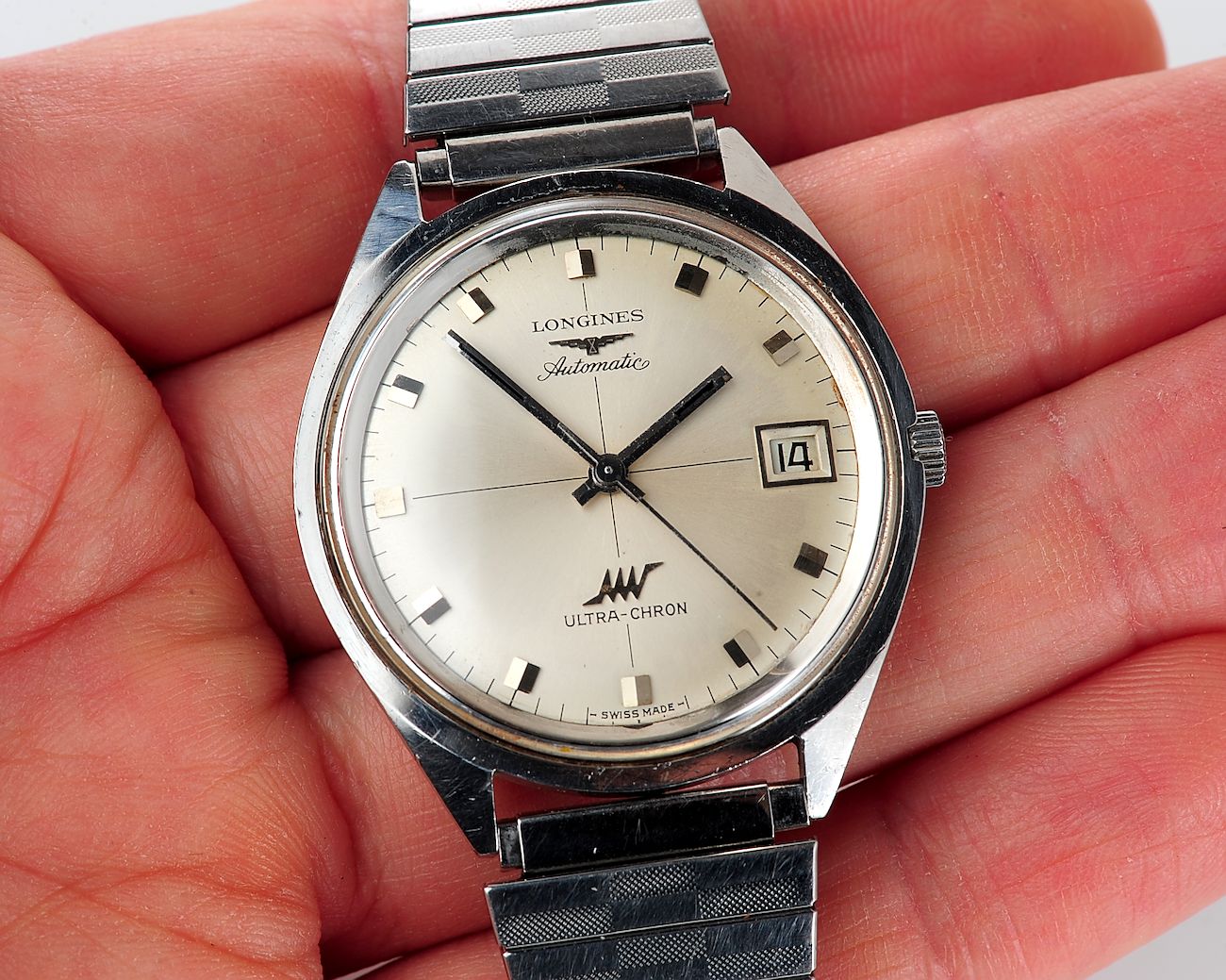
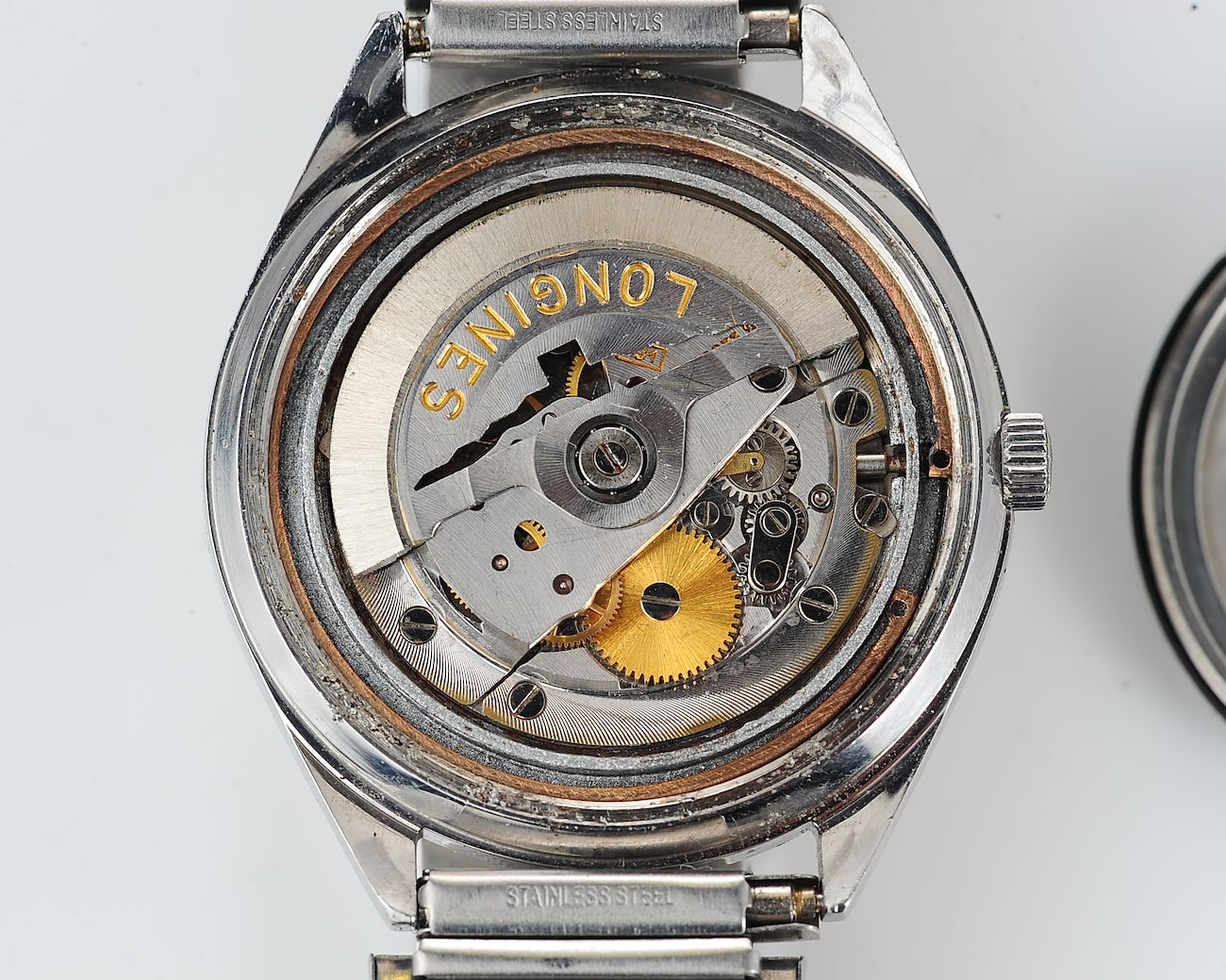
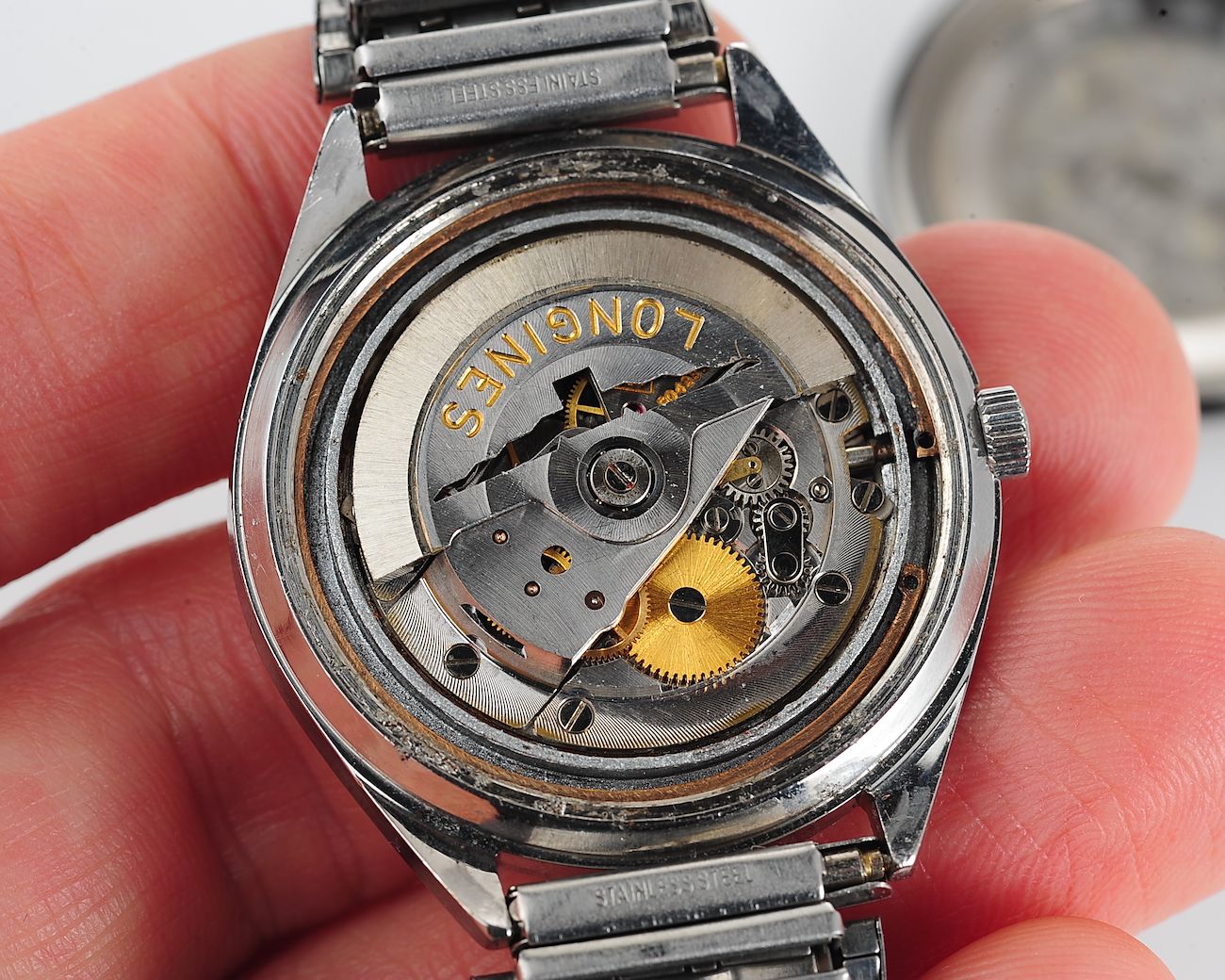
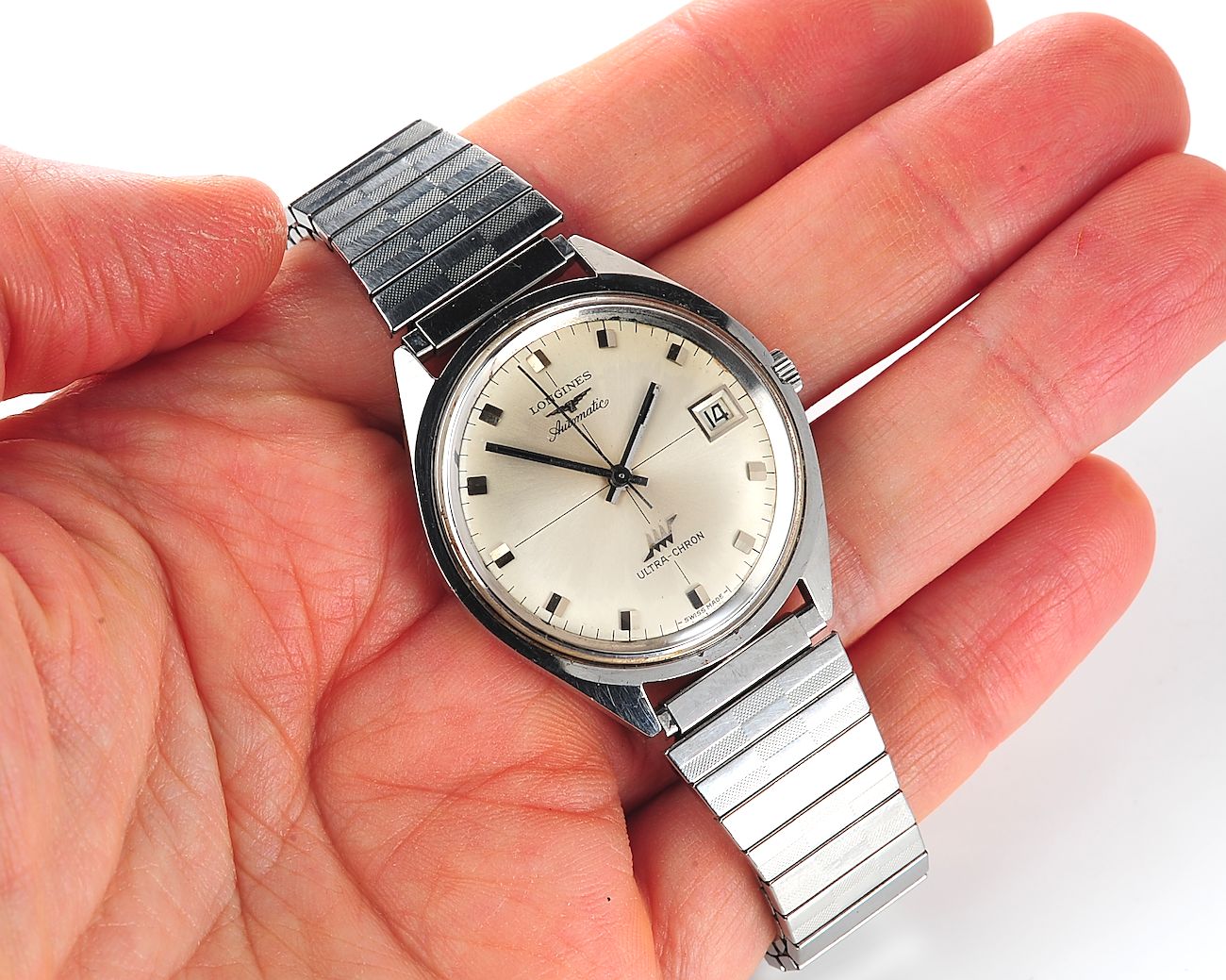
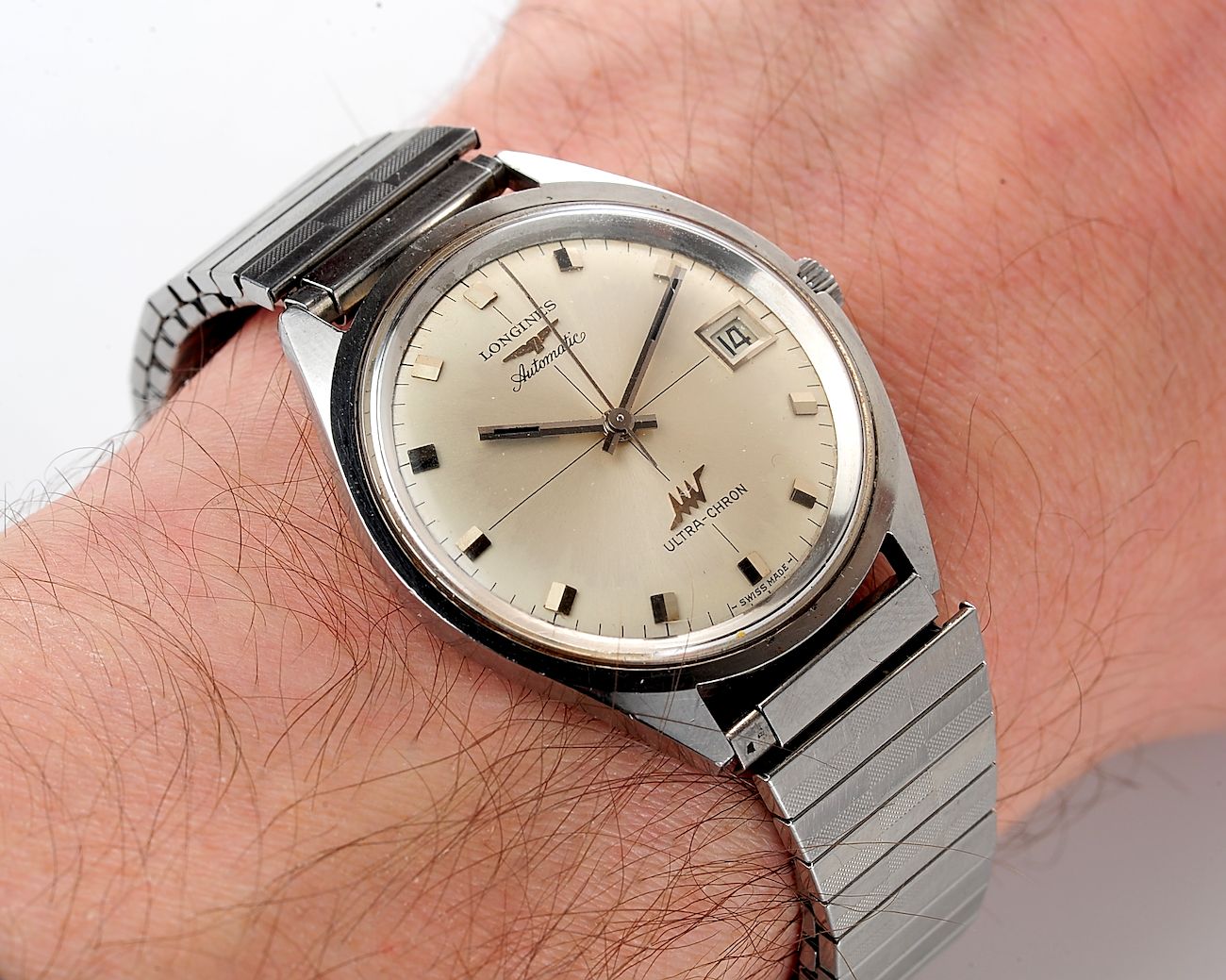
A superb example of Longines’ pinnacle high-frequency engineering. Launched to compete with the accuracy of emerging electronic movements, the Ultra-Chron was famously guaranteed to be accurate to within a minute per month. This specific reference, the 8301-4, features a sharp, angular stainless steel case that perfectly captures the “space-age” design language of the late 1960s and early 1970s.
Technical Specifications
-
Manufacturer: Longines (Saint-Imier, Switzerland)
-
Model: Ultra-Chron Automatic
-
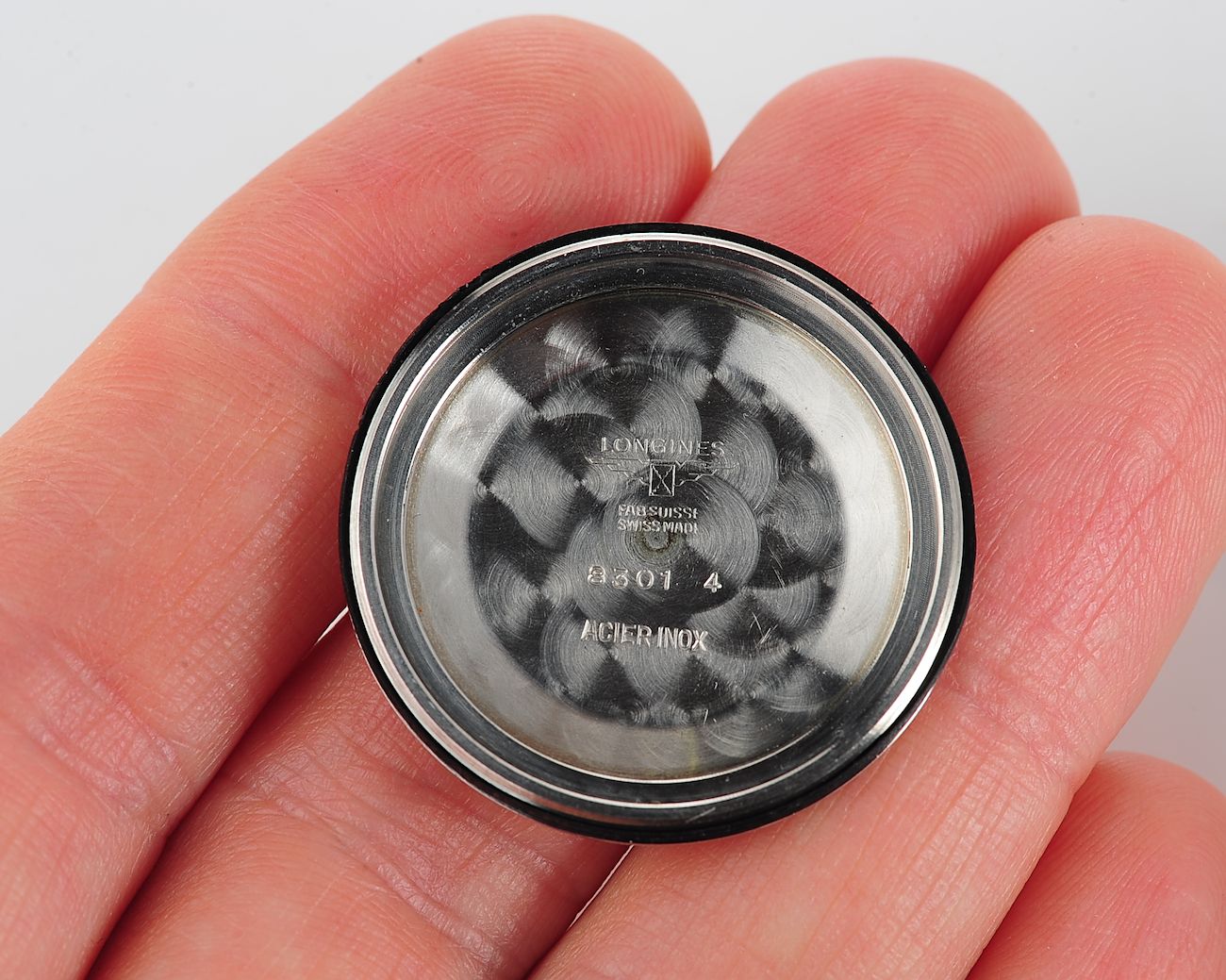
Reference: 8301-4
-
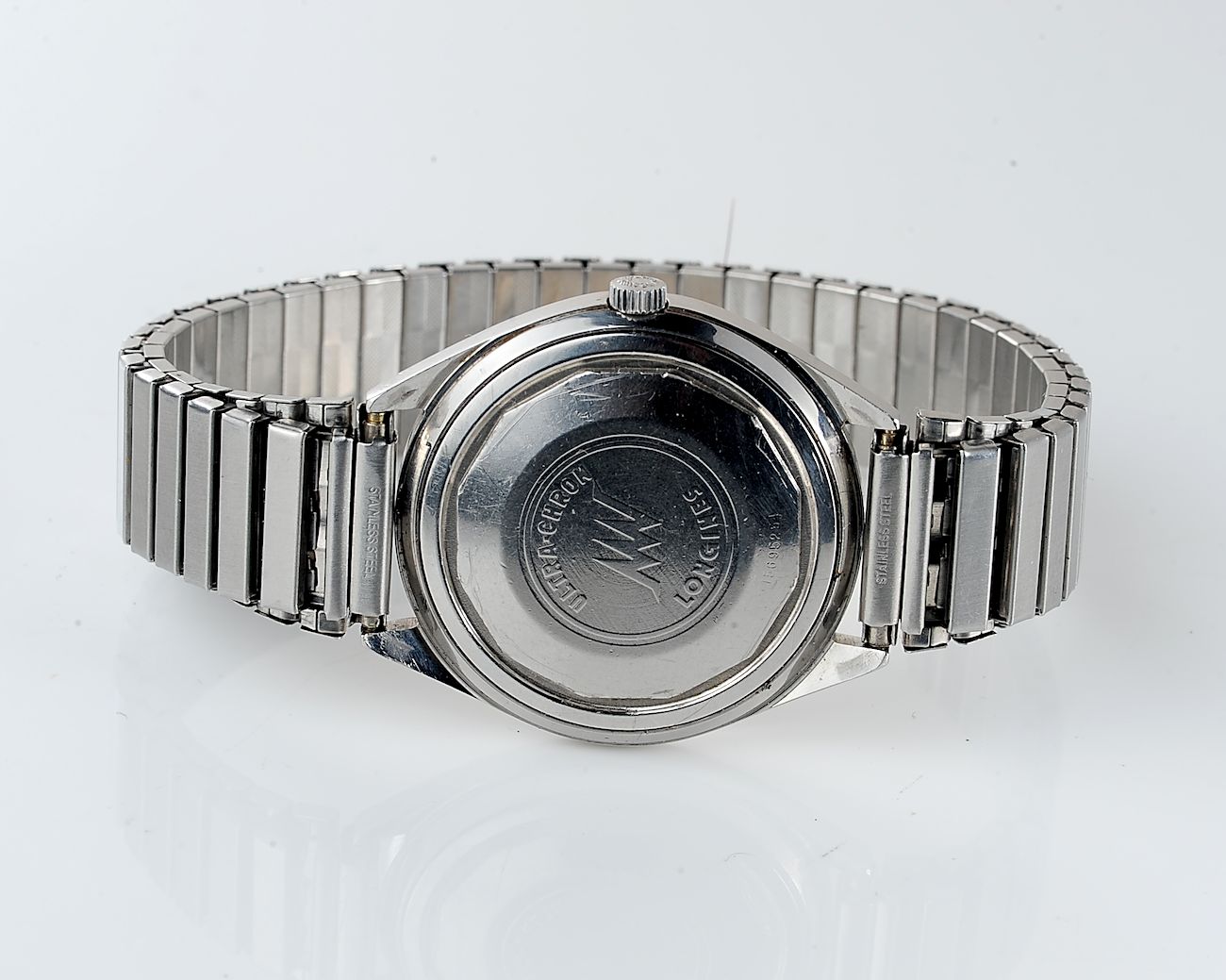
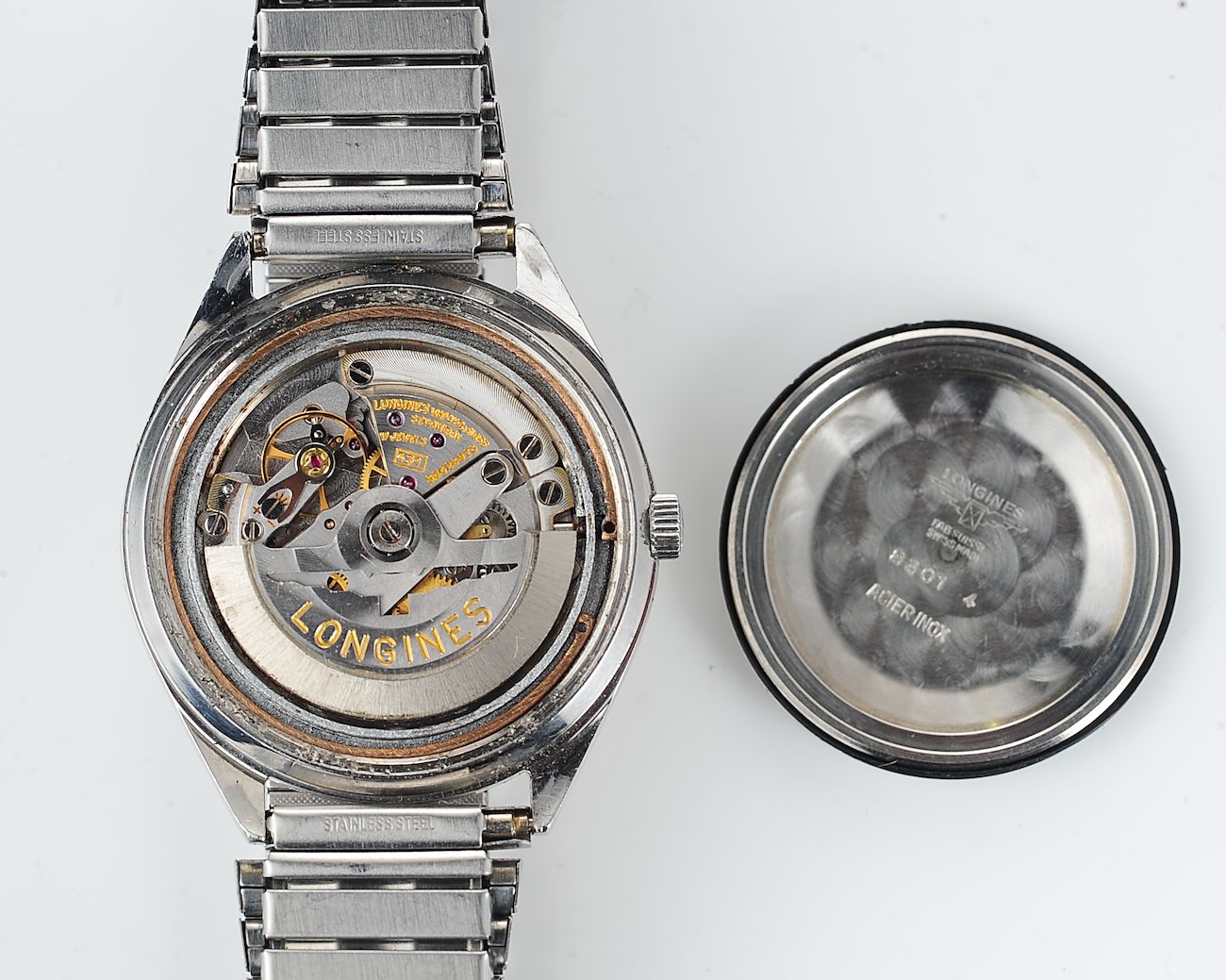
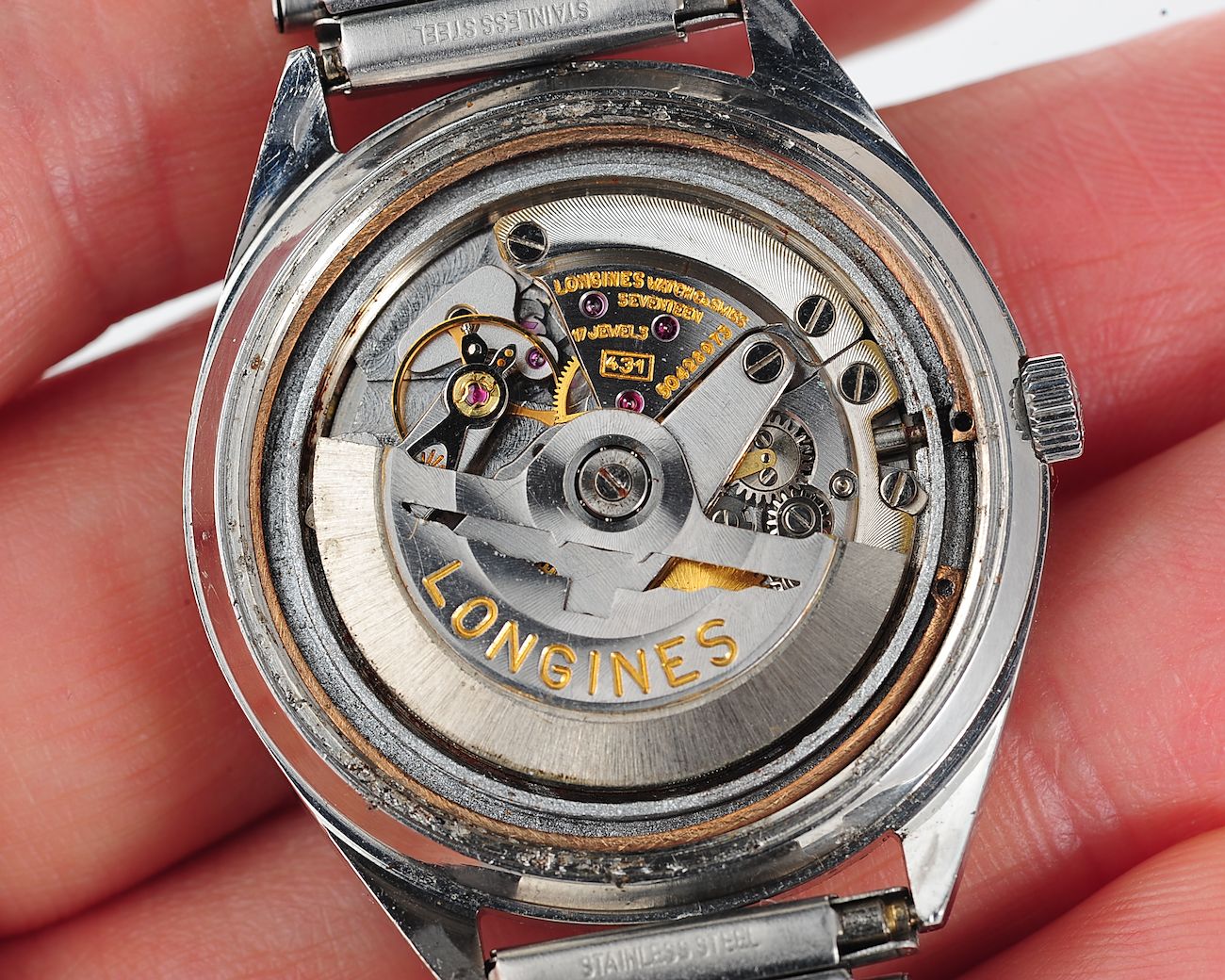
Year: 1970 (Based on movement serial: 50,422,973)
-
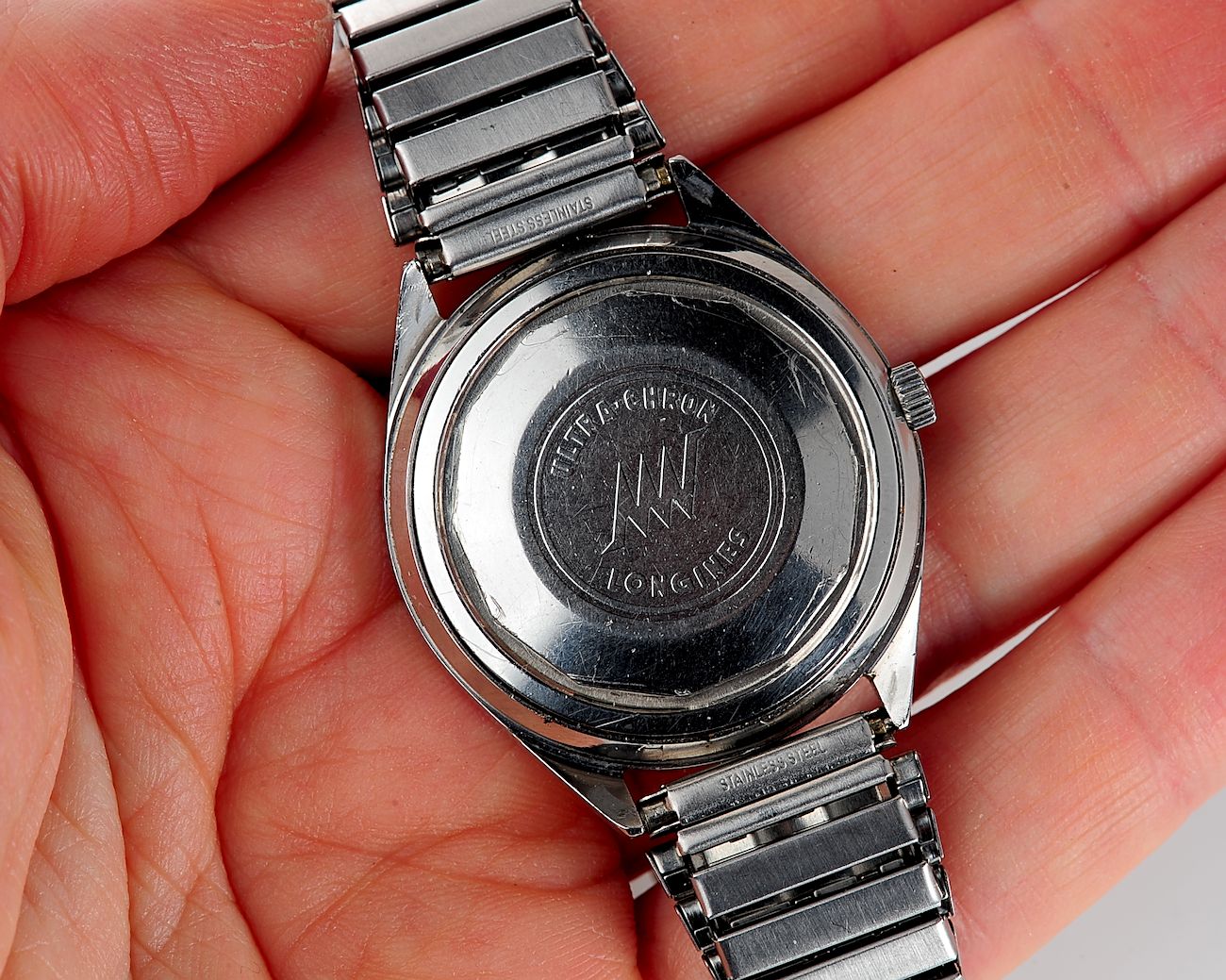
Case Material: Stainless Steel (Acier Inox)
-
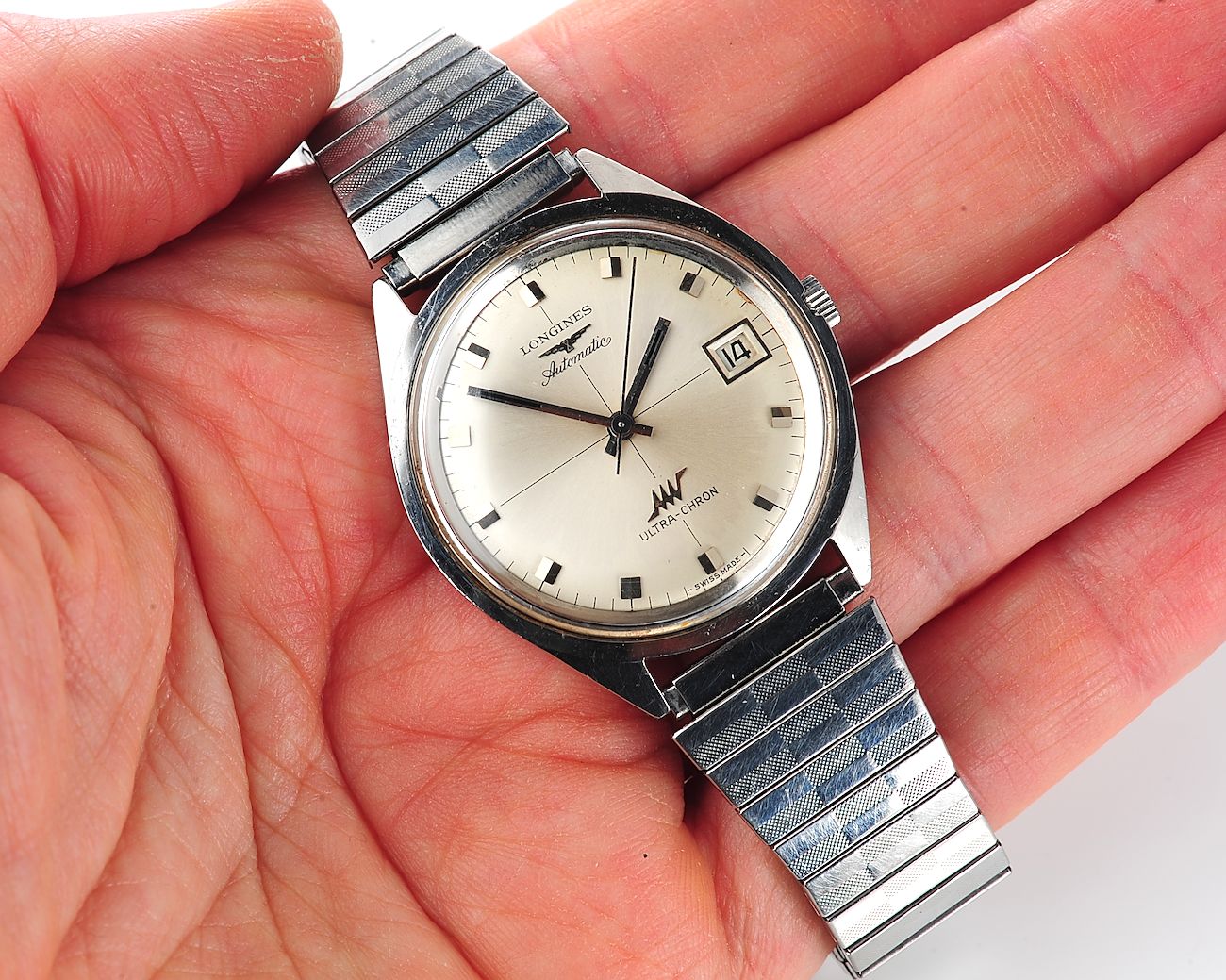
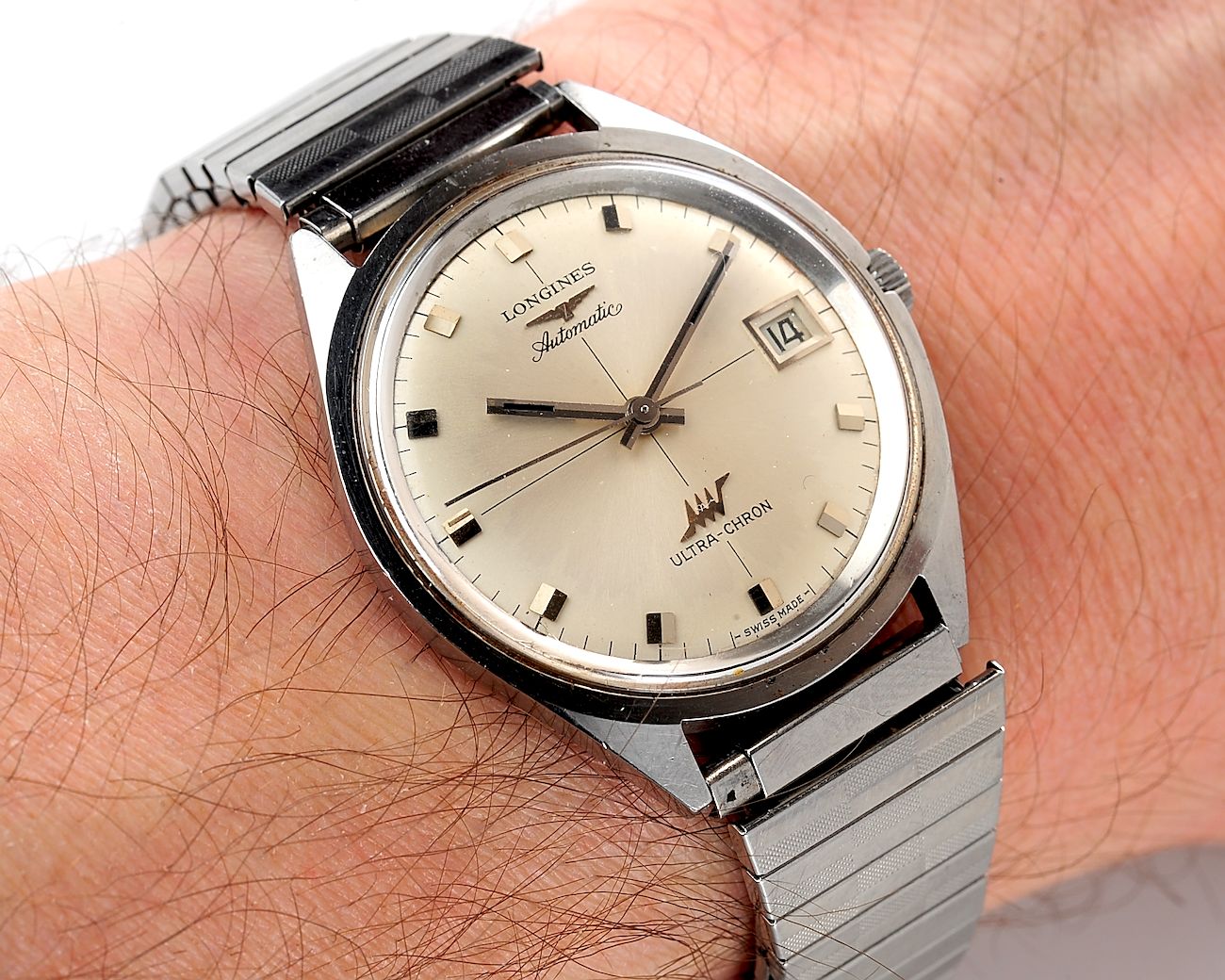
Case Diameter: ~35mm (excluding crown)
-
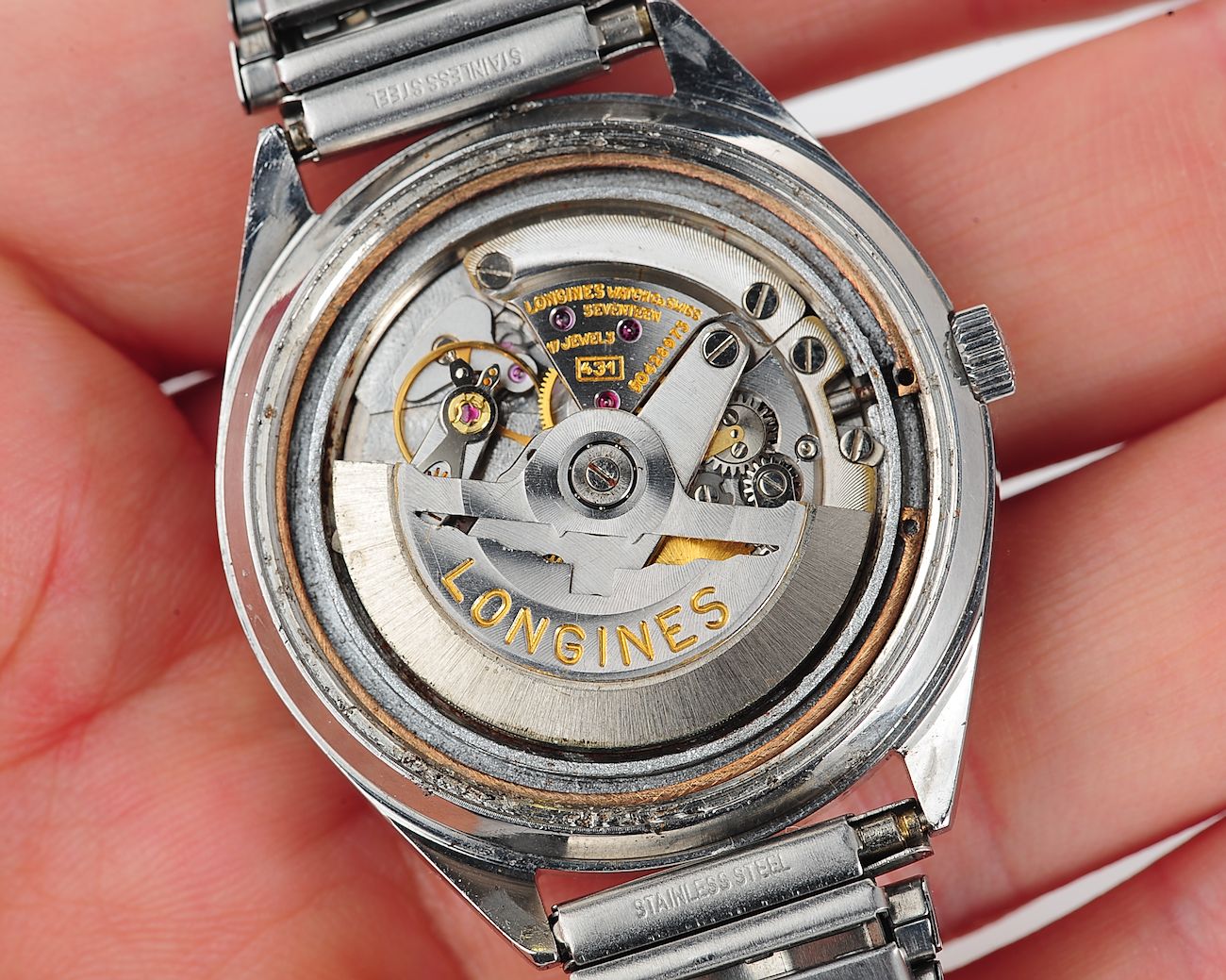
Caliber: In-house Cal. 431 Hi-Beat
-
Beat Rate: 36,000 vph (10 beats per second)
-
Jewels: 17
-
Features: Instantaneous date change, sweep second hand, excenter regulator.
-
-
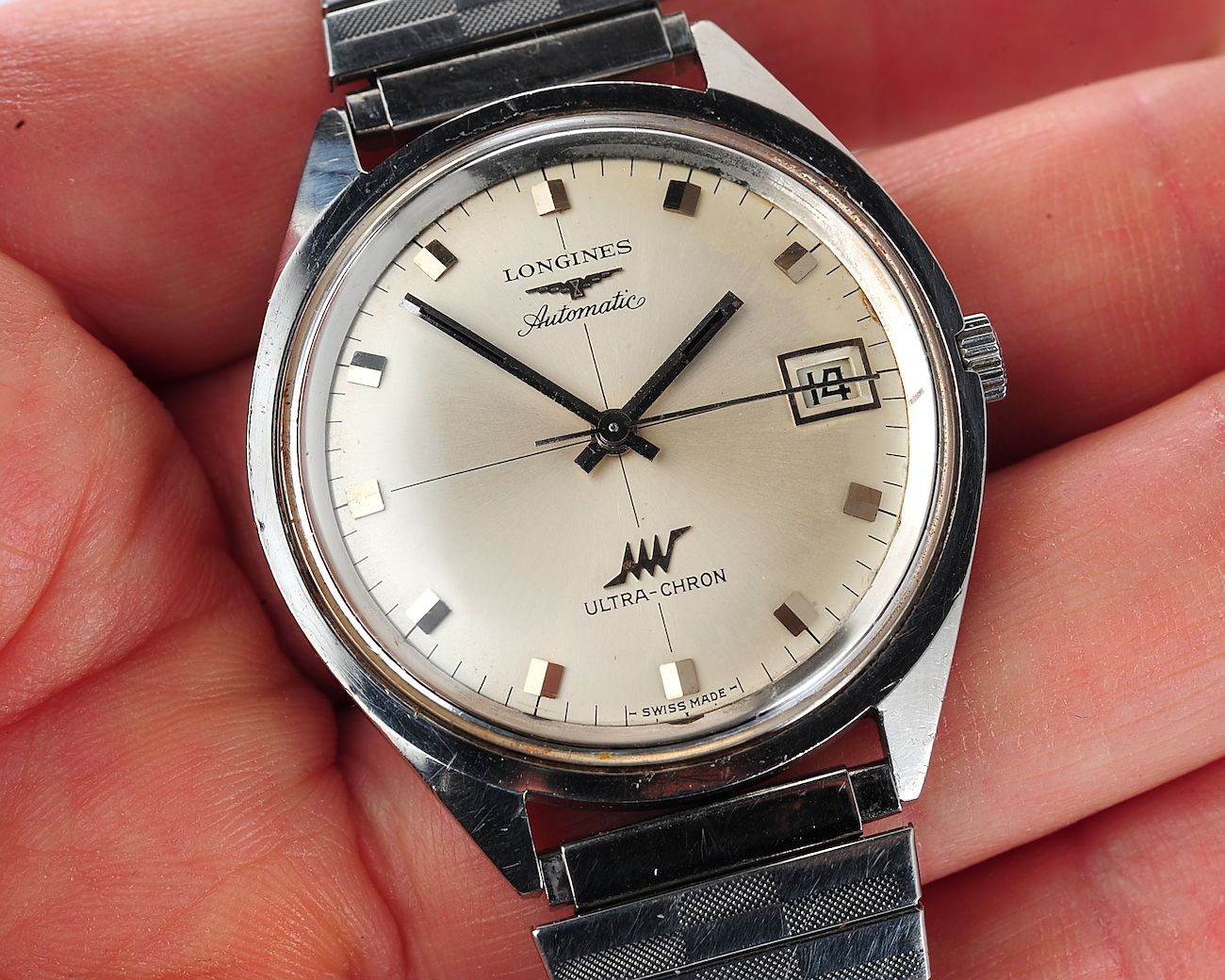
Dial: Silver sunburst with applied faceted “tombstone” indices and original tritium lume plots.
-
Crystal: Acrylic with internal cyclops magnifier over the date window.
Condition Report
-
Movement: Caliber 431 is exceptionally clean with no visible corrosion. Engravings on the rotor remain sharp and clear. Running well, though professional servicing is recommended for daily use to ensure proper lubrication for the high-beat escapement.
-
Dial/Hands: Original silver dial with light “edge creep” patina between 12 and 2 o’clock, characteristic of vintage Ultra-Chrons. Applied Longines “Winged Hourglass” logo and Ultra-Chron “sine wave” are crisp.
-
Case: Sharp facets and original lug geometry. Case back features the high-relief Ultra-Chron medallion with minimal wear.
-
Bracelet: vintage stainless steel expansion band.
Listing Highlights
-
The defining highlight of this watch is its 36,000 vph “High-Beat” movement, which represents the absolute peak of mechanical precision before the quartz era. Because the balance wheel oscillates ten times per second, the seconds hand moves with a signature ultra-smooth sweep that is visually distinct from standard vintage watches. It was Longines’ high-frequency masterpiece, specifically engineered to be the most accurate mechanical watch in the world at the time of its release.
This watch ships from 🇺🇦Ukraine with tracking number
Modes of payment:
- PayPal
- Credit Cards (VISA, MasterCard, American Express, Discover)
We guarantee that the item in this ad looks and works as advertised and offer money back guarantee on this.
Swiss watches
are known for their long history of precision engineering and repairable mechanical design. Switzerland became the center of watchmaking from the 16th century onward, developing a system of specialized workshops that perfected reliable movements, jewelled bearings, and accurate regulation. Over time, Swiss makers excelled at chronographs and complications, creating watches that could be serviced and kept running for decades rather than treated as disposable objects.
“Swiss Made” is a legally protected label that indicates Swiss control over the movement, assembly, and final inspection, reinforcing a reputation for consistency and quality. Importantly, Swiss watches have always existed at many levels—from affordable tool watches using robust movements like Landeron or ETA, to high horology from brands such as Patek Philippe—so the reputation is not limited to luxury alone.

LONGINES Brand & History

The Heritage of Longines: A Legacy of Precision
Founded in 1832 by Auguste Agassiz in the Swiss town of Saint-Imier, Longines stands as one of the most significant pillars in the history of horology. With a legacy spanning nearly two centuries, the brand has navigated the evolution of timekeeping from hand-assembled pocket watches to the industrialized precision of the modern era. Their “winged hourglass” logo, registered in 1889, holds the distinction of being the oldest unchanged active trademark in the International Registry at WIPO, symbolizing a steadfast commitment to quality that has endured for generations.
The Architect of Modern Chronographs
Longines’ historical identity was forged in the pursuit of absolute technical utility. In the early 20th century, while many houses remained focused on aesthetics, Longines became the architect of modern sports and aviation timing. They developed the world’s first wrist chronograph in 1913 (Caliber 13.33Z) and later the legendary Caliber 13ZN, which introduced the flyback complication—a mechanical necessity for pilots who needed to reset their chronographs instantly while navigating.
Pioneers of the High-Beat Era
The brand’s obsession with accuracy culminated in the 1960s with the “high-frequency” revolution. While the industry standard was a beat rate of 18,000 or 21,600 vibrations per hour (vph), Longines pushed mechanical engineering to its physical limit. In 1967, to celebrate their 100th anniversary, they released the Ultra-Chron. It was a mechanical triumph designed to rival the emerging electronic and quartz movements, guaranteeing accuracy to within one minute per month. This was achieved through the Caliber 431, a movement that oscillated at 36,000 vph, producing a seconds hand sweep so smooth it appeared virtually seamless to the naked eye.
A Legacy of Exploration
Beyond the workshop, Longines was the preferred instrument for the world’s most daring explorers. From Charles Lindbergh’s solo Atlantic crossing to Admiral Byrd’s expeditions to the South Pole, Longines provided the navigational precision required for survival in the most extreme conditions on Earth. This “Avigation” heritage remains the soul of the brand today, making a vintage Longines not just a timepiece, but a direct link to the golden age of human discovery and mechanical ingenuity.
Why Collectors Buy Vintage Longines
Collectors seek out vintage Longines because the brand offers an elite horological pedigree and high-complication movements—like the legendary 13ZN and the 36,000 vph Ultra-Chron—at a fraction of the cost of other historic Swiss marques.